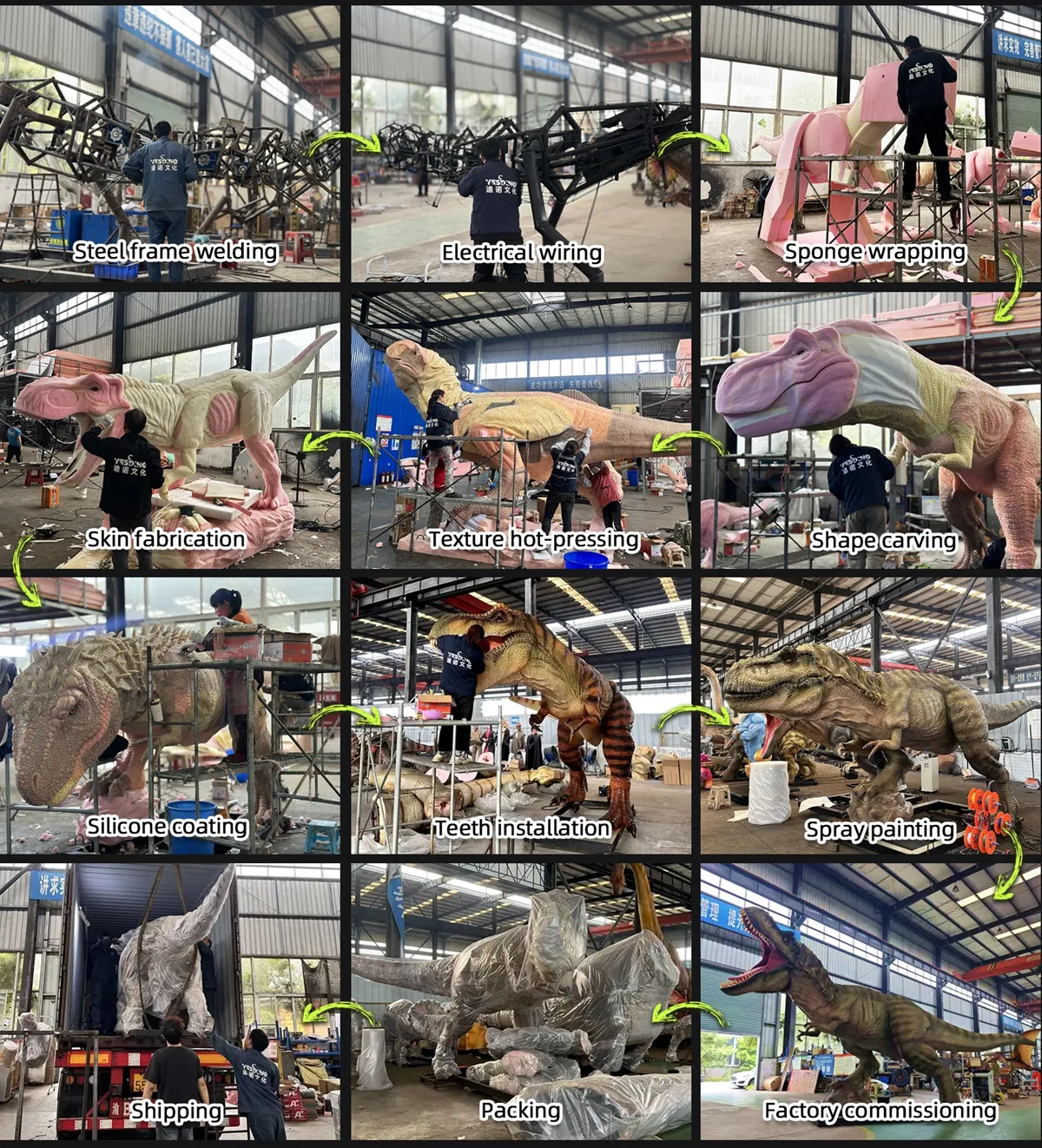
Production Process
Six in the morning outside a shopping centre, one van, two people, and a Triceratops that has to be standing before the doors open. That is the working life of an event animal, and it asks for different things from a park exhibit that goes up once and stays.
This one is 4 m long, 0.8 m across the body, and 1.85 m at the top of the frill.
Why four metres travels well
Four metres fits a long-wheelbase van with the seats out, tail over the passenger footwell. Longer than that and you are into a trailer and a tow rating. The 0.8 m body leaves room to strap it to one wall and still load barriers and cable beside it.
Height decides doors. At 1.85 m to the top of the frill, it clears a 2 m roller shutter standing on a low dolly, and it goes through a 2.1 m goods entrance without being tipped. On a taller build, a shopfront delivery turns into a crane lift at the kerb.
What four metres gives up is grandeur. This is not the animal people photograph from across a car park; it is the one they stand next to. For events, that is usually the better trade, because the queue is the point.
The frill as a backdrop
A large bony frill behind a child's head is a free photo frame, and the reason this animal works at retail events: three horns and a frill give an outline that reads in a phone snapshot in poor light. Face it about 30 degrees to the approach, so the frill fills the background.
Mark the standing spot 1 m out from the hooked beak. Children drift toward the horns, and a taped cross on the floor does more for the photographs than any amount of signage, because it also keeps small hands off the eyes.
Indoors, check the ceiling: the frill at 1.85 m on a 200 mm plinth is over two metres, fine in a concourse and tight under a marquee ridge. Outdoors, a 4 m body in a crosswind still wants the base frame pegged or ballasted.
Programming for a crowd that turns over
Head turn, neck dip, jaw, blink and tail sway. The head turn is the group worth tuning, because the audience changes every twenty minutes and a wide sweep brings the horns across the barrier line. We cap the sweep so the head arrives rather than swings.
Two trigger modes suit events. A floor mat at the standing spot, which fires on the child rather than the parent, and a timed loop for the periods when nobody is close. Delay on the mat sits at 0.8 s — short, because at an event people walk away if nothing happens.
Built for hands, spills and pack-down
Q235 steel frame with rust treatment, carved high-density foam, 5–7 mm silicone skin, colour sprayed in translucent layers. The horn tips, beak edge and frill rim are the contact points at an event, so they get a thicker skin and a satin top coat that wipes clean.
Working range is −25°C to 45°C, 110 V or 220 V at build. Indoor lighting is usually warm: at 3000K a grey-green base turns olive in photographs. If the venue cannot name the lamp type, a mid-tone base is safer.
One van, two people, ninety minutes
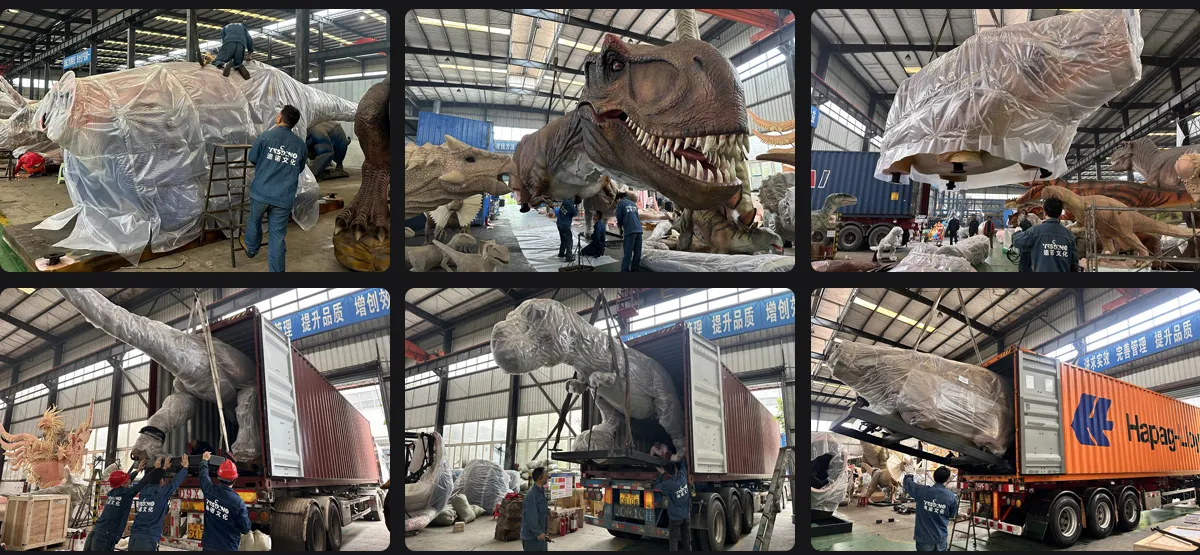
Load order is the reverse of the build order, and it decides how long the job takes. Base frame on the floor first, then legs, body, head, frill, skin panels, cabinet last so it comes out first at the venue.
On site: frame, legs, body, head, frill, panels, cabinet, then a movement test before the public arrives. Ninety minutes for two people who have done it before, half a day the first time. The cabinet sits behind the base frame, door on the operator side, 400 mm clear for the cable.
Before you book it
Send the venue, the door width, the floor surface, the ceiling height and where the power is. Two event details that catch people out: a gravel forecourt, where the dolly sinks, and a venue with no lift, where a first-floor booking means carrying sections up stairs.
On the economics, what matters is events per season against the cost of each trip. Two people and a van for a day is the real running cost. Below a handful of bookings a season, hiring locally is cheaper; above it, owning removes the risk of someone else's calendar.
Enquiry
Tell us the venues you have in mind and how the animal will travel — van, trailer or a hired truck. Colour, skin texture and the movement programme are made to order, so a photo of the stand or the shopfront is a good place to start.
Where to go next
Worth reading before you commit: the installation guide for pads and access for how the sizes compare, the wiring concealment notes for what the ground has to carry, and the park layout and theming strategies for where the money actually goes.
For ideas on placing it, see seasonal event planning. The rest of the range is on animatronic dinosaurs, and if this one is the wrong size for the slot, animatronic allosaurus for jurassic theme parks is the closest alternative.
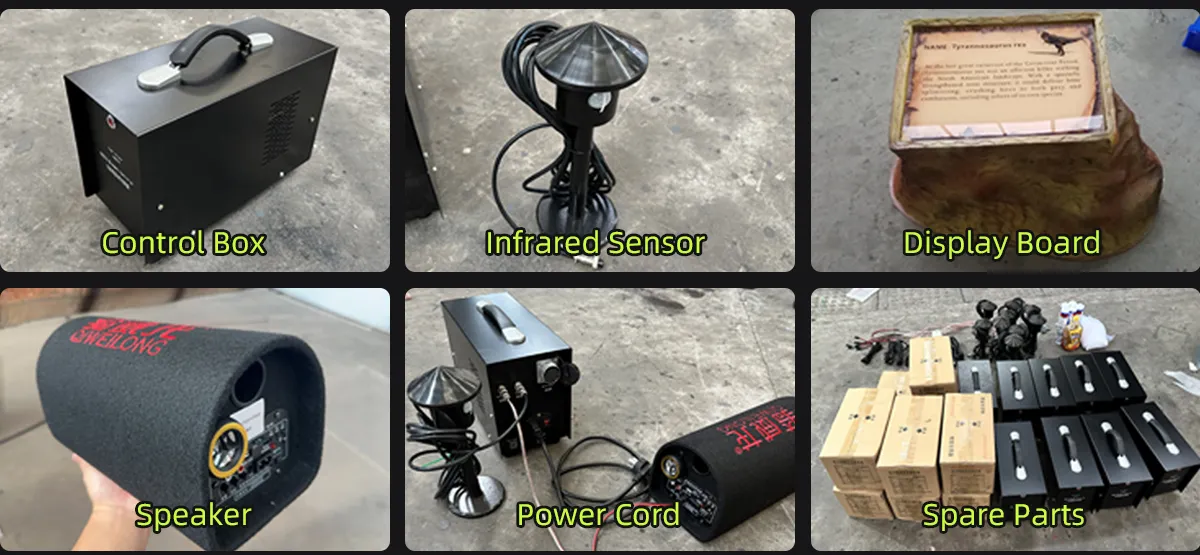
Product Accessories
Packaging and Container Loading