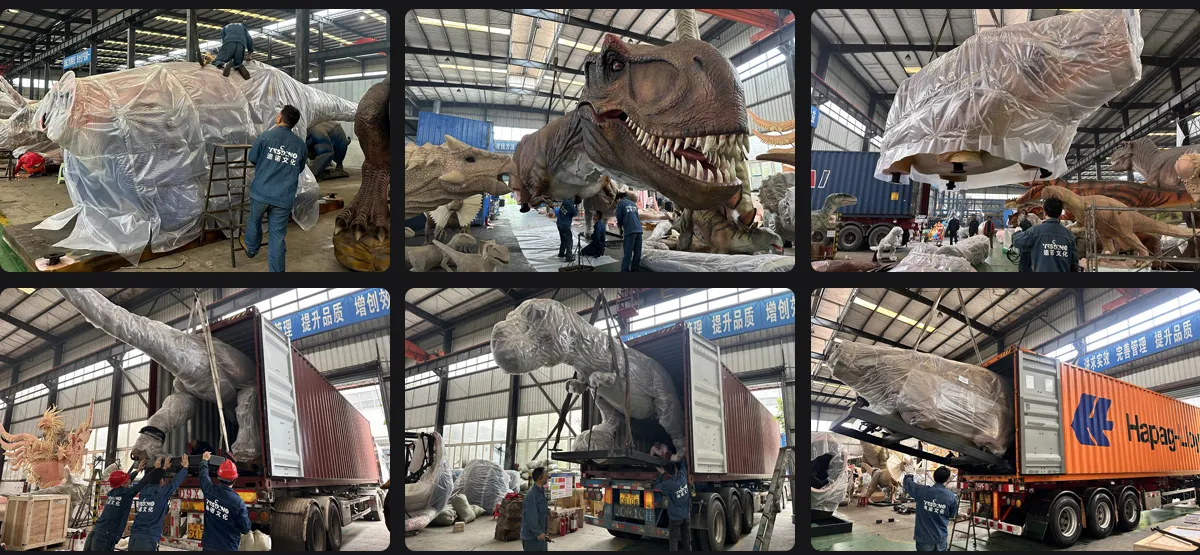
Production Process
A boy of about ten walks along the plinth, stops, and looks straight into the dome without being lifted up. His father stands beside him and looks at the same spot, slightly down. That is the reason this animal is 1.65 m at the head, and it is the only number worth arguing about when you order it.
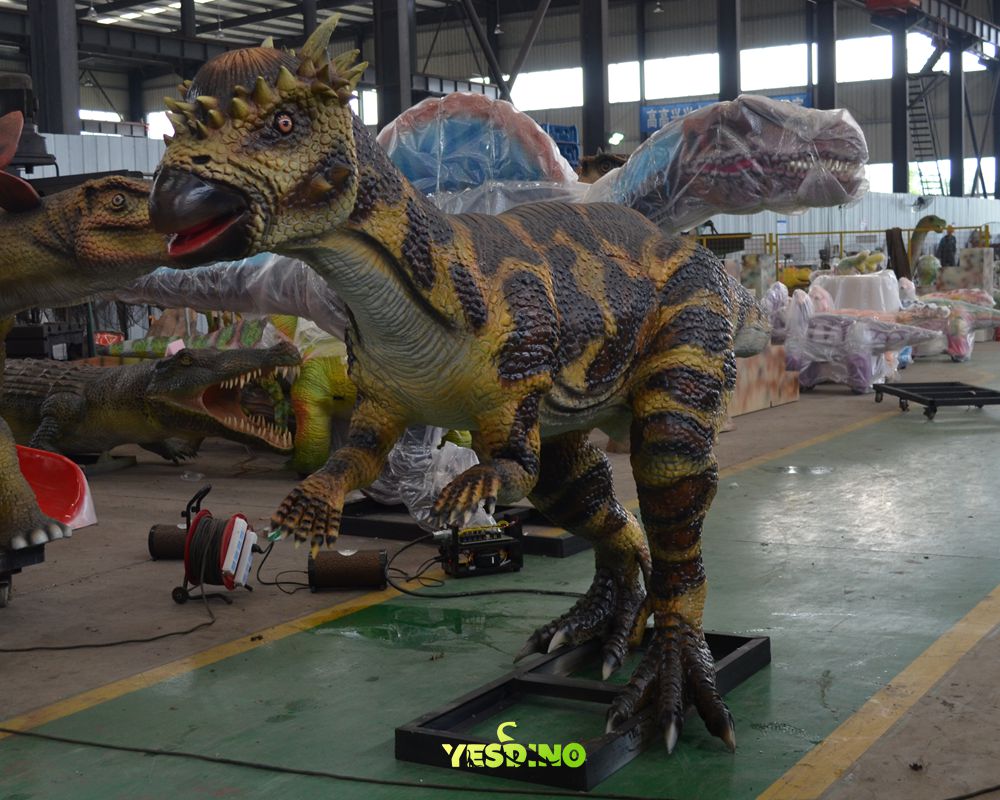
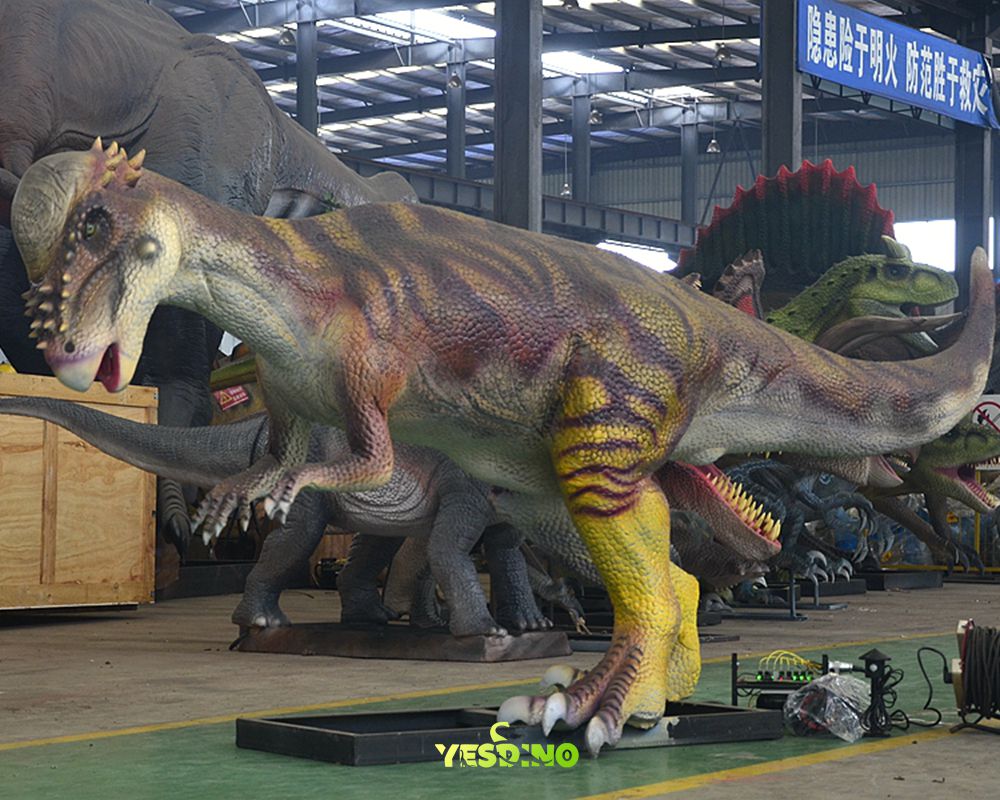
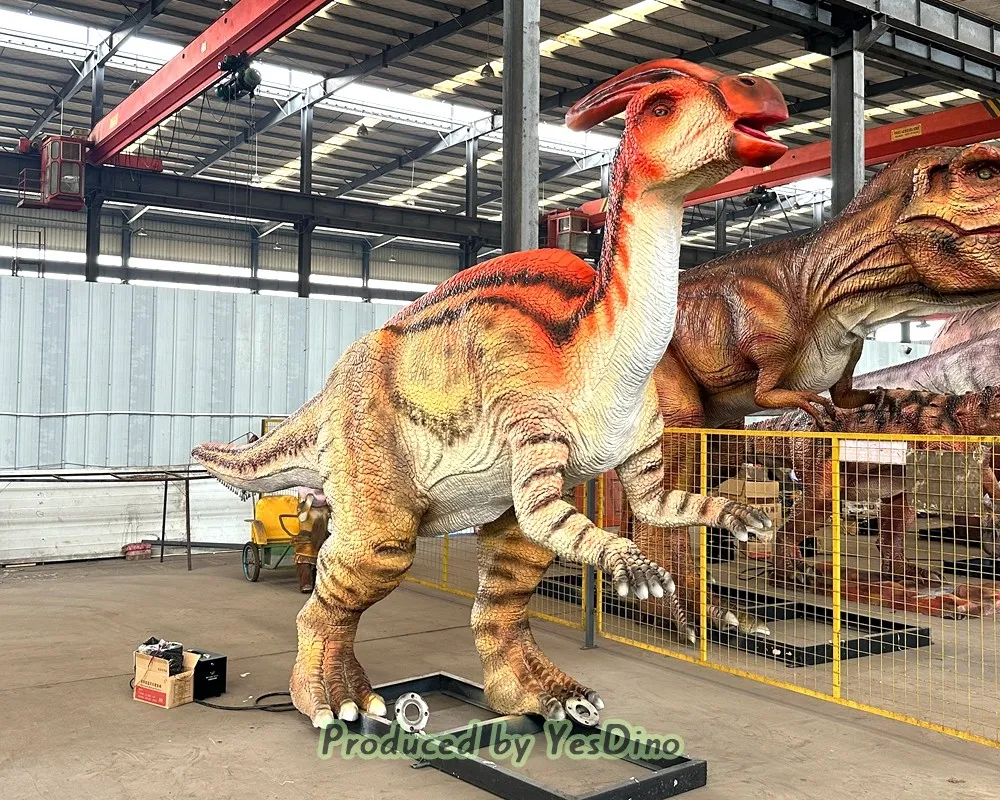
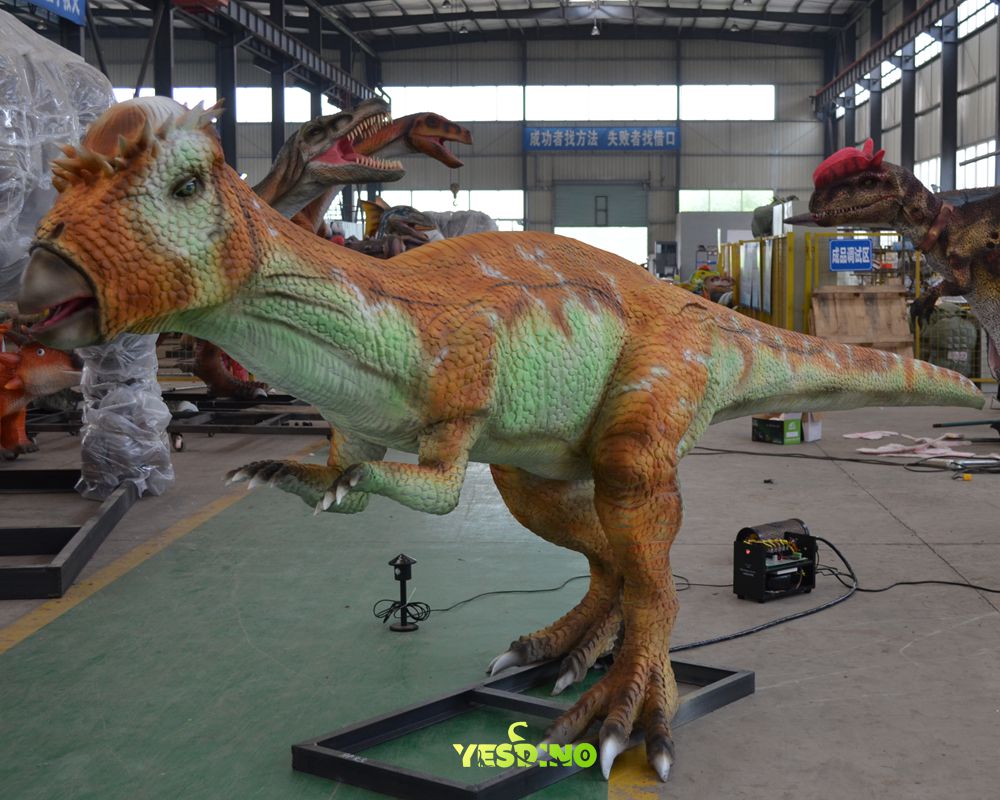
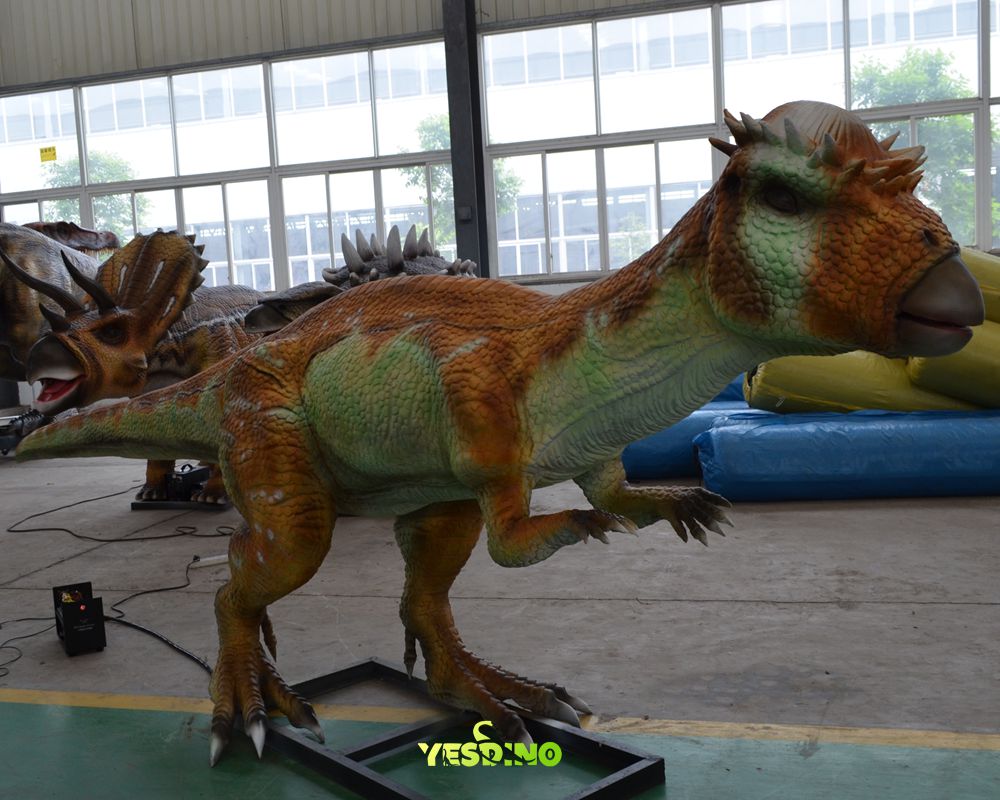
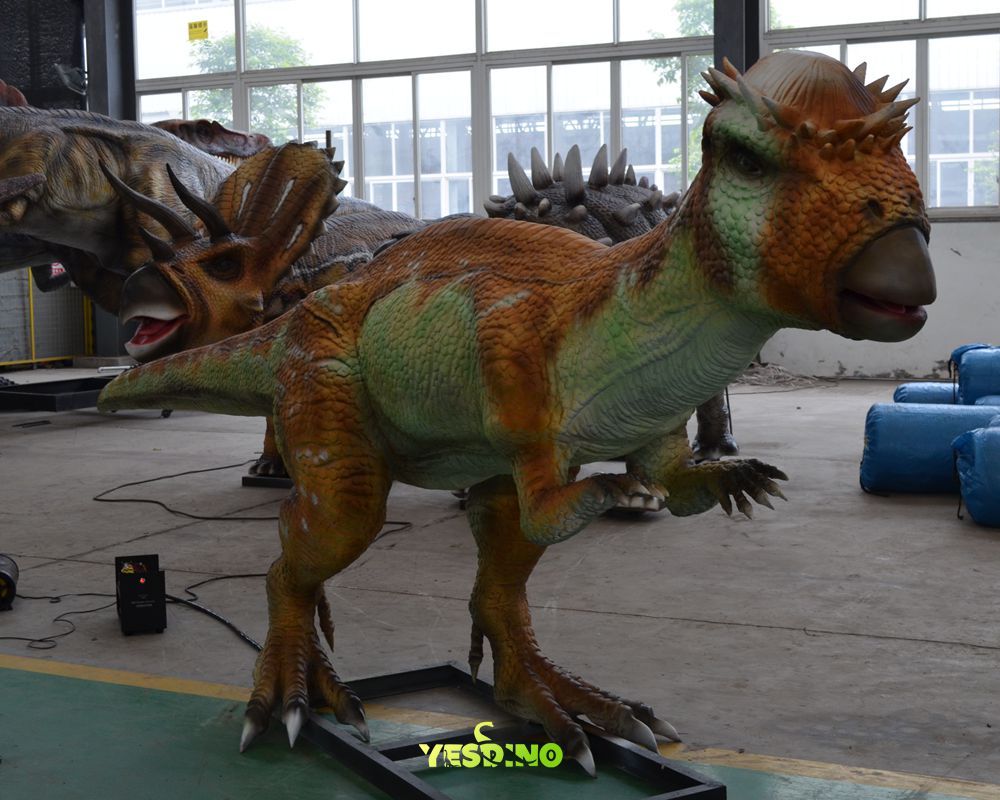
Five metres long, 0.6 m across the body, 1.65 m high at the skull, 145 kg. Read those together and the shape is clear: a long, narrow animal whose mass sits forward, with a tail that takes up roughly half the length.
Why the head height decides everything
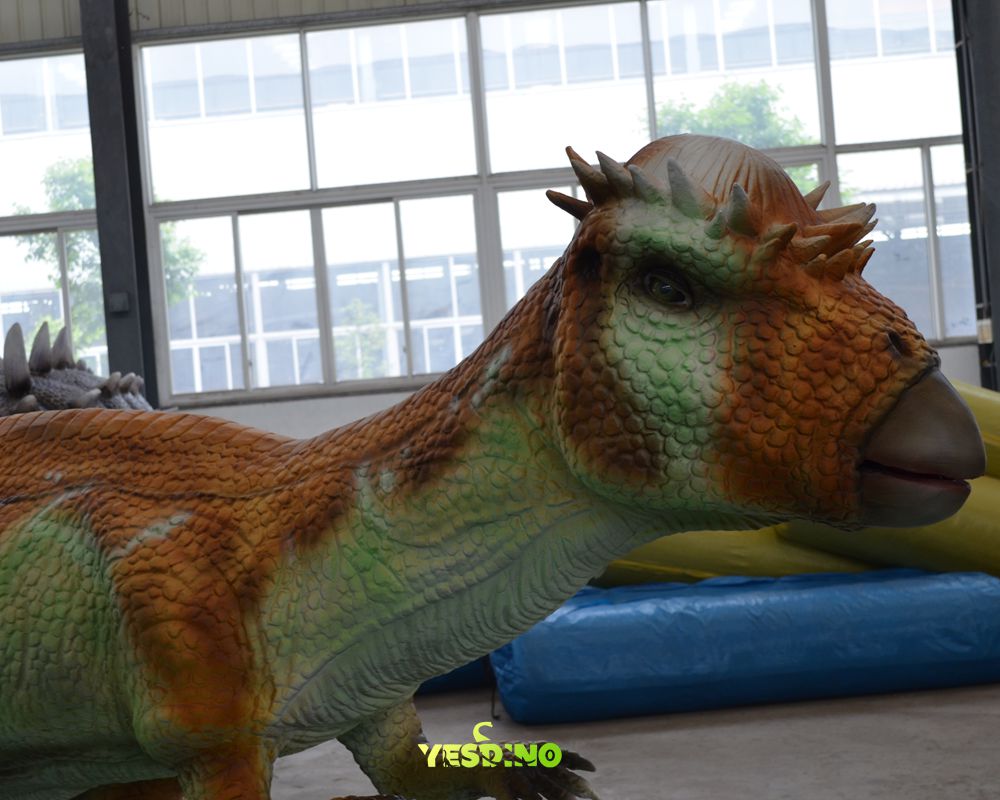
The domed skull roof with its bony knobs, the row of small leaf-shaped teeth along the snout — that is the entire product. Nobody buys this animal for its hindquarters. The height of the head sets the height of the whole build, and 1.65 m puts it below the eye line of most adults and above the eye line of most children.
The trade is in the tail. At 5 m long and only 0.6 m wide, the animal is built for a wall or a plinth, not for a trail. Put it outdoors on a wide path and it reads as a thin object from twenty metres away, because the detail that matters is on a skull the size of a football. Up close, indoors, it holds attention for a long time.
Where it earns its space
Exhibition halls, science centres, natural history galleries, the quieter end of a hotel lobby. The comfortable viewing band is 2.5 m to 4 m — close enough to see the knobs on the snout, far enough that the neck turn does not feel like it is in your face.
For a gallery, plan a 6 m by 1.5 m footprint with 1.2 m at the head for the service approach. Against a glazed wall, keep 600 mm behind the animal: the tail needs the gap and the glass shows the shadow.
What actually moves
Head nod, neck turn, jaw, blink, tail sway. The neck turn is the one worth spending time on: it carries the head from a visitor's left to their right and back across the dome. A dome swinging at a predator's speed reads as a machine part.
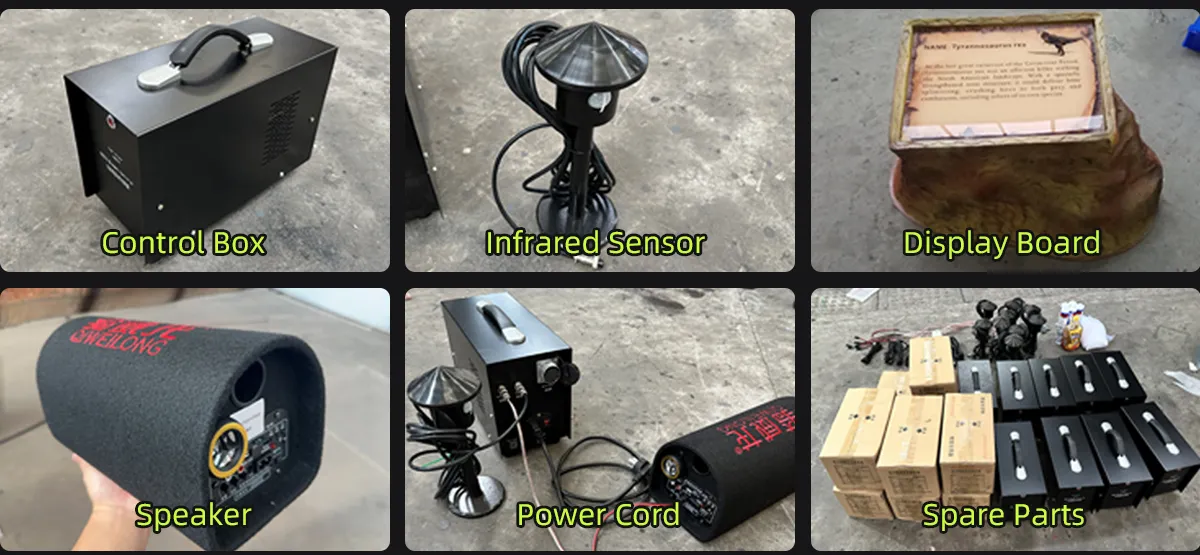
The jaw opens on leaf-shaped teeth, and it opens less than most people expect: the mouth is narrow, and a wide gape turns a small skull into a cartoon. The proximity sensor goes on the approach side at 900 mm off the floor, angled away from the plinth so visitors walking past the tail do not trigger it.
Frame, skin and the knobs
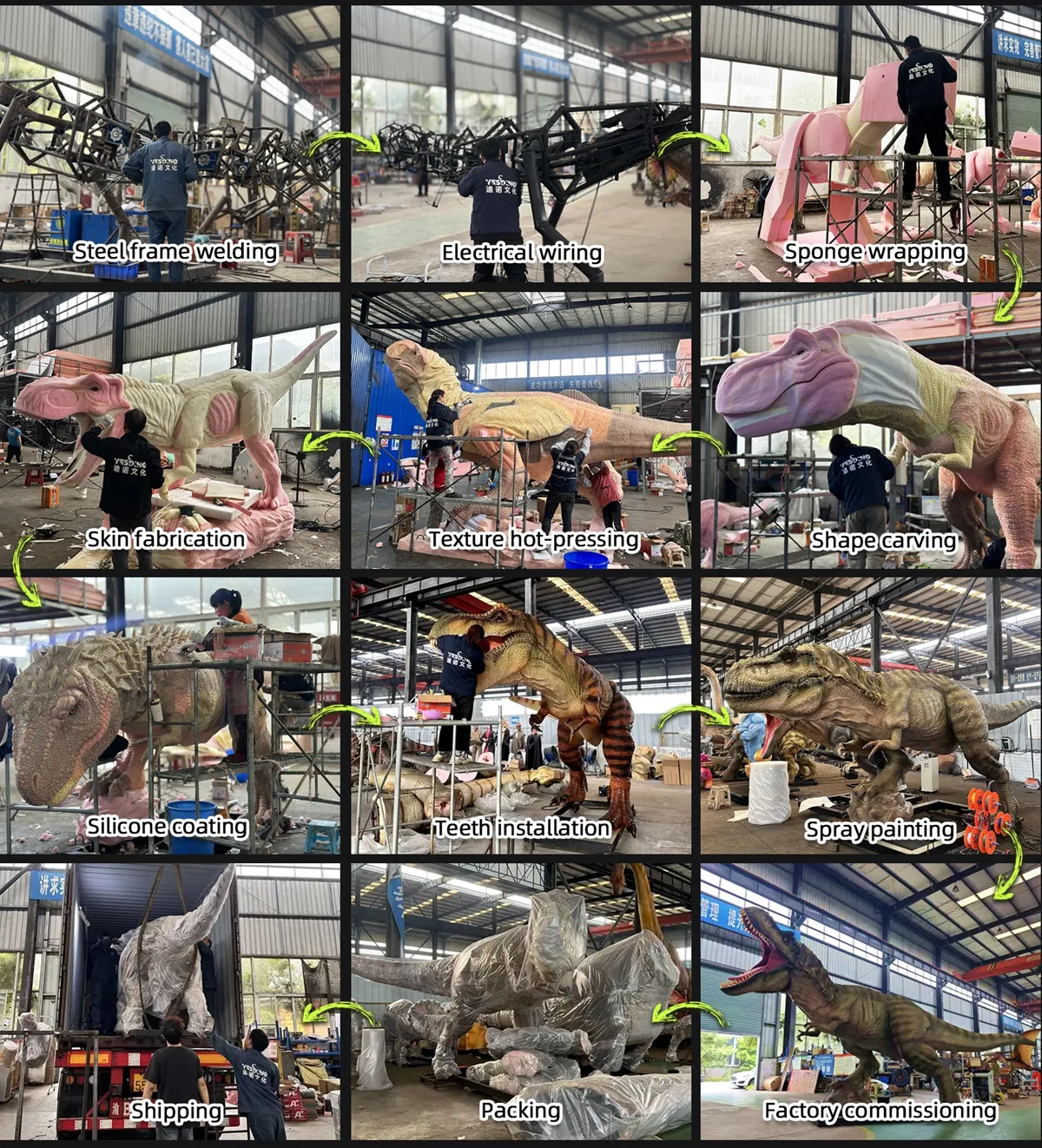
Q235 steel frame with rust treatment, high-density foam carved for the volume, silicone skin at 5 to 7 mm, colour sprayed in translucent layers so the tone sits inside the surface instead of on top of it. Indoors that skin mostly meets hands and cleaning cloths rather than sun and rain, and it holds up well; the wear points are the snout and the top of the dome, where people reach.
The knobs are cast separately and bonded before colour, which is why they keep a defined edge after a year of touching. A repair on the dome is a local pigment patch, not a repaint of the head.
Getting it through the door
The animal breaks into three sections — head and neck, torso, tail — plus the base frame. The heaviest piece is the torso, and the whole build is 145 kg, so this is a two-person carry through a 1.2 m door with a pallet truck, not a crane job. That is what a 0.6 m body width buys you.
Anchor plates bolt to a concrete floor with M10 anchors at four points; on a stage deck we send a spreader plate instead, and the deck rating reaches us before the steel is cut. The cabinet sits in the torso behind a lockable panel on the left flank, with 500 mm of clear floor there for a technician.
Before you commit
Send the ceiling height, the plinth height, which side visitors approach from, the floor material, and where the nearest power outlet sits. Nine orders in ten change slightly once the plinth drawing arrives, and the head height is what shifts.
Two cases where we would point you elsewhere. On an outdoor trail with 8 m to 15 m viewing distances, this build disappears into the planting and a bigger silhouette serves you better. On a narrow walk-through path, the tail is what visitors brush against all day; a shorter animal placed side-on does the job.
Enquiry
Send a photo of the spot with something in frame for scale, the ceiling height, and how close you want visitors to get. Tell us the power supply at the site and whether the floor is slab or deck. We will come back with the section split, the anchor plan and the sensor position drawn on your own photo, so you can see the footprint before anything is built.
Where to go next
If you are still comparing options, start with the wiring concealment notes — it lines up the builds by length and reach. Site work is covered in the park layout and theming strategies, and the cost breakdown with the seven price factors lists the factors that move the price.
For ideas on placing it, see exhibit planning walkthrough. The rest of the range is on animatronic dinosaurs, and if this one is the wrong size for the slot, animatronic triceratops for shopping malls is the closest alternative.
Product Accessories
Packaging and Container Loading