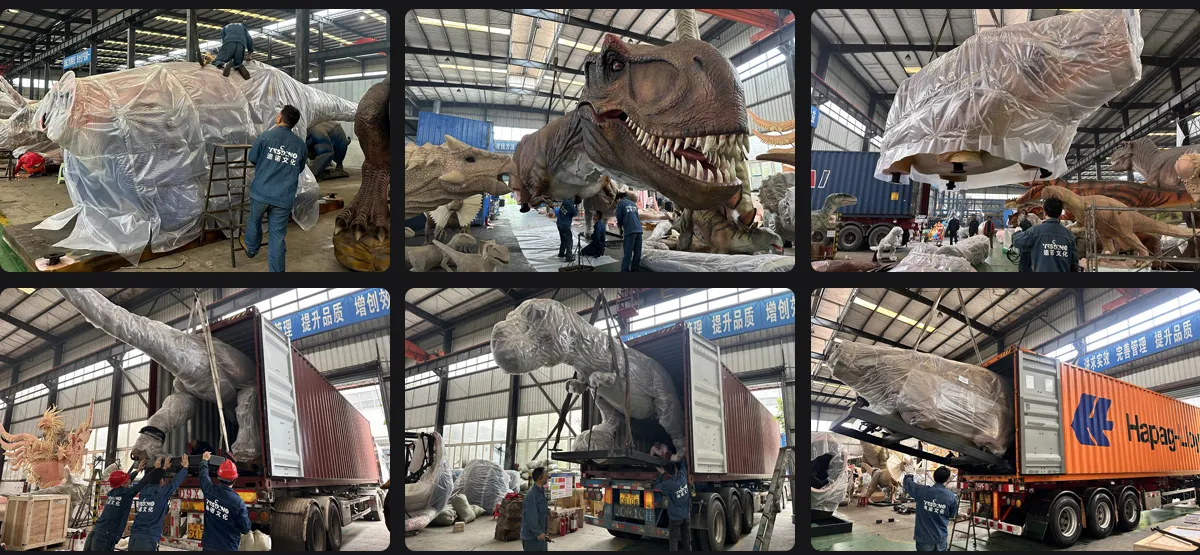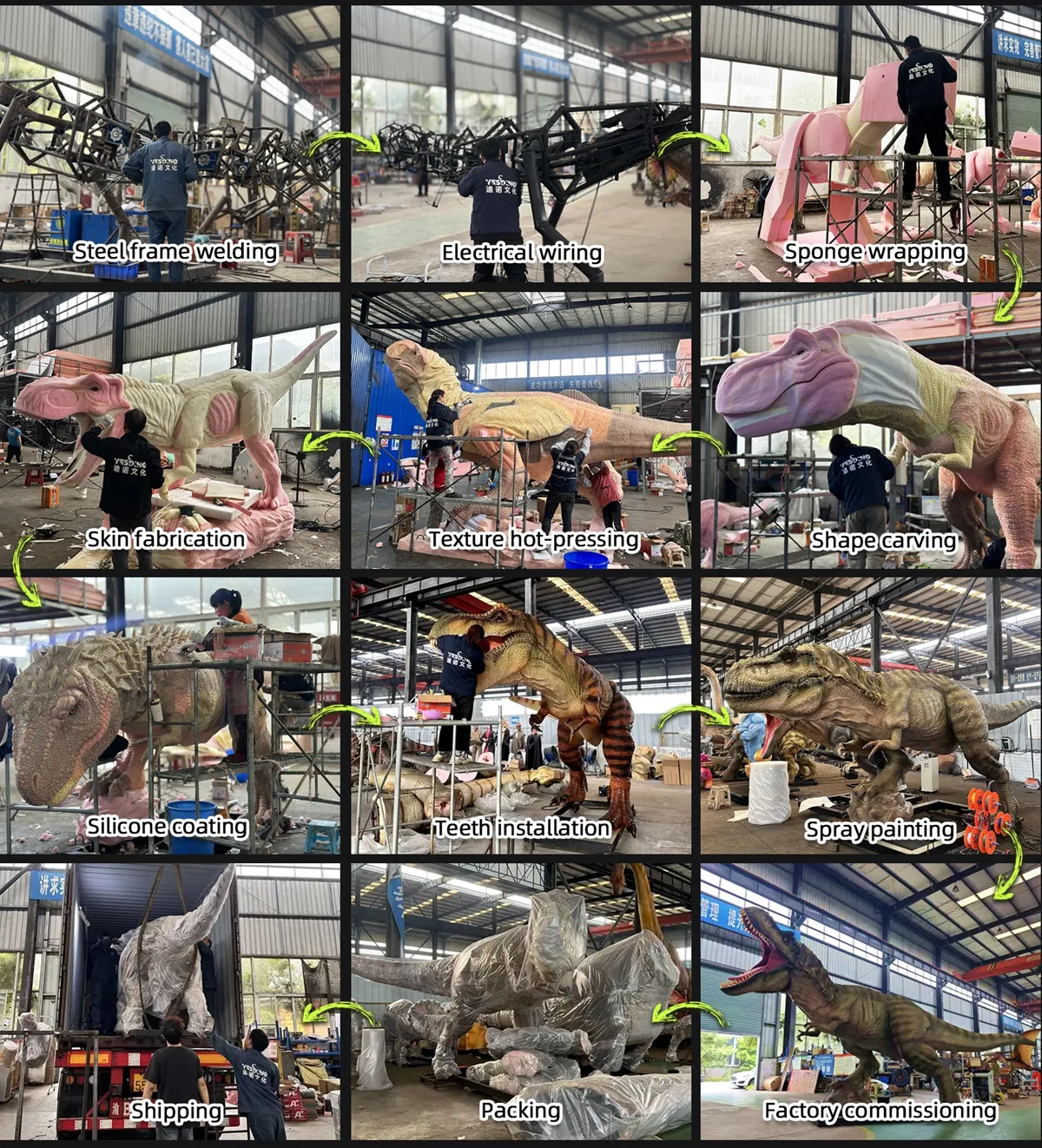
Production Process
This is not an exhibit. An exhibit earns money by being looked at, once, by people who already paid at the gate. This one earns money by the ride, and that changes every decision that follows — where it stands, how fast it loads, how often it needs attention, and what "good" looks like on the day you unwrap it.
SKU YDR-011: four metres long, 1.7 m tall, about 160 kg, built for an adult and a child to ride together.
The maths that decides whether it pays
Work backwards from the queue, not from the animal. If a cycle runs five minutes including loading and unloading, a single unit serves at most twelve rides an hour, and in practice ten once people hesitate. Set a price, multiply by ten, and compare that with the daily rate you expect — that is the honest version of the business case.
Two numbers move it more than anything else: how fast the loading happens, and how reliable the unit is during your peak four hours. A second animal is usually a better investment than a bigger one, because two units halve the wait and a queue that isn't moving is what kills the takings.
Loading is the design problem
At 1.7 m the seat height suits a child climbing on with an adult behind, but the animal is 160 kg with a swinging tail — so the operating envelope matters more than the seat. Plan a marked boarding zone with a rail or a plant trough that keeps waiting visitors off the tail arc, and put the operator where they can see both the seat and the queue.
Because it carries an adult and a child together, brief your staff on the one rule that actually prevents incidents: nobody boards or leaves while the body is moving. Everything else is a preference.
Movement set
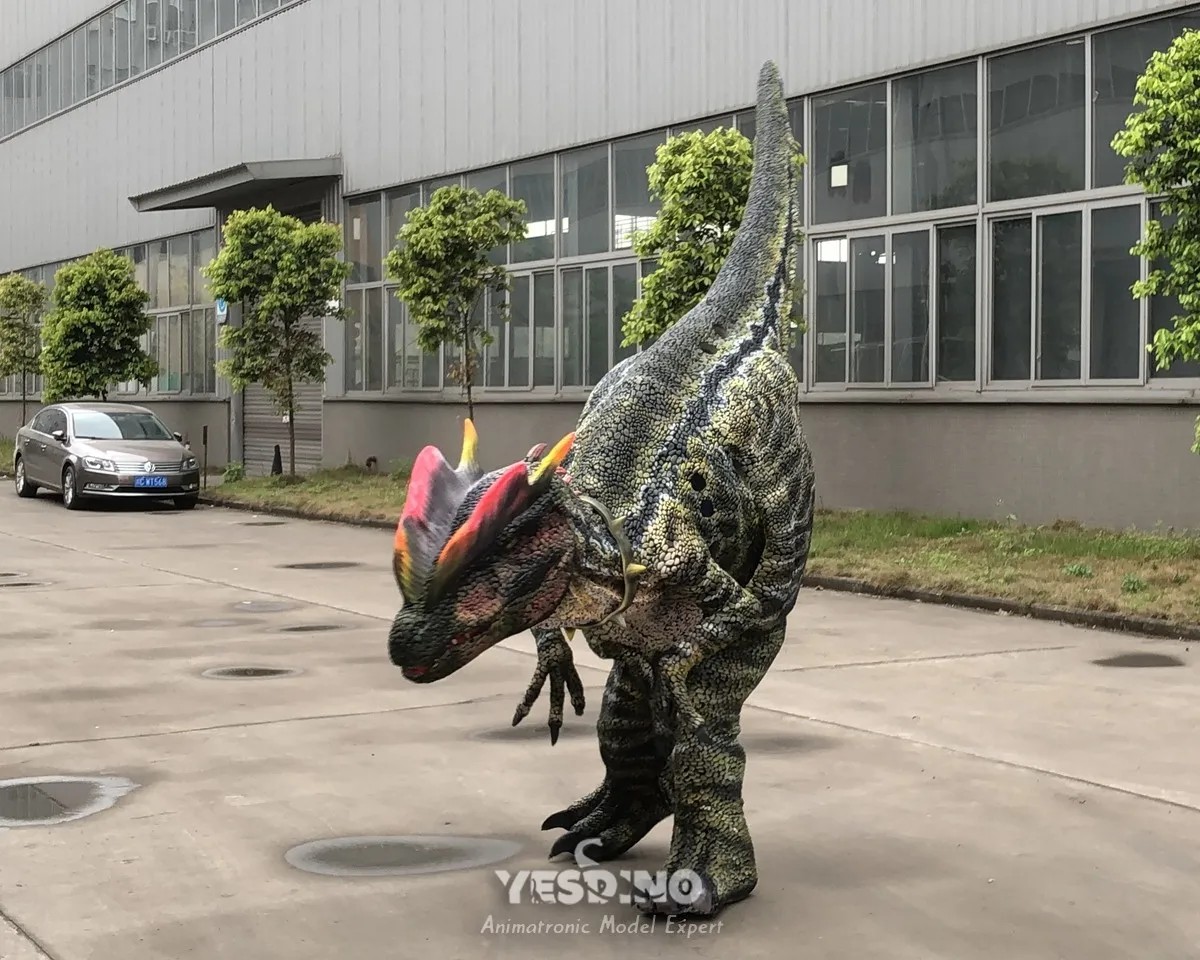
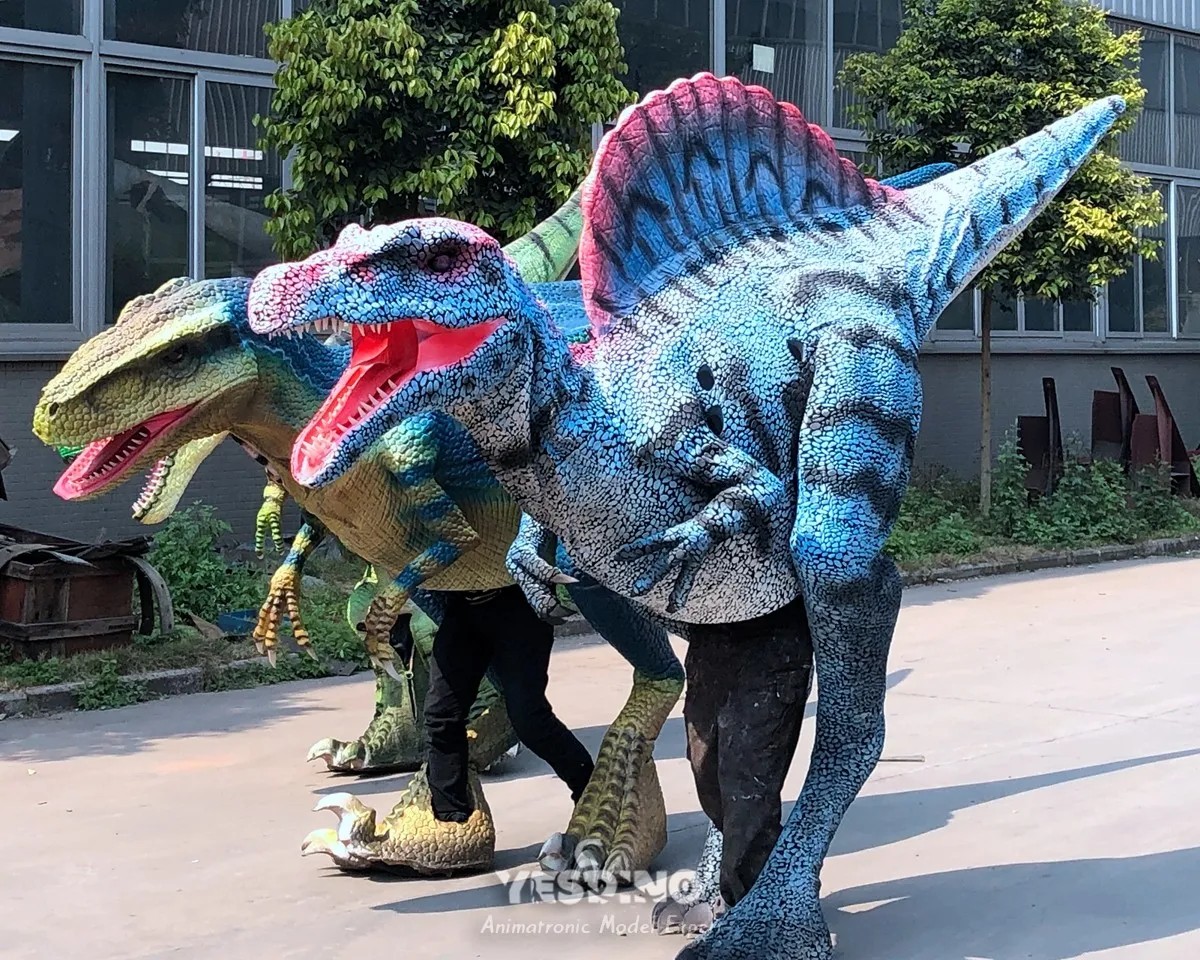
The body undulates and sways under the riders, the eyes blink automatically, the mouth opens with a roar, the tail swings, the head turns left and right and the claws wave. It is a performance for the queue as much as for the riders — the people watching are the next customers, and a unit that sits still between rides sells nothing.
Programs are set at commissioning. Keep the cycle short and repeatable: a long sequence with pauses looks impressive to the operator and feels slow to the rider.
Materials, and where wear shows first
Steel structure, silicone skin, high-density sponge volume, fibreglass components and pigments. On a ride, wear arrives in a predictable order: the skin where riders grip and where feet rest, the seat covering, then the moving joints.
The silicone surface is the advantage here. It can be wiped down between riders, and small damage is patched locally rather than requiring a panel repaint. Ask for touch-up pigment in the original colour with the order — on a ride, cosmetic damage happens in the first month and a matching patch keeps it from becoming a repaint.
Site and power
It needs a flat surface, a route for the operator to walk alongside, and a power arrangement suited to your site. Tell us at enquiry whether the unit stays in one place or moves between locations — a seasonal operator moving between fairs has different requirements from a fixed mall installation, and it is cheaper to specify that up front than to adapt later.
Freight, duties, certificates and installation are quoted separately and are not part of the product price. For a ride, ask about the certificate set your local inspectors will want before the unit ships, because that paperwork is easier to arrange at the factory than after arrival.
Care between seasons
Check the joints, the seat fixings and the skin at the grip points at the start of every season, and keep the unit dry between operating days. Silicone and sponge tolerate weather but not standing water, and a ride stored under a leaking cover is the most common way one of these ends up needing a reskin in year two.
Enquiry
Tell us the expected footfall, the site surface, whether it's fixed or travelling, and what your local inspector requires. We'll come back with a specification and an honest view of whether one unit will clear the queue at your peak.
Where to go next
Worth reading before you commit: the cost breakdown with the seven price factors for how the sizes compare, the spare parts and repair kit list for what the ground has to carry, and the size guide covering 3 m to 12 m builds for where the money actually goes.
For ideas on placing it, see visitor routing ideas. The rest of the range is on dinosaur rides, and if this one is the wrong size for the slot, 16m animatronic brachiosaurus for museum displays is the closest alternative.
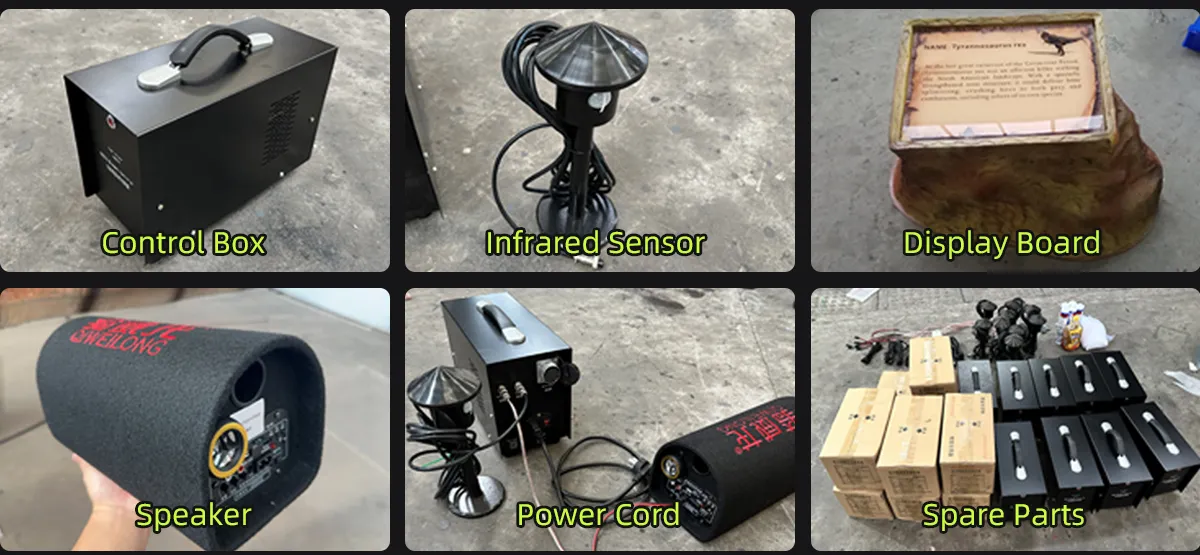
Product Accessories
Packaging and Container Loading