Production Process
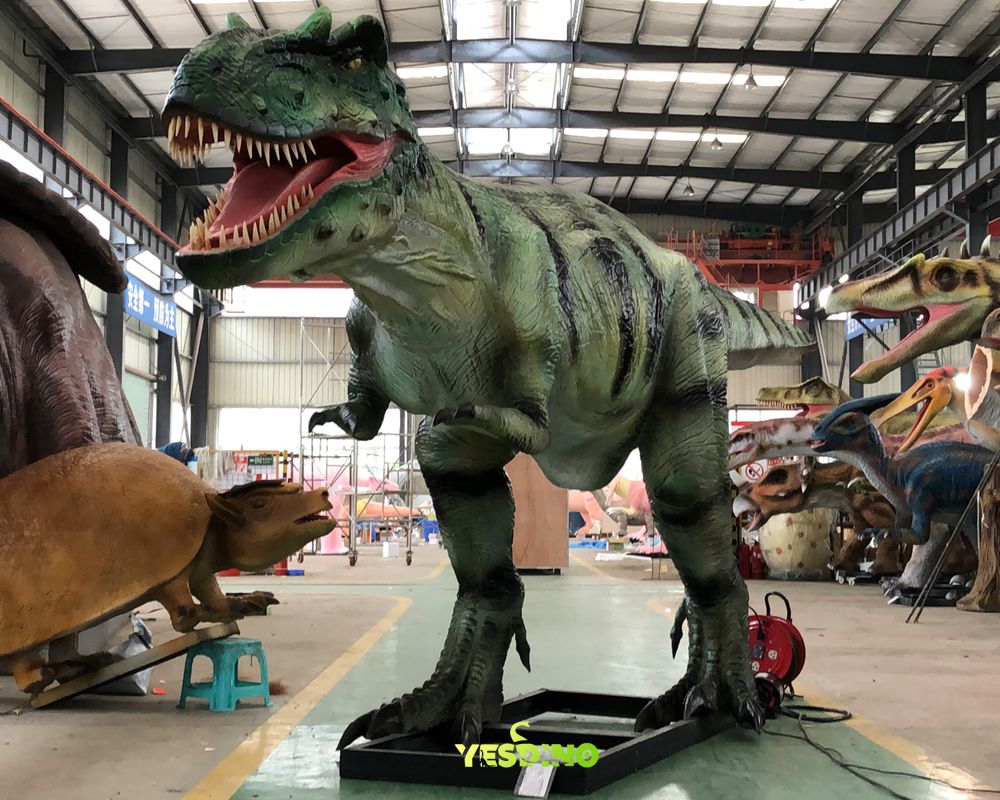
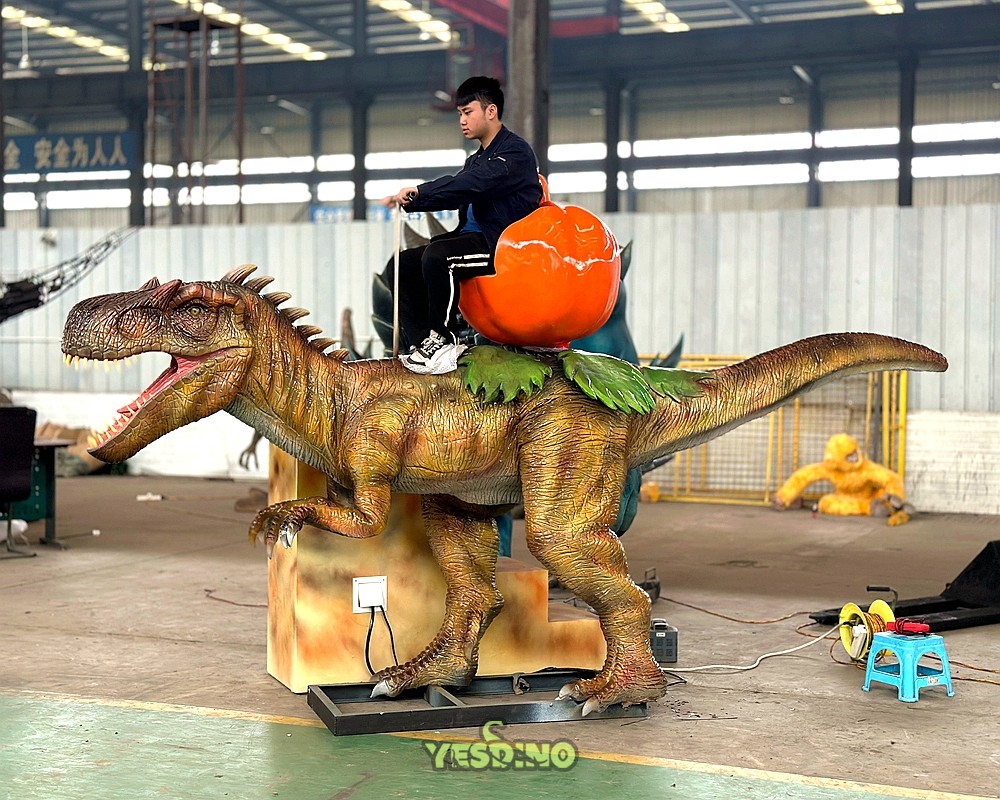
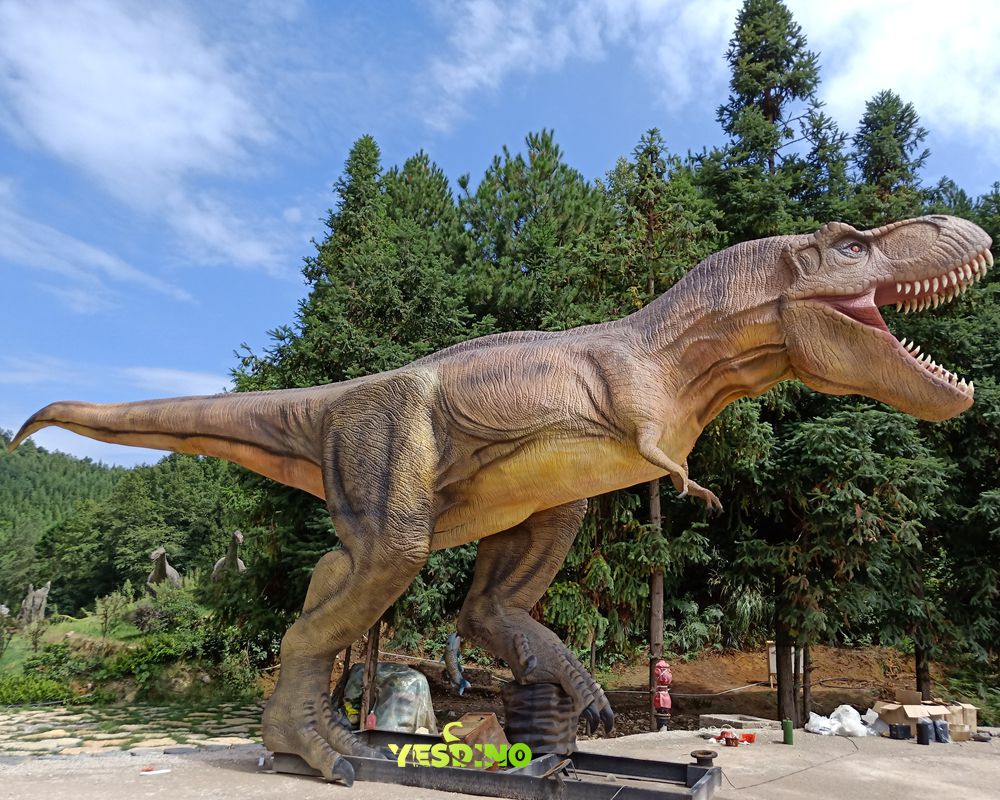
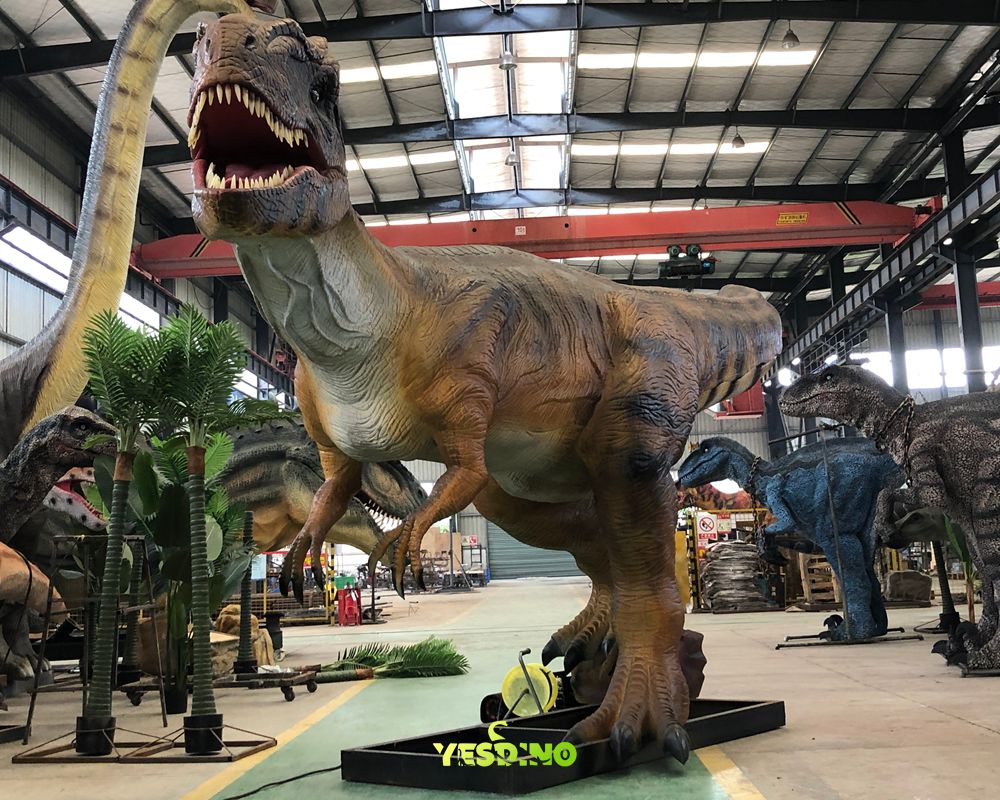
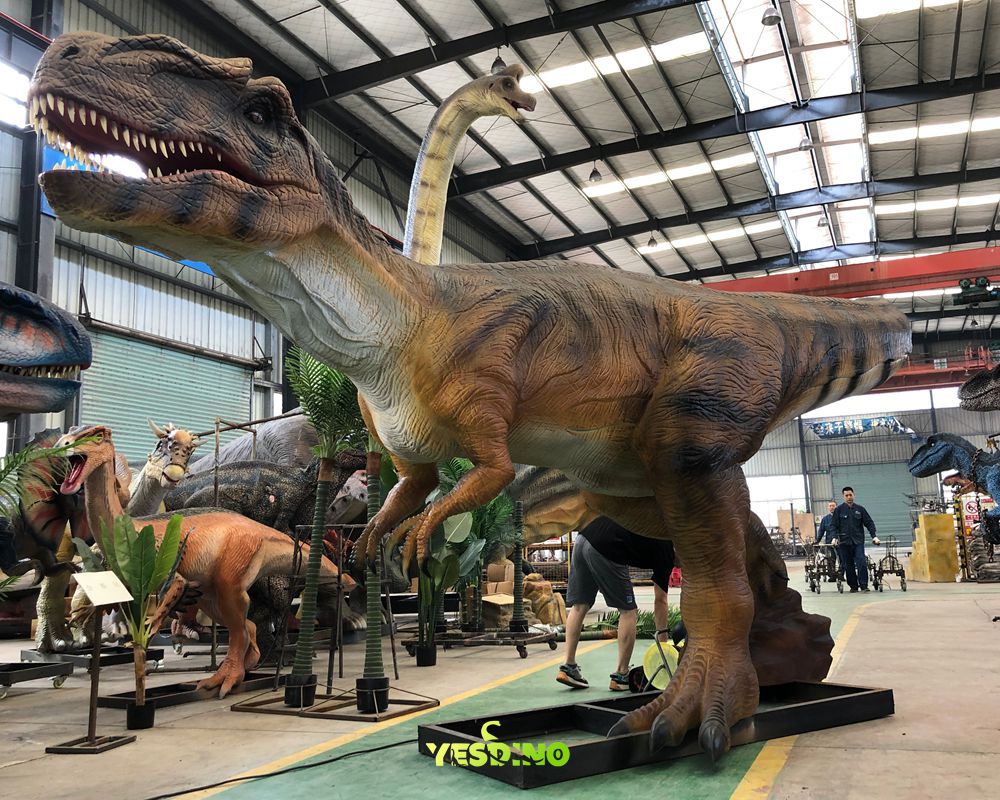
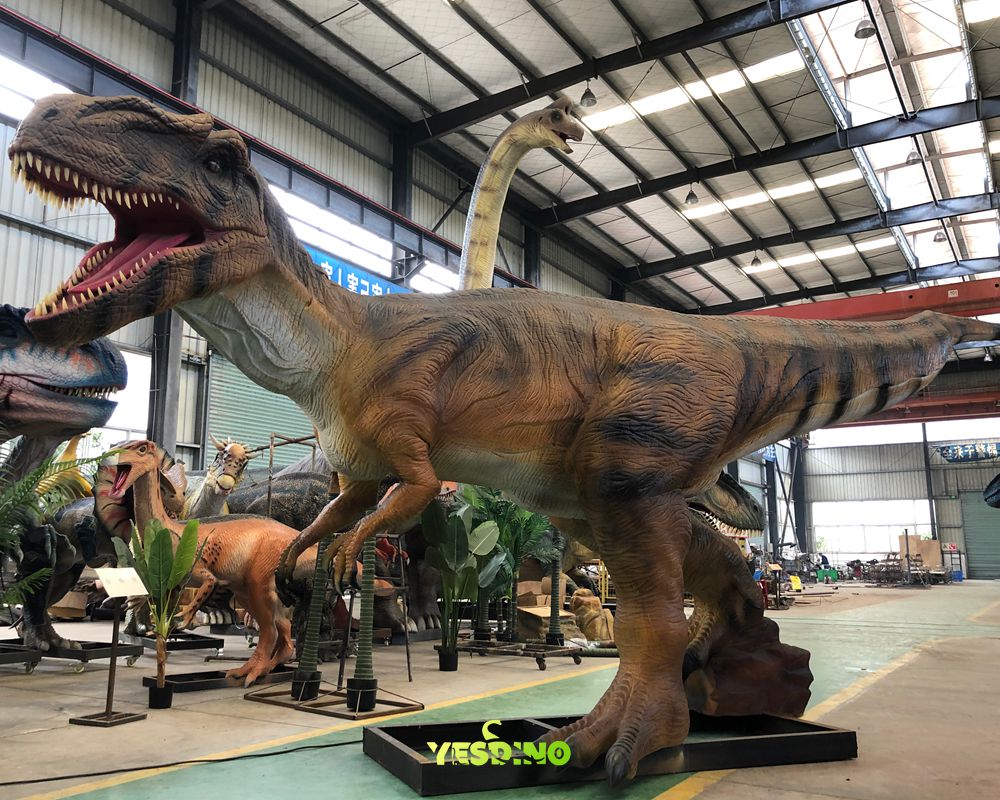
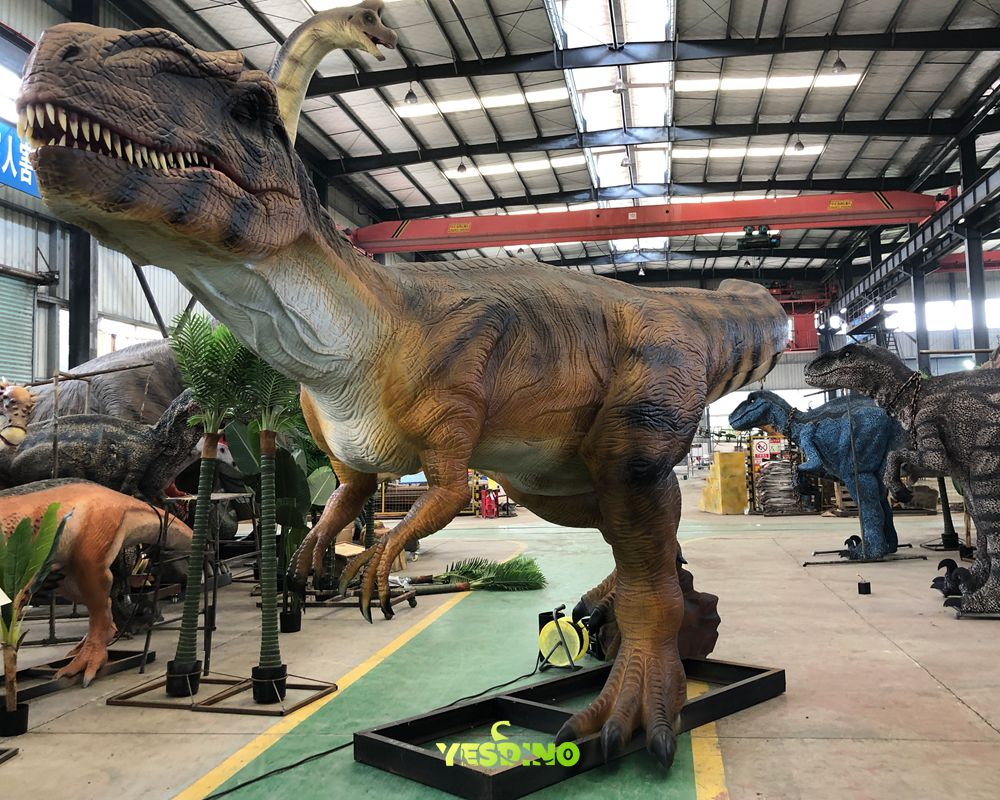
Ask a visitor to describe an allosaur and they will usually sketch the head: long, narrow, with a ridge over each eye. That sketch is the build brief. At 2 m the head sits above adult shoulder height and the profile is what people see first, which is why this animal is worth judging by its skull rather than its length.
Six metres long, 0.8 m across the body, 2 m at the top of the skull.
Judged by the head, not the length
Six metres is a workable size for theming: long enough to read as a predator on a lawn, short enough to place without a long approach. The build holds the head near full proportion and takes the length out of the torso and tail, so the animal looks forward-heavy in the way an allosaur should.
The compromise is scale at distance. At 0.8 m wide and 2 m tall, this is not a gateway animal; from fifteen metres it reads as a mid-size dinosaur rather than a threat. Set it four to eight metres from the path and the head profile does the work instead.
Lawns, gardens, mini-golf, roadsides
Six metres of animal at 0.8 m wide fits a planted bed, a resort garden, a themed mini-golf hole or a roadside pull-in where a bigger build would need engineering. The head at 2 m clears most shrubs and sits under tree canopies, which is often where a site has space going spare.
Set it at thirty to forty degrees to the walking line. Straight-on, the head disappears into the body from one direction; angled, the snout and the eye ridge catch the approach from both. Keep a metre of clear ground at the tail: the animal turns its head widely and visitors stop right where the tail sweeps.
Head, hands, and two ridges
Head turn is the axis to tune first, with the neck following rather than leading. The bony crests above the eyes sit on the moving part, so a slow turn shows them off against the light; a fast turn blurs them. We keep the neck speed low and let the jaw open on a delay, which reads as a decision rather than a snap.
The hands are three-fingered with large claws, and they get a grip-and-release rather than a reach. Visitors at four metres can see the hands, and a hand that opens and closes looks purposeful where a waving arm looks mechanical.
Skin over a long neck
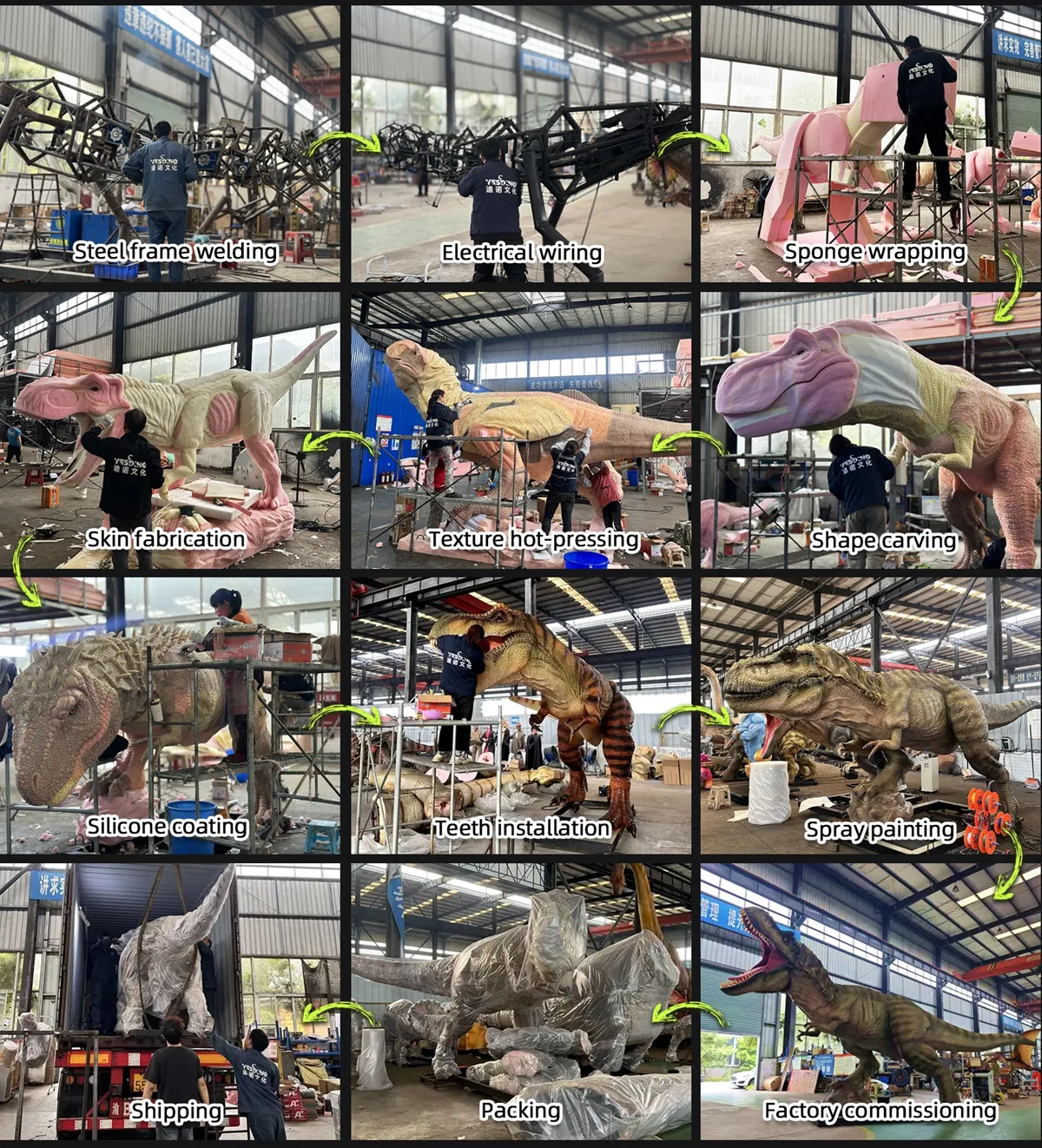
Q235 steel frame with rust treatment, high-density foam carved to volume, silicone skin 5–7 mm, colour in translucent silicone layers. The neck is the part that shows wear first, because it flexes and it is at hand height on a 2 m animal; the skin there is laid in sections so a repair does not mean reskinning the shoulder.
The build runs at −25°C to 45°C on 110V or 220V set for the destination. In an open garden the sun does more damage than rain, and a west-facing position bleaches a sprayed finish over a few seasons; the layered silicone holds colour longer, and a north-facing bed avoids the worst of it.
Onto a hardstanding
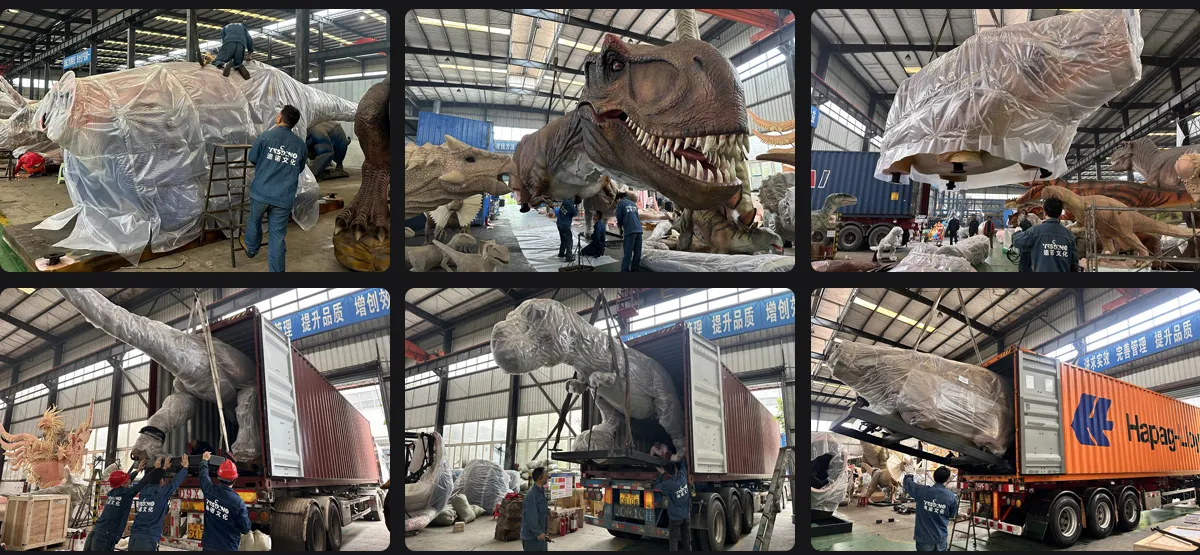
The animal ships as two body sections plus head and neck, with base plates loose. At 0.8 m wide the crates go through a standard door, and the whole build moves on a flatbed or in a long-wheelbase van. Two people and a pallet truck handle it; no crane at six metres.
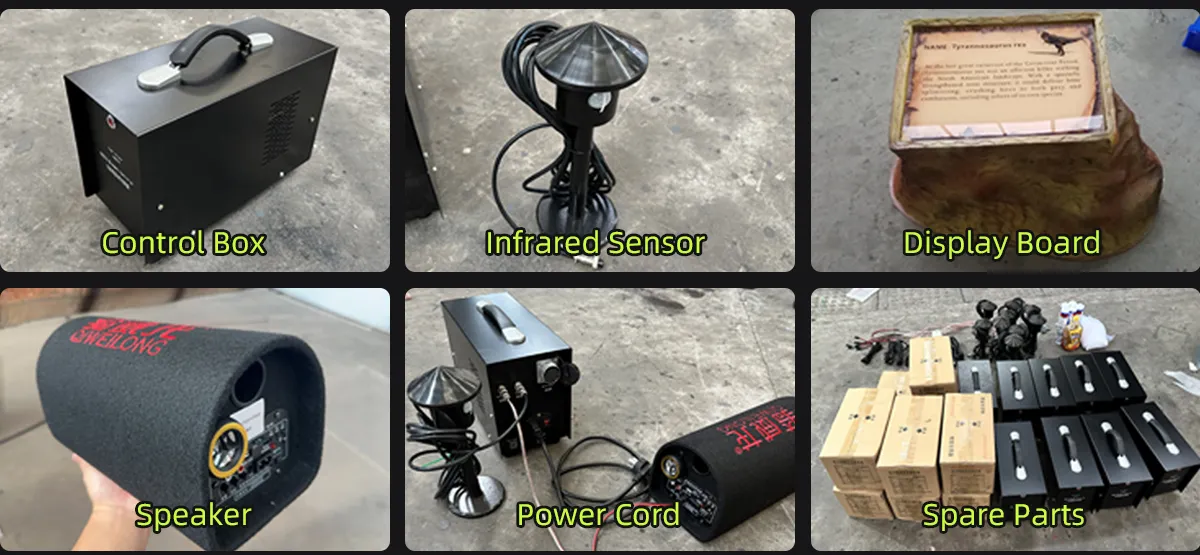
Order on site: base plates on the pad, rear body, front body onto the coupling, neck and head, tail, then skin closure. On asphalt or paving we bolt through plates with a rubber isolator under each, which keeps the frame off standing water. The cabinet sits behind the animal with the door facing away from visitors, and the sensor goes at about 1 m, angled across the approach with roughly 0.9 seconds of delay before the cycle starts.
Before you order
Send a photo of the bed or pad, the surface, the direction visitors come from, and the space between the animal and the path. Tell us whether the site has power at the display or needs a run from a nearby building, since that decides cable routing and where the cabinet can sit.
Two cases that call for a different size. A gateway or forecourt where the animal has to be seen from the car park, because 2 m of head height does not carry that distance. And a site that wants a walk-through encounter with the animal leaning over the path, which needs a bigger frame and a different base design.
Enquiry
Send the site photo, the surface, the viewing direction and the power situation. If the head profile is why you chose an allosaur, say so: we can shape the crests to your reference.
Freight, duties, certificates and installation are quoted separately from the animal, and the parameter sheet comes with the drawing.
Where to go next
Two things come up in almost every enquiry on this build: how the size compares with the alternatives, and what it takes to get it on site. The size guide covering 3 m to 12 m builds sets out the length options side by side, and the rental cost breakdown covers pads, access and assembly. Budget planning sits in the pneumatic versus hydraulic comparison.
For ideas on placing it, see layout strategies for themed trails. The rest of the range is on animatronic dinosaurs, and if this one is the wrong size for the slot, 8m t-rex for jurassic theme parks is the closest alternative.
Product Accessories
Packaging and Container Loading