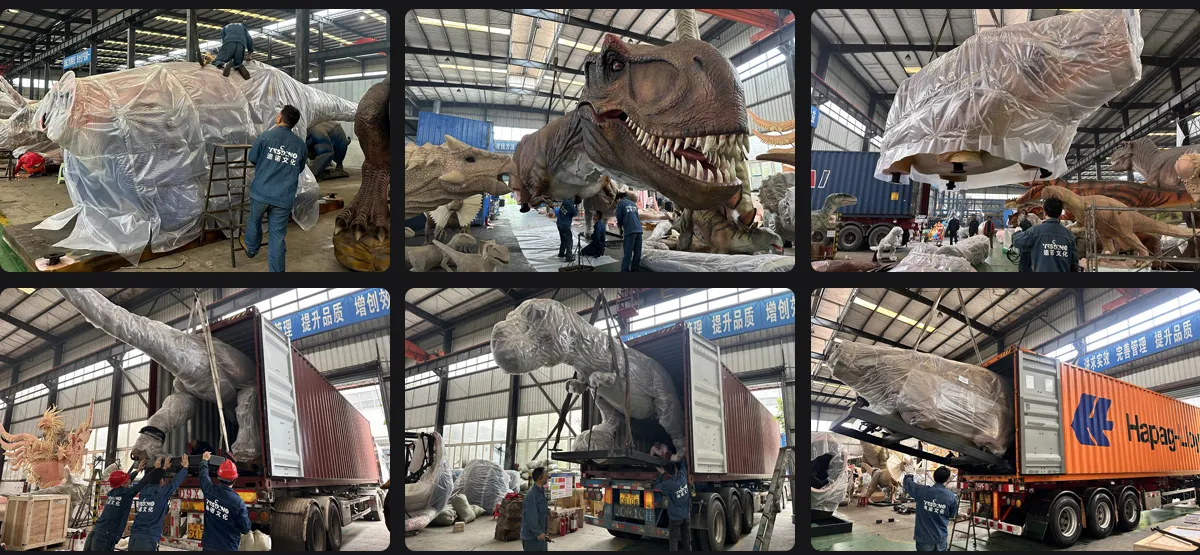
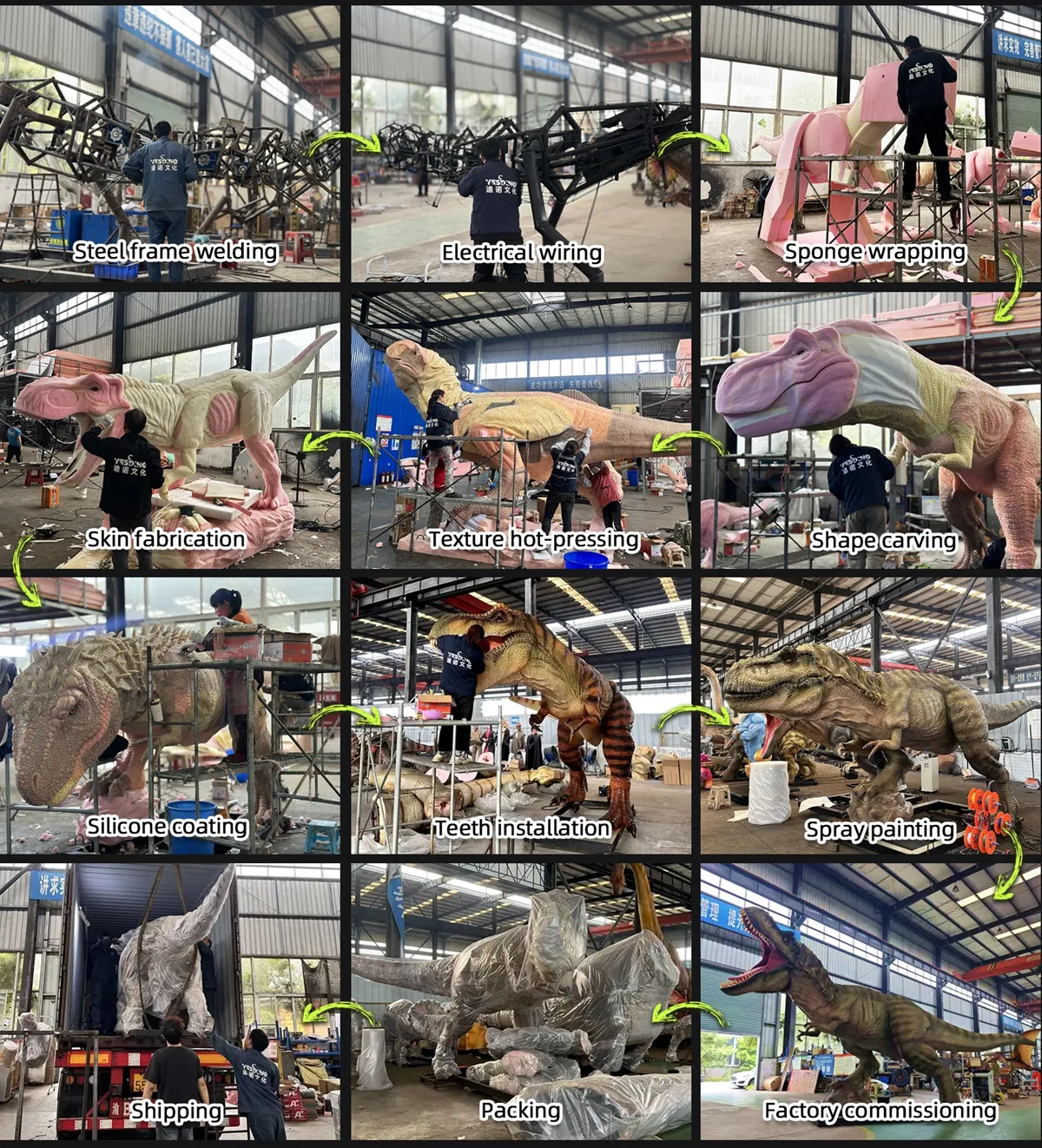
Production Process
A costume and a statue solve different problems. A statue holds a space; a costume makes a queue. That is the whole case for this product, and it is why theme parks, malls and stage shows keep buying them even when they already own a large model.
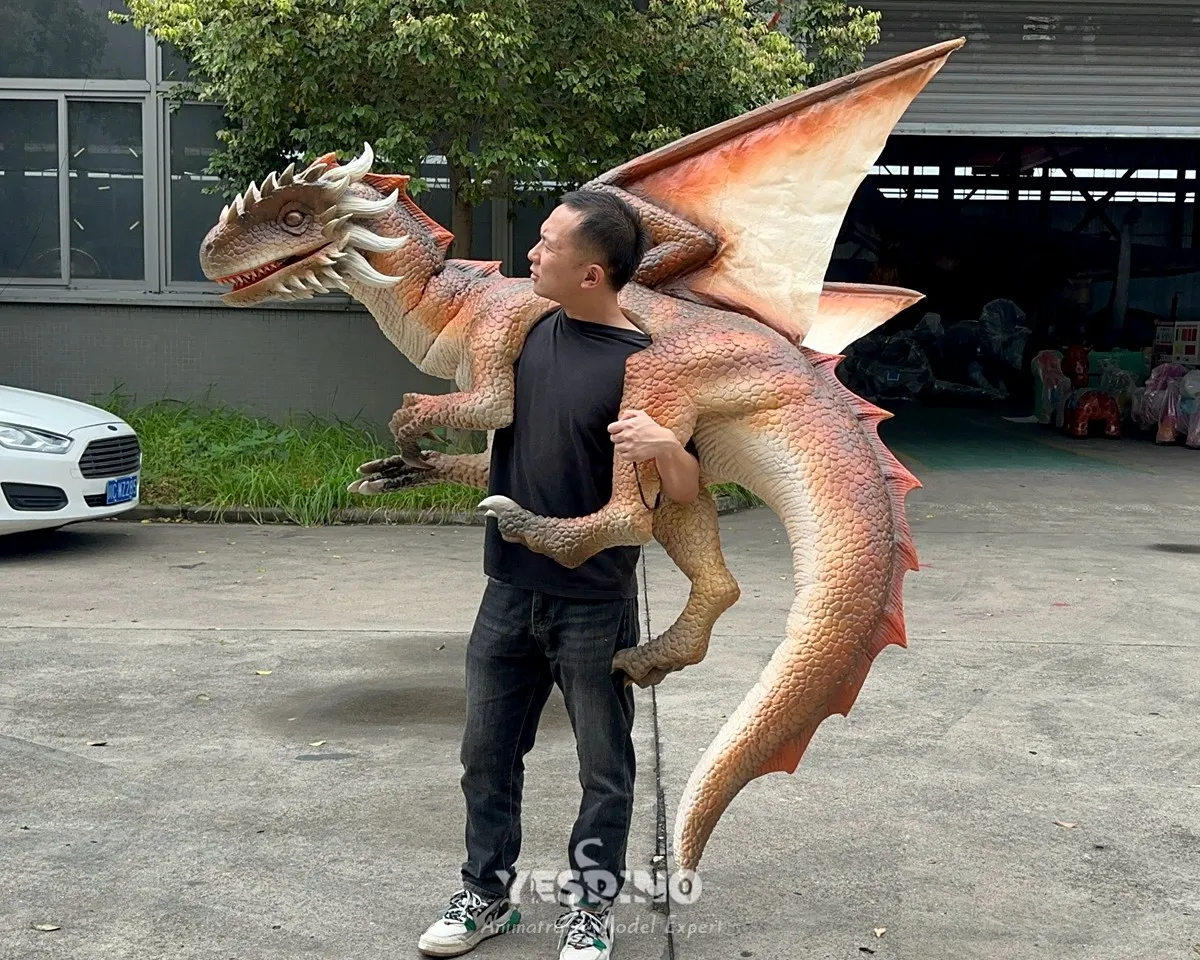
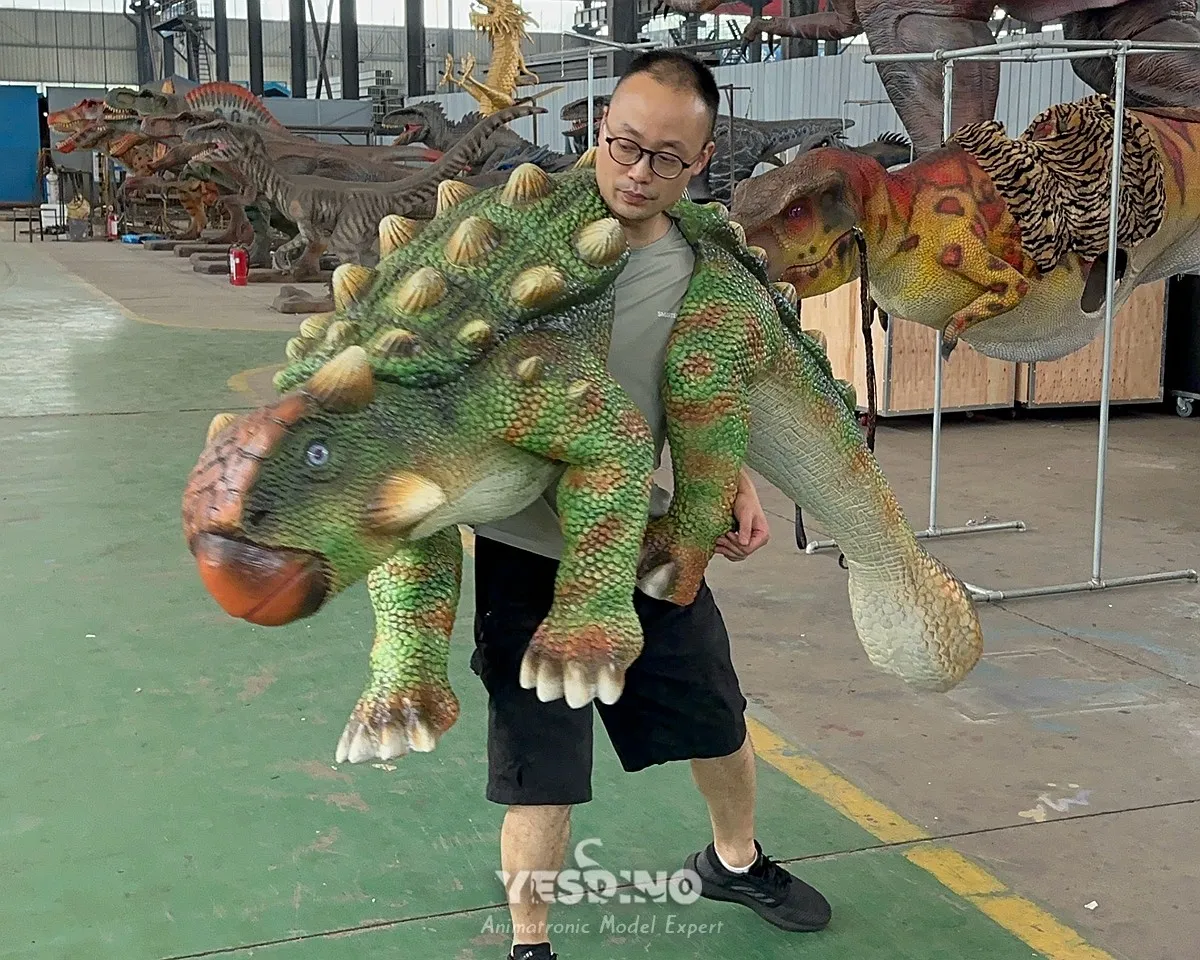
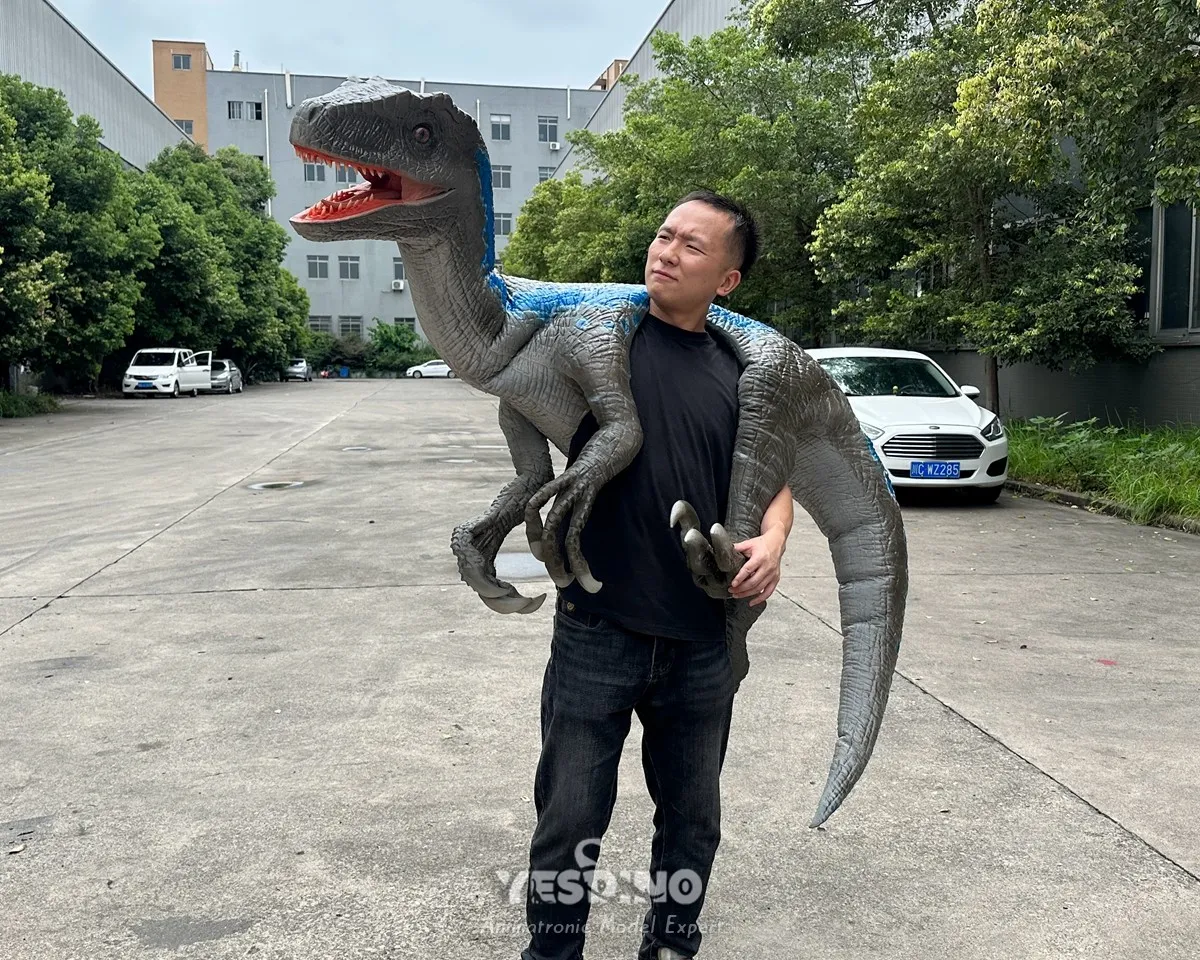
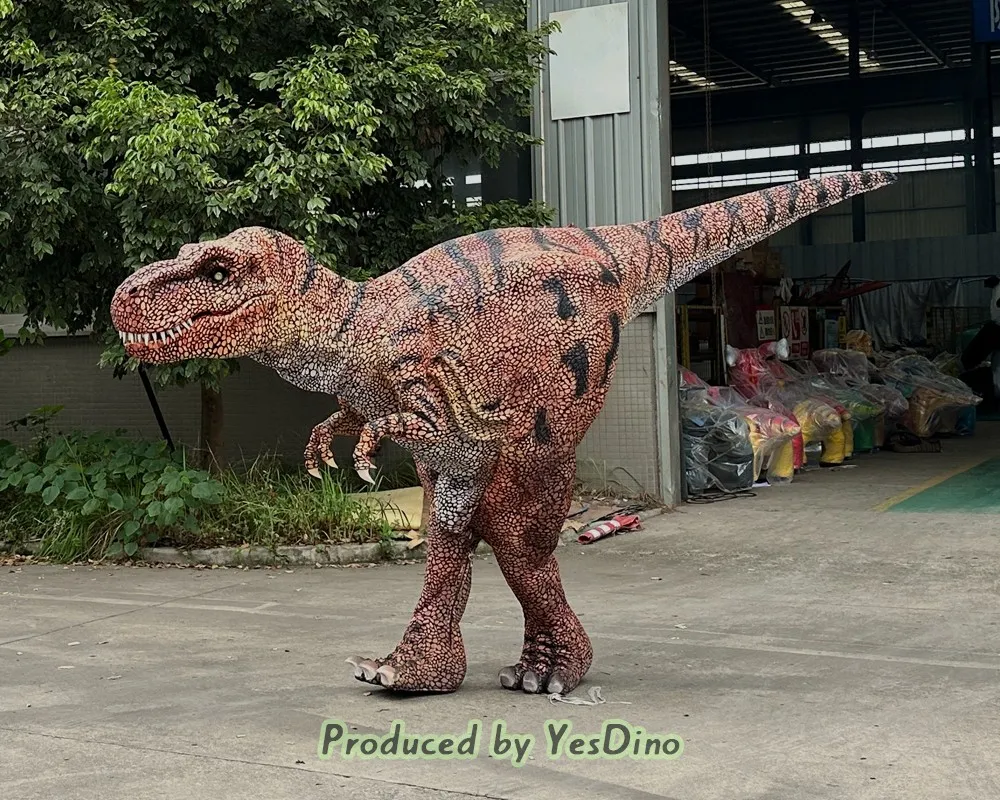
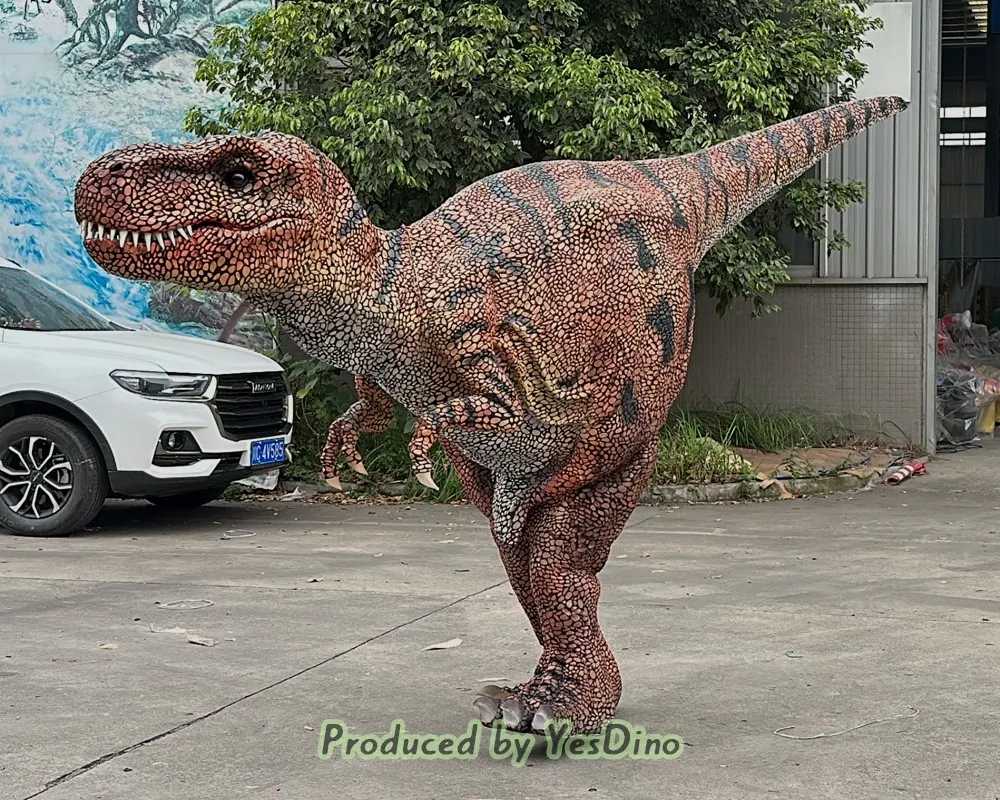
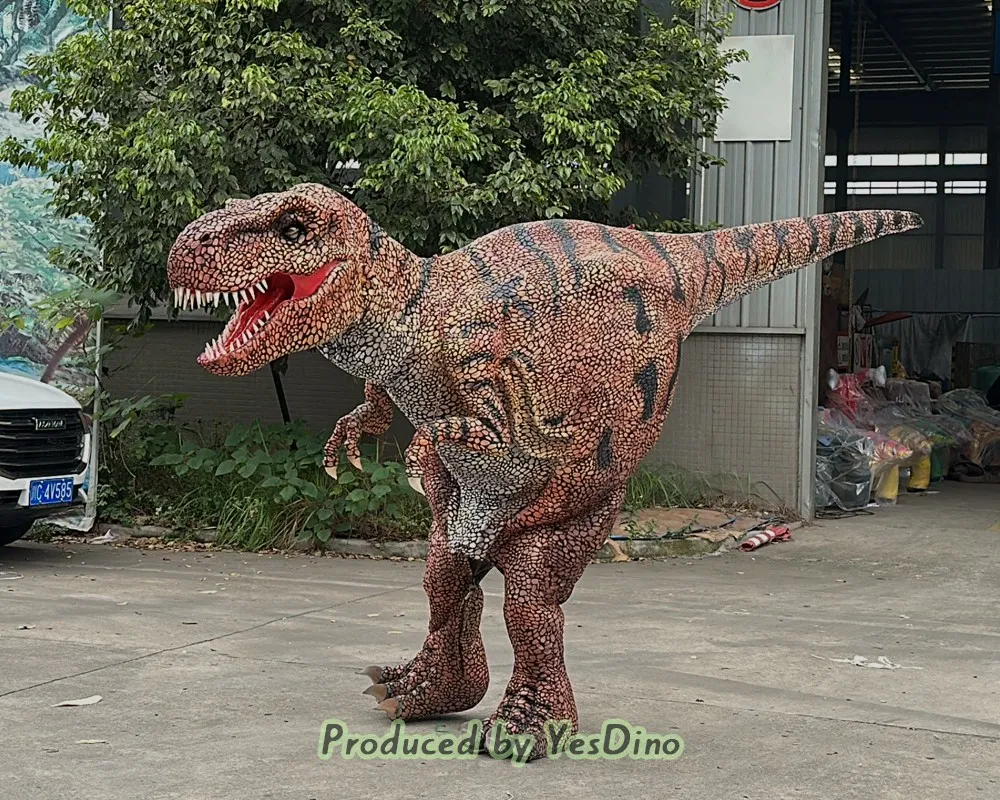
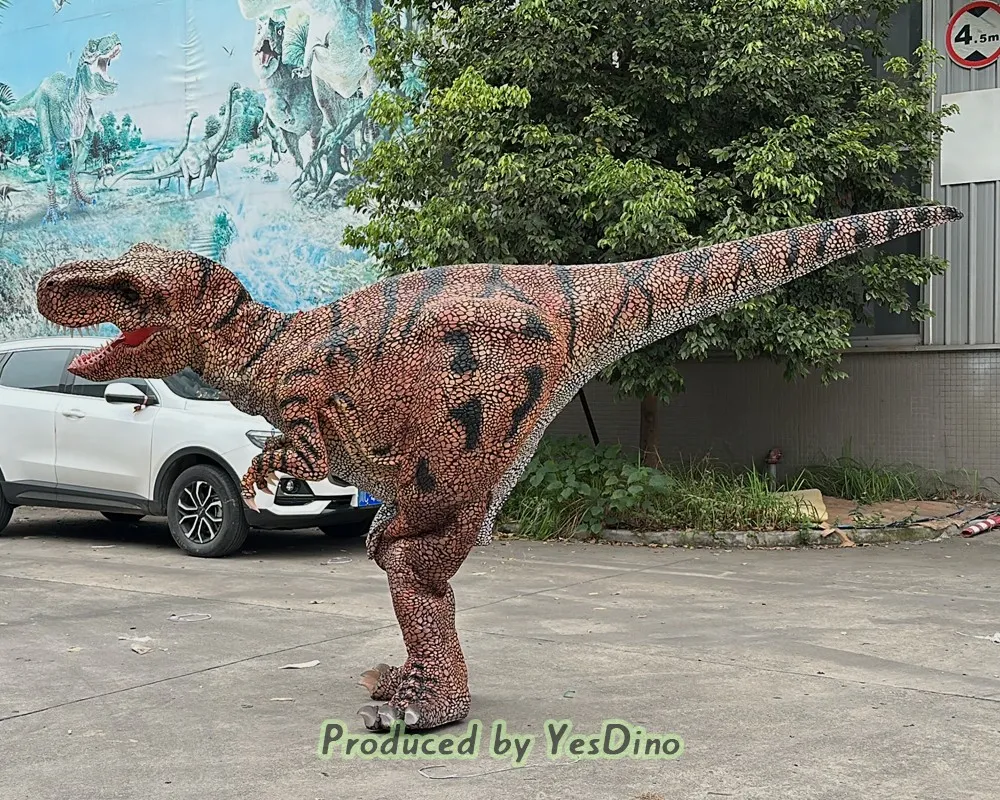
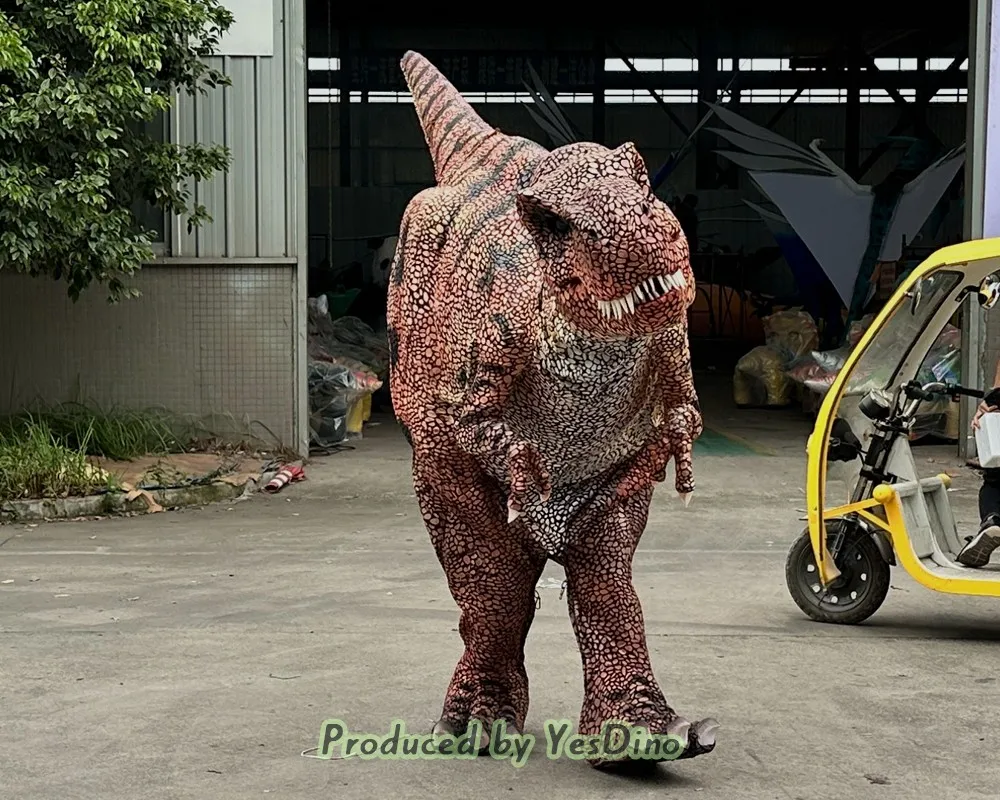
SKU YDC-012 is the adult build: 4.2 m from snout to tail tip, standing between 1.8 and 2 m, about 23 kg on the wearer. It is a performance piece, not a mascot suit — the tail is long, the head is on a moving neck, and the whole thing is meant to be seen from ten metres away in a crowd.
What 23 kg actually means
Weight is the number buyers ask about and the hardest to judge from a catalogue. Twenty-three kilograms is roughly the weight of a full hiking pack plus a large dog. Carried on the shoulders and hips through a steel frame, it is workable for a trained performer in short sets; carried badly it becomes exhausting in ten minutes.
That is why the frame is stainless steel pipe rather than aluminium tube: it holds its shape under load and does not corrode from sweat and condensation inside the suit. The frame transfers weight to the shoulders and a waist belt, and the tail is balanced so it trails rather than pulls.
Plan sets of twenty to thirty minutes with a rest between, and have a handler walk with the performer. The handler is not optional — a wearer with a four-metre tail has no view of what is behind them, and crowds close in fast.
The material stack
Three layers, each doing one job. The stainless steel pipe frame carries the structure. High-density sponge is carved over it for volume — light enough to wear, firm enough that it doesn't collapse when the performer leans. The outer skin is a textured fabric, colour-fixed with fabric colorant rather than painted.
Fabric rather than silicone is the deliberate choice here. A silicone shell at this size would add weight the wearer cannot afford and would crack at the flex points where the body bends. Fabric flexes with the performer, and it can be repaired with a needle rather than a mould.
Control: one switch plus one board
The electronics are deliberately simple. An ESP32 board runs automatic eye blinking so the animal never looks frozen, and the rest is mechanical: the wearer turns the head and neck, opens the mouth for the roar, swings the tail and walks. There is nothing to program, nothing to pair, and nothing that stops the show because a tablet ran out of battery.
Power on, the eyes start blinking, and the performer takes it from there. The roar is triggered from inside the suit. If you want a pre-recorded show track played from a booth instead, that is arranged at order time, not retrofitted.
Where a costume outperforms a model
Retail and mall activations. A walking animal moves through the concourse and takes the crowd with it. A model in the atrium holds one spot; a costume makes the whole floor the show.
Stage and festival sets. Entrances and exits are part of the choreography, and a costume can be timed to a music cue in a way a fixed unit cannot.
Photo operations. Guests pay to stand next to something that reacts. The head turn is the moment the photo happens.
Parades and openings. It packs down into a vehicle and travels; a four-metre model needs a crane and a permit.
Sizing and the person inside
The 1.8 to 2 m standing height covers most adult performers, but the internal layout depends on two things we need from you: the height of your wearer and the length of each set. Both change where the frame sits on the body and how much ventilation the build carries.
Appearance, roar and colour are made to order — species, palette and the level of wear on the skin are all specified before build, and a reference photo is more useful to us than a description.
Care between shows
Fabric skins want air, not heat. Hang or lay the suit out after use so the sponge dries through, and keep it out of a sealed bag — trapped moisture is what shortens the life of the frame and the foam. Brush the skin rather than washing it, spot-clean marks with a damp cloth, and check the frame joints and the belt stitching at the start of each season. Ask for spare fabric in the original colour with the order — small tears then get patched invisibly instead of turning into a re-dye job.
Freight and duties are quoted separately from the product price. The suit packs into a case that travels as ordinary luggage-scale cargo, which is one of the practical advantages over a fixed model.
Before you order
Tell us the wearer's height, how long each performance runs, whether the venue is indoor or outdoor, and whether you want one animal or a pair. With those four answers we can confirm the build and come back with a budget range instead of a catalogue page.
Where to go next
Two things come up in almost every enquiry on this build: how the size compares with the alternatives, and what it takes to get it on site. The size guide covering 3 m to 12 m builds sets out the length options side by side, and the rental cost breakdown covers pads, access and assembly. Budget planning sits in the pneumatic versus hydraulic comparison.
For ideas on placing it, see layout strategies for themed trails. The rest of the range is on realistic dinosaur costumes, and if this one is the wrong size for the slot, animatronic ornithomimus for shopping malls is the closest alternative.
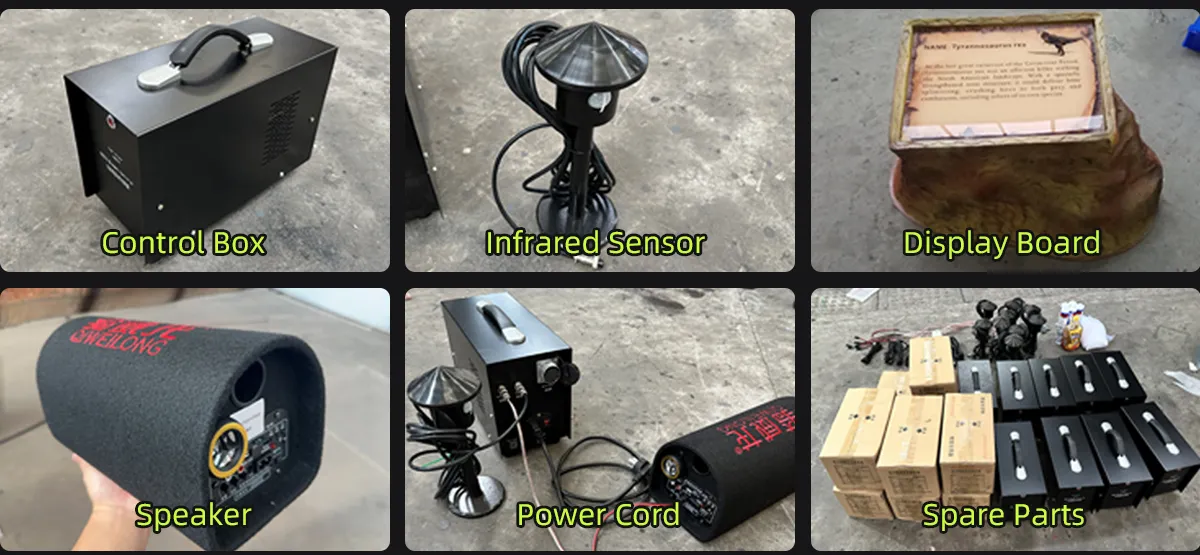
Product Accessories
Packaging and Container Loading