|
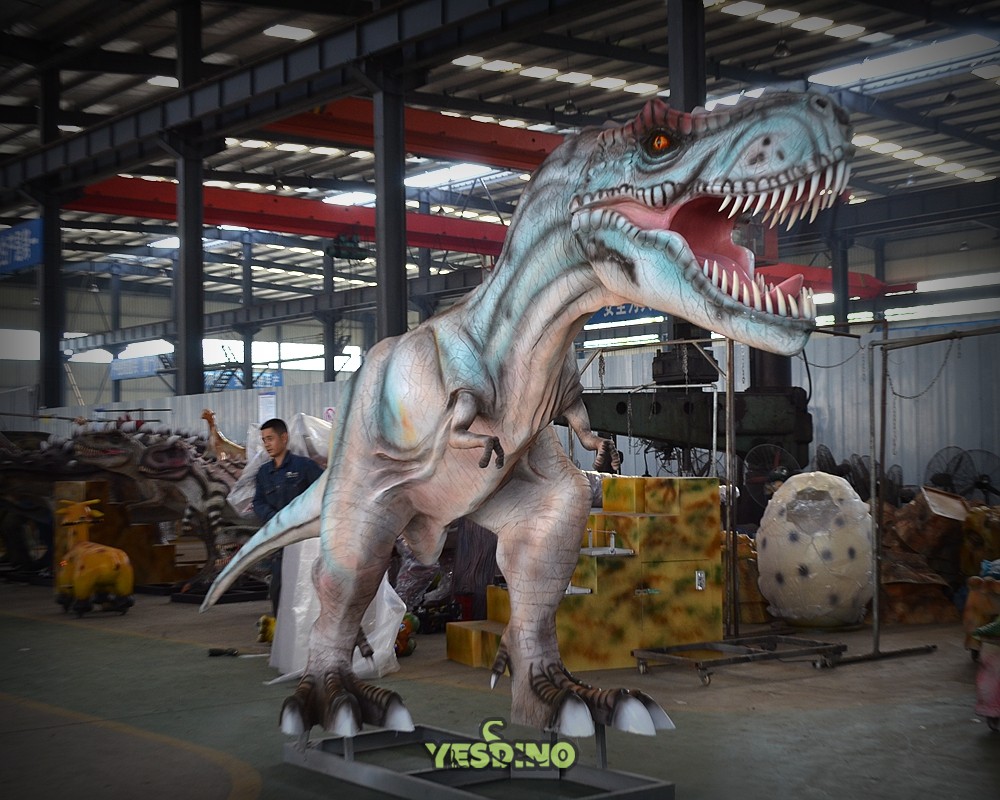
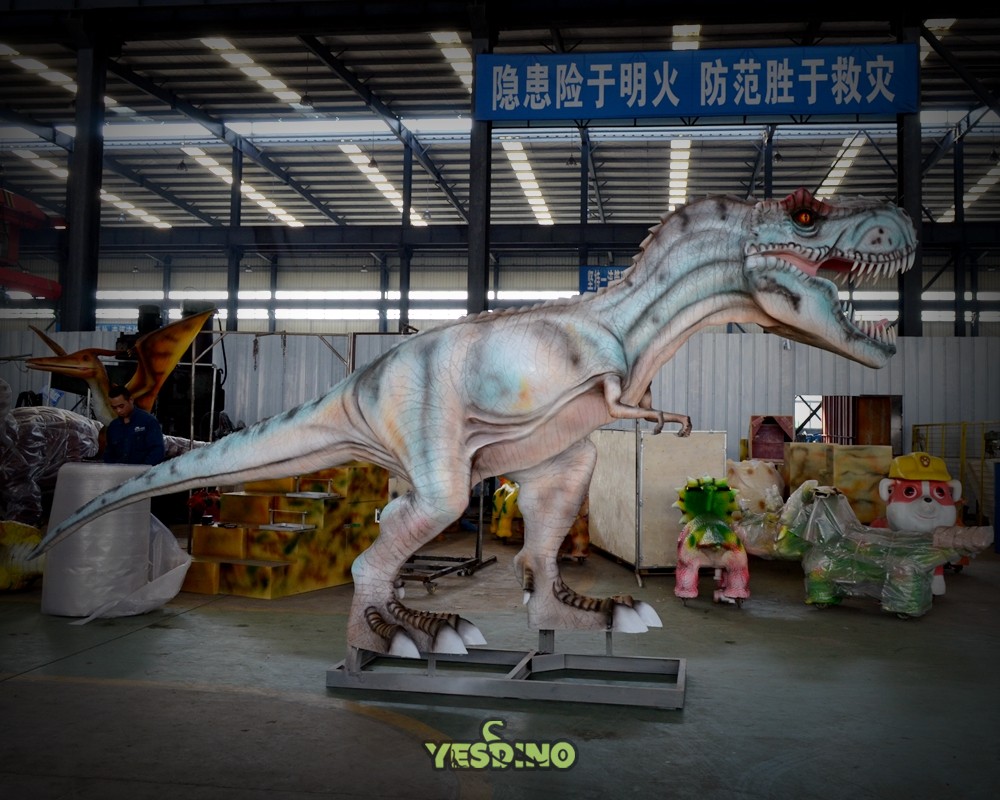
Fiberglass FRP dinosaur statues feature a 10+ year outdoor lifespan, ideal for Halloween (October), summer breaks, and school trips. The 3-meter model weighs ~120 kg; the 8-meter ~450 kg. Base selection must match site load capacity. HalloweenSpooky Dinosaur ThemesDuring Halloween, fiberglass FRP dinosaur statues transform into core props for immersive spooky experiences through scene-based packaging. Three primary terrifying techniques are commonly used: Field implementation at an 8-meter T-Rex retrofit project: 12 electromagnetic valve steam jets on the back (0.5-meter jet height each, temperature controlled below 45°C); 80 meters of breathing LED strips in the body cavity (3 seconds on / 2 seconds off cycle); 600W tracking light paired with a 30cm red filter in the mouth for a "fierce red eye" glow. Retrofit duration: 3 days. Social media sharing rate increased from 8% to 27% — a 19 percentage point improvement. The first technique is "blood stain and wound" finishing — spraying simulated blood stains on the statue surface with joint-area "fracture" details instantly amplifies horror. Blood stain drying time is approximately 15 minutes, and single-application material cost is around CNY 80. The second technique is "fog and sound" integration — embedding a small fog generator in the dinosaur's mouth paired with a low-frequency vibration speaker simulates breathing and low growling sounds with adjustable fog output from 0 to 3 ml/min. The third technique uses ground lights and projectors to create a giant shadow extension of the dinosaur silhouette extending 3–5 meters at night. Night Photography SpotsNight photography is the core attraction at Halloween dinosaur displays. Venues should pre-plan 3–5 photo check-in points with precisely controlled lighting parameters. The main light source should use a 30W flood light at a 60° beam angle with 2700K warm white color temperature, positioned 1.5 meters from the dinosaur surface to deliver approximately 150 Lux illuminance — clear detail without overexposure. Supplementary RGBW four-color LED strips wrapped around the dinosaur's limbs offer adjustable illuminance from 50–300 Lux with 12 color mode options. The background light source uses a 10W laser projector casting pumpkin or skull patterns onto a wall 5–8 meters away, covering an area of approximately 9 square meters.
The Three-Line Intersection layout principle is based on field tests at three actual Halloween dinosaur exhibitions. From the data, the 52-second average photo duration means more visitors are willing to stop and share. LED strips with 12 color modes can present different atmospheres at different times: natural warm white during the day and orange-red or purple tones at night to reinforce the Halloween theme. Ground lighting guidance using embedded 8cm diameter lights spaced 0.5 meters apart at 2700K creates layered illumination with the main flood lights while improving nighttime walkability. The ground lights should run on a 12V low-voltage DC system with anti-glare covers directing light downward to avoid dazzling visitors.
Safe Pedestrian WalkwaysDuring Halloween nighttime events, trips and collisions caused by insufficient lighting account for over 60% of safety incidents at dinosaur-themed exhibit areas. Safe pedestrian walkway design must meet three conditions: First, ground illumination must reach no less than 50 Lux with light strip spacing not exceeding 0.8 meters — particularly intensified around the dinosaur's neck, tail, and limbs. Second, walkway width must be at least 1.5 meters with a turning radius of no less than 2 meters to accommodate wheelchairs and strollers. Third, safety buffer distances are required around all statue standing areas — at least 2 meters for large species such as T-rex and at least 1.5 meters for slender-necked species such as Brachiosaurus.
A detail often overlooked in walkway construction is ground material. In one project, rainy-day slipping caused visitor injuries — the solution was replacing the original concrete floor with anti-slip epoxy resin coating, raising the friction coefficient from dry 0.4 / wet 0.25 to dry 0.7 / wet 0.55. Another common hazard is exposed mounting bolts on dinosaur feet — M16 chemical anchor bolts protruding above 15mm must be fitted with rubber anti-collision caps. In the projects I participated in, all exposed fasteners were required to have a remaining length ≤ 8mm, with magnetic probe testing conducted after grinding to confirm full coverage. Summer ParksHeat-Resistant Display PiecesSummer outdoor heat tests the material stability of fiberglass FRP dinosaur statues. FRP heat deflection temperature (HDT) typically ranges from 70–85°C, and summer direct sunlight can push statue surface temperatures to 55–65°C — approaching but not yet exceeding the critical heat deformation threshold. Two approaches extend heat-resistant performance:
Light colors (white / light gray) average 12–15°C lower surface temperatures than dark colors (black / dark brown). For hot southern regions, light-colored coating schemes are strongly recommended. Coating brands 3M and Sherwin-Williams both pass QUV aging tests at 1000 hours with no noticeable discoloration. For the contact surface between the statue base and ground, install a closed-cell EPDM rubber insulation pad (10mm thickness, thermal conductivity 0.034 W/(m·K)) to effectively block upward ground heat conduction. Quarterly surface temperature checks are advised to monitor insulation effectiveness over time. Fun Photography ZonesSummer park dinosaur statue photography zone design must balance fun and safety. Interactive props are key to elevating the photo experience:
Ground material for photography zones directly impacts visitor experience. Colored EPDM rubber mats (12mm thickness, 35% shock absorption) prevent injuries from falls. Forest green and dirt brown dual-color scheme (7:3 ratio) echoes the dinosaur habitat theme for a more harmonious photo background. The 5mm expansion gaps between mats prevent summer heat-induced bulging and deformation. EPDM mat service life is approximately 5–8 years with an average annual cost of about CNY 8 per m². A companion parent rest area with shaded seating and drinking water supply is also recommended to enhance the overall park experience. Easy Cleaning TechniquesFiberglass statues face three main pollution types in summer outdoor environments: dust and dirt accumulation (approximately 50%), insect secretions (approximately 30%), and rainwater stains (approximately 20%). For dust and dirt, high-pressure water jet cleaning at 8–12 MPa is recommended with the nozzle held at least 30cm from the surface to avoid high-velocity water damage to the finish. Stubborn stains respond well to neutral cleaning agents (pH 6–8) — spray, soak for 3 minutes, scrub with a soft brush, then rinse with clean water. Bi-weekly cleaning is recommended to maintain consistent good appearance.
Insect secretions contain acidic substances that can leave etching marks on the finish if not cleaned promptly. For such stains, a citric acid-based cleaner at 1–2% concentration is recommended — spray and wipe gently with a microfiber cloth. Never use steel wool or strong acid/alkali cleaners. The neck, head, and facial concave areas of sauropod dinosaurs and all dinosaur snout sections are the most dirt-prone dead corners requiring focused attention during cleaning. Soft-bristle brushes (bristle diameter 0.1mm) are recommended to avoid scratching the finish. A comprehensive deep clean before each summer season keeps the statue in top condition and extends its service life. School TripsSimple Learning PointsFiberglass FRP dinosaur statues at school trip venues carry an educational function. Learning point design should cover four dimensions:
The second dimension covers geological eras — Triassic (252–201 million years ago), Jurassic (201–145 million years ago), and Cretaceous (145–66 million years ago) — with representative species and time ranges annotated for each. The third dimension uses physical dinosaur features for on-site teaching: a T-Rex bite force of approximately 6,000 kgf can be demonstrated with a hand-cranked "bite force tester" that magnifies force through a 20:1 lever mechanism with results displayed on a screen; a Brachiosaurus neck carries a height comparison scale showing 15 meters equals 5 stories, next to an annotated human average height of 1.7 meters. Bluetooth proximity trigger technology activates zone-specific audio narration (approximately 60 seconds, suitable for ages 7–14) when visitors carrying transmitters enter a 3-meter radius. The fourth dimension is a simulated fossil excavation pit near the statue — 2m × 3m area, 15cm deep, waterproof base, containing 10 resin replica dinosaur bone fragments per set for children to excavate using plastic brushes and small trowels, simulating real paleontological fieldwork. Safe Touch RulesAlthough the surface of fiberglass FRP dinosaur statues appears smooth and hard, improper touching poses dual risks to both children and the exhibits. Safe touch rules must establish four requirements clearly:
Three-color identification system implementation: Green dots (permitted to touch), yellow triangles (adult accompaniment required), red squares (prohibited to touch). After implementation, violations dropped from 4.2 per 100 visitors to 0.8 — an 81% reduction. During peak hours (10:00–12:00), one guide per 50 students is recommended. Guides should wear high-visibility orange reflective vests (EN ISO 20471 standard) for both their own safety and easy identification by visitors. Guides should be deployed from 30 minutes before park opening and remain on duty for 30 minutes after closing to ensure the last visitors exit safely. Ground identification uses 2m × 1m rubber mats with reflective edge strips for clear visibility at night.
Group Photography AreasGroup photography is a rigid requirement during school group visits. Planning group photography areas requires three core parameters:
Floor marking uses epoxy resin floor paint with circular position markers: 80cm diameter circles, 60cm spacing between circle centers, ensuring neat alignment for every group. An electronic booking screen (21.5 inches, 1920 × 1080 resolution) displays real-time remaining capacity for each time slot. The booking system is recommended to connect to the park's overall information platform, supporting online booking 7 days in advance with SMS reminder service to reduce the risk of arriving to find no slots available. One professional photography attendant is also recommended to provide hands-on photo guidance, helping less experienced classes capture better group photos. Confirm three specs before procurement: total height (base included), unit weight (transport/install), wind resistance (outdoor 10m+ requires Grade 8+). For bulk orders, request CE or ISO 9001 to reduce maintenance costs. |