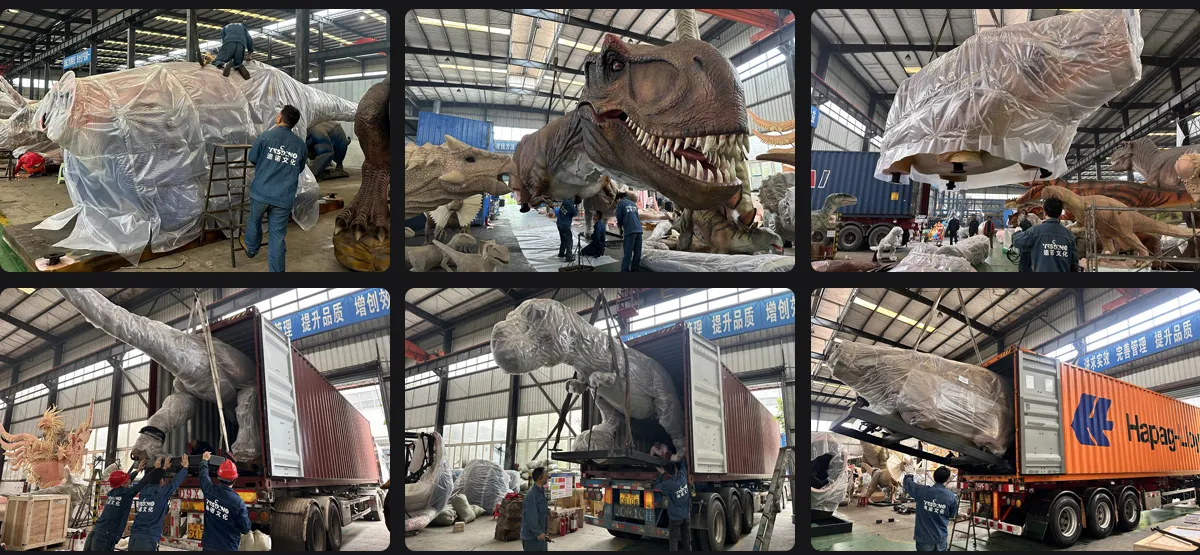
Production Process
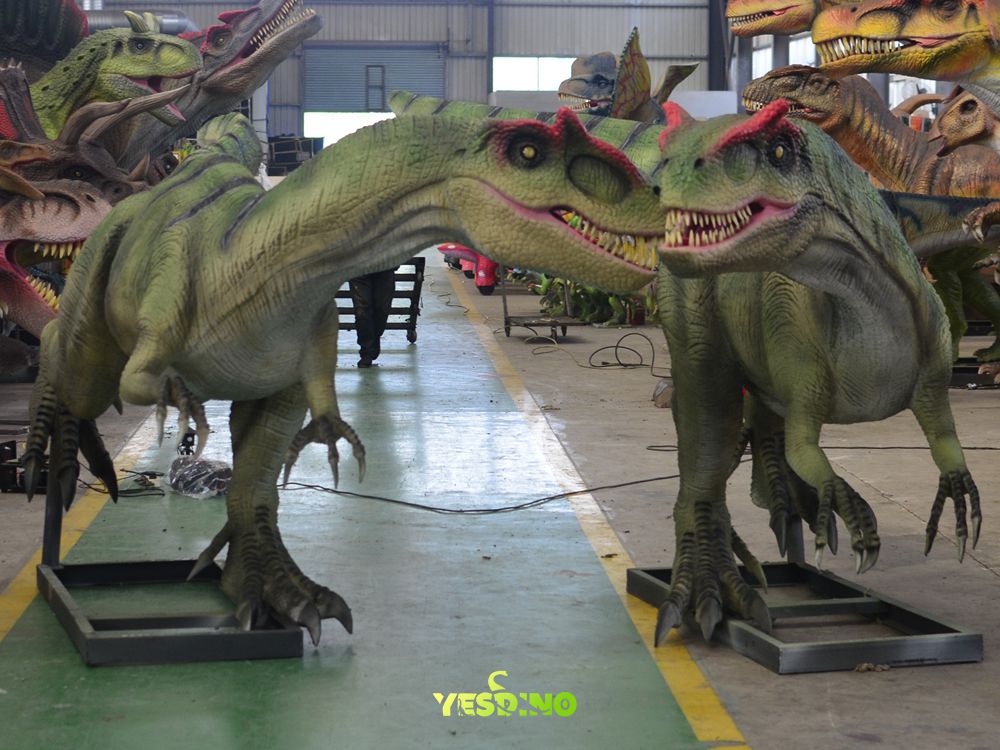
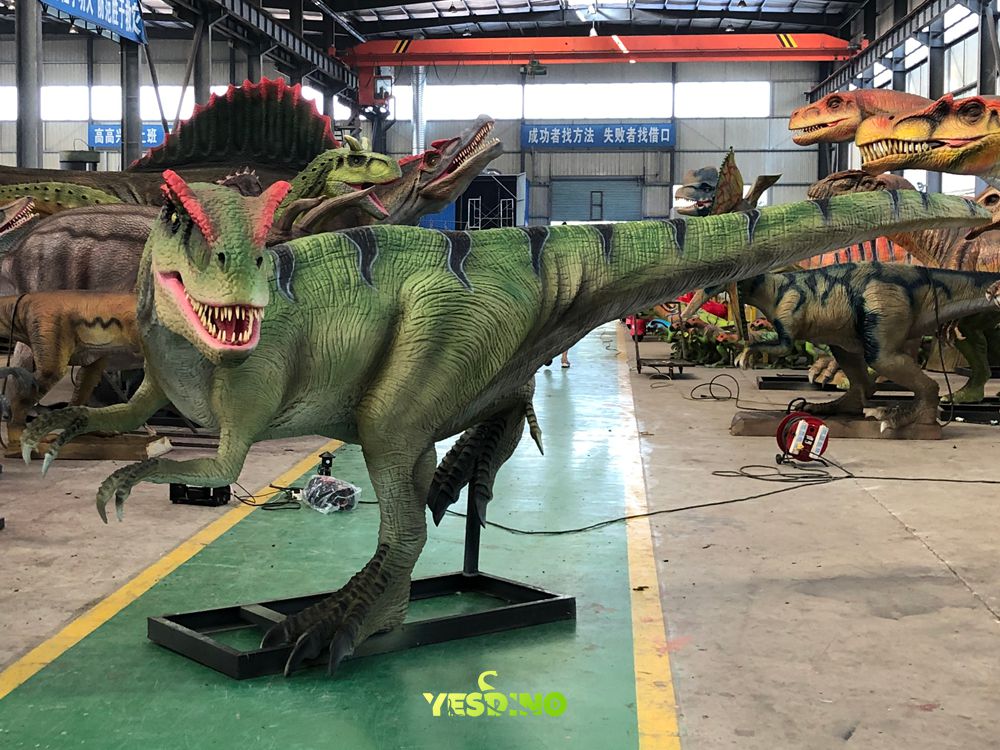
On a walk-through trail the path is 1.8 m wide and there is a fence 1 m beyond the edge. That strip is where this animal goes: body parallel to the path, head turned in, so a family walks past its chest at arm's length without stepping around a tail.
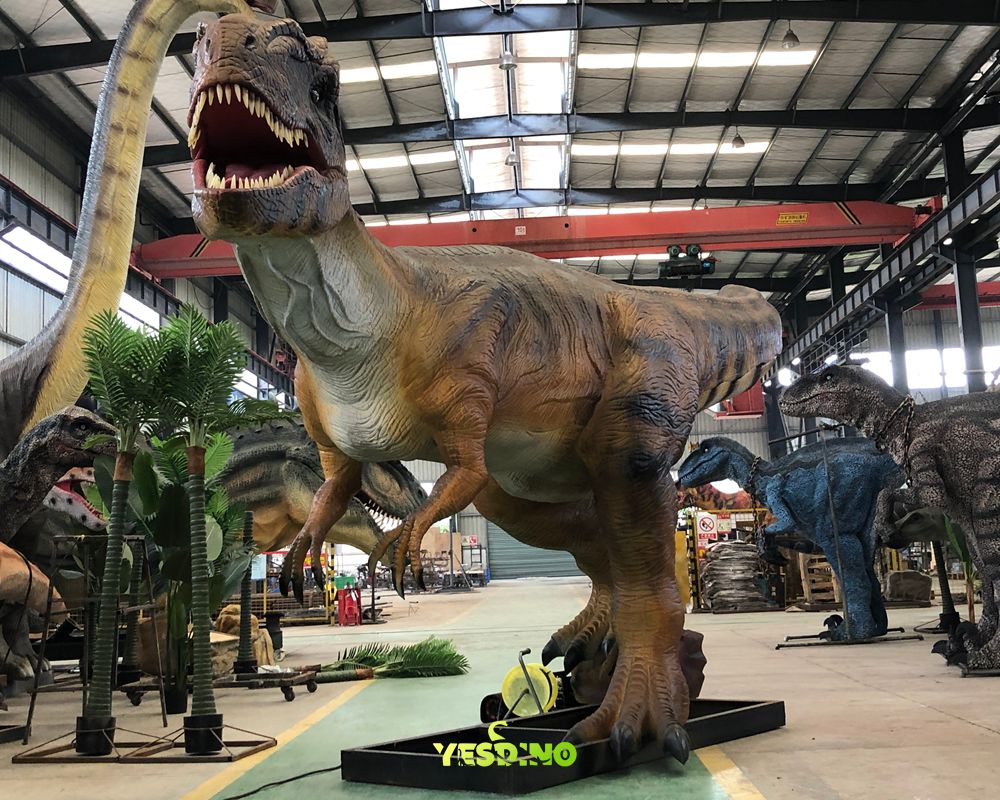
Six metres long, 0.65 m across the body, 2 m at the head. The length gives it presence along the path; the 0.65 m width is what makes the position possible at all.
Why narrow beats big on a trail
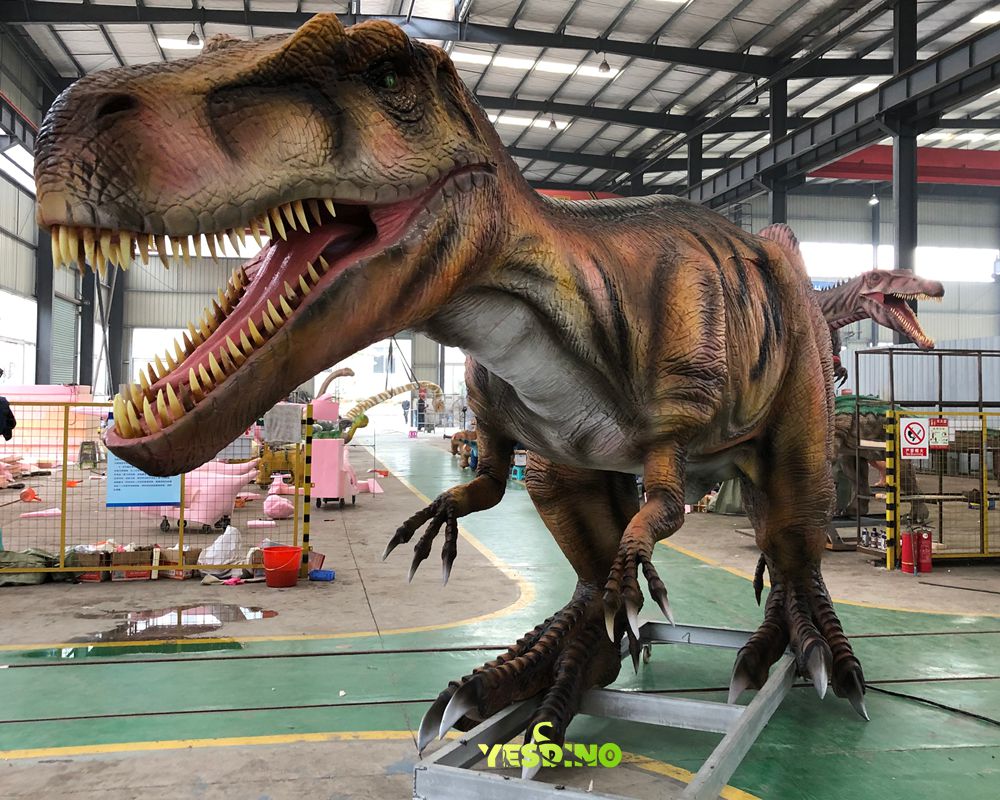
A trail animal is judged in passing, from two metres away, at walking speed. What registers is the head over the path edge, the hands, the crests catching light — not overall size. A 6 m build with a slim body puts all of it in view.
The cost is that it will not anchor a wide clearing. Put this animal in an open lawn with 15 m of viewing distance and it looks thin and small. On a path, in a corridor of planting, it fills the frame.
Standing it beside the path
Set the body 1.2 m from the path edge, angled 10 to 15 degrees so the head leans over the edge. At 0.65 m wide it leaves 300 mm to a fence line, which is enough to walk behind for inspection but not enough to invite it — good, because the back of a trail animal is where the finish is thinnest.
Choose a straight section. At a bend, a 6 m body either crowds the inside of the curve or hangs its tail into the outside planting, and visitors on a curve are looking at their feet. Low afternoon sun across the path is worth planning for: the crests above the eyes throw a small shadow that does more for the head than any paint scheme.
What moves on a passing visitor
Neck turn, head tilt, jaw, blink, breathing and tail sway. The neck leads here. On a trail, people arrive from one direction, so the movement that works is the head swinging toward the path as they come into range and following them for a step or two.
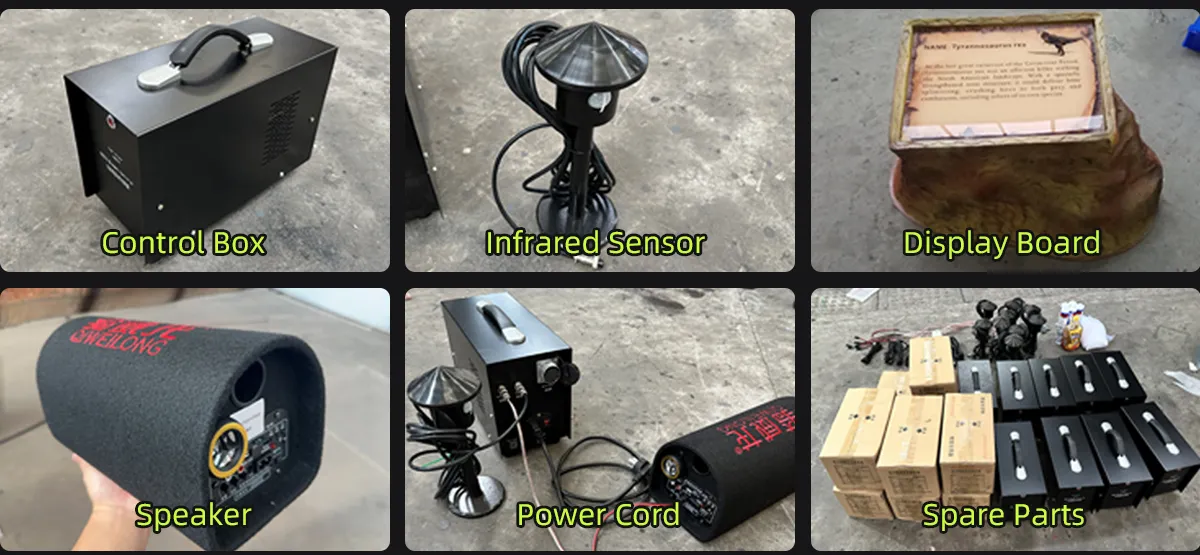
One sensor, upstream of the animal on the path side at 1.2 m, with a 0.5 second delay and a hold time long enough to cover a family walking past at child speed. Position it before the animal rather than beside it: a trigger that fires when someone is already level with the head gives them a jump and no movement to watch.
Claws, crests and skin
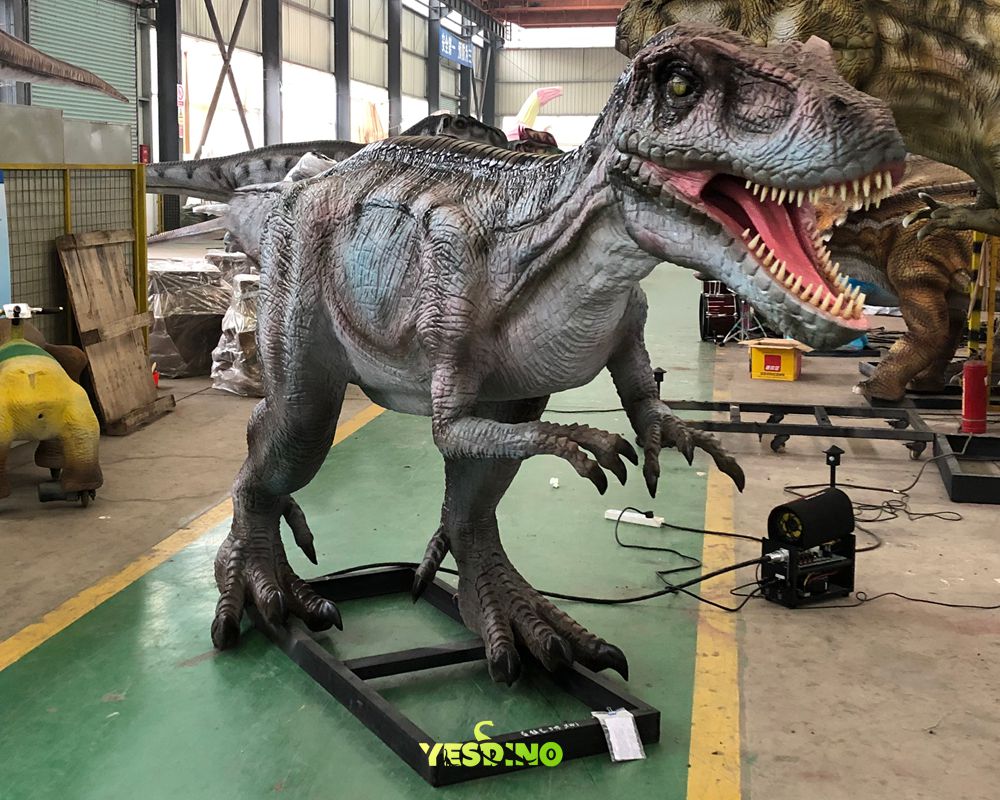
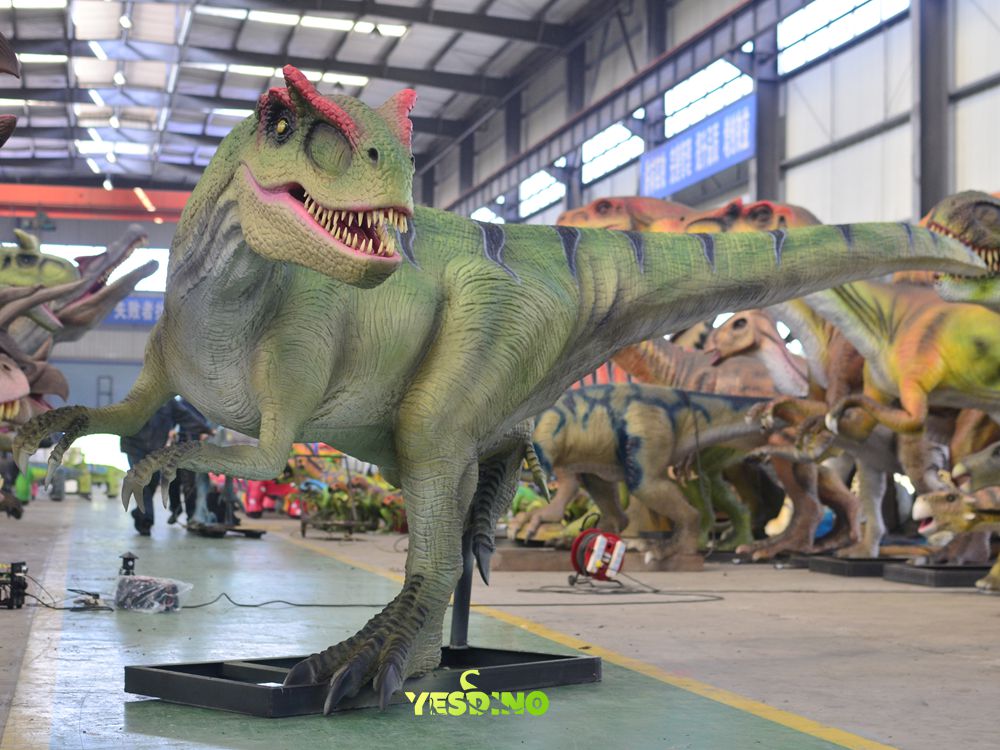
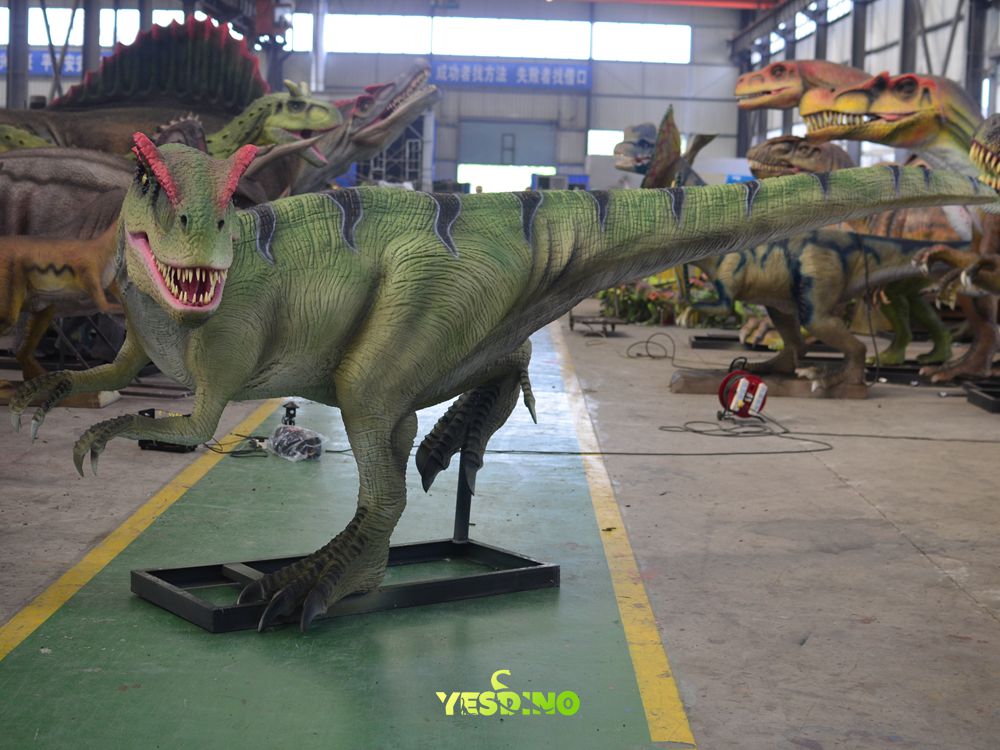
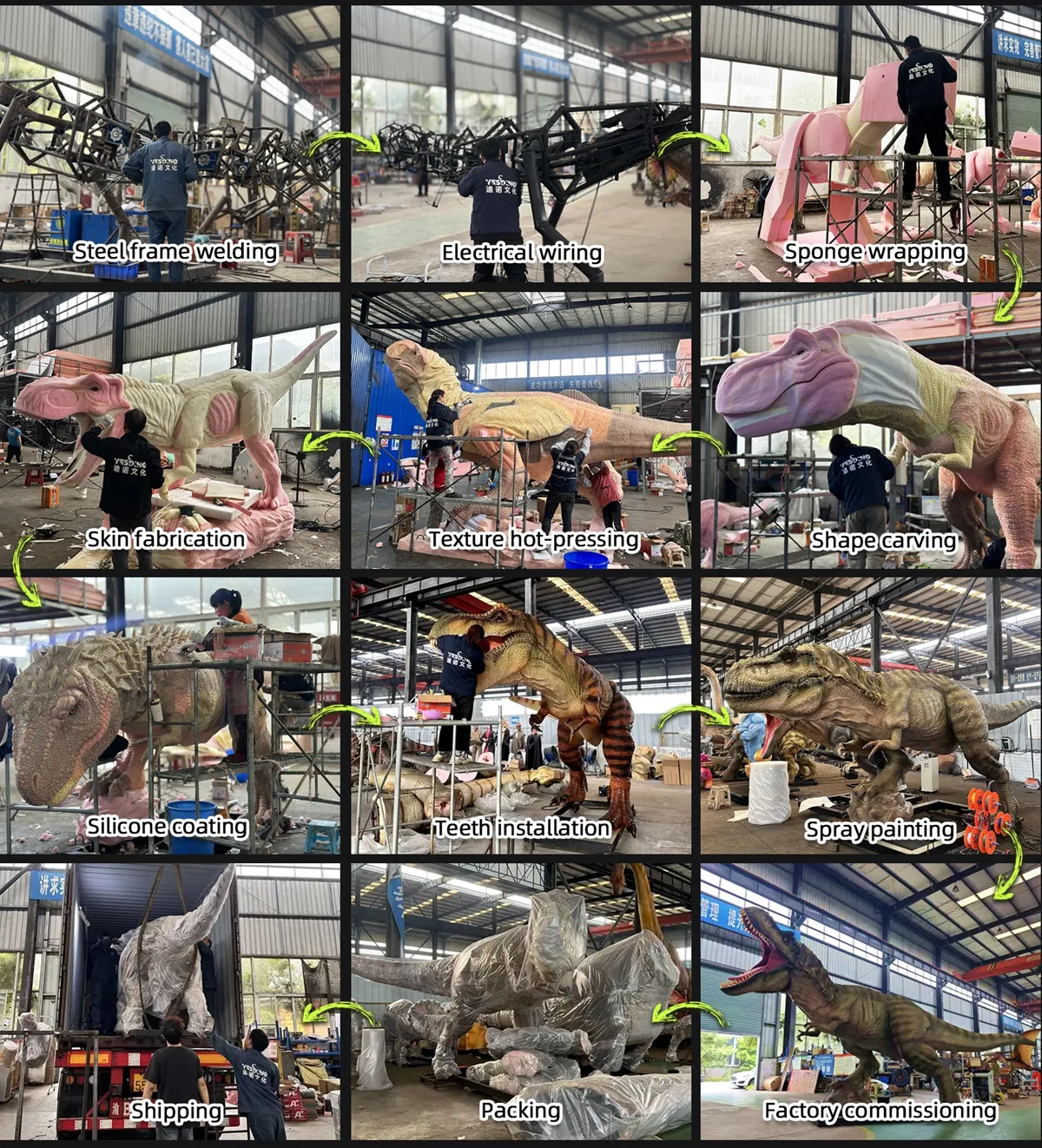
Q235 steel frame with rust treatment, high-density foam, silicone skin 5 to 7 mm, colour in translucent layers. The three-fingered hands carry large claws, and on a walk-through trail those claws are the snag point — sleeves, backpack straps, a child's hood. We cast them with the tips curved inward and keep them above 1.2 m so they sit outside most people's shoulder line.
The bony crests above the eyes are bonded before colour, like the rest of the detail, and they take knocks from branches when the planting is cut back. A chipped crest is a pigment patch rather than a new head, provided the chip is reported before the silicone tears.
Getting it onto the trail
Three sections — head and neck, torso, tail — plus the base frame, and at 0.65 m body width they pass a 700 mm garden gate. On most trail sites the last 40 m is barrow work: two people, a hand cart, and benches moved before the day.
Feet sit on small poured pads rather than directly on soil, because four legs on uneven ground load one side of the frame. The cabinet goes in the torso behind a panel on the left flank, which faces away from the path, and the supply is run in conduit to that side. Assembly is a day for two people, with the jaw and neck travel checked by hand before power goes on.
Before you order
Send a photo down the path from the direction visitors walk, the path width, the fence offset, and the surface underfoot. Tell us the direction of the afternoon sun and where power can be picked up. If the trail is on a slope, mark the gradient over 6 m — the pads and the tail clearance both change with it.
Cases where this is not the animal. A clearing where people gather in a circle needs something that reads from every side, and this build's detail budget sits on one flank. A trail under 1.4 m wide has no strip to stand in. And a site that wants the predator to be visible from the car park needs height and mass, which is a different purchase.
Enquiry
Send the path photo, the widths, and the power position. Tell us which way visitors walk and how close you want the head to come over the edge. We will draw the footprint and the sensor point on your photo and confirm the section split for the gate.
Where to go next
Two things come up in almost every enquiry on this build: how the size compares with the alternatives, and what it takes to get it on site. The installation guide for pads and access sets out the length options side by side, and the wiring concealment notes covers pads, access and assembly. Budget planning sits in the park layout and theming strategies.
For ideas on placing it, see visitor routing ideas. The rest of the range is on animatronic dinosaurs, and if this one is the wrong size for the slot, 6m t-rex for family attractions is the closest alternative.
Product Accessories
Packaging and Container Loading