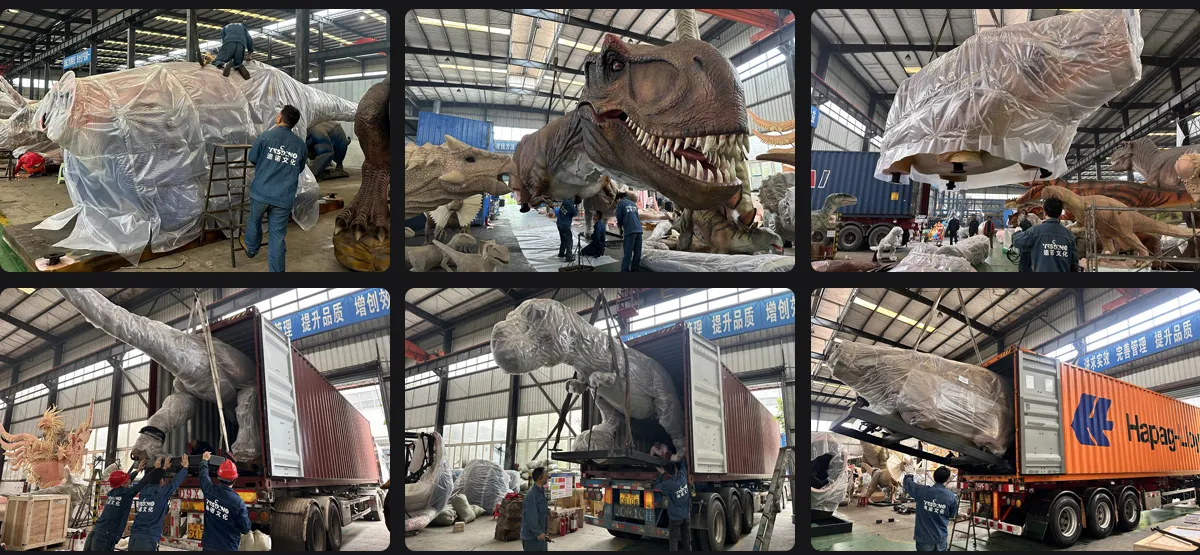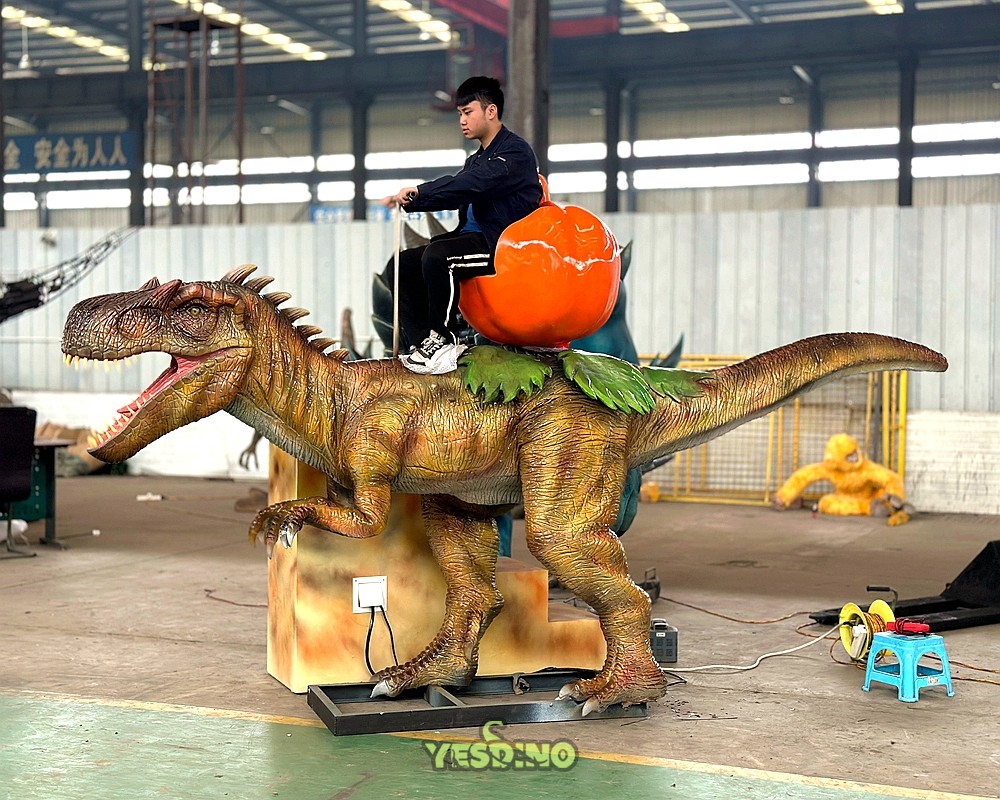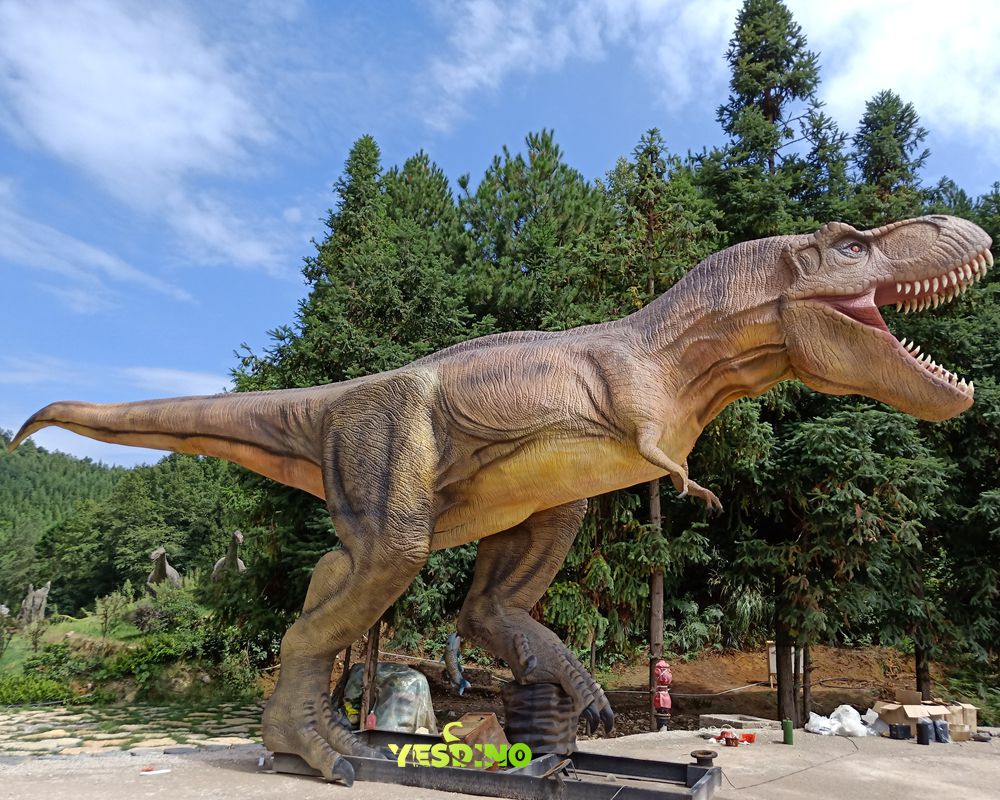
Production Process
Some trails were laid out before anyone thought about animals on them: a gravel path between mature trees, a bend every fifteen metres, and a service gate 1.5 m wide at the far end.
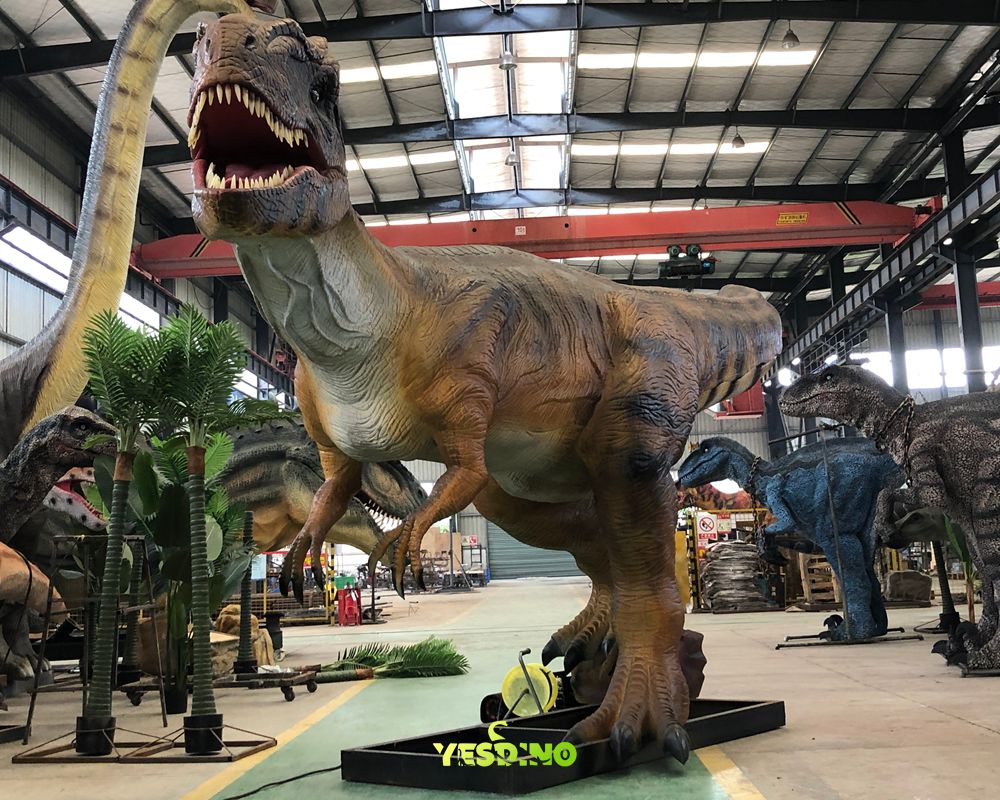
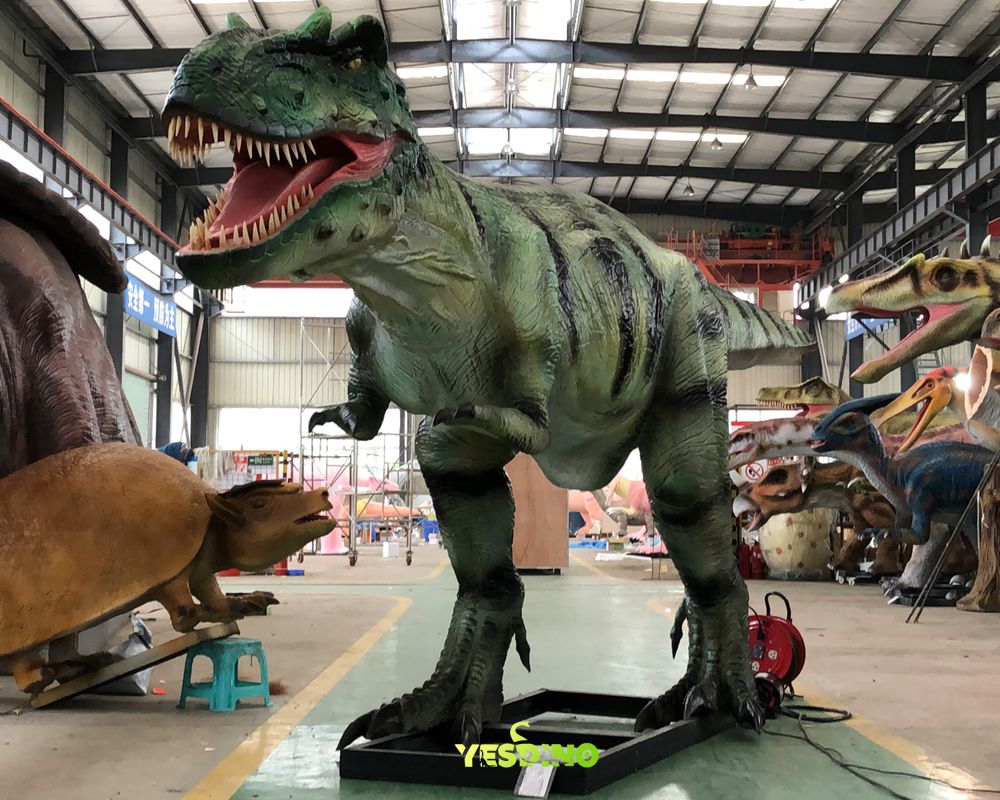
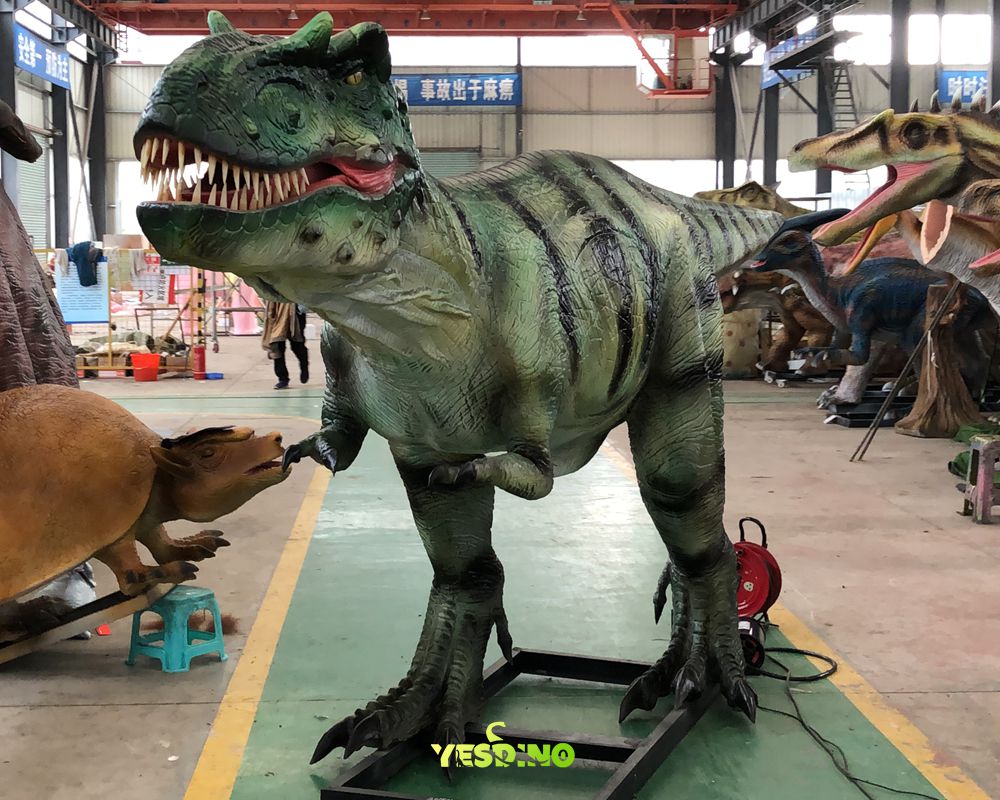
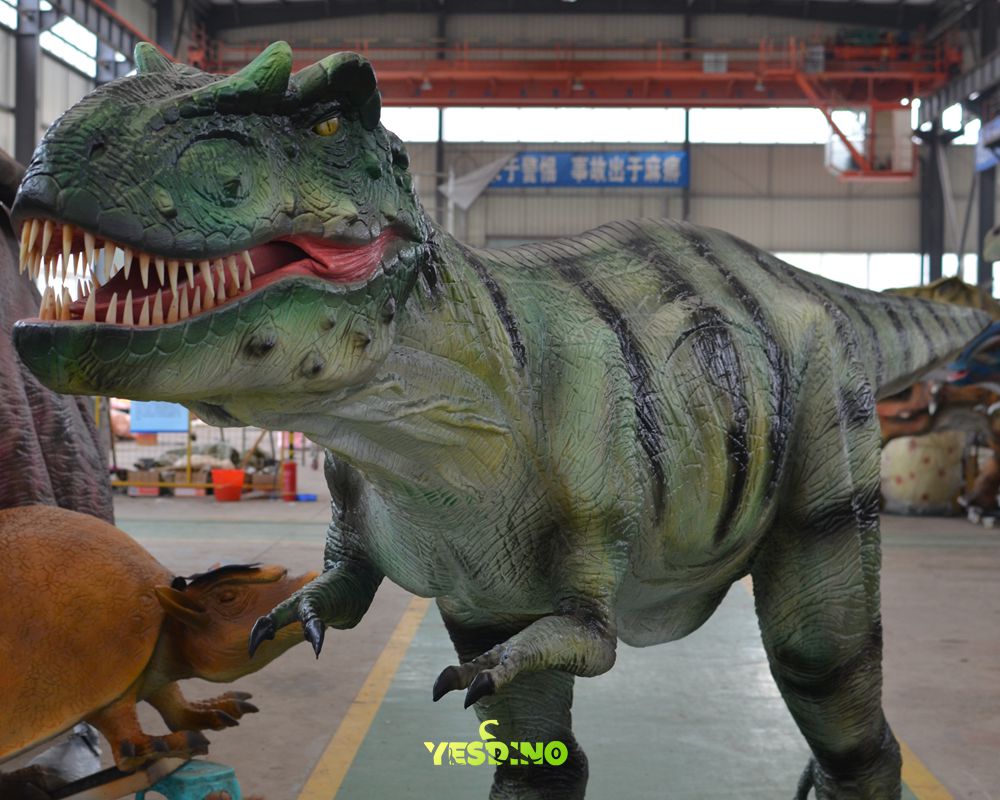
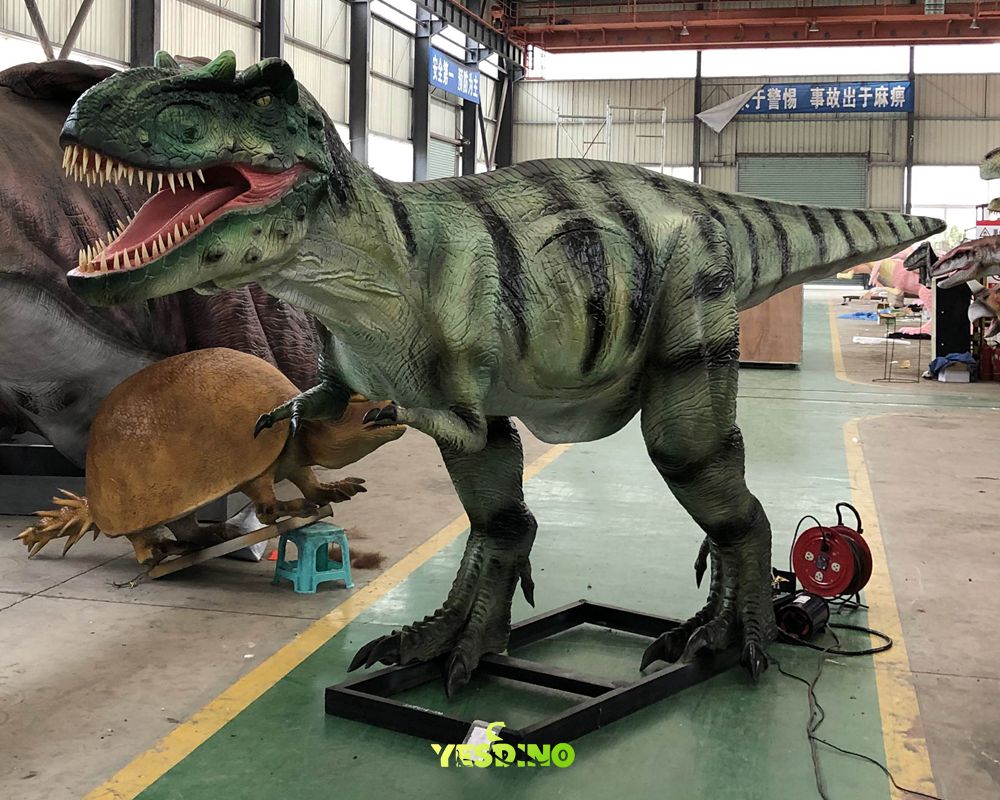
This build is 5 m long, 0.65 m across the body, 2 m tall. The narrowest of our five-metre animals, and the one that gets placed where the path is already there.
Sixty-five centimetres across
Body width decides what a trail can take. At 0.65 m across, this animal passes a 1 m gap and can be walked around a bend between two trees by three people. Builds at 1.1 m across need the path cleared, and clearing a mature path costs more than the difference.
What a narrow body gives up is mass. From straight ahead it looks slim, and at 5 m long it reads as a runner rather than a heavyweight. That suits the species, and it suits a wooded trail where a bulky animal would sit oddly among trunks.
Where a narrow animal fits
Best on trails 2 to 2.5 m wide with a fence or planting on one side, set back 1 m so the tail arc clears. The head wants to sit at the outside of a bend, facing the approach — visitors come round the corner and meet it at 3 m instead of seeing it from fifty metres and walking up.
Ground of compacted gravel or bark is fine, with the frame sitting about 40 mm above the surface on its base plate. On a boardwalk the spreader plate under each foot is what spreads the load across two joists.
Head at eye level, hands within reach
At 2 m tall the skull sits at adult eye level, which changes how the animal is built. No looking up, no looking down: visitors meet the face straight on, at half a metre from the nose if the path is tight. The bony crests above the eyes are raised ridges rather than horns, and they are the part that catches light from a path lamp.
The hands are three-fingered with large claws, carried at about 1.1 m and angled forward. They are the detail people reach for, so they sit slightly behind the line of the fence rather than over it. Neck, head turn, head tilt, jaw, tail sway and blink run here; the head turn is the group worth tuning, because at eye level a fast turn is startling.
Frame, skin and the crests
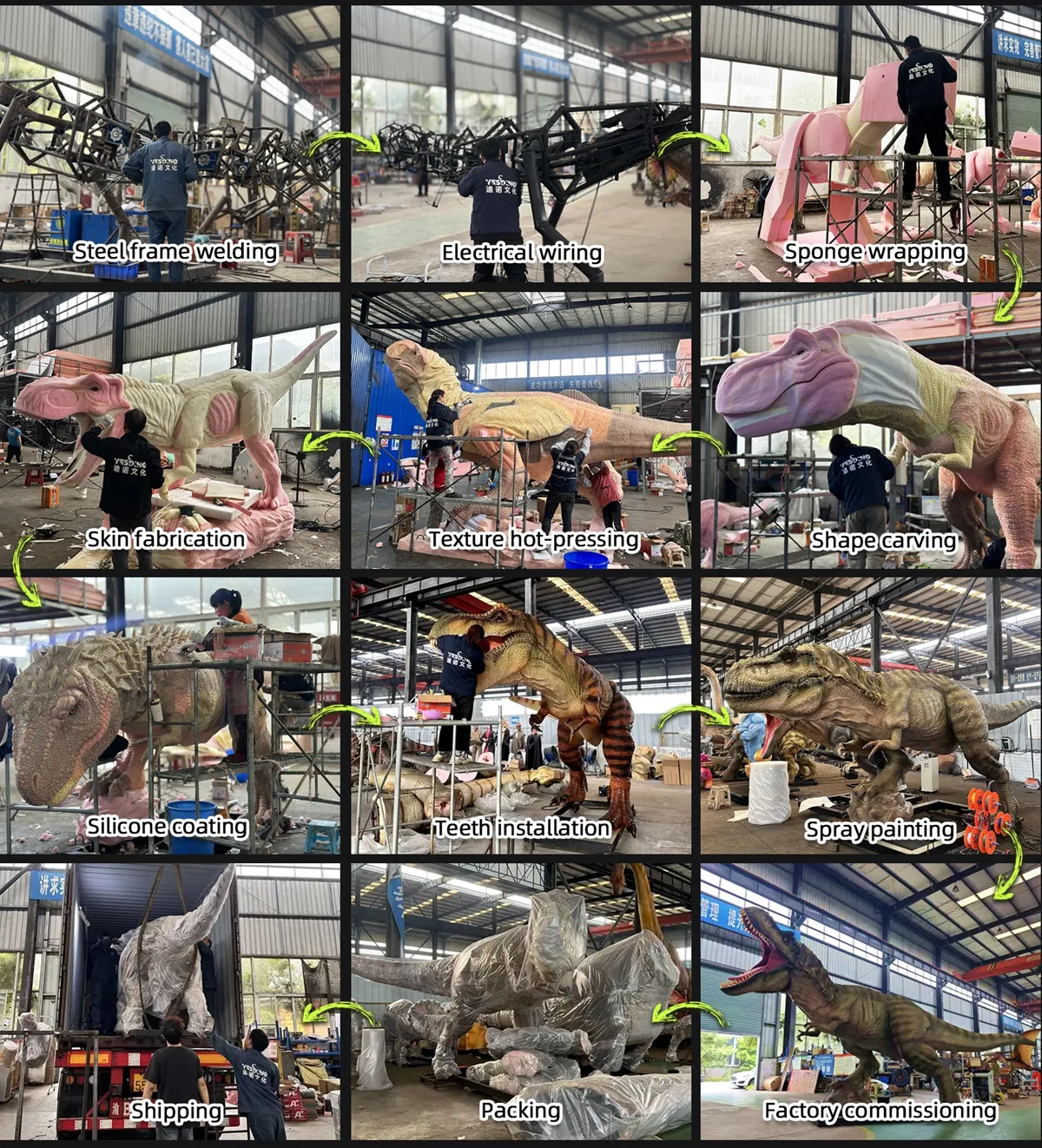
Q235 steel frame, rust-treated, foam-carved volume, silicone at 5–7 mm in translucent colour layers. A narrow body has less room inside it, so the frame is built as a spine with ribs rather than a box, and the actuators sit close to the centreline to keep the animal balanced when the neck swings.
The crests take knocks on a tight path, from branches and from people. They are moulded with the skull and sealed heavier along the ridge. Colour is worth checking at trail lighting — 3000 K lamps pull the skin warm and make the crest ridges read clearly, while cool white flattens them. Rated −25°C to 45°C, 110 V or 220 V at build, electronics under a two-year warranty.
Getting down a narrow path
Ships as head, body, tail in two parts, two legs, base plate and cabinet. Order for a tight trail: base plate and legs first, then tail, body, head — the head is the lightest section and the easiest to carry the last hundred metres by hand. All sections are under 0.7 m wide, so a 1 m gate is enough.
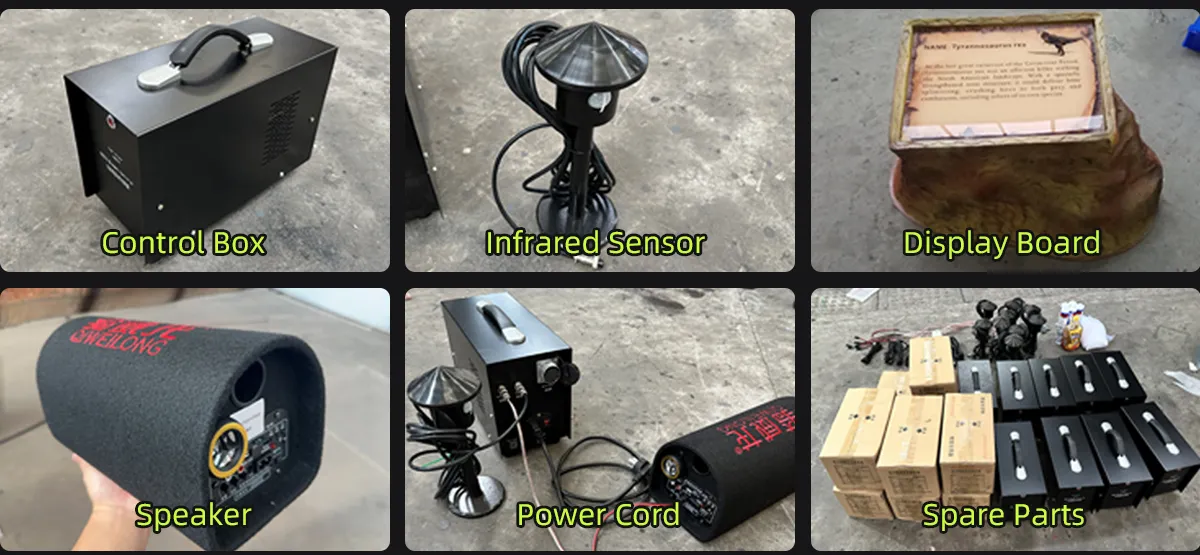
The sensor goes on a timber post at 1.4 m, on the path side, 1 m ahead of the nose, with a 0.5 s delay. The cabinet sits behind a rock or planting cover within 2 m of the base, door opening away from the path, 600 mm of swing needed. Because the body is narrow, cabinet access from the flank is tight, which is why it lives outside the animal on this build.
Before you order
Send the path width at the narrowest point, the bend radii, the gate widths on the delivery route and the ground surface. A photo from the bend settles the head angle faster than a drawing.
Two cases where this animal is the wrong choice: a wide open lawn where visitors see it from thirty metres and a slim body loses the argument, and a path under 1.8 m wide, where the tail arc leaves no room to walk past. The product price excludes freight, duties, certificates and installation.
Enquiry
Send those four details and we will come back with a placement sketch showing the head angle, the tail arc and where the sensor post lands. If the trail is being built rather than existing, send the plan instead; the sketch works from either.
Where to go next
Two things come up in almost every enquiry on this build: how the size compares with the alternatives, and what it takes to get it on site. The cost breakdown with the seven price factors sets out the length options side by side, and the spare parts and repair kit list covers pads, access and assembly. Budget planning sits in the size guide covering 3 m to 12 m builds.
For ideas on placing it, see layout strategies for themed trails. The rest of the range is on animatronic dinosaurs, and if this one is the wrong size for the slot, animatronic deinonychus for jurassic theme parks is the closest alternative.
Product Accessories
Packaging and Container Loading