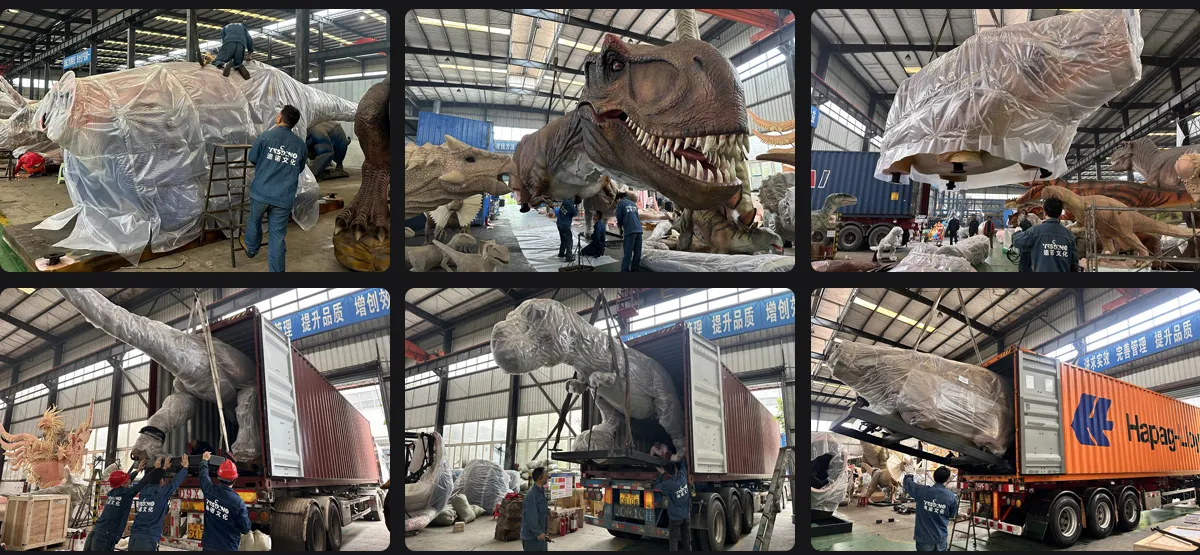
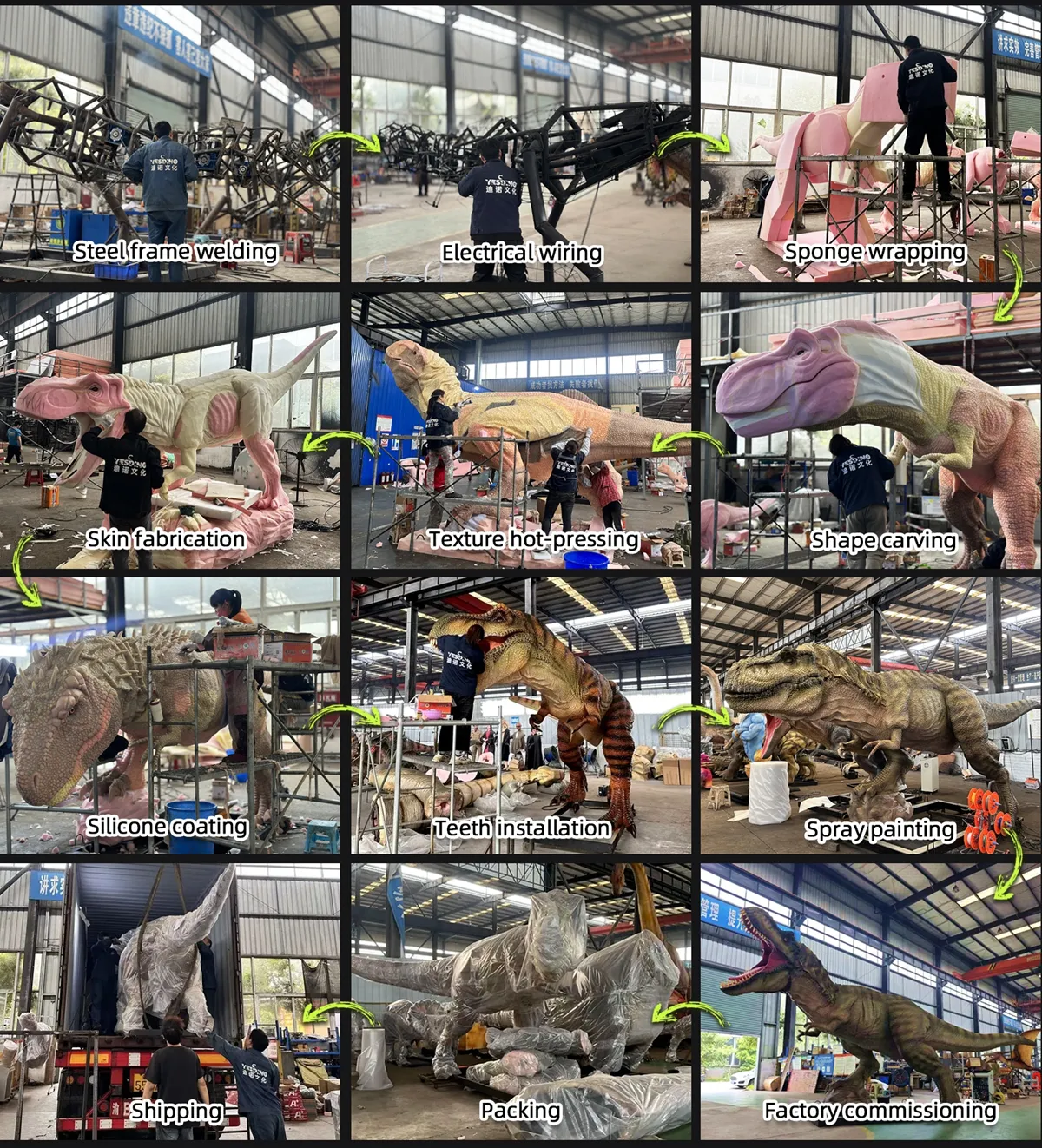
Production Process
Most park animals are bought as exhibits and then placed like furniture. A scenic area is the opposite brief: the animal is one element in a view that already exists, and it either belongs in that view or it looks dropped there.
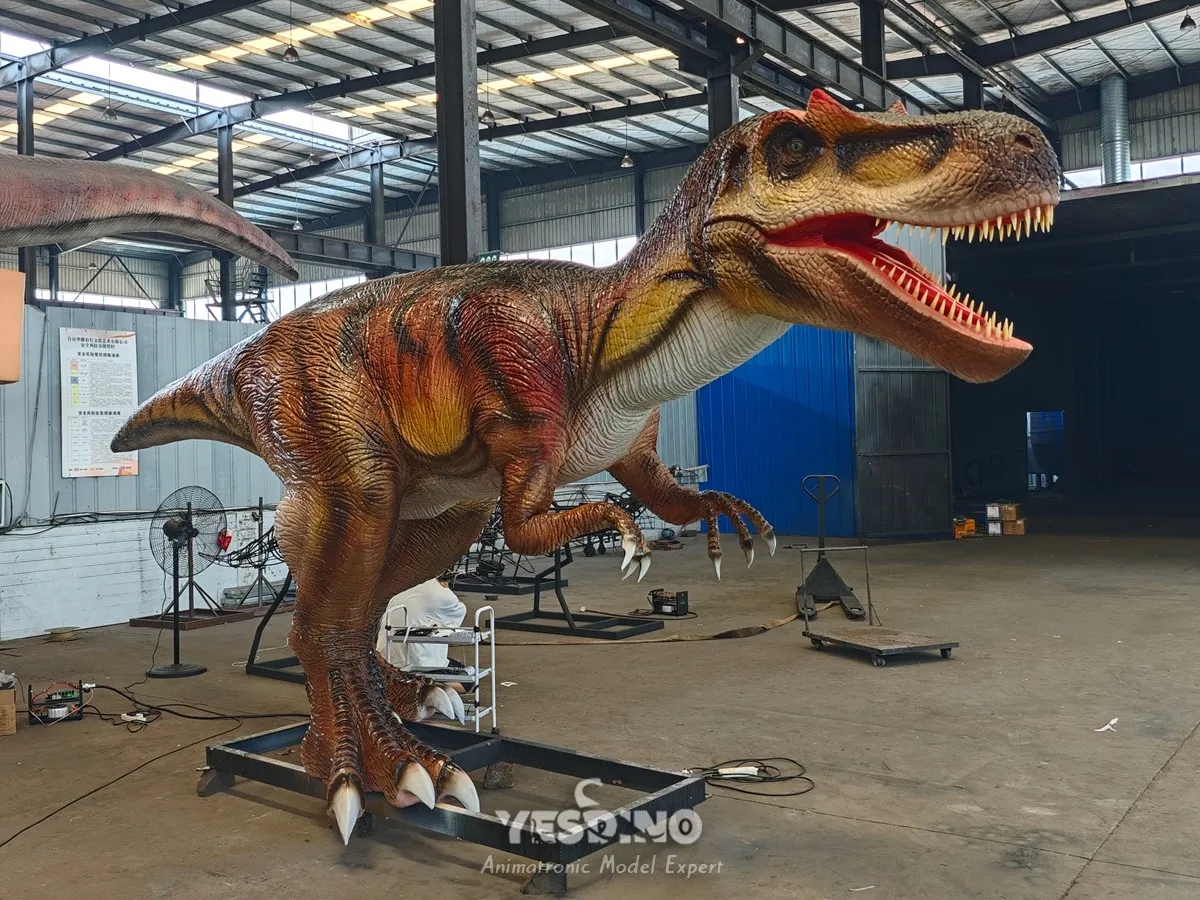
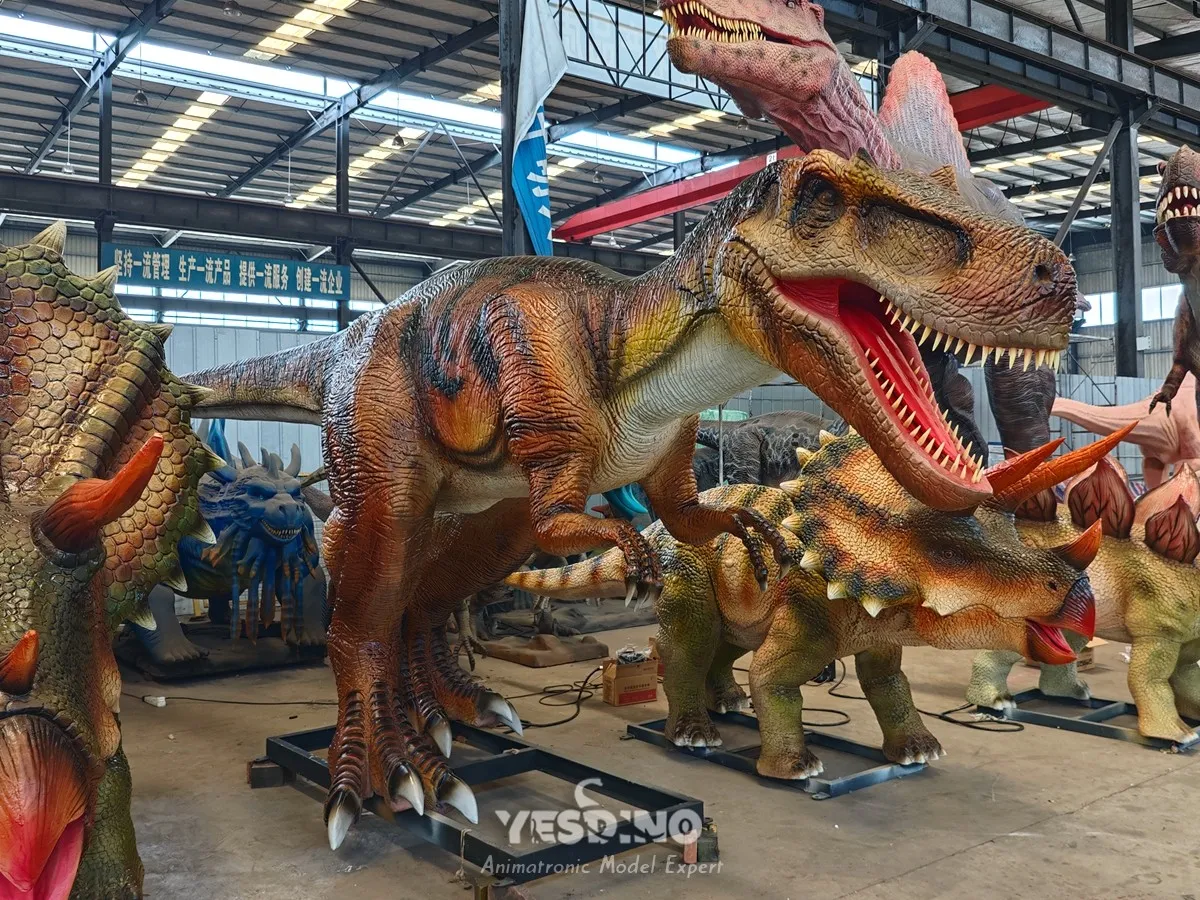
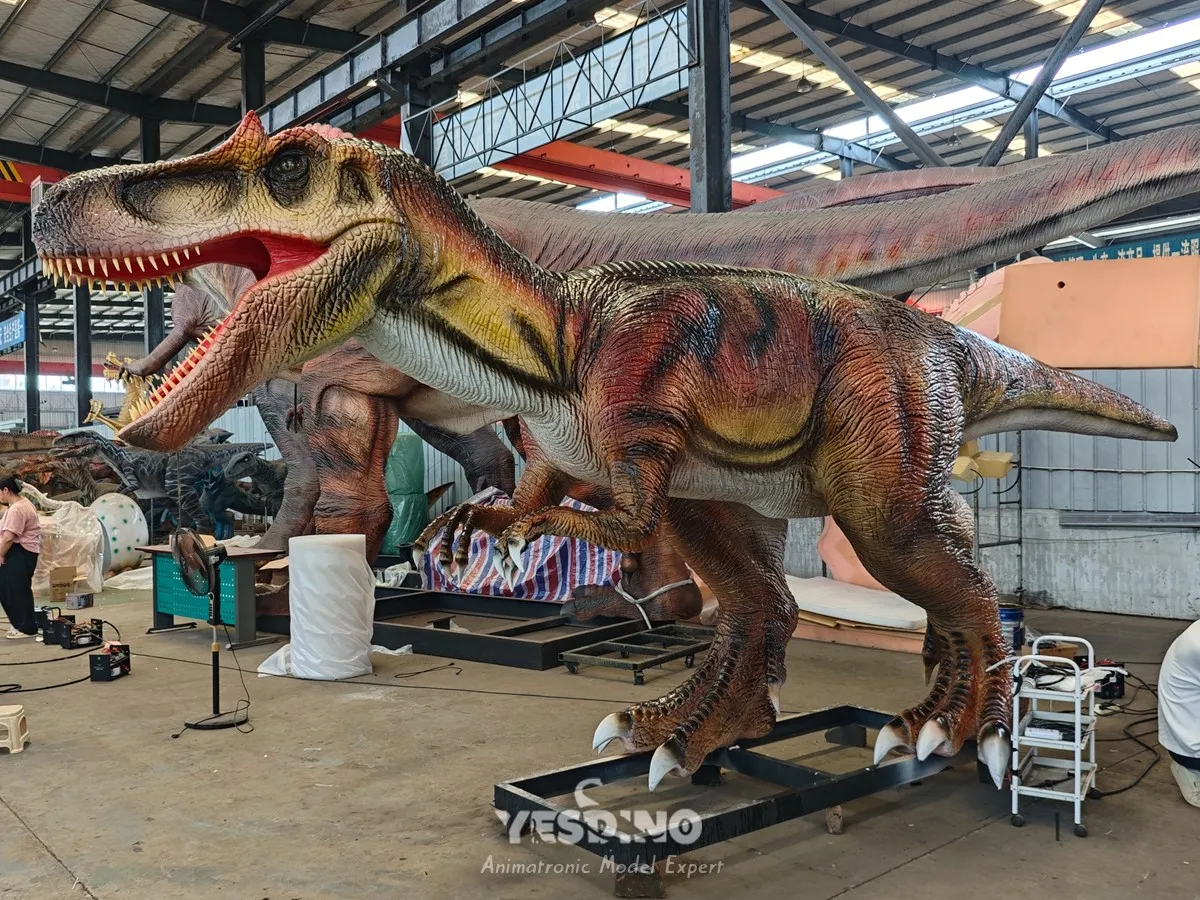
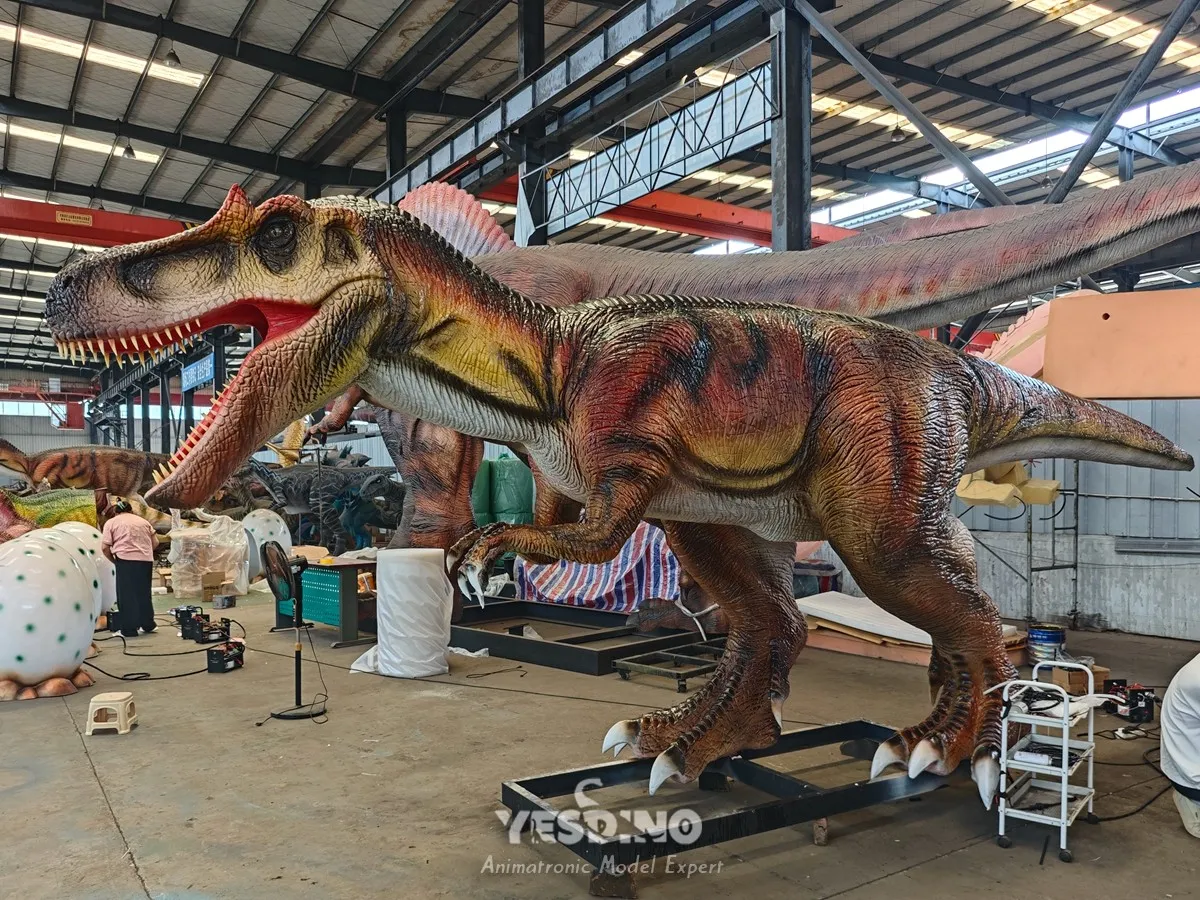
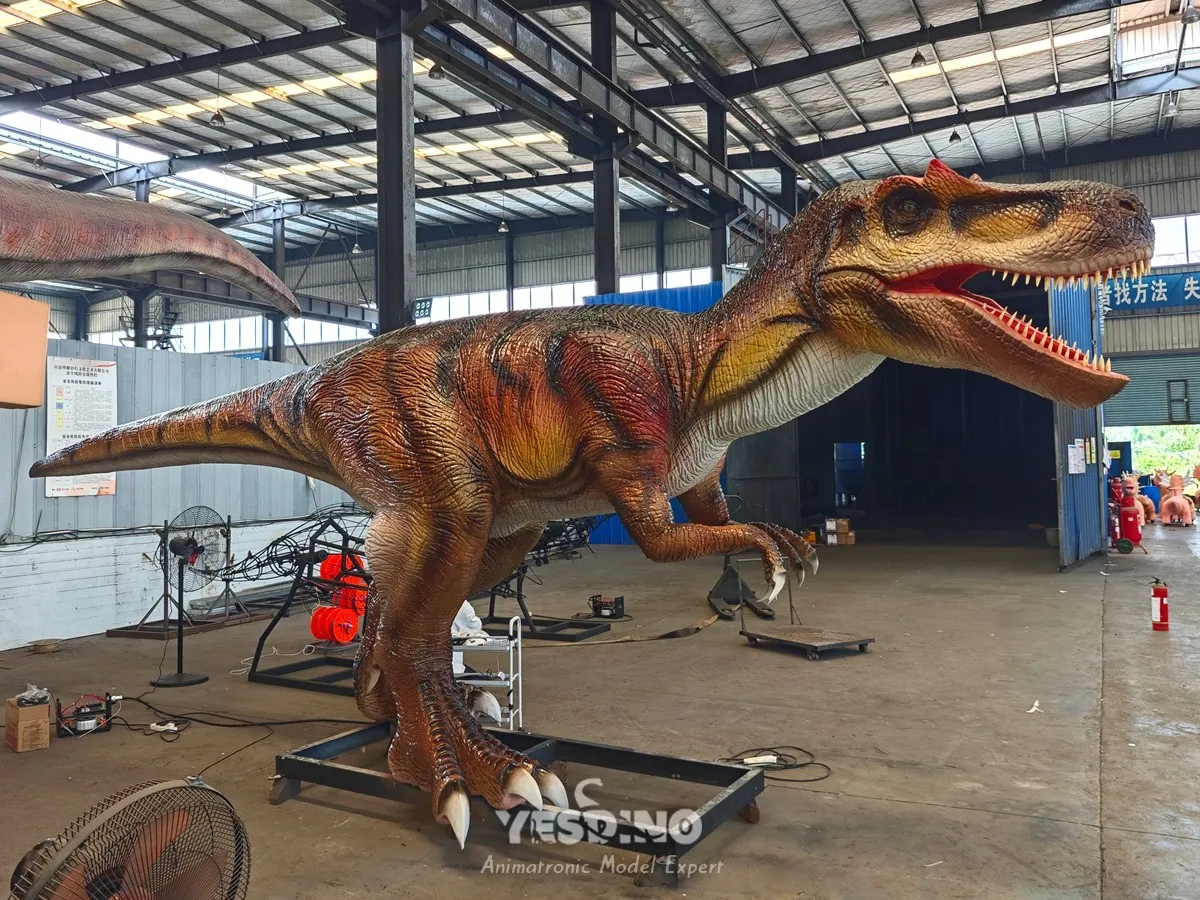
The animal in this case is a six-metre Allosaurus - a lighter, narrower build than a tyrannosaur of that size, with the three-fingered forelimbs visitors look for first. That lighter frame is an advantage in a scenic setting: it reads against open background without needing the mass a tyrannosaur needs to hold a view.
What "scenic" changes about the brief
An exhibit is approached from all sides. A scenic placement has one good viewing direction - the path, the deck, the spot where people stop and take the photo - and everything about the build can be aimed at that direction.
That is useful, because it means the joint budget goes where the viewer is. If the path approaches head-on, the value is in the head, the jaw and the neck. If it passes alongside, the tail and the hip line do the work and the head can stay simpler.
Background is half the animal
A mid-tone animal in front of a dark treeline separates cleanly. The same animal against open sky or a pale wall reads as a silhouette and loses the surface detail you paid for. Before choosing colour, stand where the visitor stops and look at what is behind the animal rather than at the animal.
Distance matters too. At 6 m the animal holds a view from roughly 8-15 m. Closer and visitors are looking at seams; much further and it competes with whatever is in the foreground.
What moves
Head left and right, neck up and down, jaw open with roar, blinking eyes, tail wag - five joints, the standard set for this length. Running gear is a 450 W brushed DC motor per joint on a relay control board, with mechanical limits set at build.
One practical note for a fixed viewing side: a trigger on the path is usually better than a timer. The roar should land when someone arrives, not on a loop that fires at an empty lawn.
Ground, power and weather
At 6 m the unit does not need a poured foundation; a level base and anchor points are enough. Power is 110 V or 220 V single phase, and the cabinet wants to sit out of standing water, out of direct sun, and within reach without a ladder.
Outdoor service is rated -25 °C to 45 °C. In a wet climate the first thing to check each season is the seam at the neck and jaw hinge, because that is where water gets in.
What the price covers
Included: framed and skinned animal, wiring, control, the movement set, export packing, two years on core electronics. Not included: freight, duty, certificates, crew travel and local labour, foundations or ground works, and delay costs from site conditions.
Technical specifications
| Item | Spec |
|---|---|
| Length | 6 m |
| Joints | 5 |
| Viewing distance | 8-15 m for a full-figure read |
| Frame | Welded Q235 steel, anti-rust coating |
| Skin | 5-7 mm silicone over carved foam, colour in translucent coats |
| Drive | 450 W brushed DC motors, relay control board |
| Power | 110 V or 220 V single phase |
| Environment | -25 °C to 45 °C, sealed cabinet |
| Warranty | 2 years on core electronics |
Frequently asked questions
Which side should a scenic animal face?
The side the path approaches from. A scenic placement has one good viewing direction, so the joints are spent there: head, jaw and neck for a head-on approach, tail and hip line for a path that passes alongside.
Does a 6 m model need a concrete foundation?
No. A level base with anchor points is enough at this length. Power is 110 V or 220 V single phase and the control cabinet needs to stay out of standing water.
How far away does it read as an animal rather than a model?
Roughly 8 to 15 m at 6 m length. Closer than that visitors are looking at seams; further away it competes with whatever sits in the foreground.
Product Accessories
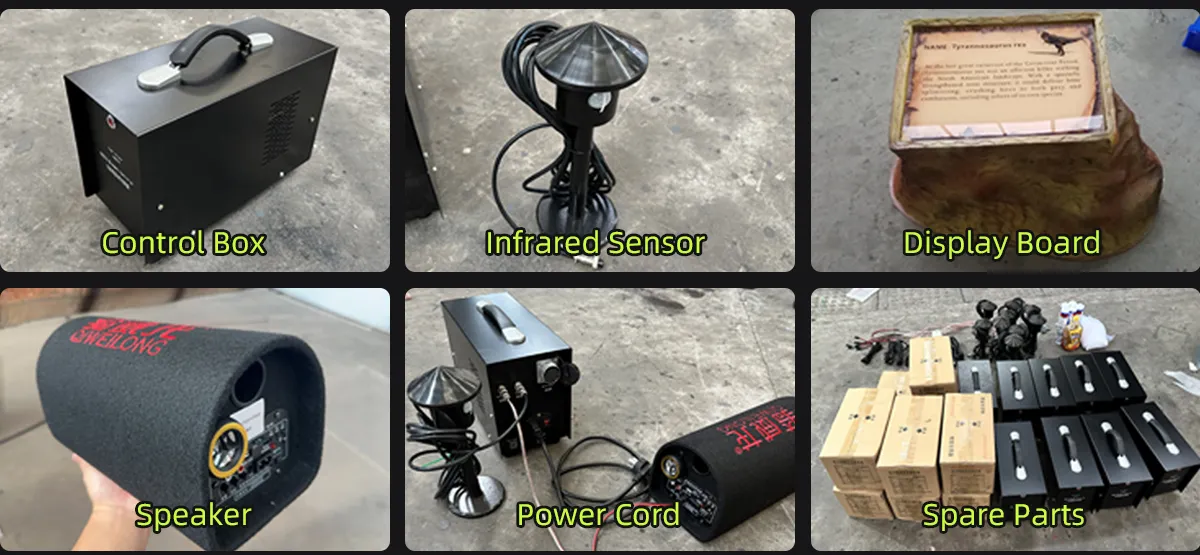
Packaging and Container Loading