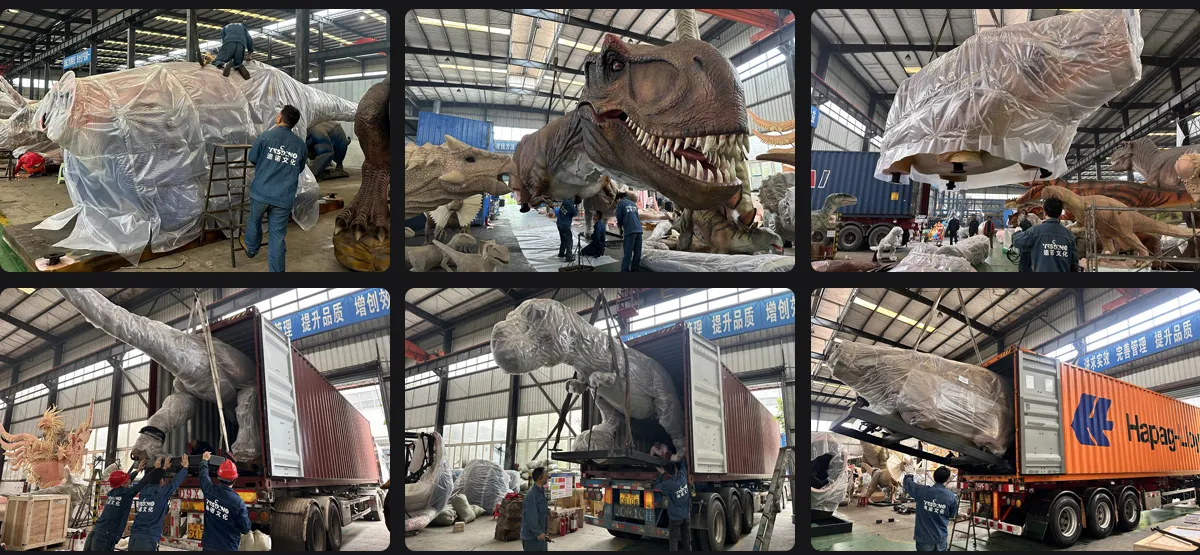


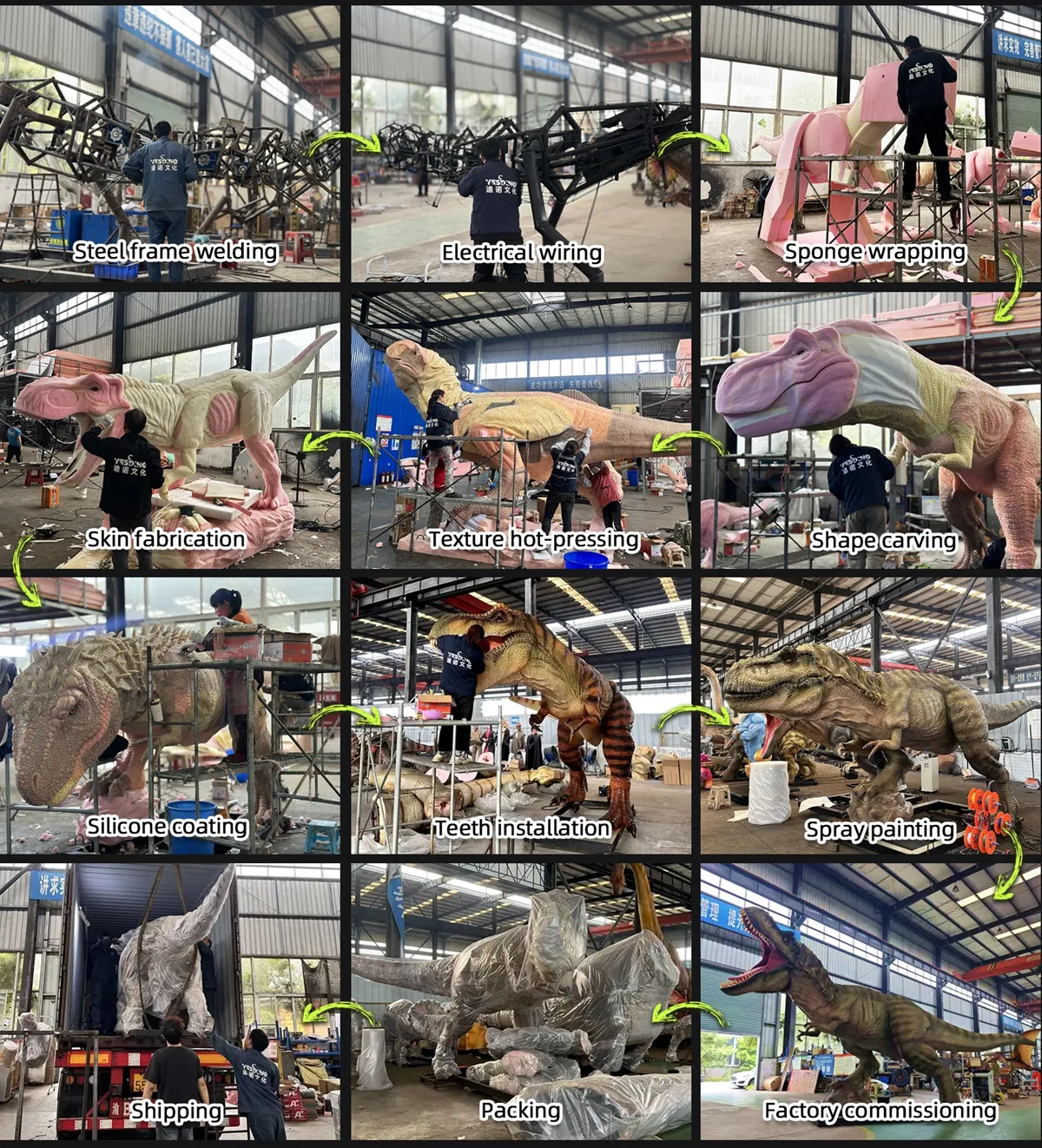
Production Process
The first thing to check on a Stegosaurus is not the plates. It is how far the tail sits from the path. A five-metre animal with a swinging tail takes up more room behind it than most plans allow for, and that is where these builds get placed badly.
This one is 5 m long, 1.2 m across the body, and 2.1 m to the top of the plate row.
Wide, and that changes the plan
At 1.2 m across, this is the widest animal of its length in the range, before the plates add anything. It wants a path of 2 m or more to sit beside, and it looks cramped on a 1.2 m walkway where a narrower animal would settle in.
The plate row is the other dimension. It takes the animal to 2.1 m, which is above adult height, so the silhouette carries from thirty metres even though the head is small and low. That is the trade: presence from a distance, at the cost of footprint.
Where it goes, and where the tail goes
Place it flank-on to the path. The plates read as a profile, the small head is visible at the near end, and visitors walk the length of the animal instead of meeting the tail first. A flank-on position also keeps the swing plane of the tail parallel to the path rather than across it.
Behind the tail, leave 1.5 m clear. The tail sweep is slow but it is wide, and the spikes sit at the end of it. If a bench, a bin or a planting bed is inside that arc, it will be hit eventually; moving it 1.5 m now is cheaper than moving it after the first week.
Ground: level and firm. With 1.2 m of body plus plates, a slab edge or a kerb within a metre of the frame feet shows up as a lean after a season of frost.
Hanging the plates
Q235 steel frame, rust-treated, high-density foam body, 5–7 mm silicone skin, colour in translucent layers. The double row of plates ships separately and drops into socket mounts along the spine, each one keyed so it can only go in one position — which matters when a site crew is fitting twelve of them in an afternoon.
Two details from experience. Plates add wind area at 2.1 m, so the anchors are sized for the row, not the body alone. And the gaps between plates are where water sits, so the sockets drain downward and the seam behind each plate gets a bead of sealant before the plate goes in, not after.
What moves on a heavy body
Head turn, neck dip, jaw, blink, tail sway and a slight body roll. The tail is the group to spend time on, because it is the one visitors watch, and it is also the one that can reach a barrier. We set the sweep to about 20 degrees either side of centre and slow the return.
The head does very little, which suits the animal: a small head on a large body moving fast looks wrong. Two sensors, one at 1.2 m on the path side and one behind the tail, keep the animal from swinging toward a group it has not seen.
Getting it through the gate
The body is 1.2 m wide, so a 1.5 m gate is the practical minimum and 1.8 m is comfortable. It ships in two body sections plus a base frame, with the plates in separate crates — twelve sockets, one crate, labelled by position.
Assembly runs frame, legs, body, tail, neck and head, then the plates from the neck back. Two people, one day. The cabinet sits at the rear of the base frame with its door away from the path and 600 mm clear, which on a 2 m path means setting the animal back slightly from the edge.
Before you order
Send the path width, the position, the surface and photographs of anything within 2 m of where the tail will sit. Tell us which side visitors approach from, since the flank-on position only works if the approach is along the body rather than from behind.
Two cases against this size. A 1.2 m walkway, where the animal leaves no room to pass. And a position against a fence that sits inside the tail arc — mounting it forward of the obstacle solves that, and it is worth settling before the base is fixed rather than after.
Enquiry
Send the plan with the animal and the tail arc marked. Colour, skin texture, posture and the movement programme are made to order, and the plate positions can be adjusted in the mould if the row needs to read differently from the path.
Where to go next
Two things come up in almost every enquiry on this build: how the size compares with the alternatives, and what it takes to get it on site. The rental cost breakdown sets out the length options side by side, and the pneumatic versus hydraulic comparison covers pads, access and assembly. Budget planning sits in the installation guide for pads and access.
For ideas on placing it, see layout strategies for themed trails. The rest of the range is on animatronic dinosaurs, and if this one is the wrong size for the slot, animatronic carnotaurus for holiday events is the closest alternative.
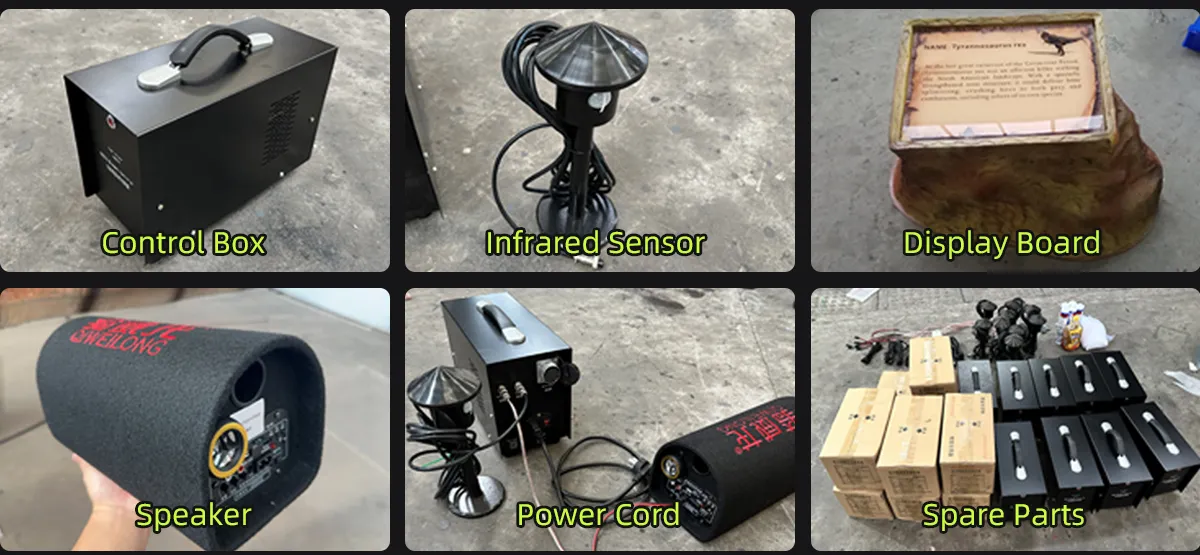
Product Accessories
Packaging and Container Loading