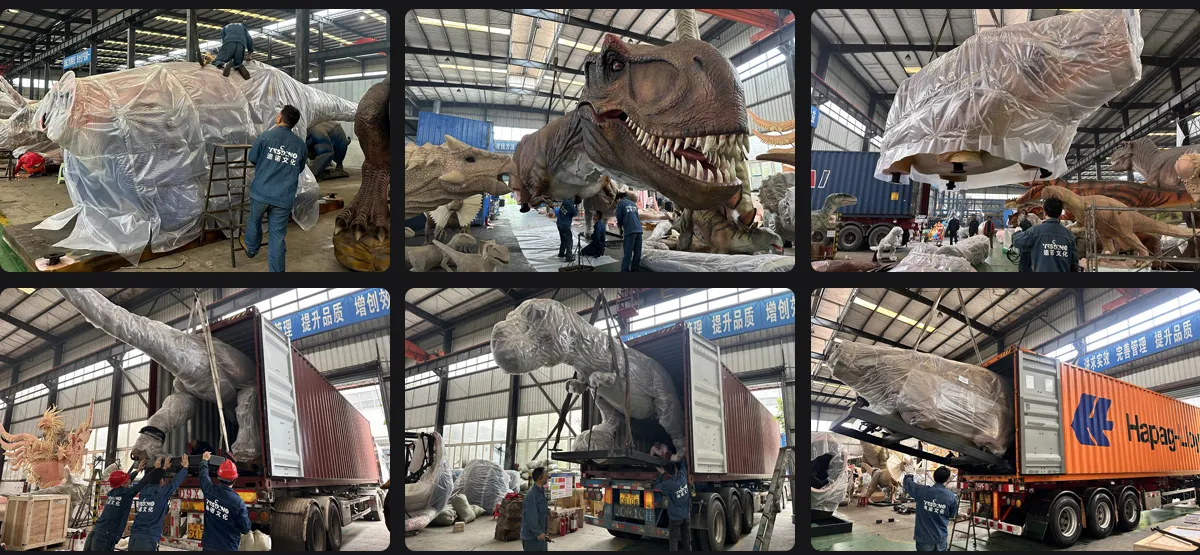


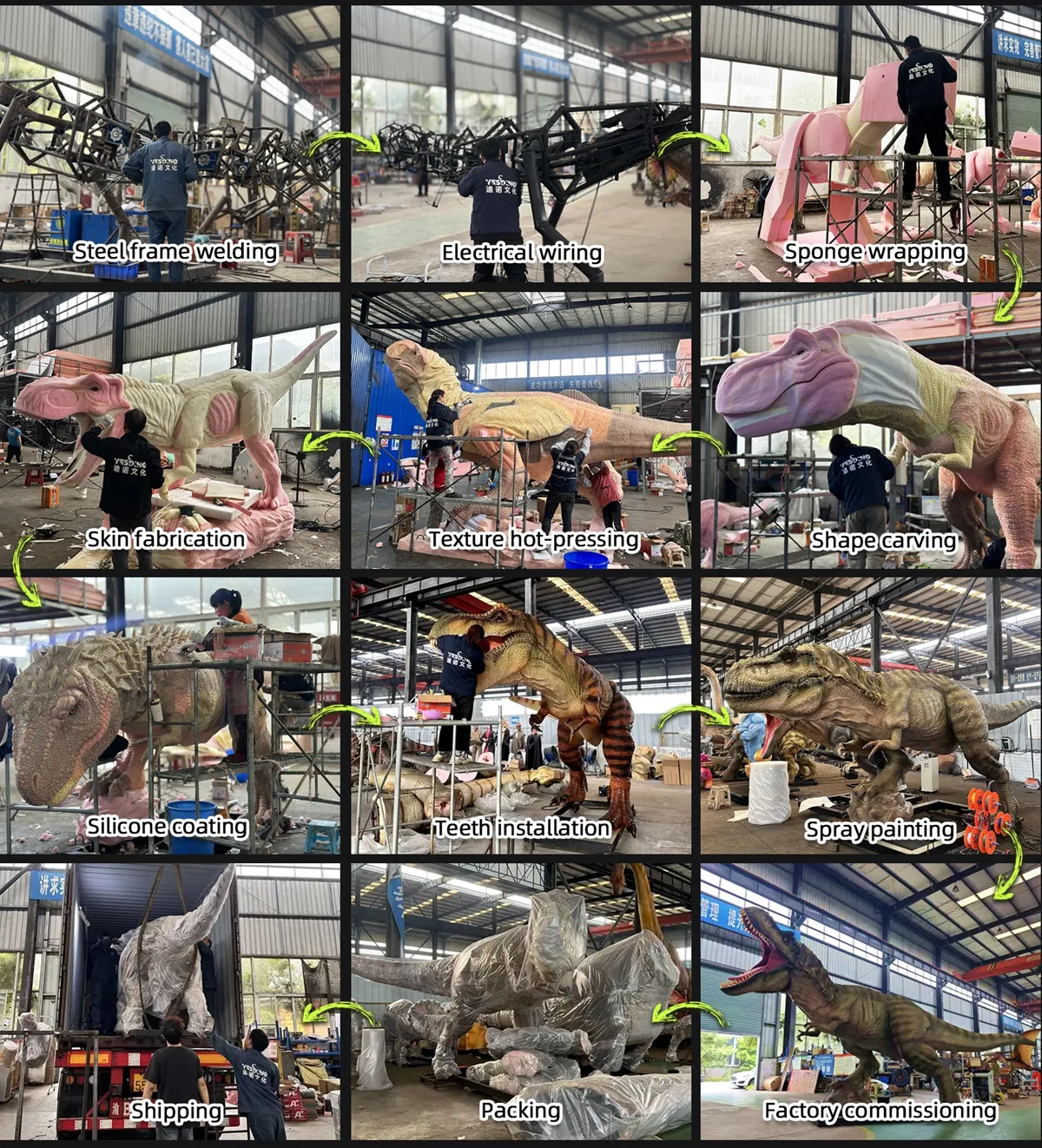
Production Process
A school group comes in at the far door and sees the whole animal at once: thirteen metres of back and sail running down the left wall, head at this end, tail at that one. They walk the length of it. Nobody looks up. That is what this build is for.
Thirteen metres long, 1.4 m across the body, 2.5 m to the top of the sail. The proportions are the point: this is a long, low animal, and a hall has to be able to hold the length in one sightline.
Why thirteen metres at this height
Most large animatronic builds buy presence with height — a head four metres up, visitors craning. This one buys it with length. At 2.5 m the sail clears a 3 m ceiling with room for a light track, and the animal stays inside the room.
What that costs you is the entrance moment: a 13 m animal does not stop someone in a doorway the way a tall one does. It works when the hall is long enough for the profile to register, and fails in a short room.
Hall layout: the long wall, not the corner
Run it parallel to the long wall with 1.5 m clear behind for service, public side at 3 m to 5 m, and 2 m clear at the tail for the sway. From the entrance, the sightline should catch the flank and the top edge of the sail; that edge reads as a Spinosaurus from thirty metres away, long before the snout does. Diagonal placement across a corner shortens the apparent length and puts the tail in the walkway.
The sail is a thin vertical panel: it takes light on one face and throws a hard shadow with the other. A track directly above puts that shadow on the flank and flattens the back. Offset the track 45 degrees to the public side and the shadow falls behind.
Colour gets set to the light in the hall. Warm track lighting at around 3000 K pulls the skin toward brown; a daylight-balanced gallery makes the same skin read grey. We ask for lamp type and mounting height, and colour to that, not to a photograph.
What moves on a long animal
Neck turn, head tilt, jaw, blink, chest breathing and tail sway. On this length, the tail is the group worth tuning. Visitors spend eight to ten seconds walking the flank, and a tail that hangs still while the neck moves is the thing that makes a long animal look like a display board.
We set the tail to a slow sweep of a few degrees, out of step with the neck, and put three sensors along the public flank rather than one at the head, so the head turn arrives when a group is actually beside it.
Skin across thirteen metres
Q235 steel frame in bolted sections, rust treated; high-density foam carved for volume; silicone skin 5 to 7 mm; colour sprayed in translucent layers. Long builds live or die on seams, so they are placed under the belly and behind the sail, and not across the flank where the light rakes.
The sail needs its own attention: a tall thin panel of skin moves in a draught and its trailing edge takes knocks from cleaning equipment. We thicken that edge and tie it back to the frame at three points.
Getting it into the hall
Five sections: head and neck, two torso sections, tail in two. The longest crate runs about 4.2 m; at 1.4 m body width the sections pass a 2 m door. No crane; four people, pallet trucks and a flat route from the loading bay.
Anchor points run in a line, eight of them, M12 into the slab: a 13 m frame rocks at the joints if only the ends are held. Assembly is a day and a half. The cabinet sits in the rear torso behind a panel facing away from the public side.
Before you order
Send the hall plan with door widths, ceiling height, lamp positions and the floor build-up, plus the route from the loading bay. Photograph the wall at the light level you run in the morning, when the hall is at its quietest and the colour reads true.
Two situations where a different animal fits better. A hall under 12 m long cannot hold this length, and a 6 m or 8 m build will look better in it than a compressed Spinosaurus. And if the animal has to be seen from both sides in the middle of a room, tell us — the second side gets priced honestly rather than assumed.
Enquiry
Send the floor plan, two photos of the wall, and the lamp type over the position. Tell us the door width at the loading bay and the voltage at the site. We will draw the footprint, the anchor line, the sensor zones and the cabinet access on your plan, and send the section split so your team can plan the delivery day.
Where to go next
Two things come up in almost every enquiry on this build: how the size compares with the alternatives, and what it takes to get it on site. The park layout and theming strategies sets out the length options side by side, and the cost breakdown with the seven price factors covers pads, access and assembly. Budget planning sits in the spare parts and repair kit list.
For ideas on placing it, see museum display guidelines. The rest of the range is on animatronic dinosaurs, and if this one is the wrong size for the slot, animatronic spinosaurus for sale is the closest alternative.
Product Accessories
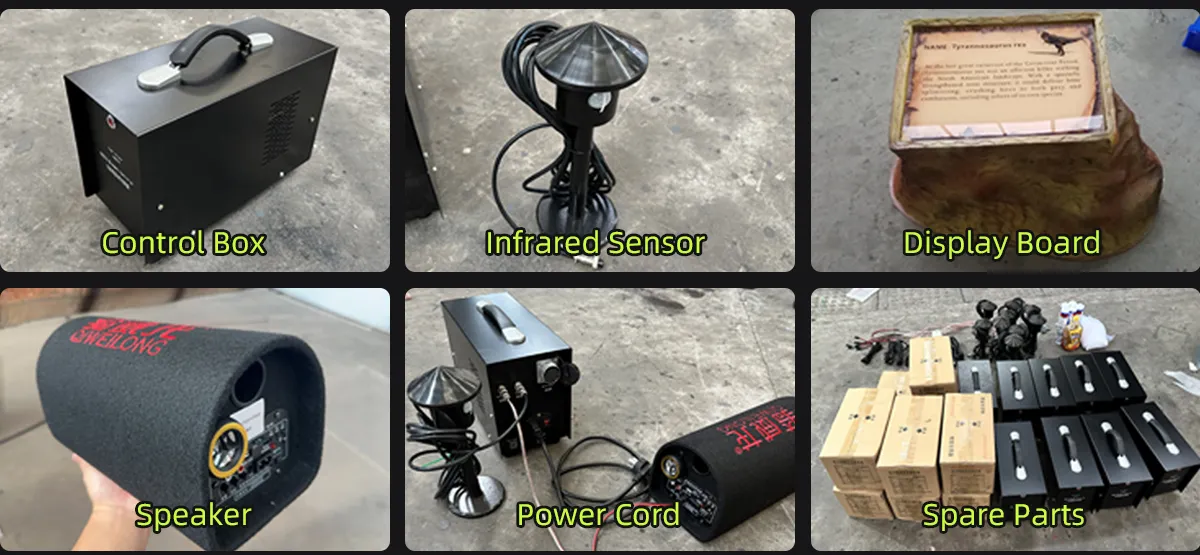
Packaging and Container Loading