


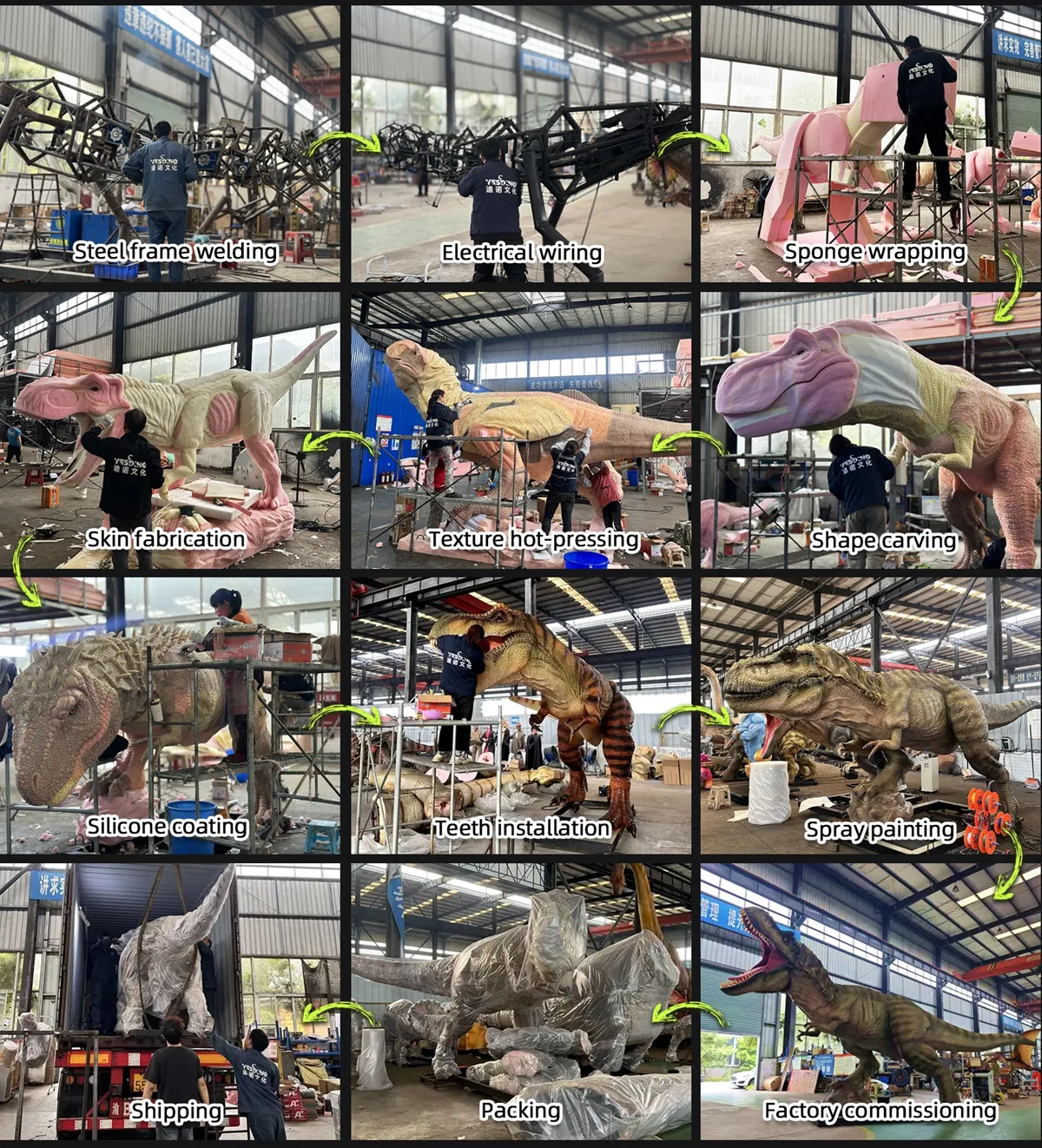
Production Process
This animal is a head on legs, and pretending otherwise is why most models of it look like a generic small theropod with a bump. The skull roof is a solid dome of bone, thick enough that it survived fossilisation better than the rest of the skeleton, and it is the entire reason the animal exists in the public imagination.
SKU YKL-064: five metres long, one metre across the body, 2.1 m at the top of the dome.
What the dome was for
The old answer was head-butting, like bighorn sheep. The current one is less certain: studies of the dome's structure have argued it was better at absorbing impact to the flanks than to the top, which points towards animals shoving each other side-on, or simply displaying. Some researchers keep the head-butting reading. Nobody has settled it.
That uncertainty is useful for an exhibit. It gives you something to say on a panel that isn't a cliché, and it is honest. What it should not do is turn into an animatronic that rams a barrier — a five-metre animal swinging a weighted head at visitors is a maintenance problem and a safety one.
Building a head that reads as bone
The dome is sculpted as a raised, slightly glossy mass with a defined rim where the bone thickened, and the small bony spikes and tubercles that stud the back of the skull are built in rather than painted. Around it the snout is blunt and narrow, with small leaf-shaped teeth — a herbivore's mouth, not a predator's.
Because the head is the product, this is one of the builds where we spend the time on the skull and keep the body simple. At 2.1 m the head sits at adult eye level, so the dome gets looked at from a metre away; a soft, vaguely rounded head fails at that distance.
Five metres against four and a half
Adults were around four and a half metres, so this build is close to the real animal with a slight stretch for presence. That makes it one of the few mid-size models where the listed length won't raise an eyebrow from someone who knows the group.
It also travels well: the sections fit standard crates, the body section goes through a double door, and no crane is needed. For a mall, a museum floor or a small park, that combination is more useful than another eight-metre predator.
Movement groups
Head left and right, neck up and down, jaw open and close with a call, blinking eyes, tail sweep, and a forearm lift. The head is heavy and the neck is short, so the head turn should be slow and deliberate — a fast snap on a domed skull looks weightless and spoils the whole effect.
The jaw on this animal is for cropping, not roaring. We set the sound to a low, short bellow rather than a predator roar, which also means it works in a family area without frightening small children.
Placement
Put it where visitors can walk around the head rather than past it — a widening in the path, or the inside of a bend. The animal is short enough that a crowd standing in front of it blocks the view entirely, so give it a metre or two of clearance on the head side.
Paired with a larger herbivore it reads as a small, aggressive plant-eater, which is closer to the truth than most trail narratives manage. Paired with a theropod of similar height it gets lost.
Specification and delivery
Welded Q235 steel frame with anti-rust treatment, foam volume, silicone five to seven millimetres, translucent layered colour. Rated −25 °C to 45 °C, 110 V or 220 V set at build, two-year warranty on core electronics. Ships in sections with base frame, control cabinet, sound system, wiring diagram and calibration sheet. Freight, duties, certificates and installation are quoted separately from the product price.
Enquiry
Send the site photo and the viewing distance. If the animal is going into a gallery, tell us the lighting colour temperature — the dome reads very differently under warm light and it's worth adjusting the finish before build.
Where to go next
If you are still comparing options, start with the rental cost breakdown — it lines up the builds by length and reach. Site work is covered in the pneumatic versus hydraulic comparison, and the installation guide for pads and access lists the factors that move the price.
For ideas on placing it, see what shipping a large animal involves. The rest of the range is on animatronic dinosaurs, and if this one is the wrong size for the slot, animatronic baryonyx for dinosaur parks is the closest alternative.
Product Accessories

Packaging and Container Loading



