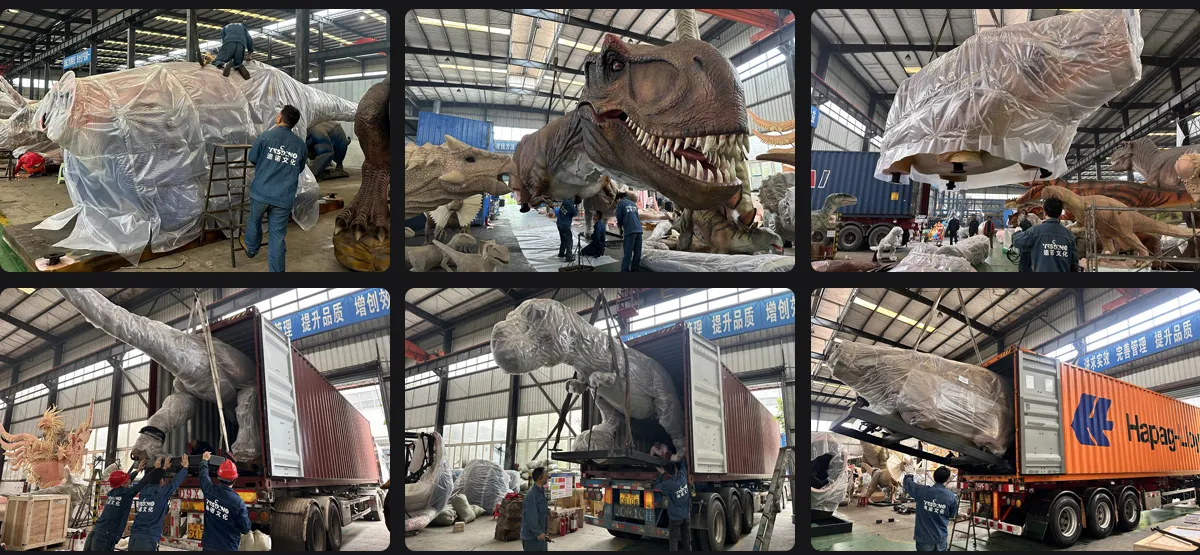


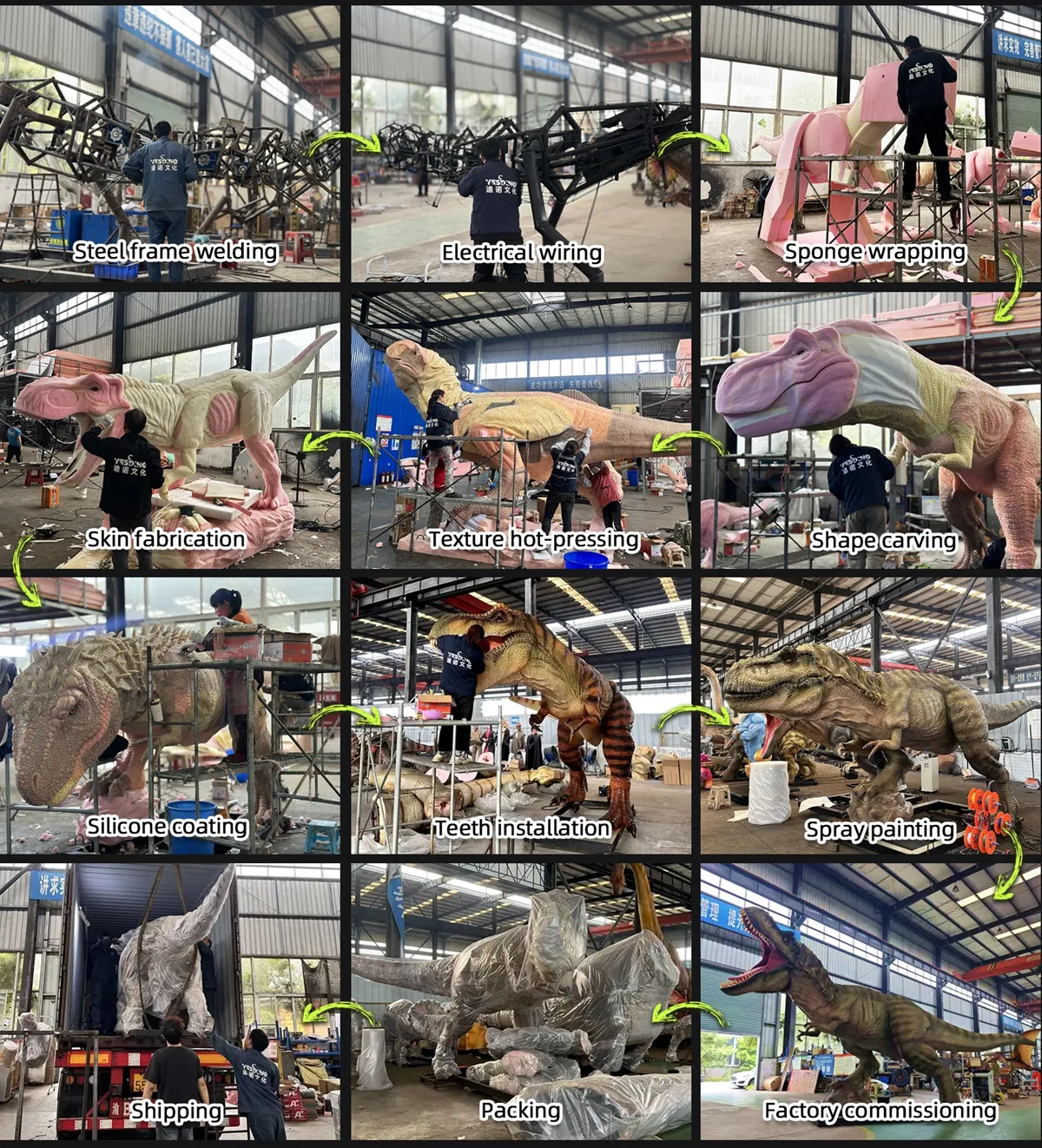
Production Process
A pond is the cheapest scenery a dinosaur park owns and the most awkward place to stand an animal. The bank is soft, the water moves, and the reflection doubles every mistake in the silhouette.
This build is 1.1 m across and 2.2 m tall, which is why it works there.
Five metres long, 1.1 m wide
At 5 m the animal is 2.2 m tall and 1.1 m through the body, which is wider than most builds at this length. Width is what a pond-side animal needs, because the viewing distance is short: people stand at a rail six to ten metres away and look along the flank, not at the head. A body with depth behind the shoulder holds that view; a narrow one looks like a cut-out pinned to the reeds.
The cost is footprint. The pad wants 1.6 m of width to take the feet and the base frame, and the crate is wider than a five-metre build usually ships, so a 1.4 m gate is the practical minimum. Between two established planting beds, 1.1 m is a tight fit and a narrower animal is the easier answer.
Position on the bank
Set the feet 0.6 m back from the waterline and let the head reach out over the water. That gives the reflection something to work with and keeps the base frame out of the wet. Body roughly parallel to the bank, angled ten or fifteen degrees so the head is over the water and the tail is inland, which is how the animal would stand.
From the main rail, the animal should be seen three-quarter with the snout against open water rather than against the far bank. From the path approaching the pond, the head should be the first thing visible over the reeds.
Head low, claw forward
The animal's identity is in two places: the long crocodilian snout with its conical teeth, and the outsized thumb claw held forward on the raised forelimb. Both want slow movement to read. A head sweep across the water at ten seconds end to end, the jaw opening a third of the way, and the claw lifting once as the head comes round: that is a complete performance, and it holds attention.
Sensing at a pond is trickier than on a path. Mount the sensor at rail height facing along the rail, not across the water, or moving reflections and birds will fire it all afternoon. Set 4.5 m of range with 0.8 s of delay, and add a second sensor only if the rail runs past the animal on both sides.
Skin in the splash zone
Q235 steel frame with rust treatment, foam-carved body, silicone skin 5–7 mm, colour sprayed in translucent layers. Water is not the problem; wet feet and splash are. The lower leg and the tail underside take the spray, finished in the same pigment so a repair does not show.
Rated −25 °C to 45 °C. Sit the base frame on two concrete slabs set level with the bank, so the steel is 100 mm above the ground and water runs under it rather than into it. Where the bank floods in winter, the slabs go above the recorded flood line.
Down the bank with three crates
Three crates, the heaviest around 300 kg. A telehandler reaches most banks, but soft ground after rain will not take one, so plan the last fifteen metres by hand or lay trackway mats before the truck arrives. Assembly is base frame, legs, body, neck and head, skin, power, and on a level bank it is a four-hour job for two people.
Anchoring is M12 bolts into the slabs, four points. The cabinet goes on the landward side, door facing the service path with 600 mm clear, and the cable run comes in from behind the animal so nothing crosses the viewing side. A cabinet at the water's edge gets hosed.
Before you order
Send the pond plan with the water level in both seasons marked, the bank material, the rail position, and which side visitors arrive from. Tell us the power distance and whether the pond has a pump on the same supply. If there is a fountain, note where it sits relative to the animal.
Three cases where this animal is the wrong choice. A pond where the animal has to be seen from thirty metres across the water needs a longer build. A bank that floods to the height of the animal's hip needs a raised platform designed before the animal is ordered. And a site where visitors walk both banks gives you two front views and no back, which wastes the width you paid for.
Enquiry
Send a photo taken from the rail at standing height, and one from the approach path. We will confirm the pad, the slab height and the sensor line before the frame is cut.
Where to go next
Worth reading before you commit: the cost breakdown with the seven price factors for how the sizes compare, the spare parts and repair kit list for what the ground has to carry, and the size guide covering 3 m to 12 m builds for where the money actually goes.
For ideas on placing it, see photo zones and crowd flow. The rest of the range is on animatronic dinosaurs, and if this one is the wrong size for the slot, animatronic allosaurus for zoos is the closest alternative.
Product Accessories
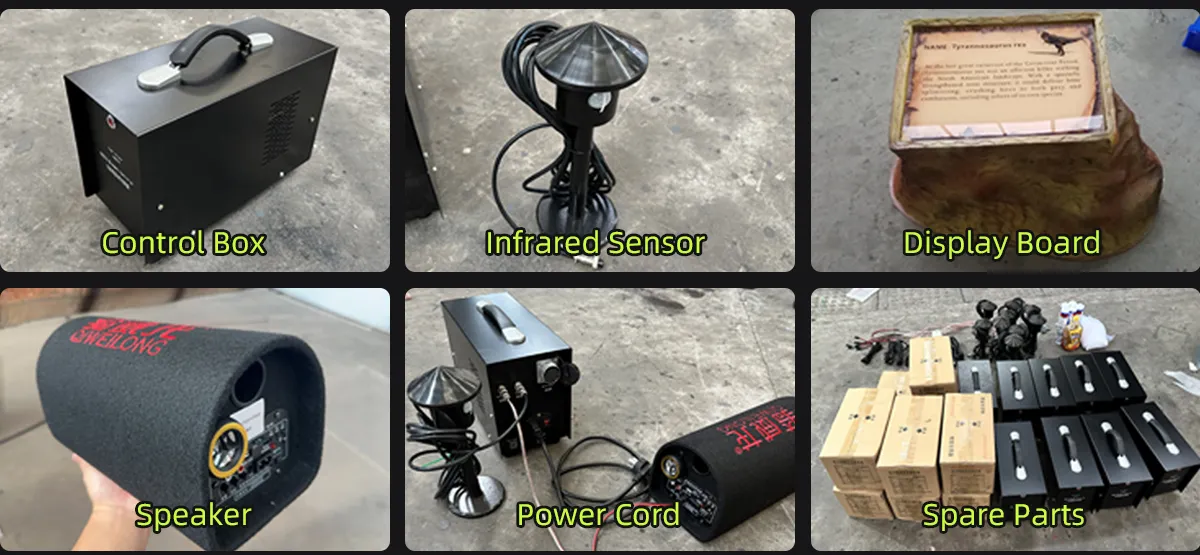
Packaging and Container Loading