|
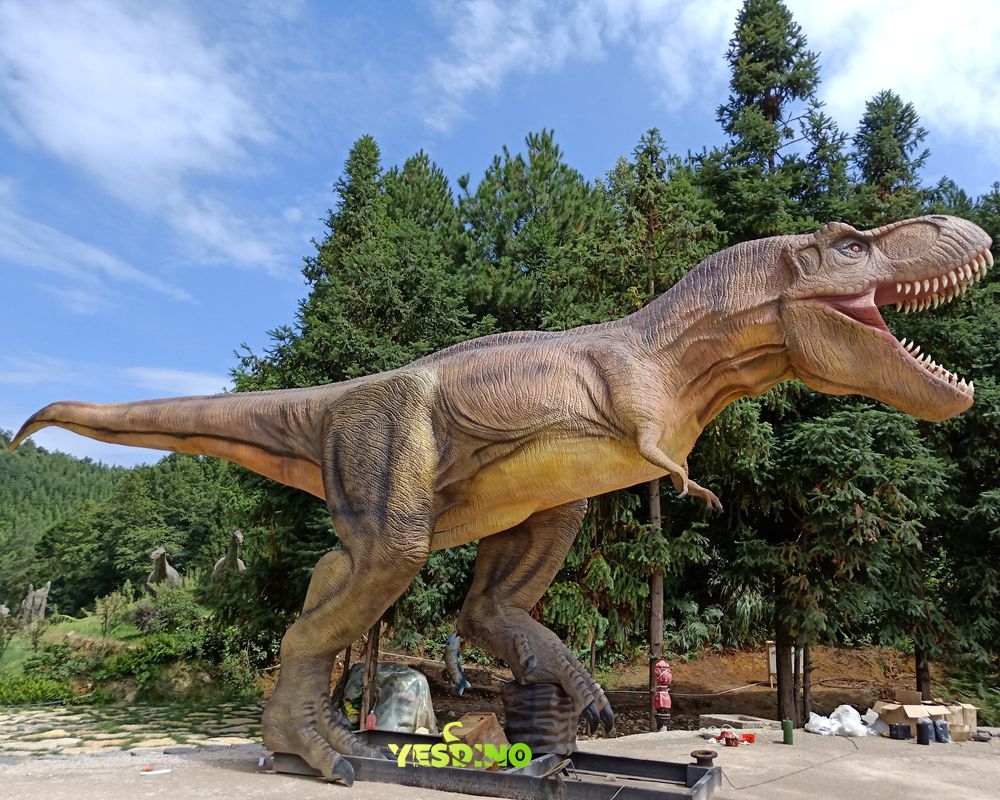
In theme parks, museum exhibitions, commercial complexes, and brand events, a highly realistic Tyrannosaurus Rex (T-Rex) is not just a visual centerpiece; it serves as a massive traffic driver and an amplifier for brand recall. Maximize ROITraffic & Revenue MetricsDuring the National Day holiday, a 15-meter animatronic T-Rex was placed outside a shopping mall in East China for 12 days. Once powered on, infrared sensors recorded a surge in daily foot traffic stopping at the entrance, jumping from 4,500 to 12,000 people, with average dwell time increasing by 22 minutes. Between October 1st and 7th, the number of people taking a taxi from within a 1.5-kilometer radius and getting off at the mall's east gate spiked by 67%. The crowds outside naturally flowed into the mall to spend money. The lunchtime turnover rate for 15 restaurants across the first to third floors hit 1.4 times their usual average, with table wait times extending by 45 minutes. The children's play area on the same floor sold 2,150 tickets in a single day, while the arcade exchanged 45,000 game tokens, shattering the highest records since opening three years ago. The mall's surveillance and payment systems captured exactly where the money was spent:
When placed in a ticketed theme park, the animatronic generates revenue through merchandise sales and fast-track services. A dinosaur pop-up shop located 200 meters from the main entrance draws in 47% of park visitors. By opening a 50 RMB skip-the-line photo lane at the entrance, the park can sell over 900 passes on a single weekend day. Inside the shop, a 59 RMB small rubber dinosaur completely sold out and was restocked four times in three weeks, yielding a profit of 42 RMB per unit. On a weekend day, 820 units of a 199 RMB sound-emitting dinosaur glove were sold. Checkout lines reached an 8-minute wait, and POS data showed an average customer spent 38 RMB more than they would in a standard souvenir shop, pushing the pop-up shop's daily sales to 240,000 RMB. Evening revenue relies on the dinosaur's lighting and mist effects. As the 15-meter T-Rex's eyes glow red and its mouth sprays high-pressure water mist accompanied by an 80-decibel roar, it successfully keeps visitors who were planning to leave at 8:00 PM around until 9:30 PM. Nearby night market stalls subsequently extended their operating hours, staying open until 11:00 PM. Revenue breakdown for this extra 1.5 hours in the evening:
The surge in online searches for the dinosaur saves the mall a fortune in advertising. Powered by 15 motors, the T-Rex shakes its head and opens its jaw. Visitors record these movements and post them online, easily surpassing 1.5 million views within seven days. A 15-second video typically sees a 65% completion rate and an 11% share rate. On local lifestyle platforms, posts featuring the keywords "15-meter giant T-Rex" garnered 420,000 likes and 18,000 comments in a single week. Cost-per-click for targeted mobile ads sent to users within a 5-kilometer radius plummeted from 2.4 RMB to 0.3 RMB. That month, the mall saved 156,000 RMB in ad spend, lowering the customer acquisition cost to less than 1.2 RMB per new visitor. The empty space surrounding the T-Rex can be monetized through advertising rent. The 60-square-meter safety enclosure around the perimeter was rented to a children's English tutoring center for 50,000 RMB a week. Placing four 1.5-meter illuminated billboards at the base generates an additional 85,000 RMB in monthly rental income. Setting up a VIP photo zone just 3 meters from the T-Rex's jaw offers another income stream. Charging 30 RMB for an instant print, which only costs 1.5 RMB in photo paper, can result in up to 1,140 photos taken on a busy weekend day. Next to it, a 6-square-meter sandbox where kids can "excavate" dinosaur bones charges 80 RMB an hour; all 12 small shovels are in constant use from morning to night. An external coin-operated console allows visitors to control the animatronic themselves. Inserting two coins (5 RMB total) makes the dinosaur turn its head and roar. During holidays, up to 680 people use this per day, requiring the cash box to be emptied every 4 hours. This single console alone clears a net profit of 92,000 RMB a month. Hosting elementary school science classes from 9:00 AM to 11:00 AM on weekends costs 150 RMB per enrollment. Using the 15-meter T-Rex as a visual aid, a fully booked class easily accommodates 40 students and parents. Scheduling 16 fully-booked classes a month pulls in an extra 96,000 RMB, while the cost of educational materials and supplies stays under 3,000 RMB. Photo studios and wedding photographers also seek out the giant dinosaur as a backdrop. Charging 500 RMB for a two-hour shoot between 7:00 AM and 9:00 AM, before normal operating hours, proved highly lucrative. Over the spring months from March to May, 72 time slots were fully booked with deposits paid, adding 36,000 RMB in pure location fees. The parking lot barrier gate activity clearly syncs with the exhibition schedule. On weekends, the proportion of out-of-town license plates rises to 24%, and vehicles parked for over 4 hours increase by 11%. With 1,200 underground parking spots charging 8 RMB an hour, the mall collects an extra 42,000 RMB in monthly parking fees, with up to 16 cars exiting per minute during peak hours. Customer acquisition costs for mall memberships plummeted. The first-floor service desk offered free 6-inch prints of T-Rex photos, provided visitors scanned a QR code to register as mall members. The system registered 9,580 new members within 7 days. Deducting the cost of photo paper and ink, the acquisition cost per new member was a mere 0.85 RMB. Presenting a receipt of over 99 RMB from five nearby chain supermarkets grants visitors one free, queue-jumping interaction at the dinosaur console. Within two weeks, this initiative drew 34,000 local residents living within a one to two-kilometer radius to the mall, driving a 16% increase in repurchase rates for fresh produce and daily necessities on the basement level. The incredibly lifelike movements of the dinosaur captivate children. Ticketing system records tied to ID cards over a 30-day period revealed that 18% of families with children returned within two weeks, bringing grandparents along to buy tickets. Inside the amusement park, six burger shops introduced a 98 RMB combo meal that included a dinosaur tooth toy costing only 2.2 RMB to produce. The large 128 RMB combo was so popular that an urgent order of 5,000 custom packaging boxes sold out completely by the afternoon of the 19th day. Western fast-food restaurants exceeded their monthly revenue targets by 35%, doubling their usage of takeout boxes. On Halloween night, swapping in jack-o'-lanterns for a themed event allowed the park to hike the night-time individual ticket price by 20 RMB, yet still sell out entirely. During downtime, the dinosaur can be packed up and leased to a plaza a two-hour high-speed train ride away for a 5-day ticketed exhibition. Based on a 30/70 revenue split, it nets an 84,000 RMB profit, with all teardown, assembly, and freight costs covered by the renter. Financial projections indicate this 15-meter animatronic can be relocated to different cities for at least 25 large-scale exhibitions over an 8-year lifespan. Payback periods for the dinosaur across various locations:
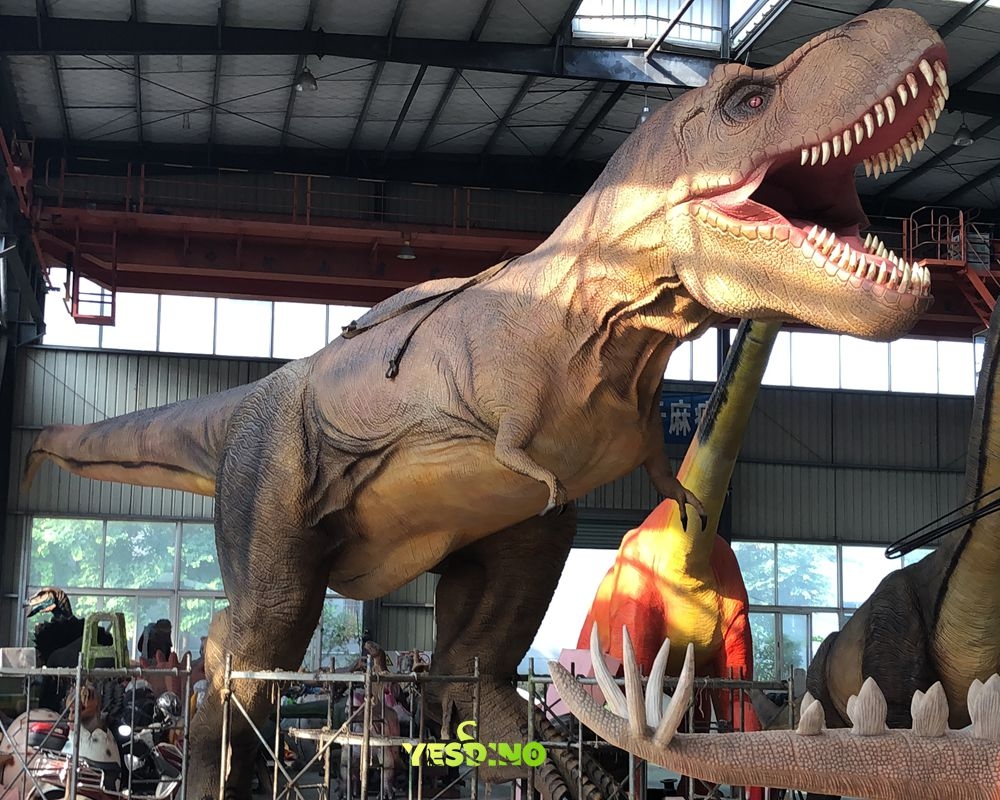
Site Adaptability & Equipment TurnoverAt the factory, the 15-meter T-Rex is disassembled and crated into four main parts: the head, body, legs, and tail. Measured diagonally, the bulkiest body component is 2.18 meters wide—perfectly squeezing into a standard 2.2-meter commercial freight elevator. Once fully assembled, the machine spans 15.2 meters in length, with its two feet occupying a floor footprint of 14.6 square meters. Indoor placement requires checking ceiling heights and floor load capacities. The machine's highest point when lifting its head is 4.3 meters, meaning a 4.5-meter ceiling provides enough clearance to avoid hitting fire sprinklers. The entire dinosaur weighs 1,850 kilograms, exerting a floor load of approximately 480 kilograms per square meter under each foot. Since a typical mall's ground-floor lobby has a load-bearing standard of 500 kg/sqm, there is no need to lay down heavy steel base plates. The tail of the machine features a 5-meter grounded power cord. Any mall electrician can simply run a 220V standard residential power line, and pairing it with a 15-amp circuit breaker is enough to get it running. Equipped with 15 small internal motors, power consumption hits a peak of 3,200 watts when the tail swings and the jaw opens simultaneously. Even running at full capacity, electricity costs less than 3 RMB per hour. Outdoor setups require wind-proofing. The base is a 3.5-meter by 2.2-meter steel frame equipped with 8 bolt holes. Bolting it down to concrete with 12mm thick screws secures it against Category 8 coastal gales. When set up on grass where drilling isn't an option, packing the base box with 400 kilograms of sandbags keeps it firmly grounded. Rain doesn't require waterproof tarps. The exterior is coated with three layers of waterproof sealant, allowing rain to simply bead up and slide off the textured silicone skin. The lowest point of the belly is 1.2 meters off the ground; unless floodwaters rise past its shins, the internal wiring and motherboards remain completely safe from water damage. The factory doesn't need to send an installation crew on-site. Simply hire a local electrician and three laborers, and rent a 5-ton mini-crane for 800 RMB. A quick look at the blueprints is all it takes to hoist the four main steel frames together, tighten 64 large bolts, and have it powered up within 6 hours. Disassembly and loading are twice as fast. Bringing a 4-man crew in at 10:00 PM means the entire unit can be taken apart and packed in just 3.5 hours. The internal wiring connectors are size-coded; the round-pin-to-round-hole design is completely foolproof, eliminating any risk of shorting out the motherboard by plugging things in wrong. Freight transport doesn't require oversized load trucks. Wrapped in bubble wrap and strapped to wooden pallets, the four components perfectly fill a standard 13-meter articulated truck. With cross-provincial freight rates at 4.5 RMB per kilometer, an 800-kilometer trip costs around 3,600 RMB in transport fees. There is a detailed log of the exact time needed for loading, unloading, and handling as the machine travels between cities:
During off-seasons, the four main components can be stacked and stored in a 20-square-meter corrugated metal shed. At a suburban warehouse rental rate of 30 RMB per square meter, idle storage only costs 600 RMB a month. Smear a little grease on the joints, and it will run perfectly upon power-up even after sitting for three months. The rapid teardown and setup times allow for a completely booked schedule without breaks. It can be dismantled late at night on October 7th, loaded onto a truck, hauled hundreds of kilometers away by the morning of the 8th, fully assembled and plugged in by 2:00 PM, and actively generating ticket revenue that same evening—without a single day lost in between. Across a 52-week year, this machine can handle plaza tours spanning 25 different cities. Before relocating, a quick 200-gram squirt of grease on the major joints and a wrench-tightening of the bolts is all the maintenance required. Provided the steel frame isn't bent in a vehicle collision, it can endure over 30 cycles of teardown and relocation without issue. Remote scenic mountain roads often narrow down to 3 meters, making them inaccessible for large trucks. Instead, two 4.2-meter light vans can easily transport the four components up the mountain. When faced with uneven, muddy slopes, the eight support pillars at the base can be vertically adjusted by up to 15 centimeters; simply slipping two wooden planks underneath is enough to level the machine perfectly. For international sales, ocean freight dimensions are calculated down to the millimeter. The 2.4-ton, 26-cubic-meter payload fills a 20-foot shipping container perfectly, with zero wasted space. Shipping it to a Middle Eastern port costs 1,800 USD, meaning freight accounts for less than 6% of the machine's purchase price. Global Logistics Efficiency & DeploymentDisassembled, the 15-meter T-Rex perfectly maxes out a 20-foot shipping container. The crates take up 26 cubic meters, leaving exactly 2 cubic meters for spare dinosaur skin, motors, and parts. The wooden packing crates do not require insect fumigation, max out at 2.3 meters high, and leave a crucial 10-centimeter gap at the top to allow forklifts to easily maneuver during unloading. Boarding a vessel from Shenzhen or Qingdao, it takes 15 to 18 days to reach the Port of Long Beach in the US, or 28 to 32 days to reach the Port of Hamburg in Germany. The container is secured with four sets of steel wire ropes, ensuring that even if harsh ocean waves tilt the ship by 15 degrees, the 1.8-ton internal steel frame won't shift or sustain impact damage.
The electrical box is equipped with an automatic 110V/220V switching module. Whether sold to Japan, the US, or Europe, it requires no external transformer—just plug it in and run. The motherboard chip processes at 50MHz, boasting an action delay of just 0.15 seconds, and features a dedicated ethernet port for remote diagnostics and repairs. Three days before the cargo ship docks, SF Express or DHL will deliver the physical paperwork directly to the buyer's door. The blueprints inside the crates are color-coded, and every single wire is labeled with numbered waterproof stickers.
If the dinosaur's movements become sluggish on-site, plugging in an ethernet cable allows us to monitor the motors' power consumption data from our backend. Tweaking the sensor sensitivity via the computer resolves 90% of issues on the spot. By fixing problems remotely within 2 hours of a repair request, we save the cost of flying a technician out and eliminate days of idle waiting. All materials needed for skin repairs are provided free of charge. A 5-liter tub of silicone putty and 2 square meters of color-matched dinosaur skin are shipped in sealed containers.
The 2025 shipping ledger confirms that all 142 machines sent to 34 countries cleared customs without a hitch. The control box utilizes Mitsubishi or Omron electrical components, ensuring that exposure to salty ocean winds won't cause rusting or power failures. The steel frame is coated with three layers of automotive primer, meaning it can sit outside in the rain for two months without developing a single rust spot. Two forklift operators can empty the shipping container in just 45 minutes. The heaviest single component is only 850 kilograms, meaning a small 3-ton forklift can easily lift it all in one go. Once plugged in, the system runs an automatic 5-minute diagnostic test, checking all 15 motors. Three extra fuses and two spare switches are included in the box just in case. Four complete novices following a video tutorial can have the machine up and roaring in 400 minutes. Receive the delivery on Friday, open up and start selling tickets on Saturday; operators cut down wait times by 15 days, allowing them to recoup their capital investment much faster.
Weatherproof DurabilityIndustrial-Grade Protection MetricsWhen purchasing a 15.8-meter, 2.4-ton animatronic T-Rex, steel quality dictates its lifespan. The main load-bearing skeleton utilizes Q345B low-alloy structural steel with a rated yield strength of 345 MPa. With the theme park operating 10 hours a day and the dinosaur swinging its tail 12 times a minute, the skeleton's tensile strength exceeds 470 MPa, making fractures extremely unlikely. Rust prevention is verified by paint film thickness. The base layer uses a zinc-rich epoxy resin with a dry film pure zinc content of 85%, achieving a level 0 adhesion rating. This is coated with two layers of micaceous iron oxide anti-rust paint and a UV-resistant topcoat. These five processes control the total paint film thickness between 180 and 220 microns.
The dinosaur's neck and tail rotate frequently, making them highly prone to wear. All 14 universal joints are equipped with SKF deep groove ball bearings, packed with special lithium-based grease rated for extreme temperatures from -40°C to 130°C. After the machine ran at full speed for 80,000 cycles, the radial clearance wear was less than 0.015 millimeters. Outdoor rainstorms can easily cause water ingress and short circuits. The electrical distribution cabinet is seamlessly welded from 1.5mm thick 304 cold-rolled stainless steel plates, boasting a compressive strength of 500 MPa. Submerged in a 1.2-meter deep water tank for 45 minutes, the IP68-rated waterproof seals completely blocked moisture, keeping the internal humidity below 35%. Low-voltage cables feature multiple layers of protective sheathing. Communication lines use RVVP pure copper shielded flame-retardant cables, encased in 304 stainless steel corrugated conduits capable of withstanding 800 Newtons of pressure. All 22 motion sensors across the body are fitted with IP68 aviation-grade 4-pin metal connectors, fully sealed at the back with epoxy resin.
The motors driving the legs and torso bear immense loads. Nine 1,000W high-torque brushless DC servo motors are installed, using Class H enameled wire rated for 180°C. When operating continuously for 6 hours in a 55°C oven while pulling a 60-kilogram sandbag, the casing's infrared temperature reading was only 72°C. The animatronic skin is exposed to constant sun and rain. The internal muscle layer uses 45 kg/m³ high-density flame-retardant sponge, with a tested rebound rate of 65%. After a stamping machine struck the abdomen with 600N of force 15,000 consecutive times, the sponge's permanent compression set was less than 2.5%. The chemical composition of the outer skin dictates its aging rate. Exactly 3.5% (by volume) of UV-B absorbers are mixed into the Dow Corning liquid silicone. After a 10x10 cm skin sample endured 2,500 hours of intense radiation in a xenon lamp aging chamber, tensile tests showed it maintained a strength of 2.6 MPa.
Moscow's severe -35°C cold can easily cause standard rubber to become brittle and crack. Skin treated with cold-resistant additives spent 120 days outdoors, with the neck completing 35,000 wide-angle twists, yet a microscope revealed zero micro-cracks larger than 0.05 millimeters. When powered on in a freezing chamber, the motors cold-started in just 2.2 seconds. High-humidity environments like tropical rainforests are breeding grounds for mold. The equipment endured 4 months of rain in Southeast Asia (with 2,600 mm of rainfall), yet the IP68 electrical cabinet maintained a steady 38% humidity. The silver ion anti-mold coating stops spore reproduction, and mud on the skin washes off effortlessly with a high-pressure water gun. factory inspections simulate the destructive force of typhoons and rainstorms. Booster pumps blast 120 kPa high-pressure water jets from all angles across the 15-meter body for 180 minutes. The equipment then runs a 96-hour continuous fatigue test, completing over 144,000 movements, with a 3D coordinate measuring machine showing zero trajectory offset. Material quality inspection reports accelerate customs clearance for international shipping. The PLC control board and 24V switching power supply hold CE and RoHS certifications from TÜV SÜD. Sponge and skin samples passed the UL94 V-0 flame retardant test, self-extinguishing within 5 seconds of removing an open flame. Real-World Climate TestingThe outdoor sandy terrain of an Abu Dhabi theme park in the UAE offers zero shade. At summer noon, surface temperatures soar to 82°C, and a thermal gun aimed at the machine's skin maxes out at 74°C. Dual built-in high-power industrial fans run at 4,500 RPM to forcefully expel the heat. A miniature air conditioning cooling module with a built-in compressor is packed into the control box, cranking the cooling capacity to 400W. The machine ran continuously in the desert for 14 months without a single high-temperature shutdown warning from the motherboard. Sandstorms bring wind speeds of 25 meters per second, filling the air with fine sand 10 microns in diameter. The outer composite silicone is coated with an anti-static finish; scraping accumulated dust from one square meter of the surface onto an electronic scale weighed less than 5 grams. Flexible, brush-lined sand skirts are installed over the mechanical movement gaps. Dust boots surrounding the hydraulic push rods block 99.9% of the sand. Random checks of the internal lubricating oil showed absolutely no sand contamination or sludge buildup. Winter displays in Irkutsk, Siberia, are buried under heavy snow year-round. Nighttime outdoor temperatures drop to -38°C, leaving a 45-centimeter thick layer of ice and snow piled on the T-Rex's back. Every square meter of the skeleton bears an extra 80 kilograms of static weight. After the main load-bearing steel beams withstood this for three months, a laser level check revealed a subsidence deformation of only 1.2 millimeters. All joint bearings throughout the body are packed with aviation-grade anti-freeze grease rated for -50°C. The motor reducer gears undergo high-frequency quenching, achieving a tested hardness of HRC58. During an early morning cold-start test, the delay from command input to execution was only 2.5 seconds—the gearbox did not freeze. The antifreeze-infused silicone retained 60% of its elasticity even in extreme cold. At 10:00 AM, the dinosaur roared on schedule, its jaw opening 45 degrees without any physical tearing of the skin at the corners of its mouth. Scanning the machine with an infrared thermal imager after closing time showed a steady temperature difference of around 12°C between the inside and outside of the skin.
The air in Phuket, Thailand's primeval rainforest is chronically sticky. Relative humidity sits around 95% year-round, with annual rainfall exceeding 3,200 mm. Every wire connection across the body is swapped out for IP68-rated threaded aviation plugs. Gaps around the waterproof rubber strips are sealed tightly with Dow Corning 732 neutral silicone sealant. Throwing 500 grams of color-changing silica gel desiccant into the chassis showed that after enduring two rainy seasons, only 15% of the beads had turned pink. Damp, hot conditions are notorious for breeding Aspergillus niger and Pseudomonas aeruginosa. The raw silicone slurry is mixed with 2.5% nano-silver antibacterial powder before molding. Rotting leaves and mud were left stuck to the dinosaur's thigh for two straight weeks. Maintenance crews used an 80-bar pressure washer from 30 centimeters away to blast the thigh. The mud washed right off, and when swab samples were sent to a lab for 48 hours, no bacterial colonies grew in the petri dish. The seaside parks of Sanya, Hainan, are filled with highly concentrated salt spray. Airborne sodium chloride hits 5%, and salt water corrodes metal incredibly fast. The dinosaur's exposed fangs and claws are all cast from 316L medical-grade stainless steel. The stainless steel surfaces are polished down to an Ra0.4 roughness, allowing saltwater to slide off instantly. A Category 14 typhoon swept through, with wind speeds reaching 42 meters per second. Eight 16mm thick galvanized steel wire ropes kept the behemoth firmly tethered to its concrete base. The base flange is laser-cut from 25mm thick Q345B steel plate, secured to the foundation by sixteen M24 8.8-grade chemical anchor bolts. The tail takes the brunt of the wind, so three 8mm thick triangular reinforcing ribs are pre-welded inside the skeleton. An ultrasonic flaw detector scanned all the tail welds and found zero stress-induced tearing. During power-on tests, the motion error across all 28 joints remained strictly within 0.5 degrees. Uyuni, Bolivia sits at an elevation of 3,656 meters, where the high-altitude sun is punishing. Daily peak UV-B radiation nears 4.5 W/m², quickly turning polymers to dust. The surface silicone is mixed with 4.2% Chemours R-902+ titanium dioxide. Quality Control Data & Inspection StandardsBefore leaving the assembly floor, every 15.8-meter T-Rex is secured to a PLC-controlled testing rig. The base is fitted with eight 5-ton strain gauge load cells to monitor the massive machine's center of gravity shifts as it moves erratically. The main control board issues commands to 9 servo motors, launching a 72-hour continuous fatigue test. By the morning of the third day, the counter hits exactly 108,000 cycles, concluding the round-the-clock endurance assessment.
The scatter plot on the monitor provides the verdict: absolute trajectory errors are locked strictly within 0.8 millimeters. The pulse signals sent back from the motor encoders to the PLC panel are flawless, with a zero-loss rate. The drain in the water pressure spray room is emptied, and four Grundfos booster pumps are fired up. The nozzle pressure gauges max out at 120 kPa, blasting the entire body with a dense barrage of high-pressure water jets. After 180 minutes of continuous spraying, the power is cut, and the machine is hauled into a drying room. Cutting open the belly inspection hatch, technicians run a moisture probe along the seams of the electrical distribution box; the buzzer, set to trigger at a 2% moisture level, stays completely silent. Electrical safety reports dictate the shipping schedule. The outsourced 24V DC switching power supplies and PLC control boards all carry CE compliance certificates stamped by TÜV SÜD labs.
Before the sponge and silicone skin are cut at the factory, they head to the fire lab. A 13-millimeter thick silicone sample strip is clamped to a vertical stand, and a Bunsen burner blasts it from below with a 980°C blue flame.
This performance earns the materials a UL94 V-0 flame retardant compliance report. Having this document on hand during fire safety inspections saves a massive amount of on-site verification hassle. The pulling force for the action points relies entirely on 6-millimeter thick 7x19 galvanized steel wire ropes. A tensile testing machine clamps both ends and pulls relentlessly; the screen hits a peak of 2,800 kilograms before a sharp snap is heard. To gauge the wear resistance of the transmission parts, the lab built a dedicated replica of the tail joint. Weighted with a 150-kilogram sandbag, the skeleton swung 20 times a minute for 30 consecutive days, enduring 860,000 cycles of alternating stress. Tearing down the universal joint and sticking a micrometer into the SKF bearing ball gaps, the radial clearance wear measured just 0.025 millimeters. The extreme-pressure molybdenum disulfide lithium grease inside had turned dark and oily, but there was no dry, powdery residue to be found.
Calculating Total Cost of Ownership (TCO) requires factoring in labor costs for assembly and teardown. Two junior assemblers at the factory pull on their gloves, grab 18V Makita lithium-ion impact wrenches, approach the machine, and start the stopwatch.
After-Sales SupportHardware Warranty & Spare Parts NetworkThe T-Rex's internal skeleton is fully welded using national standard Q235B seamless steel pipes, with load-bearing pipes featuring a 4.0mm wall thickness. The steel surface is coated with an anti-rust zinc-rich primer and an epoxy micaceous iron oxide intermediate coat. The entire skeleton comes with a 24-month warranty. Frequently moving parts, like the neck and tail, are equipped with 5.5 kW brushless servo motors and planetary reducers. Delivering an output torque of 350 N·m, these mechanisms allow the head to swing across a 1.5-meter radius. The external electrical distribution box carries an IP65 waterproof and dustproof rating, while the "brain" inside relies on a Japanese Omron micro PLC controller. The motherboard operates reliably in temperatures ranging from -20°C to 60°C and is fitted with a 30mA leakage protection switch. The wiring inside the box utilizes German-standard 0.75 mm² thick pure copper flame-retardant cables. The complete set of electrical control components also includes a 24-month free warranty.
Upon delivery of your dinosaur, our ERP software generates a bill of materials containing over 500 part codes alongside a 3D structural diagram. All manufacturing blueprints for this batch of machines are stored on our servers for 15 years. We maintain a constant over 95% in-stock rate for easily worn parts, all housed in a 1,200-square-meter climate-controlled automated warehouse. A free emergency repair kit is included in the shipping crates. The consumables inside are more than enough to handle minor bumps and scrapes during the first six months of high-frequency use.
If the machine encounters a malfunction, once the part request is entered into our after-sales inventory system, the warehouse will have the new part packed within 12 hours. Control boards or pneumatic valves weighing under 20 kilograms are shipped via DHL or FedEx international air express. Delivery takes 2 to 4 business days to North America and Western Europe, and 1 to 3 business days to the Middle East. Freight is completely free during the warranty period. For damaged steel frames exceeding 1 cubic meter or 50 kilograms, replacement parts are shipped via LCL (Less than Container Load) ocean freight to the destination port. Our export agents prepare the commercial invoice, packing list, and certificate of origin in advance to streamline your customs clearance. The shipped parts are packed in 9mm thick fumigation-free multi-layer plywood crates, with a 10-centimeter clearance at the bottom for forklifts. Once the 24-month warranty expires, all spare parts are sold to the buyer at factory cost. If the main drive shaft of a 15-meter, 2.8-ton giant T-Rex needs replacing, the workshop will manufacture and ship a new one within 72 hours of receiving the order. For out-of-warranty parts with packaging dimensions under 120x80x80 cm, orders totaling $1,000 or more in a single month qualify for priority air freight booking. Prolonged outdoor sun exposure will inevitably cause fine, dry cracks on the dinosaur's skin. To counter this, our maintenance team mails out 500 ml bottles of specialized silicone conditioner seasonally. On-site operators simply use a soft-bristled brush to apply it along the muscle textures every 45 days, preventing the polymer materials from aging and hardening.
Every double-acting pneumatic cylinder is stamped with a batch code, backed by a 100,000-cycle reciprocating fatigue test report from the pneumatic component manufacturer kept in our archives. The equipment's annual mechanical failure rate is kept strictly under 1.5%, and a 5,000-hour Mean Time Between Failures (MTBF) is written directly into the contract terms. Cross-Time Zone Remote Technical ResponseTwelve senior electromechanical technicians are stationed specifically to handle requests during US Eastern and Central European hours. If a theme park operator discovers a dinosaur has stopped moving at 2:00 AM, our computers will pop up an alarm notification within 3 minutes. On-site staff don't need to understand mechanical principles; if the machine malfunctions, they just need to shoot a short video with their phone. The video should capture 15 seconds of the dinosaur's full-body movement, 8 seconds of the motherboard flashing light frequency in the distribution box, and 5 seconds of the air pressure gauge reading. This MP4 video, typically under 50MB, is then uploaded to our designated web portal. The technician on duty downloads the video and immediately pulls up the machine's factory blueprints on their computer. The motherboard of every 15-meter T-Rex stores 85 different motion codes. By matching the flashing light sequence in the video, the technician can tell instantly whether the #3 stepper motor is jammed or if leaves are blocking the infrared sensor. For varying degrees of downtime, our after-sales team operates according to the following schedule:
Checking the circuits usually requires a local electrician's help, and we will send over a complete set of wiring diagrams labeled in both English and Chinese. Our technician will start a Zoom video call and ask the local electrician to set their multimeter to 24V DC to measure the voltage across terminals 12 and 14 on the micro-controller. If the reading drops below 21.5V, the warehouse will ship out a new switching power supply. Software errors are resolved entirely remotely via an ethernet connection. The dinosaur's electrical box features standard RJ45 ethernet and USB ports. Staff on site just need to plug in a laptop connected to a 5G network. Our domestic technicians then use TeamViewer to remotely control the laptop, spending 10 minutes flashing the low-level control code from scratch. When a client wants to drastically change the machine's "temperament," our programmers handle the data tuning:
Within 24 hours of receiving the request, the programmer will compile a new .bin file and send it over. The on-site operator simply saves the file onto a 32GB industrial-grade SD card, slots it into the motherboard, unplugs and replugs the power, and the new actions are instantly uploaded. The biggest fear in cross-border communication is a language barrier. To prevent this, every shift at the technical desk is staffed with two TEM-8 certified translators fluent in mechanical terminology. Every maintenance PDF sent to your inbox includes high-definition photos with red arrows pointing out exactly which electrical components are being discussed. Large machines sold to regions with extreme climates are retrofitted with networking modules, featuring the following real-time data transmission capabilities:
Spare Parts Supply Chain & Software MaintenanceAll 1,420 components on the T-Rex are tagged with a unique 12-digit barcode, each meticulously logged into our SAP backend system. The factory built a 2,500-square-meter automated warehouse partitioned into three separate, climate-controlled rooms, specifically designed to stockpile spare parts made of different materials. Rust-prone Q235B steel skeletons are stored in a drying room with humidity strictly below 35%. Dow Corning silicone and 45D high-density sponge are kept in a massive, dark cold-storage unit maintained at a constant 15°C year-round. On the day you receive your machine, our system automatically compiles 320 CAD dimensional blueprints onto a hard drive, securing them for a guaranteed 15-year shelf life.
After the 24-month warranty ends, we continue to sell every part—down to a single screw—to the buyer at the original factory floor price listed on the BOM. On the open market, a 5.5 kW brushless servo motor paired with a 1:50 planetary reducer starts at 12,000 RMB. By providing your machine's serial number, you save at least 35% on the sticker price of a single replacement part. After 1,500 hours of outdoor sun exposure, the skin on the dinosaur's back will inevitably fade slightly. Our color technicians pull up the CMYK base ratio cards from the computer and spend 4 hours hand-mixing a 500 ml bottle of restoration fluid. Using a colorimeter, we ensure the Delta E value is below 1.5 before sealing the can. Once applied, the naked eye cannot tell the difference between the old and new colors.
In the rare event that a large custom steel frame is smashed, the welding shop will immediately dispatch three senior welders to fast-track the job. For a 2.5-meter, 120-kilogram main neck beam, cutting the pipes, grinding, fully completing the CO2 shielded welding, and spraying two coats of epoxy primer are all executed. The entire process is completed in under 72 hours, nailed into a 9mm thick fumigation-free wooden crate, and sent to the freight terminal. Beyond swapping out chunks of metal, we have dedicated specialists handling after-sales support for the machine's motion control software. If a theme park operator buys a 3-minute, 15-second terrifying roar audio clip for a special Halloween exhibition:
A fool-proof 4-pin aviation plug is located near the dinosaur's throat. To upgrade to larger waterproof speakers, the operator simply unscrews the IP67-rated waterproof nuts clockwise, unplugs the original two 200W speakers, and swaps in 400W units. Align the plug with the slot, push it to the bottom, and tighten it. One person on a ladder can finish the job in under 5 minutes. If the dinosaur's motion range feels off, our programmer can retrieve the v2.4 .bin source file from the cloud. If a buyer emails complaining that the tail swings too wide, the programmer will shave 0.5 seconds off the opening time of the #3 cylinder valve controlling the 3rd tail segment. This reduces the physical extension stroke from 80mm to 50mm. You just need to grab a 16GB Class 10 high-speed memory card on-site, save the new file, and plug it into the motherboard in the distribution box. Say you need the dinosaur to blink every 12 seconds and keep its mouth slightly open by 3 cm to "breathe" during an evening light show. Our coder will package these new commands into a 1.8MB "night mode" file and email it directly to you. After 15,000 hours of operation in the park, the gears in the reducer might wear down and create a gap exceeding 0.15 millimeters, causing movements to lag slightly. Our after-sales technician will pull up the operational log on our server and calculate the gear wear variance.
A 4G SIM card is soldered onto the circuit board, collecting 15 data points each month to generate a PDF "health report." If our backend sees that the exhaust pressure of the #3 cylinder drops below 0.4 MPa, we will call immediately. We'll instruct the on-site workers to grab a 4mm Allen wrench and give the throttle valve a half-turn clockwise to increase the air intake. |