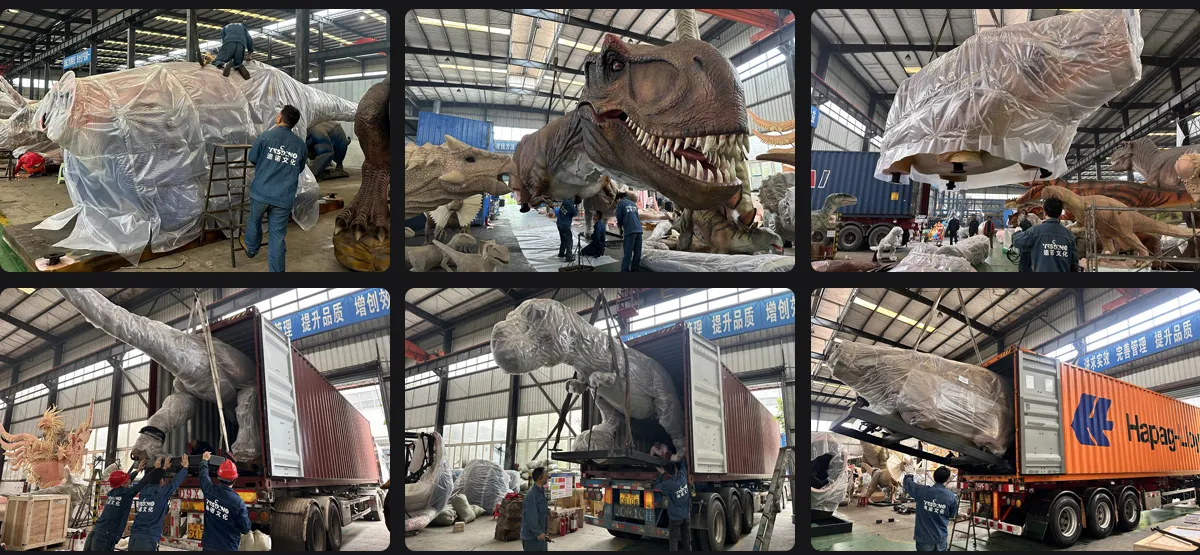
Production Process
A ten-metre animal standing five metres tall is a different proposition from a long low one. It is the first thing visitors see over a fence line, and the first thing a site manager asks about is the wind.
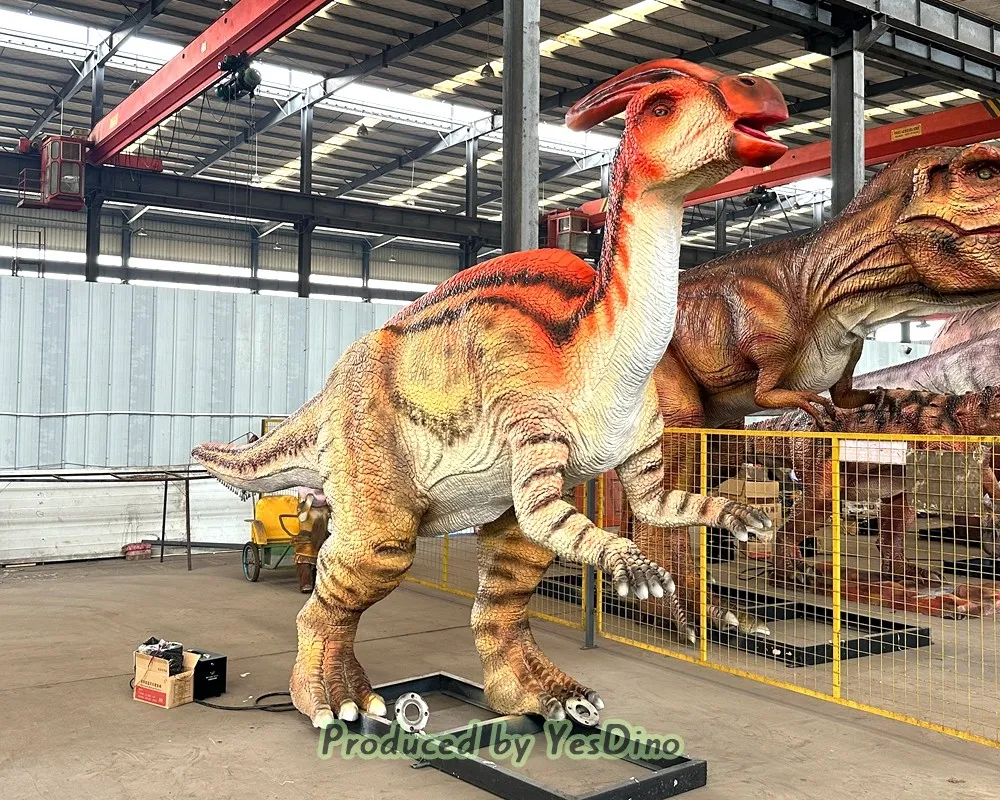
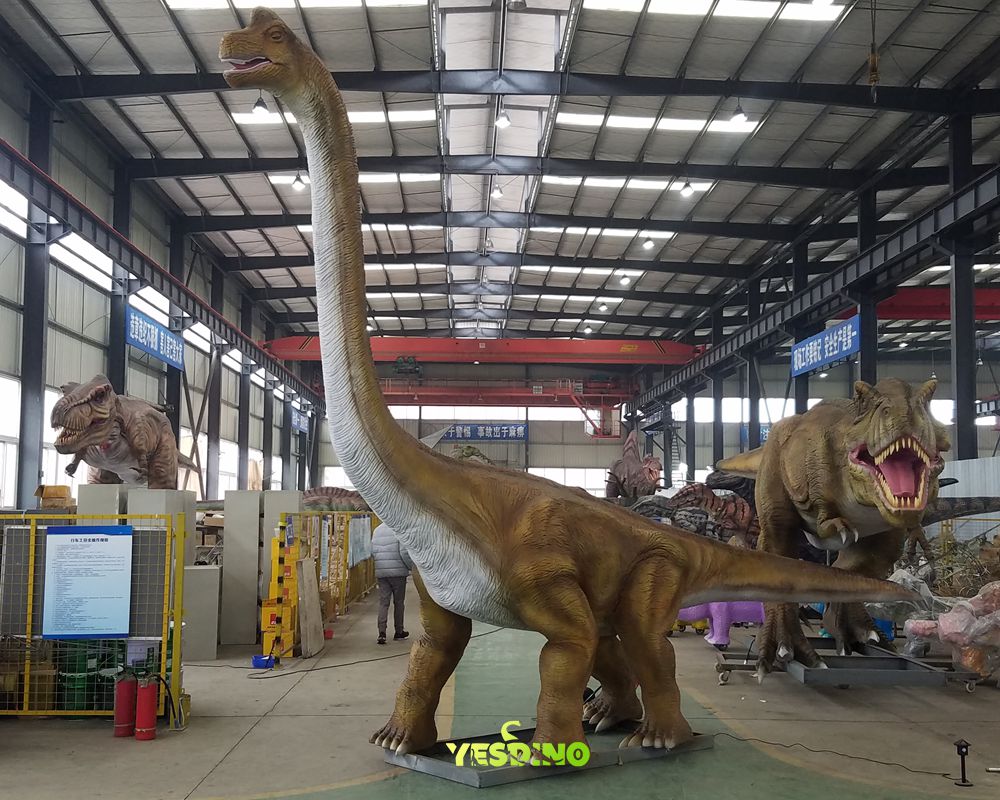
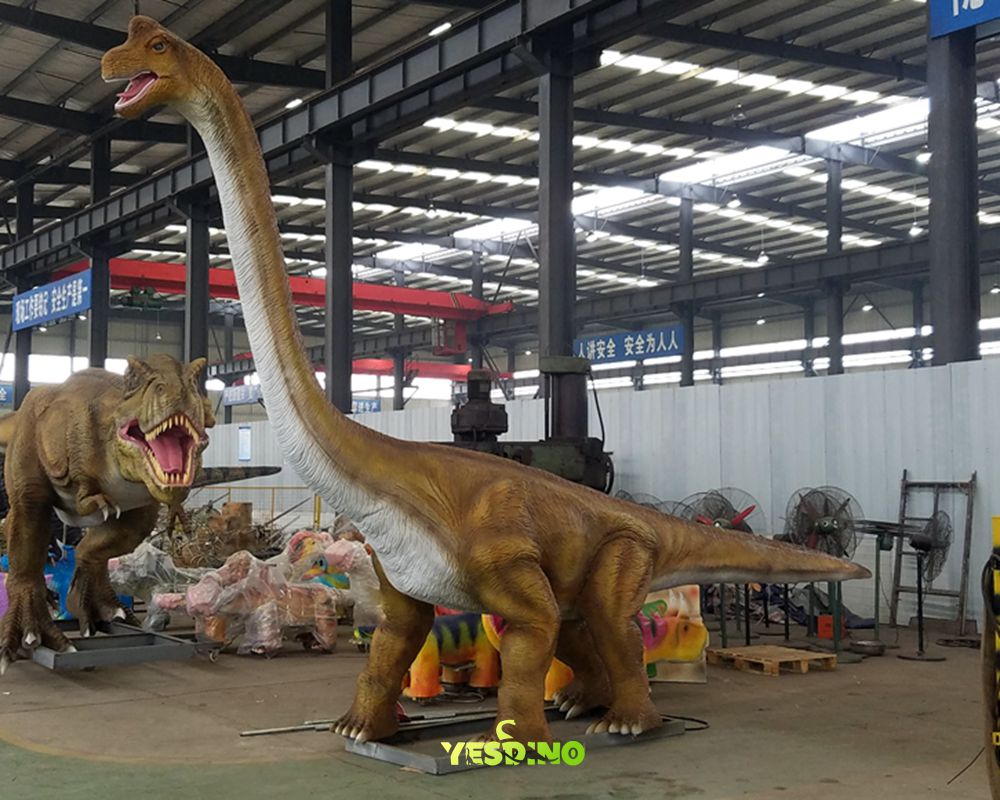
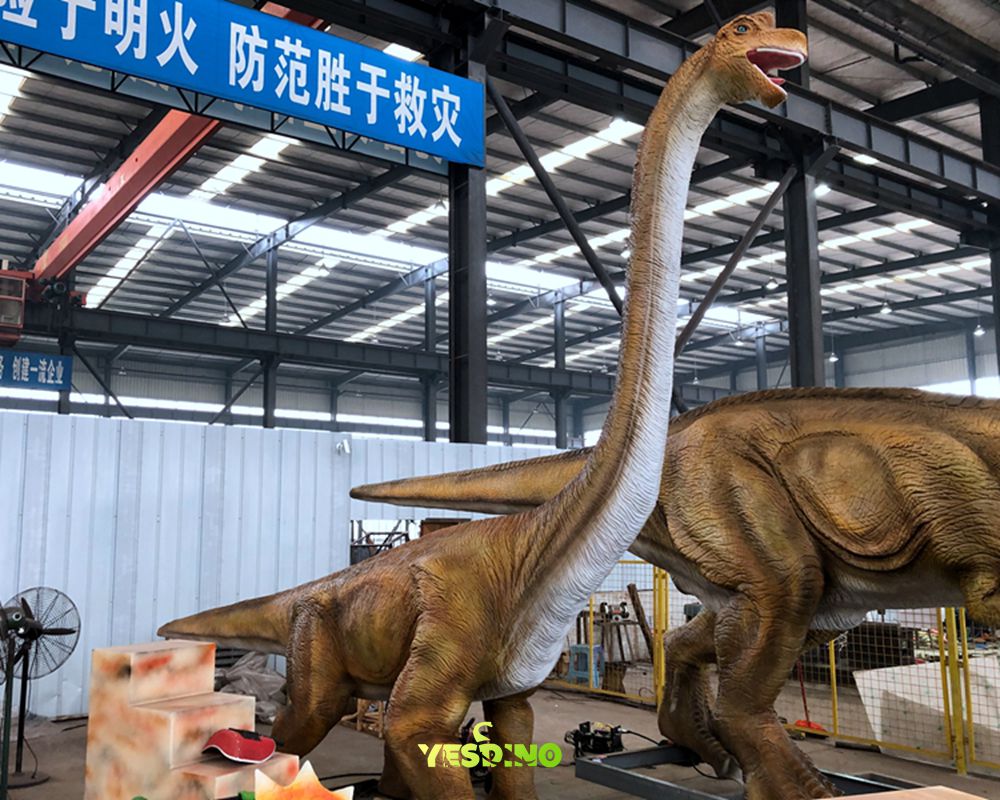
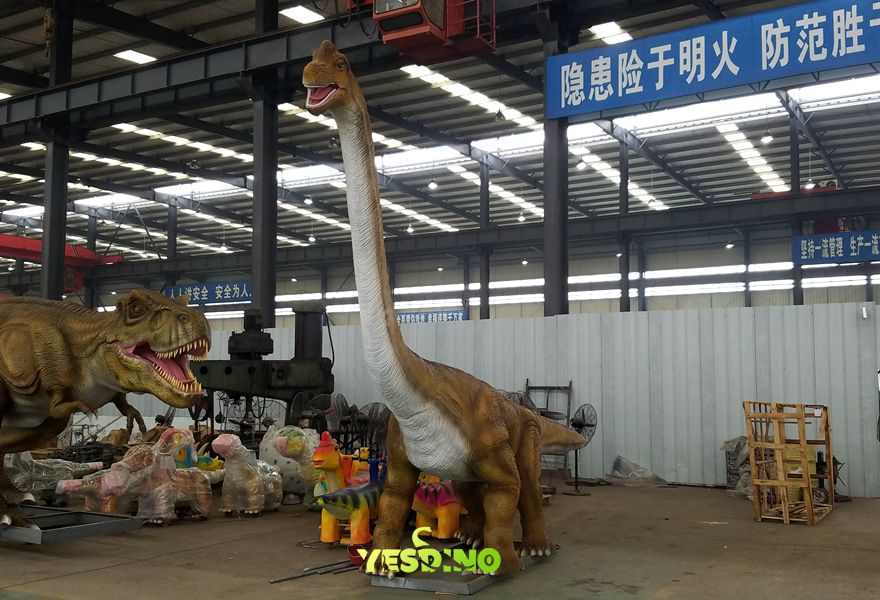
This build is 10 m long, 1.2 m wide across the body, 5 m to the top of the head. The height sits in the neck, and the neck is where the installation decisions get made.
Height does what length cannot
A low animal is read from the path. A five-metre animal is read from the car park, from the entrance gate, from the far bank of a lake. That visibility is what a vertical long-neck buys, and it is paid for in crane time and anchor depth rather than in skin.
The trade-off is wind and footprint. A 10 m body with a 5 m silhouette catches load that a low build ignores, so the base goes from four anchor points to six and the plate grows. If the site is an exposed ridge, say so at quote stage, because that changes the foundation rather than the animal.
Outdoors, keep 7 m clear above the head so the neck can lift and so a lighting mast fits if the animal is lit at night. Indoors, 6.5 m to the slab is the working number, and anything below that pins the neck travel down to a small arc.
Where a roof structure sits above the animal, the travel limits are set at commissioning and written into the handover file, so nobody adjusts the neck into a beam two seasons later. The stops are physical as well as programmed, which is the part that survives a staff change.
Where the head actually goes
The neck arcs, and the head travels forward as well as up. Keep 2.5 m clear in front of the chest, because a low feeding pose brings the skull down and out, and a barrier set at 1 m sits inside that arc. This is the measurement that gets missed on drawings.
The pivot at the base of the neck is the joint that gets greased, and it wants to be reachable from a 2 m step ladder rather than a scissor lift. The head itself is serviced from a lift, which is why the control programme includes a service mode that parks the neck low and holds it there.
The sloping back and the barrier line
The forelimbs are longer than the hindlimbs, and that is what gives the animal its sloping back: shoulder higher than hip, the whole line falling toward the tail. Get the slope wrong and it reads as a generic long-neck, whatever the head is doing.
Because the back slopes, the barrier line deserves a second look. On the shoulder side the animal stands taller than the elevation drawing suggests, and a fence set to hip height leaves the shoulder hanging over it.
Skin above eye level
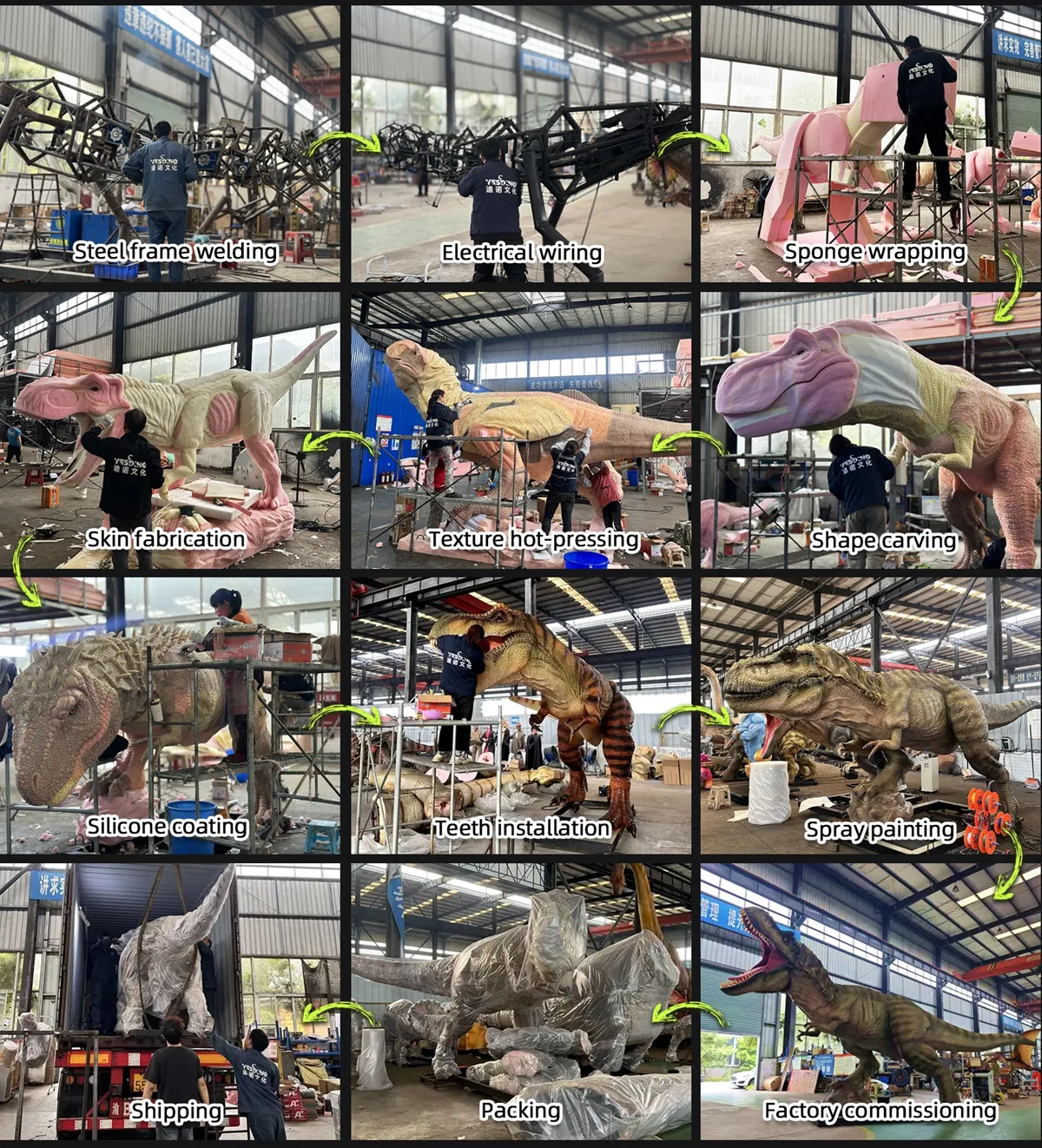
Q235 steel frame, rust-proofed, foam body, silicone skin 5-7 mm, colour in translucent layers, rated from -25°C to 45°C at 110 V or 220 V. Most of the skin sits above eye level, and that moves where the painting effort goes.
From the ground, people see the underside of the jaw, the throat and the belly. Those surfaces get the same colour work as the flanks, because a pale underside below a darker back is the thing that reads from directly underneath. The spoon-shaped teeth show when the jaw opens, and at 5 m they are a detail rather than a feature, so the mouth is programmed gently.
Two crates and a crane
Five sections, and the neck is the tall piece. That lift needs planning: a 5 m height with a soft skin means spreader bars rather than slings around the neck, and a crane standing within 6 m of the pad.
The pad runs about 11 m by 2.5 m with six resin-set anchors. Assembly order is base, hind limbs, forelimbs, neck, head. The neck goes on last, because once it is up the animal is too tall to work around comfortably.
Before you order
Send the ground and its slope, the wind exposure, the ceiling if the animal goes indoors, the crane access route and the distance to power. If it stands near a road or a boundary, tell us the sightline you want from that side.
Two cases where this size is wrong. A dense walk-through exhibit where the head at 5 m stays above the visitor's field of view for the whole approach, so the animal is impressive from outside and empty from inside. And a site with no crane access within 8 m of the pad, where the neck section cannot be landed.
Enquiry
Send site photos with the horizon visible, the ground surface and the route a crane would take to the pad. Tell us whether the animal is lit at night, since masts change the clearance figure. Price excludes freight, duty, certificates and installation.
Where to go next
If you are still comparing options, start with the pneumatic versus hydraulic comparison — it lines up the builds by length and reach. Site work is covered in the installation guide for pads and access, and the wiring concealment notes lists the factors that move the price.
For ideas on placing it, see layout strategies for themed trails. The rest of the range is on animatronic dinosaurs, and if this one is the wrong size for the slot, animatronic triceratops for sale is the closest alternative.
Product Accessories
Packaging and Container Loading