

Production Process
The gate animal is finished, the launch photos are up, and the trail behind it still has three bare platforms. That is the point where most parks buy a six-metre Tyrannosaurus. Not as the headline. As the animal that fills the middle of the walk and keeps people moving.
The second animal, not the hero
A hero build at the entrance stops people and gets photographed. Everything behind it has to reward a walk. Six metres is about the smallest length where the skull still reads as a predator from ten metres away, and 2 m at the head puts the animal at chest height for an adult, so children look up at it without a barrier doing the work instead.
What you give up against an eight or thirteen-metre build is presence at distance, and on a trail that costs you little. Visitors stand eight to twelve metres away, walk past, look back. Six metres owns that range.
Path width, turning, and the 0.85 m body
The body is 0.85 m across, so the animal stands on a 1.2 m strip of hard standing with its feet just inside the edge. On a trail with a 2.4 m path, that leaves room for two people to pass, which is the number that decides whether a queue forms at the platform. Where the path is narrower, set the animal at a slight angle to the direction of travel, head toward the approach.
At 6 m it also turns. At the end of a loop, an animal that needs three metres of clearance behind it forces the path to swing wide; a 6 m build on a diagonal fits the inside of a bend with the tail over the soft verge.
Movement at walking pace
On a trail the animal is seen close and slowly, so small movements do more work than big ones. Head turn and neck carry the performance; the jaw opens on the approach and closes after people pass. The forelimbs with their two-fingered hands work better as a short lift than a reach, since a wide gesture on a short arm looks like a machine waving.
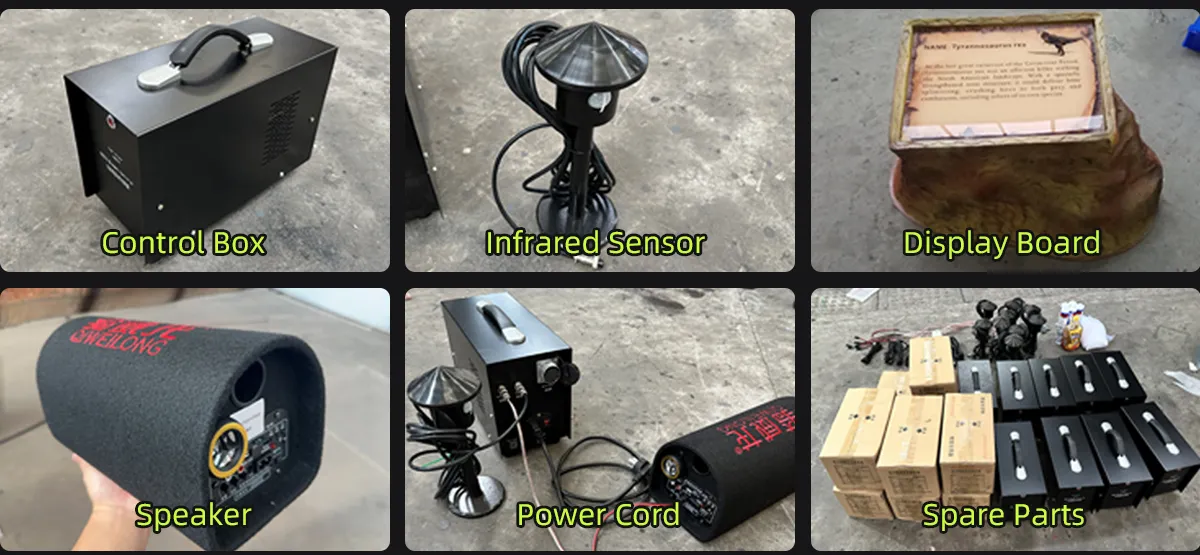
A trail sensor sits about 4 m from the animal on the approach side, with 0.5 s of delay, shorter than an event build uses because visitors here walk rather than arrive in a surge. If the platform is a dead end where people stand and film, add a second sensor on the far side and let the programme loop after the first trigger expires.
Skin on a wet, shaded trail
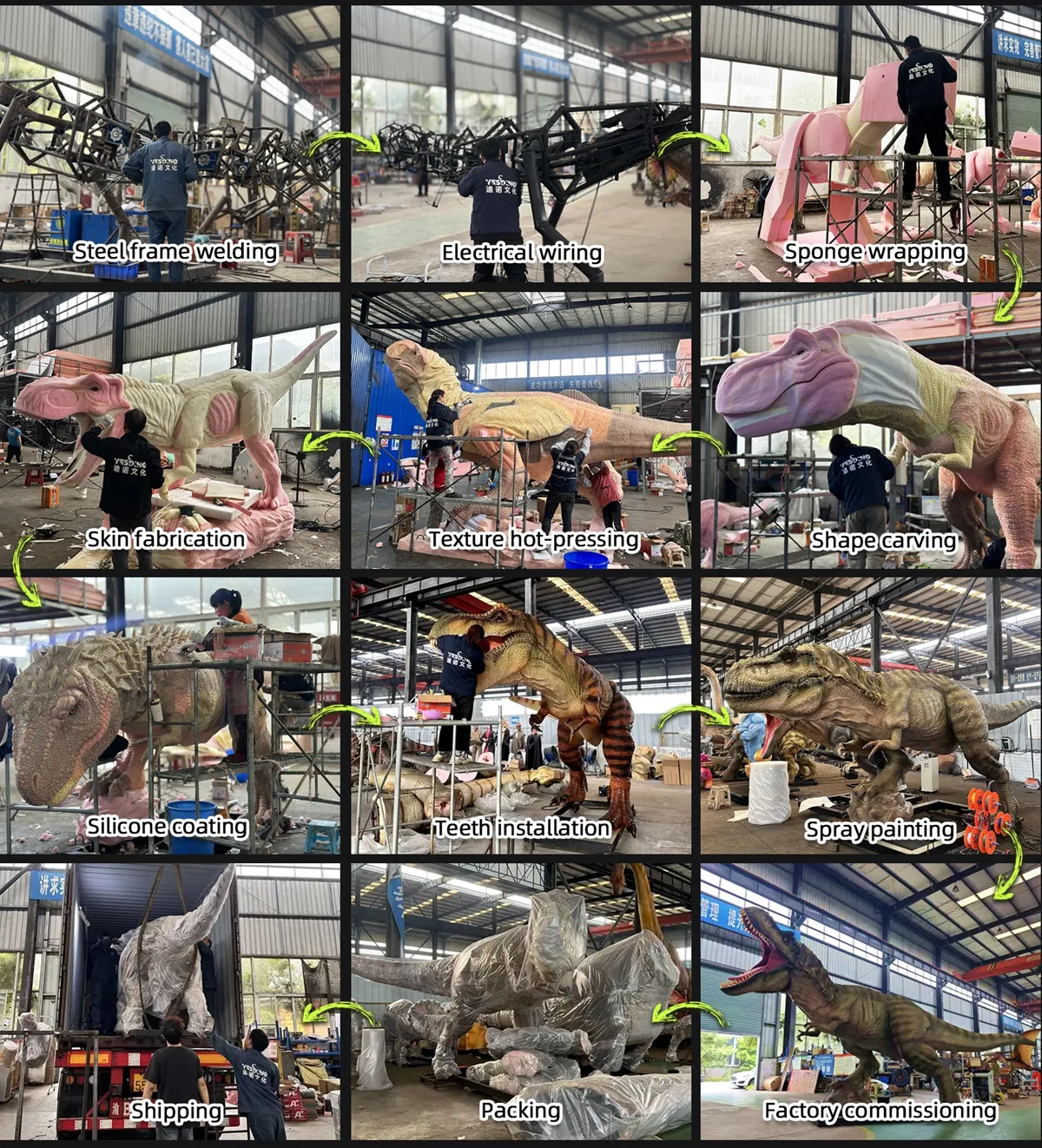
Q235 steel frame with rust treatment, foam-carved body, silicone skin 5–7 mm, colour in translucent layers so the tone sits below the surface. Under tree cover the light is green and dim, so we warm the base tone slightly for shaded positions.
Rated −25 °C to 45 °C. Trail animals get touched, climbed on and rained on. A scuff along the flank is sanded and re-pigmented in place using the batch colour recorded on the build sheet, rather than a panel respray.
One crew, one small truck
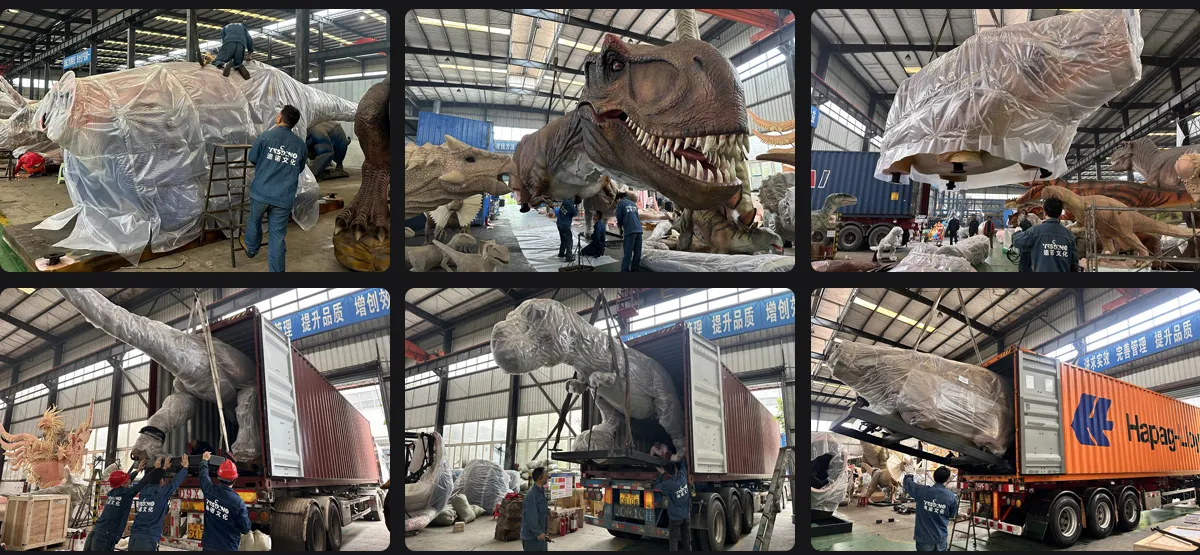
This animal ships in three crates and goes onto a trail on a tipper or a flatbed. The 2 m head height clears most estate gates and every standard site door. Assembly is two people and half a day: legs and base frame first, body next, head and neck last, then skin and programme. The heaviest crate is around 260 kg, so a tractor with forks is enough.
Base plates take M12 anchors into a concrete pad or ground screws into firm soil. Put the cabinet on the back side of the animal, away from the path, with the door opening toward your service route and 600 mm of standing room. Trails are serviced on foot with a toolbox, and a cabinet facing the visitors turns a five-minute check into a closure.
Before the deposit
Send a photo of the platform and the path leading to it, the surface, and how visitors reach the spot. Tell us the viewing direction, because the head is set toward the approach and that decision is fixed at build. Confirm 110 V or 220 V and where the supply lands relative to the animal; a 20 m cable run is normal, a 120 m run changes the plan.
Two cases where this size is the wrong buy. A spot seen from a car park forty metres away needs a larger animal, since six metres disappears at that distance. A site where the animal is the only attraction wants the gate build instead, because a second animal works by contrast with the first.
Enquiry
Tell us the trail, the platform size and the viewing distance, and we will say whether six metres is generous or tight for the spot. We answer with the crate list, foundation detail and a build time for your own crew.
Where to go next
Worth reading before you commit: the wiring concealment notes for how the sizes compare, the park layout and theming strategies for what the ground has to carry, and the cost breakdown with the seven price factors for where the money actually goes.
For ideas on placing it, see photo zones and crowd flow. The rest of the range is on animatronic dinosaurs, and if this one is the wrong size for the slot, animatronic spinosaurus for exhibition halls is the closest alternative.
Product Accessories
Packaging and Container Loading