Production Process
A Triceratops is the one dinosaur that works from any angle. Three horns and a two-metre frill read as clearly from the escalator as from the floor, which is why it gets picked so often for shopping centres — people see the silhouette before they see the animal.
SKU YKL-115 is our five-metre build: 5 m long, 2 m to the top of the frill, 0.65 m across the body. That last number matters more than it looks. At this length and slim profile the model turns inside a mall corridor and fits through a service lift, which is not true of the eight-metre adult most catalogues show.
Why five metres is the size for indoors
The animal you see in museum halls is usually a cast of an adult Triceratops horridus: eight to nine metres nose to tail, skull alone close to two metres. Beautiful, and almost impossible to place inside a building that was designed for retail.
At five metres this build keeps the proportions — the frill still dominates, the horns still carry weight — while dropping the length by roughly a third. Head room, door widths, freight cost and the space a mall can actually give up all come back into range. Most operators who start out wanting the full-size animal end up ordering this one once they have measured the atrium.
The five movement groups
Each group runs on its own drive with end-of-travel protection, on a loop or triggered by a sensor. Speed and dwell are set at commissioning, so a mall can run a slow, quiet cycle during trading hours and a more active one for a weekend event.
Head, left and right. The joint that does most of the work. A Triceratops turns its head to look at people; when the head stops moving the animal reads as scenery within about twenty seconds.
Neck, up and down. Brings the frill down towards a child's eye line and back up for photographs from the balcony. On a five-metre build the travel is modest but the effect is not.
Jaw, open and close with roar. The beak and lower jaw move together with the sound file. Timing is the detail that decides whether it looks alive: the jaw has to start opening slightly before the roar, not after.
Eyes, blinking. Small, cheap, and the thing children mention afterwards. Works best at close range, which is exactly how a mall animal is viewed.
Tail, lateral sweep. Changes the outline at distance. In a wide atrium this is the movement people notice from the far end of the floor.
Skin, frill and colour
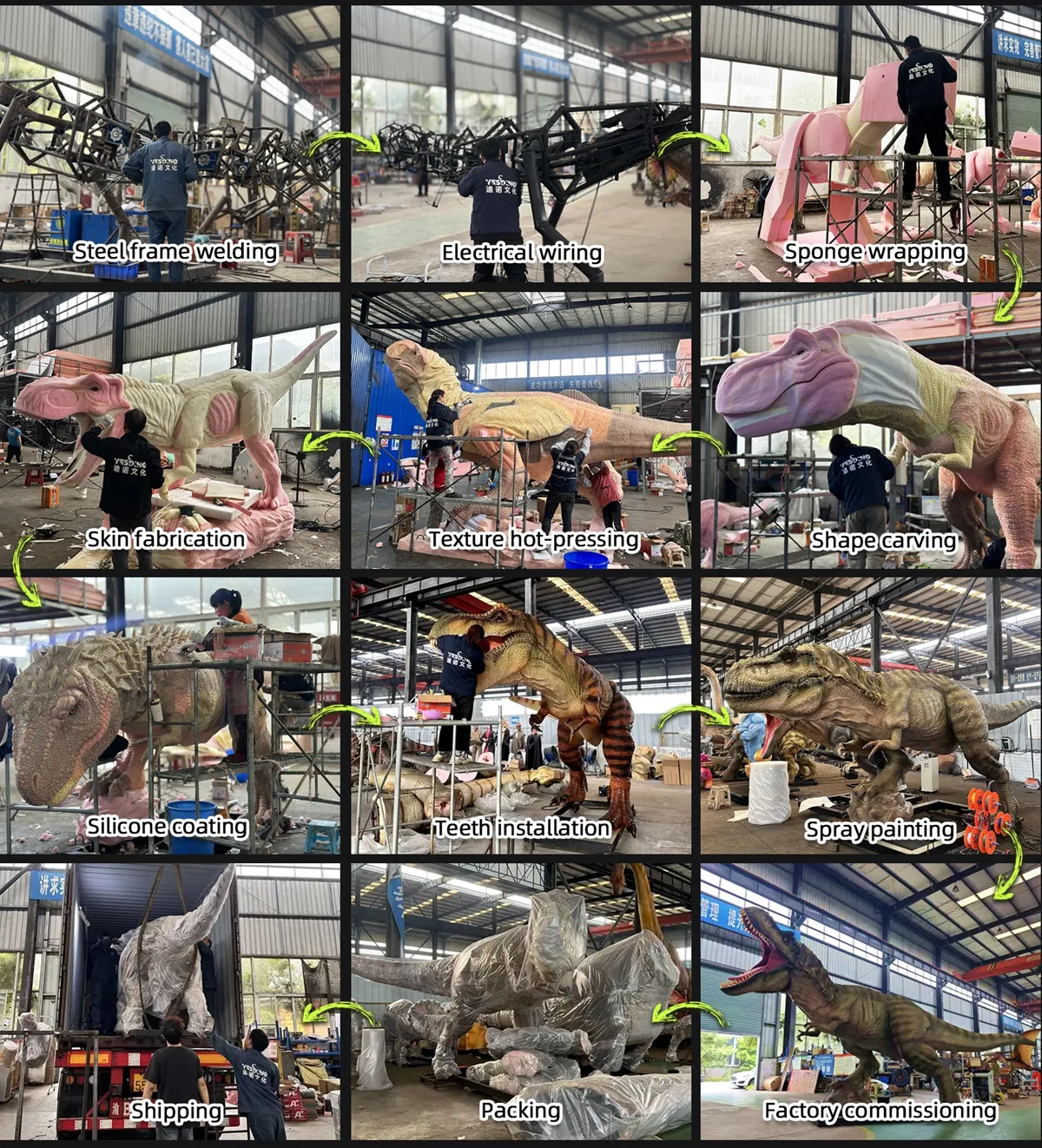
The volume is sculpted in high-density foam over a welded Q235 steel frame, then coated in silicone five to seven millimetres thick. Colour goes on as translucent silicone airbrushed in layers, so the tone sits inside the skin rather than on top of it — the difference shows up after a season of handling and cleaning, when surface paint starts to chalk and layered pigment still blends when touched up.
Frill width, horn length and the amount of wear are all specified per order. A clean, saturated juvenile reads as family-friendly and suits a toy or food court; a duller, scarred adult with mud staining low on the legs reads as a museum piece and holds up better next to stone or timber finishes. Send a reference — a photo of the space, a film still, a sketch — and we'll work from that rather than the default.
Getting it into the building
This is where indoor projects fail, and it has nothing to do with the animal. Three measurements decide the job: the widest door on the route in, the service lift if there is one, and the floor loading at the display point.
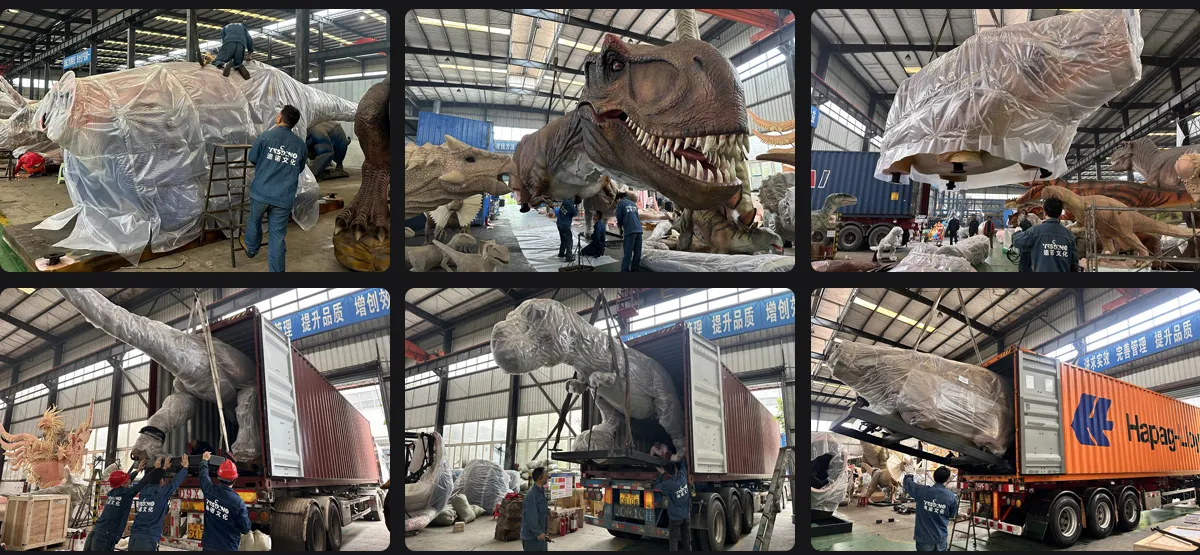
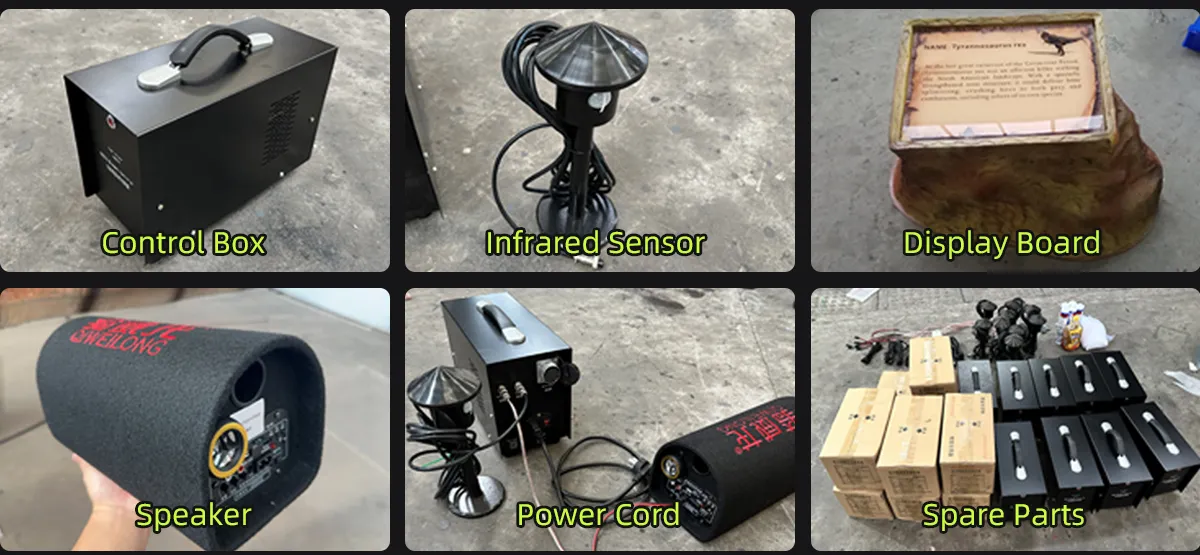
The model ships in sections — legs, body, neck, head, tail — on a steel base frame, with a control cabinet, sound system, wiring diagram and calibration sheet. Packed crates are confirmed before booking, because a five-metre animal still arrives in pieces and the largest crate is what has to pass the door.
Freight, duties, certificates and installation are quoted separately and are not part of the product price. For a mall job we normally ask for the site plan and a photo of the loading bay before quoting, since the last fifty metres are often the expensive ones.
What we need from you
Send the atrium dimensions, the height of the ceiling at the display point, and how close visitors will get. With those three numbers we can tell you whether the five-metre build is right, whether to shorten the tail for a tighter footprint, or whether the space would take a larger animal after all. If the honest answer is that a smaller model will look better in your atrium, that is what we'll say.
Where to go next
Worth reading before you commit: the rental cost breakdown for how the sizes compare, the pneumatic versus hydraulic comparison for what the ground has to carry, and the installation guide for pads and access for where the money actually goes.
For ideas on placing it, see mall exhibition notes. The rest of the range is on animatronic dinosaurs, and if this one is the wrong size for the slot, 6m t-rex for trade show displays is the closest alternative.
Product Accessories
Packaging and Container Loading