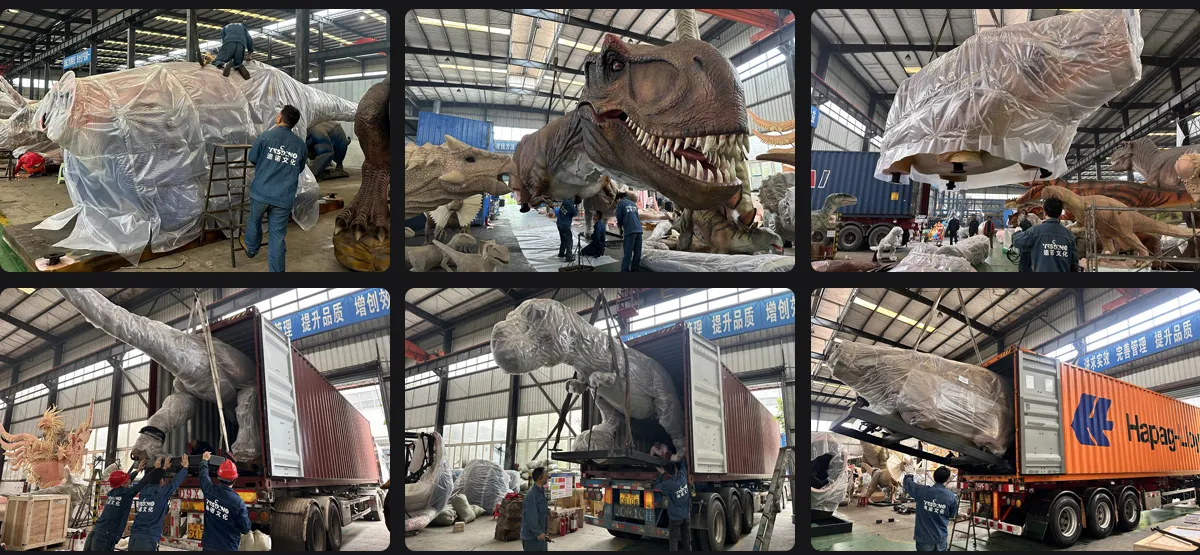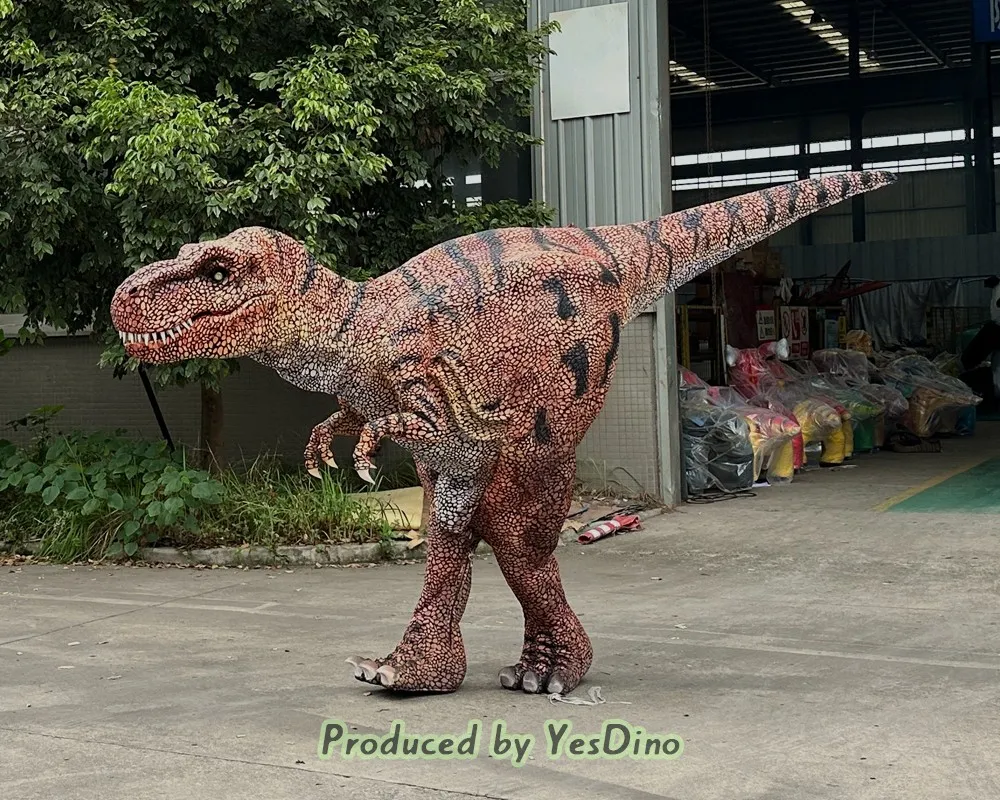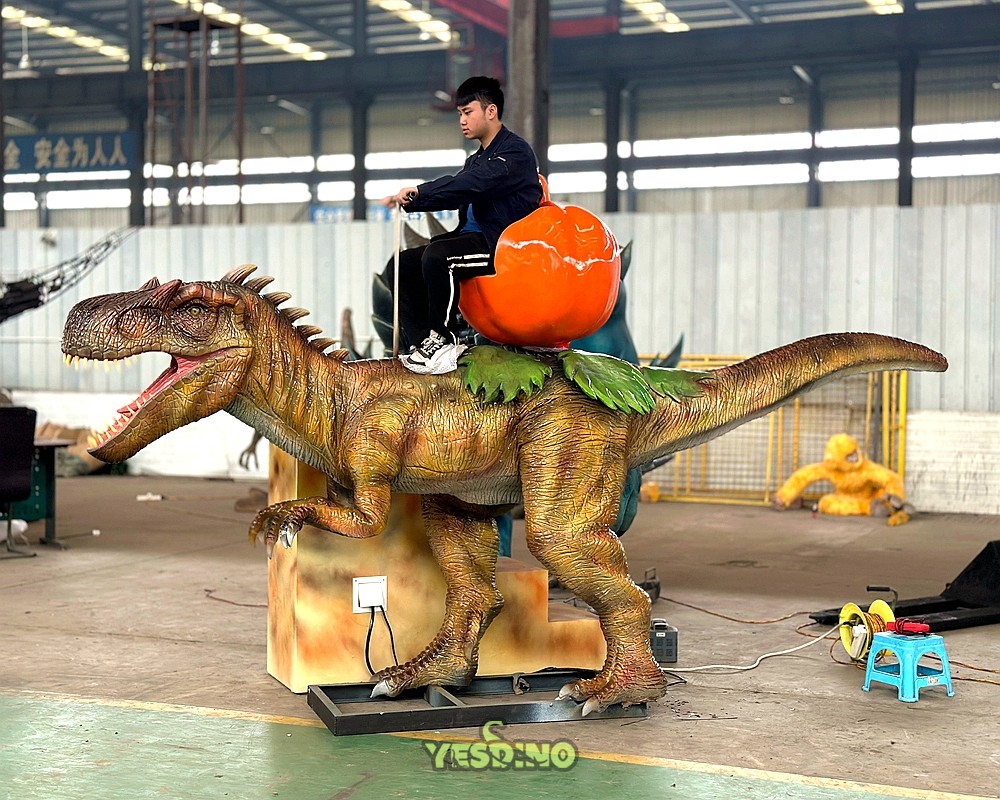
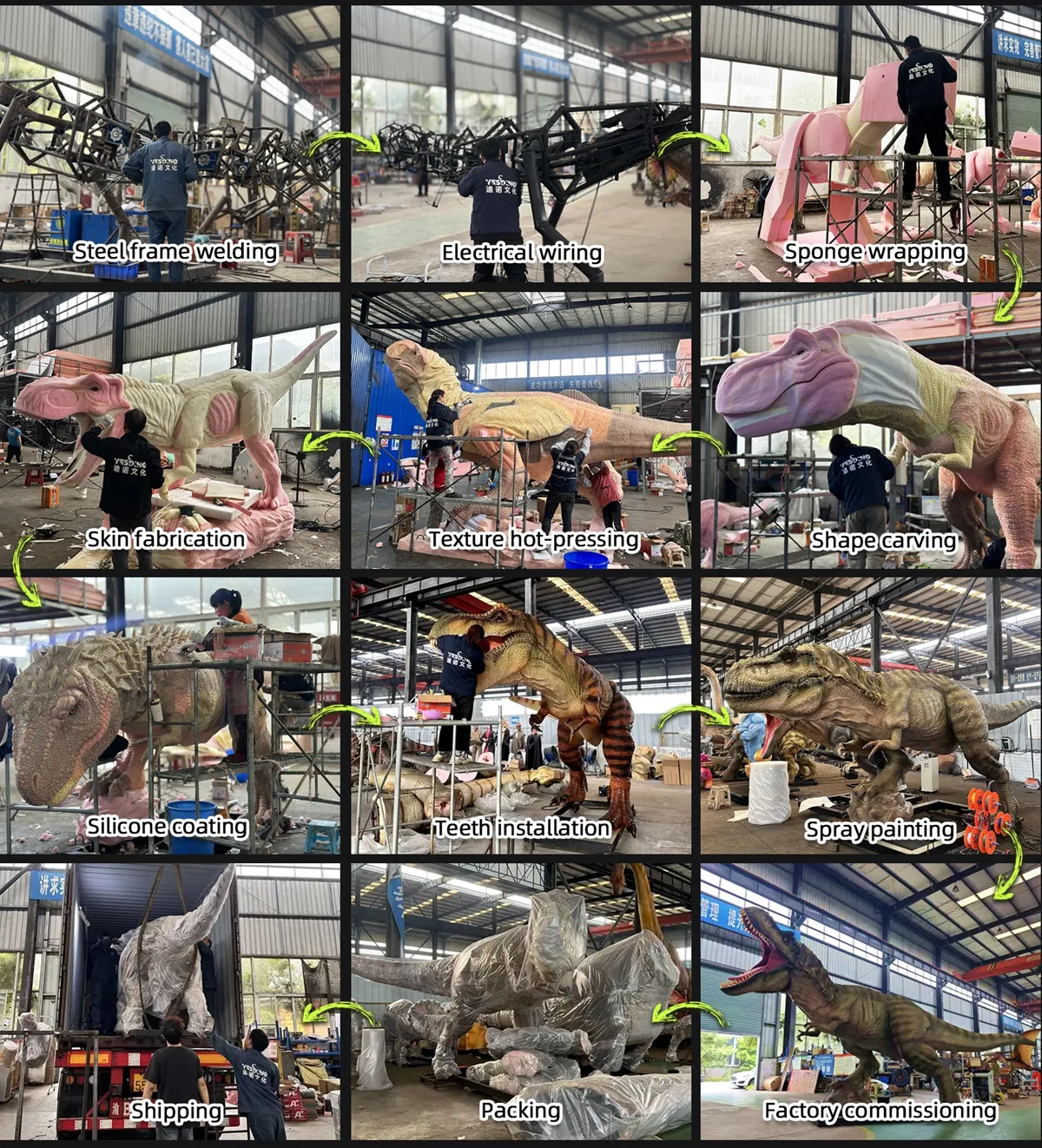
Production Process
Every predator on a dinosaur trail makes the same demand on a visitor: look at me. A hadrosaur asks for something quieter. It stands in the middle of the path, browses, lifts its head and calls — and that call is the reason this animal is worth building properly.
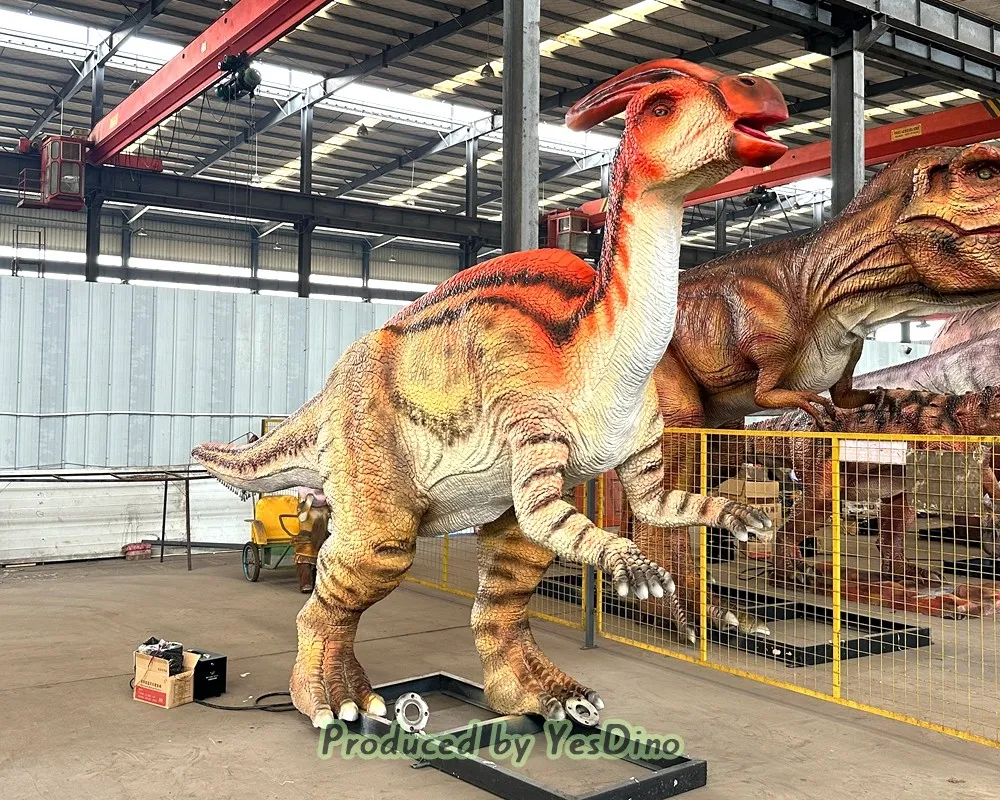
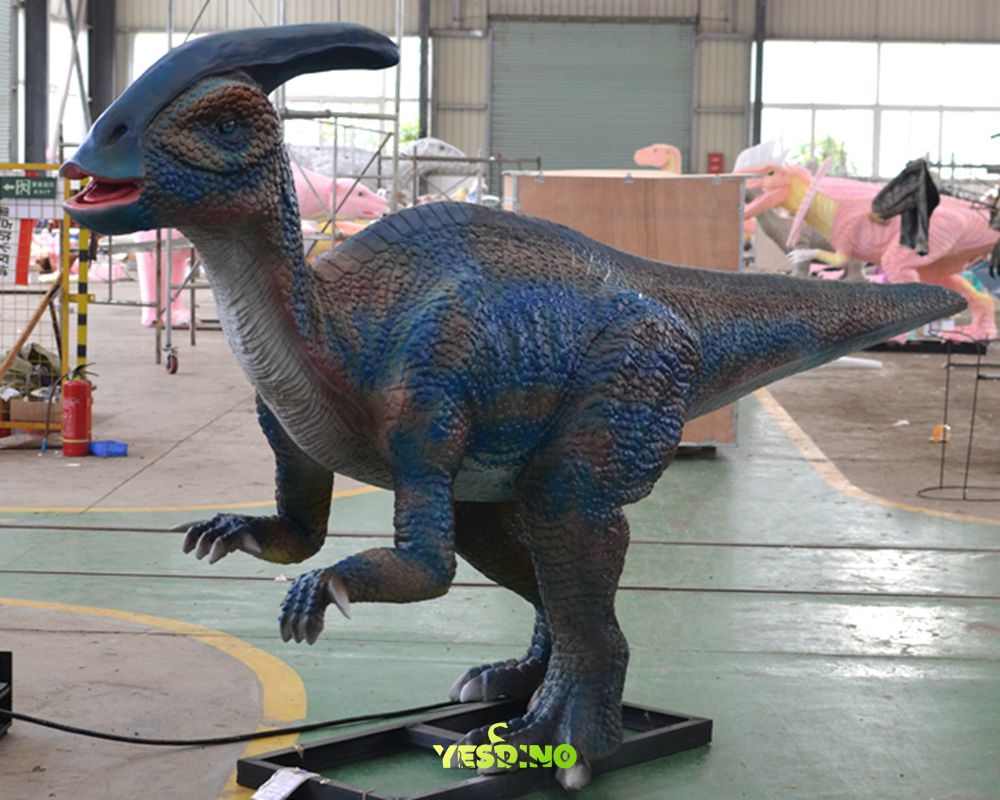
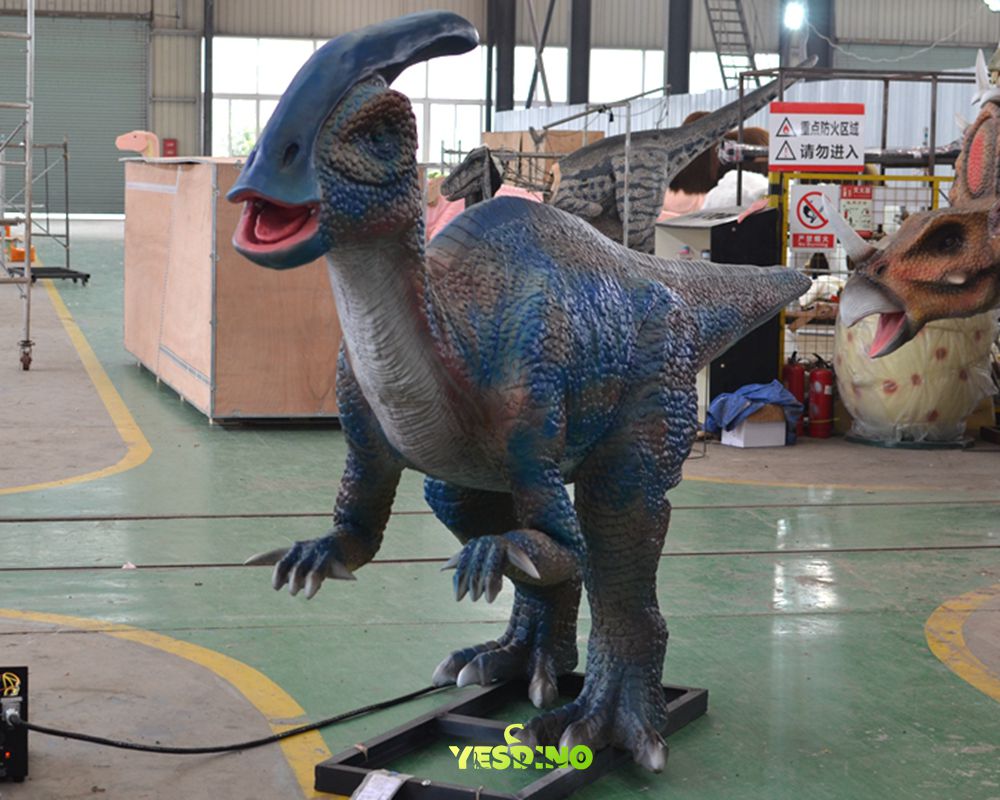
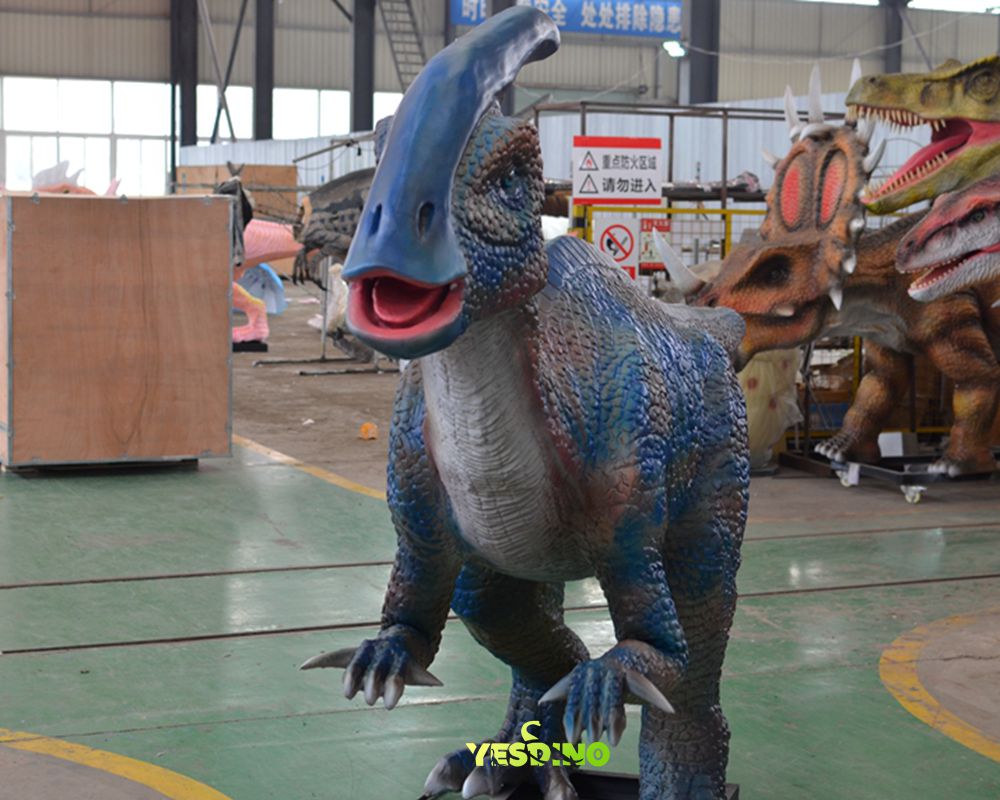
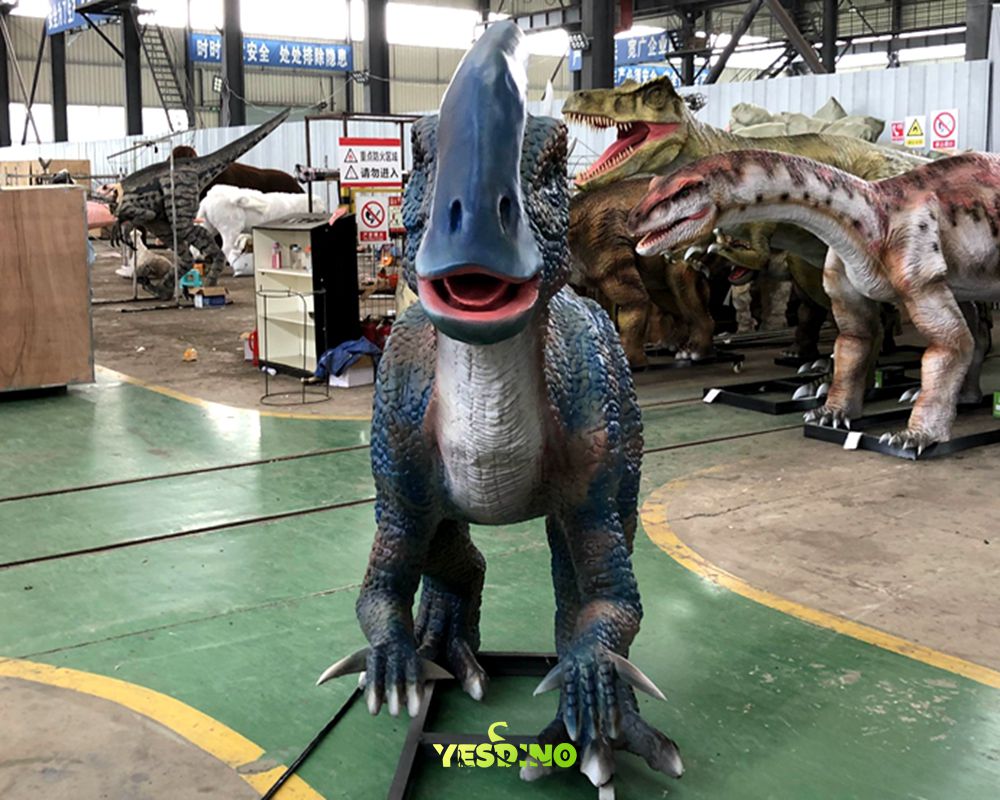
SKU YKL-096 is four metres long, 0.65 m across the body, 1.9 m at the head, with the long crest sweeping back from the skull. A compact build of an animal that reached ten metres in life, sized for walk-through trails where a full-size hadrosaur would block the route.
The crest is a horn, not decoration
The tube running from the snout to the back of the skull is hollow, and the current reading of it is a resonating chamber — air moving through it produced a low, carrying call that other members of the herd would have recognised. That gives a model builder two jobs: the shape has to be right, and the sound has to match the shape.
We sculpt the crest as a tapering tube with the internal volume implied at the nostril and the bend, so the profile holds when seen from the side. On the sound side the vocalisation is pitched low, with a longer decay than a theropod roar. High-frequency screams coming out of a hadrosaur is the single most common mistake on these models, and visitors who know the animal hear it immediately.
Four metres, and why that works indoors
A ten-metre hadrosaur is a wall on legs. Four metres keeps the proportions — the crest still reads, the body still looks heavy — while leaving room for people to walk past, which is the point of a walk-through exhibit.
It also solves the freight problem. At this length the animal travels in sections that fit a standard container, and the body section can be moved through a double door without a crane. For a museum or a mall that is often the difference between a feasible project and a quote nobody signs.
Six movement groups
Head left and right, neck up and down, jaw open and close with the call, blinking eyes, tail sweep, and a forearm scratch. The neck is the group to set carefully: a hadrosaur lifts its head slowly and holds it, rather than snapping around like a predator. Slower dwell times and longer pauses read as browsing.
Each group runs on an independent drive with end-of-travel protection, triggered from a loop, a proximity sensor or a floor mat. On a trail, the sensor trigger is worth having: the head coming up as a group approaches is the moment that makes people stop walking.
Where a herbivore earns its place
Predators sell tickets, but a trail made only of predators becomes exhausting — every animal is shouting. A herbivore between two theropods resets the rhythm, gives children something that isn't threatening, and makes the next predator hit harder.
Placement is usually mid-trail, at a widening where visitors can walk around it rather than past it. Pairing works too: two hadrosaurs at different head heights read as a herd, and the second one is cheap to add because the tooling is already done.
Skin and colour
Foam volume over a welded Q235 steel frame, silicone five to seven millimetres thick, coloured with translucent silicone airbrushed in layers so the pigment sits inside the skin. Hadrosaurs are usually finished with banded flank stripes and a darker dorsal line, which holds up better than fine detail at the distance visitors actually view from.
Pattern, colour and posture are made to order. If the exhibit is indoors under warm lighting, say so — the same palette shifts noticeably between daylight, tungsten and LED, and it is easier to adjust the mix at build than to repaint later.
Specification and delivery
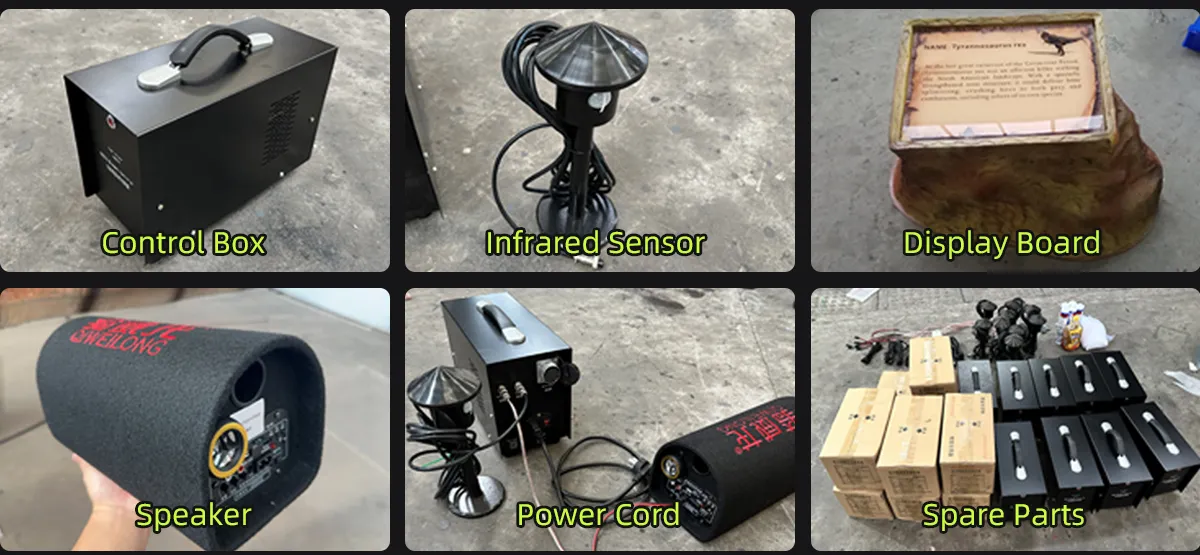
Rated for −25 °C to 45 °C outdoors, 110 V or 220 V configured at build, two-year warranty on core electronic components. The animal ships in sections with a base frame, control cabinet, sound system, wiring diagram and calibration sheet. Freight, duties, certificates and installation are quoted separately and are not part of the product price.
Enquiry
Send the trail layout or a photo of the spot, the viewing distance, and whether the animal will stand beside another herbivore. We'll come back with a posture and a sound recommendation rather than a catalogue page.
Where to go next
Two things come up in almost every enquiry on this build: how the size compares with the alternatives, and what it takes to get it on site. The installation guide for pads and access sets out the length options side by side, and the wiring concealment notes covers pads, access and assembly. Budget planning sits in the park layout and theming strategies.
For ideas on placing it, see exhibit planning walkthrough. The rest of the range is on animatronic dinosaurs, and if this one is the wrong size for the slot, animatronic spinosaurus for theme parks is the closest alternative.
Product Accessories
Packaging and Container Loading