


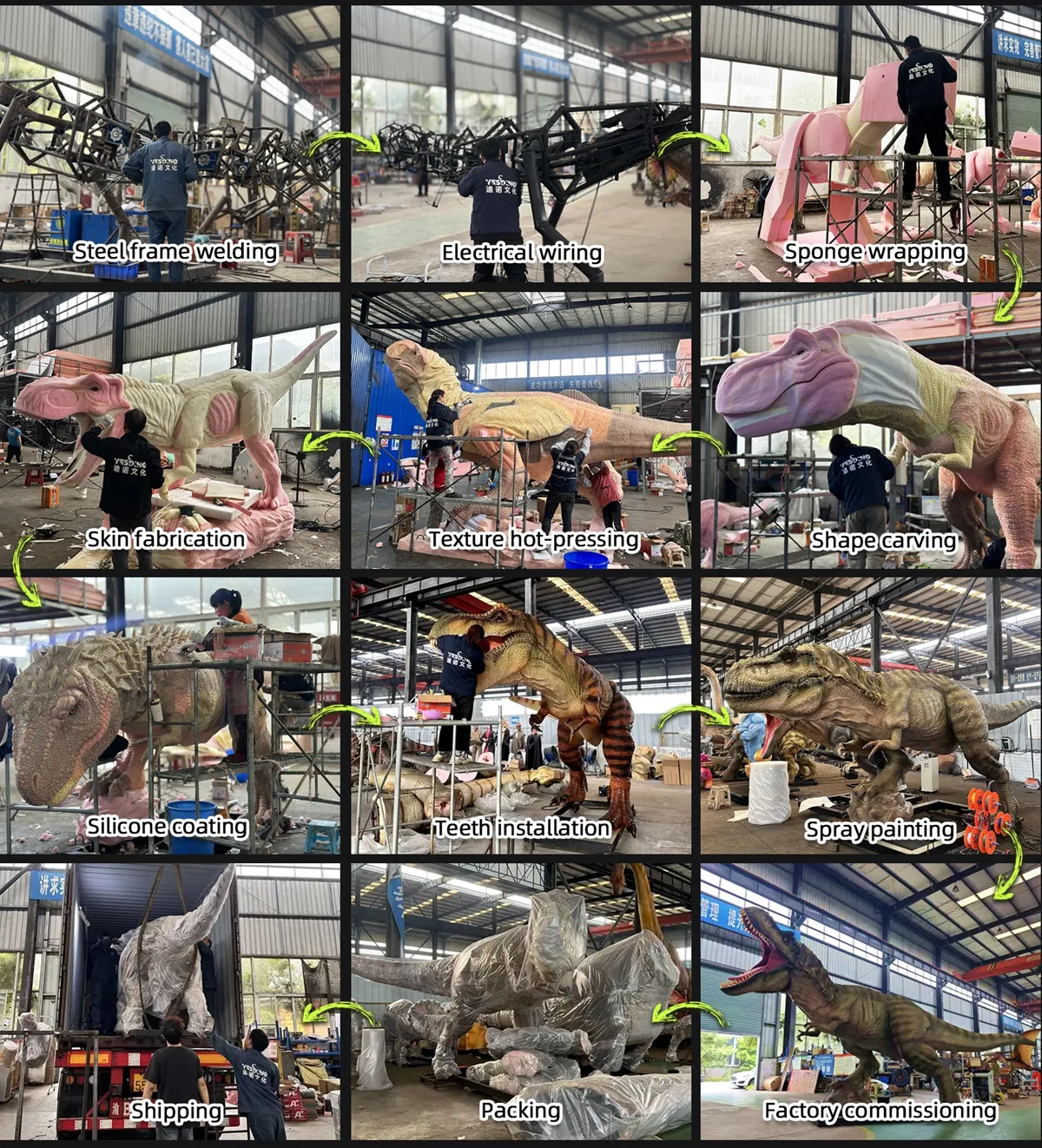
Production Process
The gallery closes at five and the cases are locked. The loading bay opens at ten. By the time the doors open again, the animal has to be on its plinth, the track lights aimed, and the rope line back on its floor marks where it was.
Museum work runs on those hours, and it runs on dimensions. Six metres is the length that fits a bay rather than a hall.
A sail that sits below the cornice
The top of the sail is 2.2 m off the floor. Galleries in older buildings often run 3.2 m to 4 m to the ceiling, which leaves a metre of air above the animal for a lighting track and keeps the sight line to the paintings behind it intact. That is the argument for this height: a large animal in a room designed for wall-mounted work.
Reading the animal in a 7 m bay
At 6 m long and 0.8 m across, the footprint is long and narrow, which suits an alcove between two cases. Leave 1.4 m from the flank to the nearest glass: closer than that, the reflection of a lit case falls across the skin and the animal looks patched. The plinth itself wants 150 mm of height, enough to lift the feet clear of cleaning equipment.
Angle the body 30 to 40 degrees to the main approach. The long crocodilian snout, the conical teeth and the sail of elongated back spines all read in three-quarter profile; head-on, the animal is narrow and the sail disappears into its own silhouette. Snout toward the approach, tail into the corner.
Movement at gallery pace
The sail is structure, not mechanism, so the performance lives in the head and neck. A slow turn of maybe eight seconds, a jaw that opens a third of its travel, and a settled blink does more in a quiet room than a fast sequence. Speed is the setting museums ask us to change most often: what works in a park reads as frantic under a gallery ceiling, where the sound of the actuators carries.
Sensing is by a narrow beam across the approach rather than a wide-area sensor, mounted at rope height and set to a 1.5 s delay. The delay lets a visitor settle in front of the case line before the head comes round. In a room with a fixed one-way route, a slow timed loop is easier to live with than a trigger.
Skin under track lighting
Q235 steel frame with rust treatment, foam-carved body, silicone skin 5–7 mm, colour sprayed in translucent layers. Gallery lighting is the hard part: a 3000 K spot two metres away will find every glossy patch on a skin, so the finish here is flatter than a park build's, and the colour is checked under the actual fittings rather than in daylight.
The sail deserves its own note. it is 2.2 m of thin section standing above the body, and it is the first thing a visitor's hand reaches from a low plinth. The edges are reinforced and the skin is bonded to the spine structure rather than stretched over it, so a knock flexes instead of splitting. Rated −25 °C to 45 °C.
Through the loading bay at night
Three crates, the longest 2.4 m, sized to pass a 900 mm door and a goods lift. The body is 0.8 m across, so the crate is narrow for its length, . Floor protection first: 18 mm ply with hardboard over stone or terrazzo, because a steel base frame dragged two metres leaves a mark that outlasts the exhibition.
Assembly runs base frame, legs, body, neck and head, skin, then programme. A museum install takes six to seven hours including the plinth anchors and the light check, which is why the bay is usually booked for two nights and the second one is used for tuning. The cabinet goes behind the case line in the service corridor, door facing the corridor, 600 mm of standing room.
Before the brief goes to the curator
Bring the ceiling height, the bay width, the plinth drawing, the door and lift dimensions, and the light plot. Tell us whether the room is climate-controlled, since the skin and the electronics both behave differently in a dry gallery than in a ventilated store.
Two rooms where this animal is the wrong answer. A double-height hall with a thirty-metre sight line needs a taller build. And a space where visitors walk a full circle around a 1 m gap will not work at 6 m long; the animal needs a wall or a case line behind it to read properly.
Enquiry
Send the gallery plan with the bay measured, and a photo taken from the doorway. We will confirm the plinth detail, the light positions and the install window before anything is cut.
Where to go next
If you are still comparing options, start with the size guide covering 3 m to 12 m builds — it lines up the builds by length and reach. Site work is covered in the rental cost breakdown, and the pneumatic versus hydraulic comparison lists the factors that move the price.
For ideas on placing it, see layout strategies for themed trails. The rest of the range is on animatronic dinosaurs, and if this one is the wrong size for the slot, animatronic parasaurolophus for dinosaur parks is the closest alternative.
Product Accessories

Packaging and Container Loading



