Production Process
Five metres of raptor at 2.2 m is the shape people recognise from a screen, and there is no point pretending otherwise. The fossil animal was about two metres long and stood knee-high; this build is the version a park can put on a poster.
SKU YKL-071: five metres long, 0.8 m across the body, 2.2 m at the head.
Carriage is everything
A theropod standing upright like a kangaroo reads as a mascot. The body has to sit horizontal, hips high, head level with the shoulders and pushed forward, with the long tail held out as a counterweight. That line is set in the frame, not in the skin, which is why a cheap build can never be corrected afterwards.
At 2.2 m the head sits above most adults, so visitors look up slightly. That is the right relationship for a film-scale raptor: close enough to be intimidating, not so high that it becomes a monument.
Details that get photographed
Three things at this scale: the raised sickle claw on each foot, the three-fingered hands with the middle finger longest, and the eye sitting high and forward under a bony brow. Visitors photograph all three, usually without knowing why they look right.
The teeth are worth a mention. Raptor teeth are small and closely spaced, not the finger-length fangs that cheap models use; overstating them turns a precise animal into a generic monster.
Six movement groups
Head left and right, neck up and down, jaw open and close with a roar, blinking eyes, tail sweep, forearm scratch. The forearm group is the one that sells it: a hand that lifts and draws back looks like an animal thinking about something.
Speeds are set quicker than a large herbivore's — a raptor moving at Triceratops pace looks sedated — and the jaw travel is short. Independent drives with end-of-travel protection; loop, sensor or mat triggering.
Where it works
Trails and photo points. At a bend, side-on, at three to five metres. That distance flatters the horizontal carriage and keeps the claw visible.
Packs. Two or three units along a path, with staggered triggers so they react a beat apart rather than in unison. Unison looks mechanical; a half-second stagger looks like a pack.
Indoor exhibitions. At 2.2 m it clears a retail ceiling and fits a hall where the crowd will be close.
Finish and delivery
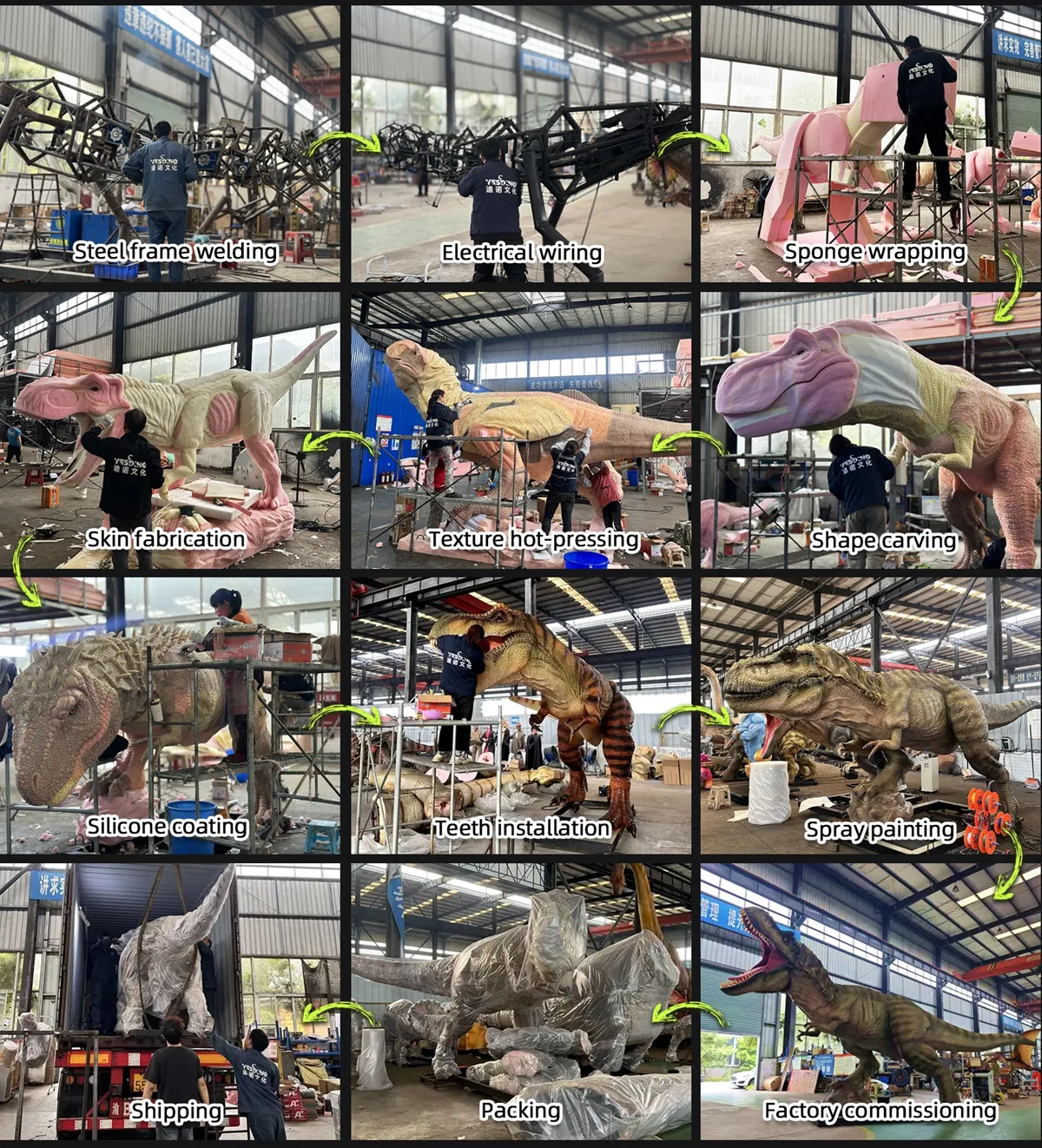
Welded Q235 steel frame with anti-rust treatment, foam volume, silicone five to seven millimetres, translucent layered colour. Standard finish is a brown-grey body with darker banding along the spine and a pale underside; pattern, posture and colour are made to order.
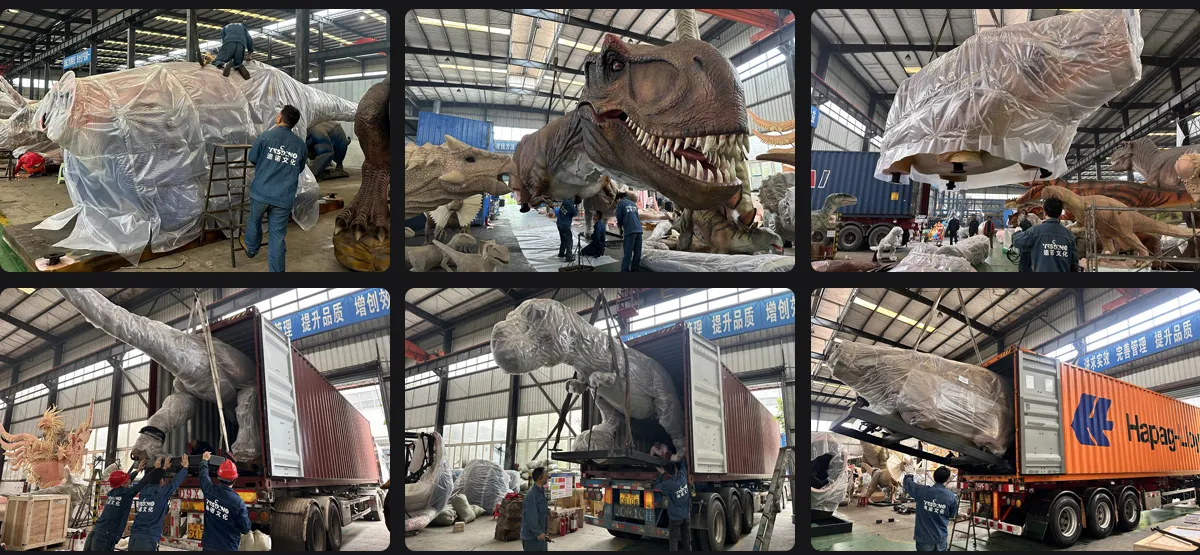
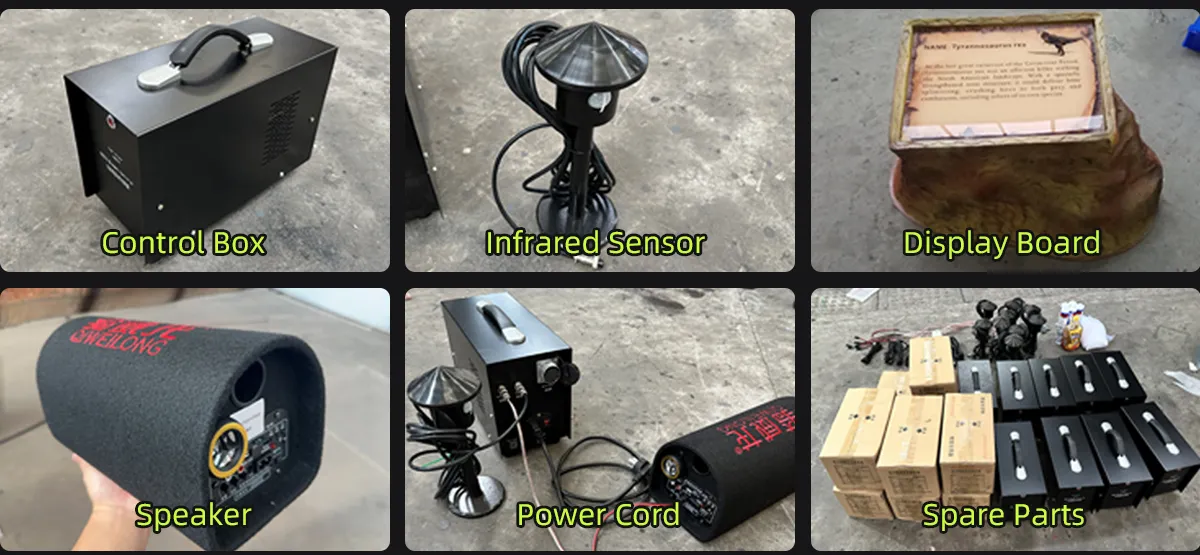
Rated −25 °C to 45 °C, 110 V or 220 V configured at build. Ships in sections with base frame, control cabinet, sound system, wiring diagram and calibration sheet; freight, duties, certificates and installation are quoted separately from the product price.
Packs, and how they read
Raptors are almost always bought in twos and threes, and the way a group is programmed matters more than the animals individually. On a shared trigger, four units that all turn at the same instant look like a machine; staggered by half a second, the same four read as a pack reacting to something.
Each unit keeps its own cabinet, so one can be serviced while the others stay live, and each still runs standalone if the trigger fails. That redundancy is worth specifying at order time rather than discovering it when a sensor cable is cut.
Sound, and why less of it works
A continuous roar loop empties a trail. The animals people remember are the ones that make a sound when something happens: a short vocalisation as a group arrives, then silence, then a head turn.
That is a programming choice, not a hardware one. We set a trigger radius at commissioning and leave it adjustable, so a park can widen it for busy weekends and narrow it when the trail is quiet. Getting that balance right usually takes a week of operation, which is why the parameters are documented rather than locked.
Enquiry
Send the trail layout and tell us how many animals you're considering. If it's a group, ask about the staggered trigger — it is configured at build and changes how the pack reads.
Where to go next
Worth reading before you commit: the rental cost breakdown for how the sizes compare, the pneumatic versus hydraulic comparison for what the ground has to carry, and the installation guide for pads and access for where the money actually goes.
For ideas on placing it, see what shipping a large animal involves. The rest of the range is on animatronic dinosaurs, and if this one is the wrong size for the slot, animatronic allosaurus for theme parks is the closest alternative.
Product Accessories
Packaging and Container Loading