Production Process
Three Parasaurolophus on a slope, heads at three different heights, and the group reads as animals rather than as stock. One animal on the same slope reads as a statue with a crest on it. That difference is the reason parks order this one in twos and threes.
Each is 5 m long, 0.65 m across the body, and 1.9 m at the top of the crest.
Why a single one looks lost
A lone hadrosaur has no context. The crest is a signature, but the animal is narrow — 0.65 m across at the body — and from twenty metres a single 5 m build reads as a shape beside the path. Two more at different angles turn that shape into a herd.
The trade is cost per metre. Three animals cost three times one and take three times the space. What you get is a scene a visitor stops at for two minutes instead of fifteen seconds, which is the same argument as buying a bigger animal, at a lower height.
Two or three, at different head heights
Pose matters more than count. We build one with the head up at the full 1.9 m, one browsing with the neck down so the crest sits near 1.4 m, and one turned 45 degrees to the path. The three silhouettes differ, and the eye reads depth the flat ground does not have.
Spacing runs 4 to 6 m between animals: close enough to group in one photograph, far enough that a visitor can walk between them. On a slope, put the tallest pose uphill. It costs nothing and makes the group look larger than it is.
What moves in a group
Head turn, neck raise and lower, jaw, blink and tail sway. The neck carries the herd, because a browsing pose and a raised one moving together look choreographed. We offset the three programmes by two to four seconds so they do not fire in unison.
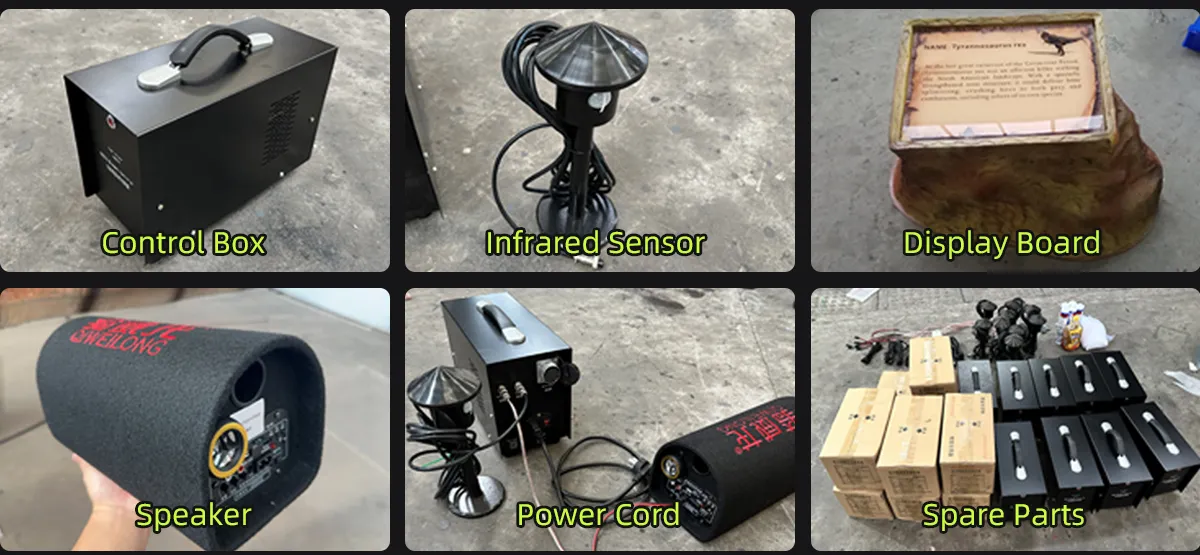
One sensor per animal, at 1.1 m on the path side. Cross-triggering is the usual fault in a group: one visitor sets off all three and the scene turns into a fairground ride. Staggering the delays by a second each is what fixes it, not a more expensive sensor.
One mould, three individuals
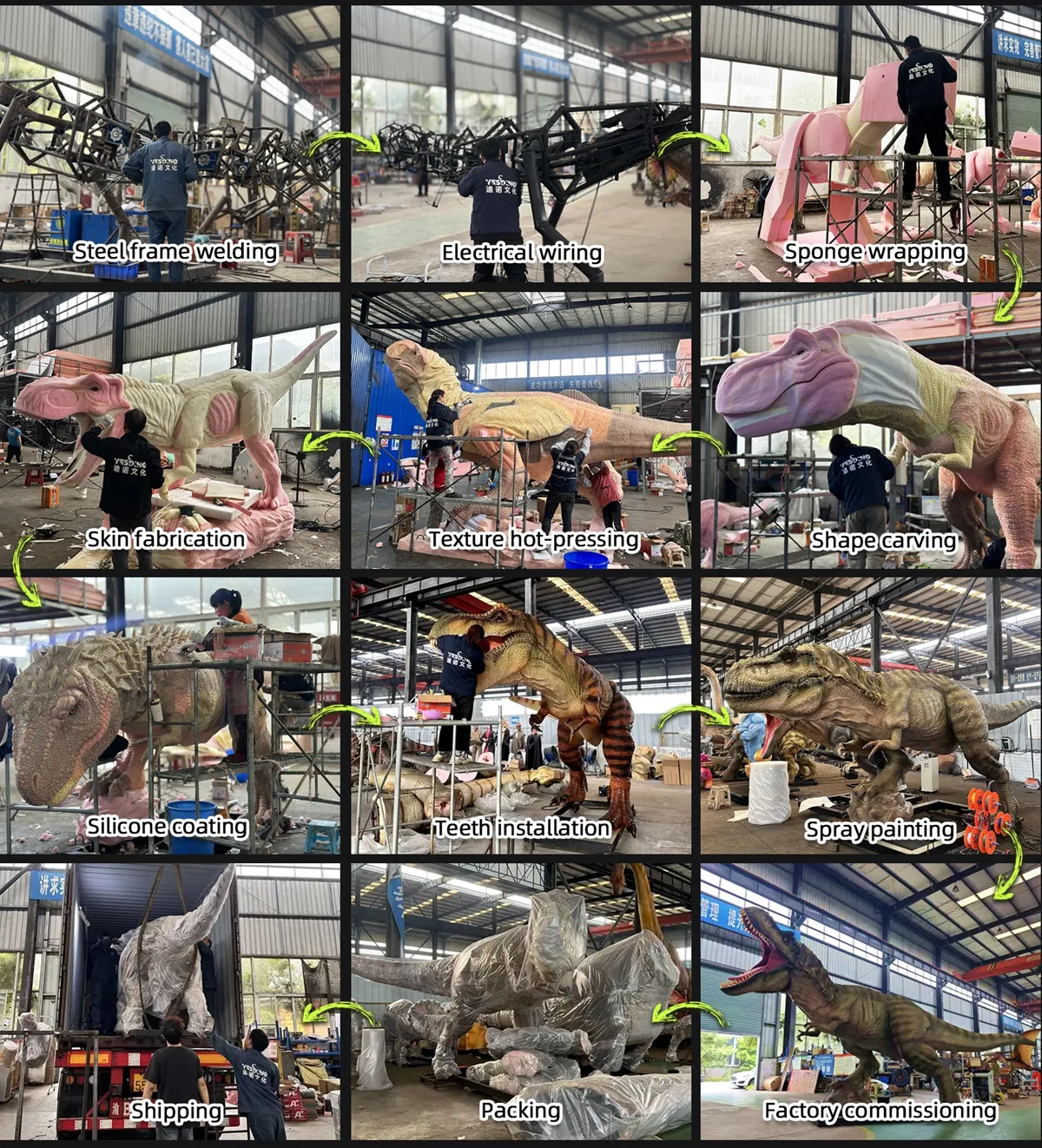
Q235 steel frame, rust-treated, high-density foam, 5–7 mm silicone skin, colour in translucent layers. The crest is a hollow tube in the build, which keeps the head light for the neck actuator and gives the silhouette its thin edge. The broad, duck-like snout is what separates it from the other herbivores at ten paces.
Colour is where a herd is won or lost. Three identical animals look copy-pasted; a shift of two shades between them, sprayed from the same palette, reads as individuals. Send a photograph of the ground colour and the palette gets set against it, under 3000K or 4000K light as the site runs.
Getting three in at once
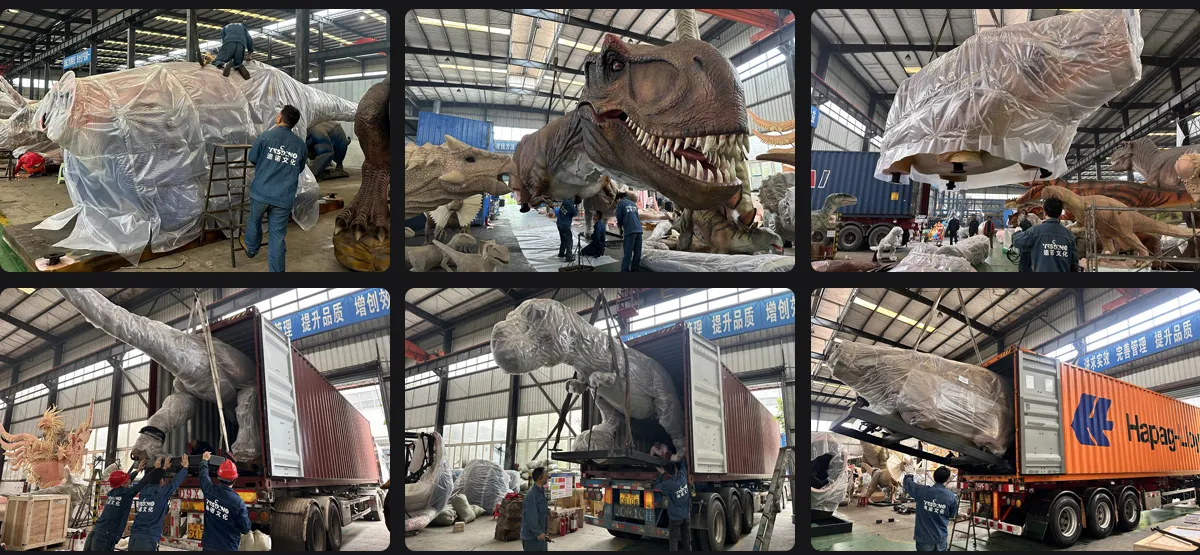
Three animals ship together: six body sections, three base frames, three cabinets, and the crests crated separately because they are the thinnest part of the skin. Load order runs frame, body, head, crest, cabinet, and unload in reverse so the cabinets come out first.
Two people, one day for three animals on level ground and a hard path. Each cabinet sits at the rear of its base frame with 500 mm clear in front; on a slope, keep the door on the uphill side so water runs away from the seal instead of into it.
Before you order
Send the path plan with the positions marked, the surface, the slope, and the direction visitors arrive from. Say whether the group is a stop or a backdrop: a stop wants the animals close and angled to the path, a backdrop wants them spread and roughly parallel to it.
When one animal is the better buy: a tight trail where three would fill the walk, or a budget where a single larger species carries more presence per metre. Three at 5 m is a scene. One at 5 m is an exhibit.
Enquiry
Tell us how many animals and where they will stand. Posture, skin texture, colour and the movement programme are made to order, and the tooling for this animal is already in place, so a group order does not start from a blank sheet.
Where to go next
Worth reading before you commit: the park layout and theming strategies for how the sizes compare, the cost breakdown with the seven price factors for what the ground has to carry, and the spare parts and repair kit list for where the money actually goes.
For ideas on placing it, see photo zones and crowd flow. The rest of the range is on animatronic dinosaurs, and if this one is the wrong size for the slot, 8m t-rex for exhibition halls is the closest alternative.
Product Accessories
Packaging and Container Loading