Production Process
Ten in the morning at a park gate, a queue that has stopped moving, and a horse that walks. Not a carousel animal on a pole — a 2.5 m build on four legs, 1.8 m tall, carrying a child around a marked route and back to the same spot.
SKU YAA-016. Visitors ask whether it looks real. The question we ask first is who is sitting on it.
Ride or exhibit, two different builds
A ridable animal carries a live load through the frame to four feet. That sentence decides most of the build. On an exhibit, the legs carry the animal and the movement can be generous; on a ride, every step is a load path, and each footfall has to arrive at a foot that is already planted.
The trade-off is speed and range. A walking gait with a rider is slower and narrower than the movement a display animal of the same size can make. What you get for it is a horse that takes a rider every day without the hips developing play.
The height figure works in your favour for once. At 1.8 m, a rider's head sits near the eye level of an adult standing alongside, which makes the photograph work and keeps supervision simple.
The loading point comes first
A ride needs a loading point before it needs a location. Pick the spot where the horse stands still to be mounted, then work outward: the step, the queue rail, the visitor path, and the surface the feet land on.
That surface decides the season. Grass looks right and turns to mud at a mounting point within weeks; rubber paving or compacted aggregate holds its shape. A slight camber under the feet shows up as a rocking motion that riders notice before anyone on the ground.
Outdoors the build runs from −25 °C to 45 °C. Under cover, allow a bay long enough to walk and turn in, and check the ceiling against a rider in the saddle, not the horse alone.
What moves: the order of the four feet
Legs, and specifically the order at the shoulder and hip. A four-beat walk reads only when the diagonal pairs are offset; set the timing evenly and the animal marches. That offset is also what riders feel through the saddle, which is why it gets tuned before anything else.
The neck follows the gait rather than leading it. A head bobbing on its own beat is the detail that makes a walking horse look like a mechanism. Ears are the opposite — a flick on the trigger is what children remember, and it costs very little travel.
The tail is decoration, and the first thing wind and visitors get hold of. Keep the sweep modest and mount it so the hair can be renewed.
Frame, saddle and the coat underneath
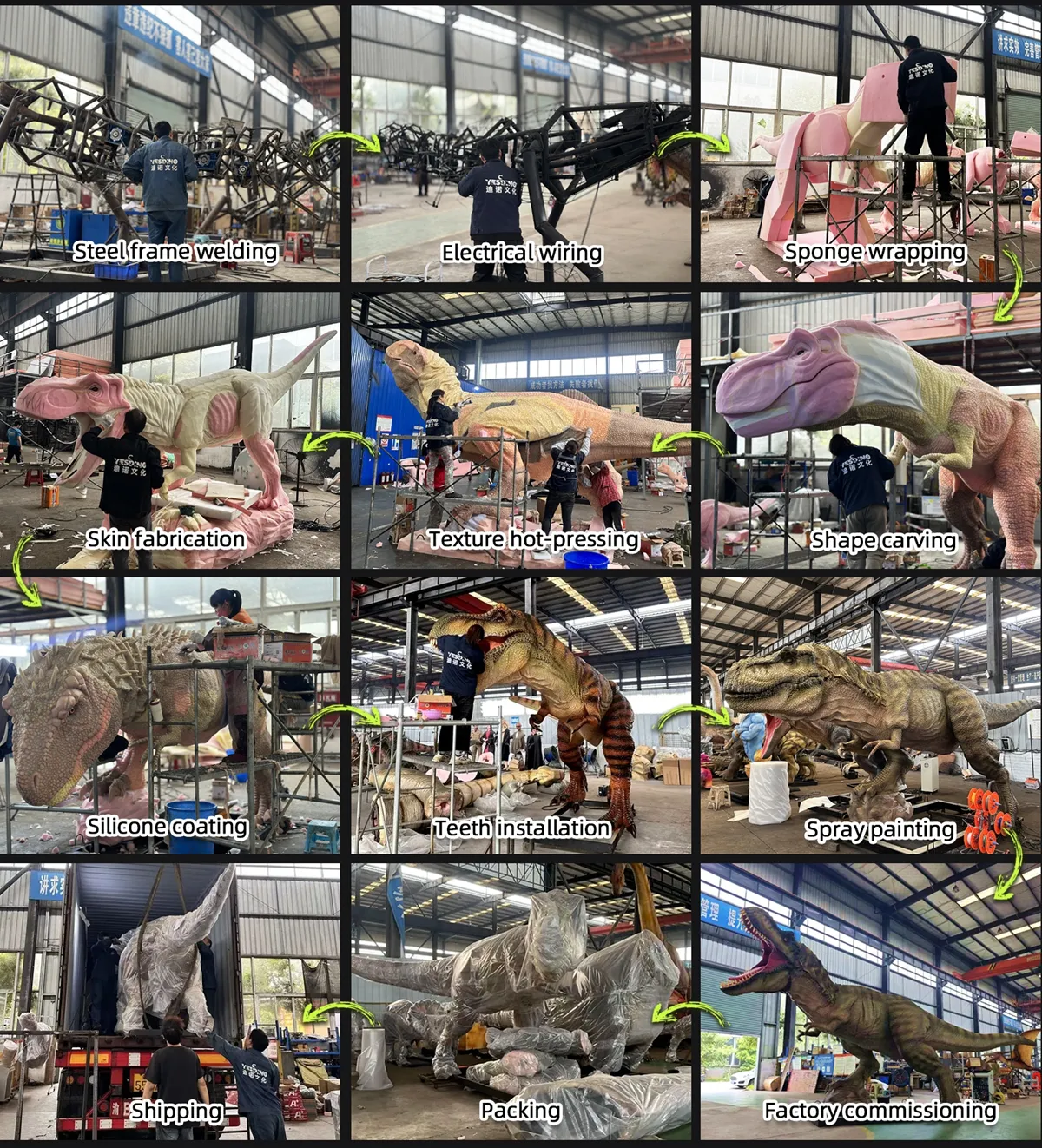
Q235 steel frame with rust treatment, saddle mount tied into that frame rather than into the skin layer, body volume carved in high-density foam, skin in silicone at 5–7 mm, colour sprayed in translucent layers so the coat shifts across the shoulder and haunch.
The saddle is a wear item. Leather or synthetic, it takes abrasion, sunscreen and damp, and replacing it costs less than repairing the back underneath. Flea-bitten and dapple markings are sprayed under the topcoat for the same reason: they survive the contact.
Crates, plates and the rider path
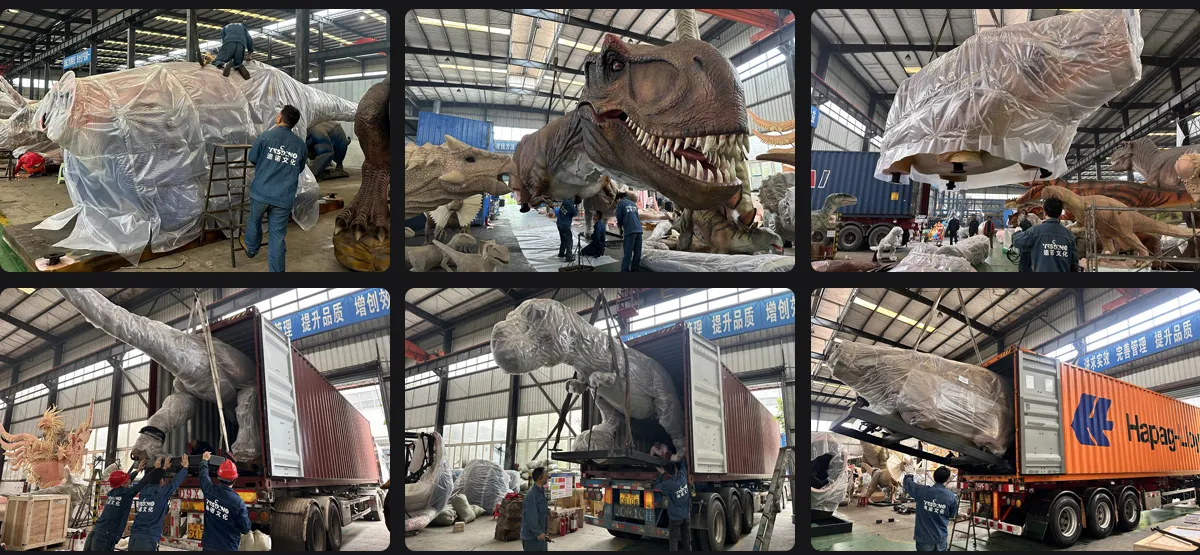
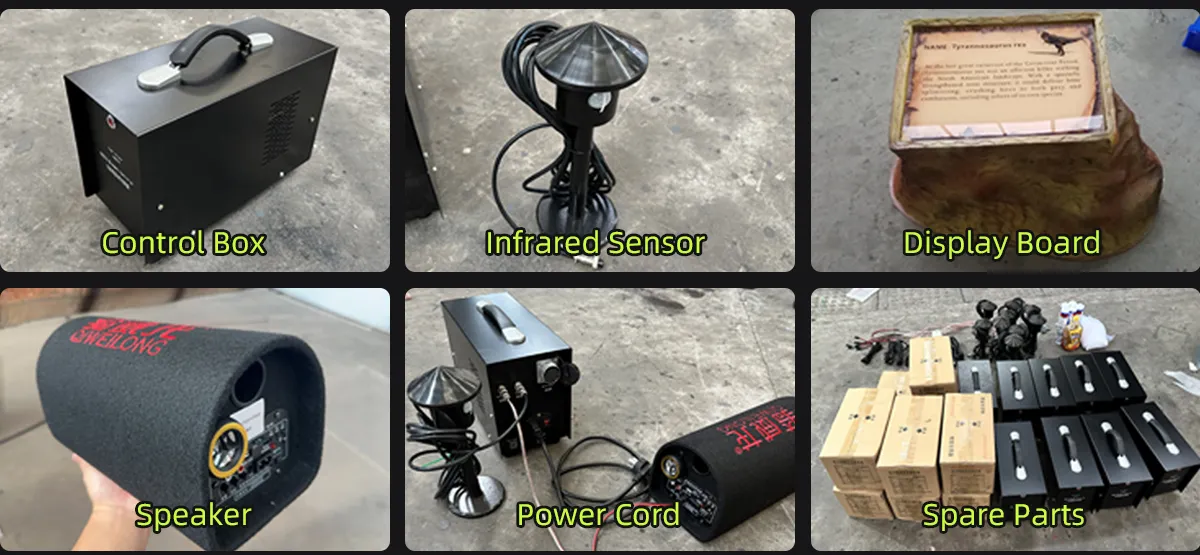
Ships in sections with the base frame, control cabinet, sound system, wiring diagram and calibration sheet. Leg assemblies are the awkward crate; the base frame is the heavy one. A horse that walks does not fold as small as a static mount.
Anchoring follows the surface: a plate into a slab on paving, a buried base in prepared ground. The cabinet goes where a technician can open it without standing in the rider's path. Power is 110 V or 220 V, configured at build for the destination, and core electronics carry a two-year warranty. Freight, duties, certificates and installation are quoted separately.
Numbers that change the frame
Send the site plan with the loading point marked, the surface, the headroom, the rider age and weight range, and whether the horse stands outdoors all year. The rider range is the number that changes the frame, so generous beats precise.
Two situations where this is the wrong purchase: a photo piece with an occasional rider, where a static mount with a saddle costs less for the same picture, and a site with nobody free to supervise mounting during the busiest hour.
Enquiry
Send a photo of the spot, the route riders take to reach it, and the surface underfoot. Tell us the rider range you plan to carry. If you have a walk in mind, a short video of a real horse at the pace you want saves a round of drawings.
Where to go next
Worth reading before you commit: the installation guide for pads and access for how the sizes compare, the rental cost breakdown for what the ground has to carry, and the pneumatic versus hydraulic comparison for where the money actually goes.
For ideas on placing it, see layout strategies for themed trails. The rest of the range is on animatronic animals, and if this one is the wrong size for the slot, animatronic hezheng sheep for museum exhibits is the closest alternative.
Product Accessories
Packaging and Container Loading