
Production Process
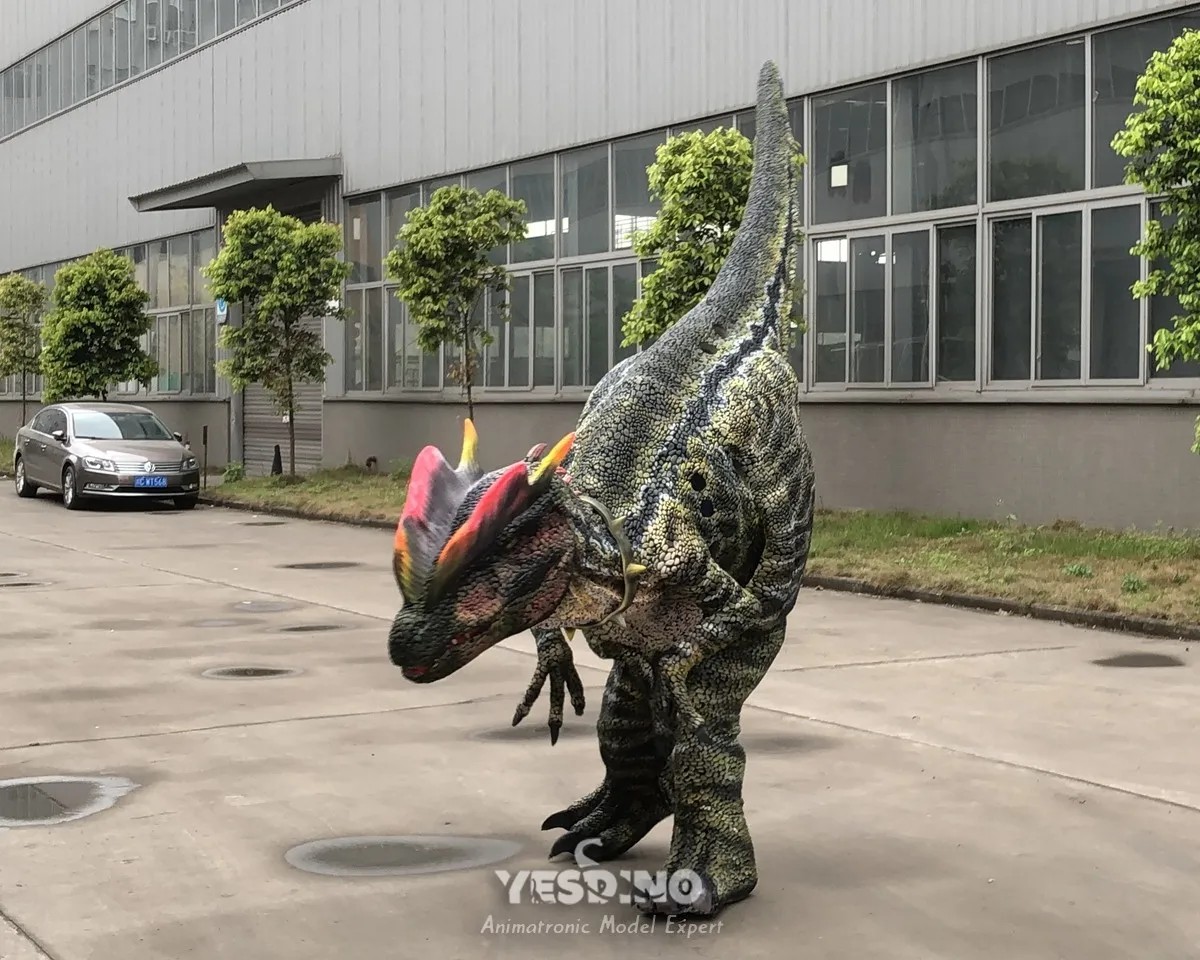
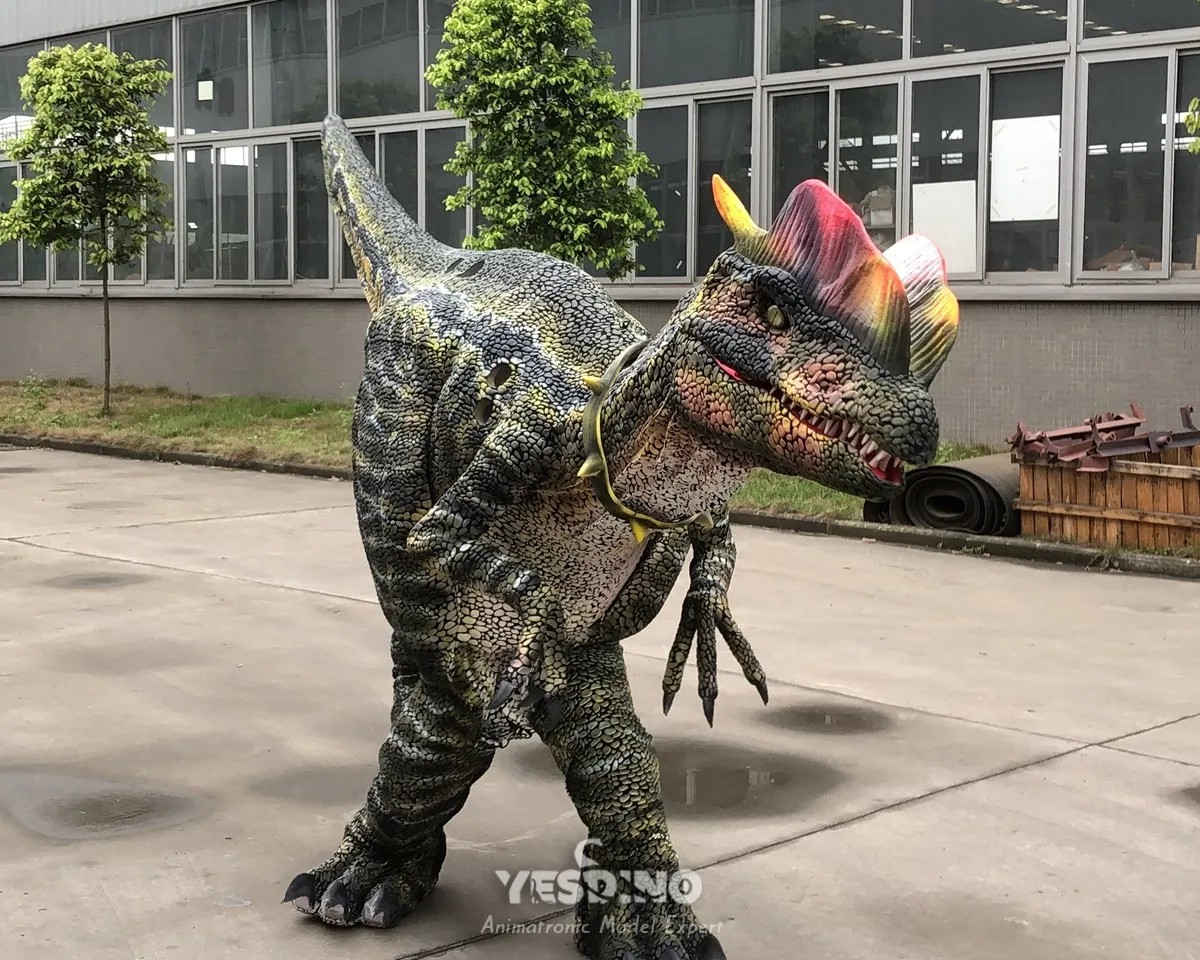
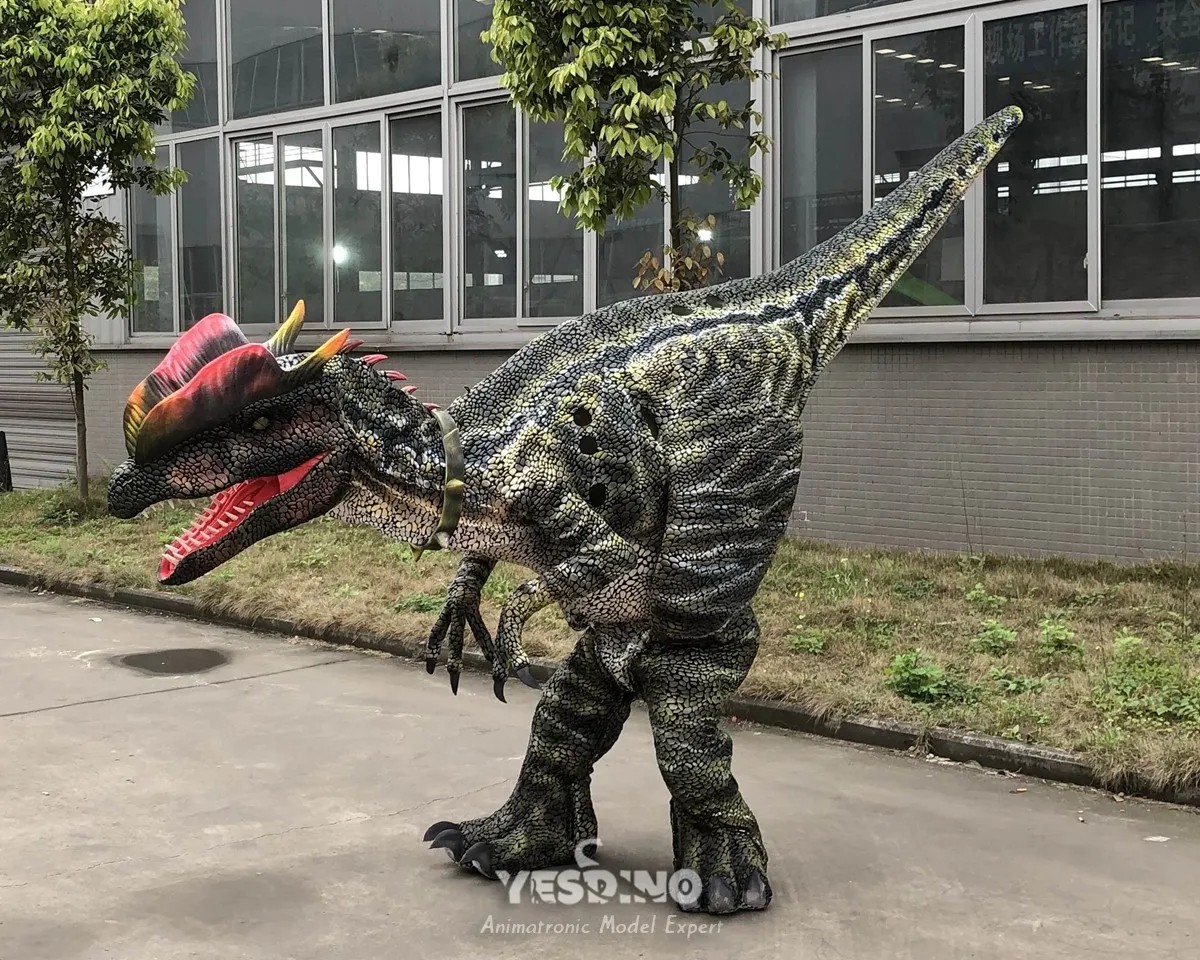
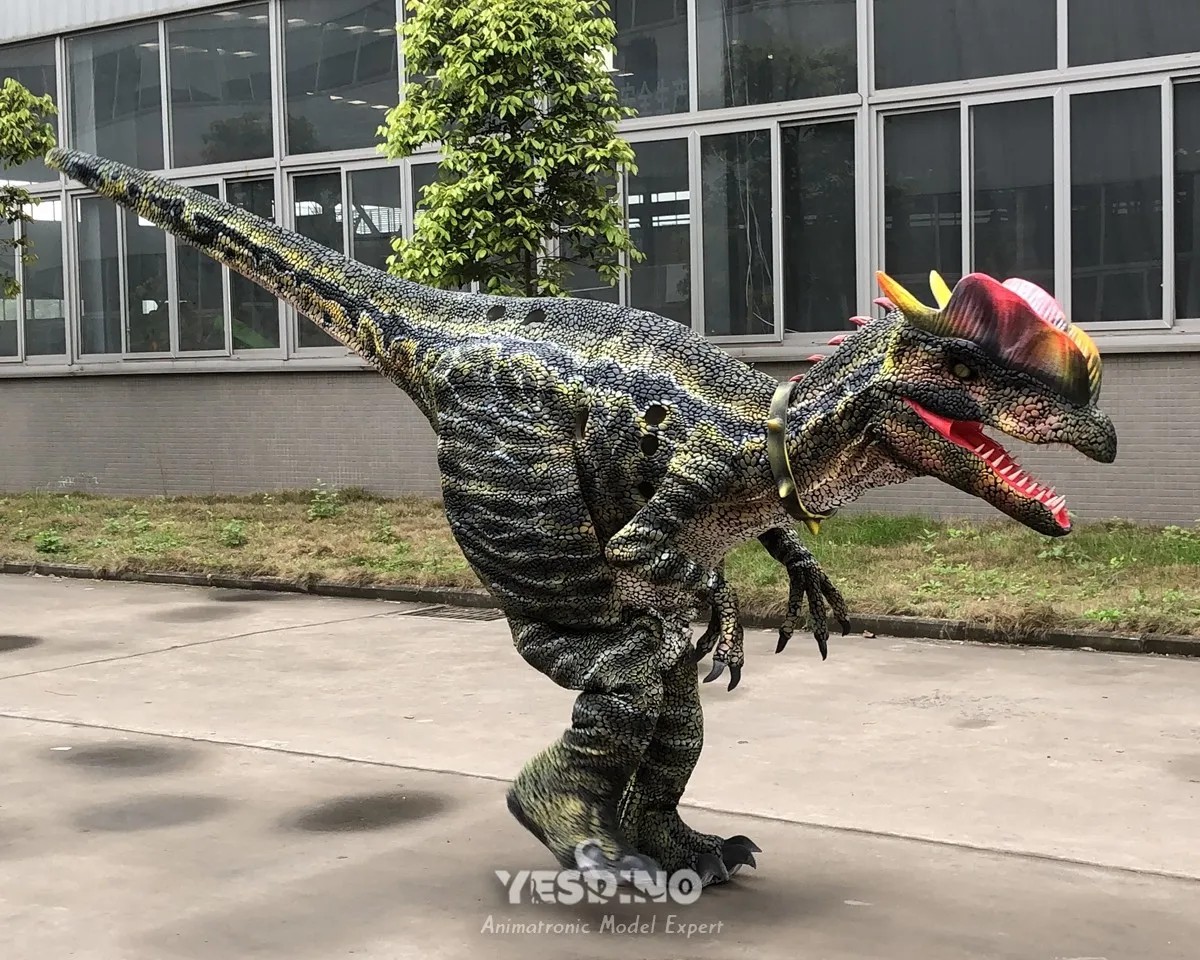
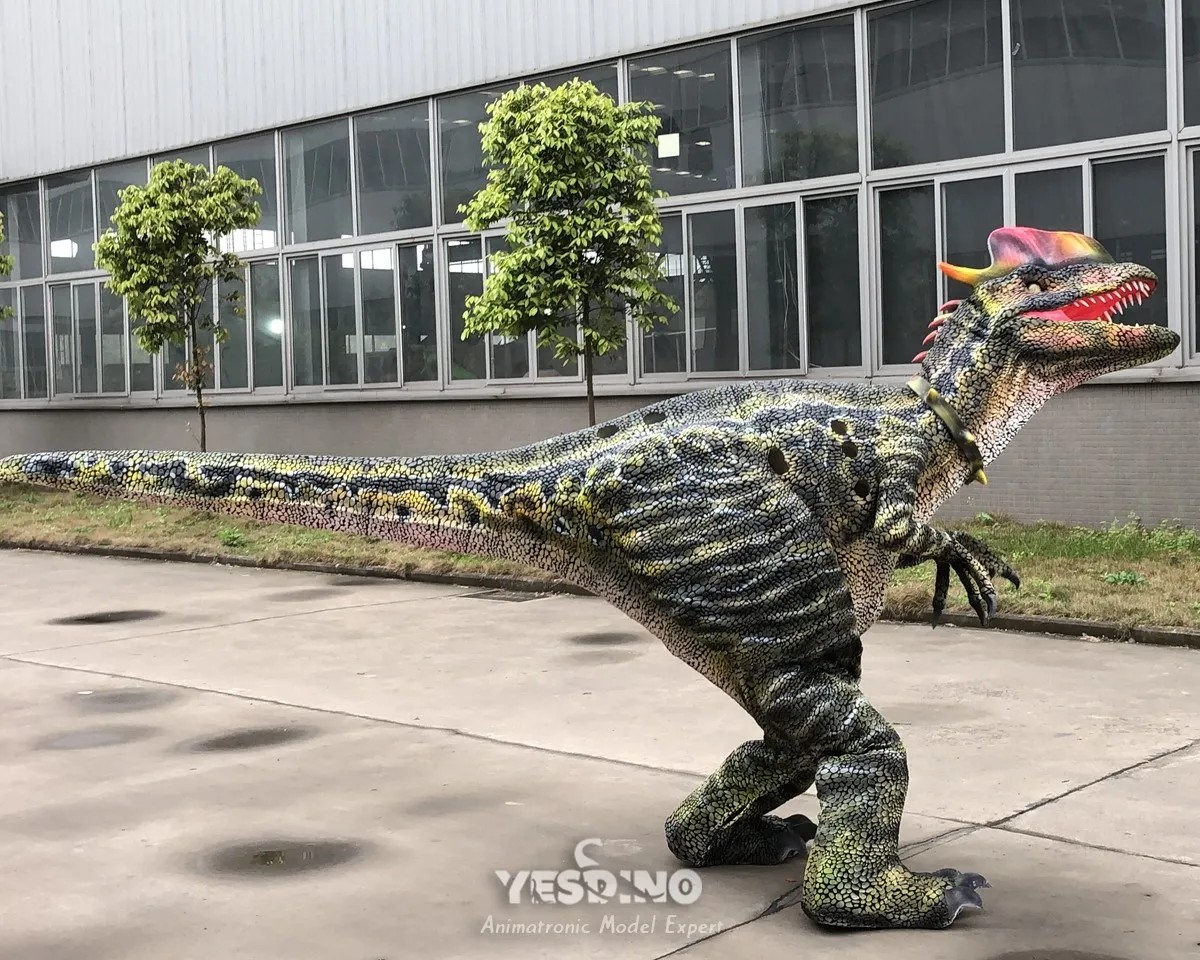
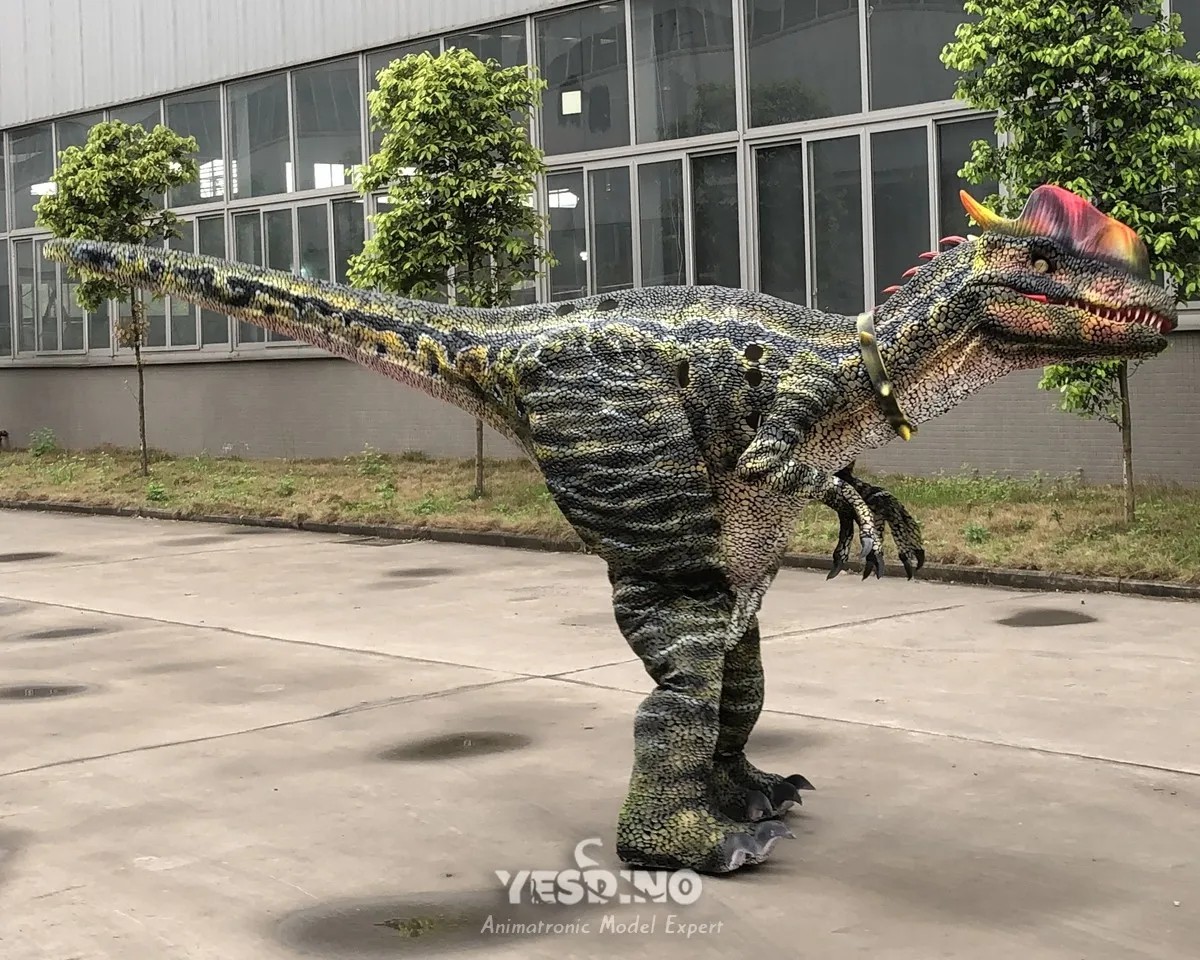
A Dilophosaurus costume is a walk-in dinosaur suit that puts a performer inside a life-size Dilophosaurus, with the head, jaw and tail moving as the wearer walks. This one is built with the embossed fabric skin rather than silicone, so the finished suit weighs 18–23 kg instead of 35–40 kg.
Quick facts: the real Dilophosaurus
Dilophosaurus was a two-crested predatory dinosaur from the Early Jurassic, roughly 200 million years ago, and it grew to about 6–7 metres long — considerably larger than the animal most people picture.
| Item | Detail |
|---|---|
| Scientific name | Dilophosaurus wetherilli |
| Lived | Early Jurassic, about 200–190 million years ago |
| Length | About 6–7 metres |
| Skull | Two rounded bony crests running along the snout |
| Neck frill | None |
| Venom | No fossil evidence |
| Film version | Much smaller, with a neck frill and venom spray — both invented for the 1993 film |
Did Dilophosaurus have a frill?
No. There is no fossil evidence of a neck frill on Dilophosaurus. The frill was invented for the 1993 film Jurassic Park, which also shrank the animal for the scene so it would read as a small menace rather than a 6-metre predator.
That matters if you are buying a costume, because both versions sell. A museum or a dinosaur trail usually wants the fossil-accurate head — two crests, no frill — because the exhibit is presented as science. A Halloween event, a theme park scare zone or a film-themed promotion often wants the frilled head, because that is the silhouette the audience recognises. We build either, and we will not talk you out of the film version on the grounds that it is inaccurate; it is your event, and the recognition is the point.
Did Dilophosaurus spit venom?
No. Nothing in the fossil record supports venom, and the spitting behaviour was written for the film along with the frill. What the film did keep is the pair of crests, which are real, bony, and positioned along the top of the snout rather than standing up like horns.
In a costume the crests are the one feature you cannot fake with paint. They have to be sculpted, and they have to hold their shape when the head swings.
Why the crests decide whether the suit reads correctly
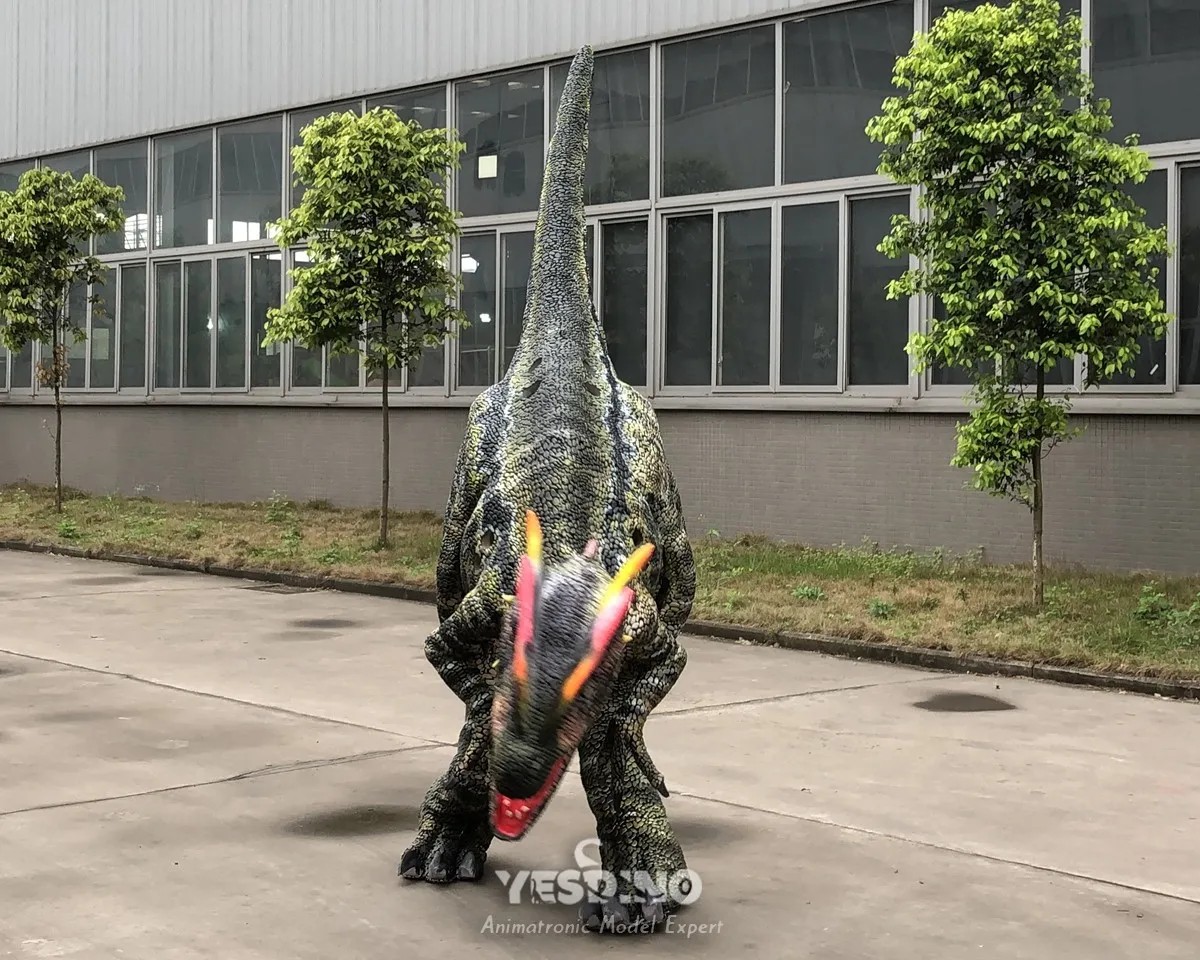
The two crests are separate moulded parts keyed into the skull rather than stitched onto the skin, because a stitched crest flattens the first time the wearer turns quickly. On this build the pair runs back from the snout with a colour gradient — deep red at the base, through pink and orange, tapering to yellow at the tips — sprayed onto the fabric after the crests are bonded. The same gradient is what makes the head readable from thirty metres, which is the distance most of your audience will actually see it from.
If you want a plain-coloured crest, or a colour break that matches an existing cast, send the reference and it is sprayed to that instead.
Embossed fabric or silicone skin?
The embossed fabric build is the lighter option at 18–23 kg, and it now accounts for about 90% of the costumes we ship. Both builds share the frame, the foam sculpt and the paint system; they part company at the skinning stage, and that is the only difference.
| Build | Weight | How the skin is made | Where it wins |
|---|---|---|---|
| Embossed fabric | 18–23 kg | Pre-textured fabric bonded straight onto the carved foam, then painted on the fabric | Walkabout work, long sessions, suits that travel between venues |
| Silicone | 35–40 kg | Fibreglass cloth over the foam, silicone brushed on in layers, colour sprayed on the silicone | Close-up filming, wet-look surface detail, static display |
Hidden legs, and why this suit is built that way
This Dilophosaurus uses the hidden-leg build: the performer's legs sit inside the dinosaur's legs, so nothing human shows below the body. It is the version in the photographs, and it is about 75% of what we make.
The alternative is exposed-leg, where the wearer's own legs are visible walking alongside the dinosaur's. Exposed-leg is quicker to get in and out of, gives a longer stride and better balance on rough ground, and costs less. Hidden-leg looks right in any photograph, which is why photo calls, museum floors and shopping malls usually specify it. Choose by where the suit will spend its time — if you are unsure, tell us the route and we will say which one we would put on that job.
Where a Dilophosaurus suit works
Dinosaur parks and trails — a mid-size predator that reads well beside larger species in a mixed cast
Theme park meet-and-greet — head-height interaction, with a handler walking ahead
Museums and science centres — the fossil-accurate head as a counterpoint to a skeleton
Shopping mall campaigns — hidden legs, indoor surfaces, a defined route
Film and brand events — short takes, close camera work, colour matched to a reference
What ships with the suit
The finished costume, built to your wearer's measurements
Padded shoulder and hip harness, fitted
Rechargeable battery pack and charger
Spare fabric patches, hand grips and fasteners
Handler notes covering entry and exit, cleaning, storage and the fan filter
Core electronics carry a two-year warranty. Freight, import duty, destination certificates and on-site setup sit outside the unit price and are quoted separately, so the budget you present is the whole number rather than the factory number.
Dilophosaurus costume questions
How much does a Dilophosaurus costume cost?
Species, size, leg style and skin choice set the price, so we quote per order rather than publish a list price. The embossed fabric build is the cheaper of the two at the same size, because two material layers come out of the process. Send the four details on the sizing guide and you get a written quotation with a dimensioned drawing.
Can one person put it on alone?
On the fabric build, usually yes. The weight is the difference — a 20 kg suit can be entered and settled by one person, where a 38 kg suit needs a second pair of hands. A handler is still worth having at public events — the wearer sees through mesh panels set into the neck, not through the eyes, so somebody walking ahead keeps the route clear.
Can it be used in the rain?
Light rain is fine. Standing water and heavy downpour are not, because water reaches the fan intake and the head mechanism. If your calendar is mostly outdoor, say so at the design stage — the intake position and the sealer change, and that is cheaper than fixing it later.
Do you build a smaller suit for a child or a shorter performer?
Yes. The suit is built from the wearer's measurements rather than from a fixed pattern, so a 1.45 m performer gets a proportionally smaller animal instead of a full-size suit they cannot balance. Send the measurements of the person who will actually wear it.
How long does a build take?
The schedule starts when the drawing is signed, not when the enquiry arrives. Sculpting, skinning, painting and programming run in sequence, and a change of head style after the sculpt moves the date. A dated plan comes with the quotation.
Can the colours be changed?
Yes. The suit in these photographs runs olive and dark green over the body with a red-to-yellow gradient on the crests. Other palettes are sprayed from a reference you supply, and colour changes cost far less than changing the sculpt.
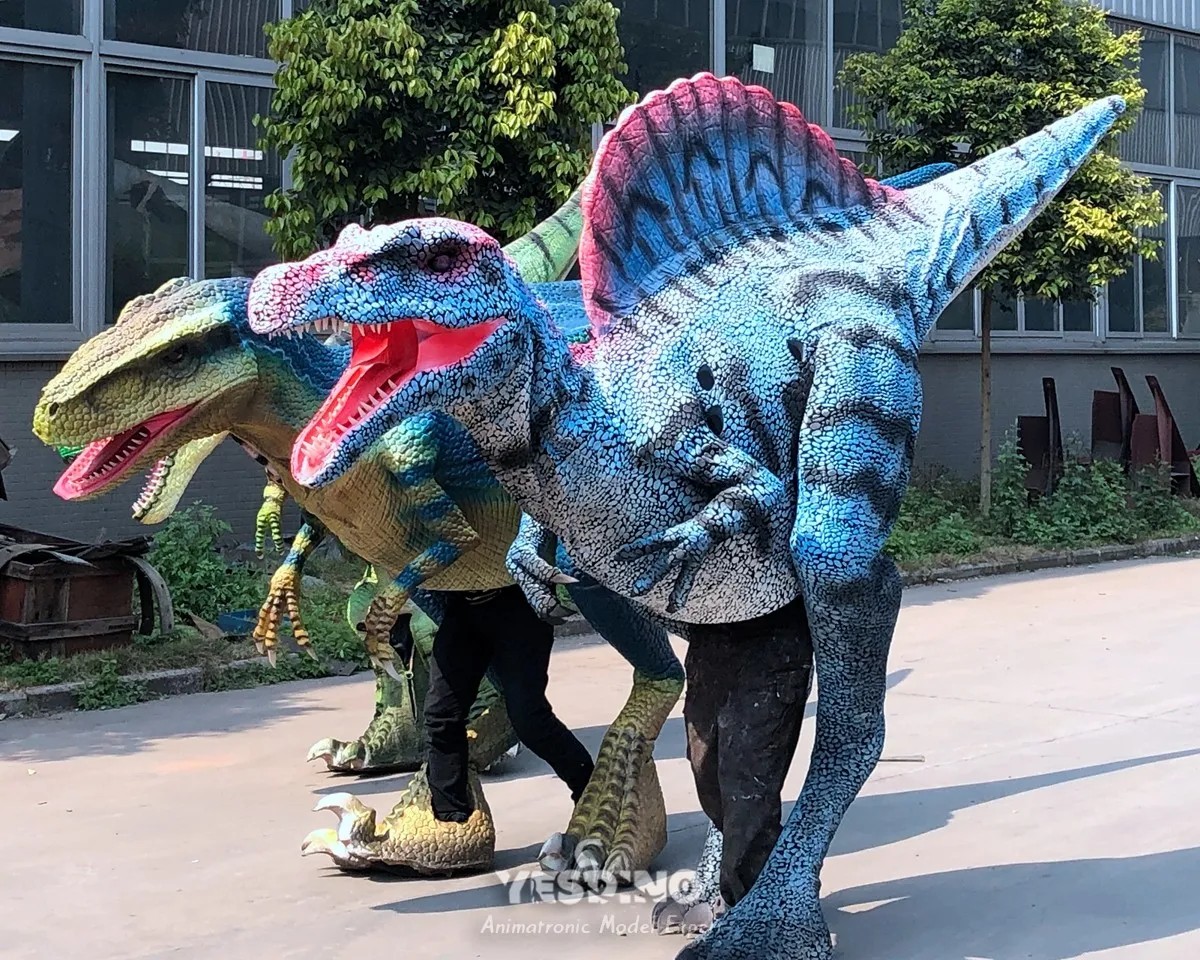
Comparing species before you decide? The Spinosaurus costume is the same build with a sail instead of crests, the full costume range covers the other species, and the costume guide explains how the suit behaves on a performer. If you want a recommendation for a specific venue, send us the site and the event and we will say which build we would use.
Product Accessories

Packaging and Container Loading