Production Process
A visitor stops at the Linxia Basin case, studies a slab of horn cores and jaw fragments, then turns and finds the animal standing there at chest height. That is why a regional museum buys this piece: the fossils are local, and a two-metre body closes the gap between a label and a creature. SKU YAA-018 measures 2 m from nose to tail, 1.5 m at the head.
Why a two-metre bovid, not another dinosaur
The dinosaur hall is the draw in most regional museums. The local collection is what makes one museum different from the one two cities over, and the Hezheng sheep, an extinct bovid known from the Linxia Basin in Gansu, does that second job. Its heavy curved horns are the recognisable feature, and the animal belongs to a place your visitors can find on a map.
At 2 m long and 1.5 m high it sits beside real specimens at their own visual weight, which is what a gallery of fragments needs. The trade is presence: it will not fill a hall, and nobody walks around it.
Where it sits in a gallery
A permanent gallery, on a low plinth in front of the fossil display, barrier on the visitor side so the horns read in profile from the approach. At 1.5 m the head sits near adult chest height — good for viewing, awkward for a hands-off line, since a school group leaning over a rail can reach the muzzle.
The second placement is a temporary route. A museum that borrows specimens and rotates a display twice a year can move 2 m between rooms without a crane. Measure those doors before the plinth is drawn, because the plinth has to fit the route twice.
What moves, and what to slow down
The list is short: neck down and up, head turn, jaw, ear flick, tail sway, slow flank breath. Neck and jaw carry the read. A bovid chewing with its head lowered looks like an animal, and the same body with a fixed head looks like taxidermy with a motor in it.
Worth the time in commissioning is the head turn. Slow it, hold the pause at the end of travel, and leave a long idle stretch in the loop so the animal is still most of the cycle. A short burst inside a long loop reads better in a gallery than continuous motion.
Build, skin and horn curvature
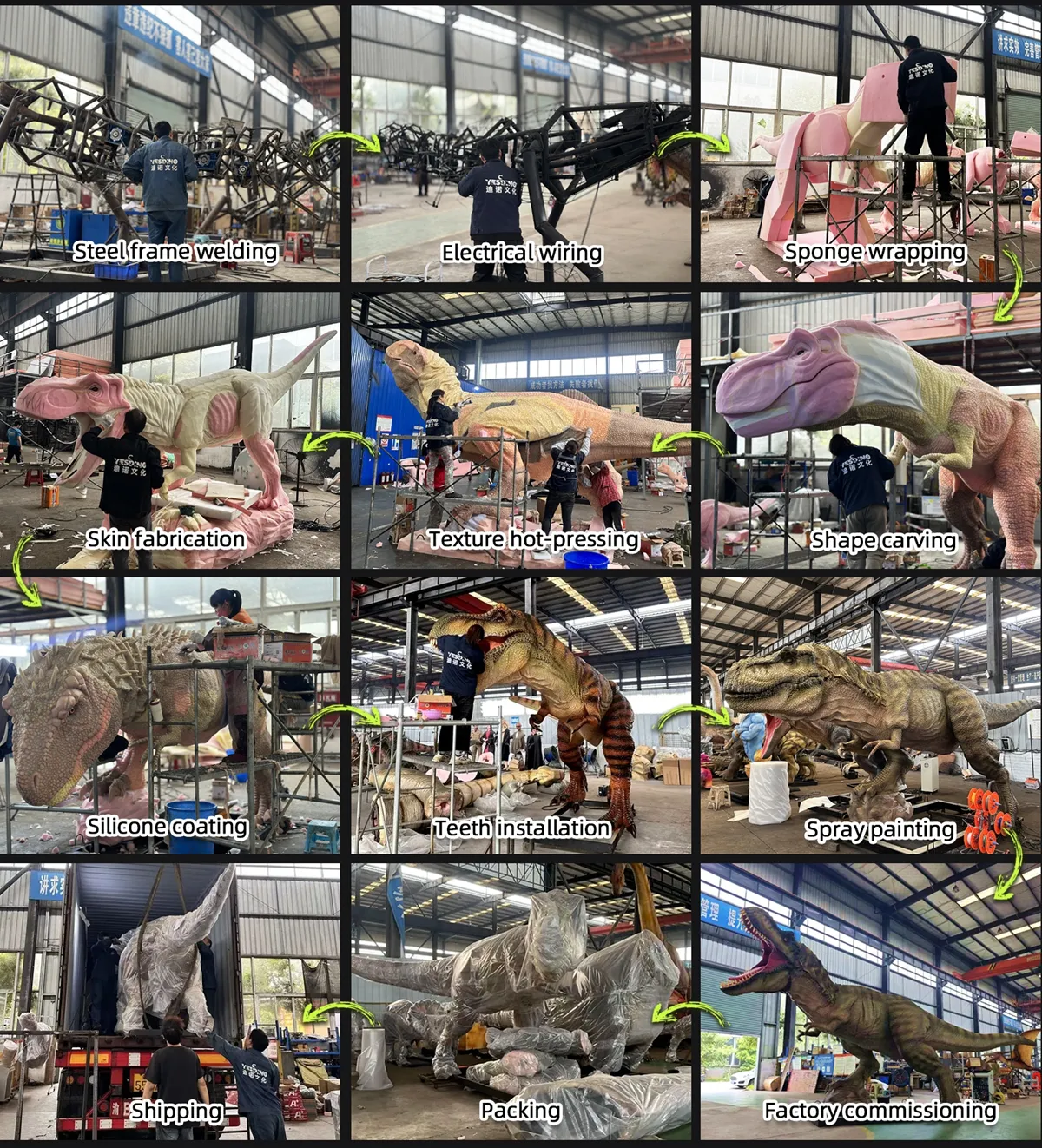
Q235 steel frame, rust-proof treated, high-density foam carved to volume, 5–7 mm silicone over it, colour sprayed in translucent layers so the pigment sits in the surface. Gallery light is close and even, and a paint film on silicone shows as a shine at one pace where a layered skin reads as depth.
The horns decide whether the piece works. They are carved and laid as separate parts on a core, because the curve is compound: it sweeps back, drops, and rolls slightly along its length. A horn shaped as one tapered cone looks right from the doorway and wrong from the rail, and the rail is where visitors stand. Separate horns also make a tip damaged in transit a replacement part.
Rated for −25 °C to 45 °C, 110 V or 220 V configured for the destination, core electronics on a two-year warranty.
Getting it in, and service access
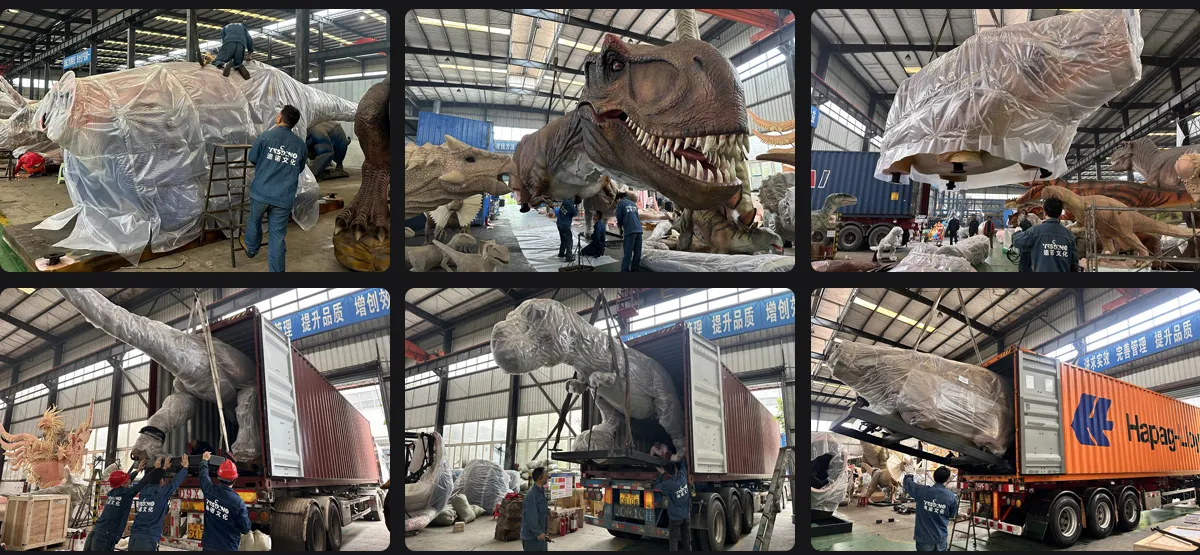
It travels in sections: body, neck and head, horns boxed separately, base frame, control cabinet. The constraint in a museum is rarely the freight door, it is the route from the door — a service lift, a stair, a gallery threshold somebody forgot. Send the narrowest measurement on that route with the order.
A new exhibition floor takes a bolted base frame; a protected heritage floor takes a ballasted plinth, and the ballast is designed in rather than added on site. Leave clearance on one flank: the service panel and the cabinet need a person standing there, not a screwdriver reaching in.
What to send before you order
Send a floor plan with the case marked, door and lift dimensions on the delivery route, whether the floor can be drilled, the barrier height you plan, and the hours the piece will run each day.
Two cases where this size is the wrong buy. A gallery that needs a centrepiece people walk around: 2 m behind glass reads as furniture next to an eight-metre skeleton. And a room where school groups pass without a rail, since the finish then takes contact it was not built for.
Enquiry
Send the gallery photo and the route measurements, and tell us which way visitors approach the case, since the head turn is programmed to face the approach rather than the exit. If the animal will stand beside real fossil material, say so early: tone and horn finish are matched at build, and matching them later means a second visit. Freight, duties, certificates and installation are quoted separately.
Where to go next
Two things come up in almost every enquiry on this build: how the size compares with the alternatives, and what it takes to get it on site. The installation guide for pads and access sets out the options side by side, and the rental cost breakdown covers pads, access and assembly. Budget planning sits in the pneumatic versus hydraulic comparison.
For ideas on placing it, see museum display guidelines. The rest of the range is on animatronic animals, and if this one is the wrong size for the slot, animatronic goat for animal exhibitions is the closest alternative.
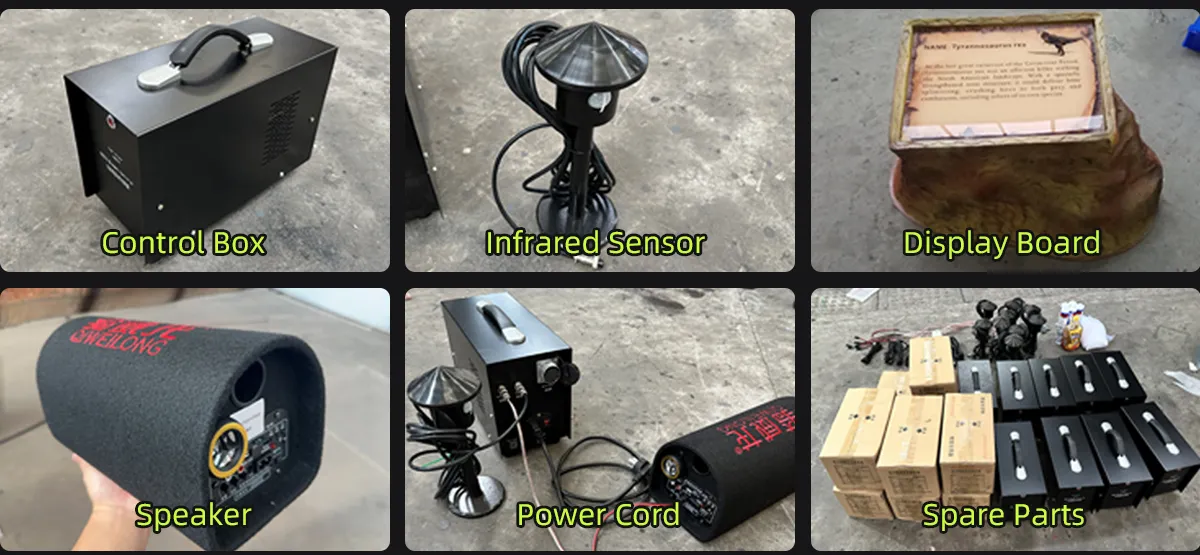
Product Accessories
Packaging and Container Loading