
Lifelike dinosaur costume · manufacturer
Lifelike Dinosaur Costumes
Lifelike, real-life wearable suits built over a carved foam body, with the performer inside. Made for walkabouts, meet-and-greet, parades and film — where the animal has to move through a crowd rather than stand behind a barrier.
Wearable
Performer inside, not on a base
Silicone skin
Carved foam body, layered colour
Hand-triggered
Jaw, head and arms from inside
Made to measure
Built around the performer
A costume is a room you wear
That is the whole design brief. Every decision on a wearable dinosaur comes down to what the person inside can see, breathe, hear, carry and do with their hands — the outside is the easy half.
So this page is organised around the wearer rather than the animal. If you are choosing between a costume and a full animatronic model, there is a straight comparison further down; if you already know you need something that walks through a crowd, the sections below are the ones that decide whether it works on the day.
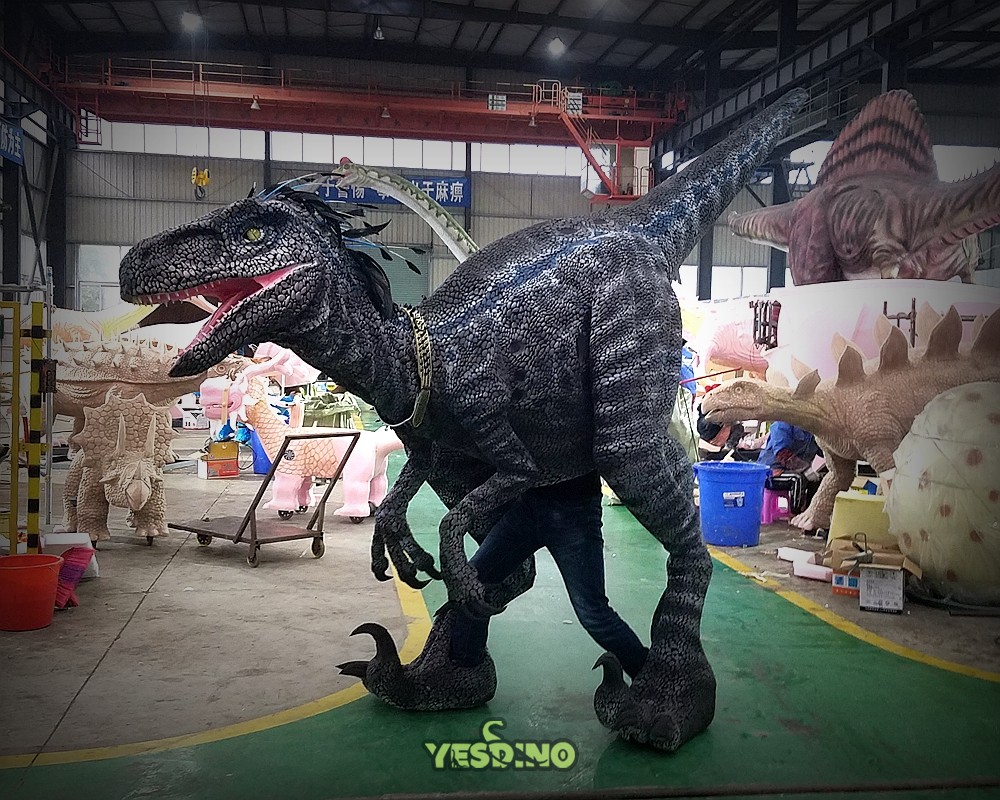
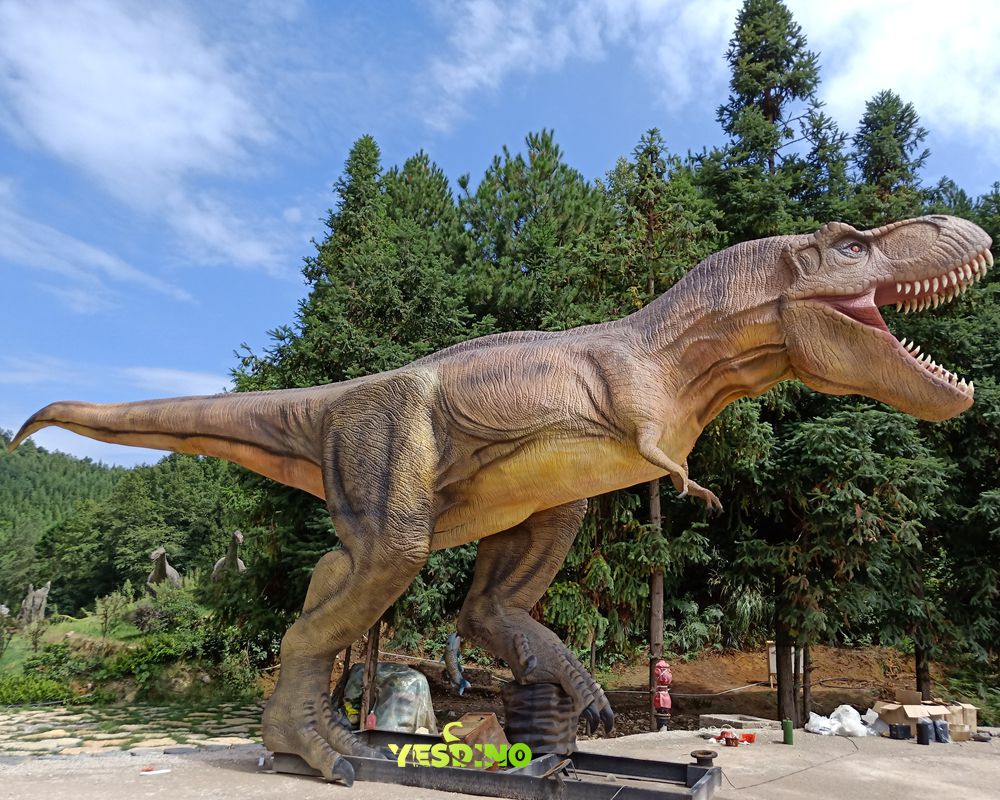
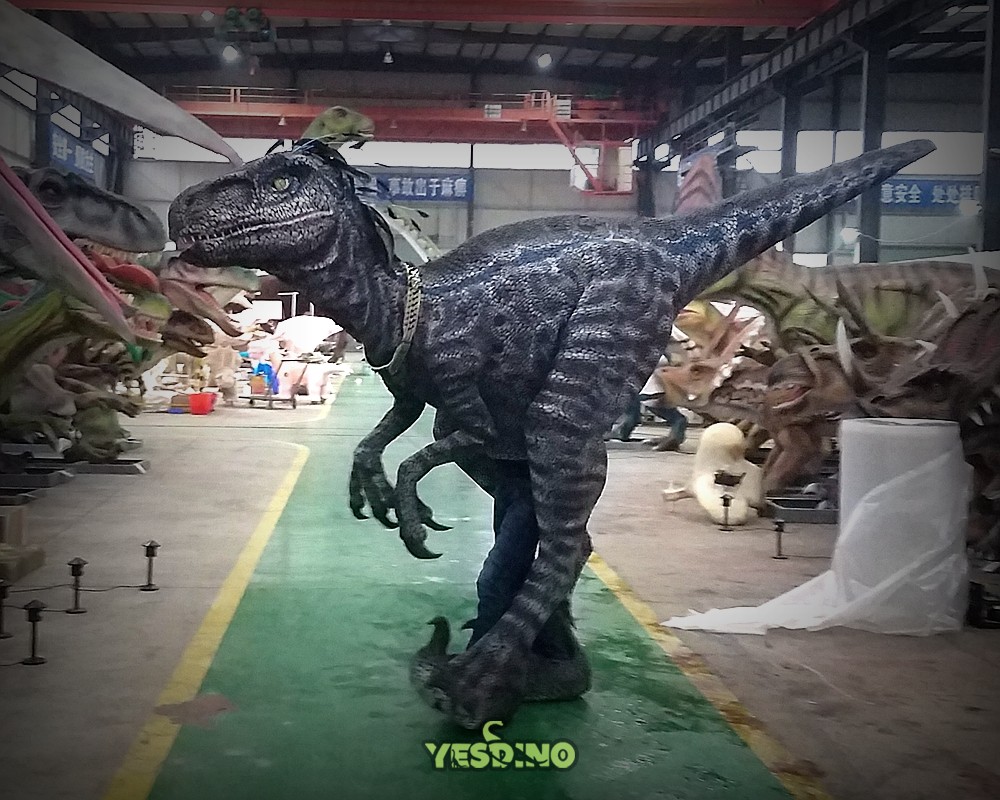
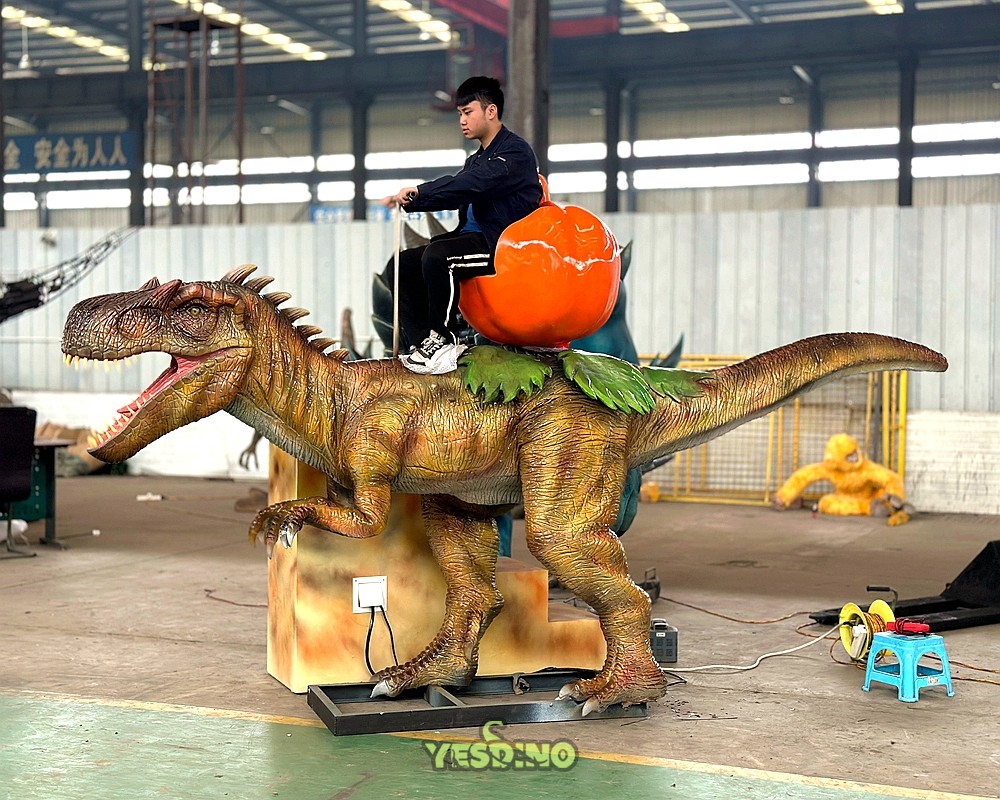
Workshop shots — the same floor that builds our full-size models.
On this page
Two families: realistic suit, or inflatable
Both are called "dinosaur costume" and they are different products with different jobs. Choosing badly is the most common mistake on this page — an inflatable bought for a museum tour, or a silicone suit bought for a 40 °C car park.
| Realistic suit (the kind we build) | Inflatable costume | |
|---|---|---|
| Surface | Carved foam body with silicone skin and layered colour | Printed fabric held under air pressure by a blower |
| What it reads as | An animal, at two metres and at twenty | A character or mascot — clearly a costume, and fine if that is the brief |
| Weight and effort | Carried by the performer, so size and shape are constrained by the body inside | Light; the air does the shaping, which allows much bigger silhouettes |
| Heat | Traps heat — indoor and cool-weather work is where it belongs | Constant airflow through the blower, which is why it is popular outdoors in summer |
| Repair | Seam and skin repair, done in a workshop | Patch kit on site; a puncture is a ten-minute fix |
| Where it wins | Parks, museums, film, brand work where the animal must look real | Fun runs, retail promotions, school events, anything high-volume and short-lived |
We build the first kind. If what you actually need is an inflatable, we will say so rather than sell you the wrong product — the upkeep on a silicone suit in a hot outdoor pitch is not worth it for anybody.
Sizing: you are measuring the performer, not the dinosaur
A costume cannot be scaled like a model. The animal's proportions have to be built around a real body, and five measurements do almost all of the work.
| Measurement | What it decides |
|---|---|
| Standing height | How big the animal can be. The head height follows the performer's eye line, not the other way round |
| Shoulder width and torso depth | Where the weight sits and how the chest reads. Too tight and the performer cannot rotate; too loose and the shoulders look hollow |
| Inseam | Stride length and how the legs are proportioned. This is the measurement most often guessed wrong when a costume is bought off a size chart |
| Arm reach | Whether the performer can work the jaw trigger and still keep the arms in the right place |
| Sight line height | Where the viewing window has to sit — usually the mouth or the neck join. It constrains how the head can be shaped |
Send the measurements with the height of the tallest and shortest person who will wear it. A costume built for one performer is better than one built for the average of a team: if two people share a suit, size it to the taller and let the smaller wear thicker footwear. The sizing guide goes through the measuring itself.
Species: what each one is like to wear
Species changes a costume far more than it changes a model, because every proportion has to be carried by a body. These six come up most often, and they are not equally comfortable.
| Species | What it is like to wear | Where it works |
|---|---|---|
| Spinosaurus | The tallest silhouette on this list and the least discreet to walk in. The sail fixes the upper body, so the wearer's arms stay low and the head sits high on a long neck. | Open floor, entrance moments, photo backdrops — not crowded concourses |
| Tyrannosaurus | The heaviest head of the common suits, and the one a performer feels within minutes. Shorter sessions and a geared head turn are the usual answer. | Meet-and-greet, stage, film — anywhere the head can be the whole show |
| Velociraptor | The easiest to wear and the easiest to move in — close to human proportions, so sight, balance and stride all behave. It is the suit we suggest first for new performers. | Mall walkabouts, school visits, close interaction, rental fleets |
| Triceratops | Wide, so doors and aisles become the constraint rather than weight. The frill hides the performer well, which makes it a favourite for photo work. | Museums, family events, anywhere it stands still for pictures |
| Carnotaurus | Compact and low, with a big jaw. The head pulls forward, so balance matters more than in a raptor and the walk is deliberately slower. | Themed walkways, scare moments, evening events |
| Brachiosaurus | The long neck makes the sight window sit high, so the performer needs a clear forward line and a handler who can see further ahead than they can. | Parades and outdoor routes where the height reads from a distance |
If you are buying for a team rather than for one performer, start with the raptor or the carnotaurus — the ones that behave most like a person. A Spinosaurus is a statement piece, and it needs a performer who has already worn something.
Inside the suit: six things the wearer lives with
None of these are visible in a photograph, and all six decide whether a performer can hold a 20-minute set without breaking character.
Heat
Foam and silicone are insulation. Heat is the real limit on session length — not the weight, and not the walking. A cool indoor hall and a sunlit car park are two different products.
Sight
The wearer sees through a small window at the mouth or neck join, and peripheral vision is close to nothing. Everything to the side is memory and a handler's voice.
Hearing
The head is a sound box. Speech arrives muffled and direction is unreliable, which is why a suit performer is guided rather than spoken to.
Hands
The performer's hands sit in the chest and work the jaw and head. That means no carrying, no opening doors, no handing out flyers — anything like that needs a second person.
Balance
A tail changes the centre of gravity and a big head changes what the neck has to hold. Turning quickly is the manoeuvre that catches new performers out, not walking.
Getting in and out
Entry is through the back or the belly panel, and it takes a second pair of hands. Somewhere to sit down and a private space to change are part of the specification, not an afterthought.
We size the suit, the ventilation and the session plan around the venue rather than around a standard. Tell us where it will be used and in what season, and those three things get built to match.
What the wearer can actually do
A costume is a puppet with a person inside, not a machine. The movement list is short and honest — and knowing it up front prevents the most common disappointment after delivery.
| Movement | How it works | What it looks like in use |
|---|---|---|
| Walking | The performer's own legs, inside the suit's legs where the proportions allow | The most convincing movement in the whole package, because it is genuinely a body moving |
| Jaw | A trigger in the chest, worked by the hand | Snaps shut faster than a motor can, which is why it reads as a bite rather than a hinge |
| Head turn | The wearer's own neck, geared where the head is too heavy to turn directly | Generous on a small raptor, deliberately limited on a large head — the neck can only carry so much |
| Arms | Usually the performer's arms driving the suit's arms, or a rod for a small forelimb | Good for gestures and photo poses; not for anything requiring grip |
| Tail | Follows the hips, with a light linkage so it swings with the walk | Sells the movement more than anything else at a distance; needs clearance behind the performer |
| Sound (optional) | A small speaker in the body with a hand or motion trigger | Worth having: a roar buys attention that a silent suit has to earn by walking up to people |
| Not available | Blinking eyes, breathing motion, independent limb articulation | Those need motors, batteries and a controller — that is a full animatronic, not a costume. See the comparison below |
Four suits in motion
A costume is judged by its gait, not by its finish. Four species, four different sets of constraints on the person inside — watch how much of the walk is the animal and how much is simply a person walking carefully.
Tyrannosaurus costume · heaviest head
The head is the whole performance and the whole problem: watch how short the strides are, and how the turn is set up before it happens.
What all four have in common is the thing that cannot be built in: the wearer's own body is doing the walking, so the gait is honest. What differs is how much of the animal's shape gets in the way of it — a heavy head, a high neck or a wide frill all change the way somebody crosses a room.
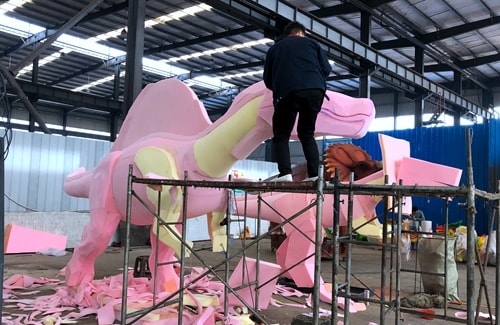
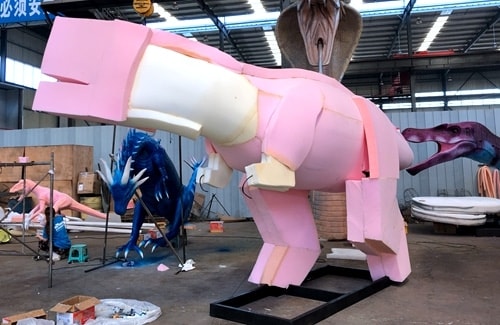
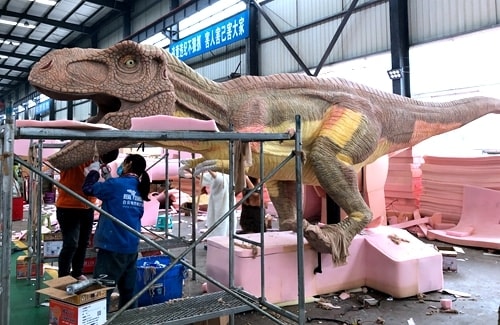
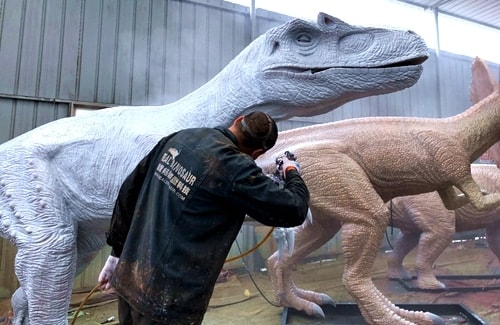
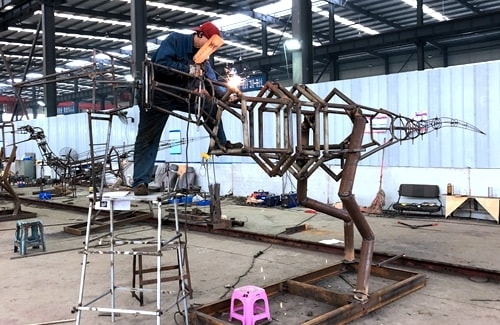
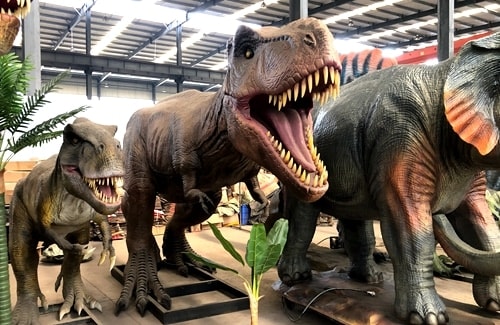
How a suit is built: six stages
A costume goes through the same floor as our full-size models, with one difference: every stage is checked against a body rather than against a frame. The fitting is not the last step — it runs alongside the build.
What it looks like in service
Four settings where a wearer beats a model, because the animal can go to the visitor instead of waiting behind a rope.
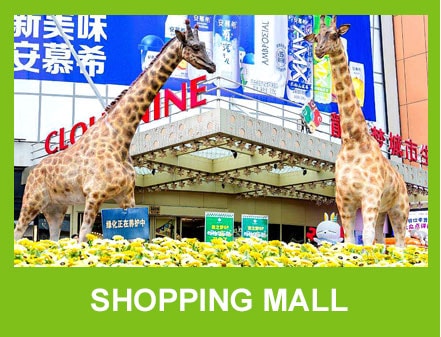
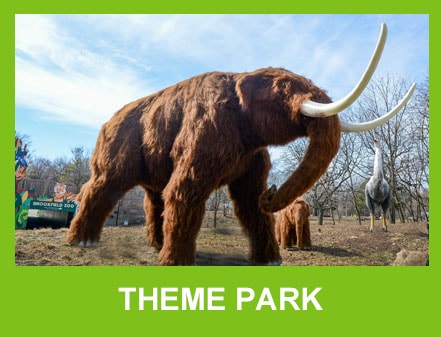
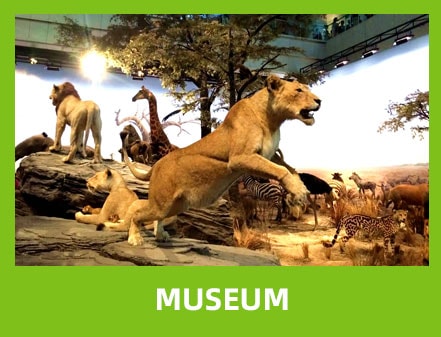
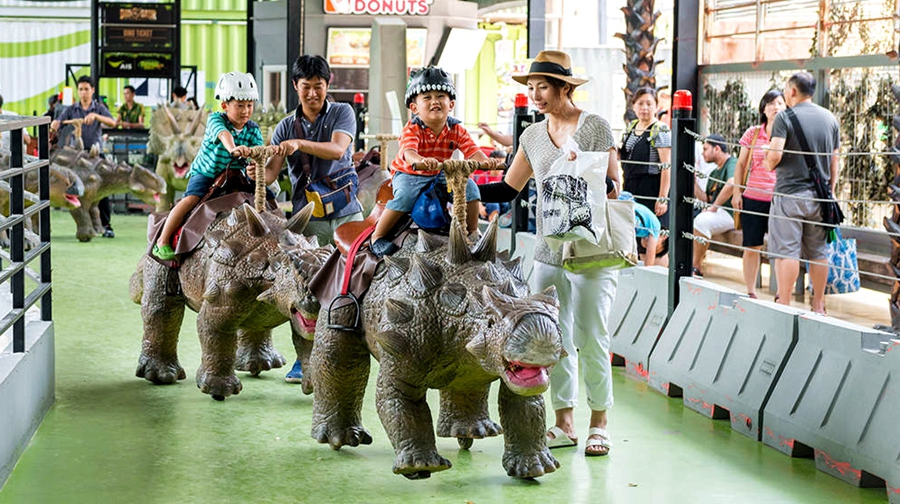
Scene images are placeholders from our own project archive and will be replaced with production and client photography.
Where a costume earns its keep
The value of a wearer is mobility. Anywhere a model would need a barrier, a costume goes instead.
RETAIL
Mall walkabouts
Short loops through a concourse, timed around footfall. The constraint is ceiling height and lift size, not floor space — and a handler is essential in a crowd.
ATTRACTION
Park meet-and-greet
A fixed pitch with queues and photo moments. Here a costume beats a model outright: visitors want to stand beside it, and a barrier kills the whole point.
EVENT
Parades and festivals
Slow forward movement in a line. Sight through the mouth window is the limiting factor, so a route with turns needs rehearsal rather than a first attempt on the day.
EDUCATION
Museum and school visits
The wearer can talk to a group through the suit, which a model cannot. Sessions are short and scripted; the value is the interaction, not realism.
BRAND
Campaigns and launches
Usually specified to match a design or a film reference. Two units are common so one is always available while the other dries or is repaired.
RENTAL
Costume rental businesses
Rented out by the day to venues that have no performer of their own. Durability and cleaning become the buying criteria, not detail level. The rental model is covered separately.
Running a shift: the part nobody plans for
Most costume programmes fail on operations rather than on the product. Five things to arrange before the first booking.
Two performers, one suit
Rotation is what makes a long booking possible. One wearer per session, a second ready to take over, and a third as backup on a full day.
A handler, always
Someone outside the suit who steers, clears the route, speaks for the character and watches for overheating. This is not optional in a crowd.
A changing space with a seat
Entry and exit need room, a chair and privacy. A stockroom with a door is enough; a corridor is not.
Water and a cool-down point
Drinking through a costume is impractical, so hydration happens between sessions. A fan and a quiet corner are worth more than a longer break.
A transport plan that fits the doors
Measure the van opening and the venue doorway before the first job. A suit that will not go through a service door is a suit that stays in the vehicle.
Care between events
A costume is worn against a body, so it gets dirty in a way a model never does. The routine is short and it is the difference between a three-season suit and a one-season suit.
| When | What to do |
|---|---|
| After every use | Wipe the inside with a damp cloth and dry it fully open before it is packed. Trapped moisture is what makes a suit smell |
| After every use | Check the jaw linkage and the head mount; these take the most load and are the first to work loose |
| Weekly in season | Look along the seams for a starting split, especially at the shoulders, hips and jaw hinge |
| Storage | Hang or lay it loosely. Folded tight for months is how a skin takes a permanent crease |
| Off season | Air it out, check the inside lining, and store it away from heat and direct sun |
Costume or animatronic model?
The honest split is mobility versus everything else. A model can be bigger, more detailed and always available; a costume can go where people are.
| Question | Costume | Animatronic model |
|---|---|---|
| Can it move through a crowd? | Yes — that is the point of it | No. Fixed position or a track, usually behind a barrier |
| Maximum size | Bounded by what one person can carry and turn in | 3 m to 16 m and beyond; the frame takes the load |
| Movement quality | Human, and better for it at walking; limited to jaw, head, arms | Programmed cycles, repeatable, unlimited joints and sound |
| Running cost | A performer and a handler per session | Power, plus occasional maintenance; no staff |
| Interaction | Can react, pose and hold a moment with a visitor | Sensor-triggered routines; no judgement in the loop |
| Best for | Malls, meet-and-greet, parades, film, rental fleets | Park set pieces, museum exhibits, entrances, drive-through routes |
Plenty of parks run both: models as the fixed landscape, one or two costumes for the parts of the day where visitors are supposed to meet something. The side-by-side comparison goes further, and the animatronic dinosaur page covers the other half in detail.
What moves the price
Four variables, in the order they matter.
Size, and how much of it is silicone
A costume is surface as much as shape. A large suit with a full silicone skin carries far more hand work than a small one — and the skin is the single biggest material line on any build we do.
Detail level
Scale pattern, teeth, tongue, eye work, the colour build-up. This is where a suit looks real at two metres or looks like a mascot — and it is entirely hand labour.
How many units
Two costumes cost roughly twice one, but they are what makes a programme work: one on, one drying. Most serious buyers end up ordering a pair.
Extras
Sound module, extra ventilation, geared head, reinforced jaw linkage. Each is a small line item that changes how the suit performs in service, not how it photographs.
Cost inside the workshop splits into material, labour and overhead, and on a costume the labour share is high — fur and skin work, fitting sessions and hand-finishing are what you are buying. As with our full-size models, freight, duty, certificates and on-site support are quoted separately rather than folded into a single product figure, so you can see what each part actually costs.
IN THE PRODUCT PRICE
Finished suit, fitted to the measurements you send
Jaw and head mechanism as specified
Export packing and a care sheet
One-year warranty on mechanism and seams
OUTSIDE THE PRODUCT PRICE
Freight and insurance
Import duty and taxes at both ends
Optional sound or ventilation upgrades
Performer training, if you want it on site
Spare skins or a second suit, ordered later
Frequently asked questions
Can one costume be shared by two performers?
It can, if it is built to the taller of the two and the shorter wears thicker footwear. Building to one body always fits better, so tell us the range rather than an average.
How long can someone wear it?
Heat sets the limit, not weight. That is why we ask for the venue and the season before finalising ventilation, and why every programme we quote assumes rotation rather than one long session.
Can it be used outdoors?
Silicone skin handles weather; the wearer does not. Outdoors works in cool conditions or under shade. For a summer car park, an inflatable is the better product and we will say so.
Can the performer wear glasses inside?
Usually yes, provided the sight window sits at the right height. Send the measurement for the person who will actually wear it — this is one of the details that gets missed when a suit is bought from a stock size.
Does it come with a fan?
Ventilation is specified per build. Where the suit will be used in a warm or crowded environment, we plan for it as part of the structure rather than as an add-on.
Can we repair it ourselves?
Seam splits and skin damage are repairable, and we supply guidance with every suit. Structural damage to the jaw linkage or the head mount should come back to us or to a workshop that knows the mechanism.
Can you match a specific design?
Yes — a film reference, a concept drawing or a brand character all work as a starting point. With no real animal to copy, the design is approved from drawings before the body is carved.
Do you make suits for children's events?
Our suits are built around an adult performer. For a children's event the usual answer is a smaller animal sized to a shorter adult or a teenage performer, which keeps the proportions honest.
Send the performer's measurements and the venue
We will come back with the shape, the surfacing, the ventilation plan and the numbers — before anything is committed. A photo of the space is worth more than a long email.