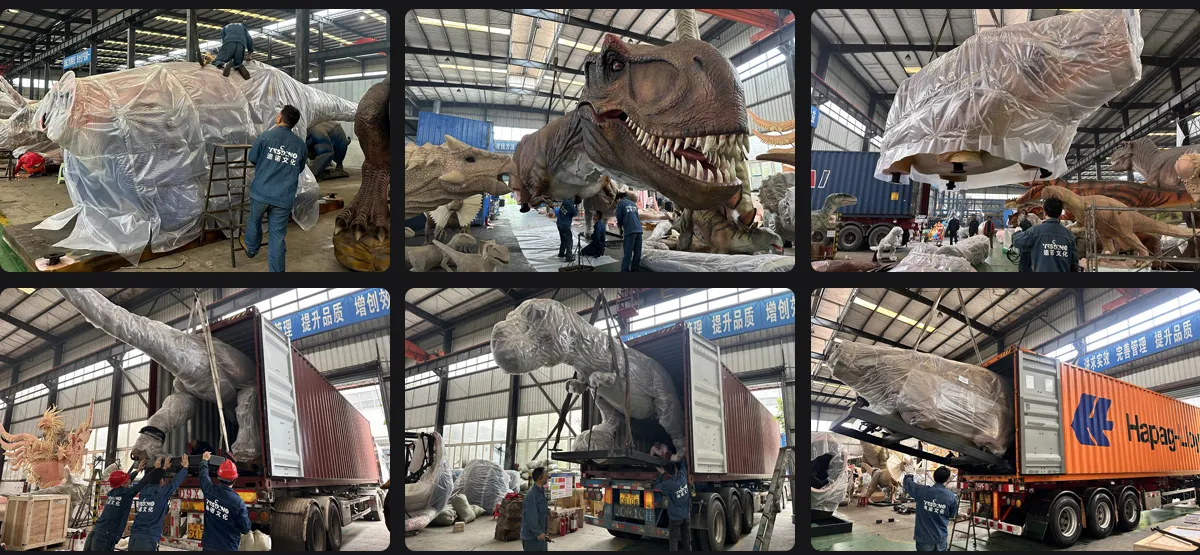
Production Process
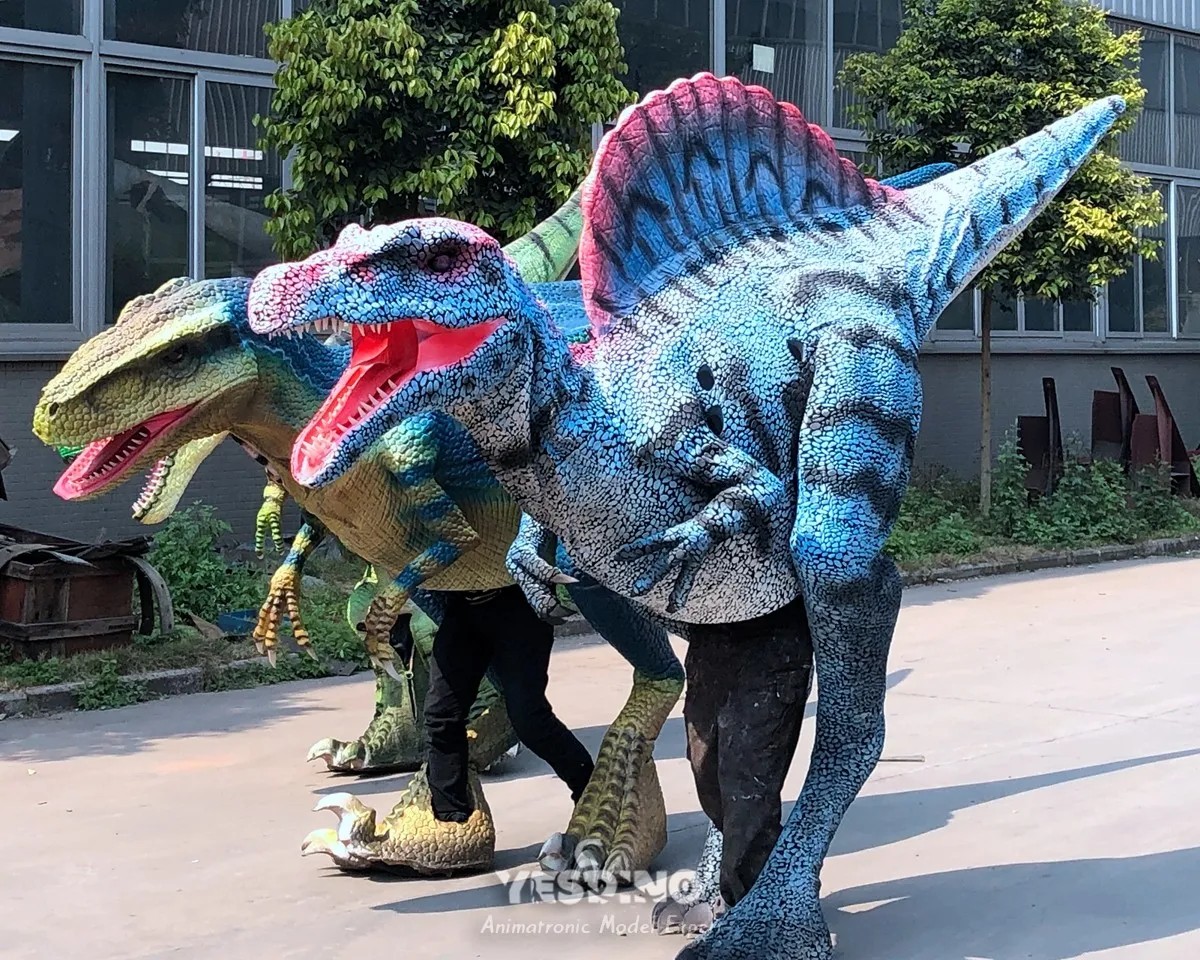
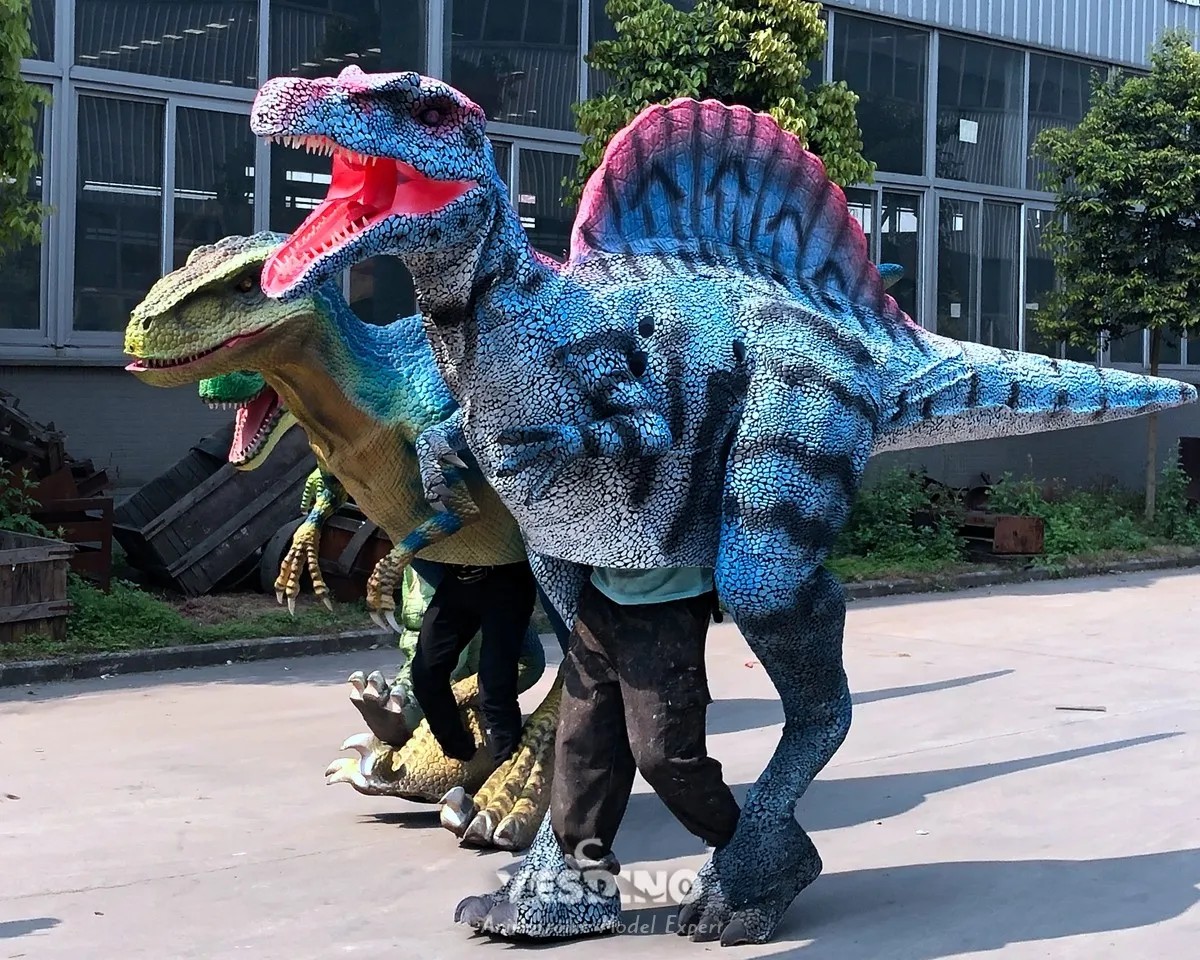
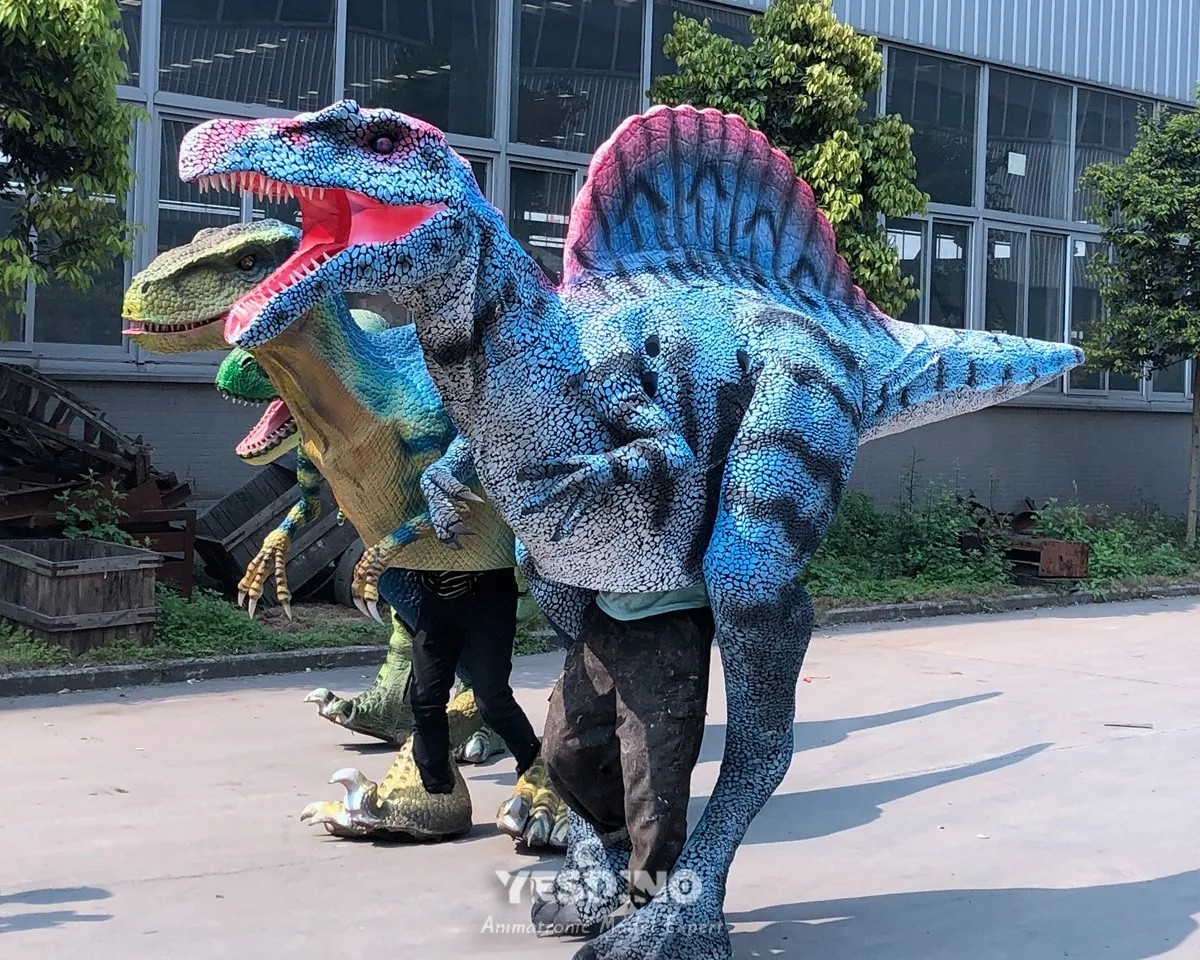
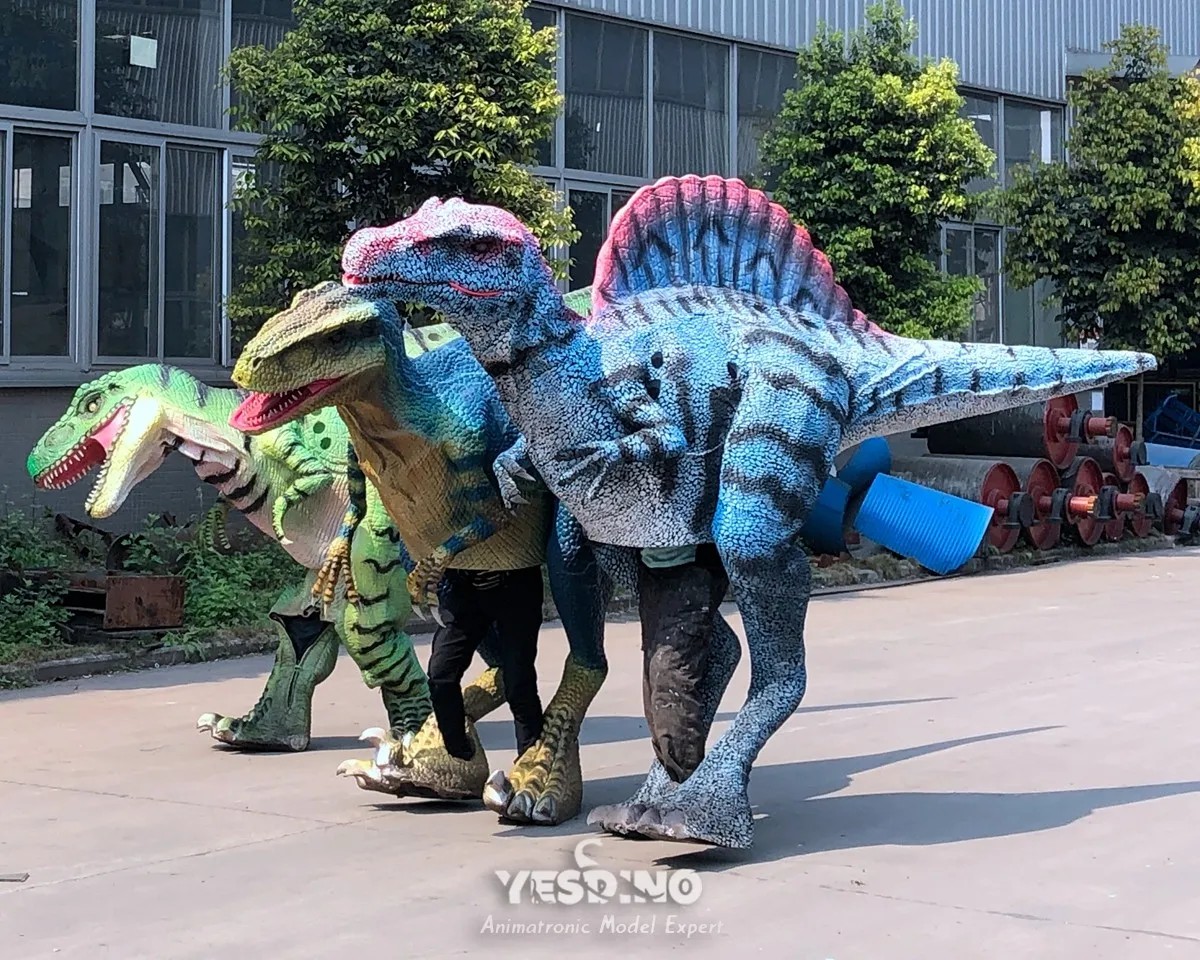
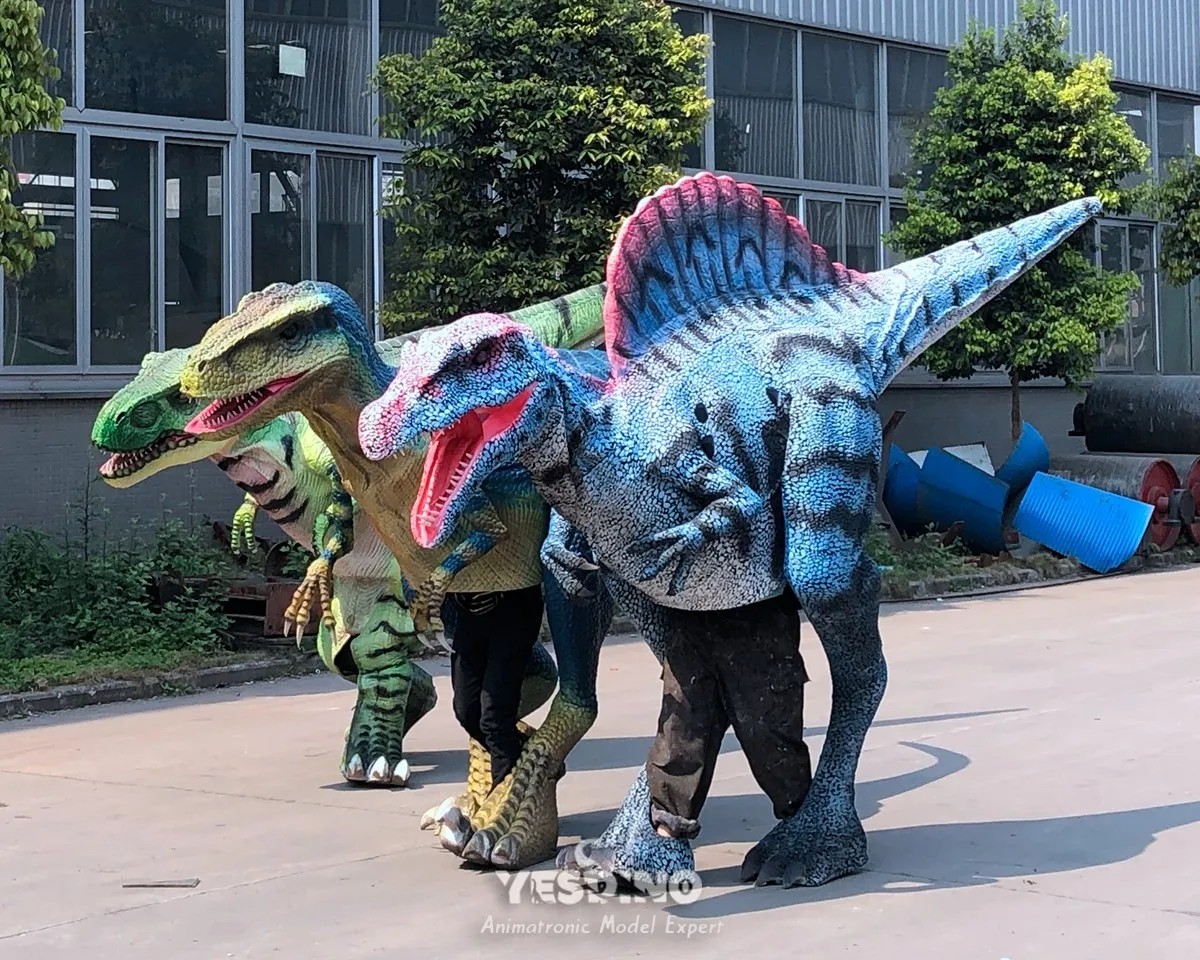
A Spinosaurus costume puts a performer inside a 18–23 kg animal and lets them walk a crowd, turn the head, open the jaw and hold a pose for a photo. This one is built with the embossed fabric skin — the current production method, and now roughly 90% of the costumes we ship. The sail along the back, the crocodile-style snout and the colour break from blue-grey to pink along the spine are all decided at the sculpt stage, so what you see in the photographs is what gets built.
The skin is the only thing that changed
The difference between the older silicone costume and this one sits entirely in the last stage, the skinning. Everything before it — the frame, the foam sculpt, the mechanism, the paint system — is the same work.
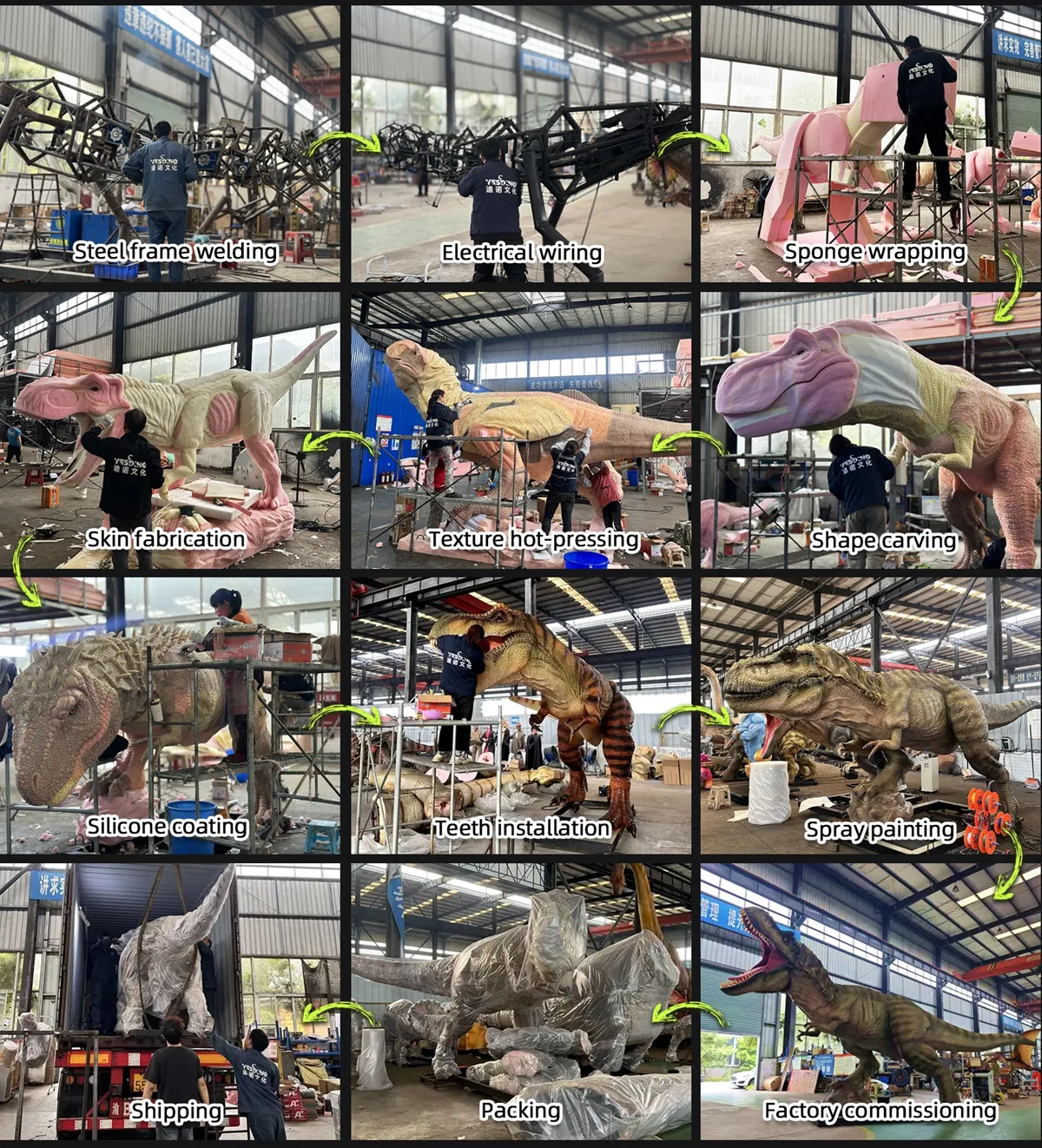
On the silicone build the textured foam is sealed, fibreglass cloth is bonded over it, silicone is brushed on in layers and the colour is sprayed onto the silicone. That is the same process we use on the life-size animatronic models, and it is why those suits look like a model you can wear. It is also why they weigh 35–40 kg.
On the fabric build the carved foam body is covered directly with an embossed fabric that already carries the dinosaur scale pattern. The colour is sprayed straight onto the fabric. Two fewer material layers, no silicone, and the finished suit comes in at 18–23 kg depending on species and size.
| Silicone skin (older build) | Embossed fabric (current build) | |
|---|---|---|
| Skinning | Texture seal → fibreglass cloth → brushed silicone → sprayed colour | Embossed fabric bonded to the foam → colour sprayed on the fabric |
| Weight | 35–40 kg | 18–23 kg |
| Surface | Rubbery, deep relief, wet look under light | Matte, crisp scale edges, reads as hide rather than rubber |
| In service | Heavier on the shoulders; a second person helps with the entry | One person can get in and out; longer sessions are practical |
| Repair | Local silicone patch, colour blended in | Fabric patch, colour blended in; both are workshop jobs |
| Share of our costume orders | About 10% | About 90% |
Why the fabric build took over
Weight is the whole argument. A performer in a 38 kg suit is working against the suit the entire time; the same performer in a 20 kg suit can walk further, turn faster and stay in character for longer. For an events company paying by the appearance, that is the difference between one act a day and three.
The second reason is handling. Lighter suits go into a smaller crate, get carried by one person, and come out of storage without the skin cracking where it was folded. If the costume travels between venues rather than living in one park, that matters more than the surface finish.
What you give up is the deep wet-look relief of silicone. At three metres the two are hard to tell apart in daylight; at half a metre, in a photograph with side lighting, the silicone suit still reads as more three-dimensional. If the costume is being filmed close up, say so and we will quote the silicone version instead. For walkabout work, the fabric build is the one to take.
Exposed legs or hidden legs
There are two ways to finish the legs and both are in production. In the photographs on this page the wearer's own legs are visible below the body, walking alongside the dinosaur's legs — that is the exposed-leg style, and it is the version most people picture when they think of a walking dinosaur suit. In the hidden-leg style the wearer's legs sit inside the dinosaur's legs, so the animal has no human legs under it at all.
Hidden-leg is about 75% of what we build. It photographs better, it works in a shopping mall or a museum where a pair of human legs would break the illusion, and it is the version clients ask for once they have seen both. Exposed-leg is quicker to get in and out of, gives the wearer a longer stride and better balance, and costs less because the leg sculpt is simpler.
Pick by where it will be used. Long walkabout routes and rough ground suit exposed-leg. Photo calls, stage work and anywhere the audience stands close suit hidden-leg.
What the sail does to the build
The sail is the reason a Spinosaurus reads instantly, so it gets the attention. It is built as a rigid foam and fabric fin keyed into the spine frame rather than stitched onto the skin, which keeps it from folding when the wearer turns and keeps it standing when the suit is in storage. The neural spine ridge along the back is sculpted rather than painted, because a flat painted sail disappears the moment the light comes from the side.
Colour on this build runs blue-grey over the flanks and limbs with a pink-red edge along the top of the sail and the head — a common reading of the animal, and one that photographs well against both foliage and concrete. If you want a different palette, send a reference and it is sprayed to that instead.
What ships with the suit
- The finished costume, built to your wearer's measurements
- Padded shoulder and hip harness, fitted
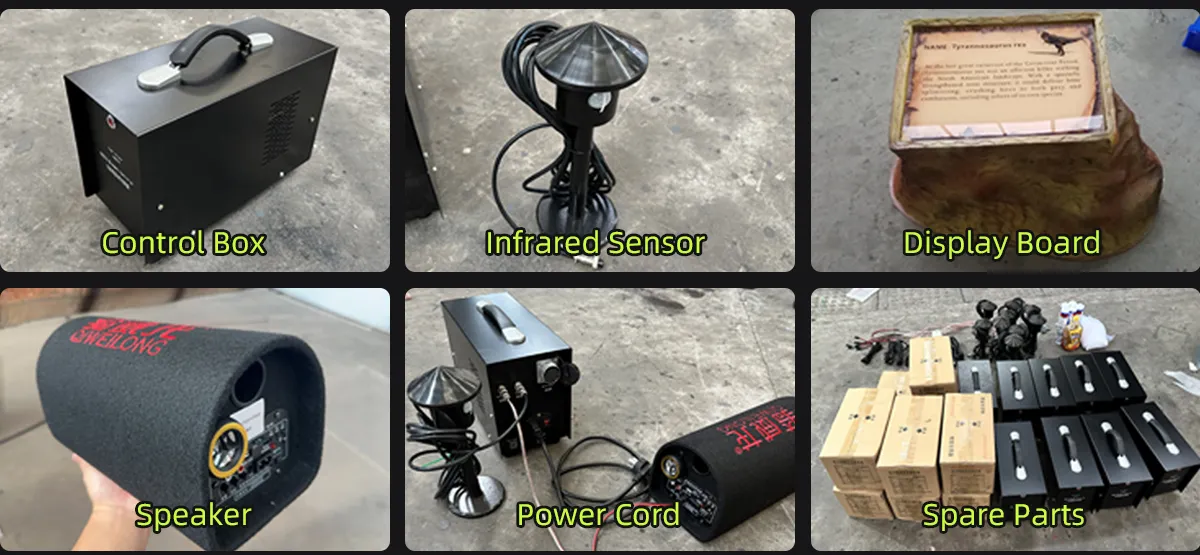
- Rechargeable battery pack and charger
- Spare fabric patches, hand grips and fasteners
- Handler notes covering entry and exit, cleaning, storage and the fan filter
Two years of warranty cover the core electronics. Freight, import duty, destination certificates and on-site setup sit outside the unit price and are quoted separately, so the number you take to a budget meeting is the whole number.
What we need to quote it
Send the wearer's height, shoulder width and inside-leg measurement, whether you want exposed or hidden legs, whether the suit is for indoor or outdoor use, and how long each appearance runs. We come back with a dimensioned drawing and a written quotation; nothing is cut until the drawing is signed.
Spinosaurus costume questions
How much does a Spinosaurus costume cost?
Species, size, leg style and the skin choice set the price, so we quote per order rather than publishing a list price. The embossed fabric build costs less than the silicone build at the same size, mainly because two material layers come out of the process. Send the four details above and you get a written quotation with a drawing.
Is the embossed fabric skin durable enough for regular use?
Yes, and it is what most of our customers now order. The fabric is bonded to the foam rather than hung loose, so it does not shift or sag. It handles rain and sun better than silicone in one respect — it does not go tacky in heat — and it is repairable with a patch and a colour blend. Keep it out of standing water and store it dry.
Can one person get into it alone?
On the fabric build, usually yes — that is one of the practical gains of losing 15 kg. We still recommend a handler at public events, because the wearer's sight lines run through mesh panels at the neck rather than through the eyes.
Can you match the colour to a reference?
Yes. Send a photograph, a colour chip or a sketch. The suit in these photographs is blue-grey with a pink-red sail edge; other palettes are sprayed from the reference you supply.
Do you build other species in this material?
Yes — T-Rex, Velociraptor, Triceratops, Carnotaurus, Parasaurolophus and custom species all use the same embossed fabric build. See the full dinosaur costume range or the costume guide for how the suit works on a performer.
Not sure which leg style or skin suits your event? Send a photograph of the venue and the kind of appearance you have in mind, and we will say which build we would put on that job — get in touch here.
Product Accessories
Packaging and Container Loading