Production Process
A gallery in a natural history museum, one empty case, and a tiger that was not going to arrive. The mount on loan had gone back to its owner, and the specimen they wanted next was not on any list they could buy from. What filled the case was a replica.
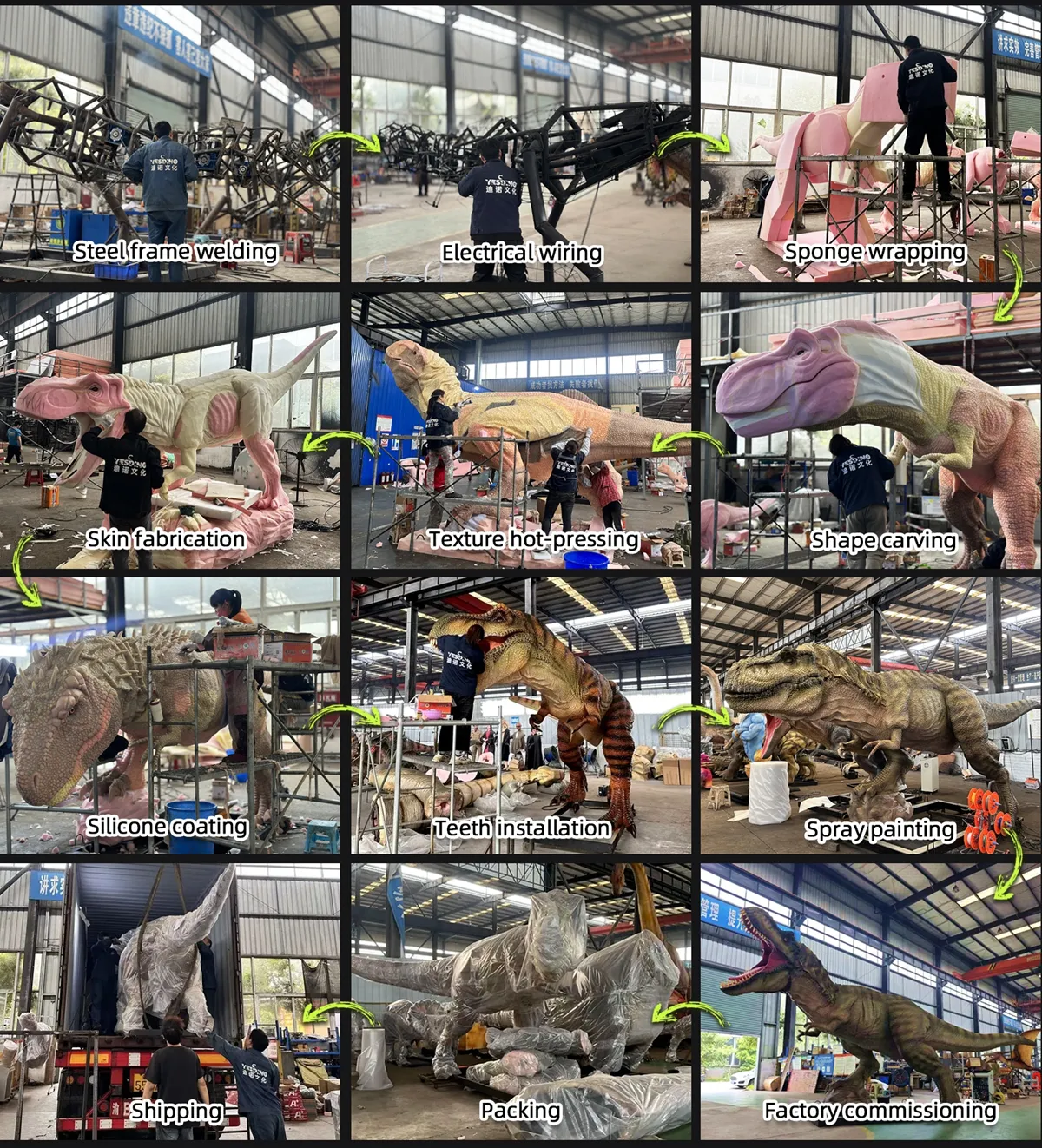
Steel frame, carved foam, silicone skin, drawn to the inside dimensions of the glass. The conversation usually starts with paperwork, not pose.
Why a replica, and what it costs you
Many museums now prefer a replica over taxidermy for provenance and CITES reasons. A real tiger mount carries a paper trail that has to stay complete and defensible for as long as it is on display. A replica carries a build sheet: frame, skin batch, pigment record, programme.
The trade-off is worth stating plainly. A replica holds no DNA, no stomach contents, no measurement a researcher can publish. Where a gallery teaches comparative anatomy, this is an illustration. Where the case exists to show visitors what the animal looked like, it does the job the case was built for.
There is a second cost, on the plinth: a replica labelled as a specimen becomes a problem at review. We build the animal; the wording is yours.
Cases, not paddocks
Interior cases, mostly: a mammal gallery, a visitor centre, a themed hotel lobby, a mall display built to feel like a museum. The finish is specified for that setting, not for the weather a park animal stands in.
Light is the reason. Gallery light is warm and close, often a metre or two from the animal, and a finish tuned for daylight turns orange under it. Send the lamp type and whether the case lights from above or the front.
Depth decides the pose. In a case about a metre deep, the tail is the measurement people leave out — it curves, it eats floor area, and it ends up pressed against a side panel when nobody allowed for it.
What moves, and how little it should
For a museum piece we argue for less movement than clients ask for. Breathing, blinking and a slow head turn are enough at close range. A full-body stretch in a case reads as a mechanism and breaks the illusion the case was built around.
The group worth the tuning budget is the face. Eyelids closing at the wrong speed look mechanical, and the blink is what visitors register first at a metre. Second is the breath, in the chest and flanks, slow and shallow.
The neck is where people over-specify. A wide turn needs clearance front and back inside a shallow case, and travel is limited in the programme rather than by a stop that knocks at each cycle.
Skin, striping and the light in the case
Q235 steel frame with rust treatment, body volume carved in high-density foam, skin in silicone at 5–7 mm, colour sprayed in translucent layers so the tone sits in the surface. On a tiger the striping tests that method: sprayed rather than painted, the edges stay soft and move with the skin.
Eyes are glass, pupils aligned to the main viewing line. Whiskers get touched by cleaners, so they are set to be renewed without repainting the muzzle. Damage is patched with matching pigment, which only disappears if the pigment record ships with the animal.
Through a gallery door
Sections — body, head, legs, tail — in foam-lined crates, through a standard double door, moved by two people. The base plate decides whether you need a lift for the last ten metres.
The mount fixes down through a plate and wires to a control cabinet. Put that cabinet where a technician can reach it with the glass closed; we have built them into plinths and into the wall behind a case.
Power is 110 V or 220 V, configured at build. Working range is −25 °C to 45 °C, and core electronics carry a two-year warranty. Freight, duties, certificates and installation are quoted separately.
What the case drawing tells us
Send the internal dimensions and the tail allowance, the light type, the viewing side, the plinth the piece stands on, and the label wording you plan to use. A photo of the empty case beats a description, because it shows where reflections fall.
Two cases where we point people elsewhere: a collection that needs a specimen for research rather than display, and a sealed case with no route to a cabinet or a joint. The second one is usually solved with an access panel at design stage.
Enquiry
Tell us the case size, the light, and what the animal needs to do in the room. Send a reference photograph of the pose if you have one; if the pose is still open, we draw two and you choose. You get a drawing, a skin sample card and a price.
Where to go next
If you are still comparing options, start with the park layout and theming strategies. Site work is covered in the size guide covering 3 m to 12 m builds, and the spare parts and repair kit list lists the factors that move the price.
For ideas on placing it, see museum display guidelines. The rest of the range is on animatronic animals, and if this one is the wrong size for the slot, ridable animatronic horse for parks is the closest alternative.
Product Accessories

Packaging and Container Loading