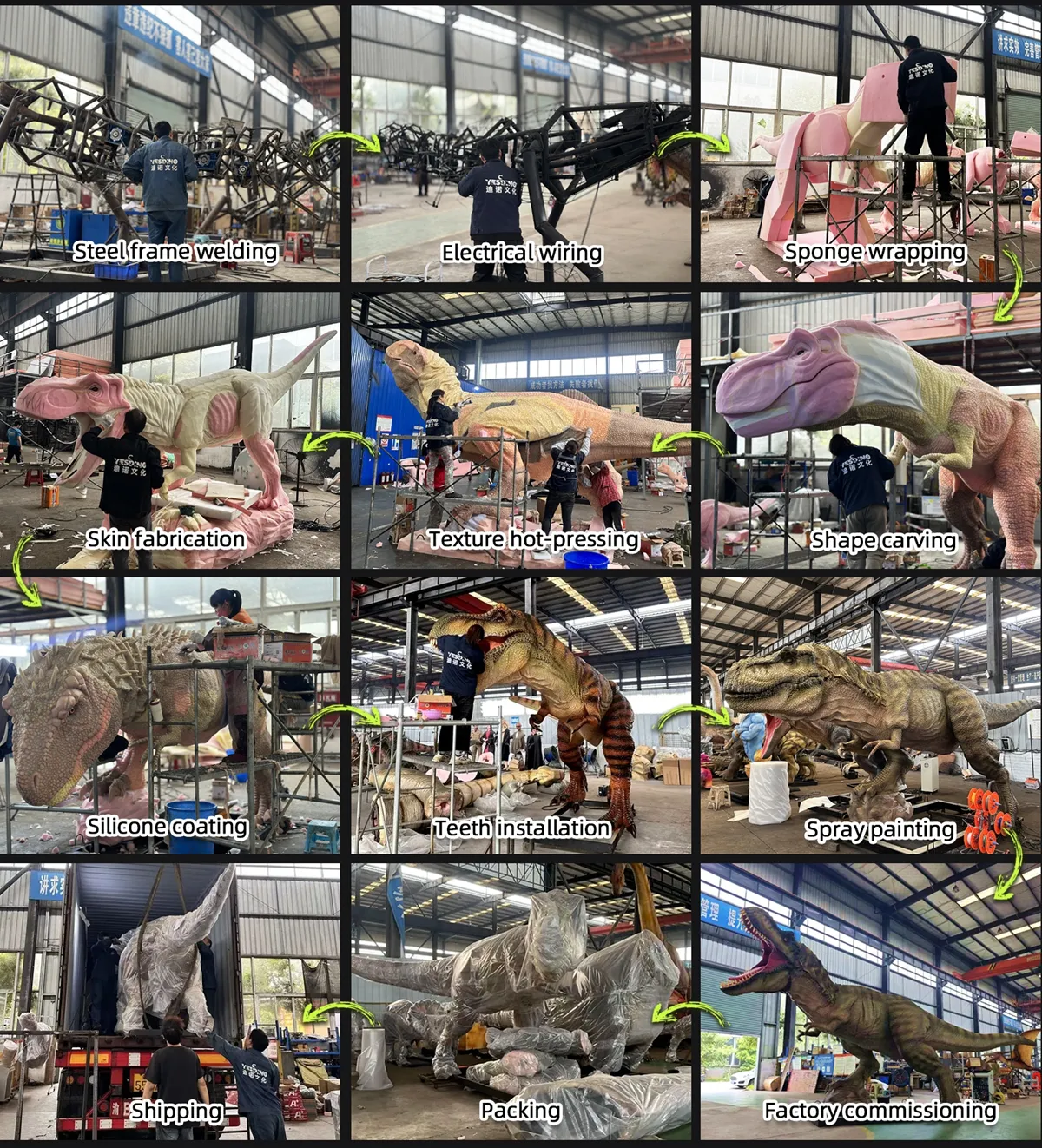
Production Process
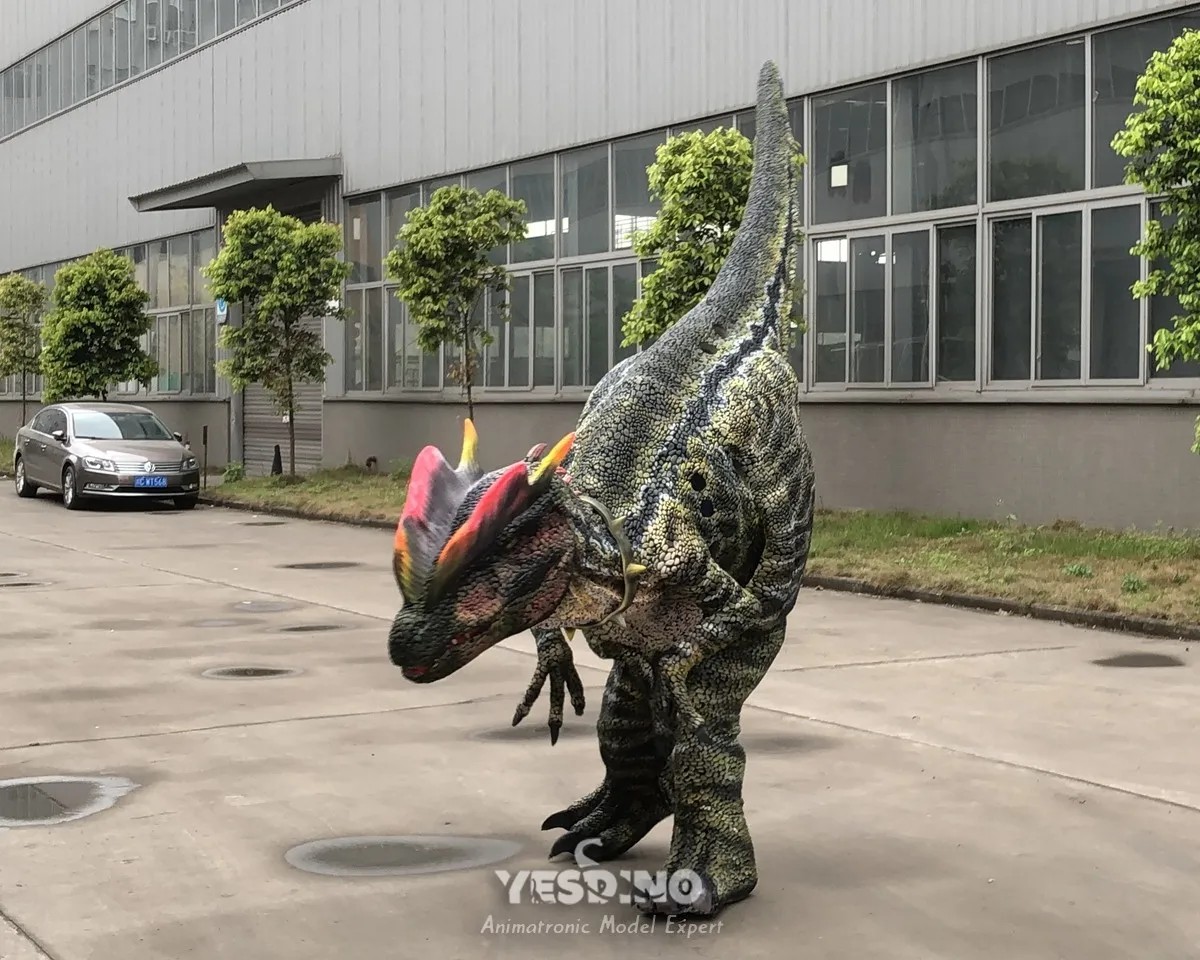
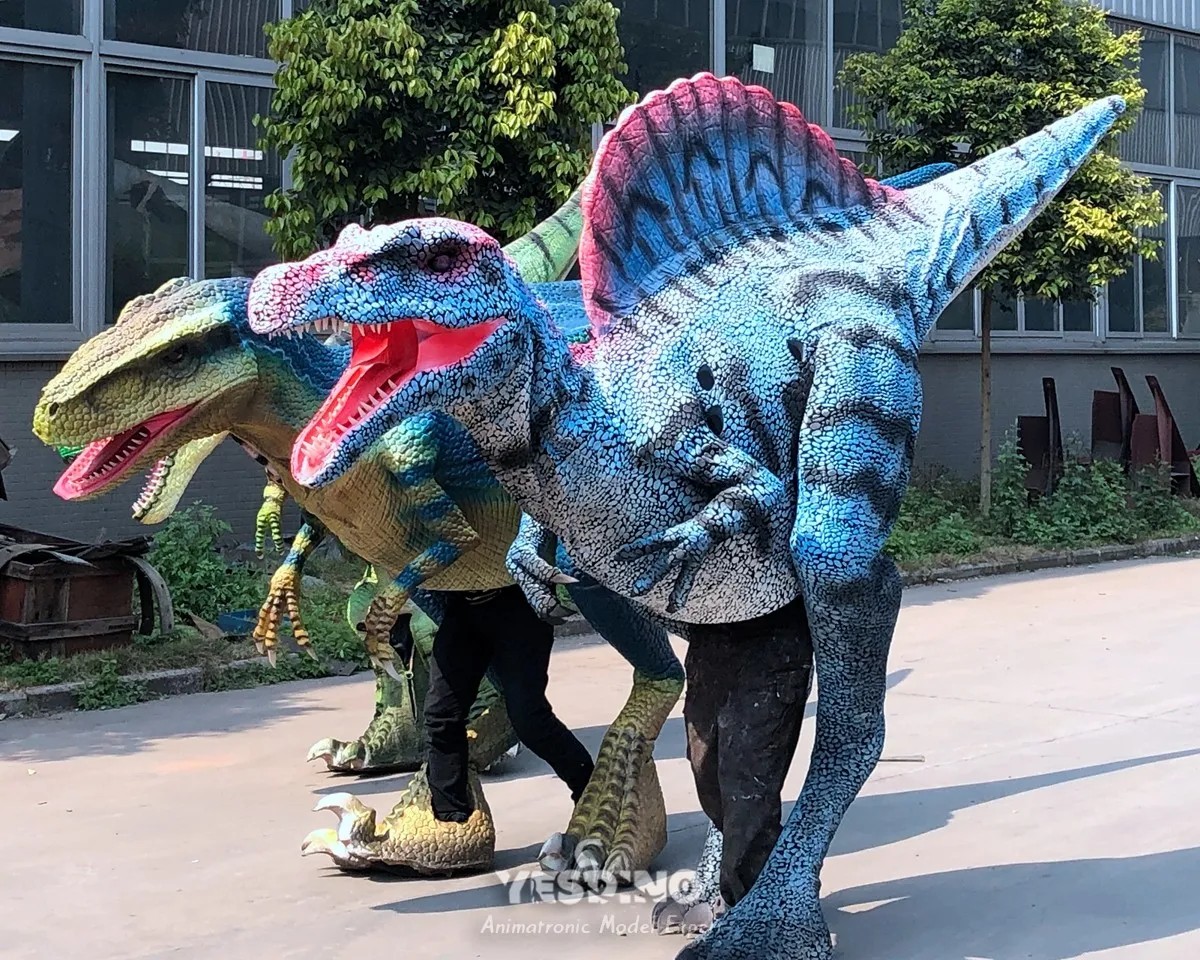
A costume is not a small animatronic. An animatronic stands where you put it; a costume is carried by one person for the length of a set, and everything about the build follows from that. At 4.2 m nose to tail and about 23 kg, this one is designed for a performer who walks, turns, poses and then does it again an hour later.
SKU YDC-002. The animal stands 1.8 to 2 m depending on the wearer's height, and the tail carries most of the visual length rather than the body.
Where 23 kilos actually sits
Total weight tells you very little about whether a costume is wearable. What matters is where the load lands. Weight carried on the shoulders becomes neck and back fatigue within twenty minutes; weight carried on a hip belt can be worn for an hour. This build puts the frame on a belt-and-shoulder harness, so the shoulders guide the animal while the hips carry it.
The tail is the part that surprises people. It is light, but it is long, and a long light object swings with momentum. A performer who stops suddenly feels the tail arrive a moment later. That is why the tail is counter-balanced forward of the hips rather than hung off the back.
Sightlines and ventilation
The operator sees through the chest or the neck, not the eyes. The eyes are where the audience looks, so they stay solid and the vision port goes lower, which changes the performer's posture: they walk with the head slightly forward of where it feels natural. That takes a rehearsal or two to stop looking like a lean.
Ventilation is the second constraint. A foam shell holds heat, and a performer inside one is doing moderate exercise in an insulated box. The build includes intake and exhaust paths sized for a set length; if your sets run longer than twenty minutes, tell us, because the airflow changes the shape of the neck.
The movement set, and why it is short
Head and neck turn, eye blink, jaw open with a roar, and tail swing. That is the whole set, and it is deliberately short: every powered movement adds weight, a battery draw and a failure point on a costume. The head turn and the jaw do most of the performing; the blink is what makes people look twice.
Control is a switch and a small programme, not a console. The performer triggers the roar with a hand control, which is why the roar tends to land at the right moment in a photo rather than on a timer.
Sizing to the wearer
Send the wearer's height and shoe size before the build starts. The internal frame is set to the wearer: a costume built for someone 10 cm shorter will sit wrong at the hips and the head will ride too high, which is visible from twenty metres away.
If two performers share one costume, size to the taller and add an adjustable foot platform for the shorter. It is a small change at build stage and an awkward one afterwards.
Skin, wear and repair
Textured fabric over foam, with the frame in stainless pipe so sweat does not become a corrosion problem. Fabric skins scuff rather than crack, which is the right failure mode for something that brushes past people all day.
Ask for spare fabric in the original colour with the order. A small tear patched in matching material is invisible; the same tear patched later, after the colour has faded, is not.
Using it on site
Two things make a costume work in a venue: a handler, and a place to sit down out of sight. The handler manages the crowd and the space behind the performer, because the performer cannot see their own tail. The rest spot matters because a costume that has nowhere to go between sets gets worn continuously, and then the set length stops being a design decision.
For parades, check the route width against the tail swing before the first run rather than during it. A 4.2 m animal needs roughly a metre either side of the body to turn without clipping a barrier.
Enquiry
Send the wearer's height, the set length and where the costume will be used — indoor stage, outdoor parade, or a mix. Those three answers decide the harness, the airflow and the skin.
Where to go next
Two things come up in almost every enquiry on this build: how the size compares with the alternatives, and what it takes to get it on site. The size guide covering 3 m to 12 m builds sets out the options side by side, and the spare parts and repair kit list covers pads, access and assembly. Budget planning sits in the installation guide for pads and access.
For ideas on placing it, see layout strategies for themed trails. The rest of the range is on realistic dinosaur costumes, and if this one is the wrong size for the slot, realistic dinosaur costumes is the closest alternative.
Product Accessories
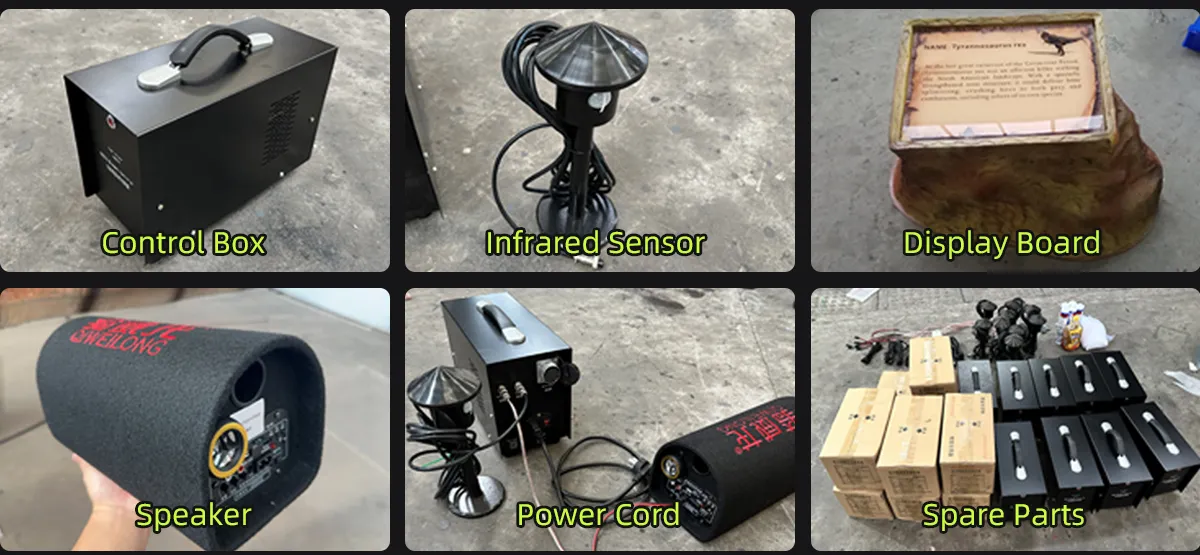
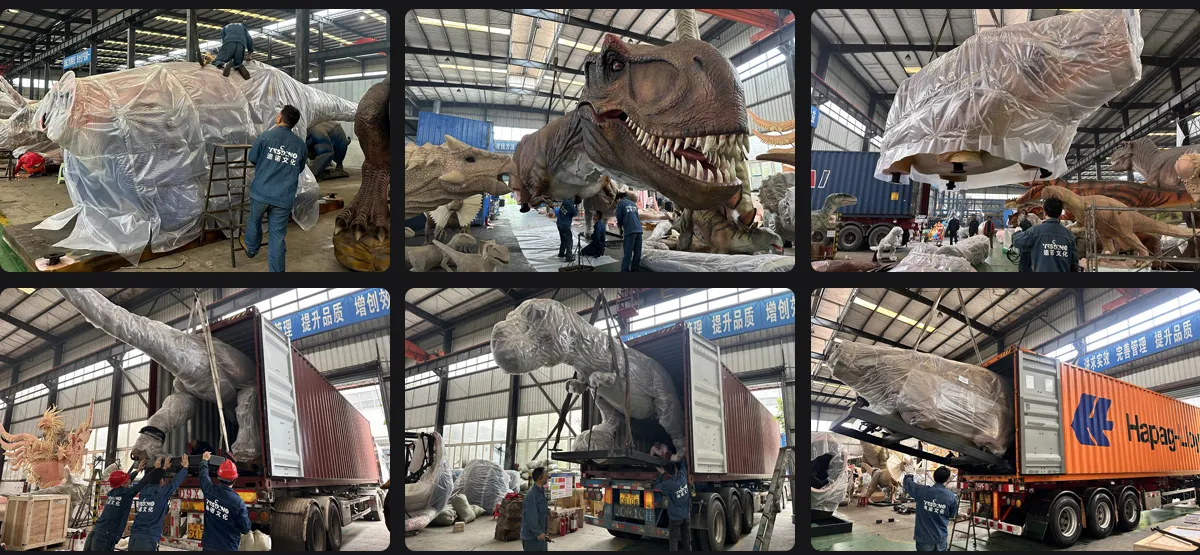
Packaging and Container Loading