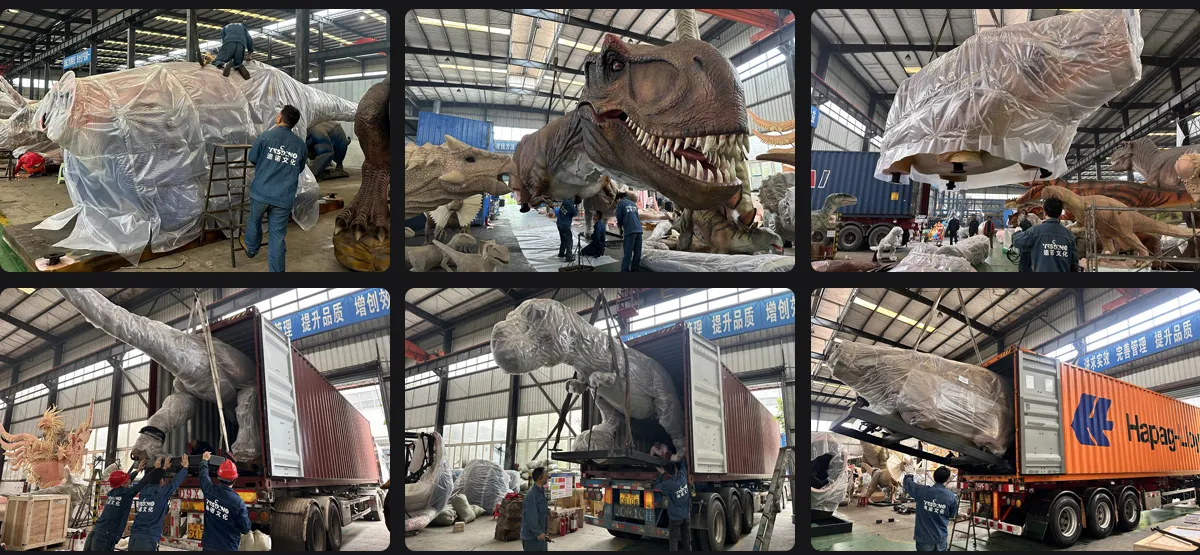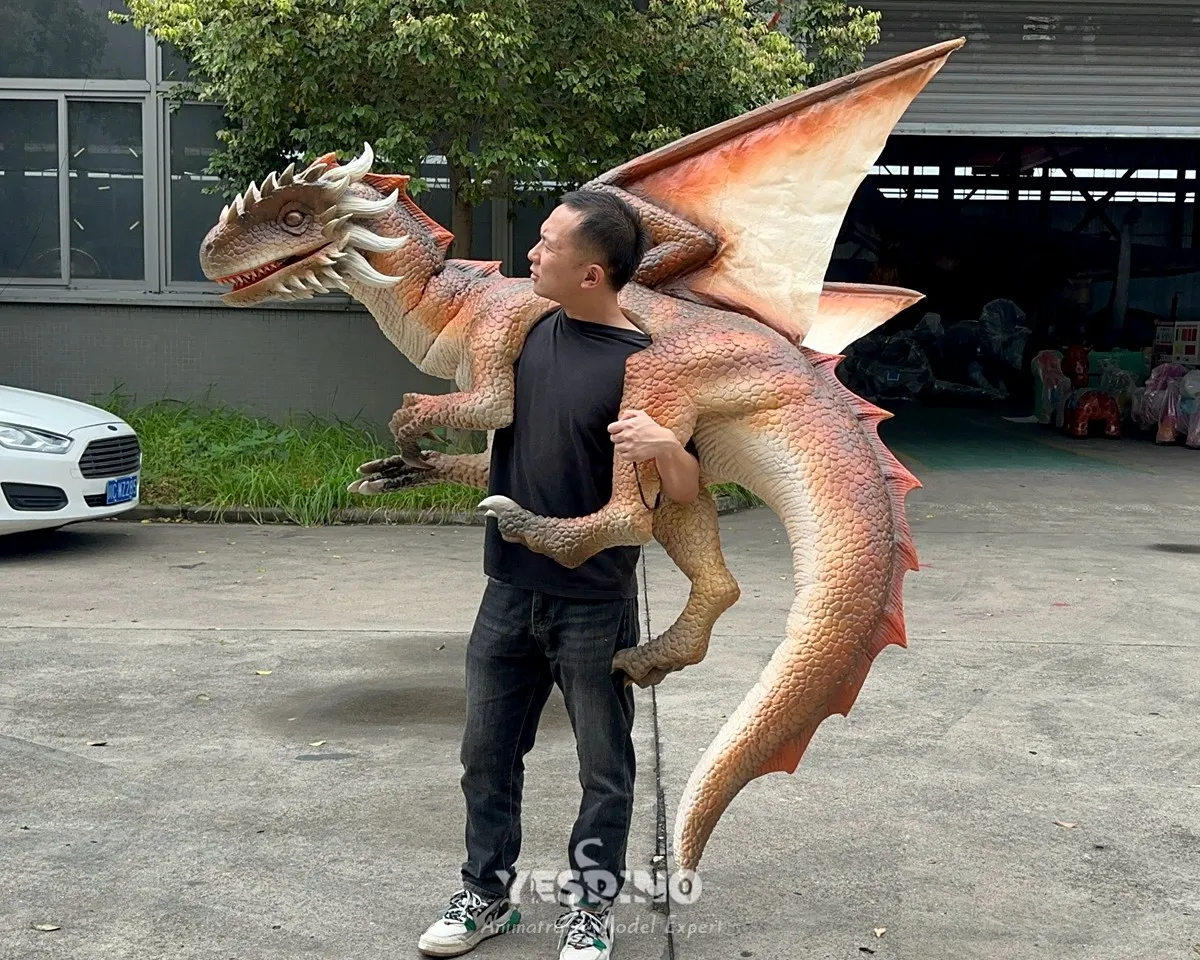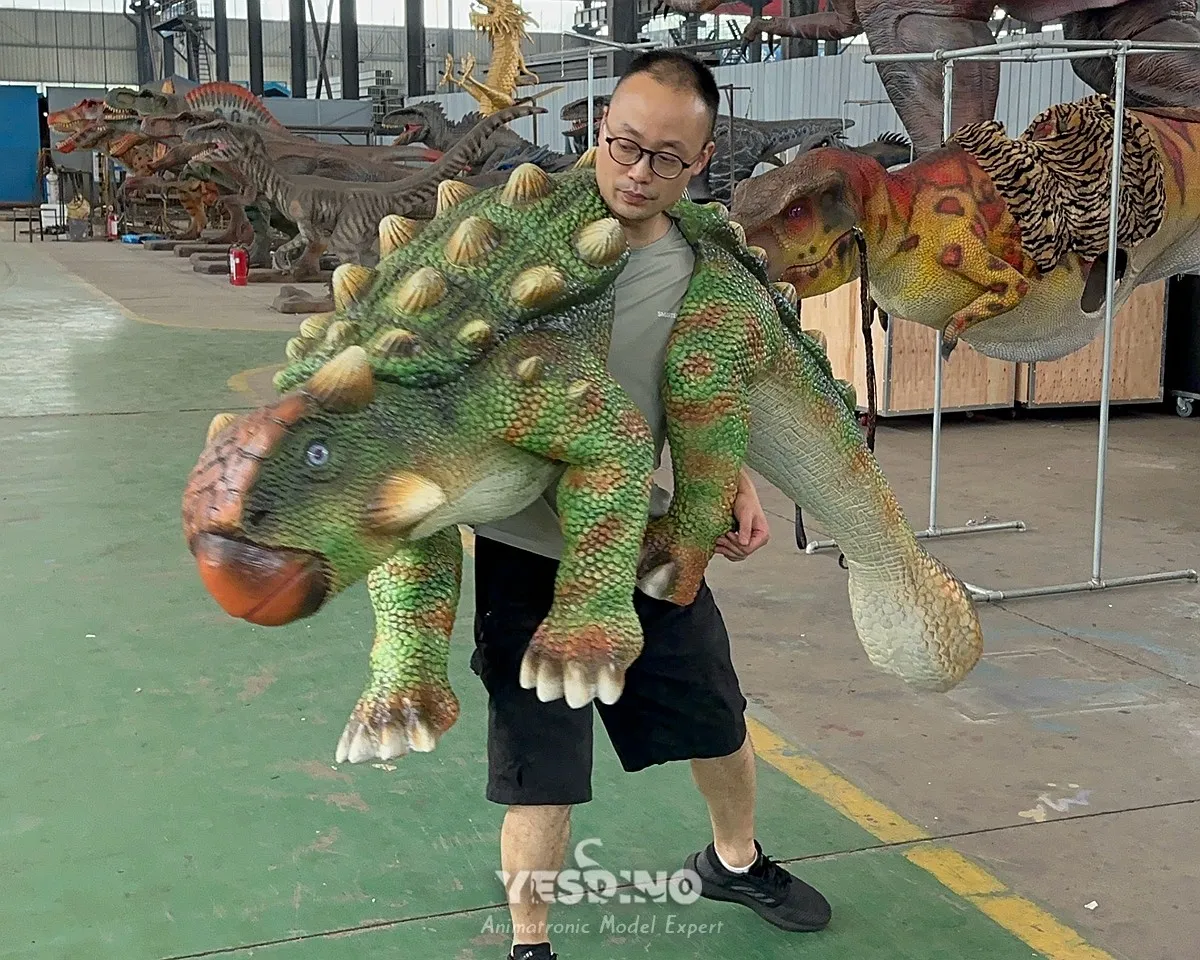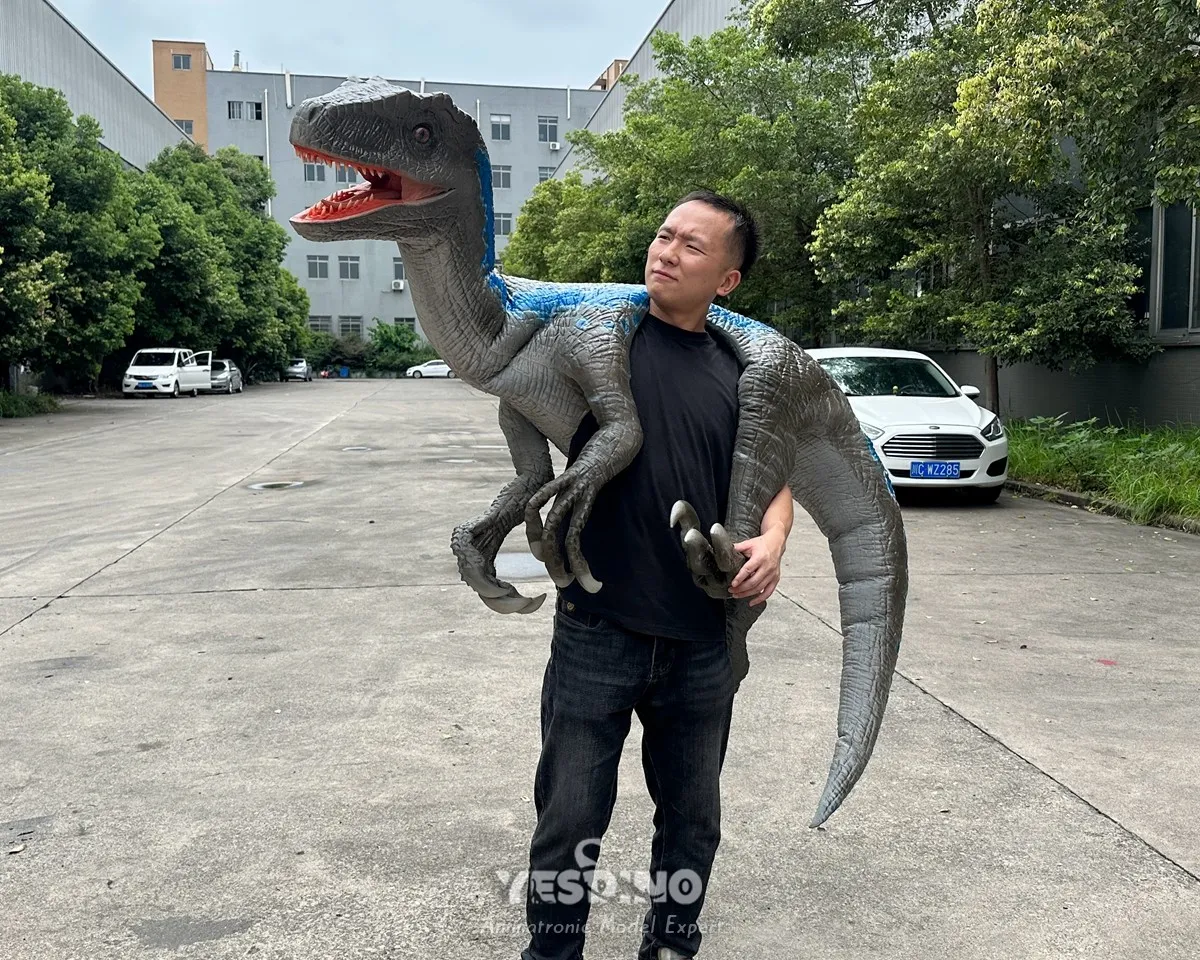
Production Process
A garden trail at dusk, families walking a lit path between hedges, and something standing behind the third hedge that was not there on the way in. That moment is what a monster hunt is built around, and it decides what the monster looks like.
SKU YDZ-005: length, width and height made to your scene. The dimensions come out of the brief, not out of a catalogue.
No size chart, so the scene comes first
With a catalogue animal the size is the starting point and the site gets fitted around it. A custom monster reverses that. We ask where it stands, what the visitor sees first, and how close they get before the trigger fires, then draw a body to those answers.
The trade-off is time and certainty. A custom shape means drawing rounds, a sculpture approval, and a price that moves with the design instead of sitting on a list. You also carry more decisions than you would buying a stock piece.
What you get is a figure sized to the sightline. A shape drawn for the gap between two hedges reads at that distance; a stock animal put in the same gap either fills it or disappears into it.
Hedges, gaps and the approach
Trails, mazes, walk-throughs, a themed garden, a mall activation with a set built inside it. Placement is governed by the approach: what a visitor can see at ten metres, at five, and at the moment the trigger fires.
Hiding matters as much as the monster. A shape half behind a hedge, a tree or a doorway does more for a scare than a bigger animal standing in the open, and it lets a modest build read as a large one.
Indoors, the ceiling and the fire route set the height. Outdoors, the build runs from −25 °C to 45 °C, and a trail that floods needs drainage at the feet rather than a taller base.
What moves: the reveal, then the limb
The reveal is the movement that matters: a head turn, a step, a jaw. The gap between the trigger and the first movement is what the piece hangs on, and it is set on site, by walking the path at the pace visitors walk it rather than at the pace of a technician.
Limbs come second. A reach or a lunge reads well from the side of a path and poorly head-on, so the pose is drawn against the direction of approach, which is a drawing decision rather than a programming one.
Idle movement keeps the figure from reading as a statue before the trigger: a slow breath, a small head sway, eyes that track. It is also what gives the sudden movement somewhere to go.
Fur, scales and trail lighting
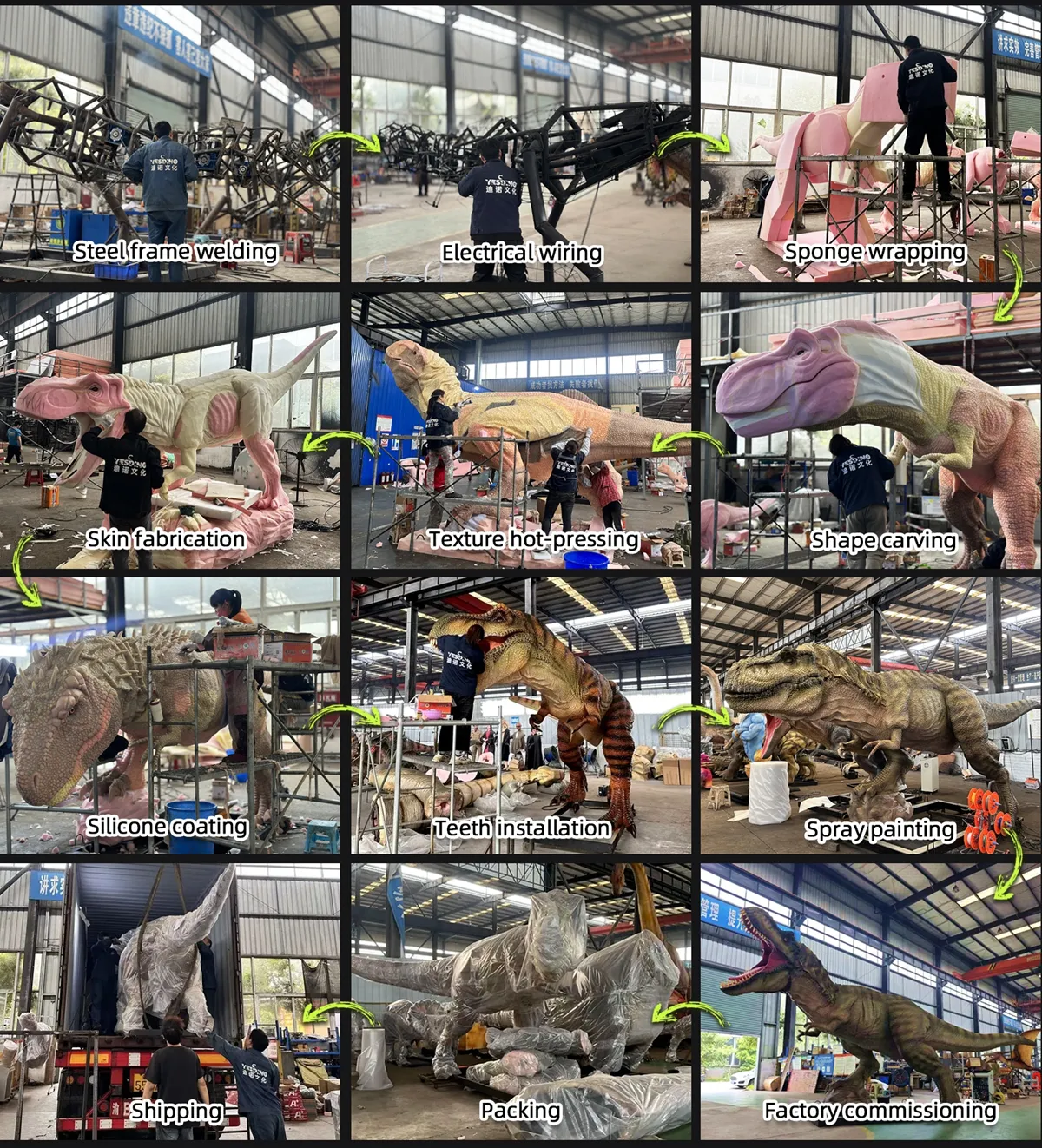
Q235 steel frame with rust treatment, body volume carved in high-density foam, skin in silicone at 5–7 mm, colour sprayed in translucent layers. Fur, scales and wet finishes are all built on that base; the surface is a specification taken with the lighting in mind, because a trail lit in green or amber changes what a colour reads as.
On a trail, hands and faces get touched. Those areas are built to be patched, and the pigment record travels with the unit so a repair does not read as a scar.
Sections drawn for the service gate
Custom shapes crate awkwardly, so the sections are drawn with the route in mind: the service gate, the path width, the turn at the entrance. A monster that fits the trail but not the gate is a problem better solved on paper than on the night before opening.
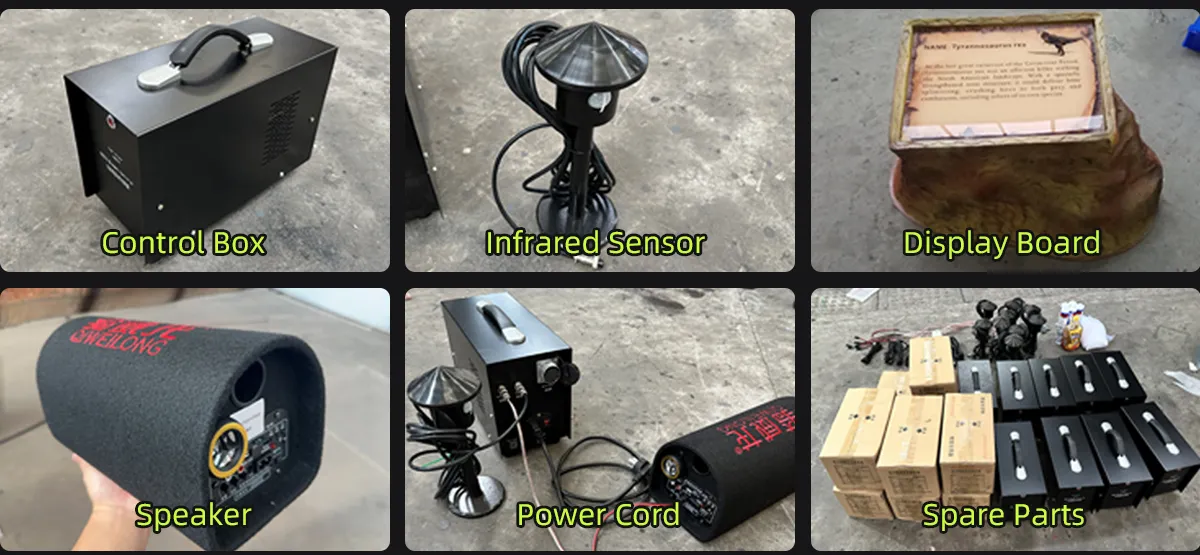
Anchoring follows the ground: a plate on paving, a buried base in soil. Controller and audio sit in a cabinet off the path, and the power run is planned with the path lighting, since a trail usually has both. Power is 110 V or 220 V, configured at build for the destination, and core electronics carry a two-year warranty.
How frightening, in plain terms
Send the trail map with the direction of travel, photos taken at dusk from visitor height, the path width, the power points and the age group you expect. Tell us how frightening the piece should be, in plain terms; that answer shapes the face more than any drawing does.
Where custom is the wrong buy: a scheme that needs a fixed price this week, and a site that will be redesigned after the season. In both cases a stock animal with a repaint is the cheaper answer, and it will not embarrass anyone.
Enquiry
Send the map, the dusk photos and the scene you have in mind. A rough sketch of the silhouette helps more than a paragraph of description. You get a shape drawing, a trigger plan and a price.
Where to go next
Two things come up in almost every enquiry on this build: how the size compares with the alternatives, and what it takes to get it on site. The wiring concealment notes sets out the options side by side, and the park layout and theming strategies covers pads, access and assembly. Budget planning sits in the size guide covering 3 m to 12 m builds.
For ideas on placing it, see layout strategies for themed trails. The rest of the range is on custom animatronic builds, and if this one is the wrong size for the slot, animatronic avatar banshee for theme parks is the closest alternative.
Product Accessories
Packaging and Container Loading