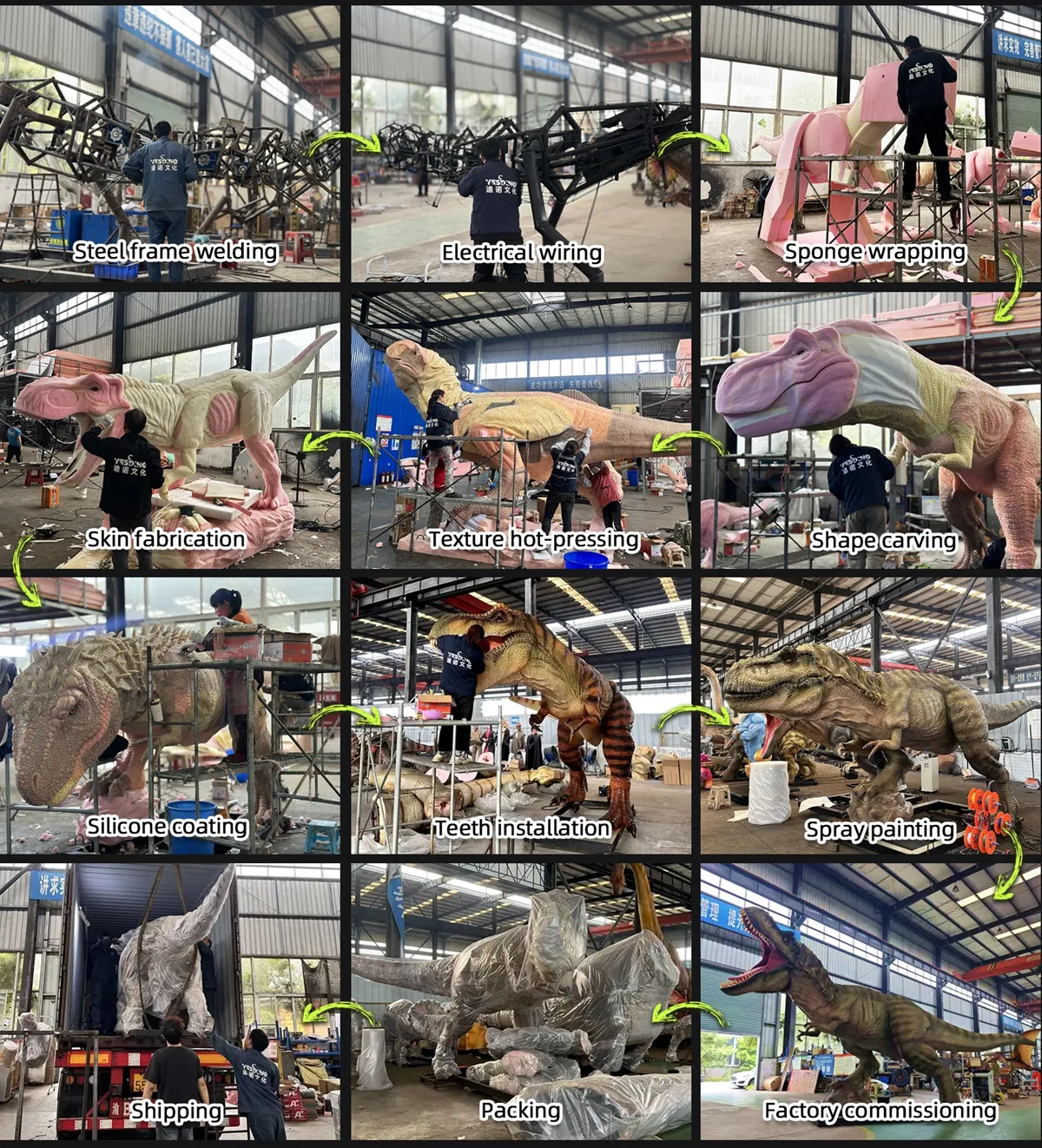
Production Process
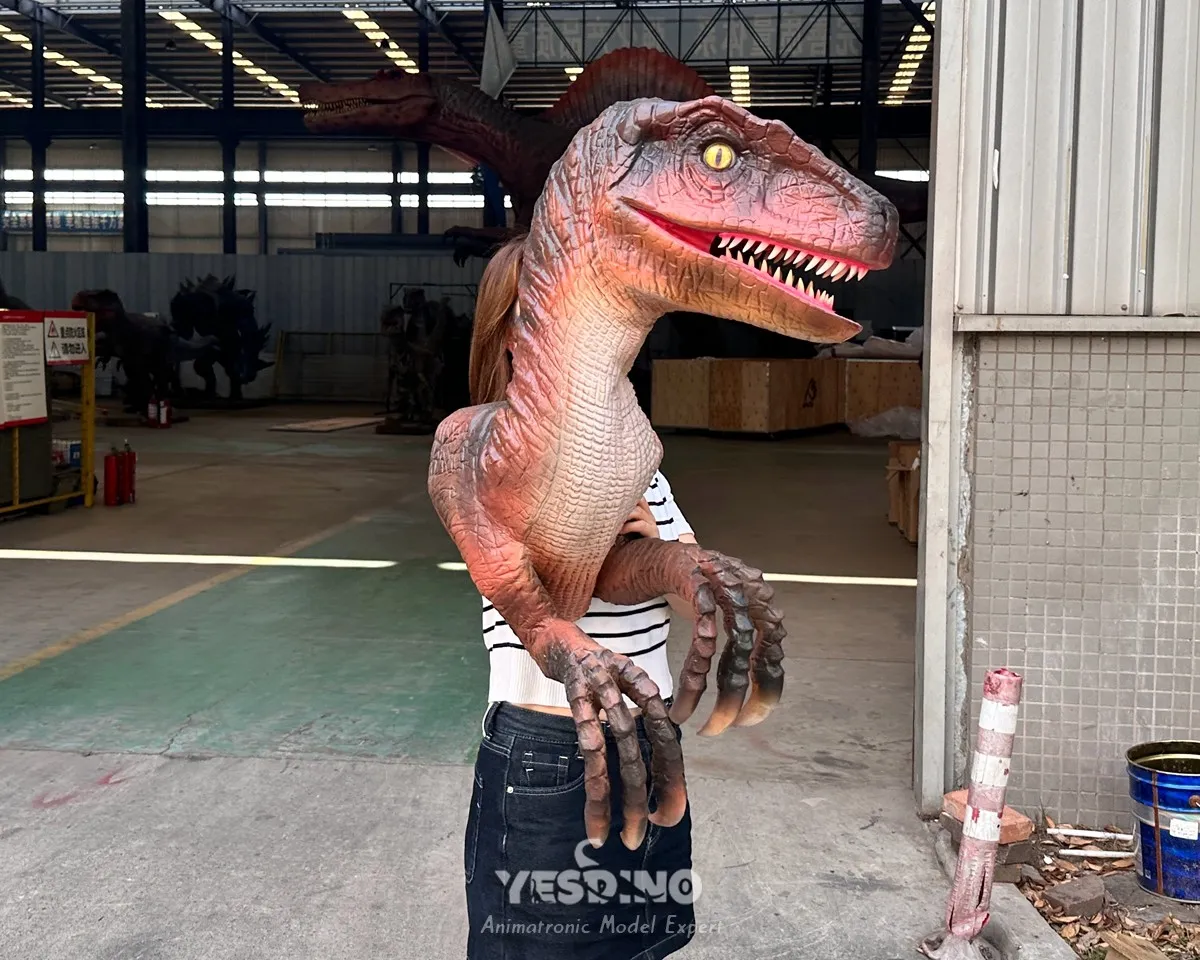
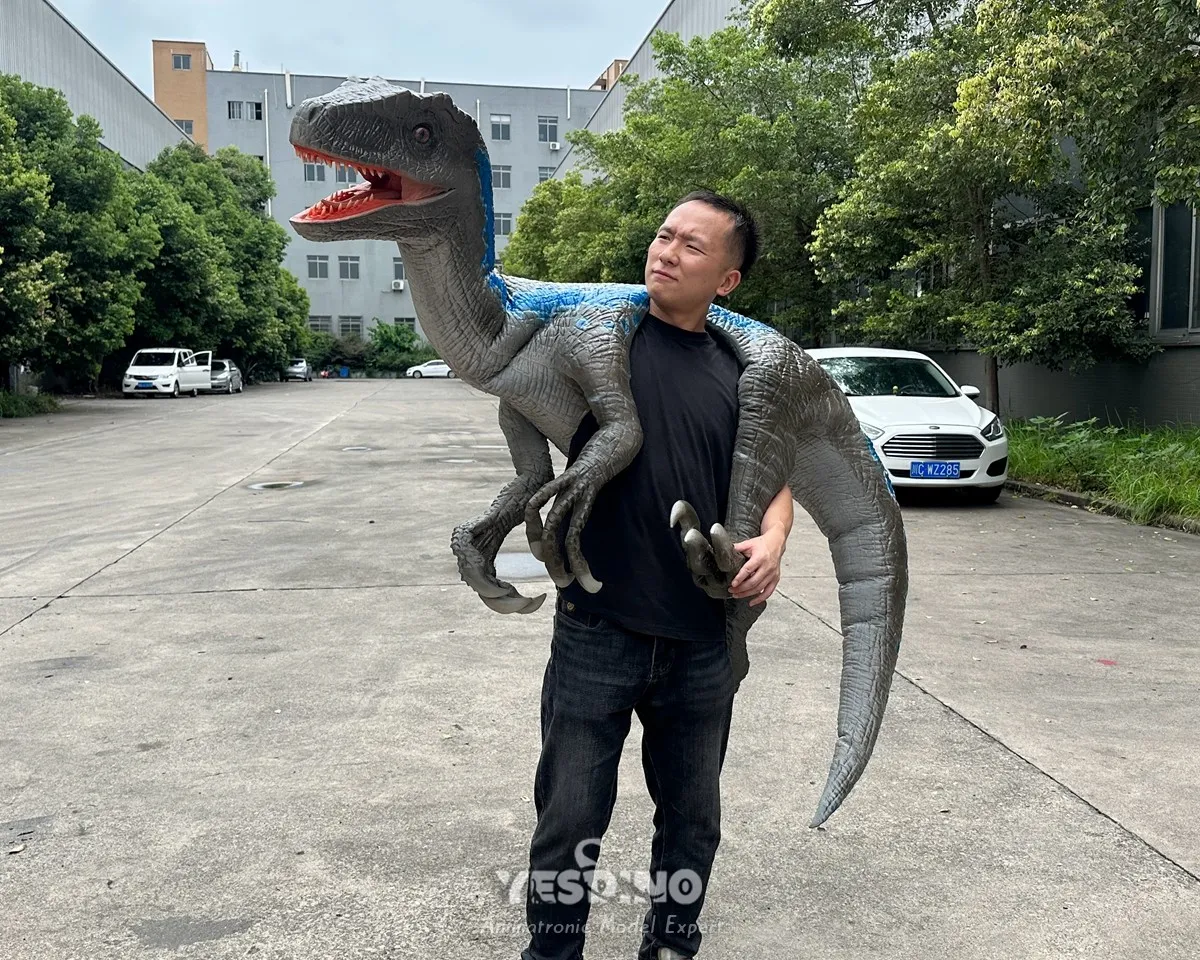
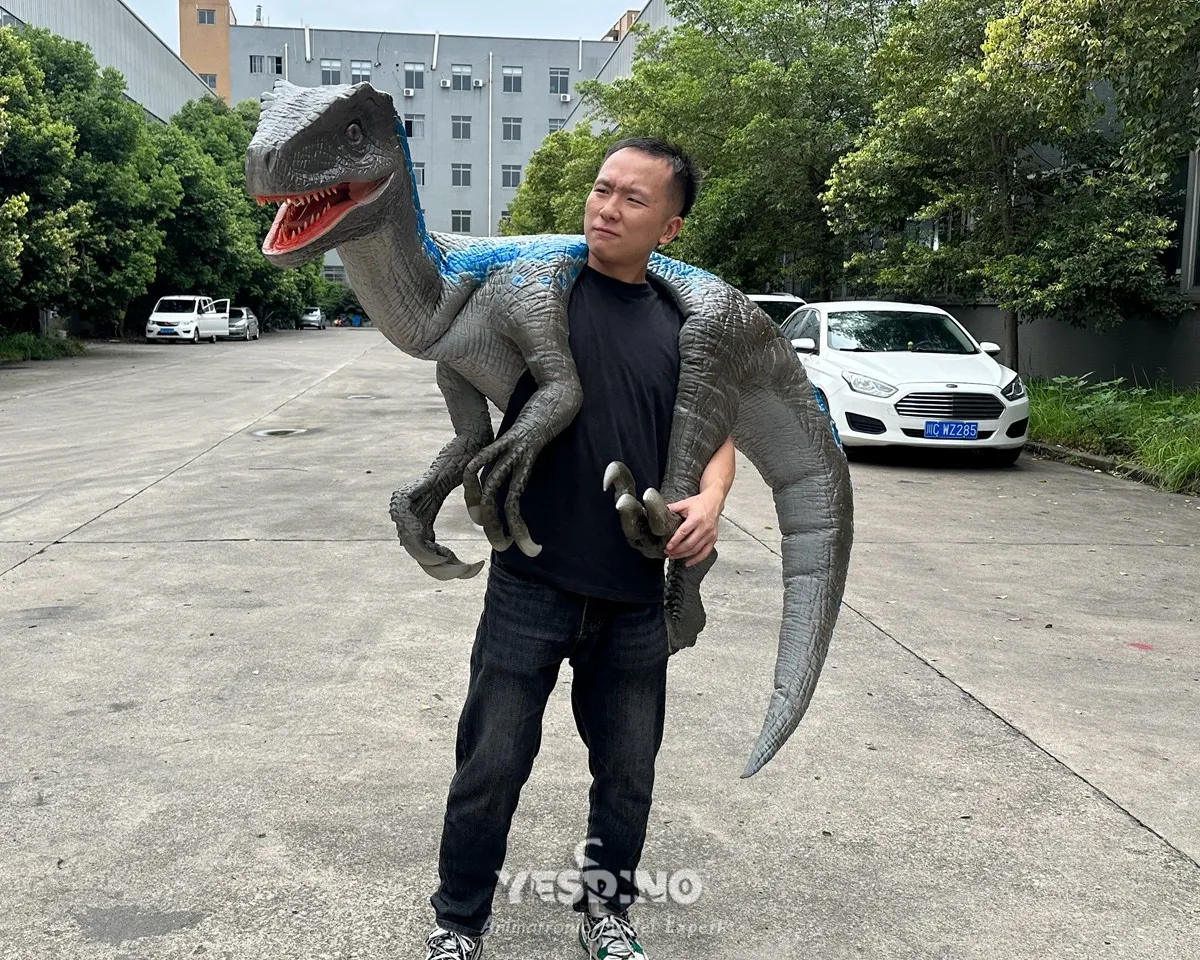
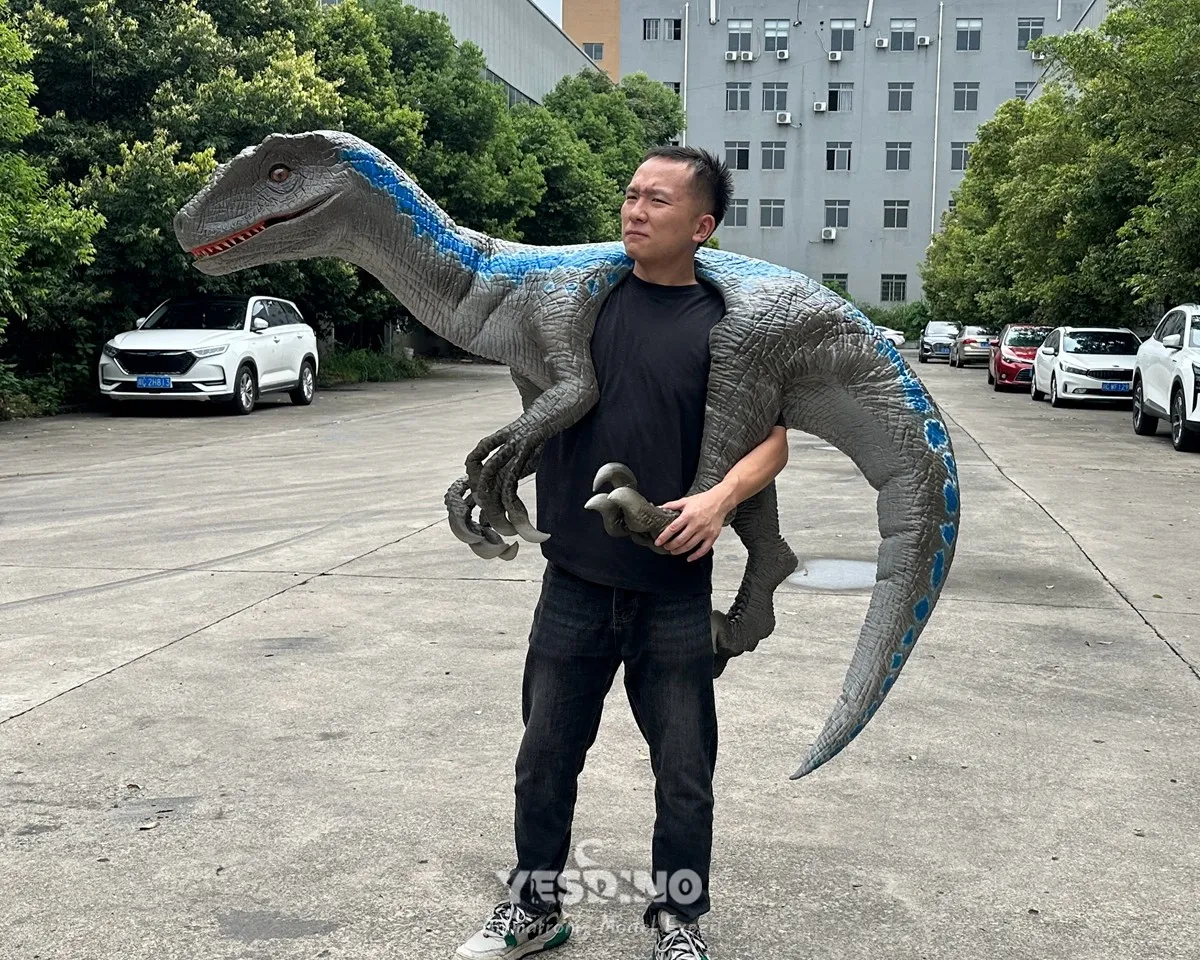
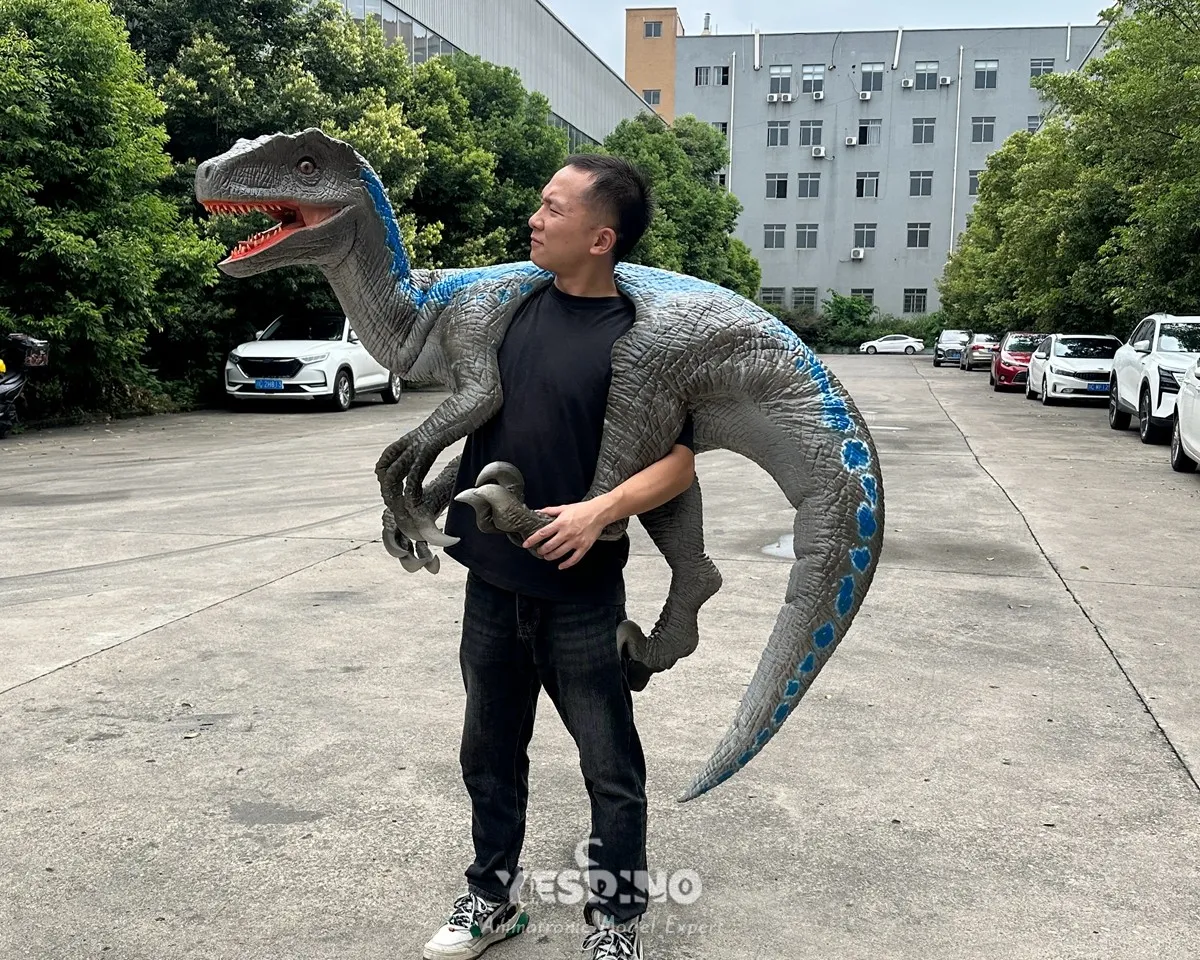
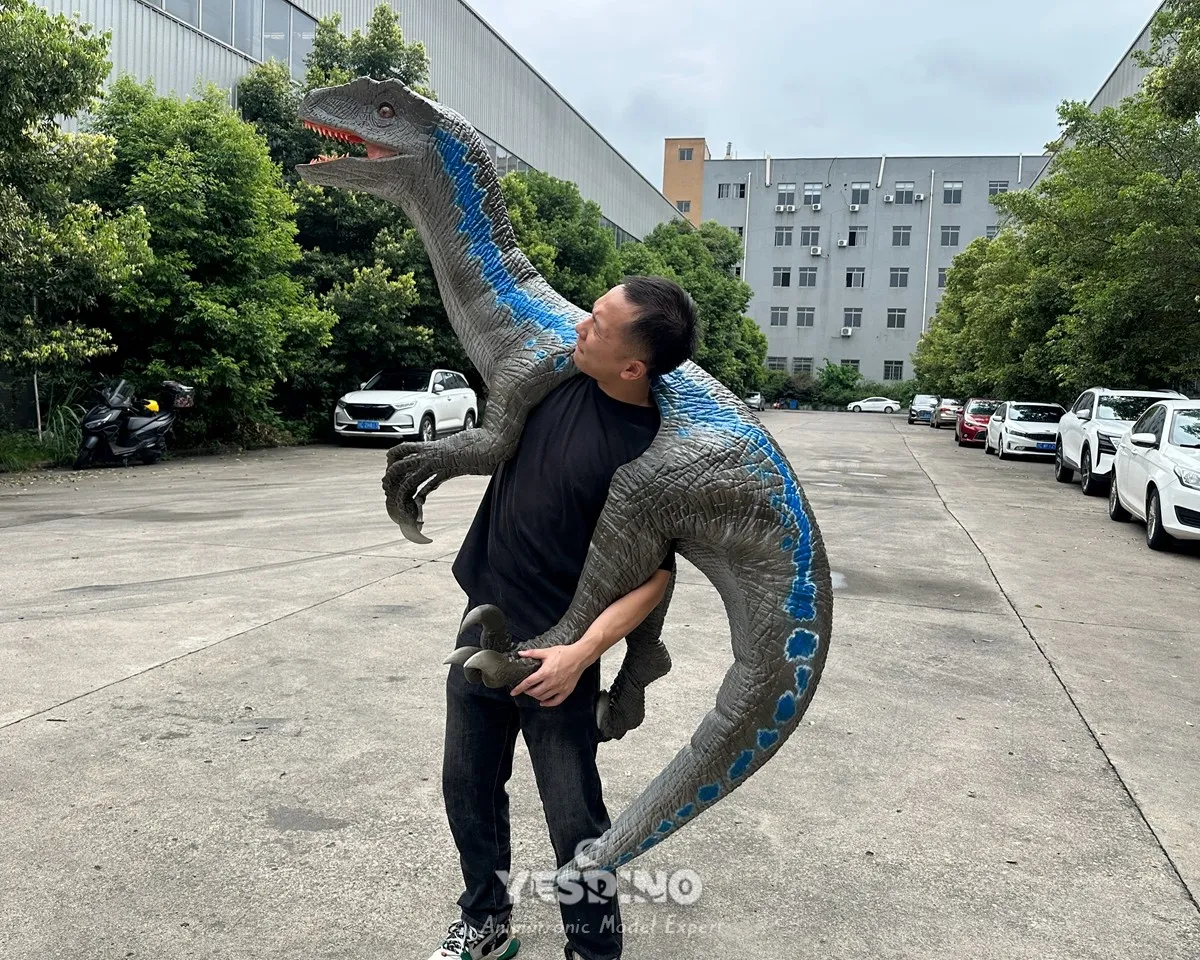
This one is worn rather than carried. The shell is open along the belly so it sits over the performer's shoulders, and the animal's head rides above the performer's own. At 1.5 to 1.8 metres, the audience sees a walking dinosaur with human legs, and that mismatch is what makes people stop.
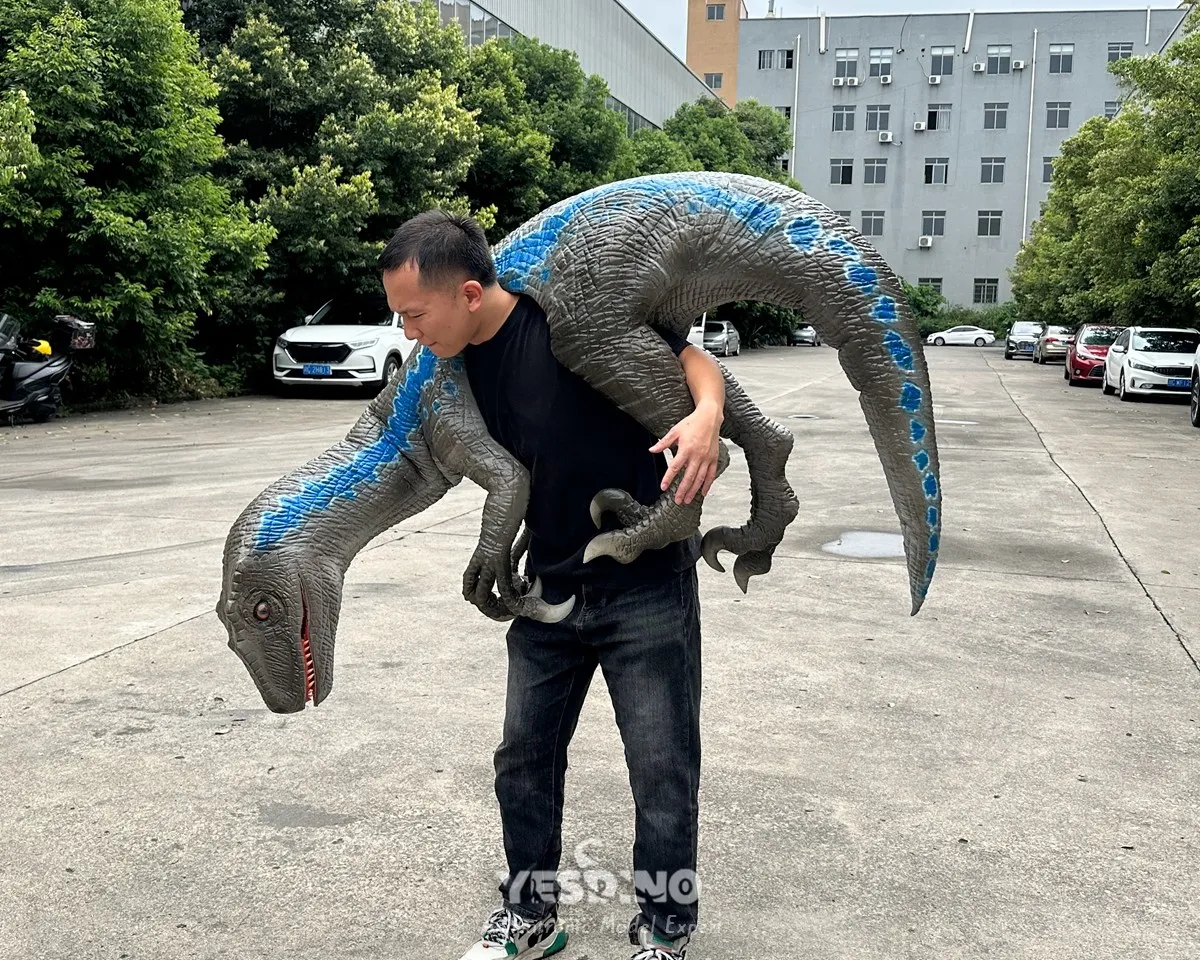
The raptor is finished in grey with a blue stripe along the flank, a long tail that trails behind the shoulders, and forearms that hang forward of the performer's chest.
What the audience actually sees
From the front, a head two metres off the ground turning to follow them. From the side, a tail swinging as the performer walks. The performer's hands are not visible, so the illusion holds at ten metres and survives a phone camera, which is the test most event work is judged by now.
Hand at the neck, one hand only
Your working hand goes in at the neck opening and works the head, the eyes and the jaw. The other hand stays outside on the multi-key remote. Because the neck opening is close to your own shoulder, the head moves when your body moves, so a turn of the torso reads as a turn of the animal.
The 12V control box and speaker sit in a pocket, speaker facing forward. Nothing shows at the waist.
Movement range
A shoulder unit is bigger than a hand puppet and it moves bigger: a full head sweep, a drop toward a child, a rear-up when the performer leans back. Walking is normal pace; the tail follows the body rather than being steered.
Where it works
Queue lines and walkabouts, where the animal needs to move with the crowd rather than stay on a mark.
Parades and festival routes on flat ground.
Mall campaigns, where a two-metre silhouette is the whole point.
Park trails, with a handler walking alongside for spacing.
Notes for a performance team
Plan short sets and a second operator for crowd control; the performer's forward vision is reduced by the head position. Check the shoulder straps and the neck opening before each set, and keep the tail clear of doorways when turning. Charge the sound box between sets.
Questions
Can the performer see?
Forward vision is limited by the head; a handler walking ahead is the usual arrangement.
How tall does the performer need to be?
The shell sits on the shoulders, so height affects where the head lands. Tell us the performer's height when ordering.
Can it be worn for a full day?
It is a performance piece, not a costume for a shift. Sets with breaks are the normal pattern.
Can we get a different species on the same shell?
Yes, the shoulder frame is shared across species.
Quote
Send performer height, venue type and how many sets a day. That is what determines the shoulder fit and the shell size.
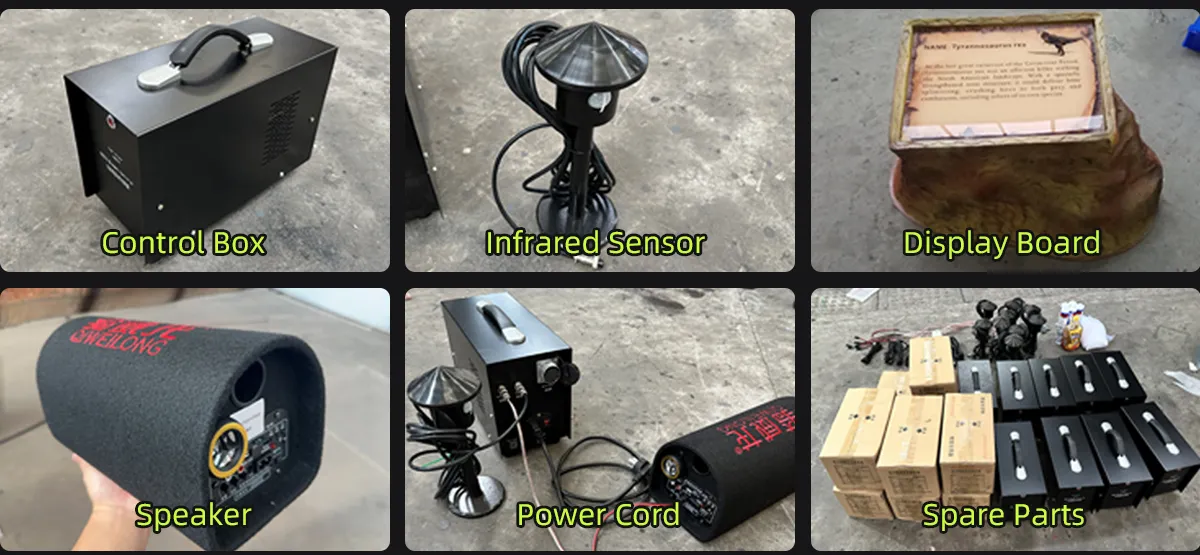
Product Accessories
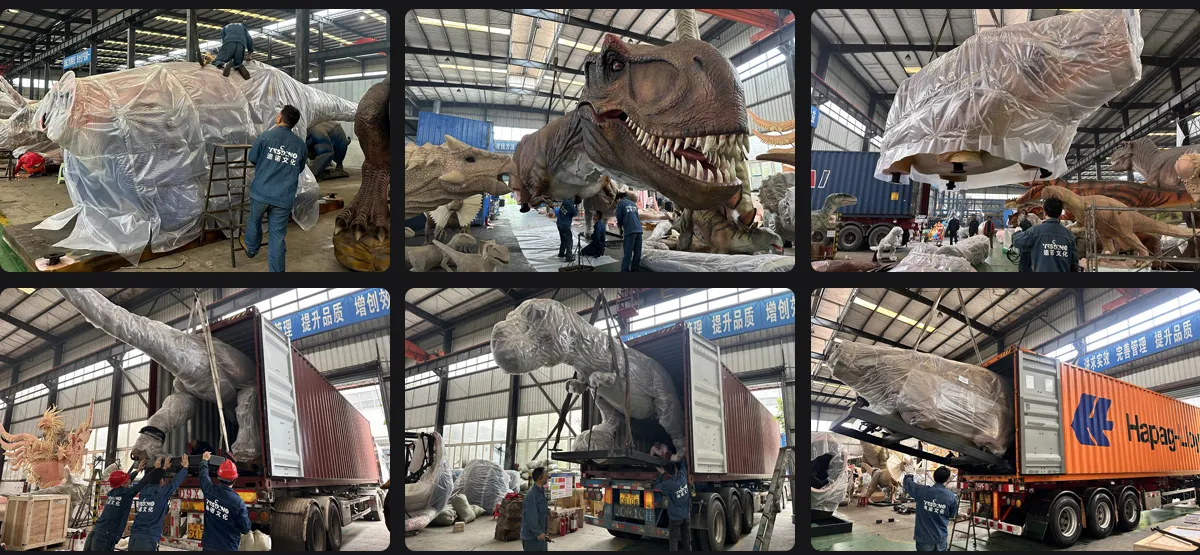
Packaging and Container Loading