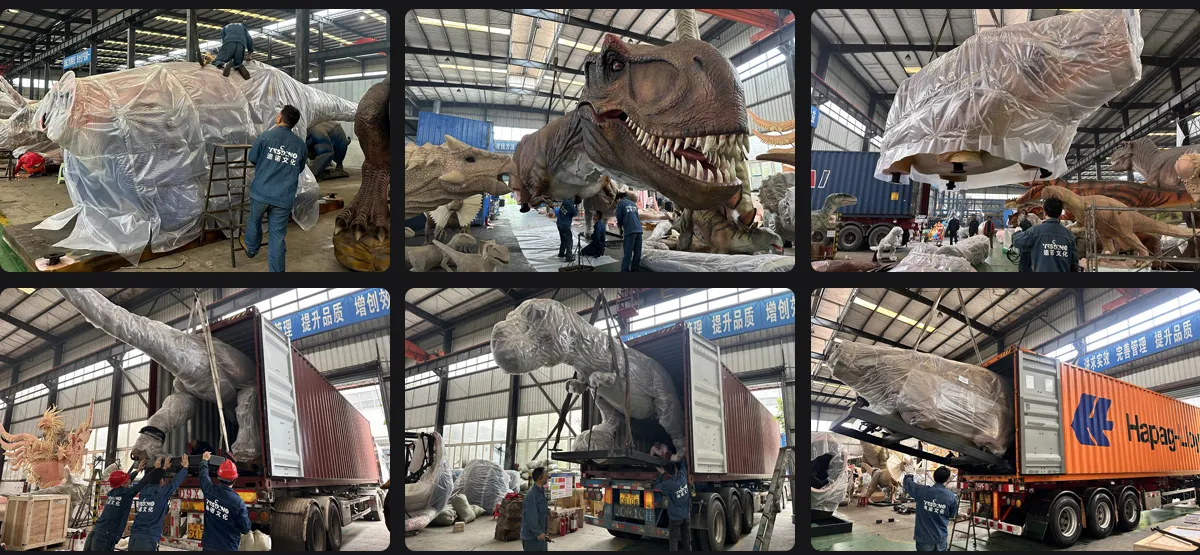


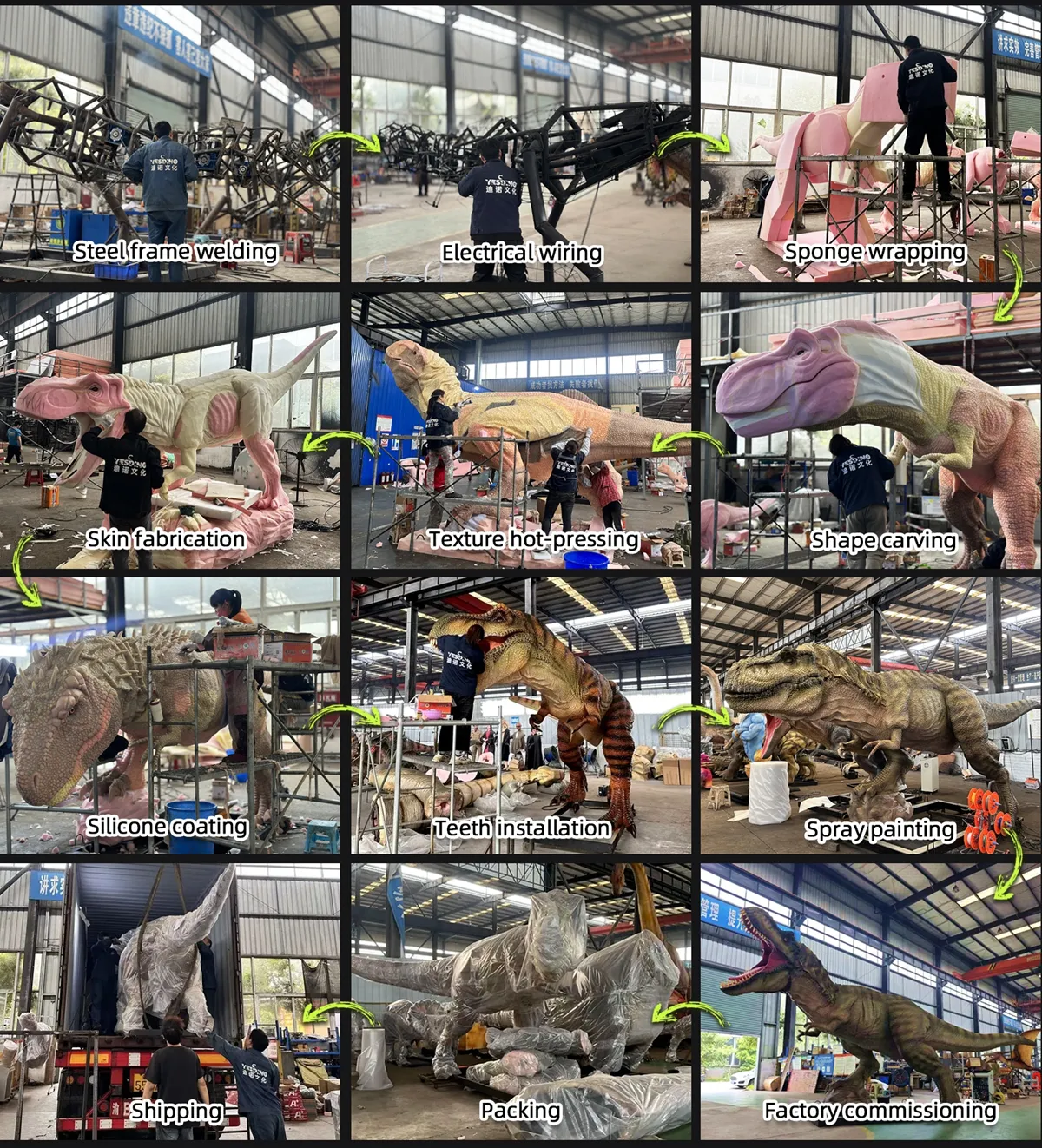
Production Process
A mall atrium in the school holidays, a dragon over the escalator, and a facilities manager holding a ceiling drawing. That is where this conversation starts. The animal is the straightforward half. The building decides the rest.
SKU YDZ-014: 5 m long, 4.5 m wingspan, 1.7 m tall. Where the design comes from a film, the name and the likeness carry their own permission question, and that sits with you before artwork goes anywhere.
A wingspan is a volume, not a width
A 4.5 m wingspan needs clearance in every direction, including the sweep behind the animal, not just the ceiling above it. The wing travels forward on the downstroke and back on the recovery, so the space it occupies is a box bigger than the span on the drawing.
At 5 m long and 1.7 m tall the body is manageable: a double door, a service lift, two people. The wings are what turn a delivery into a lift. Folded, they crate; open, they need the room you promised them.
The trade-off at this size is the arc. A wing this wide beats through a shallow sweep rather than a deep one, because a deep stroke needs structure most indoor sites do not have. Shallow, fast and well timed reads better from below than a slow, wide attempt.
Atriums, voids and the height that counts
Atriums, entrances, themed zones, exhibition halls, a concourse with a void to hang into. Indoors, the headroom figure that matters is measured to the highest point of the wing at the top of its stroke, not to the back of the animal.
Outdoors, the build runs from −25 °C to 45 °C. The wings take wind differently from the body, so a sheltered position matters more than a tall one. An exposed rooftop is a different engineering conversation from a shopping street.
What moves: the shoulder carries it
The shoulder is the joint worth spending on. Fold, beat and the pause between them are what visitors watch, and a beat that begins before the fold has finished is the giveaway that the piece is mechanical. Triggers are set at commissioning and recorded.
Head, neck and jaw carry the character at close range, where a 1.7 m body puts the face within reach. The tail is what balances the mass when the wings lift, and the legs barely read on a body this low, where budgets go to waste.
Spar, membrane and wingtip wear
Q235 steel frame with rust treatment, body volume carved in high-density foam, skin in silicone at 5–7 mm, colour sprayed in translucent layers so the tone sits in the surface. The wing membrane is where this build departs from a normal animal: a skin drawn over spars, thin enough to catch light and reinforced where it meets the frame.
Wing tips take the wear, so they are built as a replaceable section. On a dark green or blue dragon, a mismatched wingtip is the first thing anyone notices, which is why the pigment record ships with the animal.
Folded for the door, open overhead
Sections: body, wings, head, tail, and either a rigging frame or a standing base, in foam-lined crates. Two people move the body. The wings want a third and a clean floor to lay the spars on.
Hanging puts the load into structure overhead; standing puts it into a base frame with anchors or ballast and a footprint cleared of queue rails and planters. That choice is made at enquiry, because the frame differs.
Power is 110 V or 220 V, configured at build for the destination, and core electronics carry a two-year warranty. Freight, duties, certificates and installation are quoted separately.
What the ceiling drawing needs to show
Send the ceiling or roof drawing with the points you can hang from, the clear height, the floor area, the door and lift dimensions, the main viewing side, and whether the piece stays indoors all year. A section drawing of the space tells us more than photographs do.
One thing to settle on your side: where the animal is based on a film design, confirm that the character name and likeness are cleared for the promotion you have planned. We build to the reference you are entitled to use.
Two spaces where this size fights you: a hall with no structural points and a ceiling below the wing's top stroke, and a corridor where the span stays folded all year. At that point a smaller flying build reads better and costs less to hang.
Enquiry
Send the space drawing, the hanging points and the height you actually have. Tell us whether the wings open on site or stay folded, and where visitors will stand to look up. We come back with a clearance drawing, a skin card and a price.
Where to go next
Two things come up in almost every enquiry on this build: how the size compares with the alternatives, and what it takes to get it on site. The cost breakdown with the seven price factors sets out the options side by side, and the wiring concealment notes covers pads, access and assembly. Budget planning sits in the park layout and theming strategies.
For ideas on placing it, see layout strategies for themed trails. The rest of the range is on custom animatronic builds, and if this one is the wrong size for the slot, animatronic dinosaur band for amusement parks is the closest alternative.
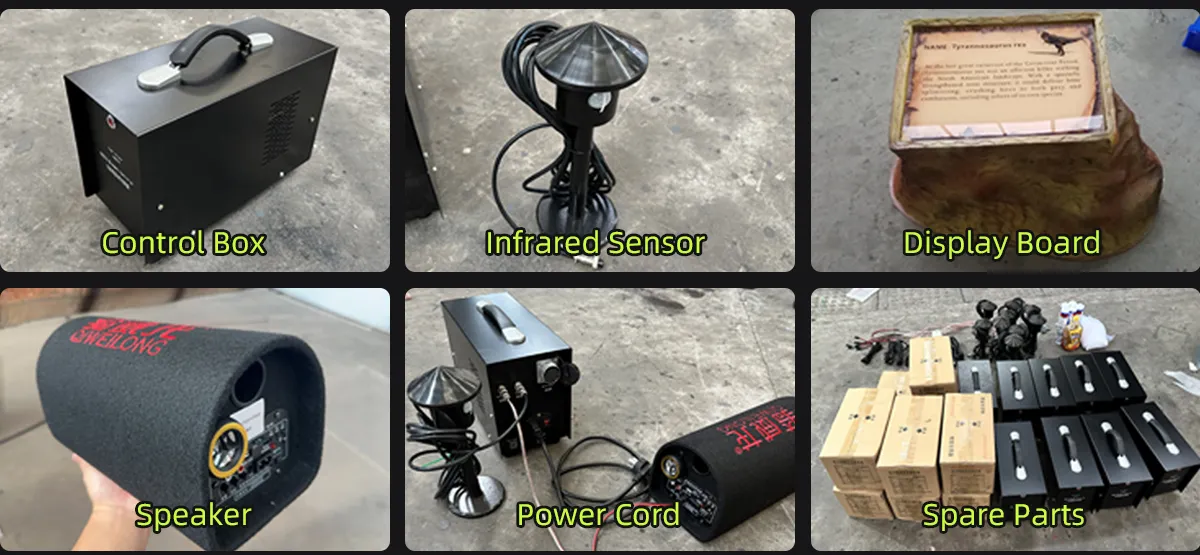
Product Accessories
Packaging and Container Loading