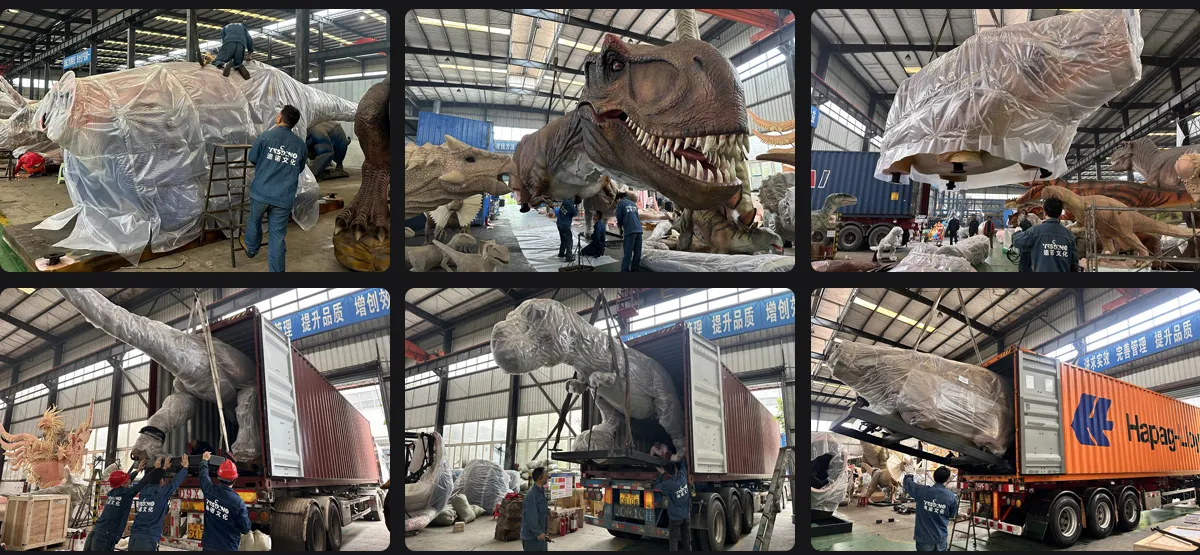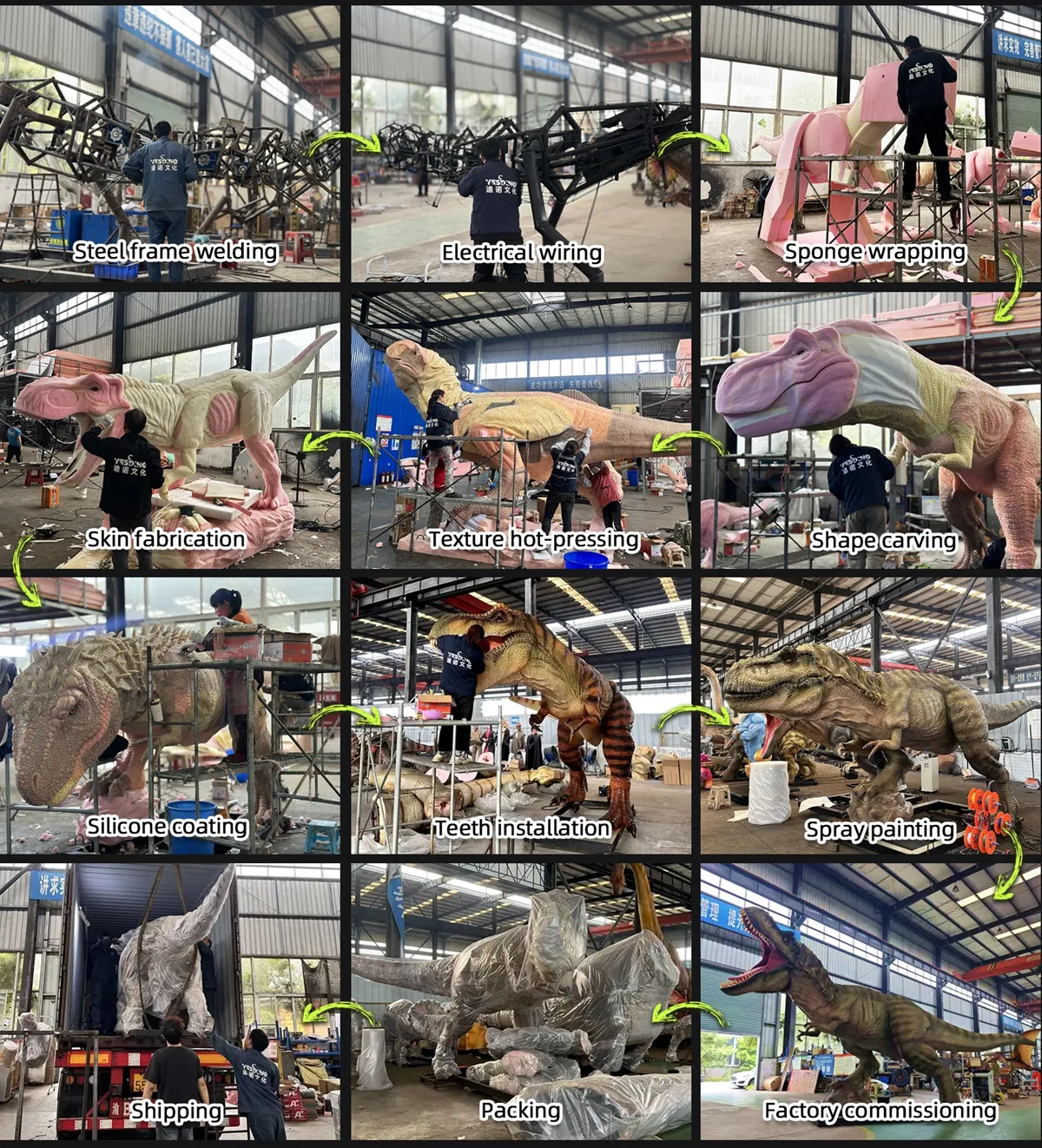
Production Process
Nobody has ever complained that a raptor attraction is too big. That is worth saying out loud, because the real Velociraptor mongoliensis was about two metres nose to tail and stood knee-high to an adult. The animal in the film everyone is picturing was scaled up from a different genus and then scaled up again for the camera.
SKU YKL-108 is the version visitors are actually looking for: six metres long, two metres at the head, 0.65 m across the body, carried low and horizontal the way a running theropod is built.
The size question, settled up front
If your brief is scientific accuracy, a true-scale Velociraptor is a two-metre animal that reads as a large bird and gets lost beside a T-Rex. If your brief is a park that sells tickets, six metres is the number that matches what people saw on screen.
Both are legitimate. We build this one as the film-scale animal, tell you plainly that is what it is, and can supply a true-scale two-metre version for an interpretive or educational setting where the label matters more than the photograph. What we won't do is call a six-metre animal scientifically accurate and hope nobody checks.
What makes it read as a raptor
Four things, in order of how much they matter at a distance.
The carriage. Body horizontal, hips high, head level with the shoulders and pushed forward. Built upright like a kangaroo, any theropod reads as a mascot. The spine line is set in the frame, not in the skin.
The tail. Long, straight, held off the ground, stiffened along its length. It is the counterweight in life and the thing that stops the model looking like it might tip forward.
The head. Long and narrow with a slight upturn at the snout, jaw line straight rather than deep. The eye sits high and forward.
The hands and feet. Three fingers with the middle one longest, and the raised sickle claw on each foot. At six metres those details are small, and they are the ones visitors photograph.
Movement set
Six groups, each on an independent drive with end-of-travel protection: head left and right, neck up and down, jaw open and close with a synchronised roar, blinking eyes, tail sweep, and a forearm scratch. The last one is the group most suppliers leave out and the one that changes how the animal is read — a raptor that lifts a hand and draws it back looks like it is thinking about something.
Cycles are programmed per unit. Speeds are quicker than a large herbivore's by design; a raptor that moves at Triceratops pace looks sedated.
Running a pack instead of one animal
Most raptor exhibits end up as two to four units along a trail. That raises a question the catalogue never answers: do they move together or independently?
We ship packs with a shared trigger and staggered programs, so a group of four reacts to the same visitor within a beat of each other rather than in unison. Unison looks mechanical; a half-second stagger looks like a pack. Each unit still runs standalone if the trigger fails, and each keeps its own cabinet so one animal can be serviced while the others stay live.
Skin, colour and plumage
Foam volume over a welded Q235 steel frame, silicone five to seven millimetres thick, coloured with translucent silicone airbrushed in layers. Standard finish is scaled, in the brown-grey range with darker banding along the spine and a pale underside — the palette that photographs well against green planting and against concrete.
On plumage: the fossil evidence for feathers on this genus is solid, and a feathered raptor is a different tooling job from a scaled one. It can be done as a sculpted feather-textured variant on the arms, neck and tail, and it should be specified at enquiry rather than added later, because it changes the moulds and the build time. If a museum client has asked you for accuracy, this is the conversation to have before signing anything.
Placing it on a trail
A six-metre raptor is usually placed at a bend rather than on a straight run, so visitors meet it side-on at three to five metres. That distance flatters the model: close enough for the eye and claw details to register, far enough that the horizontal carriage reads properly.
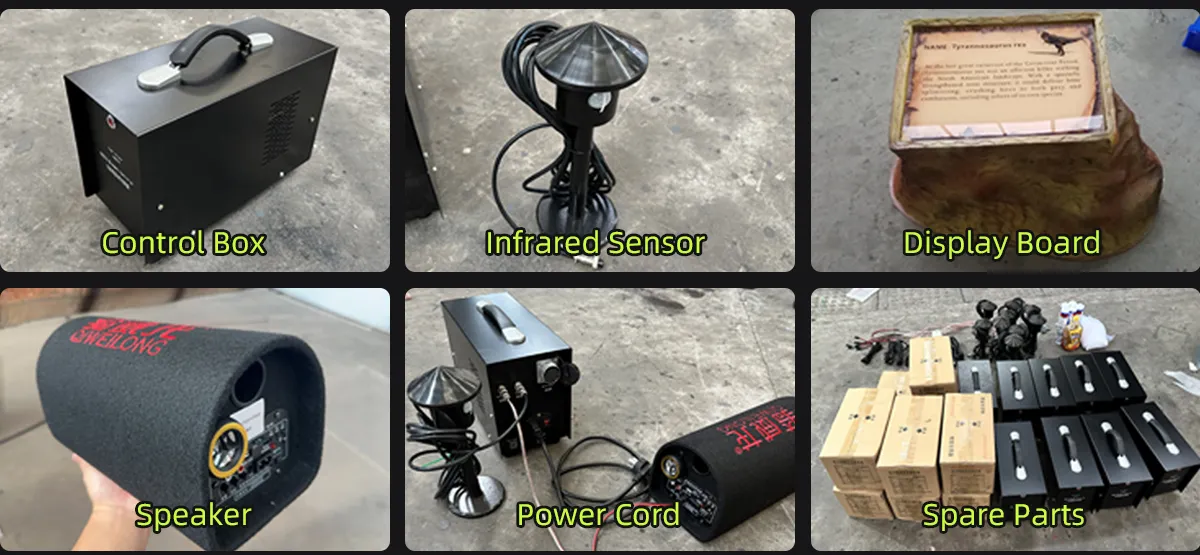
The animal arrives in sections with a steel base frame, control cabinet, sound system, wiring diagram and calibration sheet, and it is rated for −25 °C to 45 °C outdoors with 110 V or 220 V input set at build. Freight, duties and installation are quoted separately and sit outside the product price; send the site plan early and we'll plan crate sizes and access before the container is booked.
What to send with an enquiry
The trail layout or a photo of the spot, the viewing distance, and whether you want one animal or a group. That is enough to come back with a posture recommendation, a program outline and a budget range rather than a catalogue page. If you're weighing six metres against a true-scale build, say so — we'll tell you which one your site will actually sell.
Where to go next
If you are still comparing options, start with the rental cost breakdown — it lines up the builds by length and reach. Site work is covered in the pneumatic versus hydraulic comparison, and the installation guide for pads and access lists the factors that move the price.
For ideas on placing it, see exhibit planning walkthrough. The rest of the range is on animatronic dinosaurs, and if this one is the wrong size for the slot, animatronic carnotaurus for sale is the closest alternative.
Product Accessories
Packaging and Container Loading