Production Process
Theming work usually starts with a theme and a floor plan, and the animal is chosen after that. A five-metre Carnotaurus suits the order. At 2 m the head sits just above adult eye level, at 0.8 m across it stands on a plinth barely wider than a bench, and it moves between venues without a crane.
Five metres long, 0.8 m across the body, 2 m at the top of the skull.
The skull is not scaled down
There are two ways to reach five metres. Shrink a large predator evenly and the head shrinks with the body: the horns become bumps and the silhouette stops reading. The other way holds the skull at near full size and takes the length out of the body.
This build takes the second route. The skull stays short and deep, the two brow horns project outward above the eyes at the angle you expect, and a compressed neck takes up the difference. From three metres away the head lands first.
The trade sits behind the shoulders. The body is stubby, the tail short, and at 0.8 m wide there is not much mass to fill a large room. In a hall with six-metre ceilings it reads as a compact animal, because it is one.
Queue lines, lobbies, trail corners
Five metres is a close-range animal. The comfortable band runs from about two metres to eight; past that the horns stop resolving. A queue line that snakes past it, a hotel lobby, a themed retail entrance, a trail corner where visitors turn a bend: each gives the head a short approach.
Ceiling height is the number that trips planning. The head reaches 2 m and lifts a little through its travel, so 2.6 m clear above the display point keeps it away from soffits and light rigs. At 0.8 m wide the body passes a 0.9 m door with the skin on.
Jaw first, then head, then almost nothing
The jaw sells this animal. A short deep skull opening on a low neck gives a heavy, deliberate bite, and the timing between head turn and jaw matters more than the range of either. We start the jaw about 0.6 seconds after the head reaches its mark, which reads as a decision rather than a mechanism. The figure goes into the commissioning sheet.
The forelimbs are reduced and get a small press-and-lift rather than a reach. A big gesture from those arms is tempting and makes the animal look wrong. Neck, tail and blink fill the cycle; tail sway stays short, because a long tail on a short body exaggerates the proportion.
Foam body, silicone skin, steel inside
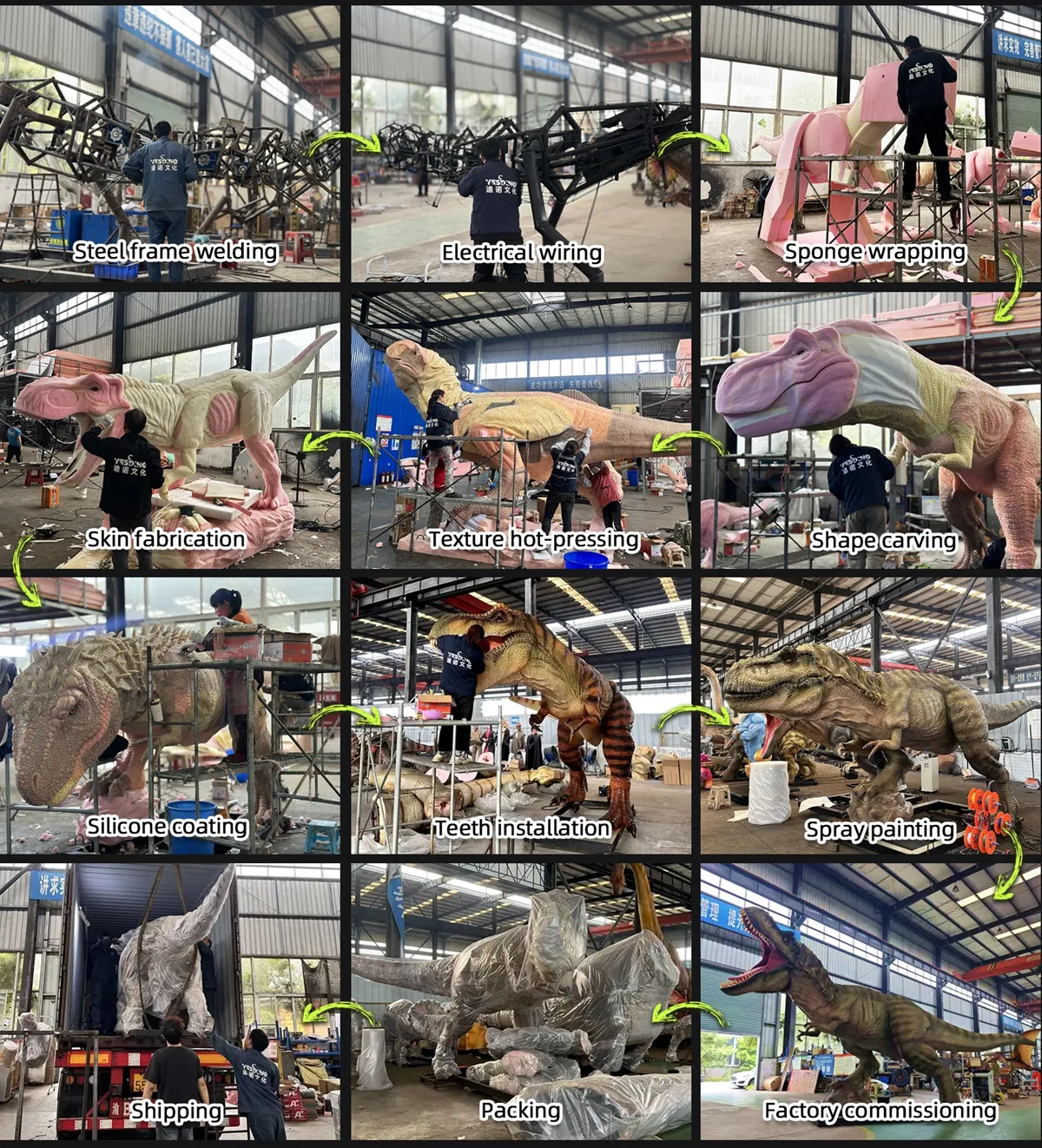
Q235 steel frame with rust treatment, high-density foam carved to volume, silicone skin at 5–7 mm. Colour goes on in translucent silicone layers, so the red-brown tone sits in the material and a knock shows as a lighter patch that can be tinted back.
One lighting detail is worth planning. Under 3000K spots the skin reads darker and redder than in daylight; under 5000K the reverse. If the rig runs warm, judge the colour under a warm lamp at approval, or the animal looks muddy on opening night and correct in the maintenance photos.
Two sections and a pallet truck
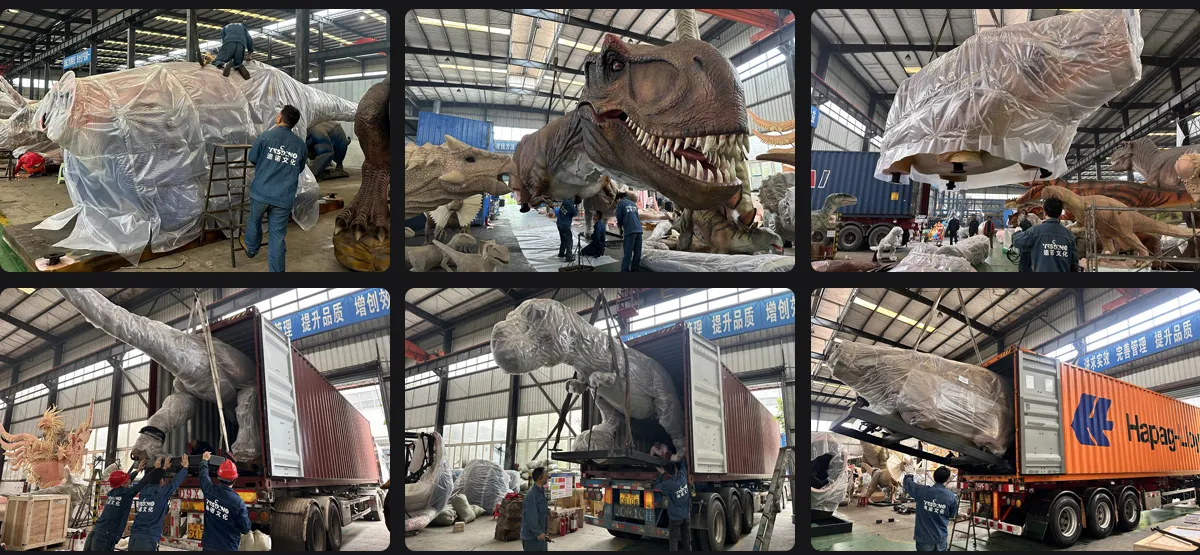
The animal ships as two body sections plus head and neck, base frame separate. Crated, the sections fit a standard van or a 1.2 m goods lift, which is why this size turns up in upper-floor retail units and hotel lobbies.
Order on site: base frame levelled and anchored, rear body, front body onto the coupling, neck and head, then skin closure at the joints. Cabinet position is settled before the base goes down, because the door needs 600 mm of swing on the service side — usually the wall side, since visitors walk round the head.
Before you place the order
Send a photo with something for scale, the ceiling height, the width of the door the crate comes through, and the floor build-up. A raised access floor needs load spread across more than one panel, and that changes the base.
Where the size is wrong: a long sightline. If visitors first see the animal twenty metres down a corridor, five metres reads as a small object and the horns vanish; a longer build earns that distance. A double-height void is the other case, since 2 m will not fill the height and lighting does not fix it.
Enquiry
Send the floor plan, the ceiling height at the spot, and the route in from the street. Tell us the lighting colour temperature if the rig is specified, and whether the display runs all day or only during opening hours.
Freight, duties, certificates and installation sit outside the animal price. The movement list and parameter sheet come with the quote.
Where to go next
Worth reading before you commit: the cost breakdown with the seven price factors for how the sizes compare, the spare parts and repair kit list for what the ground has to carry, and the size guide covering 3 m to 12 m builds for where the money actually goes.
For ideas on placing it, see what shipping a large animal involves. The rest of the range is on animatronic dinosaurs, and if this one is the wrong size for the slot, animatronic parasaurolophus for exhibition halls is the closest alternative.
Product Accessories
Packaging and Container Loading