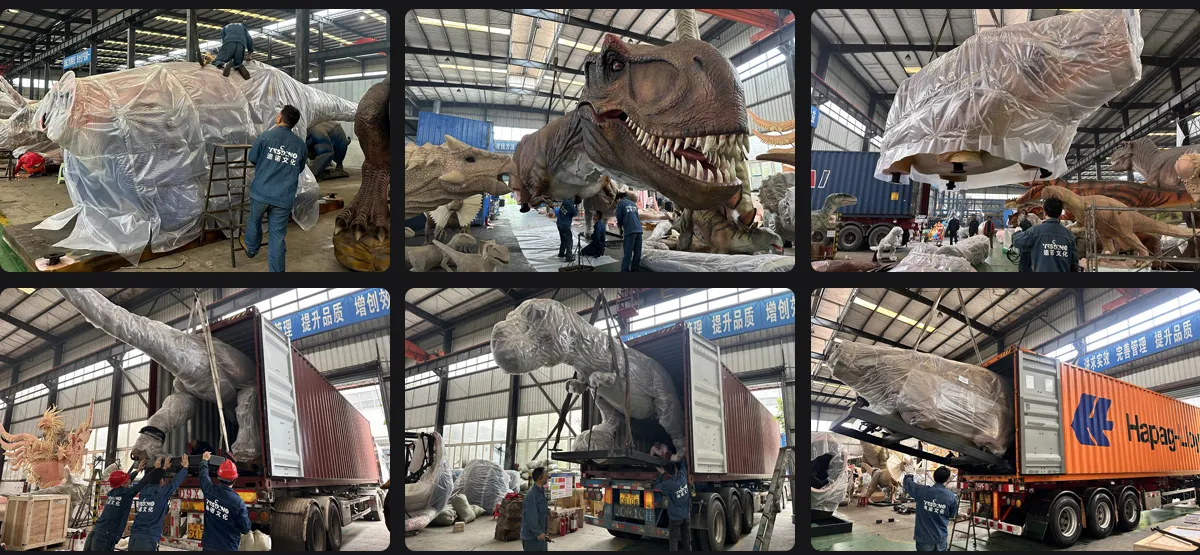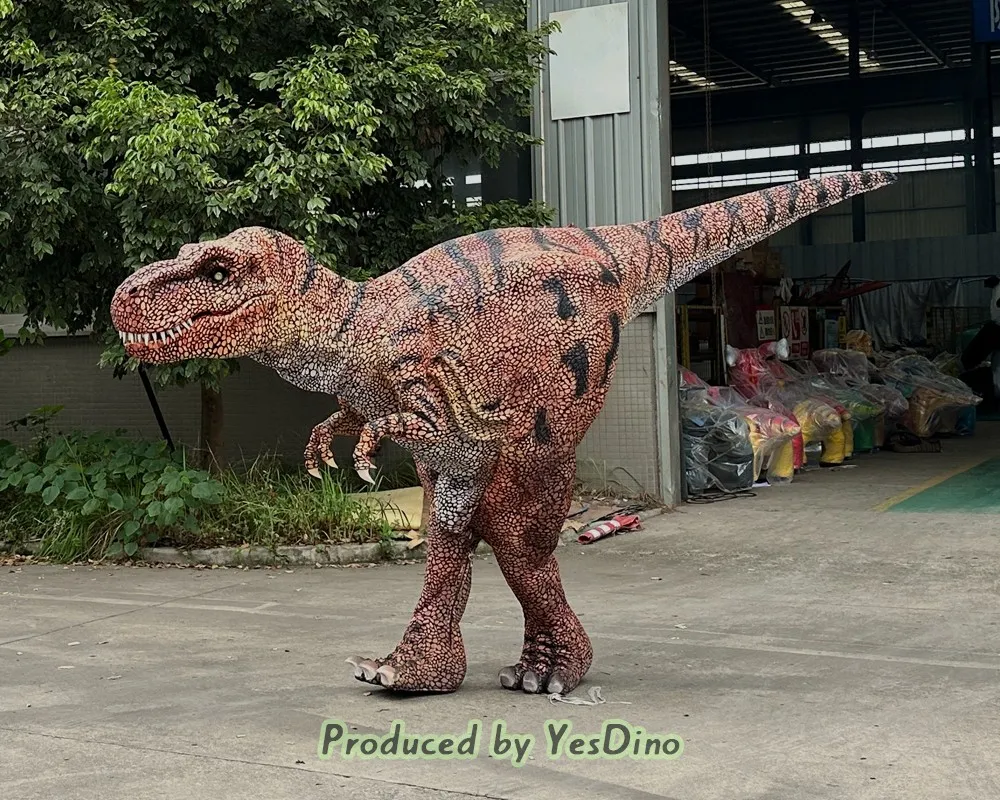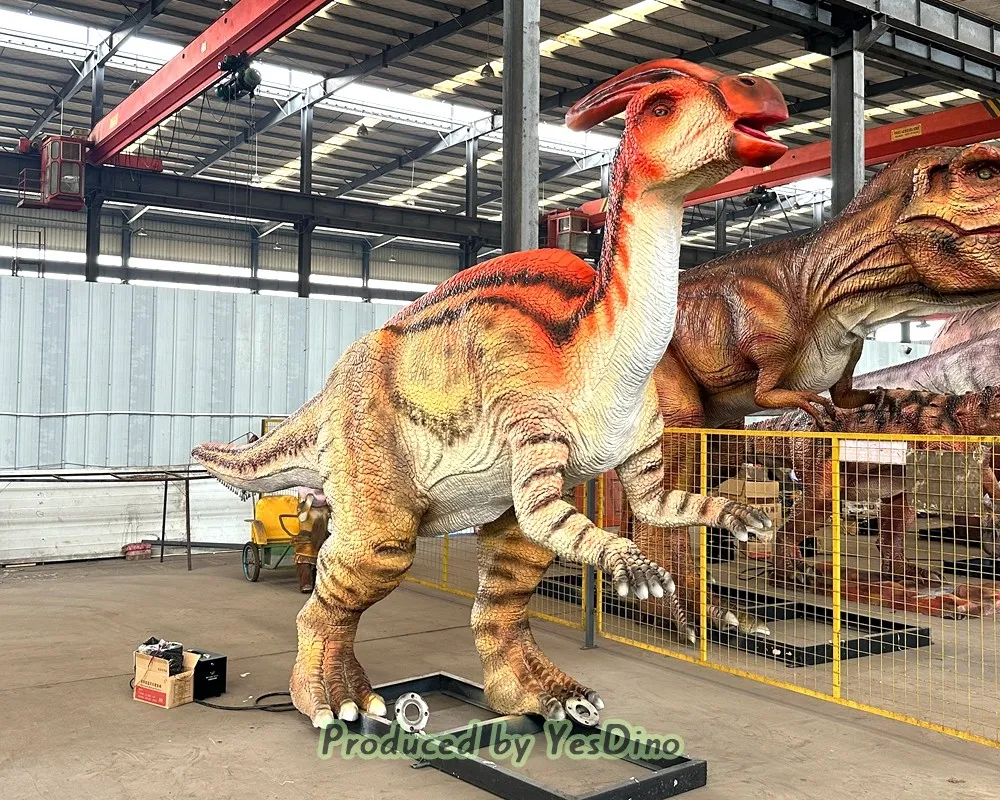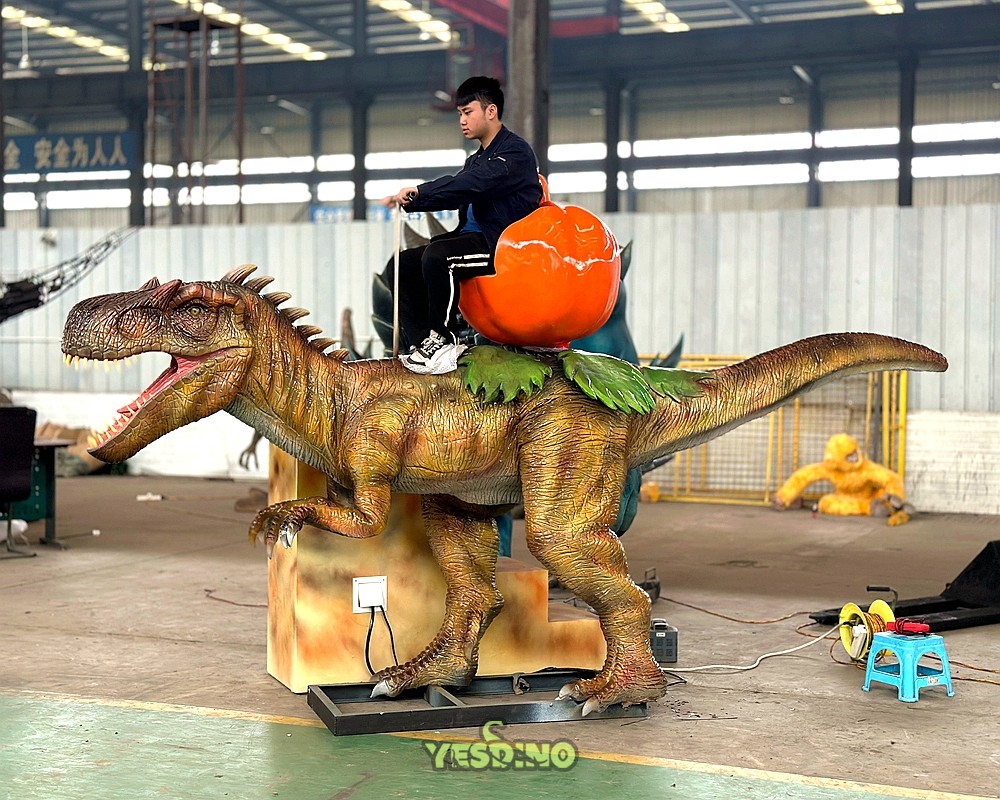
Production Process
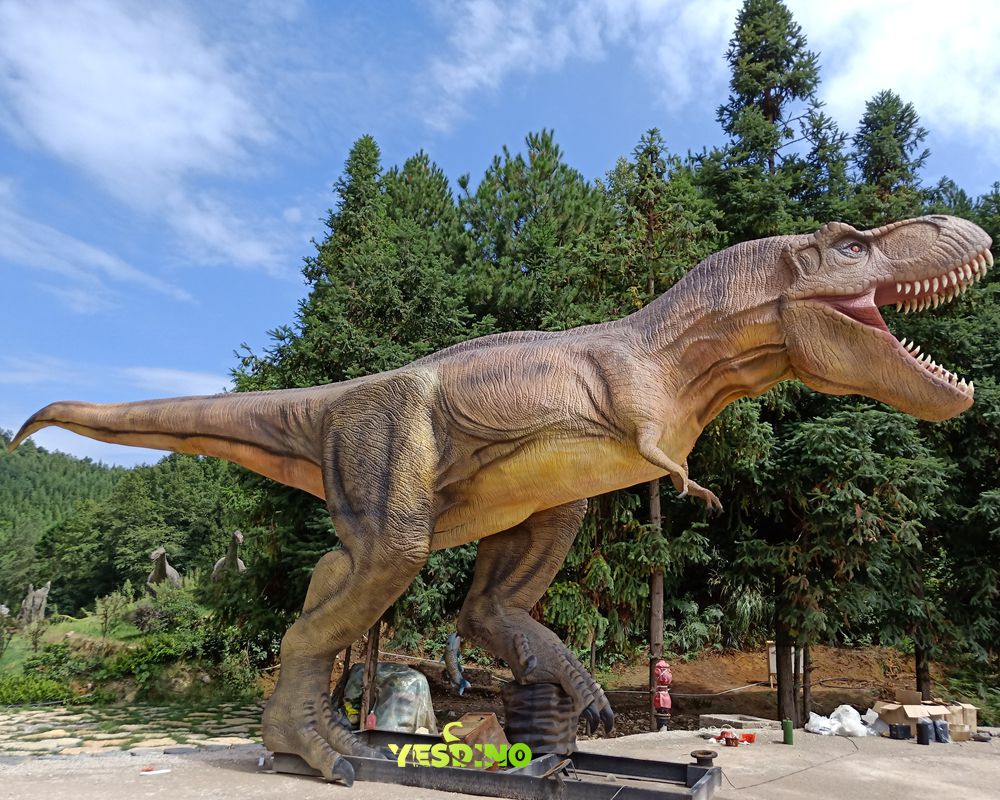
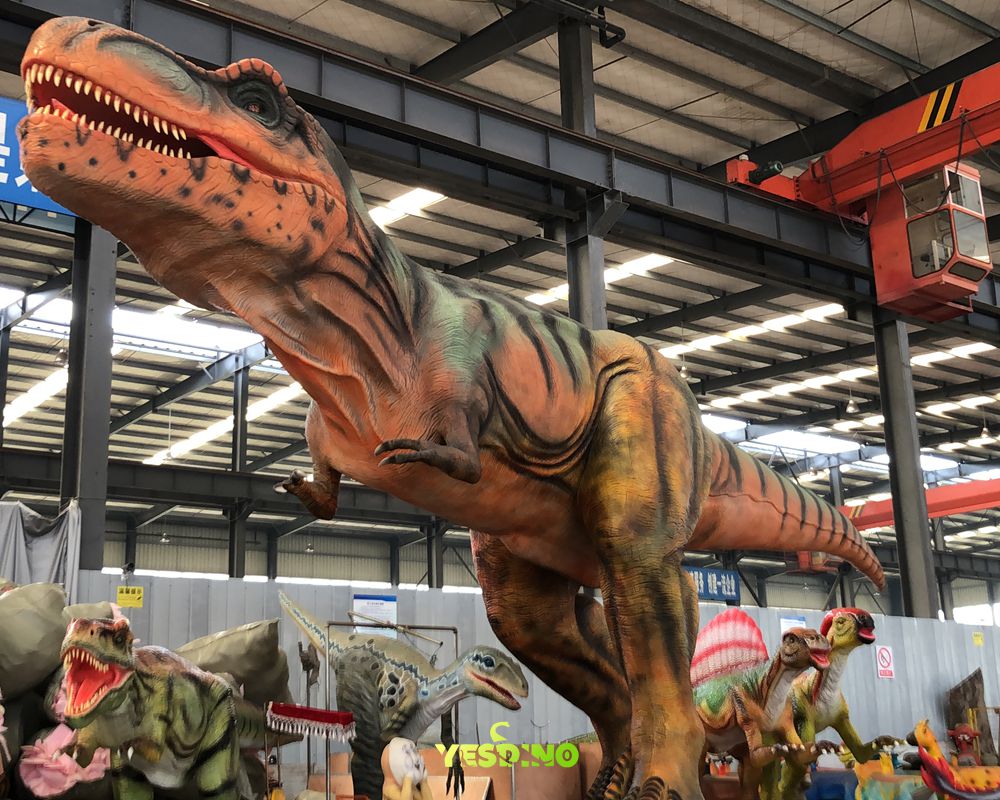
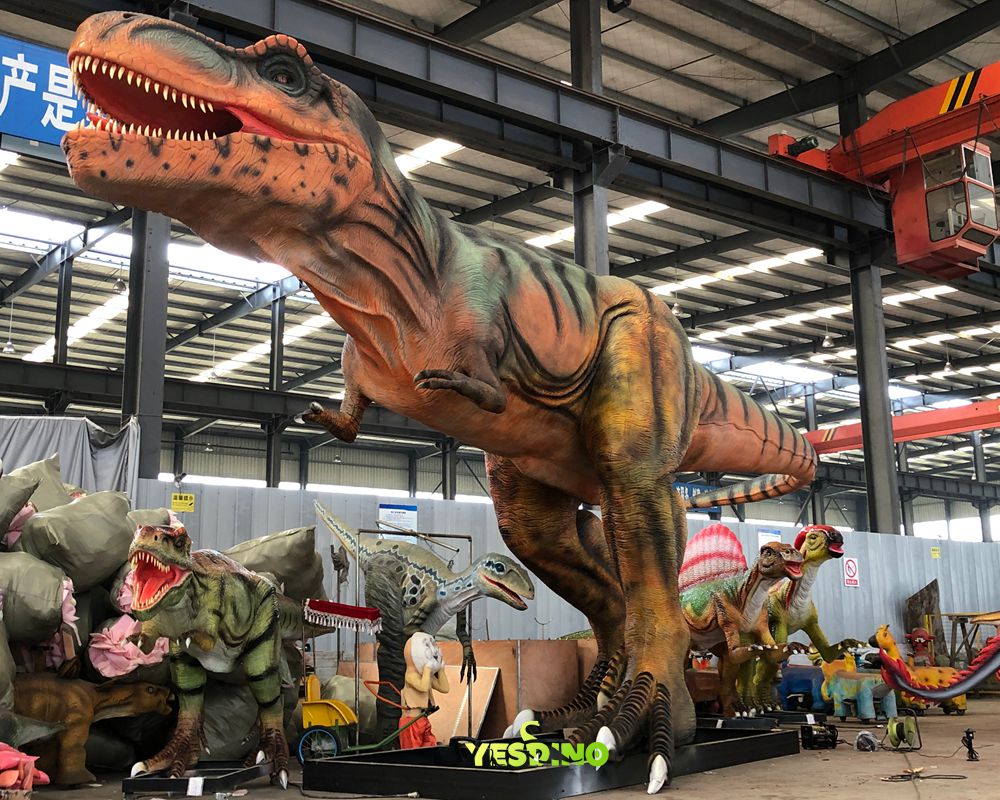
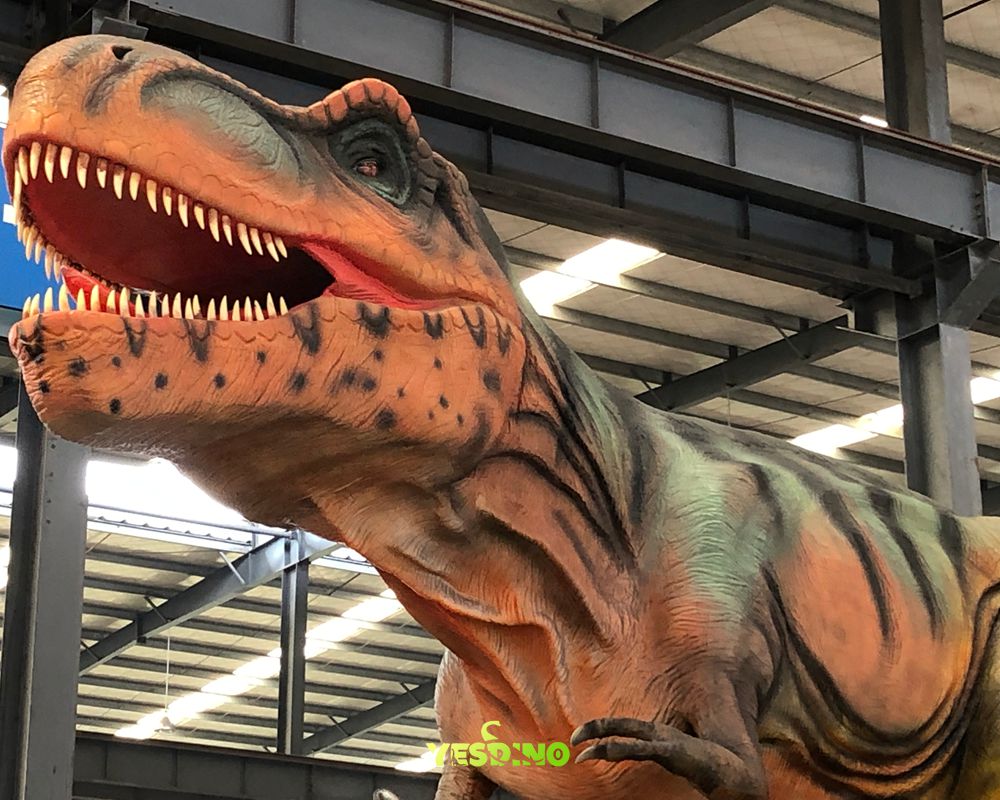
A mall atrium is an odd place for a thirteen-metre predator, and the ceiling settles it first. Most atriums give four or five metres of clear height in the void and less under the soffit, so a build that is long but not tall goes where a compact tall animal cannot. This one is 3.2 m at the skull and 13 m nose to tail.
Thirteen metres long, 1.7 m across the body, 3.2 m at the top of the head.
Length and height are separate decisions
On a park build the numbers move together: a longer animal is also a taller one. Mall work pulls them apart. The carriage stays low, the hips sit close to the deck, the neck carries forward rather than up, and the tail runs almost level. At 1.7 m wide the body keeps a narrow footprint along a walking route.
What you give up is the upright posture. At 3.2 m the head sits at first-floor balcony height, which reads well from a cafe rail and less dramatically from the floor beside the tail. For a silhouette that fills a double-height space, a taller animal at half the length does the job better.
Along the concourse, not across it
Set along a concourse, the animal reads from thirty metres away and still leaves walking room on both sides. Set across one, it becomes a barrier and the fire review asks about the gaps. Atrium voids work as well: the void edge gives a gallery one floor up, with the head at rail level.
Measure clear height where the skull travels, not at the peak of the void. Under a soffit it can drop a metre and a half within two paces, and that number decides whether the head has room to lift.
The skull carries the performance
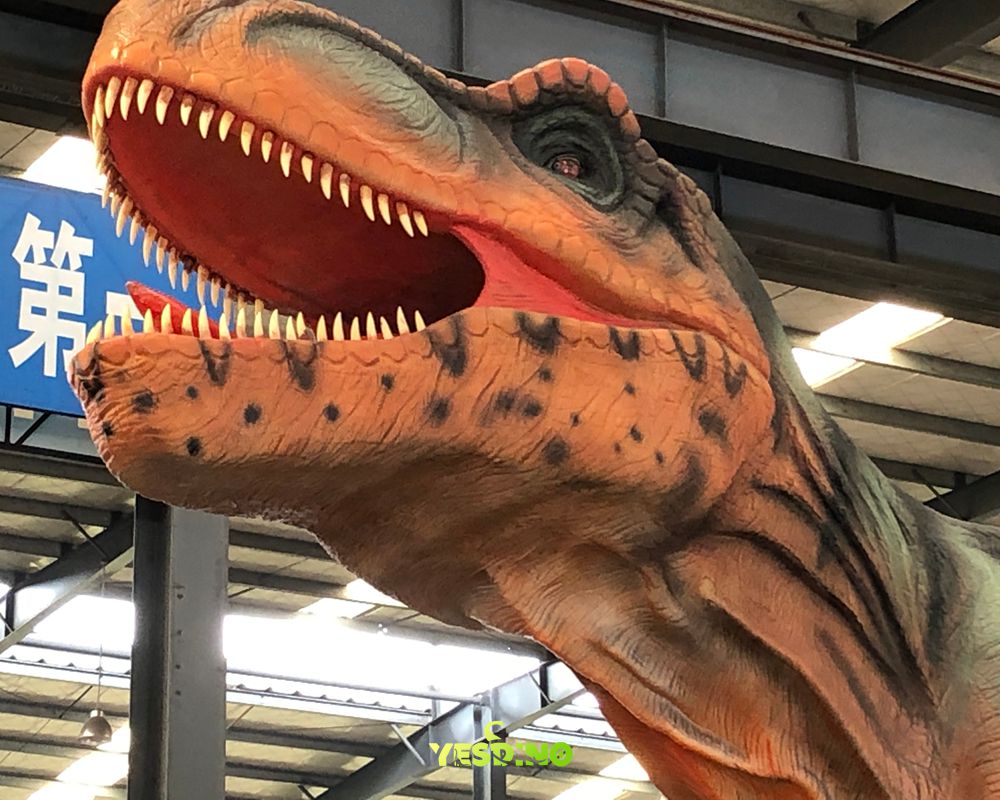
The jaw is the axis worth tuning. A heavy skull on a low neck makes head turn and jaw open read as one movement, and the offset between them is what makes the animal look like it decided something. We run the jaw a fraction behind the head turn, set during commissioning and logged with the other parameters.
The forelimbs are small and two-fingered and get a short lift-and-press rather than a reach, which keeps the arms from becoming the thing visitors watch. Tail sway runs at low amplitude; on thirteen metres a big sweep at the tip moves a lot of skin and reads as a flag.
Foam, silicone and a low steel carriage
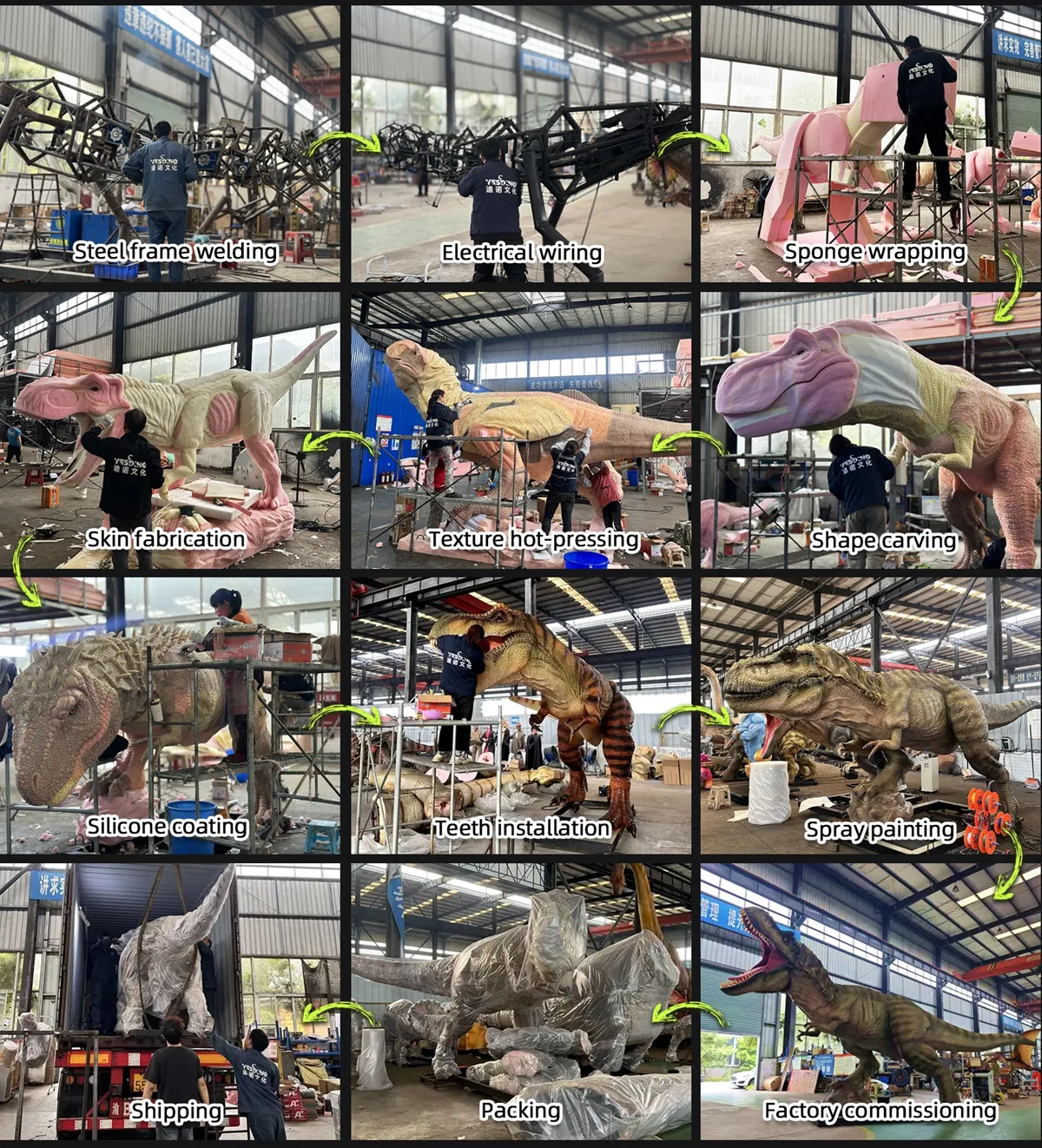
Structure is Q235 steel with rust treatment, the volume is carved in high-density foam, and the skin is silicone 5–7 mm thick. Colour goes on in translucent silicone layers, so a scuff shows as a lighter patch rather than a white scratch across paint.
The build runs at −25°C to 45°C, on 110V or 220V set for the destination. Mall floors bring trolleys, cleaning machines and a service route behind the display, so the flanks are laid out with reachable panel edges instead of one continuous skin.
Loading bay, goods lift, assembly order
Thirteen metres does not arrive in one piece. The build splits at the body sections and the crating follows the narrowest door on the route, usually the goods lift at 1.6 m to 1.9 m clear, which is why the body ships at 1.7 m and no wider.
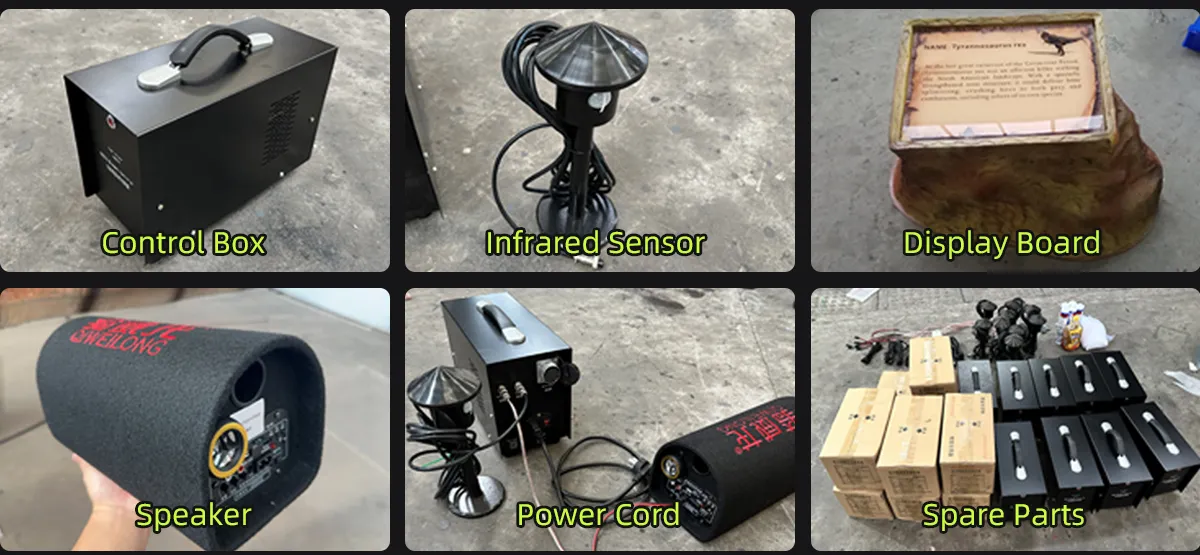
The order that works: anchor plates and base carriage, hips and torso, neck and skull, tail, with skin closed at each joint as you go. The control cabinet goes in before the flank skin covers it, and its door faces the service side, which sometimes turns the animal round from the first plan.
Numbers we ask for before quoting
Send the clear height under the soffit at the display point, the width of the narrowest door on the route, the floor finish, and the line visitors walk past. A photo with a person where the head will be says more about scale than a plan does.
Two cases where this size is the wrong purchase. A space under about 3.5 m clear at the head leaves the skull no room to lift through its travel. A tight atrium where the animal would sit across the main walking line is the other; a six- or eight-metre build fits that geometry with less installation work.
Enquiry
Send the floor plan with the display marked, the ceiling height there, and the route in from the loading bay. Tell us where the power drop sits and whether the site takes 110V or 220V. We reply with a footprint drawing and a movement list.
Freight, duties, certificates and installation are quoted separately from the animal.
Where to go next
If you are still comparing options, start with the cost breakdown with the seven price factors — it lines up the builds by length and reach. Site work is covered in the spare parts and repair kit list, and the size guide covering 3 m to 12 m builds lists the factors that move the price.
For ideas on placing it, see mall exhibition notes. The rest of the range is on animatronic dinosaurs, and if this one is the wrong size for the slot, animatronic spinosaurus for jurassic theme parks is the closest alternative.
Product Accessories
Packaging and Container Loading