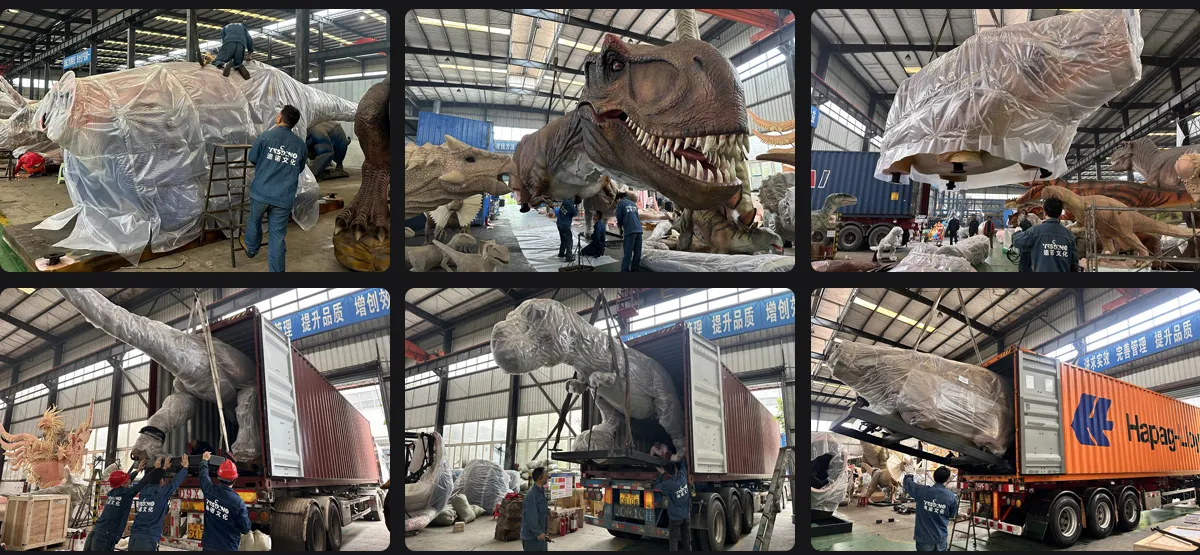
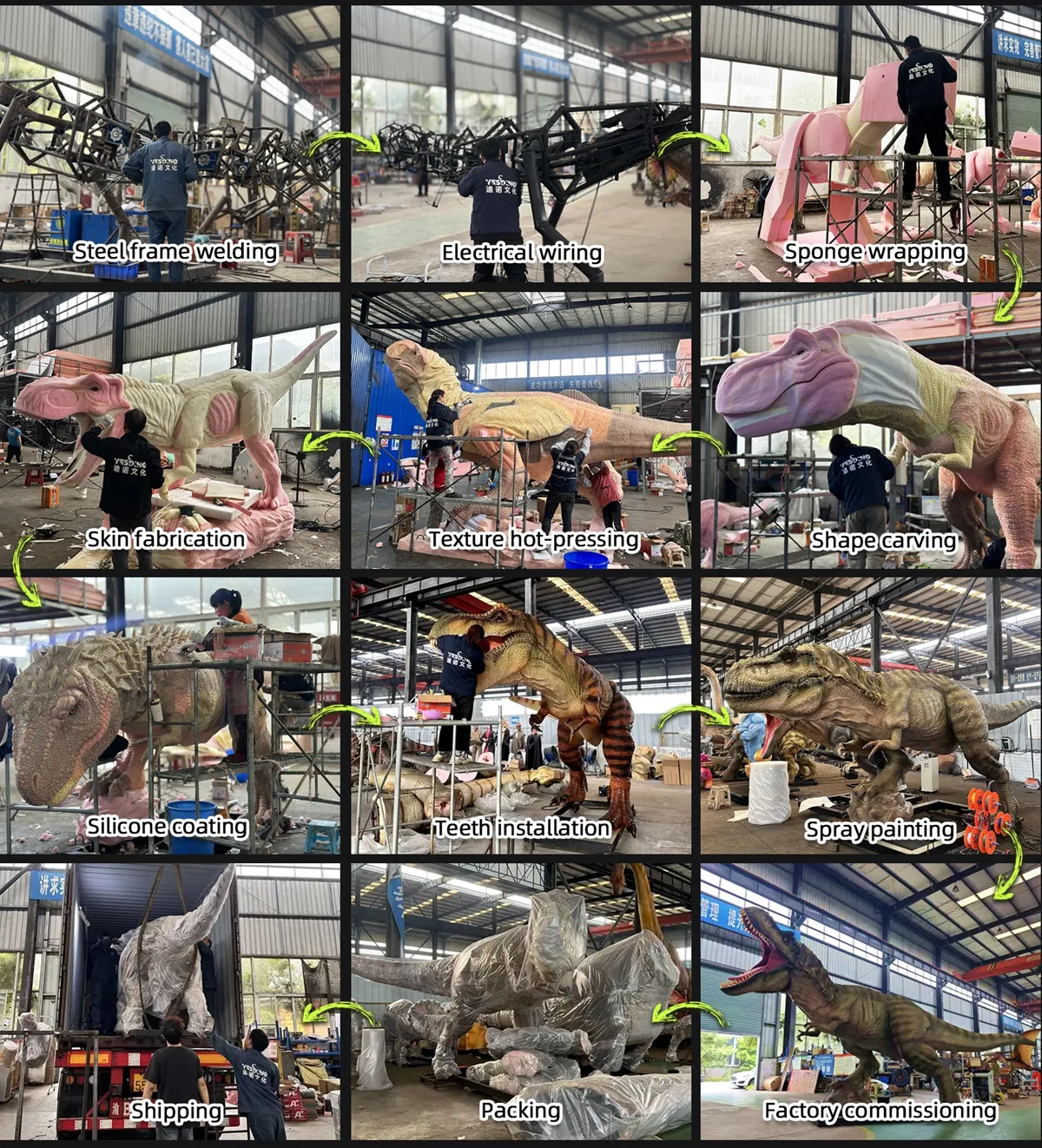
Production Process
A museum hall asks something different from a park. Visitors are quiet, the lighting is controlled, and the animal is usually standing next to a real skeleton it has to agree with. A model built for a plaza — roaring every ninety seconds, finished in high-contrast colours — is the wrong object for that room.
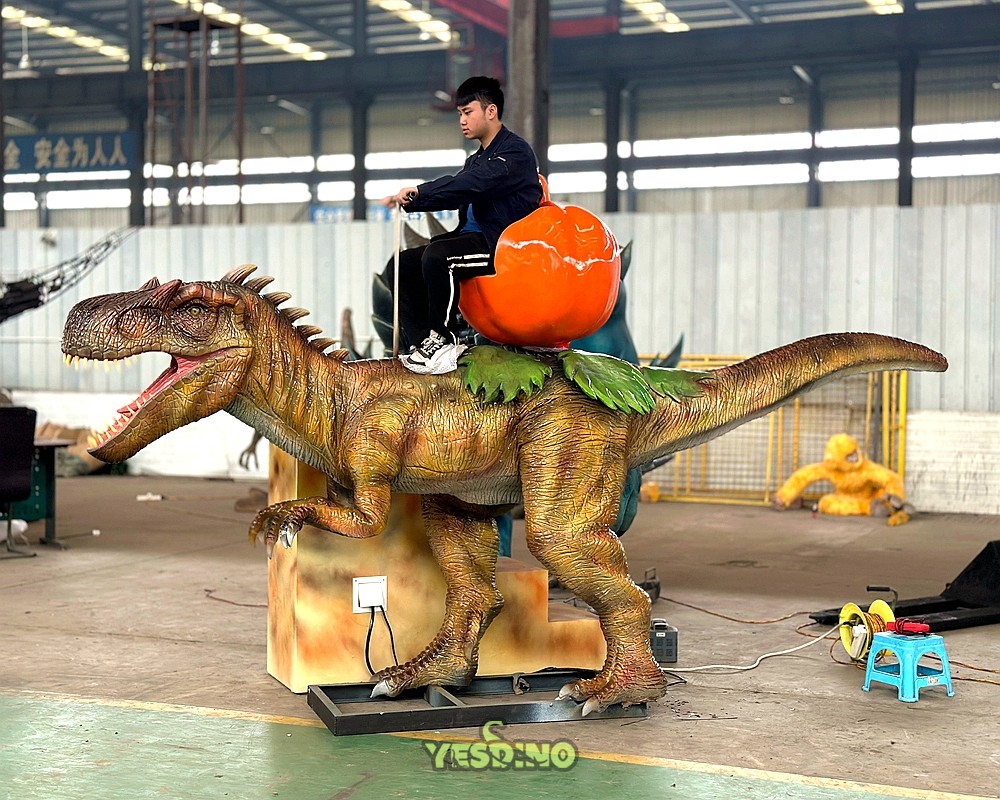
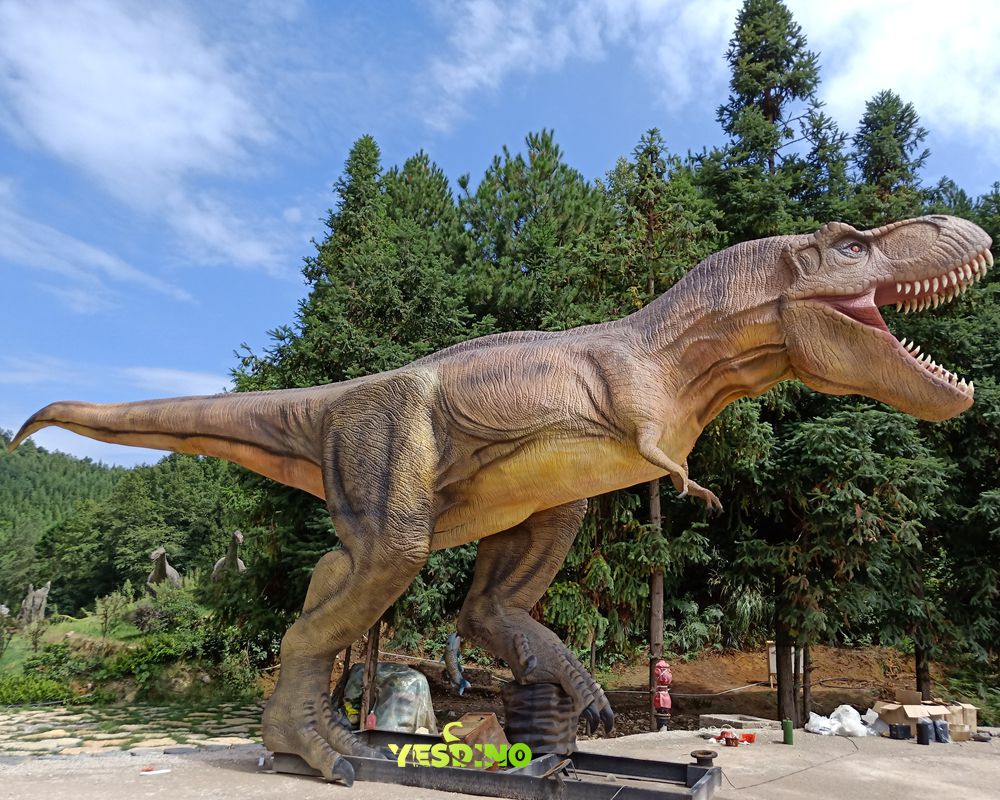
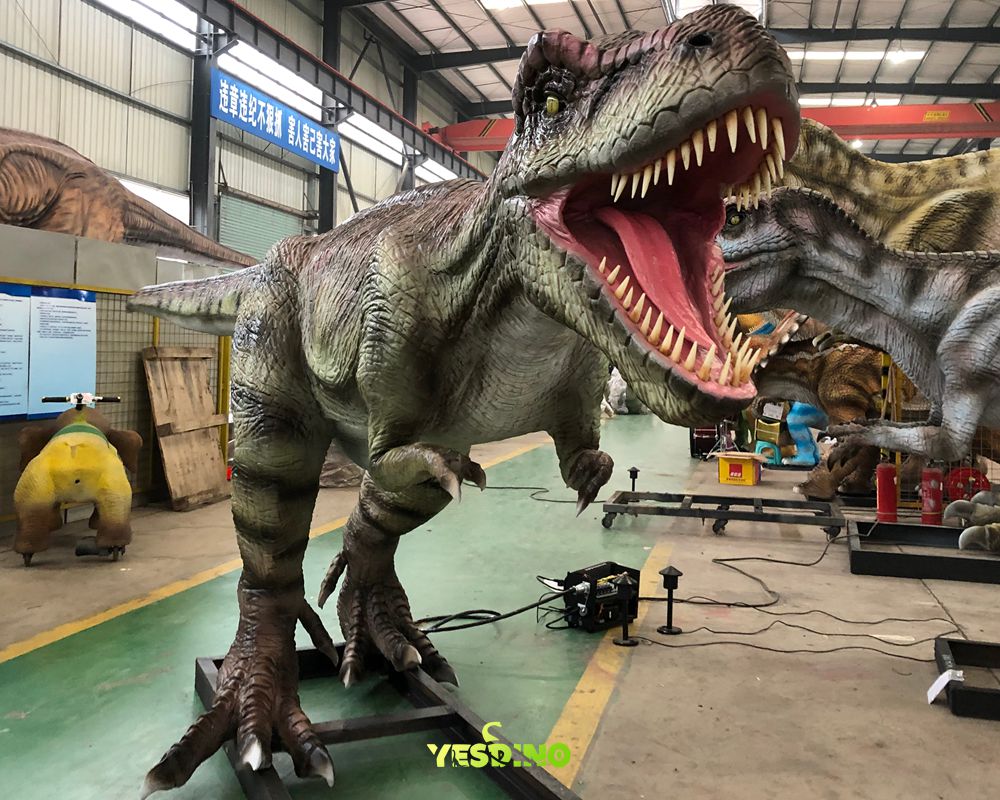
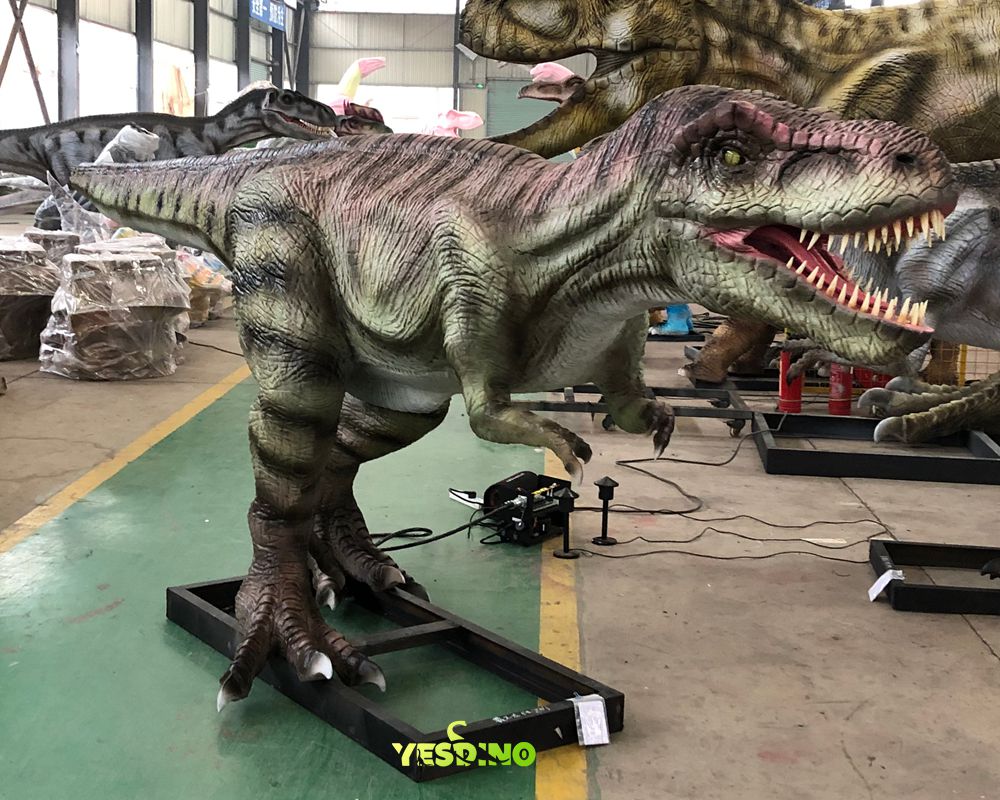
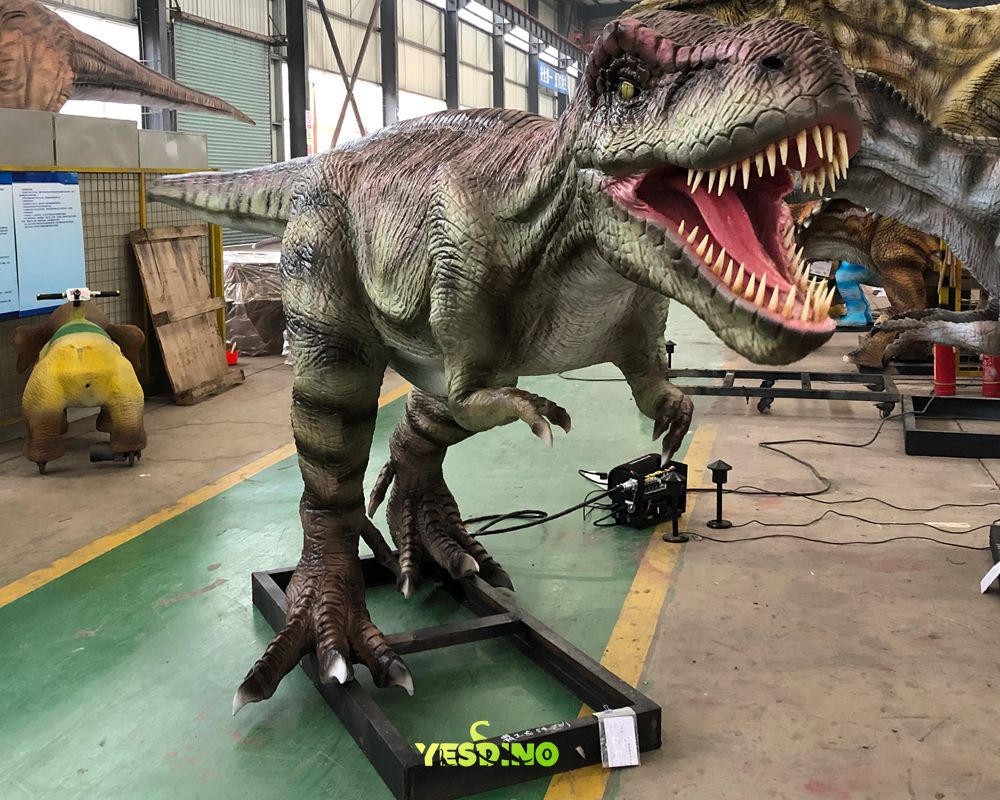
SKU YKL-092: five metres long, 0.65 m across the body, two metres at the head.
Sitting next to a skeleton
If the hall has a mounted tyrannosaur, the model's job is to show what the bones carried. That means the proportions have to match the specimen rather than a film, and the posture should echo the mount — same stance, same head height, same angle of the tail.
Send the specimen reference or a photo of the mount at enquiry. We set the posture from it, and we can match a specific reconstruction rather than shipping the default. Getting this right is what makes the pairing read as an exhibit instead of a decoration that happens to be nearby.
Silence is part of the specification
Indoor amplification turns a roar sized for a park into something oppressive. The gallery programme runs a long idle cycle of small movements — a blink, a slight neck shift — and reserves the roar for a proximity trigger at the barrier, with the sound level set lower and the decay shortened.
Curators usually settle on movement-only within a week, which is why the setting is easy to change without a service visit: the parameters are documented at commissioning, and the trigger can be disabled from the cabinet.
Six movement groups
Head left and right, neck up and down, jaw open and close, blinking eyes, tail sweep, forearm scratch. In a gallery the neck and the eyes do the work: bringing the head down to label height and letting it hold there is more effective than any roar, and it is the movement school groups respond to.
Independent drives with end-of-travel protection; loop or sensor triggering; speeds set at commissioning and documented.
Floor, light and route
Three things to confirm before quoting. The floor has to take the load at the feet, which is concentrated rather than spread. The route in has to accept the body section, so measure the goods lift and the widest door. And the display point needs enough space for visitors to view the animal from the side — end-on, a theropod reads as a wall with a head.
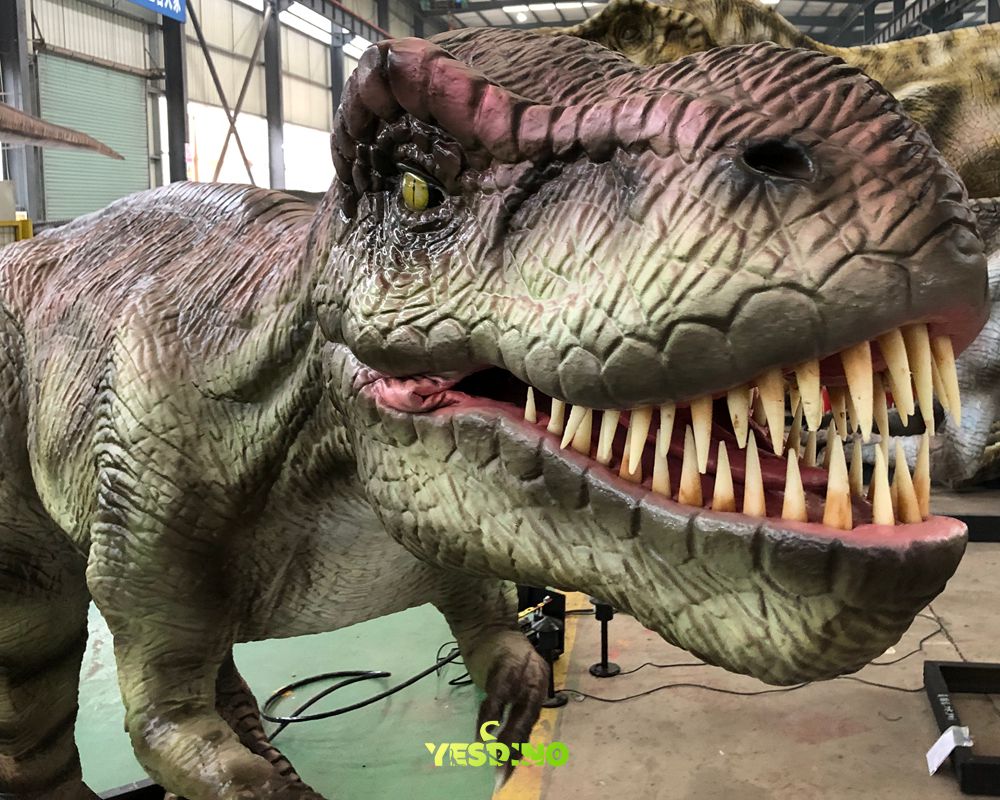
Lighting matters more than most buyers expect. Spotlights pick out every ridge in the silicone, which is good on the head and less good on a flat flank; a slightly warmer palette with softer tonal contrast photographs better indoors than a high-contrast scheme designed for daylight.
Finish and delivery
Welded Q235 steel frame with anti-rust treatment, foam volume, silicone five to seven millimetres, translucent layered colour. Rated −25 °C to 45 °C, 110 V or 220 V configured at build. Ships in sections with base frame, control cabinet, sound system, wiring diagram and calibration sheet; freight, duties, certificates and installation are quoted separately from the product price.
Working with a curator
Museum projects usually start with a specimen, not a product. If the hall has a real mount, the model is there to show what the bones carried, and curators are precise about posture, skin texture and the absence of film-era invention.
That changes the brief in two ways. The animal is built to a reference rather than a default, and the movement programme is set for interpretation rather than spectacle — slow, quiet, and controllable by gallery staff. We produce CAD drawings for approval before fabrication so the curator signs off on the pose rather than discovering it on delivery.
Enquiry
Send the hall dimensions, the ceiling height and a photo of the mount it will stand beside. We'll come back with a posture proposal and a budget range rather than a catalogue page.
Where to go next
If you are still comparing options, start with the spare parts and repair kit list — it lines up the builds by length and reach. Site work is covered in the size guide covering 3 m to 12 m builds, and the rental cost breakdown lists the factors that move the price.
For ideas on placing it, see layout strategies for themed trails. The rest of the range is on animatronic dinosaurs, and if this one is the wrong size for the slot, animatronic carnotaurus for exhibition halls is the closest alternative.
Product Accessories
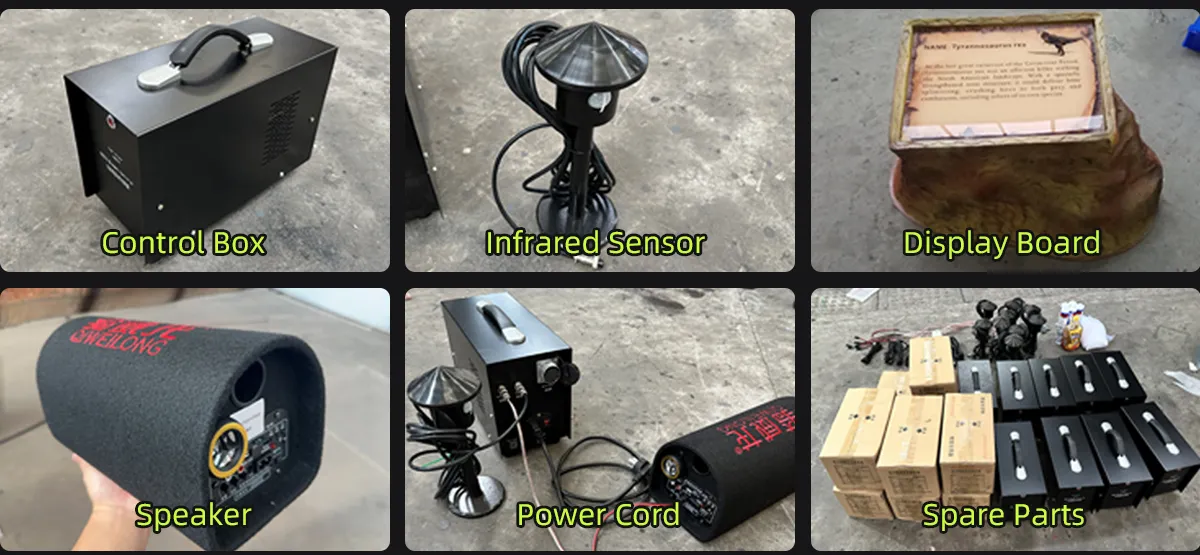
Packaging and Container Loading