Production Process
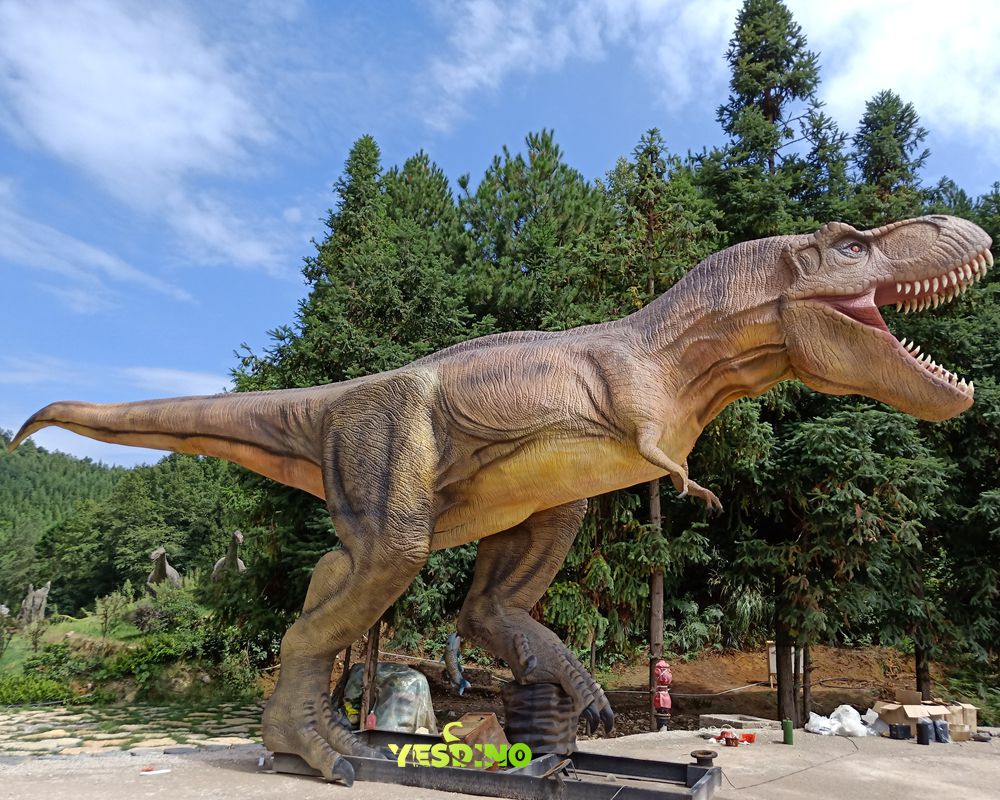
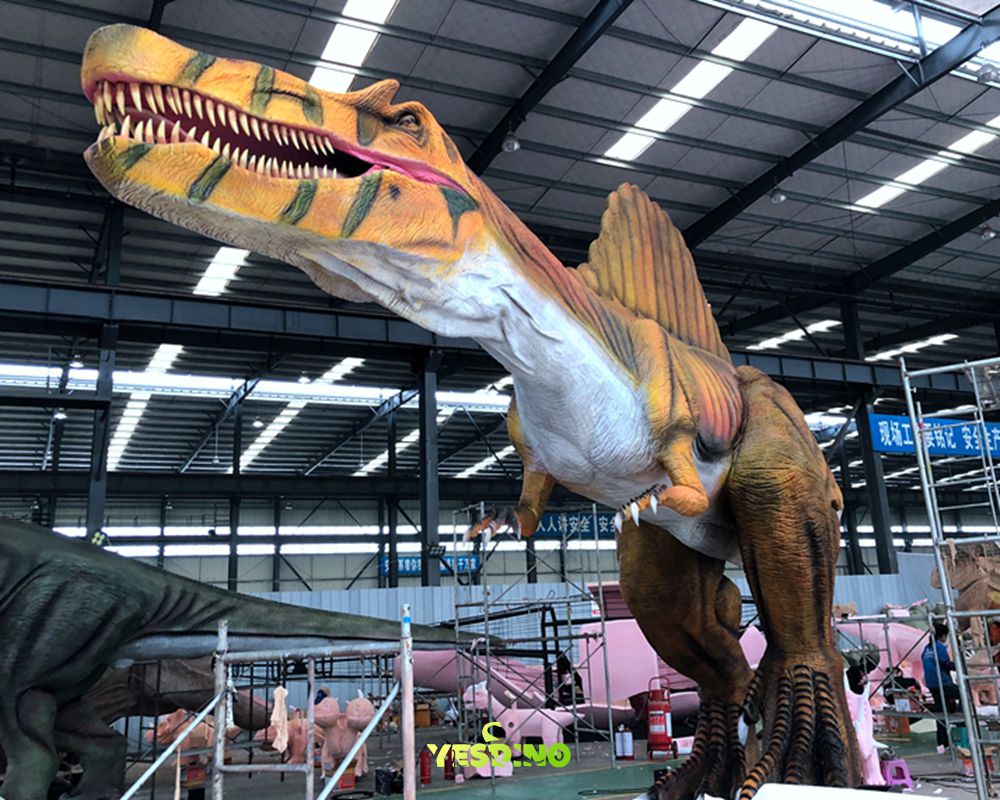
A fifteen-metre spinosaur is a decision about the site before it is a decision about the animal. Visitors see the sail from the car park, and the ground under it becomes part of the design. At 4 m the sail sits above most planting; at 15 m of length the animal owns the clearing.
Fifteen metres long, 1.5 m across the body, 4 m at the top of the sail.
What four metres of sail buys
Height makes a landmark readable from a distance: from the ticket window the sail shows over the fence, and at thirty metres the head still separates against the sky. Length holds them once they arrive.
The cost sits in the ground and the lift: a designed pad rather than a levelled patch, an anchor layout that takes wind on the sail, and one day of crane work with standing area for the vehicle. With no crane access and soft ground, the same money buys two smaller animals.
A clearing, not a path edge
Fifteen metres needs room to be seen. The band that works runs from about eight metres to thirty; closer, visitors are under the jaw and lose the sail. A clearing, a lake edge or a slope above a path all give that distance.
Plan the fence at six to eight metres from the body, not at the base. The head swings through a wide arc at 4 m height, and a barrier tucked in close turns a slow head turn into a lunge from the visitor's side of the rope. At 1.5 m wide the animal itself is slim; the space around it is what the site has to supply.
The sail sets the movement
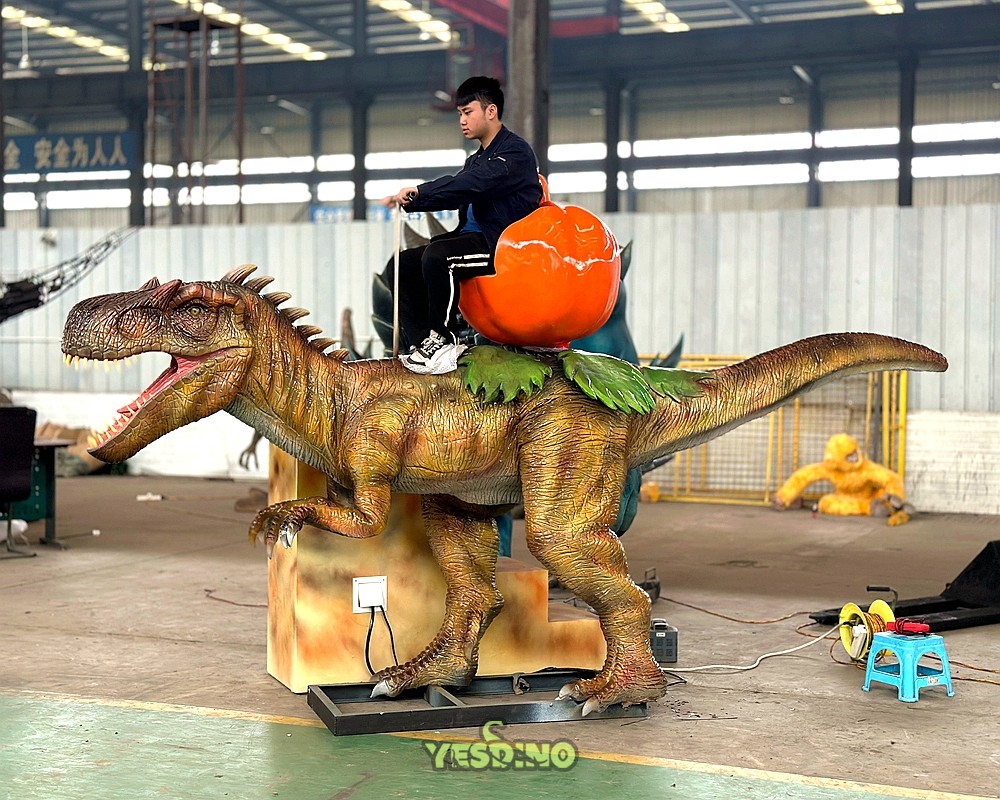
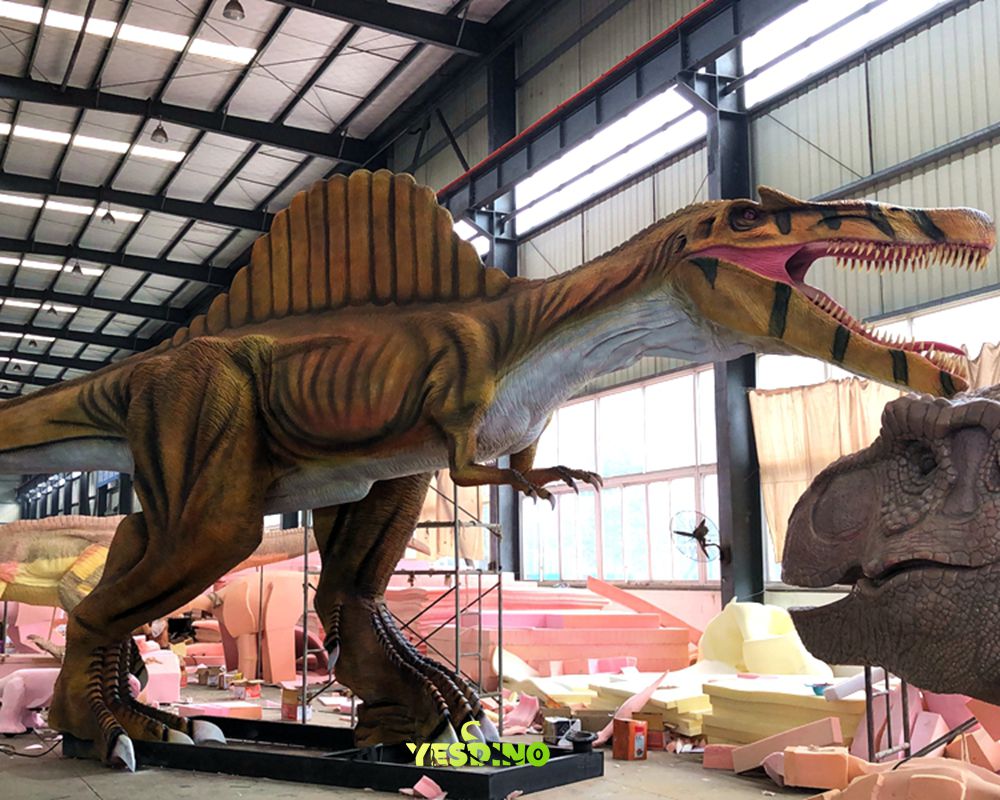
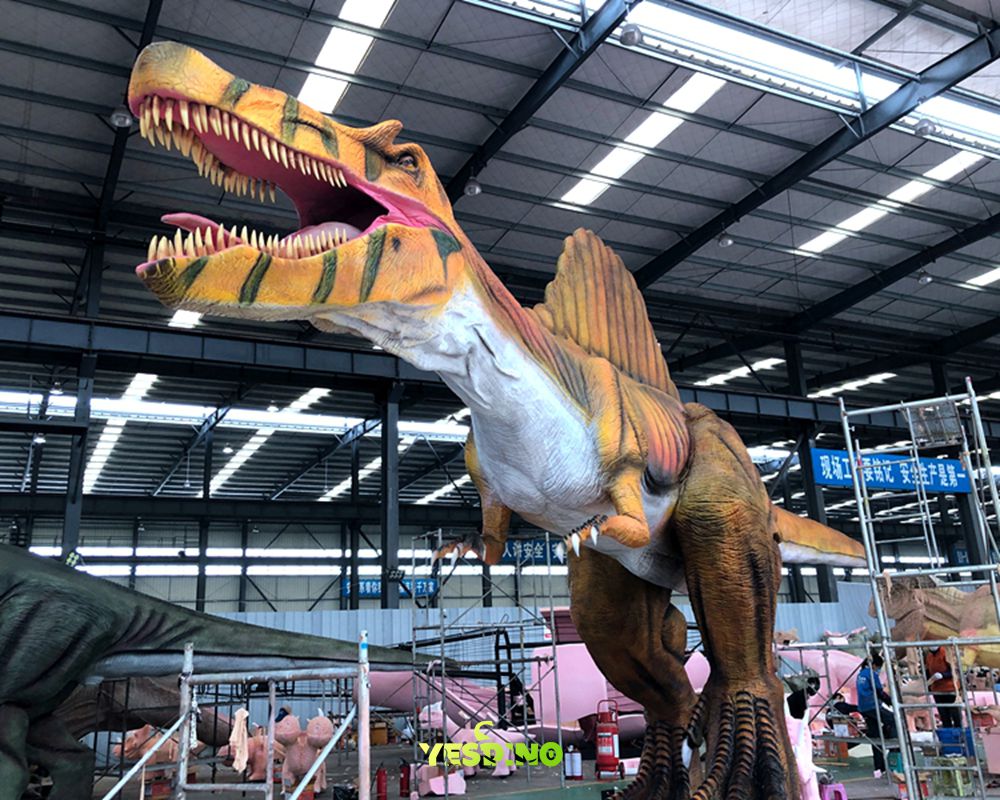
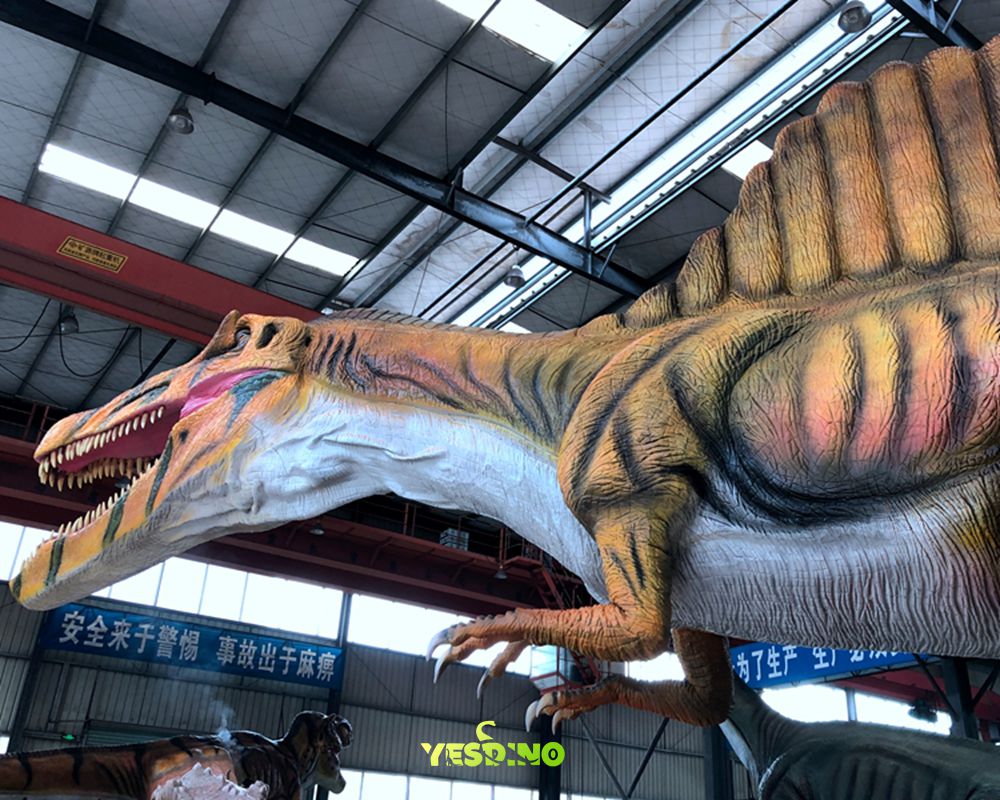
The sail of elongated back spines is rigid, tied into the spine structure, and it does not animate. Any flex at its base would work the skin along a row of spines, and that is where a tear starts. What moves instead is the head and the long crocodilian snout: a low sweep, then a lift, with the conical teeth showing on the jaw open.
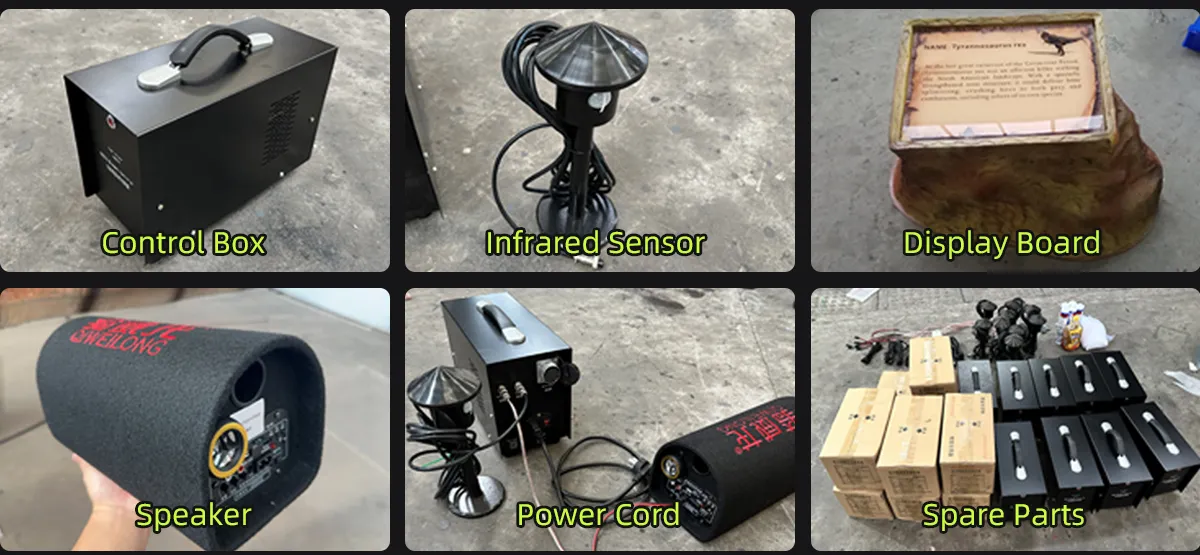
At this mass the neck runs slower than on a six-metre animal, and body sway is kept small because a few degrees at the hips reads as a metre of travel at the sail. Triggering is staged: the sensor at about 1.2 m picks up visitors at eight metres, and a delay of roughly 1.5 seconds lets them arrive before the cycle starts. On a busy day that delay is what keeps the animal from running continuously.
Structure behind the skin
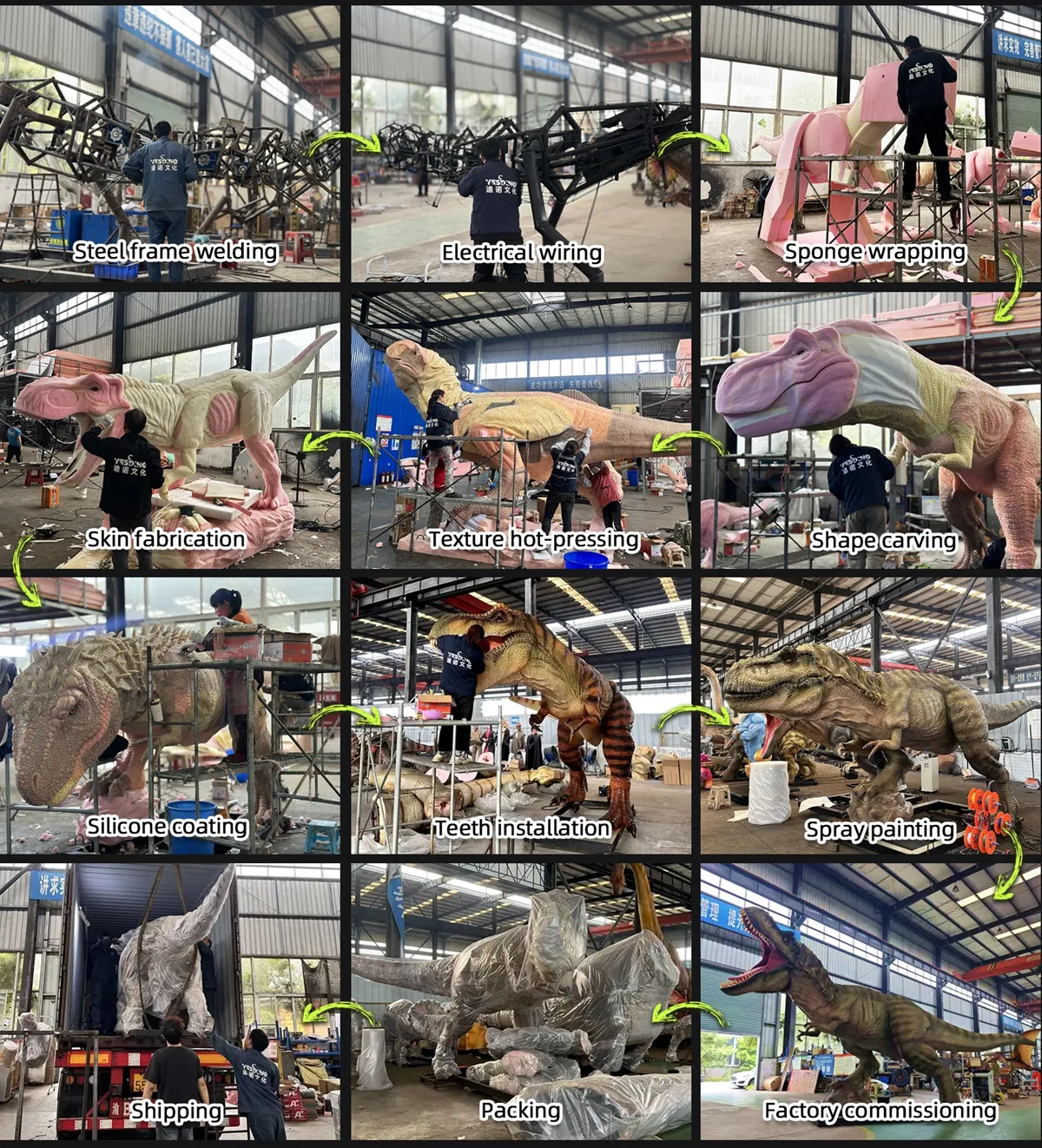
Q235 steel frame with rust treatment, high-density foam carved to volume, silicone skin 5–7 mm, colour sprayed in translucent layers. The sail carries its own bracing: a frame line follows the spine row and picks up the load from the skin panels, so wind on the sail goes into the frame rather than into the foam.
Outdoors the sail edge takes weather first, because water sits on the top line and the sun hits the same face all day. Panel seams face downward, the skin is laid with a slight fall, and repairs are patches with matching pigment at the spine line. Working range is −25°C to 45°C, 110V or 220V configured for the site.
Crane day
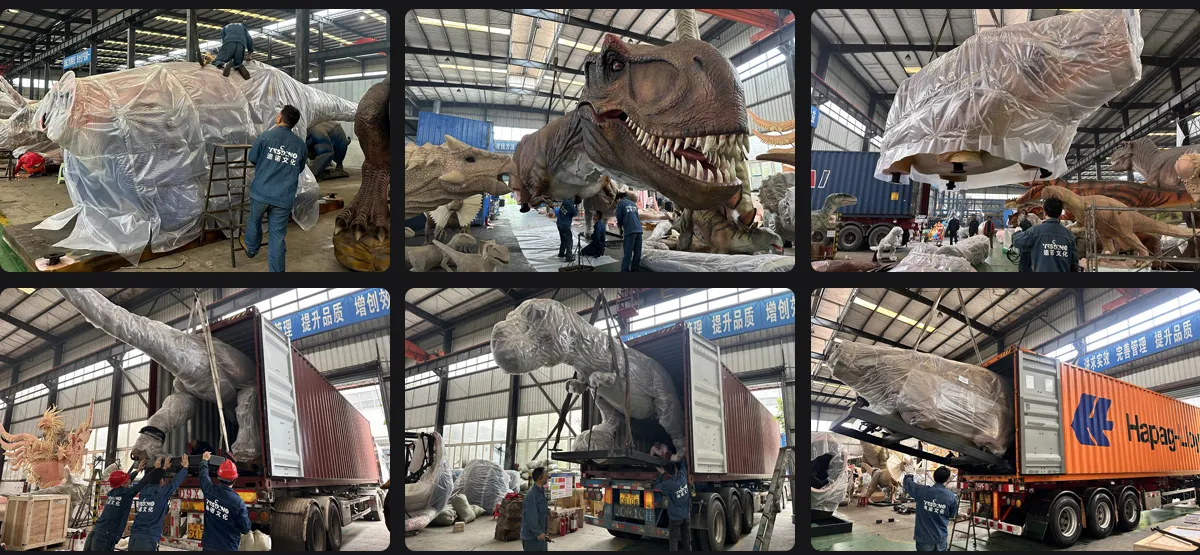
The animal travels in five sections on a low-loader: base frame, legs, body, sail panels, neck and head. Section weights come with the drawing, so the crane is sized from them before it is booked. Sail panels stay flat and go up after the body is on the legs.
Sequence: pad cured, anchor plates set, base frame levelled, legs bolted, body landed, sail fixed from the front spine back, neck and head last, skin closed at each joint. The control cabinet lives in the base with the door on the service side, and the cable route is fixed before the pad is poured, because a 15 m animal does not move once it is anchored.
Before you order
Send a site plan with the standing point, the access road width, where a crane can stand, the wind exposure and the power source. Tell us the viewing distance from the main path.
This size is the wrong buy on a tight site. A clearing under about twelve metres across, a canopy of mature trees, or an access route that a low-loader cannot reach all push the project towards a smaller build. The same animal at six or eight metres keeps the sail and the snout, and installs in a day without a crane.
Enquiry
Send the site plan, the access route and a photo from the visitor side. We reply with a base and anchor drawing and a section list for the lift.
Freight, duties, certificates and installation are quoted separately from the animal, and the pad is usually built by your own contractor from our drawing.
Where to go next
If you are still comparing options, start with the wiring concealment notes — it lines up the builds by length and reach. Site work is covered in the park layout and theming strategies, and the cost breakdown with the seven price factors lists the factors that move the price.
For ideas on placing it, see how animatronics differ from robots. The rest of the range is on animatronic dinosaurs, and if this one is the wrong size for the slot, animatronic spinosaurus for indoor halls is the closest alternative.
Product Accessories
Packaging and Container Loading