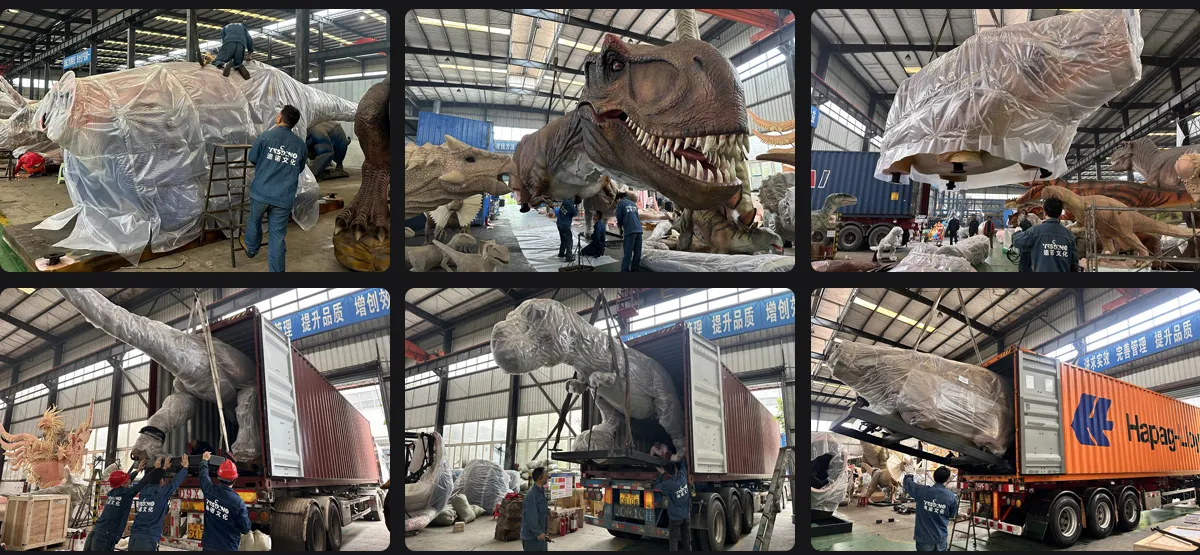
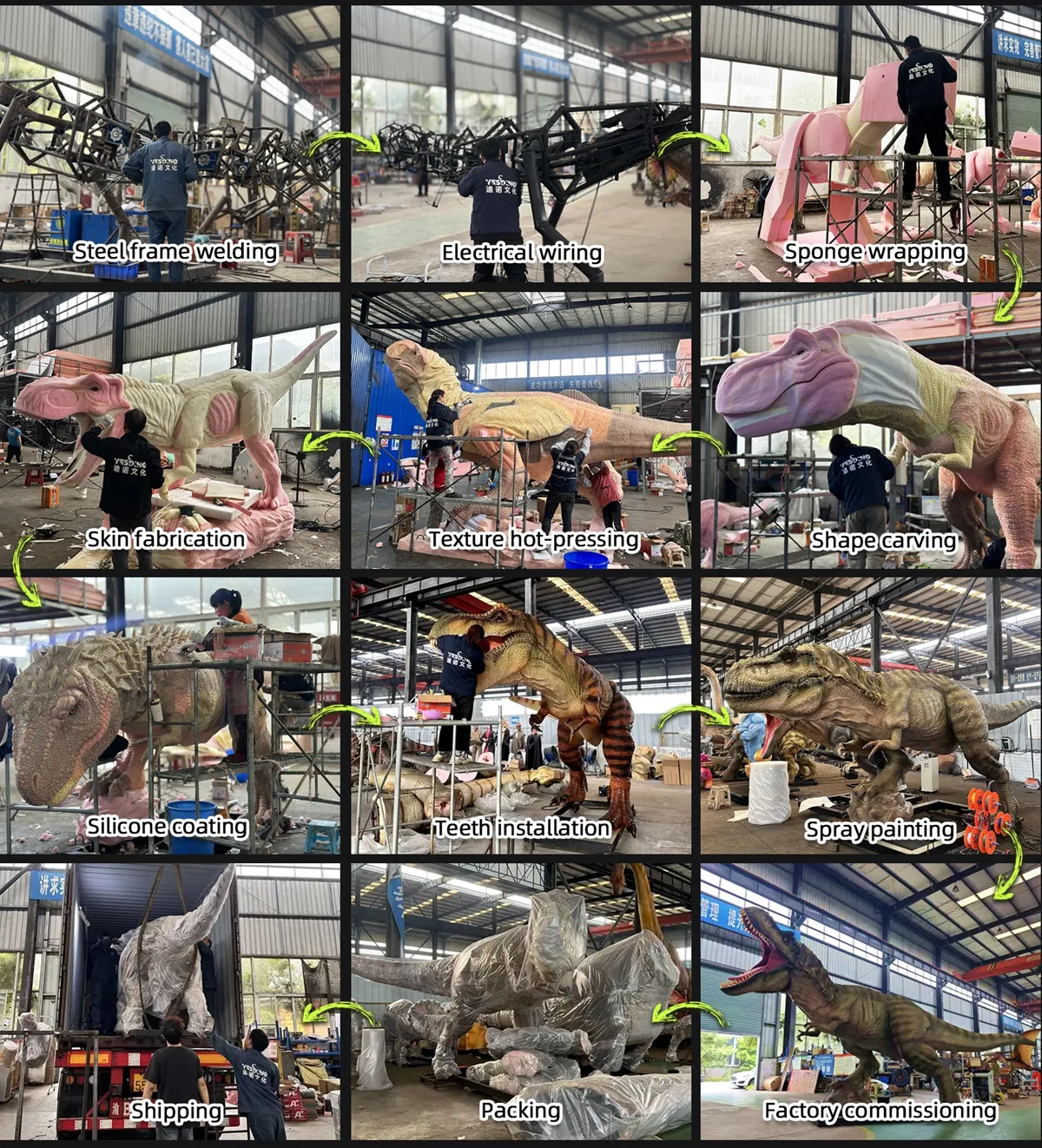
Production Process
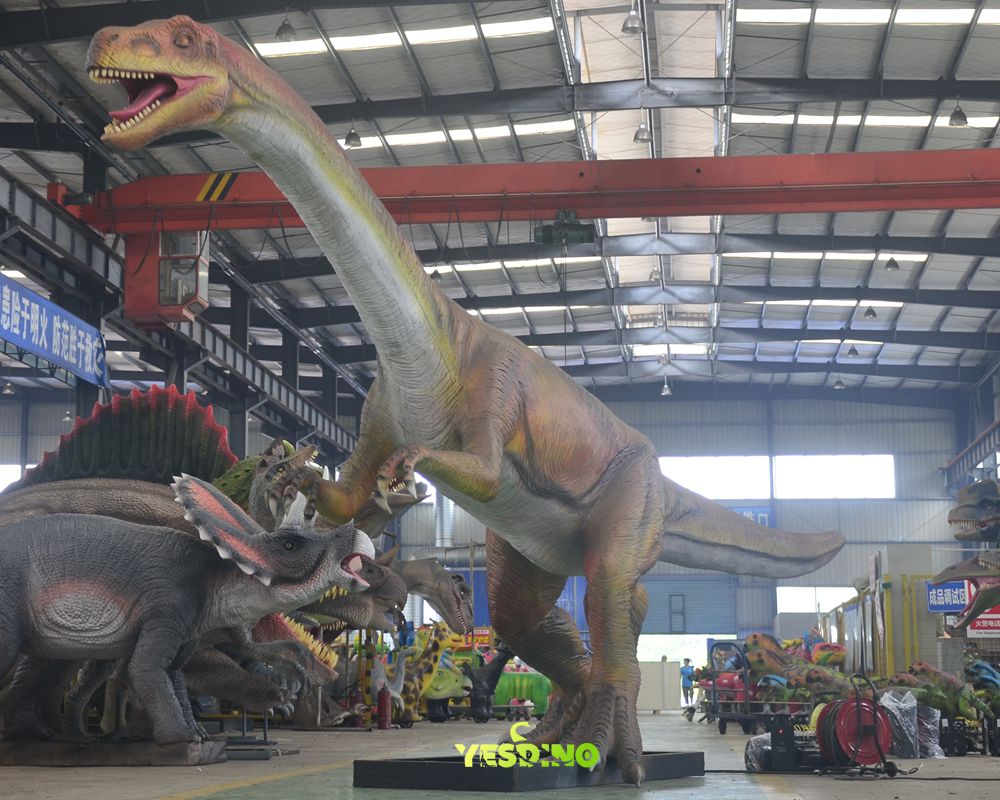
Plateosaurus is the animal that shows up before the famous ones. It lived in the Late Triassic, roughly 210 million years ago, and it is one of the first dinosaurs to reach a genuinely large size — a plant-eater with a long neck, a small head and hind legs built for standing upright.
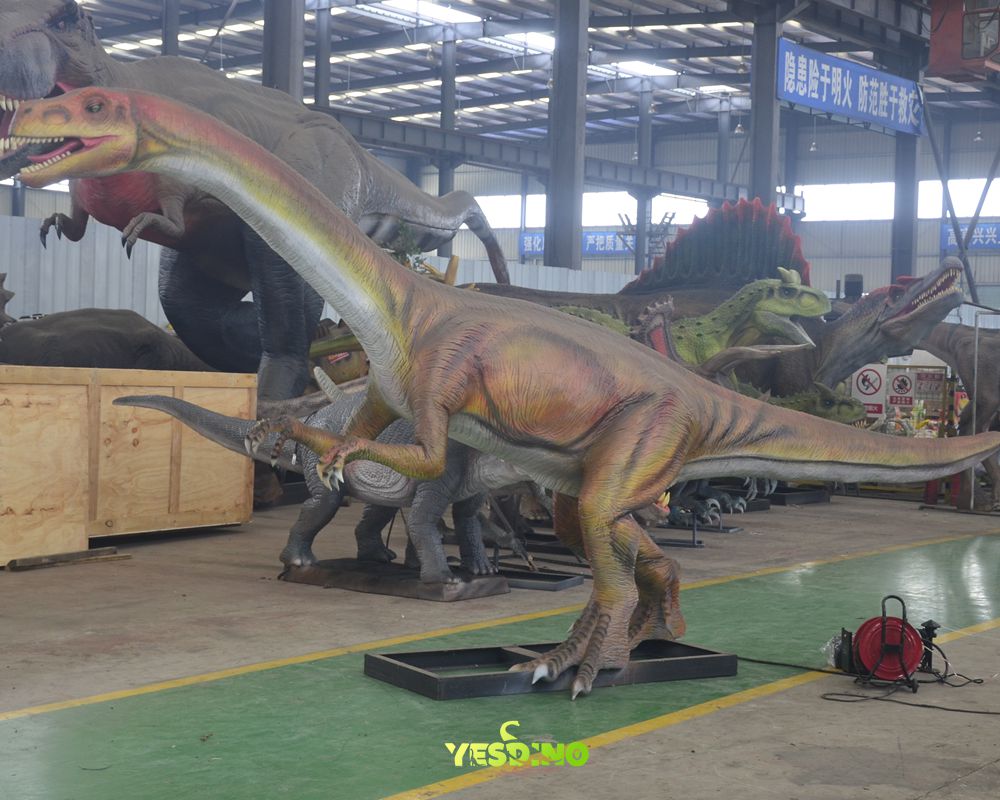
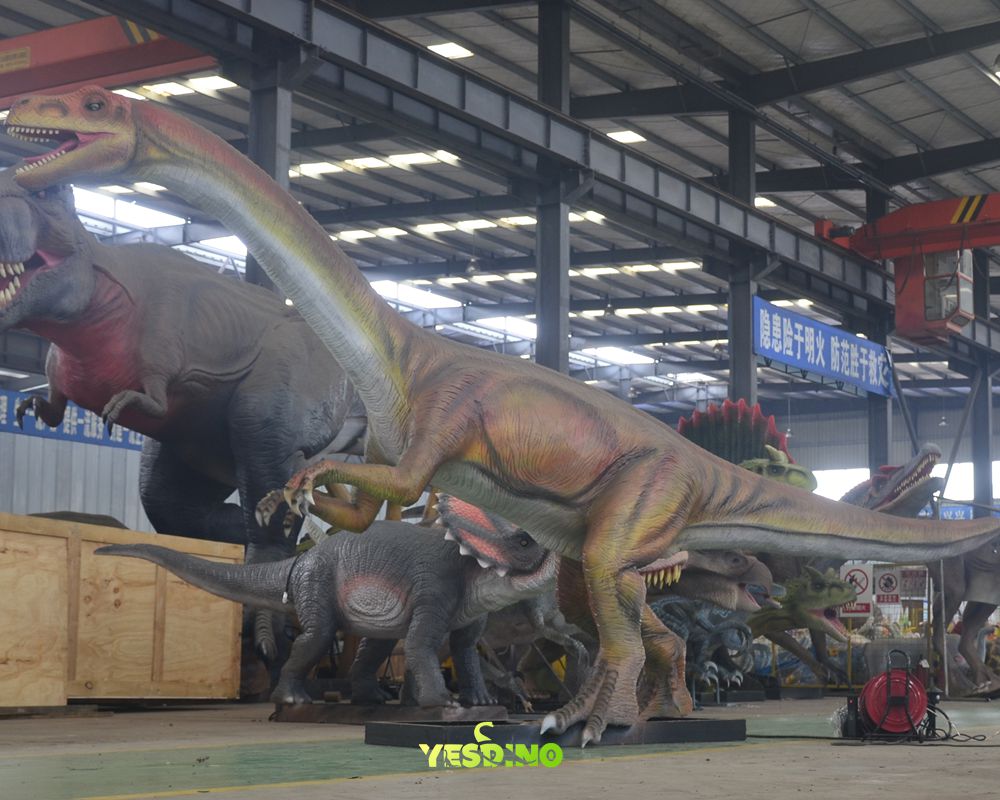
This build: six metres long, 0.65 m across the body, 2.1 m to the top of the head, about 150 kg. It suits museum floors, expos and educational displays where the story matters as much as the spectacle.
Why it doesn't look like a sauropod
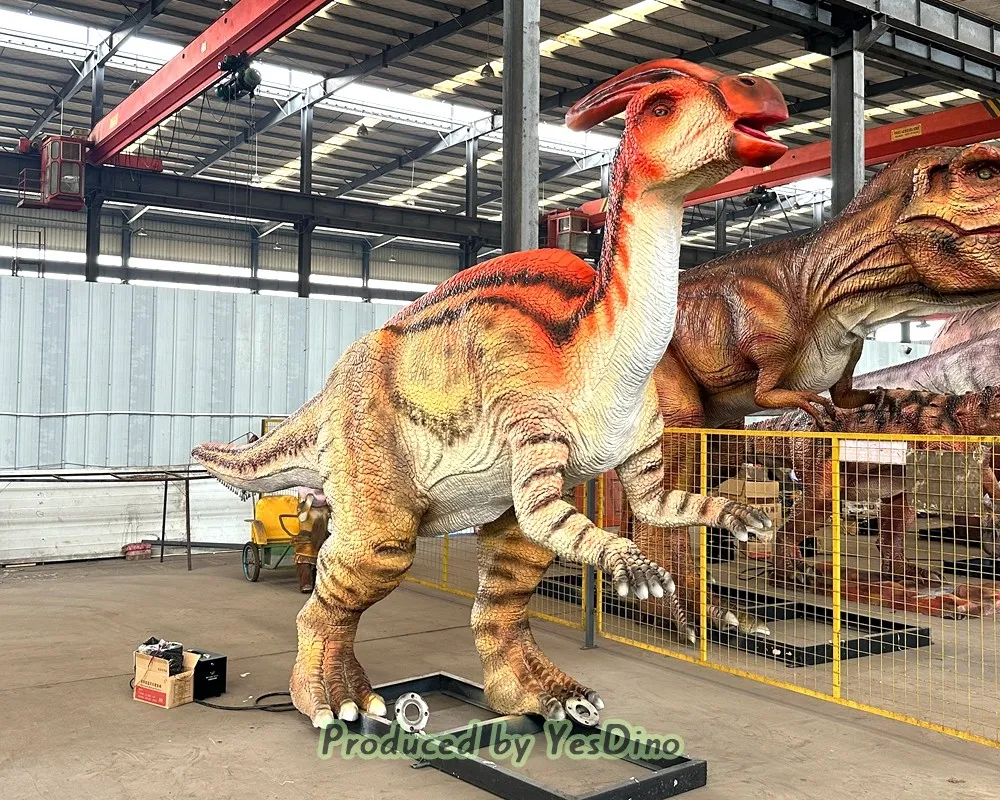
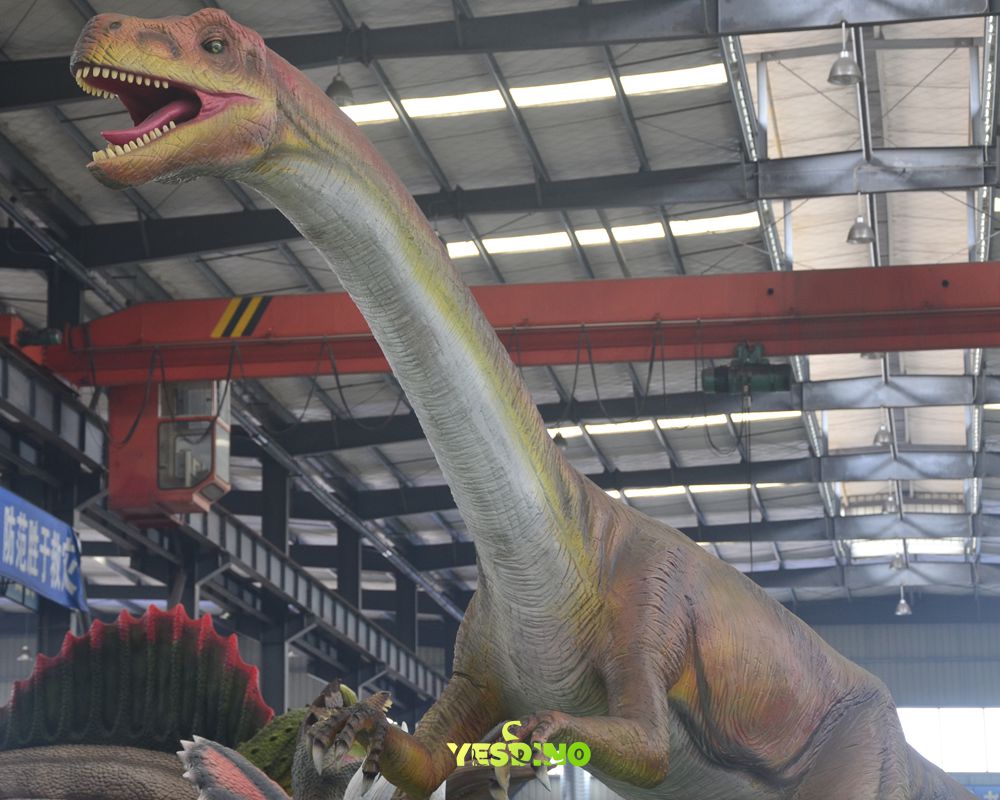
Most long-necked models in this industry are built to a Brachiosaurus template: columnar legs, a massive body, a head carried high. Plateosaurus predates that body plan and looks different. The head is small and boxy, the neck is long but light, the torso is deep at the hips and narrow at the shoulders, and the hind limbs are much heavier than the front.
That last detail is the important one. Plateosaurus could rear up on its hind legs to reach vegetation, and the model is normally built with the body angled upward rather than level. Posed that way it reads as the animal it is; posed like a small Brachiosaurus it reads as a mistake.
The hands and the thumb
Each hand carries a large thumb claw, and the fingers are short and built for gripping rather than for walking on. On the model the hands are held clear of the ground, slightly turned inward, with the claw modelled as a distinct element.
At 2.1 m the hands sit at adult shoulder height, which means they get looked at. It is worth the extra moulding: visitors who know the animal check the hands first, and children notice the claw before they notice anything else.
Six movement groups
Head left and right, neck up and down, jaw opening with a call, blinking eyes, claw wave and a tail sway. The claw wave is the group to keep on this animal — a plant-eater lifting a hand reads as browsing rather than as aggression, and it gives the model something to do that doesn't depend on the jaw.
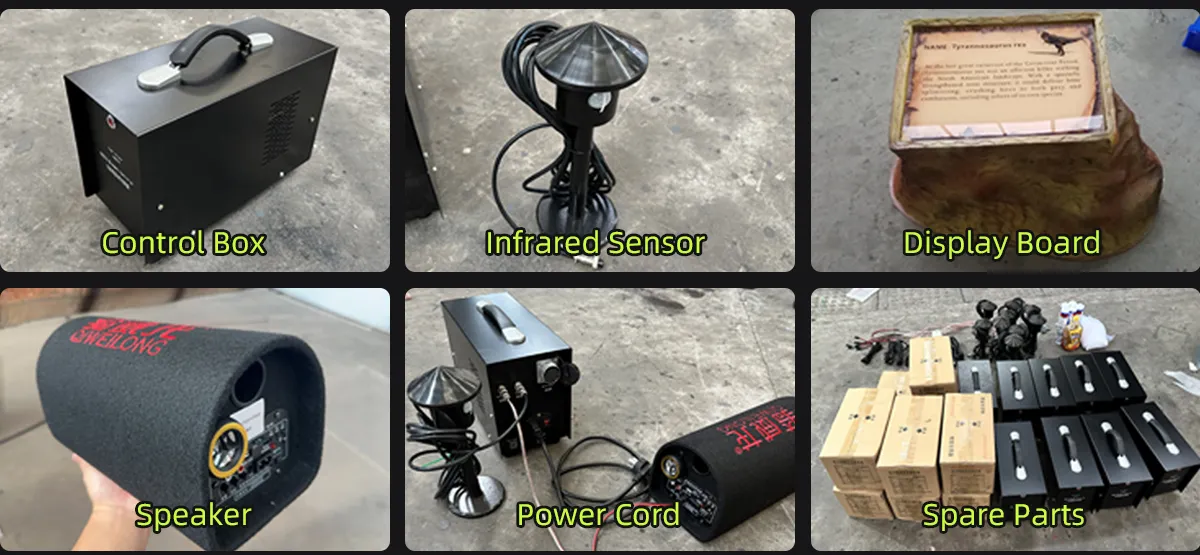
Each group runs on an independent drive with end-of-travel protection, triggered from a timed loop or an optional proximity sensor. For an expo or a museum floor the sensor is usually worth adding: the animal responds to the visitor who caused it to move, which is the whole point of the display.
Where it earns its place
Natural-history and science museums. The Triassic is under-represented in dinosaur exhibits, and this animal carries the "first giants" narrative better than another Cretaceous predator.
Educational centres and school programmes. Six metres is big enough to impress a class and small enough to fit a teaching room with a three-metre ceiling.
Expos and travelling shows. At 150 kg it travels in sections that a small crew can handle, without a crane.
Finish and delivery
A heavy-duty anti-rust steel frame carries the load, with hand-sculpted sponge for volume and a tough silicone skin over it. Paint is hand-mixed and weather-proofed. The control system runs a timed auto-play cycle with optional proximity activation, and the power supply accepts 110–220 V at 50/60 Hz with plugs configured for the destination country.
Ships in sections with the base frame, control cabinet, sound system, wiring diagram and calibration sheet. Freight, duties, certificates and installation are quoted separately and are not part of the product price.
Where it sits in time
Plateosaurus is one of the reasons the Triassic matters. Before it, the largest land animals were a few metres long and built low; after it, the sauropod line was on its way to animals that weighed more than a herd of elephants. This animal sits at that hinge, roughly 210 million years ago, and it already had the long neck and the heavy hindquarters the later giants would build on.
For an exhibit, that gives a curator a story that isn't about size. The Triassic is the period when dinosaurs were still minority animals on land, and Plateosaurus was one of the first to get genuinely big. A panel with that line on it does more than a plaque that says "Plateosaurus, 6 m".
Enquiry
Send the ceiling height, the viewing distance and whether the animal goes indoors or out. If the exhibit is built around the Triassic rather than the Cretaceous, say so — it changes the palette and the posture we recommend.
Where to go next
Worth reading before you commit: the spare parts and repair kit list for how the sizes compare, the size guide covering 3 m to 12 m builds for what the ground has to carry, and the rental cost breakdown for where the money actually goes.
For ideas on placing it, see layout strategies for themed trails. The rest of the range is on animatronic dinosaurs, and if this one is the wrong size for the slot, 10m animatronic t-rex for events is the closest alternative.
Product Accessories
Packaging and Container Loading