Production Process
Most animatronic theropods are bought to fill a corner. This one is built to stop people. The jaw works with the sound, the eyes blink out of sync with the head turn, and the forearm lift reads as a small, unnecessary detail that makes the whole animal convincing at two metres.
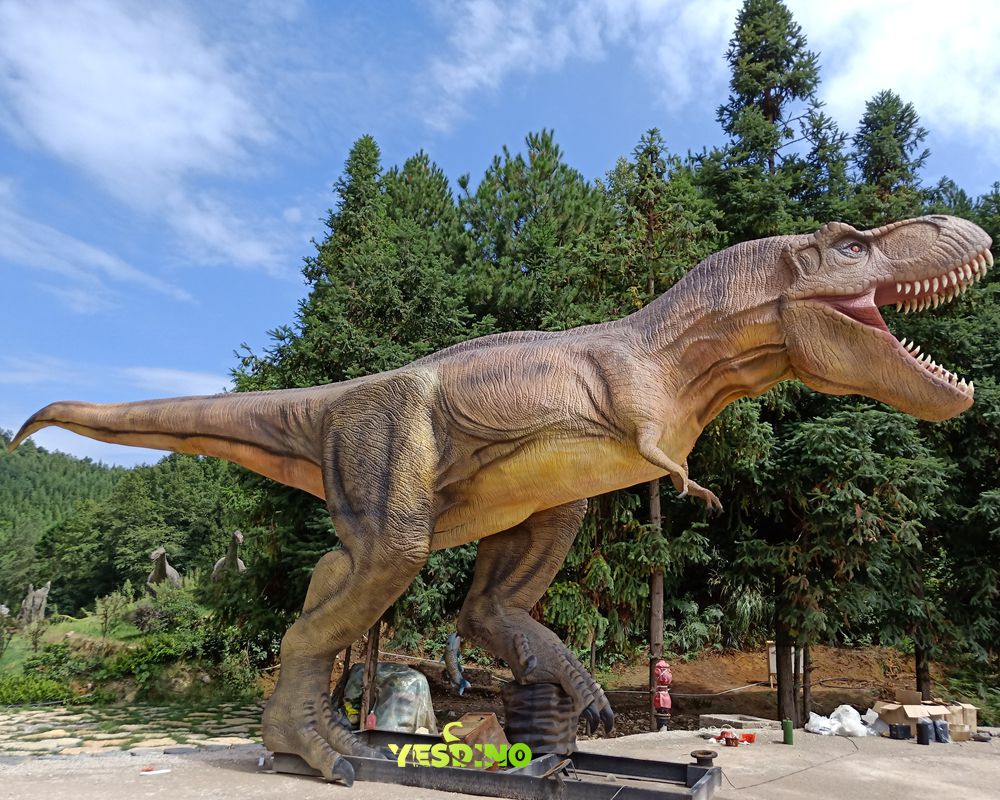
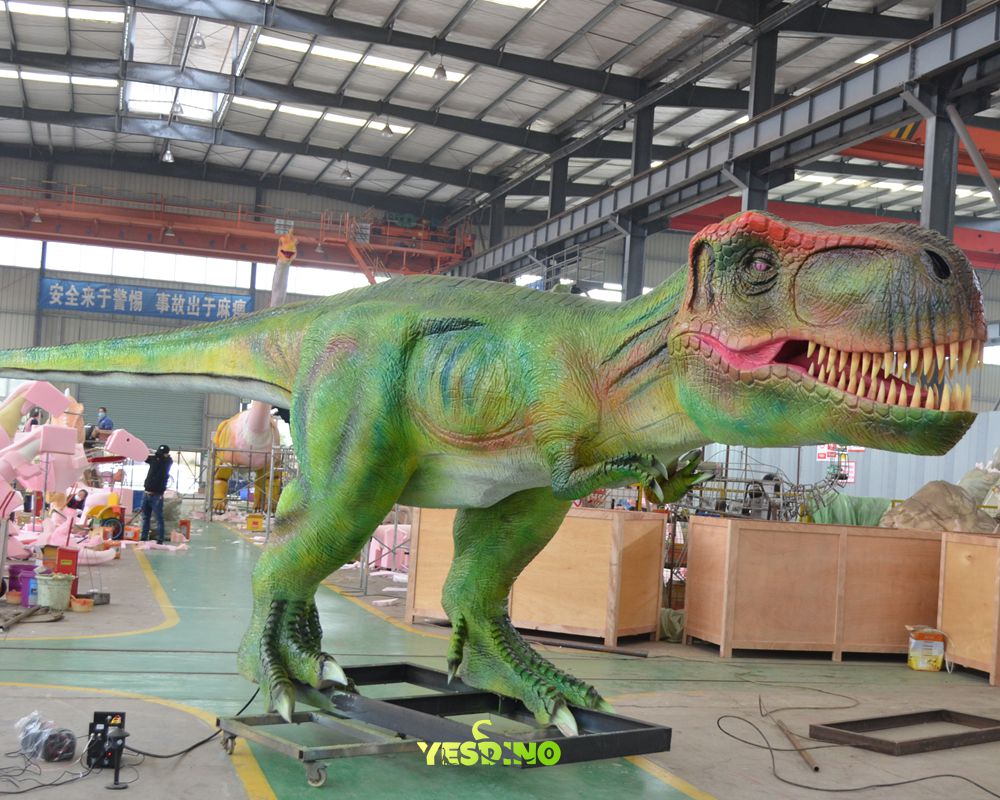
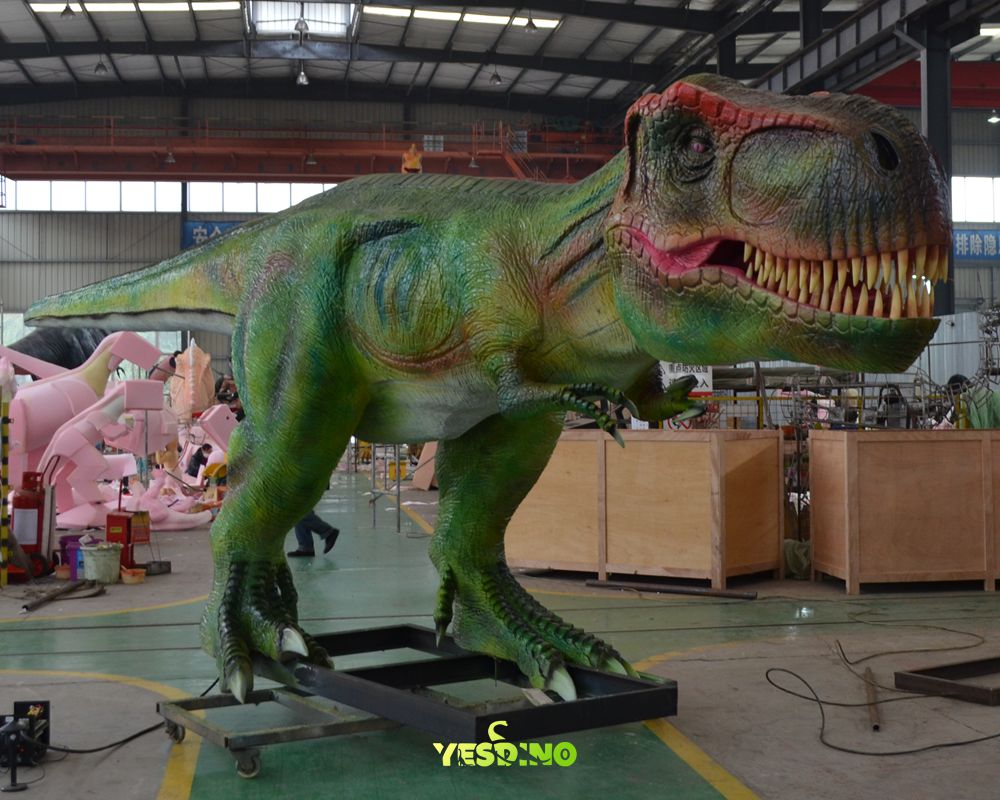
SKU YKL-114 is a ten-metre Tyrannosaurus in a raised, forward-leaning posture with the head carried high enough to be photographed from below. It is the configuration we build most often for parks and museums that want an animal visitors can walk towards rather than past.
Movement groups
Six groups, each on its own drive and each with end-of-travel protection. They can be run as a loop or triggered from a sensor.
| Group | Travel | Why it matters |
|---|---|---|
| Head | Left / right turn | The single joint that reads as attention. Without it the animal looks past the audience. |
| Neck | Up / down | Lets the head come down to a child's eye line and back up for the wide shot. |
| Jaw | Open / close, synchronised with roar | Timing matters more than speed. A jaw that opens before the sound reads as a machine. |
| Eyes | Blink | Cheap to add, disproportionately effective at close range. |
| Tail | Lateral sweep | Changes the silhouette at distance more than any other joint per unit of cost. |
| Forearm | Scratch / lift | Nobody asks for it; everybody notices it. It's the detail that separates a model from a character. |
How the body is built
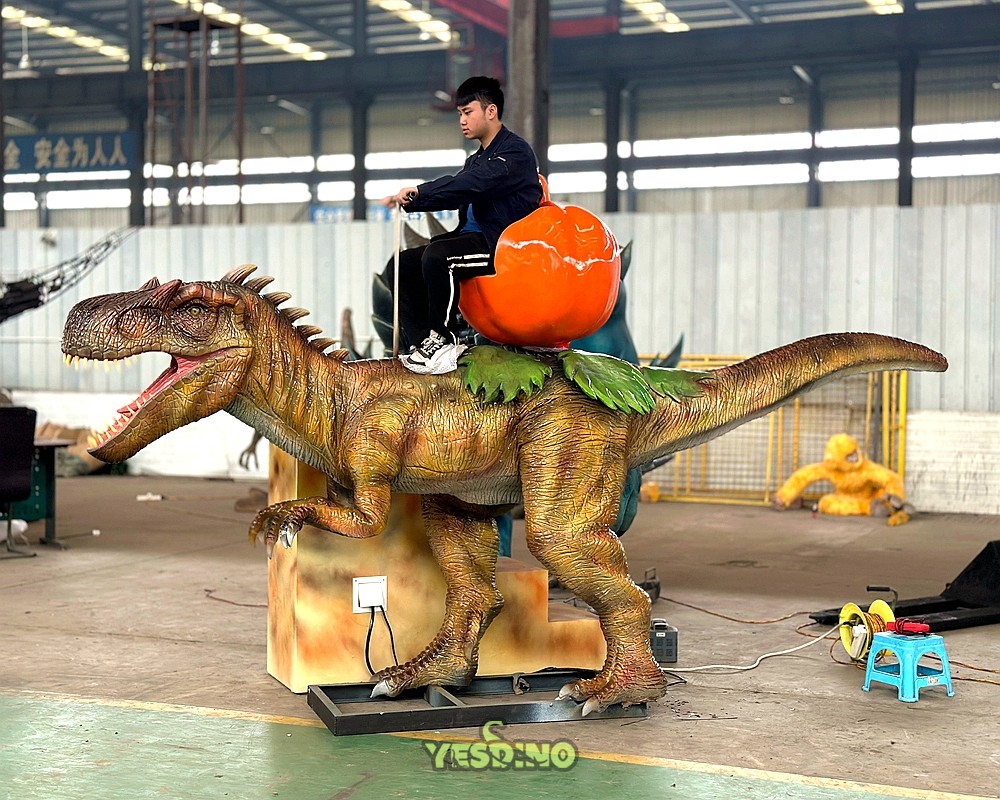
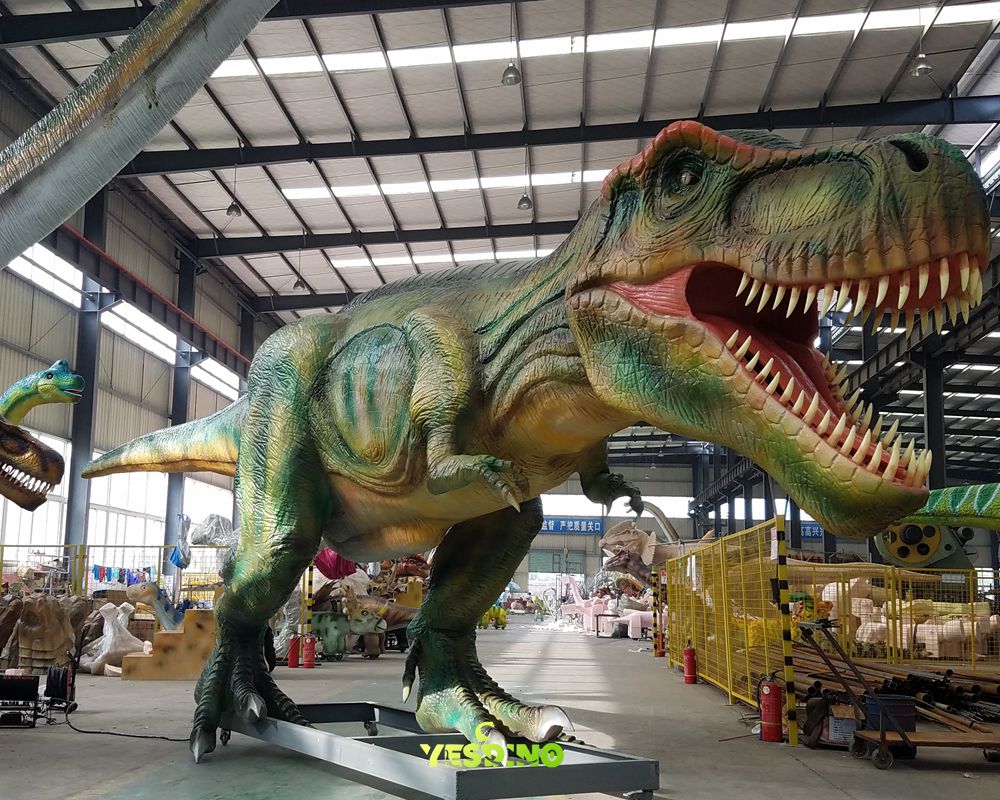
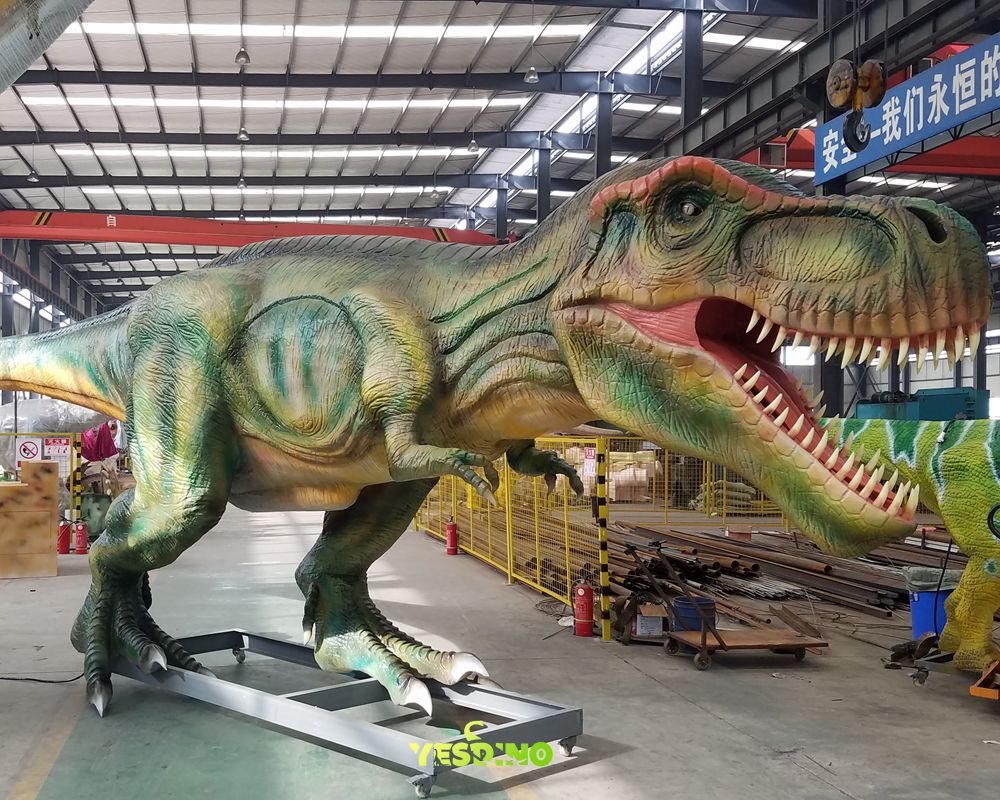
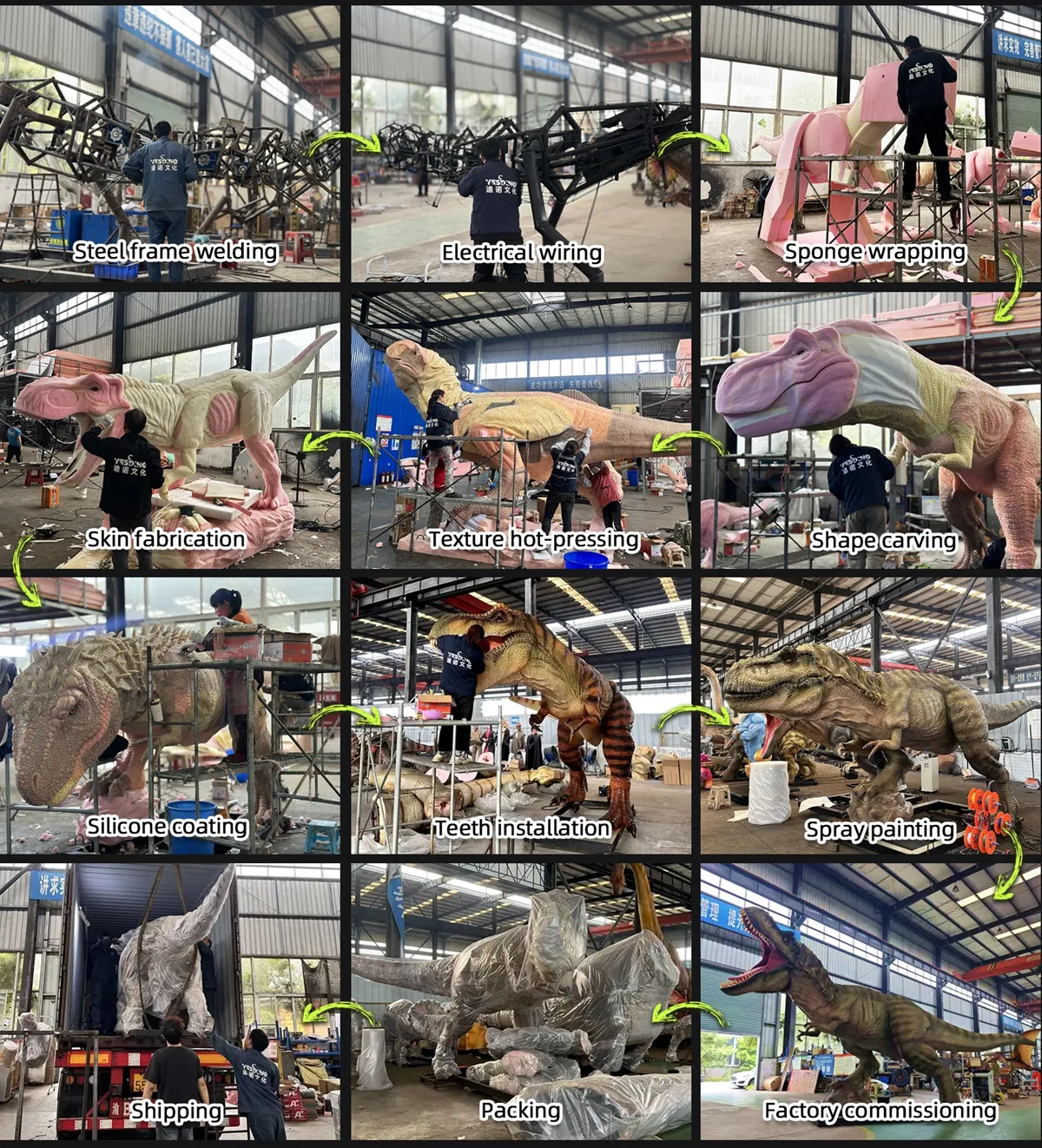
A welded Q235 steel frame carries the load at the hips and feet, with the neck and tail built as separate sections that bolt on during assembly. The volume is sculpted in high-density foam over that frame, then coated in silicone 5–7 mm thick, coloured with translucent silicone airbrushed in layers so the tone sits inside the skin instead of on top of it.
That last part is what decides how the animal ages outdoors. Surface paint chalks and fades within a couple of seasons; pigment carried in the silicone layer holds its depth much longer, and touch-ups blend instead of showing as patches.
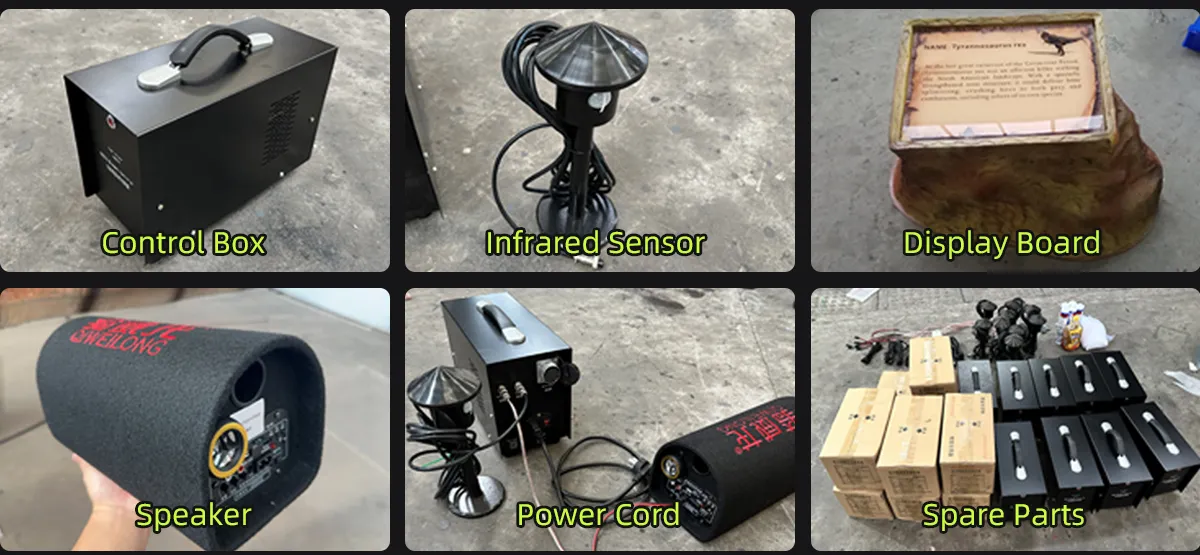
The control cabinet runs the movement program and takes 110 V or 220 V input, set at build time. The electronics sit in a sealed enclosure inside the body; the drives and the mechanical travel stops remain accessible through service panels. Every joint can be moved by hand for inspection, and the program can be paused without leaving the animal mid-motion.
Skin, colour and posture
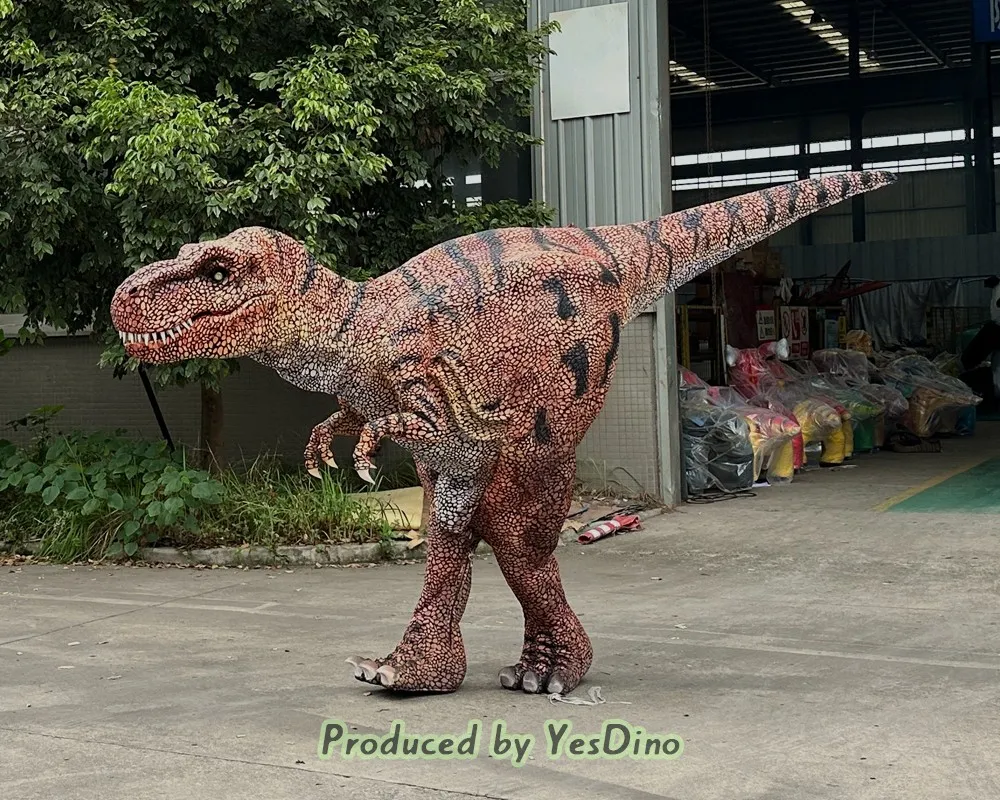
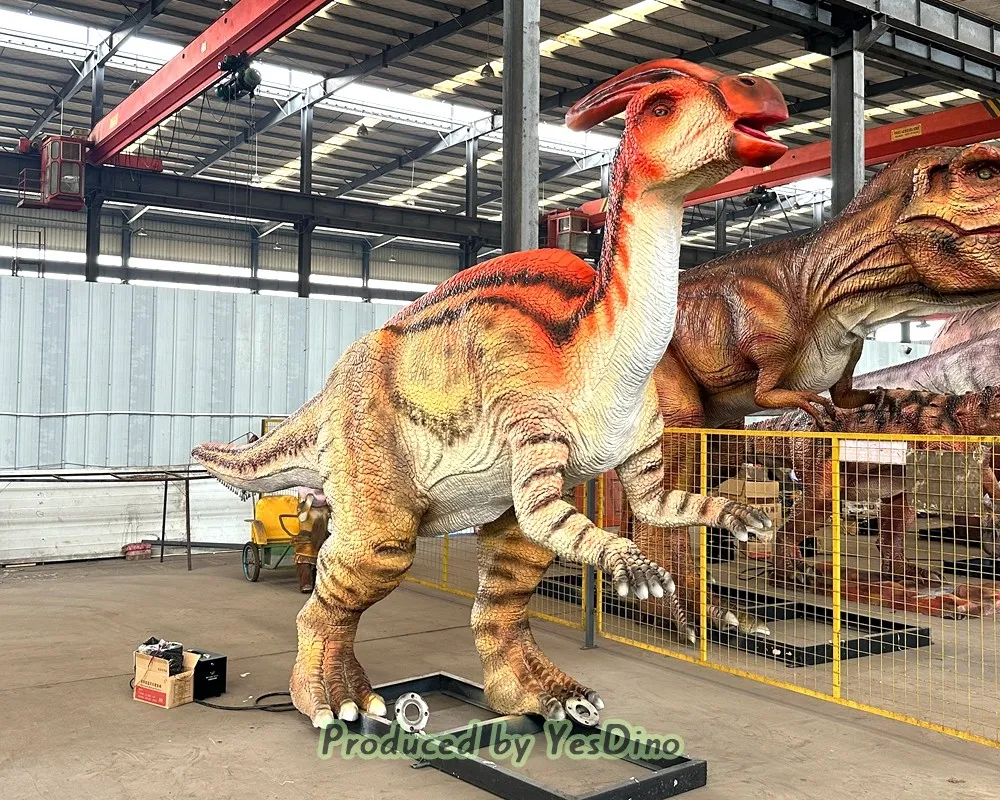
The unit in the photographs is finished in olive-green with darker dorsal banding and a warm ochre underside. That's one option, not the product. Pattern, colour scheme and the amount of wear — mud staining around the feet, faded patches along the back — are all specified per order, and the reference can be a film still, a museum reconstruction or a sketch.
Posture is the choice most buyers underestimate. Head height, stance width and tail angle decide whether the animal fills a photo frame or looks lost in an open plaza. If you send us the viewing distance and the camera position, we'll suggest a posture rather than shipping the default.
Where it works
Jurassic parks and themed trails. The head height lets it be seen over planting and crowd barriers — the reason most park operators choose this posture over a lower, grazing build.
Dinosaur museums and science centres. Movement can be slowed and quietened for an interpretive gallery; the same animal that roars on a plaza can shift its weight and blink in a hall.
Themed restaurants and retail. A ten-metre animal needs the ceiling height to carry it. Check the clearance before you fall in love with the length.
Zoos, kids' parks and film sets. For film work the motion program can be split into individually triggered groups so a shot only uses what it needs.
What ships with it
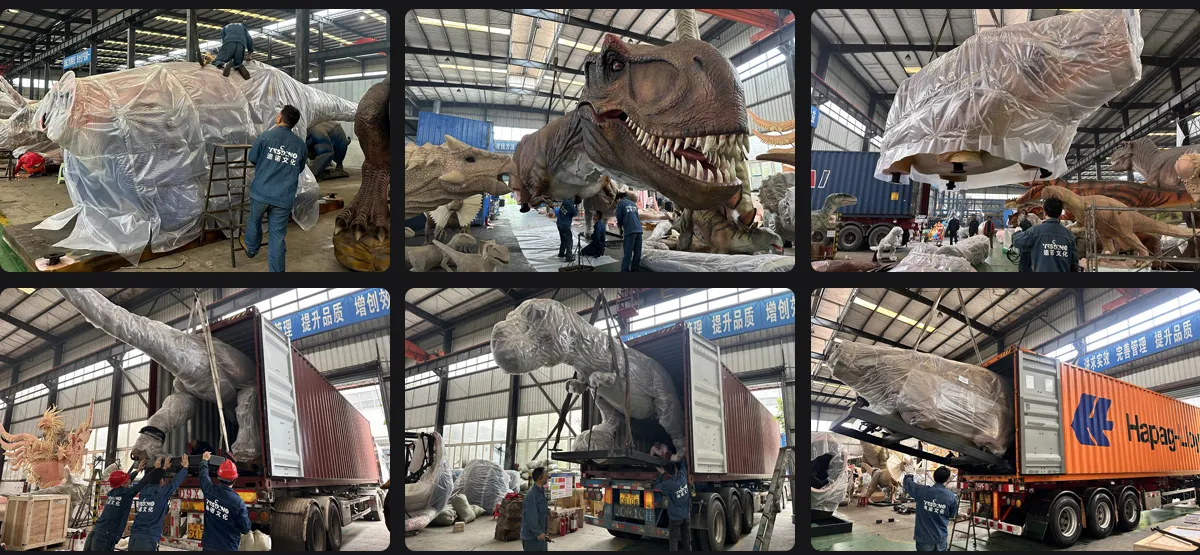
The animal arrives in sections — legs, body, neck, head, tail — with a steel base frame, the control cabinet, the sound system, a wiring diagram and a joint calibration sheet. Assembly hardware, touch-up paint and a spare set of fuses and seals travel in the same crate.
Loading is planned per order: crate dimensions and packed weight are confirmed before the container is booked, because a ten-metre animal does not fit a standard container as one piece. Tell us the delivery city early and we'll quote freight, duties and installation separately — none of that sits inside the product price.
Before you order
Three things decide whether this size is right for your site: the clearance above the head, the load the floor or pad can take at the feet, and the distance visitors will view it from. Give us those three numbers and we'll tell you whether to keep the ten-metre build or step down — including when the honest answer is that a smaller animal will look better in the space you've picked.
Send a photo of the site and we'll come back with a posture recommendation and a rough budget range, not a catalogue page.
Where to go next
Two things come up in almost every enquiry on this build: how the size compares with the alternatives, and what it takes to get it on site. The size guide covering 3 m to 12 m builds sets out the length options side by side, and the installation guide for pads and access covers pads, access and assembly. Budget planning sits in the cost breakdown with the seven price factors.
For ideas on placing it, see seasonal event planning. The rest of the range is on animatronic dinosaurs, and if this one is the wrong size for the slot, 15m animatronic t-rex for theme parks is the closest alternative.
Product Accessories
Packaging and Container Loading