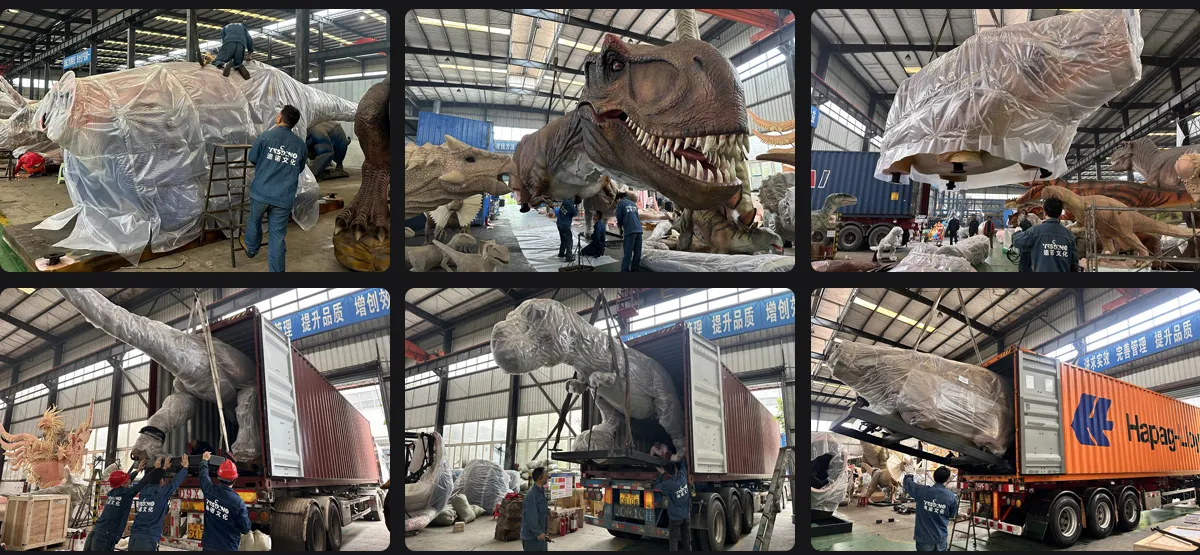
Production Process
Two quotes are open on the desk: a six-metre raptor and this animal. Both fit the space. The difference shows up in the crate, in the silhouette at the entrance, and in what a visitor photographs — so it is worth being clear which of the two you are buying.
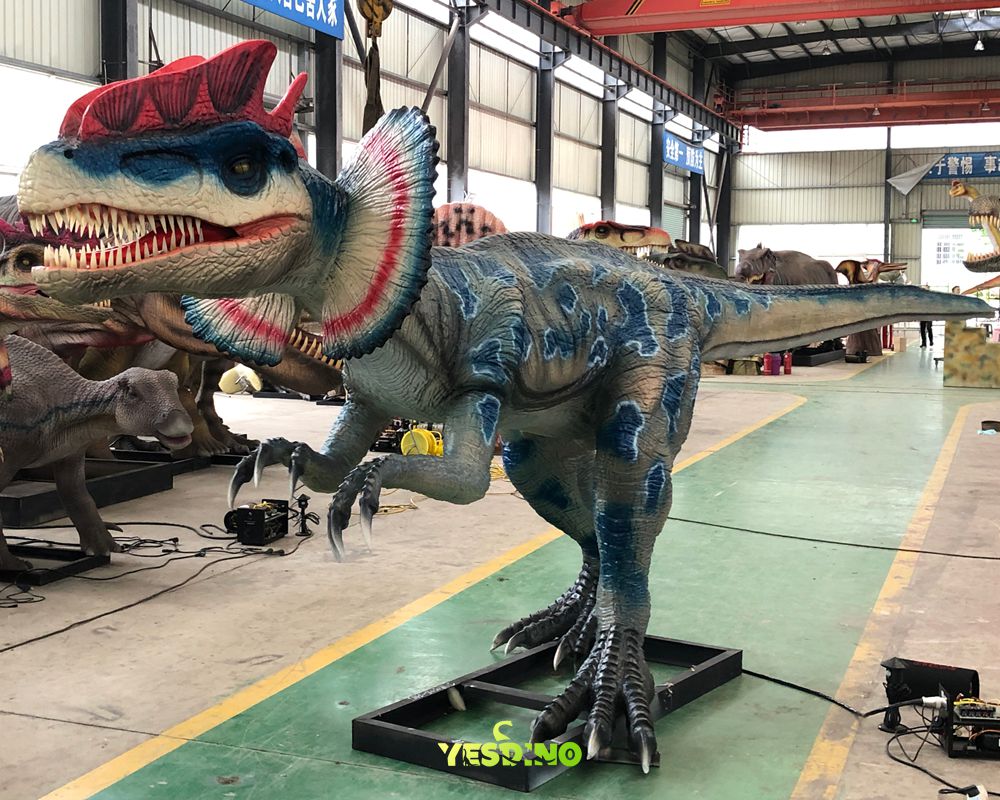
Six metres long, 0.65 m across the body, 2 m at the head. The width is the number most buyers skim past, and it is the one that decides where the animal can stand.
Why six metres, and why so narrow
At 0.65 m across, this animal fits a gap that a raptor build of the same length cannot use: between a queue rail and a wall, in a planter bed, at the end of a themed corridor. It also keeps the tail out of a walkway when the animal stands side-on.
The trade is mass. This is a light animal: slim neck, shallow chest, which is right for the species and wrong for a brief that wants something heavy over a gate. A 2 m tall build with a 0.65 m body will not supply weight, whatever the paint does.
Where it earns its place
Themed queue lines, attraction entrances, a dark-ride pre-show, the back wall of a themed restaurant, a mini-golf jungle. At 2 m the head sits above a queue rail and below the ceiling void, so it reads over the crowd without blocking signage.
Viewing distance of 1.5 m to 3 m is where the crests and the teeth do their work. Beyond 6 m it reads as a shape, and a shape at this weight impresses nobody; in a large open hall, a bigger build is the honest answer.
What moves, and how fast
Neck turn, head tilt, jaw, blink and tail sway, with a quicker head snap available on this build because the neck is slim and the mass is low. That snap is the movement that sells a light animal; the same speed on a heavy build looks wrong, and the same slow turn here looks sleepy.
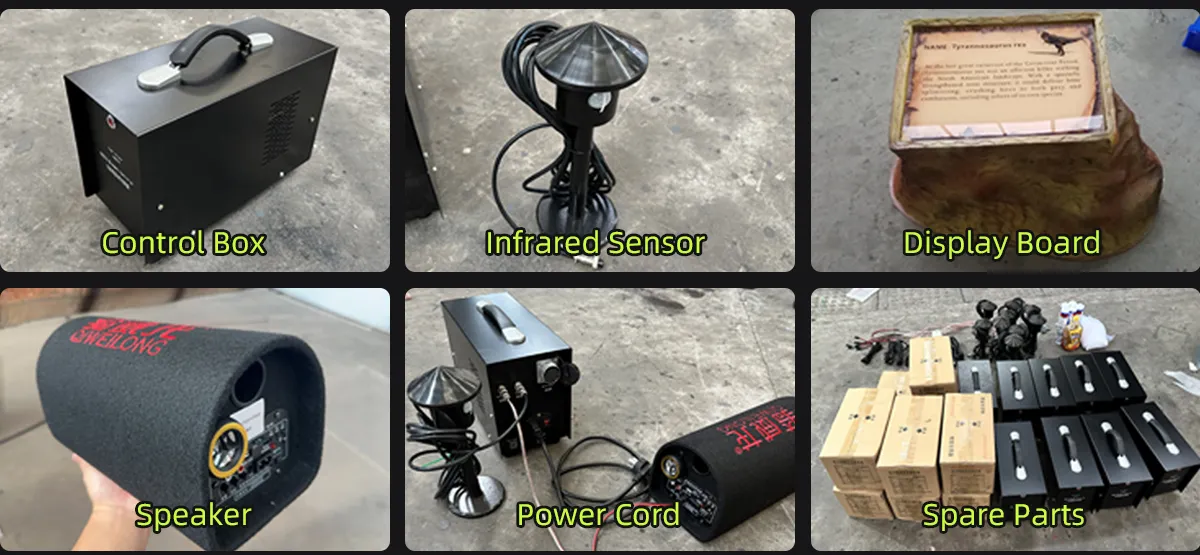
The trigger sits on the approach side at 1.1 m, with a delay of about 0.4 seconds between the sensor and the first movement. Shorter than that and the animal appears to flinch at nothing; longer and visitors have already walked past. On a queue line, aim the sensor across the queue, not along it, or one person standing still holds the animal in a loop.
Build, skin and the two crests
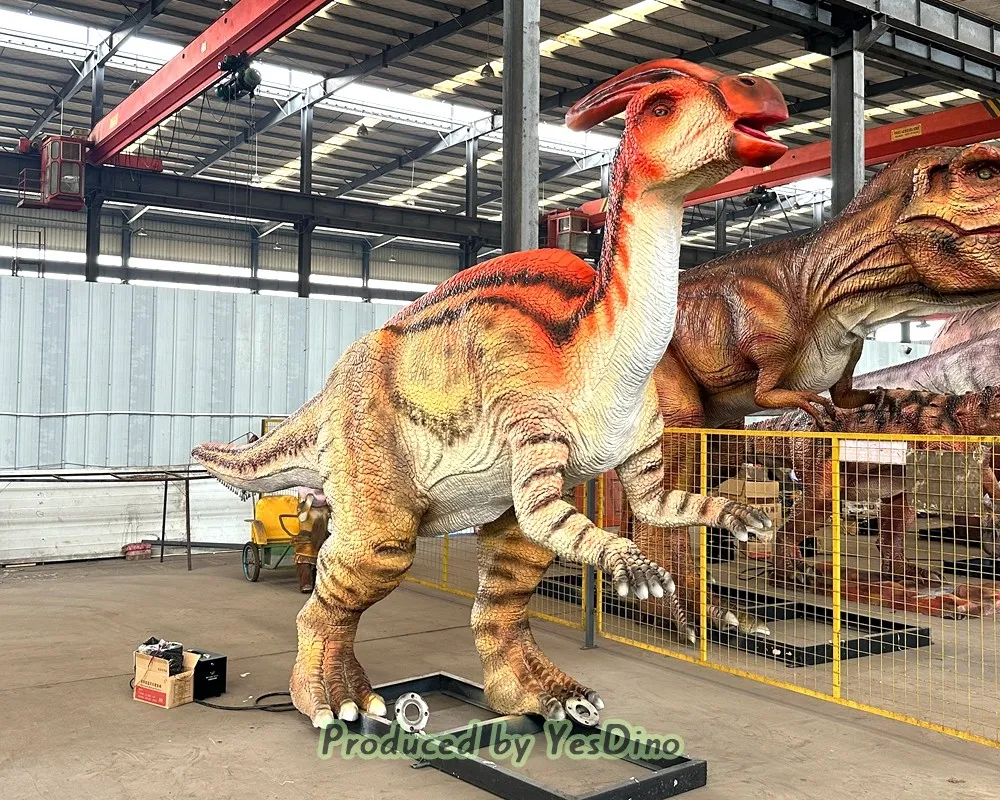
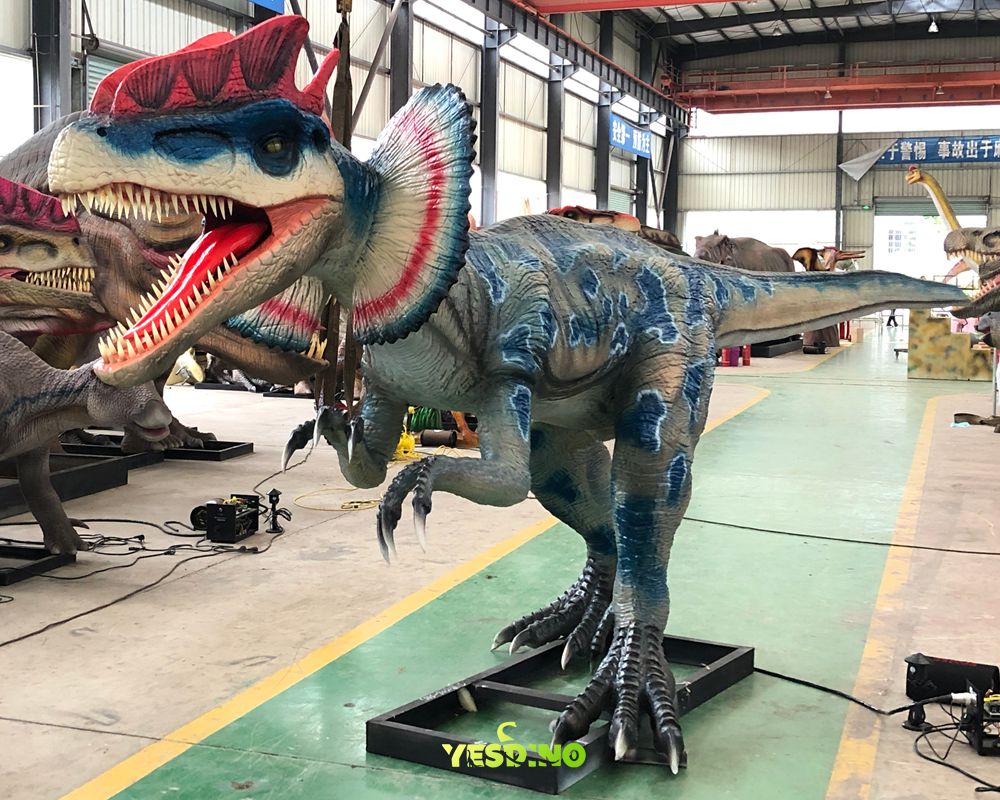
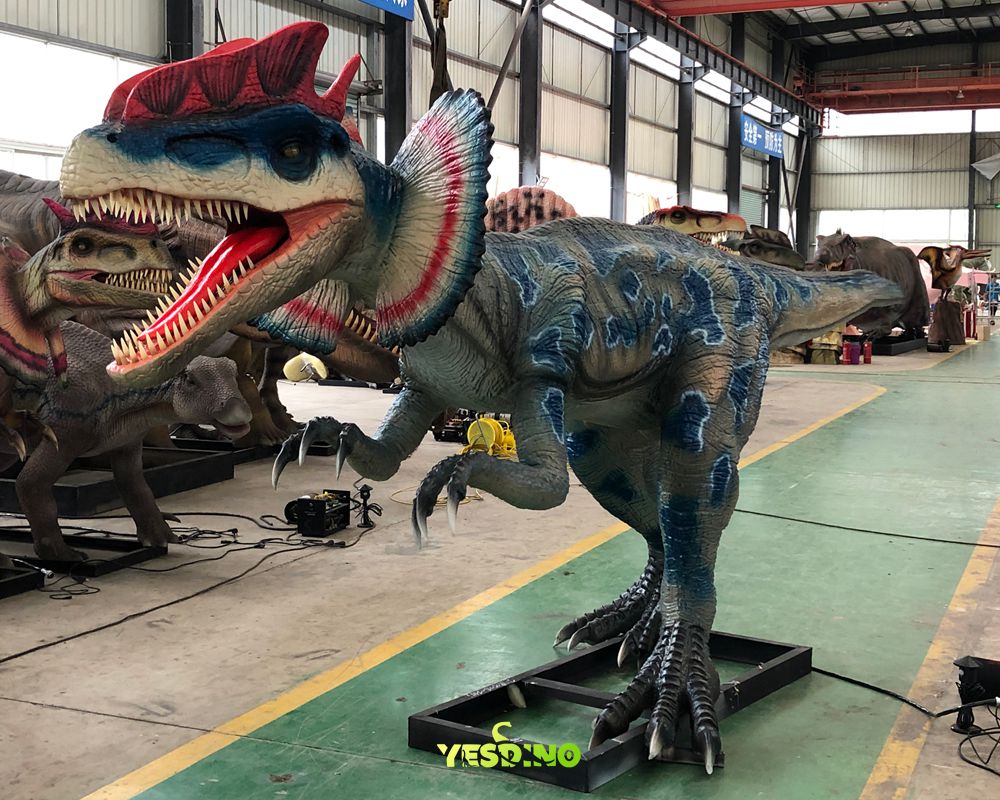
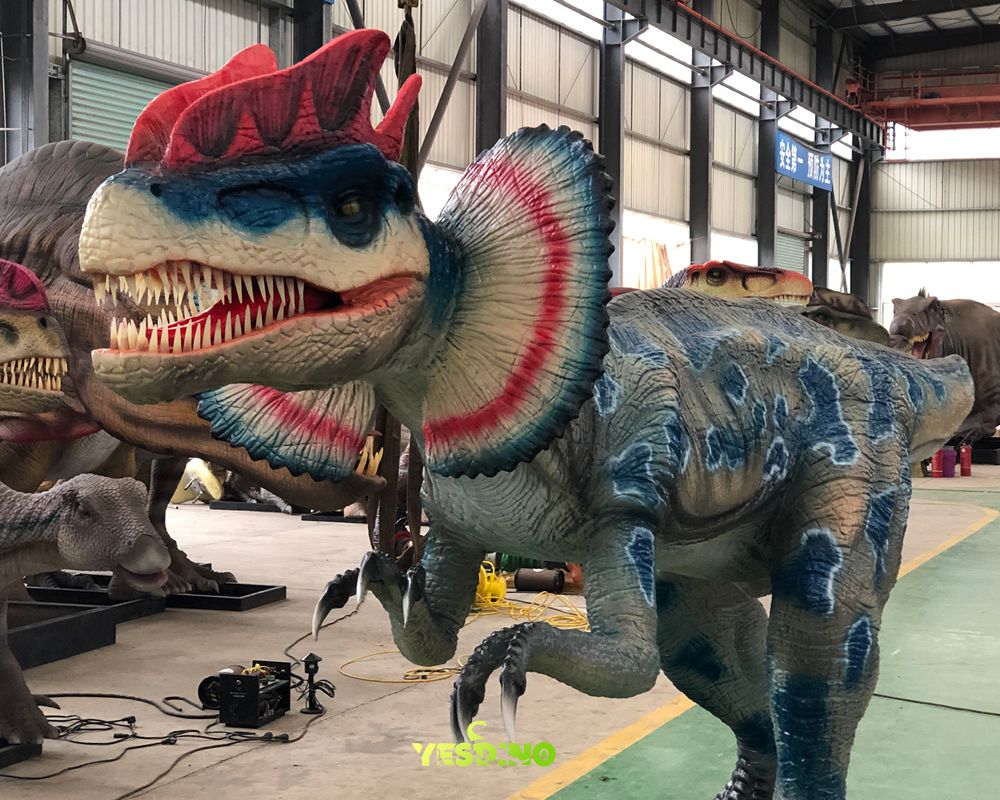
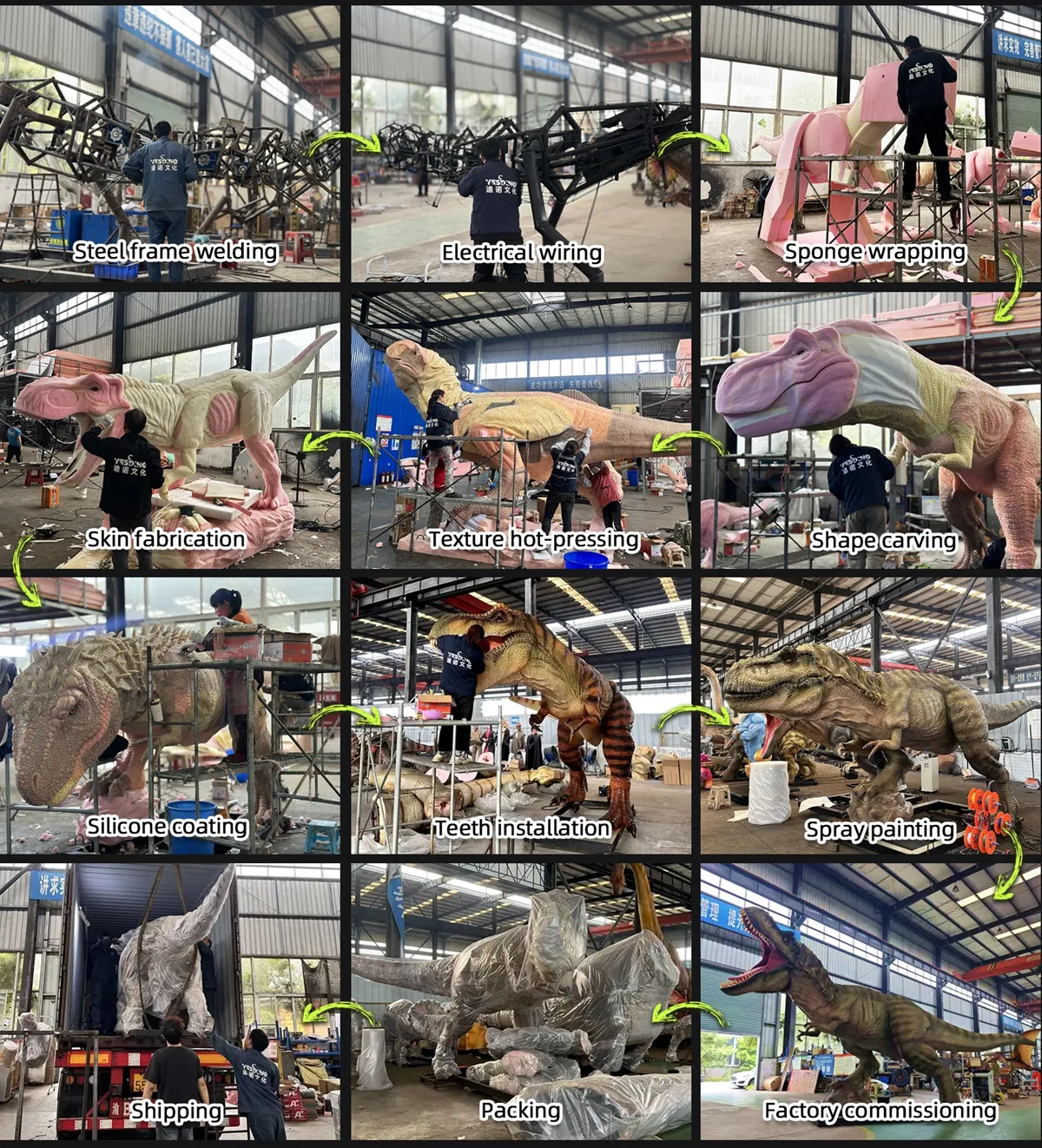
Q235 steel frame with rust treatment, high-density foam carved for volume, silicone skin at 5 to 7 mm, colour built up in translucent layers. The crests are cast in flexible silicone and bonded to the skull before colour, because a rigid crest is the first thing to break in a crate and the hardest thing to match afterwards.
There is no frill on this animal, and that is a decision rather than an omission. Some builds add one because visitors expect it from the film — a choice about recognition. The two thin rounded crests are the shape the animal actually had, and from the side they give a cleaner neck line.
Getting it in
Three sections: head and neck, torso, tail. At 0.65 m body width the sections pass a 900 mm door, which is why this animal turns up in places a wider build cannot reach. The crests travel in their own foam cradle inside the head crate, and they go back on last.
The base frame takes four anchors into a slab, or a ballasted plate on a floor that cannot be drilled. The tail overhangs the frame by about a metre, so the last support sits under the tail base. Cabinet access is through a panel on the left flank; that side wants 400 mm of clearance, and it wants to face away from the audience.
Before you order
The raptor question comes down to two briefs. To startle people at close range in a dark corridor, a lower, faster, cheaper raptor does it better. For a silhouette at an entrance or a themed façade that has to look like a species rather than a generic predator, the crests and the height are worth the difference.
Send the floor plan, the ceiling height, the doorway the animal has to pass, and the floor material. Tell us whether the animal faces a queue, a table or a window. Two cases where we would steer you elsewhere: a space with under 2.4 m clearance at the head position, and an outdoor site with full sun and no shade, where a light-coloured skin at this thickness will need more pigment work than the budget usually allows.
Enquiry
Send a photo of the spot, the door width, and the voltage at the site. Tell us the movement you want to lead with and whether the animal stands in a queue or beside one. We will confirm the footprint, crate sizes and sensor position before the frame is cut.
Where to go next
Two things come up in almost every enquiry on this build: how the size compares with the alternatives, and what it takes to get it on site. The spare parts and repair kit list sets out the length options side by side, and the size guide covering 3 m to 12 m builds covers pads, access and assembly. Budget planning sits in the rental cost breakdown.
For ideas on placing it, see what shipping a large animal involves. The rest of the range is on animatronic dinosaurs, and if this one is the wrong size for the slot, interactive 6m t-rex with motion sensor is the closest alternative.
Product Accessories
Packaging and Container Loading