Production Process
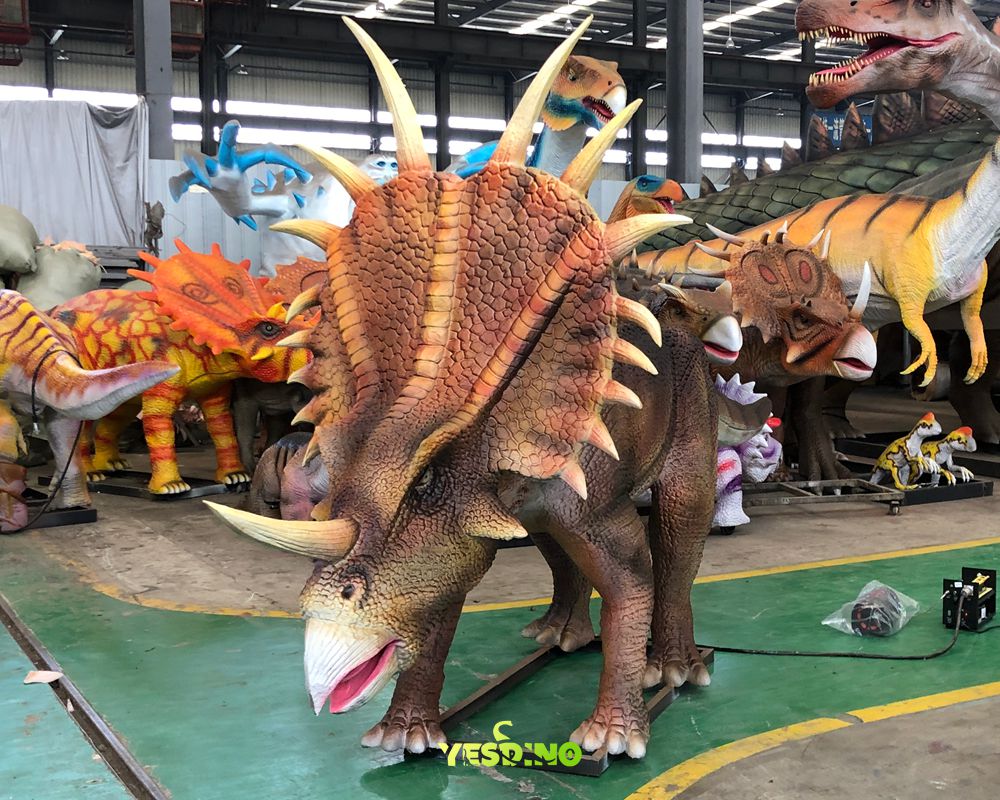
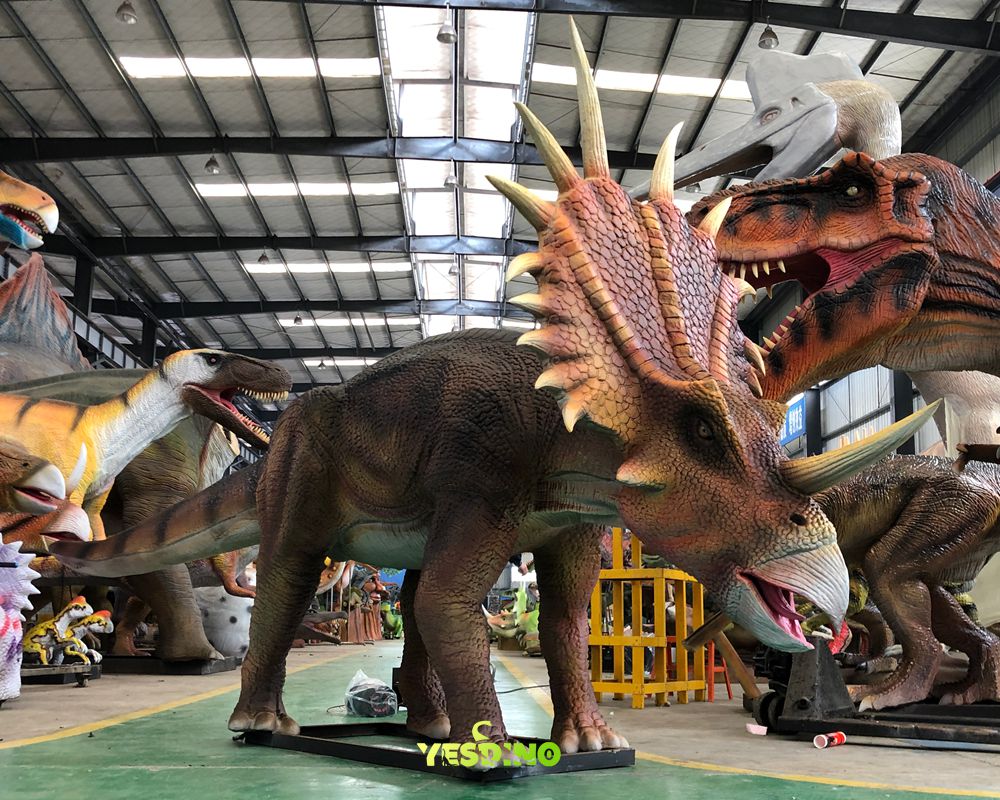
Horned dinosaurs all get filed under Triceratops by visitors, which is a shame for this one — a Styracosaurus frill, edged with long spikes like a saw blade, is a more aggressive silhouette than anything else in the family.
SKU YKL-106 is five metres long, two metres to the top of the frill, 0.8 m across the body. And unlike most of the models on this site, that length is honest to the animal: adult Styracosaurus ran around five to five and a half metres. No scaling up was needed.
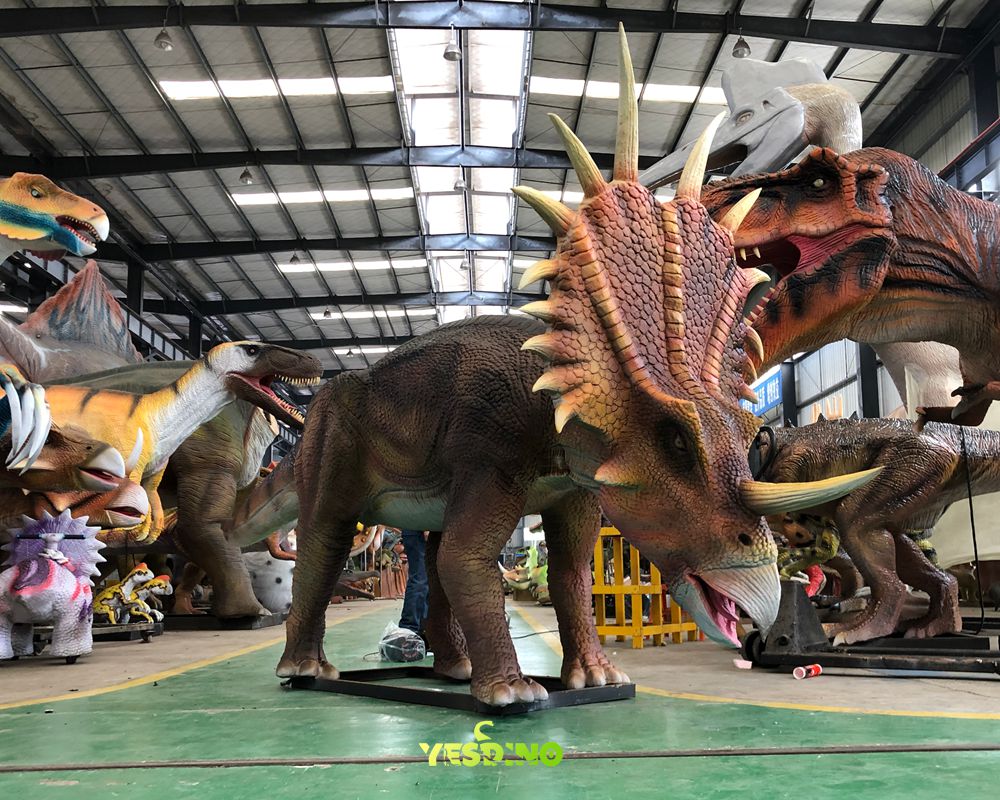
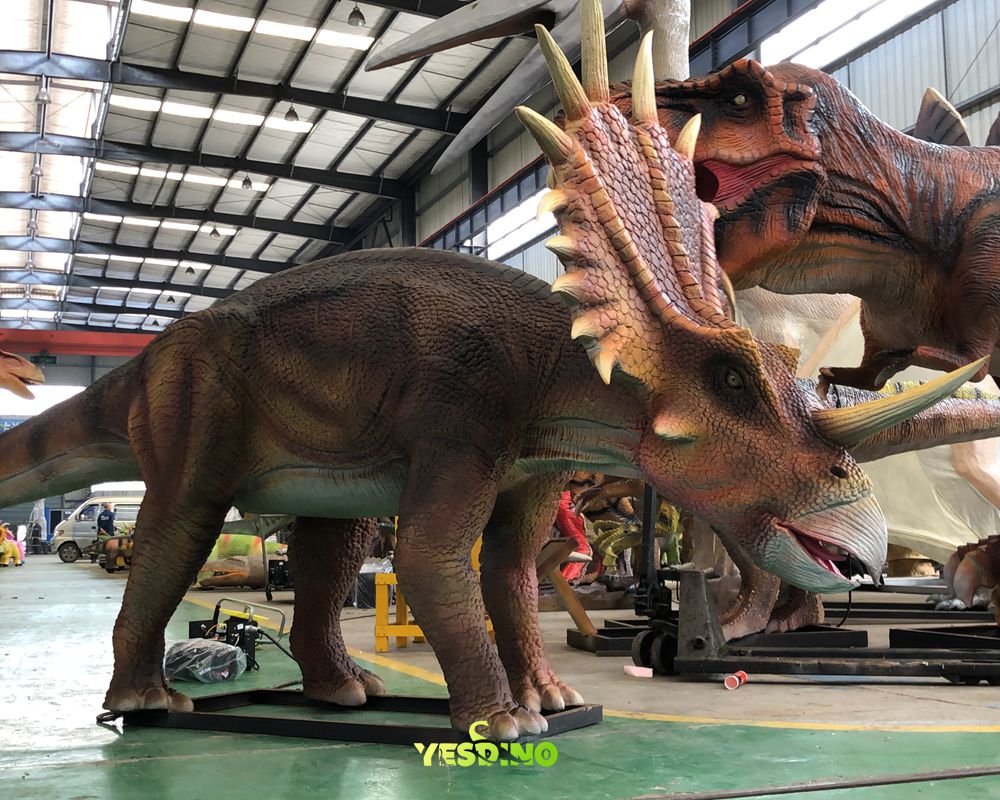
One long horn, six spikes
Three features separate it from a Triceratops, and all three are worth getting right because they are what a knowledgeable visitor looks at first.
The nose horn. Long, stout and set well forward on the snout — in life probably a metre in a large adult. It is the animal's main weapon and the first thing to exaggerate if you want the model to read from a distance.
The brow horns. Short or absent. Models that give it a full set of Triceratops brow horns turn it into a different animal, and the head loses its distinctive wedge profile.
The frill spikes. Four to six long spikes along each side of the frill, flattened and curved, projecting outward and back. On the model each one is a moulded part on its own mount, not a shape pressed into the frill skin.
Why the spikes are built as parts
A frill spike is a thin, exposed projection standing two-thirds of a metre off the head. Pressed into the surface as a soft shape, it droops in summer heat and loses its edge within a season; knocked, it tears the frill skin and the repair runs across the face of the animal.
Built as separate mouldings on brackets tied into the skull frame, each spike holds its profile, and a damaged one is replaced on its own. The frill skin then runs to the base of each spike and closes against it, so there is no seam along the visible edge. That decision adds build time and it is the reason this head still looks sharp after a few years outdoors.
Five movement groups
Head left and right, neck up and down, jaw open and close with a synchronised roar, blinking eyes, tail sweep. The head is heavy and the frill adds leverage, so the head drive is geared slower than on a theropod of the same length: a Styracosaurus that snaps its head around looks like a toy, while a slow, deliberate turn with the frill coming round last looks like weight.
Neck travel is worth setting generously. Raising the frill from grazing height to visitor height is the movement that shows off the spikes, and it is the one visitors wait for.
Pairing it with other horned dinosaurs
If your trail already has a Triceratops, the two will be compared. Two things stop them reading as the same animal at a glance: separation and palette. Put at least fifteen metres of path between them so visitors meet the second one after the first has left their eye, and give them clearly different schemes — a warm ochre Triceratops and a cooler grey-green Styracosaurus, for instance, rather than two variations of olive.
The other option is a deliberate pair: two horned animals facing each other across a path, which reads as a standoff and is a reliable photo point. That works better with the two heads at similar heights, so ask about matching the neck settings.
Finish and delivery
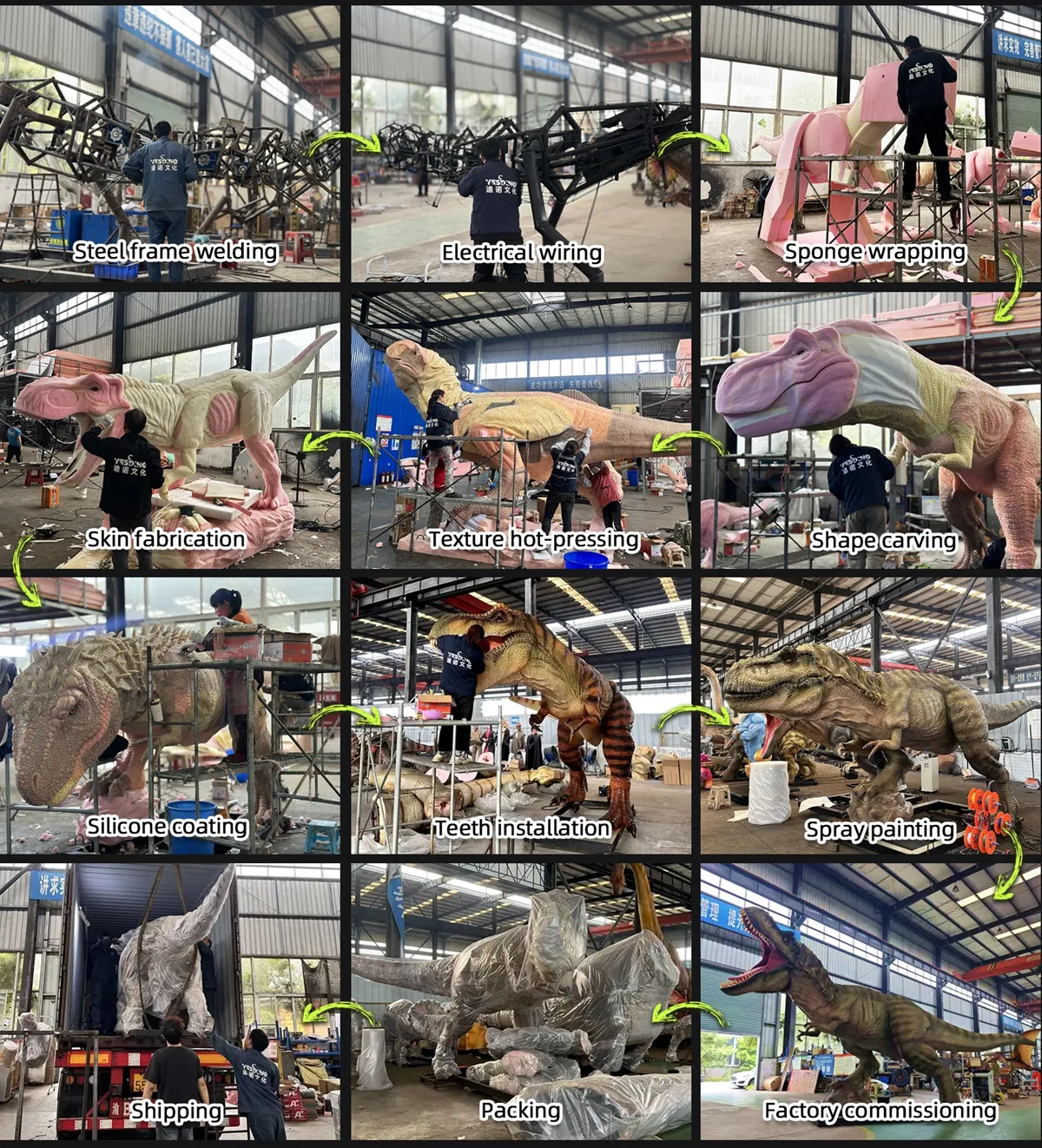
Welded Q235 steel frame with anti-rust treatment, high-density foam volume, silicone five to seven millimetres thick, colour applied as translucent silicone airbrushed in layers. Posture, skin pattern, colour scheme, motion programming and sound are all made to order. A common choice for this species is a dark body with a paler frill face and darker spike tips, which is the scheme that reads best in low evening light.
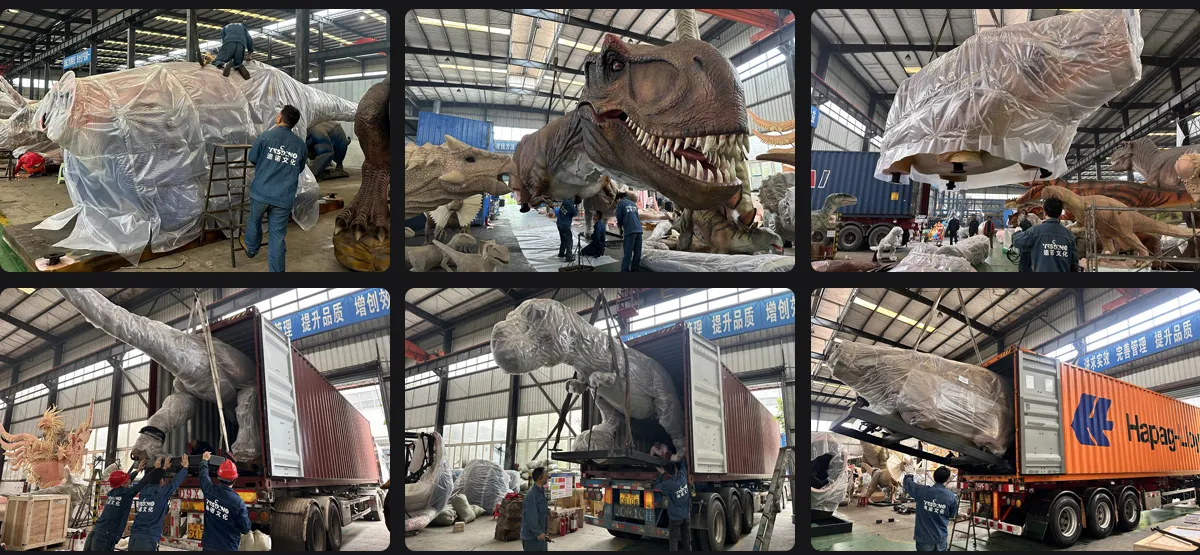
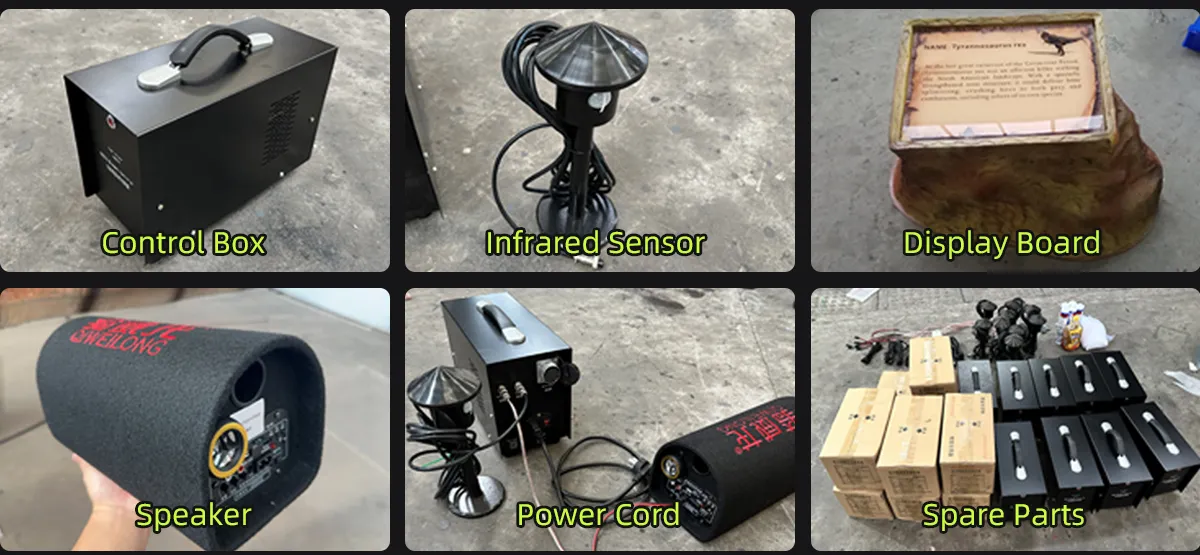
The animal ships in sections — legs, body, neck, head, tail — with a base frame, control cabinet, sound system, wiring diagram and calibration sheet. Rated for −25 °C to 45 °C outdoors, 110 V or 220 V set at build. Freight, duties, certificates and installation are quoted separately and are not included in the product price.
Enquiry
Send a photo of the spot, the viewing distance and whether the animal will stand beside another horned dinosaur. We'll come back with a posture and palette recommendation rather than a catalogue page, and confirm whether five metres fills the space or needs a larger build behind it.
Where to go next
Two things come up in almost every enquiry on this build: how the size compares with the alternatives, and what it takes to get it on site. The spare parts and repair kit list sets out the length options side by side, and the size guide covering 3 m to 12 m builds covers pads, access and assembly. Budget planning sits in the rental cost breakdown.
For ideas on placing it, see layout strategies for themed trails. The rest of the range is on animatronic dinosaurs, and if this one is the wrong size for the slot, 5m t-rex for mall promotions is the closest alternative.
Product Accessories
Packaging and Container Loading