Production Process
Walk half a kilometre of long-necks and every head is above yours. After the third one, the neck stops lifting and the trail turns into a series of ceilings. This animal exists for that stretch of path.
It measures 5 m long, 0.65 m across the body, and 1.8 m at the top of the back ridge.
The animal at chest height
At 1.8 m the back sits just under an adult's eye line, so the animal is looked at rather than looked up to. That is the slot it fills: a plant-eater a trail can put between two big builds without repeating the long-neck outline.
The low ridge of back spines and the broad snout do the identifying work at that height, and neither is dramatic. A visitor will not photograph it from the gate. That is the trade — this is a trail animal, not an entrance animal, and five metres of it will not carry a poster.
Where the narrow body helps
The 0.65 m width is the useful number. It stands on a bank above a path, on the strip between a fence and a walkway, or at the back of a planting bed where a wider animal will not fit. At 1.8 m it also sits under a low branch line without pruning.
Mid-trail is the natural position: after the first large animal and before the predator, so the visitor's neck rests before the next thing that makes them look up. Angle it 30 degrees into the path rather than parallel, and the snout faces the approach.
Movement at a low posture
Head turn, neck down and up, jaw, blink and tail sway. The neck-down motion is where the programming time goes: a browsing plant-eater dips toward the ground, and at 1.8 m that dip brings the head within a child's reach, which is the part people remember.
Slow it down. A dip that takes about 2.5 s reads as feeding; a quick one reads as a peck. The thumb spike and the spine ridge stay still — they are silhouette, and a moving ridge looks like a hinge.
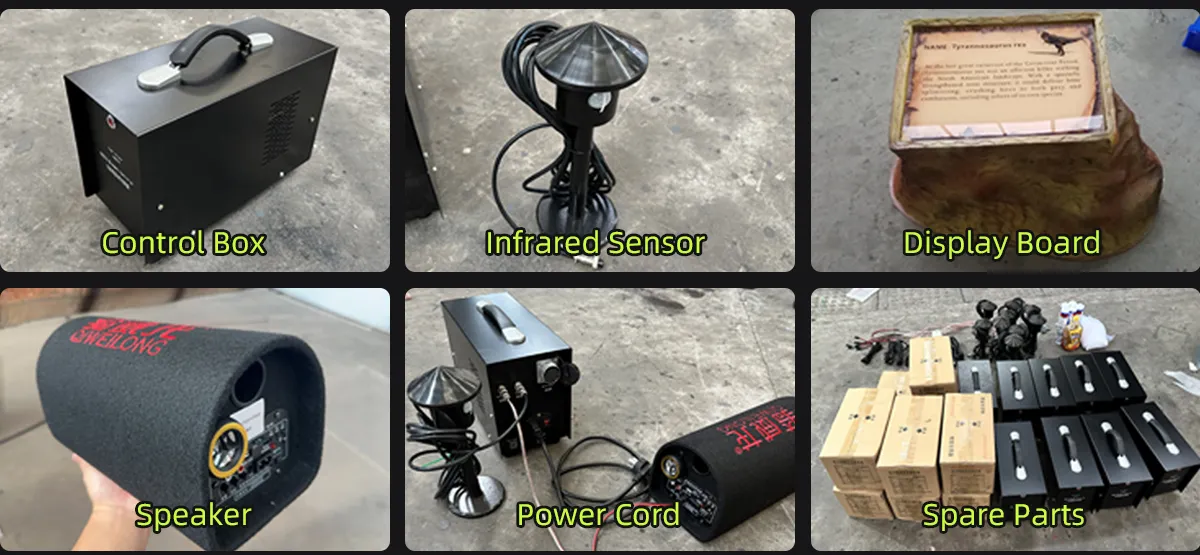
Sensor at 1.0 m on the path side, angled down, 1.5 s delay. The height matters: at 1.0 m it catches children at the barrier and ignores adults walking past on the far side of the planting, which is the usual reason an animal fires at nothing.
Skin, spines and weather
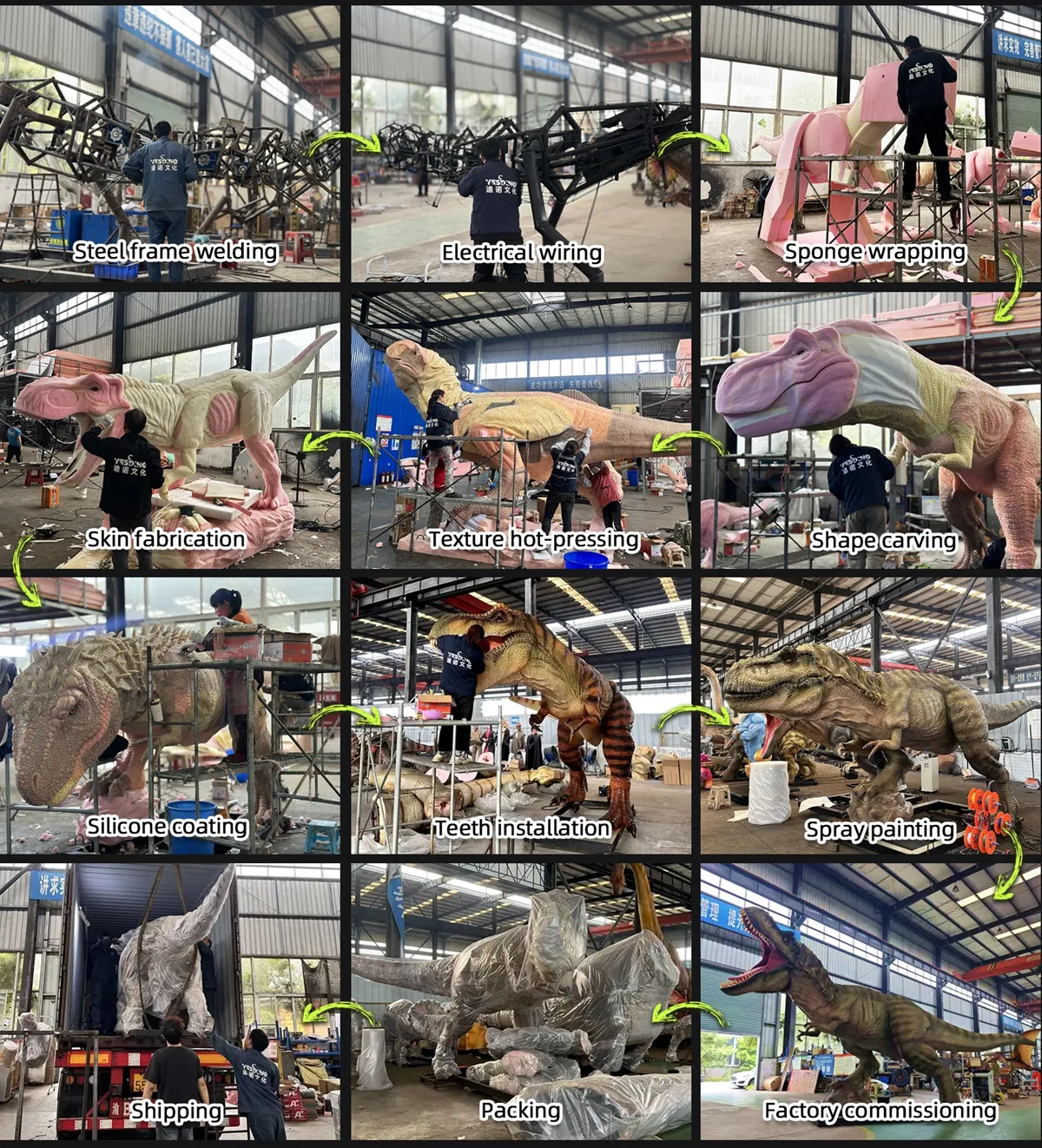
Q235 steel frame, rust-treated, high-density foam, 5–7 mm silicone skin, colour in translucent layers. The ridge is moulded as separate pieces bedded into the back, so a broken spine is one part rather than a whole body section. Low branches are the usual cause of that.
Working range is −25°C to 45°C, 110 V or 220 V at build. Under 3000K path lighting a grey-brown base goes warm and the ridge shadow disappears, so the recesses get one shade darker than the flanks to keep the spines visible after dark.
Getting it in
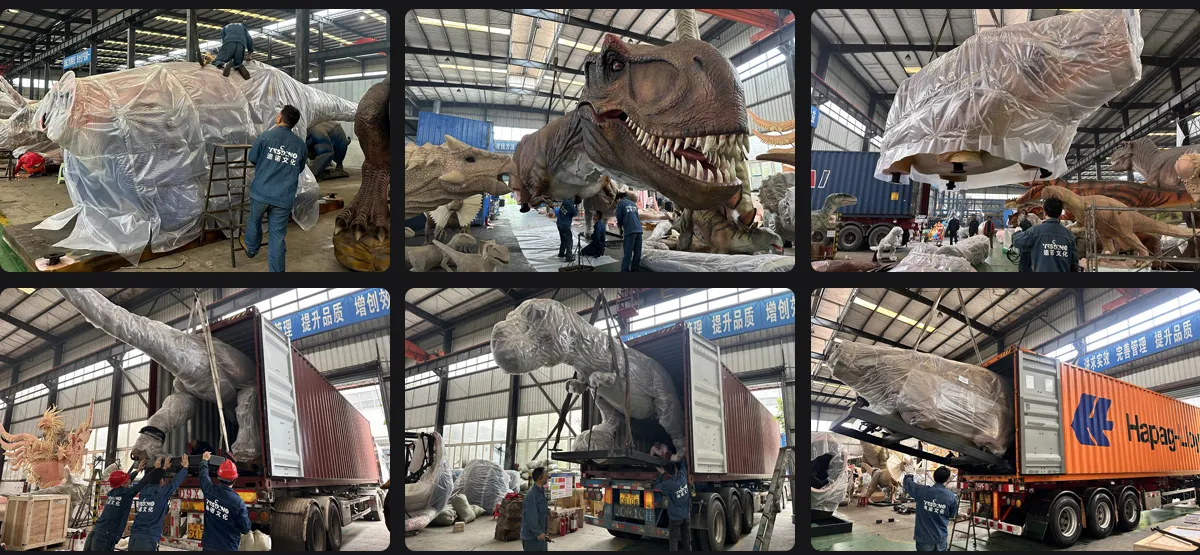
Two sections and a base frame on one pallet, with the head in its own crate. At 0.65 m across it goes through a 0.9 m gap, which is why it suits back-of-house routes, service gates and boardwalk sections. Two people, about three hours, no crane.
The cabinet sits at the rear of the base frame with its door on the side away from the path and 500 mm clear. On a bank, the door goes on the downhill side; a cabinet set into a slope collects water at the seal otherwise.
Before you order
Send the trail plan with the position marked, the surface, the power location, and a photograph from adult eye height on the path. If the animal stands on a bank, send the bank height — a 1.8 m animal on a 300 mm bank is a 2.1 m animal to a child standing below it.
One case against this size: a park that needs a plant-eater to sell the ticket. A low-slung five-metre herbivore is a supporting animal, and a long-neck still does the headline job better. Two of these plus one tall species reads as a mixed exhibit; two of these alone reads as a gap.
Enquiry
Send the position and what stands either side of it. Colour, skin texture, posture and the movement programme are made to order, and a photo of the neighbouring animals helps us set a height and a tone that sit with them.
Where to go next
Two things come up in almost every enquiry on this build: how the size compares with the alternatives, and what it takes to get it on site. The park layout and theming strategies sets out the length options side by side, and the cost breakdown with the seven price factors covers pads, access and assembly. Budget planning sits in the spare parts and repair kit list.
For ideas on placing it, see layout strategies for themed trails. The rest of the range is on animatronic dinosaurs, and if this one is the wrong size for the slot, 10m animatronic brachiosaurus for jurassic parks is the closest alternative.
Product Accessories
Packaging and Container Loading