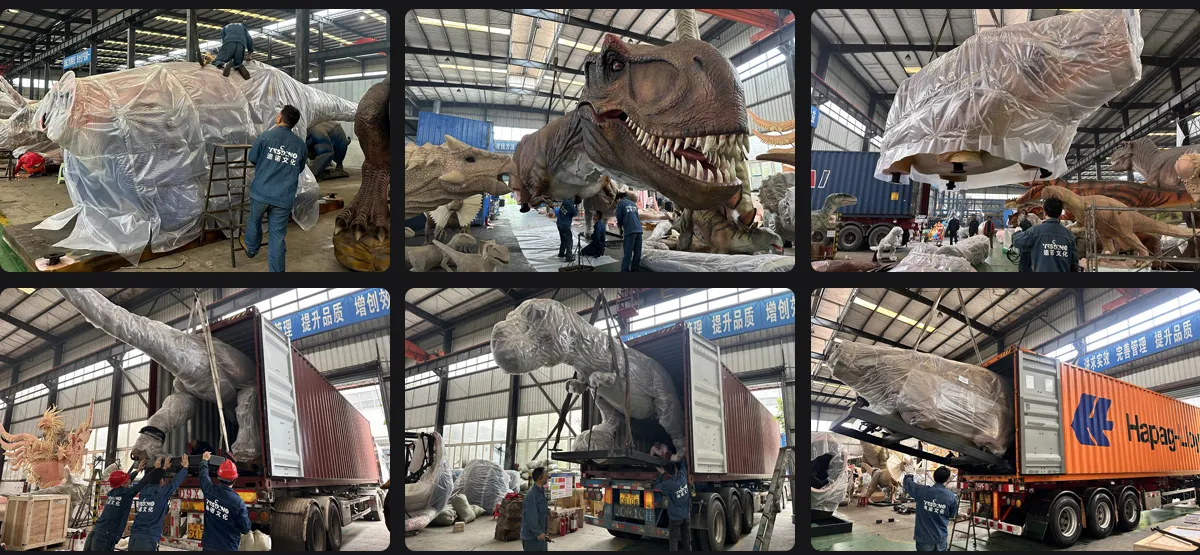


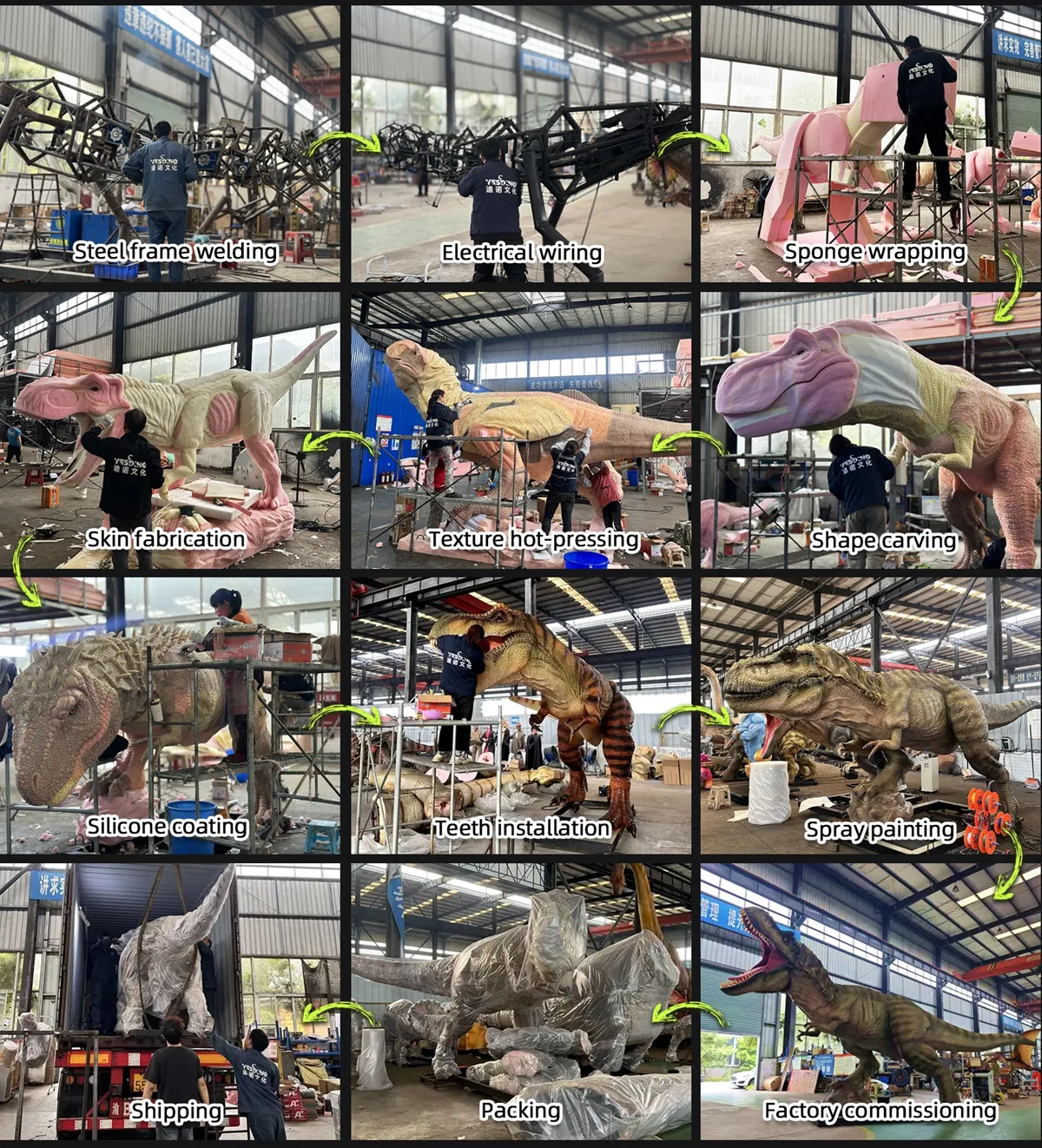
Production Process
The quote comes back, the pad is already poured, and then somebody asks who is lifting 5.5 m of Tyrannosaurus onto it. On the sites where this animal goes wrong, the animal is rarely the problem. The lift is.
It measures 15 m nose to tail, 2.1 m across the body, and 5.5 m at the top of the skull.
Five and a half metres is a lifting question
Half a metre more skull height changes the crane, not the animal. Add slings and rigging and the hook needs about 9 m of reach, which pushes you to a larger crane at a longer radius — and radius, not capacity, usually decides the machine.
Visually that half metre puts the head just over a single-storey roof line, so the animal reads above a ticket booth rather than against it. The cost is structural: more neck, a bigger actuator, more wind area up high. On an exposed site that does not need the height, a 5 m build is the saner purchase.
The survey that decides the day
Four measurements settle an install: the narrowest point of the route, the turning circle at the gate, the ground bearing where the crane stands, and the height of any overhead cable. The last one gets missed, and it can stop a lift on the morning it is booked.
The truck stands within 15 m of the pad, and the pad runs about 18 m to take a 15 m animal with its tail overhang. On a finished park that means delivering before the landscaping, not after. Map the visitor route at the same time: work and public traffic on one path costs more in barriers and staff than the crane costs per hour.
What moves once it is standing
Head turn, neck pitch, jaw, blink, tail sway, body rise and fall, forelimbs. The neck is the group to tune, because the skull is heavy and anything above roughly 12 degrees per second reads as mechanical on that mass. Two-fingered hands and short forelimbs stay nearly still; at 5.5 m they are close-up detail, and motion up there pulls the eye off the head.
Two sensors on an entrance where visitors arrive from both directions, at 1.2 m and angled down, with delays 0.4 s apart so the animal does not stutter when someone crosses both beams. A park pose also goes into the programme for high wind — head low, tail centred, no sweep.
Sections, skins and the join lines
Q235 steel frame, rust-treated, high-density foam, 5–7 mm silicone skin, colour in translucent layers. It travels in sections, and every skin panel is numbered to its frame section — on a 15 m animal, a panel fitted one bay out leaves a visible step in the paint. Working range is −25°C to 45°C, 110 V or 220 V at build. On a floodlit entrance, 3000K turns the skin red-brown and 4000K keeps it grey, so the base coat is mixed for the light the site runs.
The install day, in order
Base frame levelled and grouted, legs, torso, tail sections, head, skin panels, then cabinet and wiring, then a dry cycle with the barrier up and the person who will run the animal watching. The heaviest lift goes first, while the crane is fresh and the crew is not tired. Anchor torque gets checked before the head goes on, because reaching the rear anchors with a head in place is a job for a thinner person than most crews have.
The cabinet sits at the rear of the base frame, door away from the prevailing wind and the afternoon sun, 700 mm clear in front. On an entrance facing west, that puts the cabinet on the north side.
Owning it and installing it are two skills
There are two ways to buy. With installation in the quote, where our crew does the lift and hands over a running animal. Or without it, where you hire a rigging contractor locally. The second is cheaper on paper, and it moves the lift plan, the crane booking and the insurance to your side of the table.
If you take that route, ask the rigger for the crane size at your actual radius before you sign, and send us the drawing. We mark the lift points and the section weights on it, so the rigger prices a known job instead of guessing from the crate size.
Two sites where this size does not work: where the crane cannot stand within 15 m of the pad, and where the route narrows below 3 m. In both, the animal is fine and the install is not, and a shorter build solves it.
Enquiry
Send the pad drawing, photographs of the route, and the name of whoever will do the lift. If the crane is not booked yet, we can list what the animal needs so you can price it locally.
Where to go next
Worth reading before you commit: the pneumatic versus hydraulic comparison for how the sizes compare, the installation guide for pads and access for what the ground has to carry, and the wiring concealment notes for where the money actually goes.
For ideas on placing it, see exhibit planning walkthrough. The rest of the range is on animatronic dinosaurs, and if this one is the wrong size for the slot, animatronic pachycephalosaurus for exhibition halls is the closest alternative.
Product Accessories
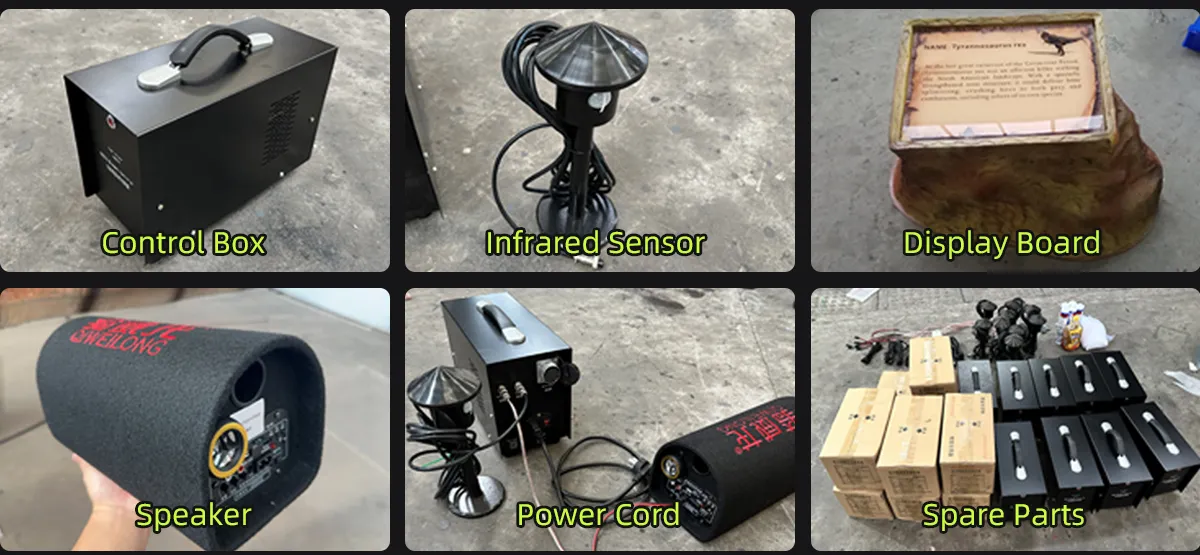
Packaging and Container Loading