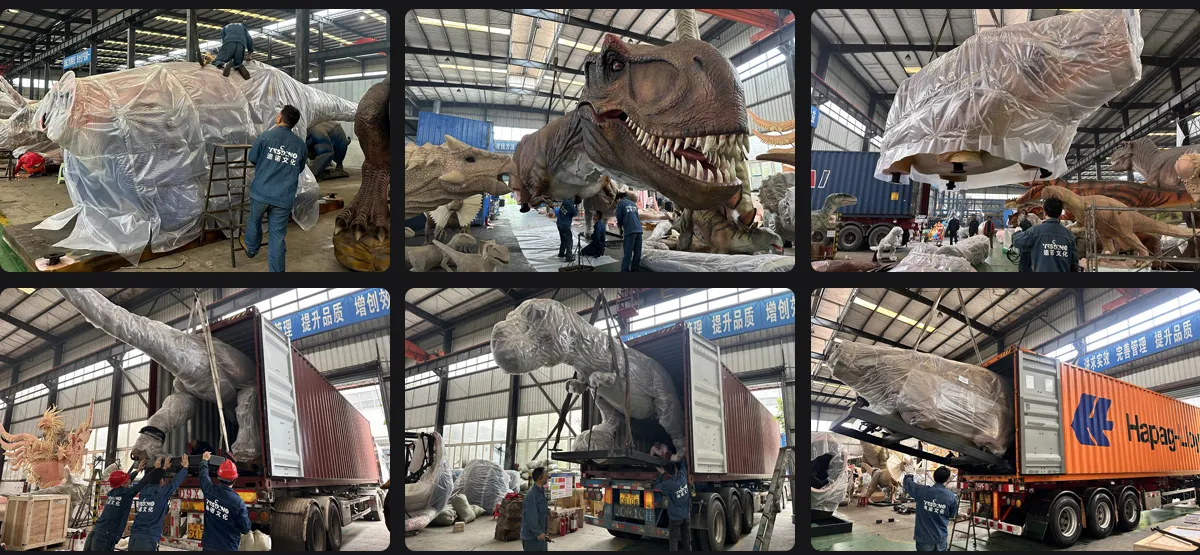
Production Process
A park in the middle of a build has one question that holds up everything else: which way the animal faces. On a site we shipped to in spring, the entrance arch moved four metres, because a fifteen-metre tail would otherwise have swept the ticket window.
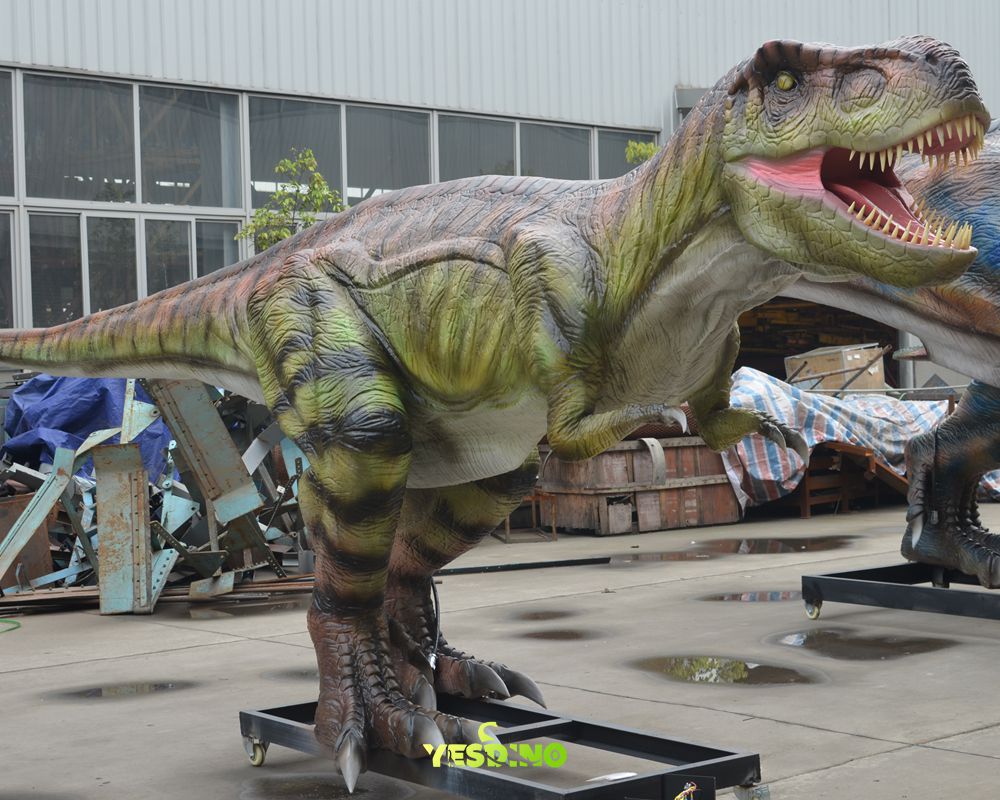
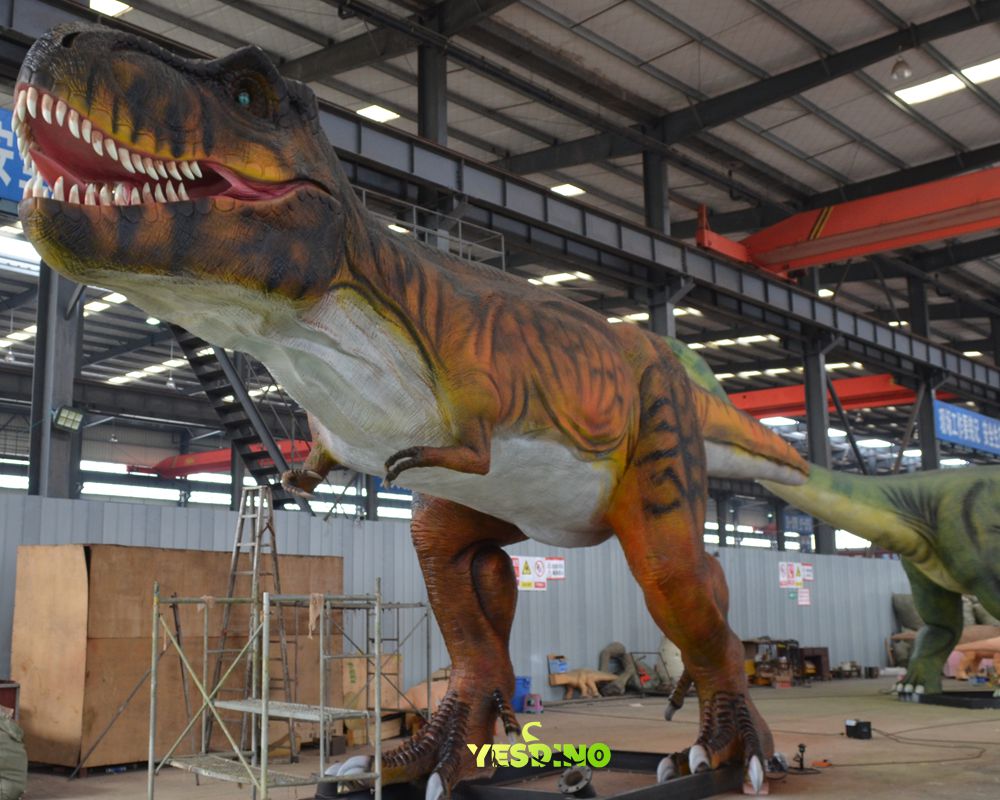
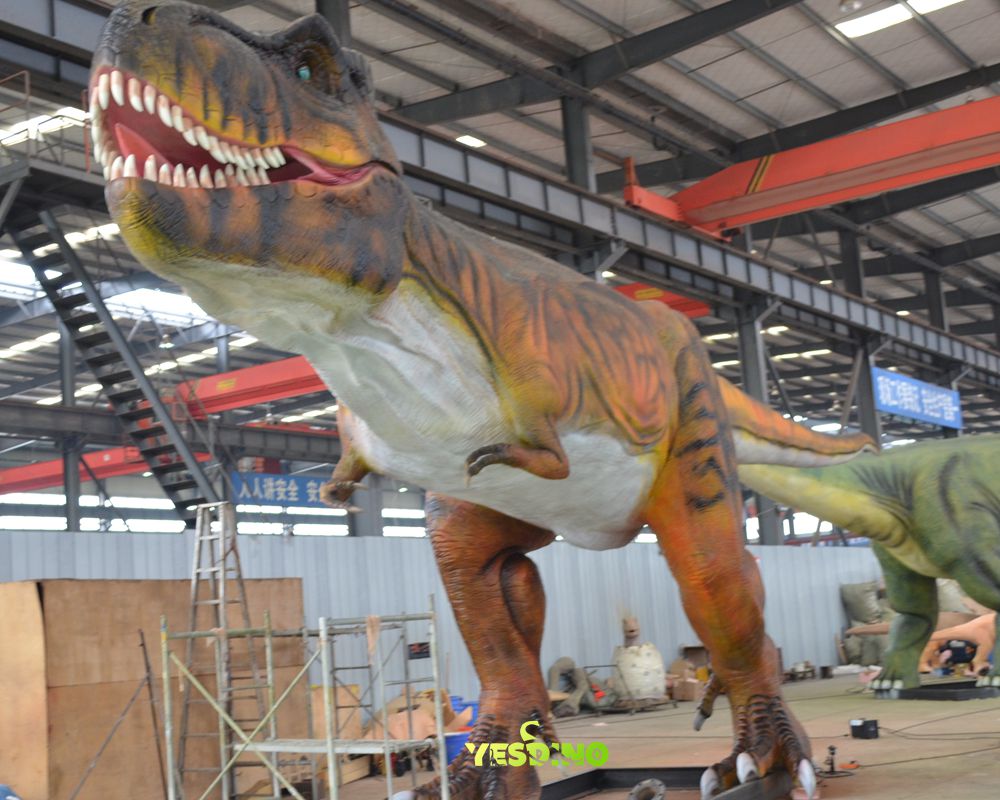
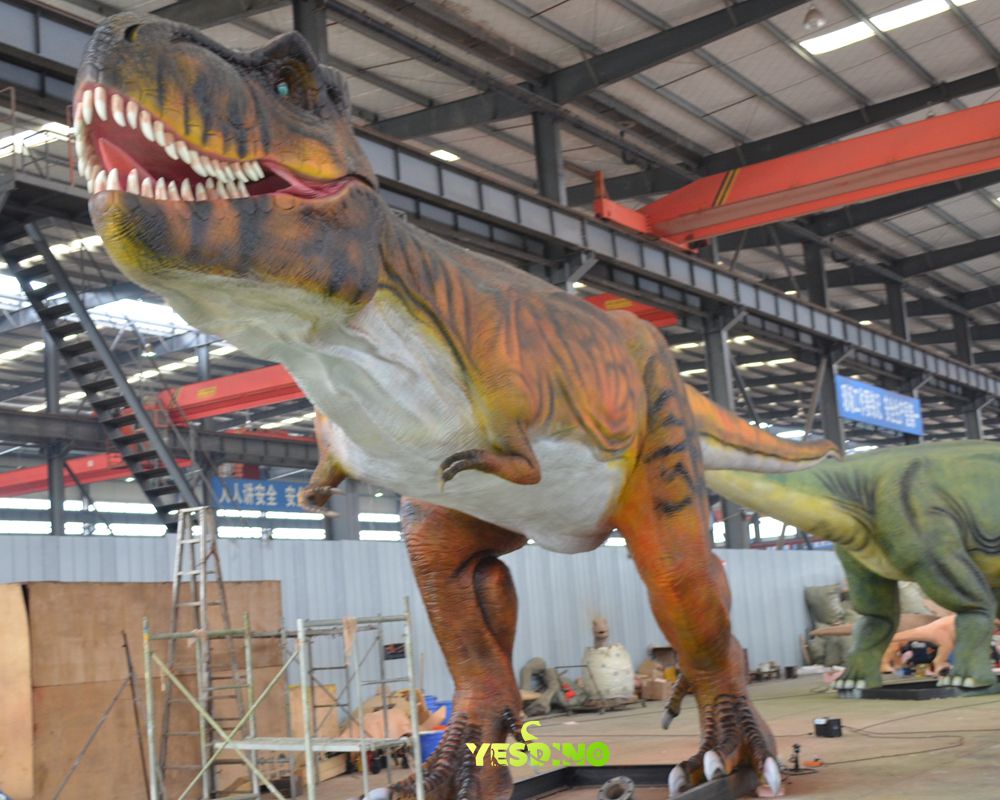
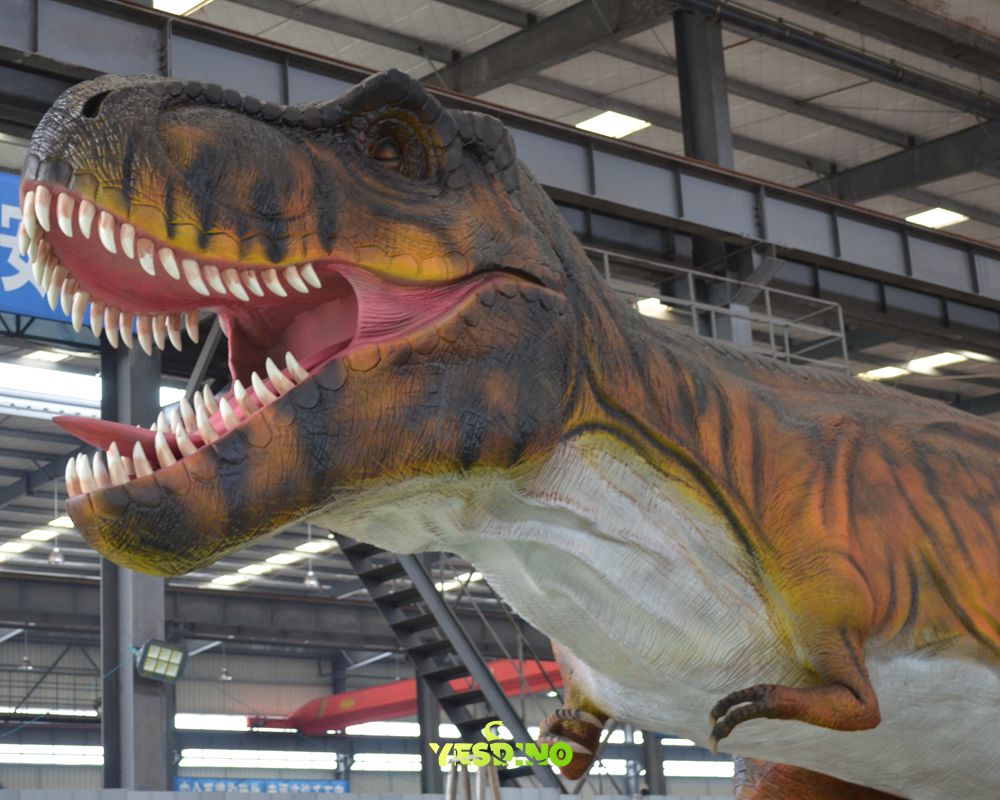
This animal is 15 m from snout to tail tip, 2.1 m across the widest part of the body, and 5 m at the top of the skull. Crated weight is 1,550 kg, in sections a crane lifts one at a time.
What fifteen metres decides before anything else
At this length the animal is no longer an exhibit; it is site planning. It sets the pad, the viewing radius, the crane position and the sightline from the gate. A head at 5 m clears a two-storey facade, so whatever stands behind it needs to be taller or deliberately plain.
The trade: a nine-metre predator reads well from twelve metres and needs a slab the size of a parking bay. Fifteen metres buys the moment when a visitor walks under the jaw, and the bigger slab, crane and assembly. Parks that get this wrong usually get it wrong on the slab.
The ground it stands on
Plan a slab of about 18 m by 6 m, 200 mm reinforced, with embedded plates at the six anchor points of the base frame. Those plates go in before the pour. Drilling them into a cured slab afterwards works and rarely looks as neat.
The animal presents a sail: 15 m long, 5 m at the head, 2.1 m across. Wind load on that surface, not the 1,550 kg static weight, sizes the anchors, so exposed sites get a second row of chemical anchors through the frame feet and a 1% slab fall. Sightlines want 8 to 12 m for a full-body phone photograph.
Which joint earns its programming time
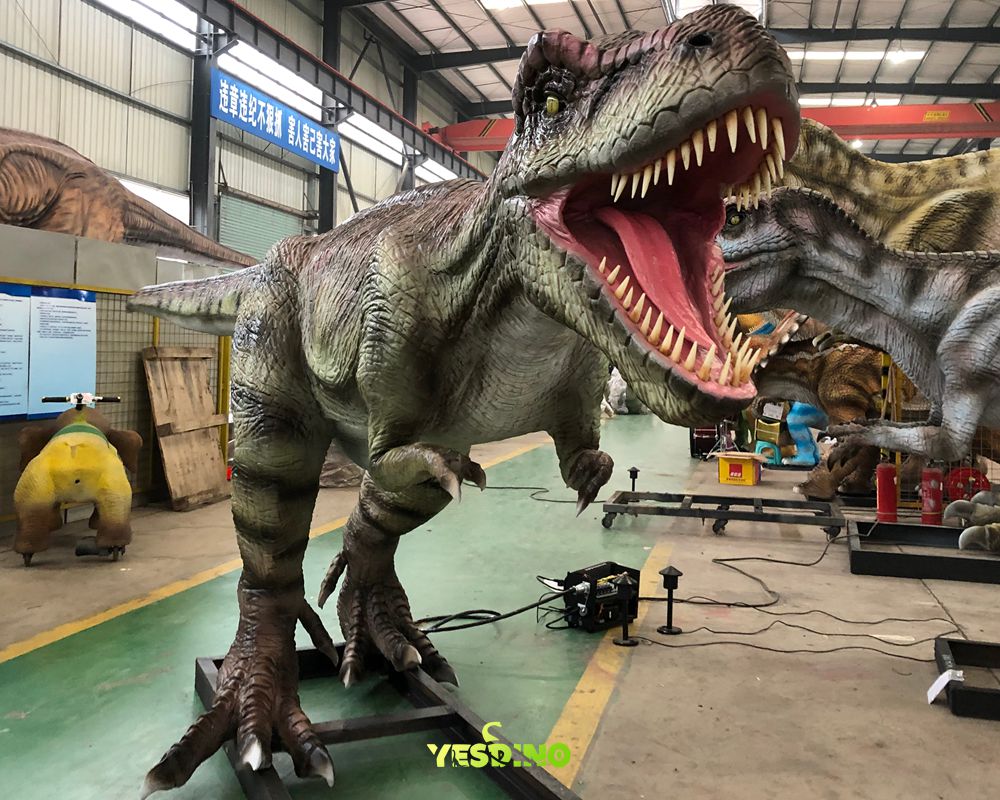
Seven groups run here: head turn, neck pitch, jaw, blink, tail sway, body rise and fall, forelimbs. The neck decides whether the animal reads as alive. The skull is heavy, so movement above roughly 12 degrees per second looks mechanical, and we ramp the neck over 0.8 s while the jaw does the quick work.
The long tail sways on a six-second cycle, slow enough that people notice it only after they stop walking. The forelimbs stay close to still: two fingers and a short reach make those hands a detail, and animating them turns a detail into a puppet.
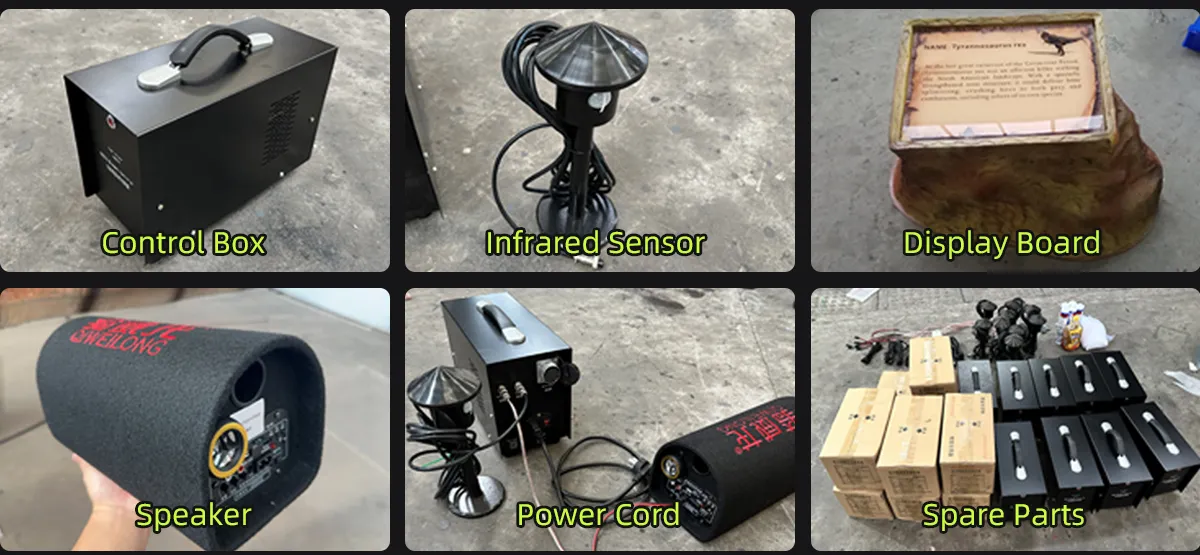
For triggering, an infrared sensor at 1.2 m on the approach side, angled 15 degrees down so it picks up a child and not a bird. Delay sits at 1.2 s, about two steps, so the animal reacts just after someone commits to walking past.
Frame, skin and the weather it sits in
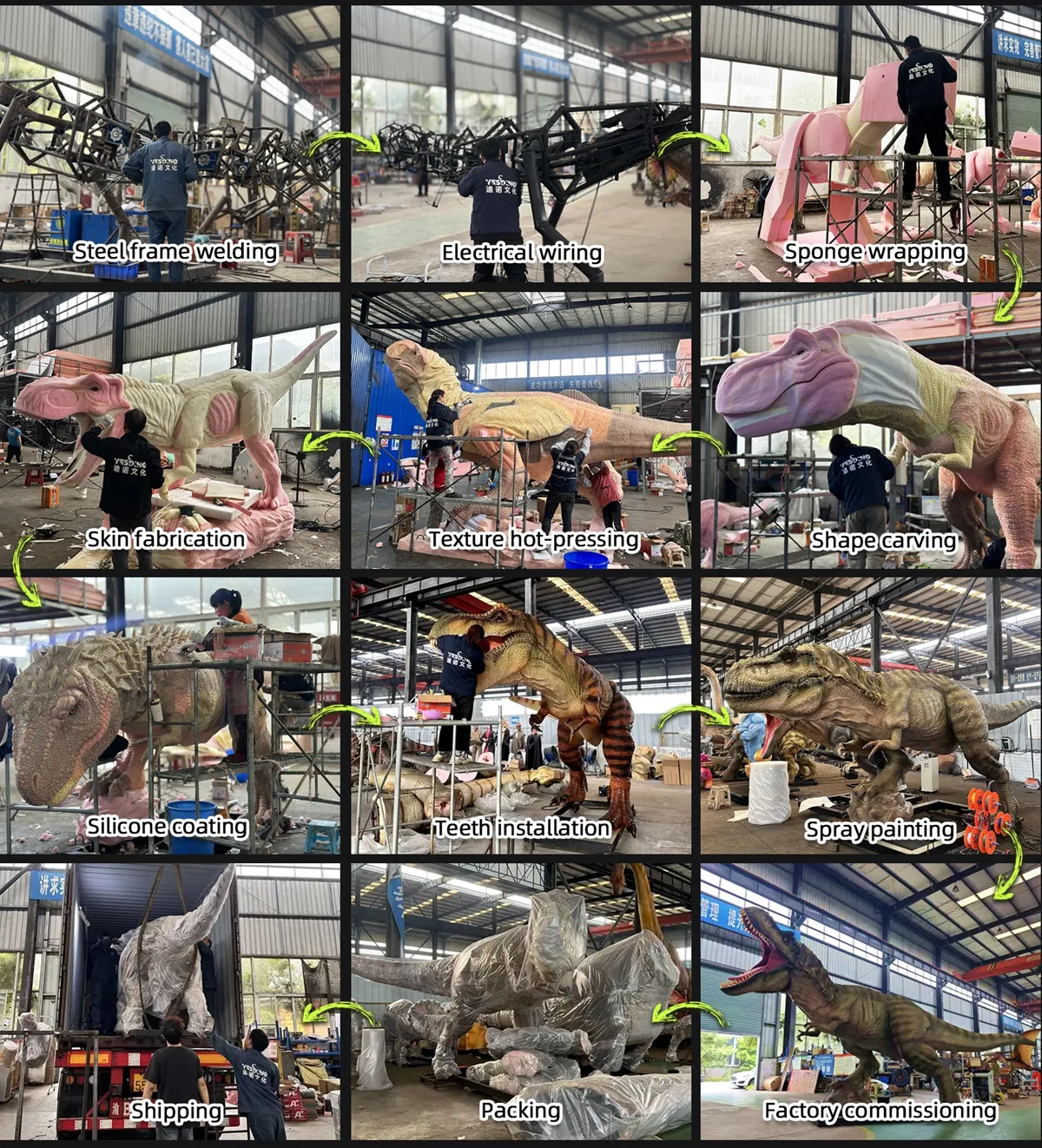
Q235 steel frame, rust-treated, carved high-density foam, 5–7 mm silicone skin. Colour is sprayed in translucent layers, so depth sits in the material and a scuff shows a lighter tone rather than a white gash. Repair is a pigmented patch blended at the edge.
Working range is −25°C to 45°C. Colour temperature matters more than most sites expect: under 3000K floodlight the skin reads dark red-brown, under 4000K it drifts grey. Send the lamp specification and the base coat gets tuned to it.
Crane access is the real constraint
The heaviest lift is the torso. A 25-tonne crane at 12 m radius covers it, and the truck stands within 15 m of the pad on ground that takes a loaded axle. The access road is 4 m wide in the drawings and often 3.2 m once landscaping is finished.
Install order: base frame, legs, torso, tail, head, skin panels, cabinet and wiring, then a dry cycle with the barrier up. Four people, two days. The cabinet sits at the rear of the base frame, door facing away from the prevailing wind and the afternoon sun, with 700 mm clear in front.
What to send before you commit
Pad drawings, photographs of the route from gate to site, gate width, power position, and whether the site runs 110 V or 220 V, configured at build rather than converted later. Add whoever will service the animal.
Two situations where a smaller build serves better. A slope with no hard standing, where the crane cannot set up or costs more than the animal. And a park with one seasonal staff member and no maintenance routine, since 15 m of machinery wants somebody who can read a wiring diagram.
Enquiry
Send the site photo, the pad drawing and the route visitors take past the animal. Tell us which direction most people arrive from, since the head should face the approach and the tail should not cross the path.
If the entrance is still being designed, we can mark the anchor positions on your drawing before the concrete is poured. That costs nothing and saves a slab.
Where to go next
Worth reading before you commit: the size guide covering 3 m to 12 m builds for how the sizes compare, the rental cost breakdown for what the ground has to carry, and the pneumatic versus hydraulic comparison for where the money actually goes.
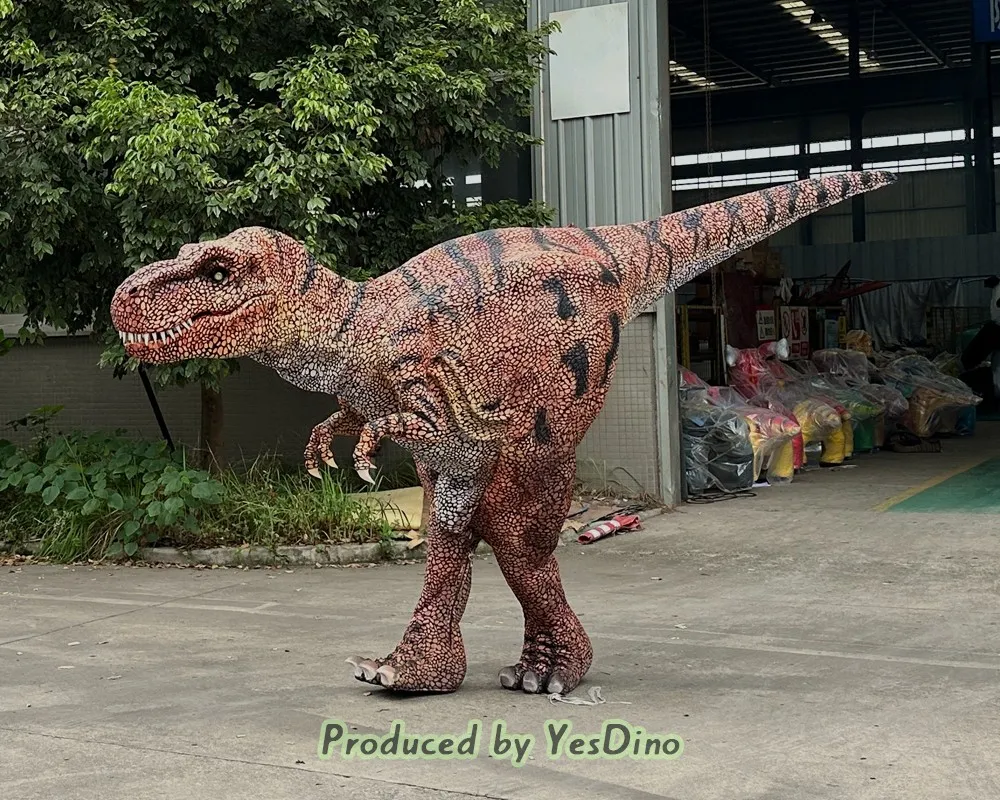
For ideas on placing it, see layout strategies for themed trails. The rest of the range is on animatronic dinosaurs, and if this one is the wrong size for the slot, animatronic albertosaurus for shopping malls is the closest alternative.
Product Accessories
Packaging and Container Loading