Production Process
Deer are the animals visitors walk past without stopping, which is a problem or an opportunity depending on placement. A 1.5 m sika deer at the edge of a path, head turned toward the approach, gets a second look from people who have already seen the big cats. The antlers do most of that work, and the antlers are also the part that needs planning. SKU YAA-025: 1.5 m along the body curve, 1.4 m at the head.
The size that still reads as a deer
Small animals are cheap to move and easy to place, and 1.5 m of body is the size that still reads as a deer at three or four paces. At 1.4 m the head sits near adult eye level, which is where a deer's head is when it lifts to look at you.
What you give up is presence. This build does not anchor a lawn the way a large one does, and in a wide open space it disappears. It works in numbers — three or four along a path — or as a single piece in a defined garden with a backdrop behind it.
Walkways, gardens, seasonal trails
Zoo walkways between larger exhibits, garden attractions, hotel grounds, autumn and winter trails, museum dioramas with a painted backdrop. A six-row specification keeps the sheet compact, which suits sites buying a set of animals rather than one centrepiece.
Two to four metres is the working viewing range. Closer and the eye finds the joints; further away and the antlers are all that reads, which is fine for a trail and thin for an exhibit.
What moves on a small animal
Head turn, neck lift and lower, jaw, ear flick, blink, tail. On a small animal the movement budget is the whole budget — there is no size to carry a mediocre motion set, so the motions that stay are the ones with a reason: head down to graze, head up to look, ear flick at a sound.
Worth tuning is the neck with the ears. A deer's ears move before its head does, and half a second of ear movement ahead of the head turn is the difference between a machine and an animal. That half second is a programming choice, not a hardware one, and it costs nothing at commissioning.
Build, skin, and antlers on sockets
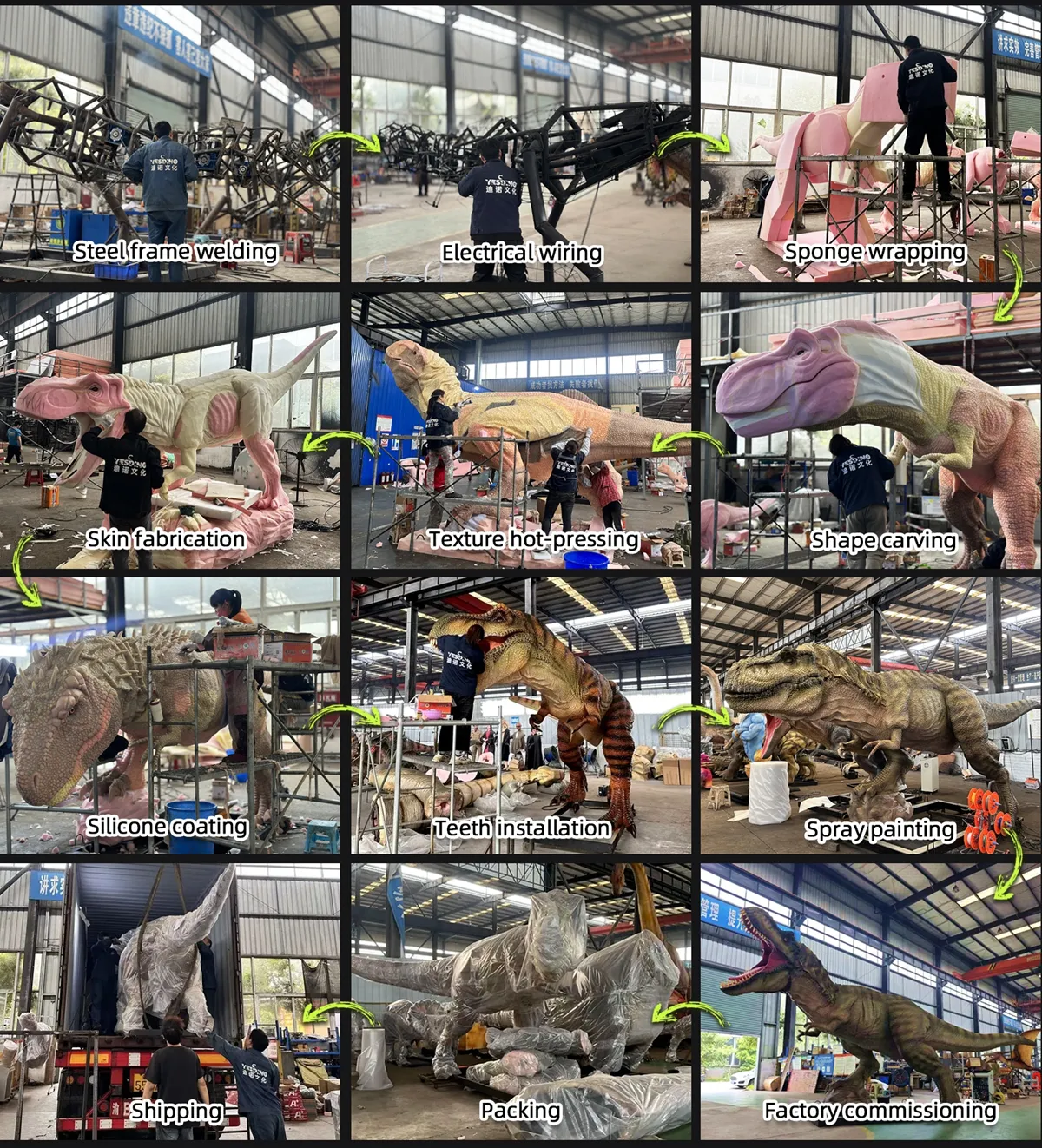
Q235 steel frame, rust-proof treatment, foam carved to volume, 5–7 mm silicone, pigment sprayed in translucent layers. Small animals are viewed close, so the skin is where the money goes: the neck and face carry more visual load per centimetre than a large animal's flank.
The antlers sit on keyed sockets rather than being moulded into the skull. Sika deer shed and regrow antlers, so a display that runs all year needs them treated as a replaceable part: swap a full rack for bare pedicles between seasons, or replace one damaged side without rebuilding a head.
For a site that changes its display twice a year, that socket is the most useful detail on the whole animal. Rated −25 °C to 45 °C, 110 V or 220 V to destination, electronics on a two-year warranty.
Crates, spikes and staggered loops
One crate, base frame, control cabinet, sound module where specified. A 1.4 m animal passes a normal door width in one piece, which matters for garden attractions and hotels where the route in is a corridor and a lift.
On soil a spike base; on paving or decking a ballasted plate with bolts. For a group, run separate loops or staggered start times — identical animals moving in step is the first thing visitors notice, and the fix is in the settings rather than the hardware.
Numbers that change the order
Send the route if the deer go along a path, since the number of animals and the spacing change the order. Send the surface, the viewing distance, and whether the display rotates seasonally.
Where this size is wrong: a large open lawn that needs one strong object, or a drive-through route where animals are seen from a vehicle. At 1.5 m a deer is a walking-pace animal, and sites needing a landmark at distance want something taller.
Enquiry
Send the path drawing or site photo, the surface, and how many animals you are considering. If the deer are part of a seasonal display, tell us the swap date — the antler sets are built together with the animal. Freight, duties, certificates and installation are quoted separately from the product price.
Where to go next
Two things come up in almost every enquiry on this build: how the size compares with the alternatives, and what it takes to get it on site. The rental cost breakdown sets out the options side by side, and the pneumatic versus hydraulic comparison covers pads, access and assembly. Budget planning sits in the cost breakdown with the seven price factors.
For ideas on placing it, see visitor routing ideas. The rest of the range is on animatronic animals, and if this one is the wrong size for the slot, animatronic tiger for zoo decoration is the closest alternative.
Product Accessories

Packaging and Container Loading