Watch what happens the first time a dinosaur walks past a playground gate. Kids stop mid-sprint. Parents reach for their phones. Nobody has to read the sign out loud. That pull is the whole reason dinosaur props keep turning up in family entertainment centres, mall atriums and park play zones — and why operators who buy one rarely stop at one. You don't need a five-figure dark ride to get it, either. The short version: small animatronic dinosaurs, walking dinosaur costumes, ride-on dinosaurs, remote-control walkers, hand puppets and dinosaur bands cover almost every playground budget, and more than one of them can pay for itself inside a season. Below is the honest breakdown: what each prop does, where it belongs on your site, what it costs, and the catch that never makes it into the sales brochure. Dinosaur props for playgrounds at a glanceIf you only read one part of this page, read the table. It sorts the six options by what they're actually good at, so you can cross off the ones that don't fit your site before you talk to a supplier.
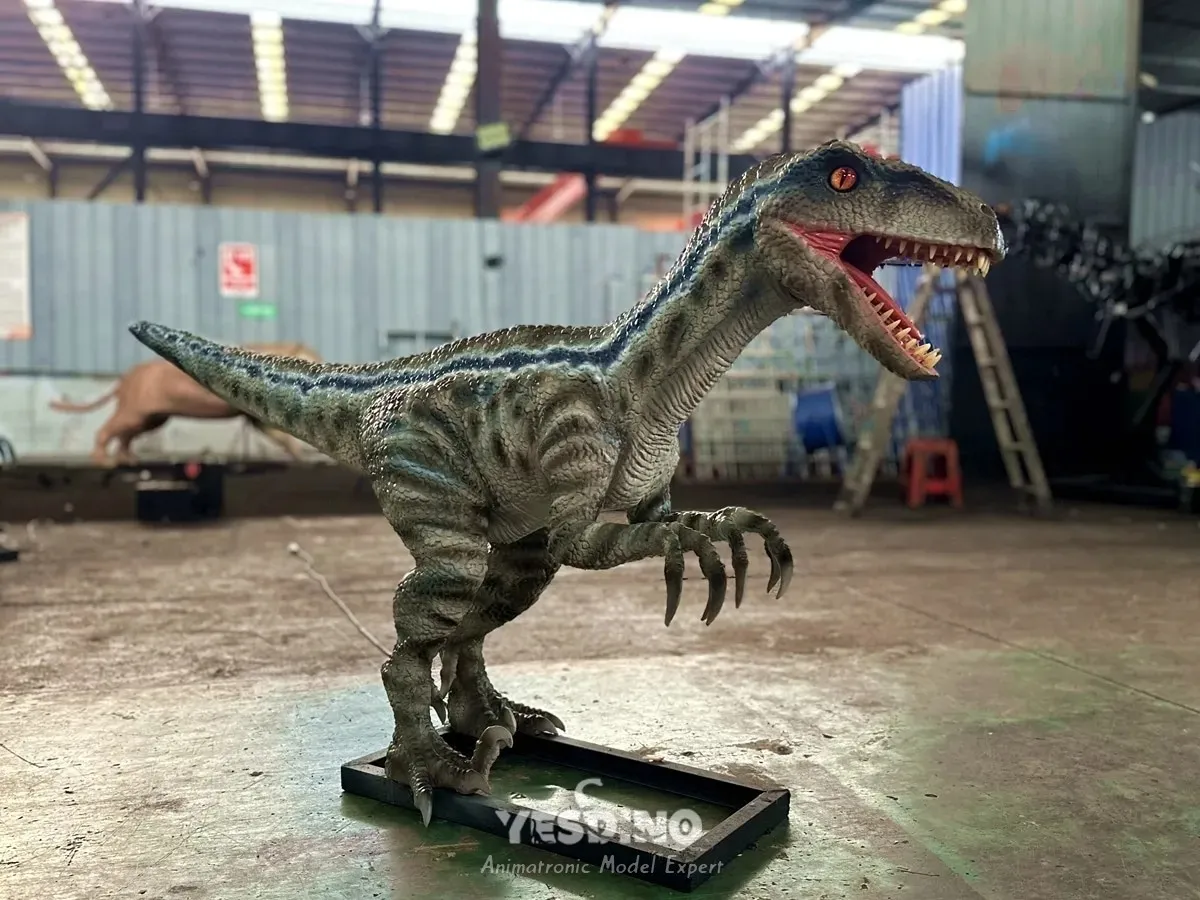
The two rows worth studying are the ones with real interaction: the ride-on and the costume. Everything else decorates, entertains or advertises. Those two change what a family does with their afternoon, which is what changes your numbers. 1. Small animatronic dinosaurs: the cheapest way to make a corner feel prehistoricA small animatronic dinosaur is the scaled-down version of the big park pieces — usually 1 to 3 metres, built on the same architecture. Welded steel frame, sculpted high-density foam body, hand-textured silicone skin, and a set of movements driven by motors and servos. Jaw, head, tail, eyes, sometimes a step-in-place walk. They run off a standard 110 V or 220 V supply and start working the moment you switch on.
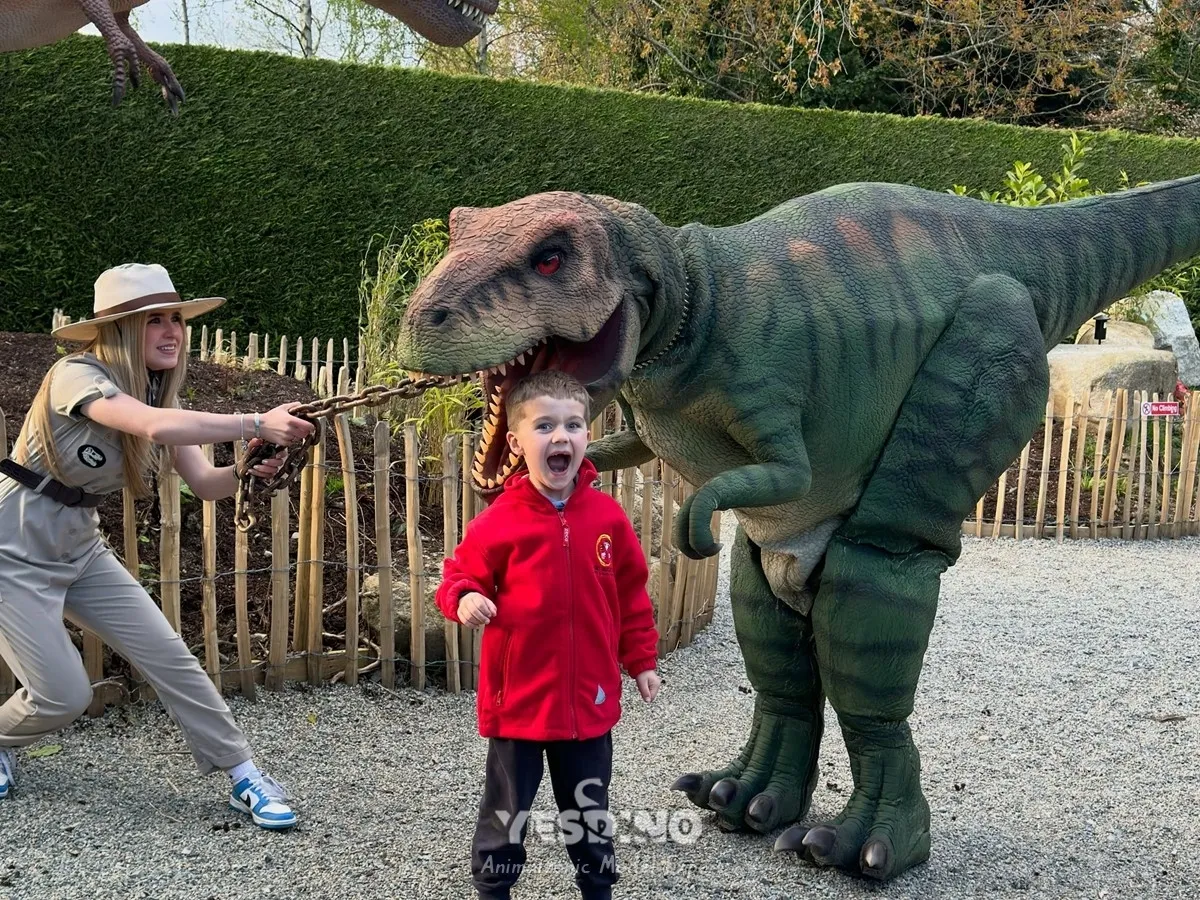
Why kids and parents both stopKids stop because it moves on its own and it's roughly their size. Parents stop because it's the photo they came for, and because a still dinosaur in a shopping centre is wallpaper while a moving one is an event. Add an infrared remote and staff can trigger a roar exactly when a family walks past — that timing is what turns a prop into a memory. Where it earns its keepThis is the piece that fixes dead space. Park entrances, walkways between two paid zones, the blank wall next to the ticket desk, the corner of a family seating area, the middle of a mall atrium. It also does the light educational work that keeps teachers and parents on side: species name, era, a short plaque, and you have a science exhibit that also photographs beautifully. What it costsThis is the mid-range, entry-level purchase in the dinosaur category, and the one that gets cheaper fastest when you order in a group — two or three models built together spread the design and set-up work across the batch. Ask for species options at the same time. A small animatronic dinosaur in a T-Rex, Triceratops or Parasaurolophus costs the same to specify and gives you variety for the same money. 2. Walking dinosaur costumes: the prop that turns a slow Tuesday into a queueA walking dinosaur costume is a performance prop worn by one person. The performer sees out through a camera panel or mesh window and works the mouth, head and tail from inside, so the dinosaur looks at whoever it's looking at. Same build philosophy as the static models: steel and alloy frame, foam body, hand-finished silicone skin, but lightened until somebody can wear it for a two-hour shift.
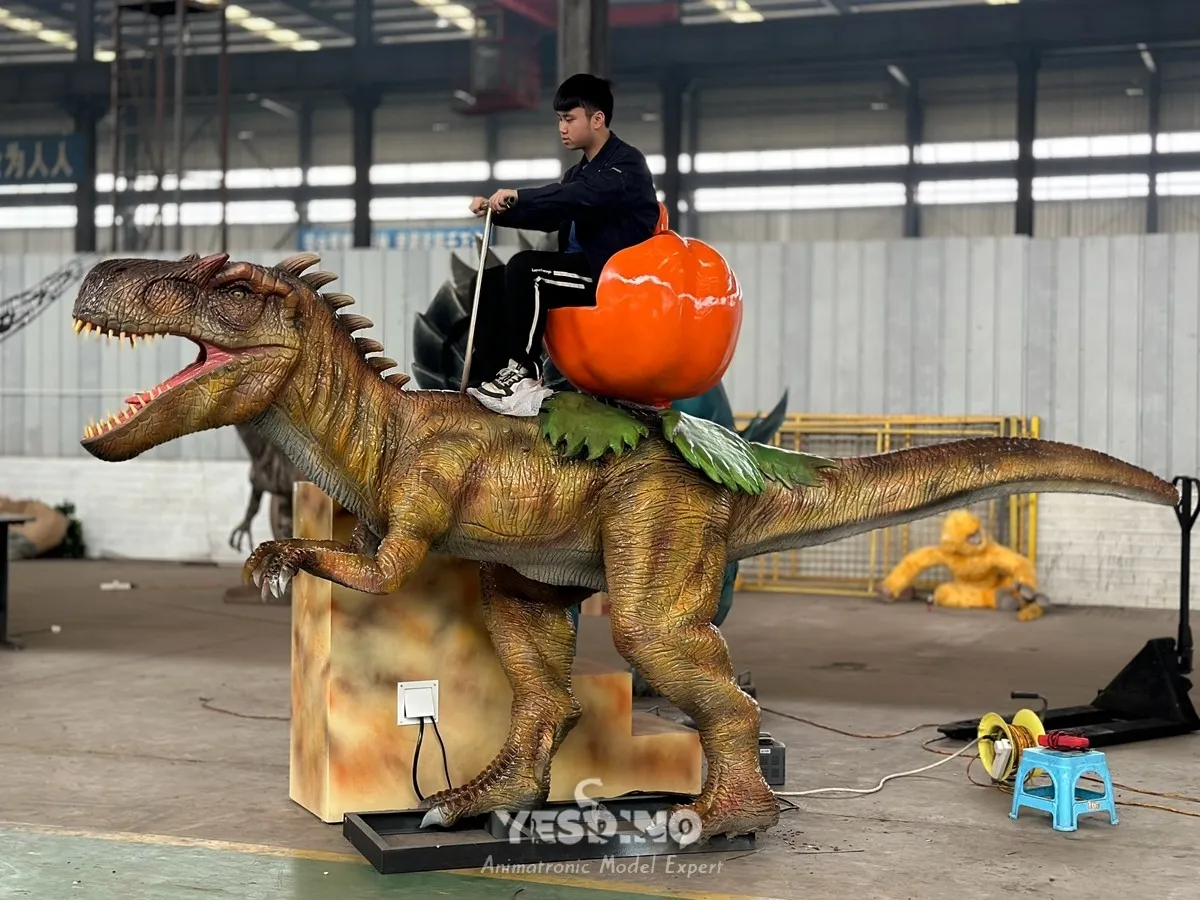
Why it pulls a bigger crowd than anything else hereA ride waits for guests to come to it. A costume goes to them. That's the whole trick, and it's why operators describe the first outing the same way every time: kids freeze, then follow, then parents follow the kids, and within a minute there's a crowd in a spot where nothing was happening half a minute ago. Where it pays offParades, openings, holiday programming, mall and hotel events, birthday packages, school visits, film and TV work. Because there's no fixed footprint, it earns money at your venue on Saturday and at somebody else's on Wednesday. Two operational notes worth budgeting for: you need a performer (that's a labour line, not a one-off cost) and you need a spotter when children are close, because a five-year-old will absolutely try to grab the tail. What it costsMid-to-high for a single unit, but the cost per use is the lowest on this list if you book it out. A realistic dinosaur costume that gets used twice a week for three years has already paid for itself twice over; the same money spent on a fixed installation that sits still for eight months does nothing on a rainy Tuesday. 3. Ride-on dinosaurs: the one that can pay for itselfA ride-on dinosaur is a mechanical dinosaur a child sits on and drives, with the controls built into the seat or handlebar. Forwards, backwards, a slow turn, dinosaur sound and lighting. Steel frame underneath, padded seat on top, and a top speed low enough that a parent can walk beside it without jogging.
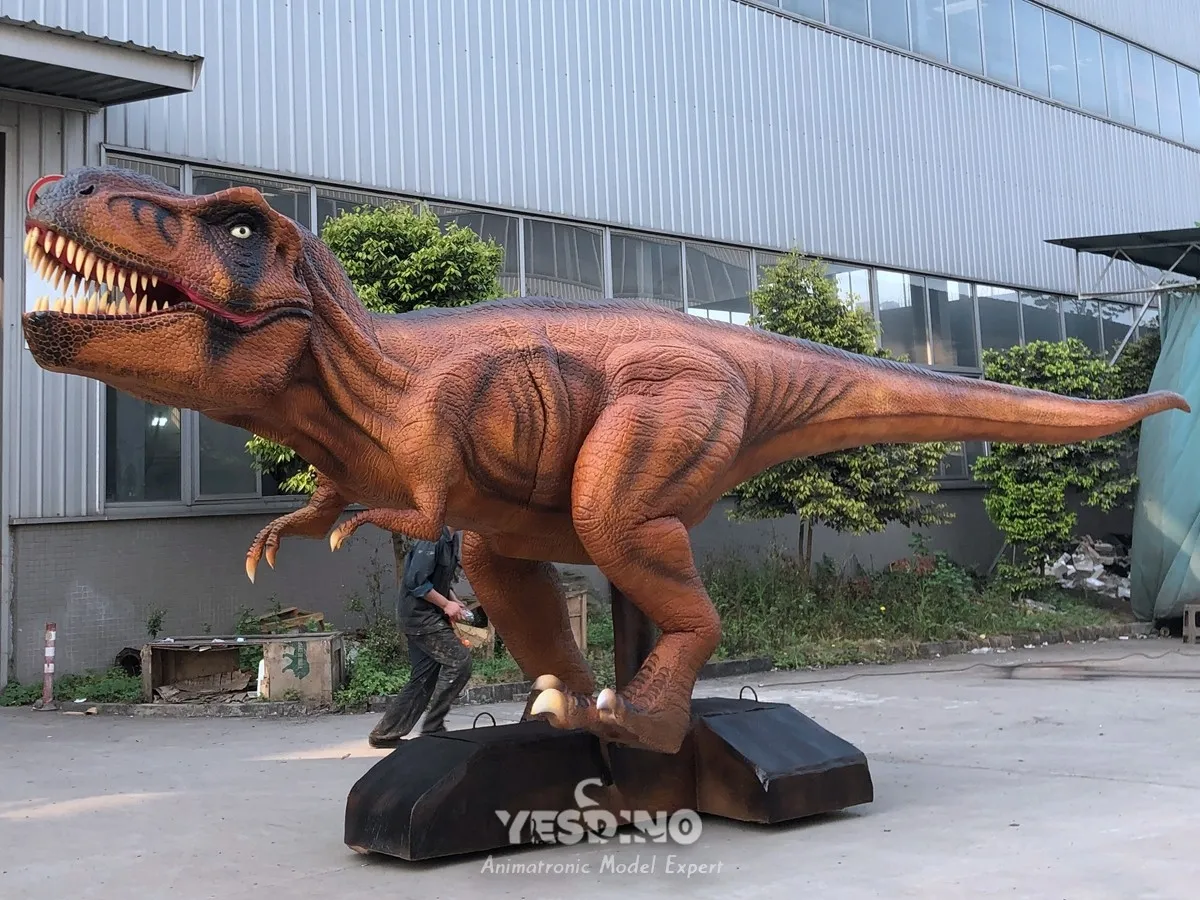
What to check before you buy oneAsk these five things, whatever the supplier: a speed a supervising adult can keep up with, a stop the child can reach and staff can override, a weight and age rating that matches your actual visitors, a charging routine that fits your opening hours (not one that takes the unit out of service mid-afternoon), and a smooth, bounded floor with no slope at the edges. Get those right and the unit survives a busy weekend. Get them wrong and you'll be repairing it by the second month. Where it earns its keepIndoor dinosaur halls, paid courtyard zones, family entertainment centres, mall activity areas and holiday markets. It's the only prop here that produces revenue rather than atmosphere, so price it like an attraction: rides per hour × ticket price × open hours. Even a conservative version of that sum tells you in advance whether the unit makes sense for your footfall, which is not something you can say about a decorative model. What it costsMid-to-high, and priced as a business purchase rather than a decoration. If the arithmetic above only just works at your current traffic, start with one unit and one peak season before you commit to a second. See the dinosaur rides line-up for the sizes and seat options. 4. Remote-control walking dinosaurs: a crowd magnet with nobody insideThis one is driven from outside by a staff member with a handheld transmitter: forwards, backwards, turning, with the roar and the head movement synced to the walk cycle. Because nobody has to fit inside, the model can be heavier, more detailed and more convincing than a wearable — a real advantage if your audience includes adults as well as children.
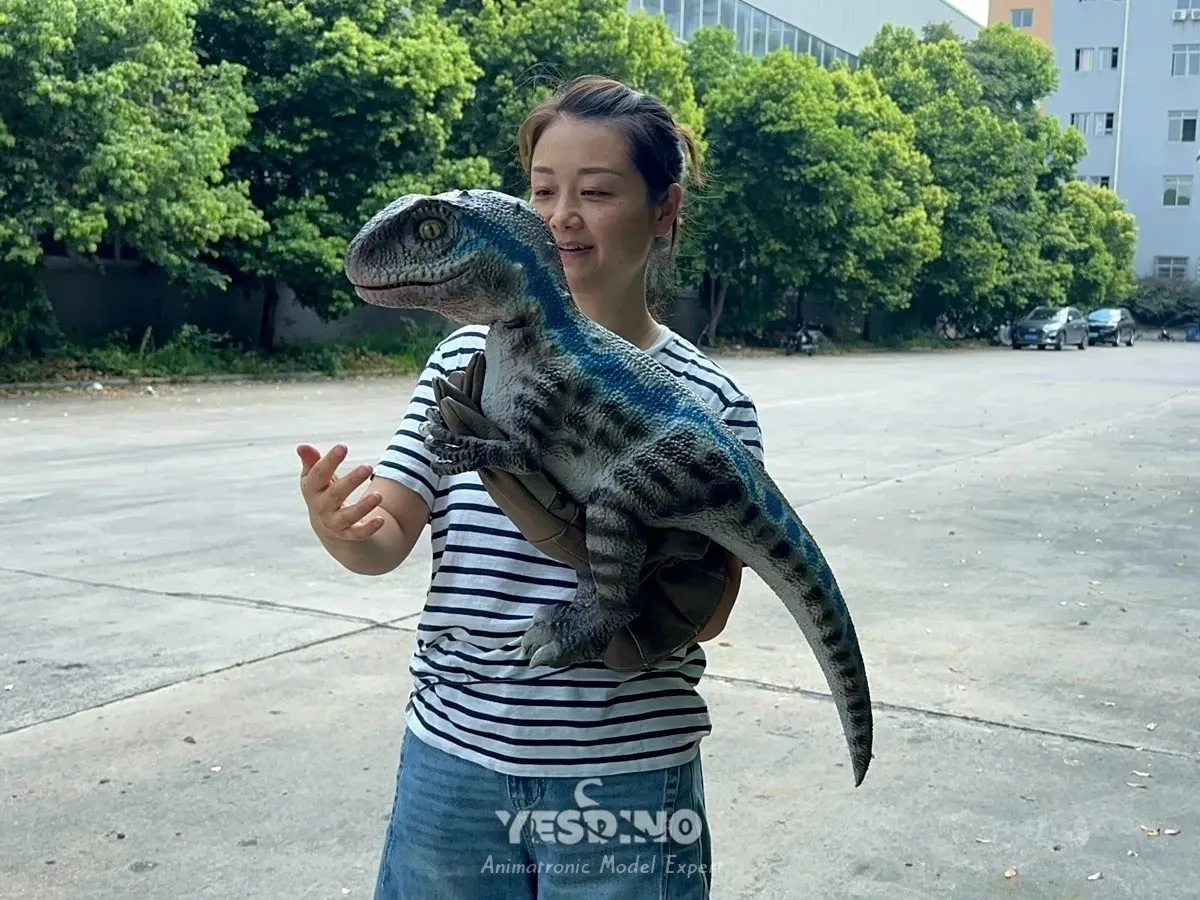
The advantage that never makes it into the pitchNo performer inside means no heat build-up, no fatigue, no visibility compromise, and no performer wages during the run. One staff member can drive the dinosaur and talk to the crowd at the same time, which is exactly what you want during a show. And when the event ends, it parks, gets covered and waits; it doesn't need to be washed, dried, stored flat and checked for tears the way a costume does. Where it fitsPlazas, courtyards that are empty on weekdays, event days, temporary exhibitions, festival stages and school grounds. Because it needs nothing fixed — flat ground, a charged battery, one operator — it's the smartest first purchase if you're still deciding where your dinosaur traffic actually is. Run it in three different spots over one season and let the crowds tell you where to build. Browse the custom animatronic range for walking models and custom builds. What it costsMid-range. The clean way to choose between this and a costume: costume for indoor close-up work among people, remote-control walker for open ground and repeated shows. 5. Dinosaur hand puppets: small, cheap, and quietly effectiveA hand puppet is the one prop here that needs no power, no installation and no risk assessment. Soft silicone over sponge, your hand goes inside, the mouth opens and shuts. It's also the only item on this list that works thirty centimetres from a child's face, which is where the magic actually happens for the three-to-six-year-olds who are too small for the big stuff.
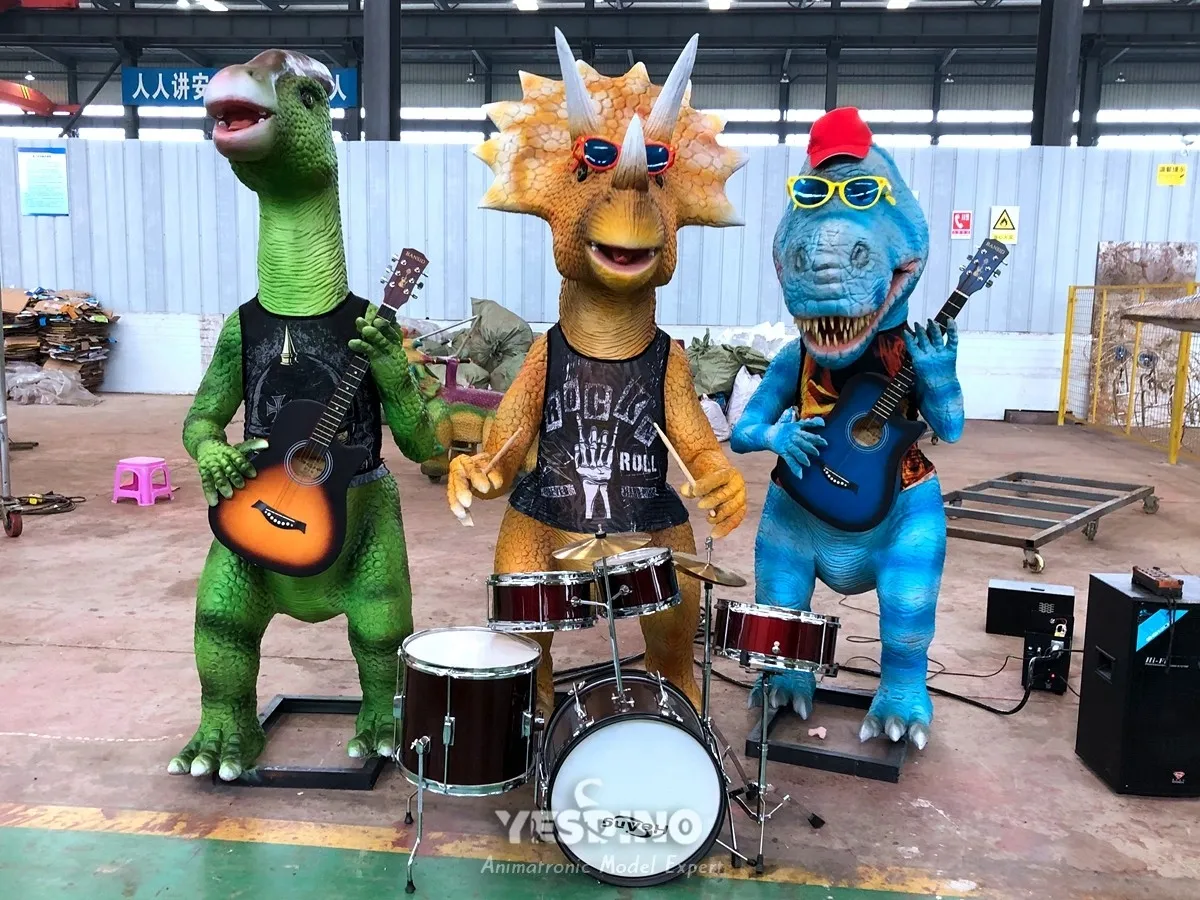
Why they're worth having aroundStory time, birthday packages, school and nursery visits, rainy-day programming, a roving host who needs something in their hands while they talk. Buy five rather than one: a pair of puppets arguing about who gets the last leaf is a five-minute show, and that show is what your birthday-booking price is really paying for. What it costsThe lowest band on this list, and the fastest to replace when a toddler tests it. If your team already runs group activities, they're the cheapest way to add a dinosaur segment. See the dinosaur hand puppets. 6. Dinosaur bands: the photo spot that runs itselfA dinosaur band is a set of cartoon-styled dinosaurs holding guitars, drums and a bass, with motorised movement timed to music. You switch it on in the morning and it performs on a loop until you switch it off. No operator, no schedule, no performer to roster.
Why operators keep buying themThree reasons, and none of them is subtle. It's a landmark people use to navigate ("meet you at the dinosaur band"), it produces a queue of families waiting for the same photograph, and that photograph goes out to the family's friends with your venue in the background. The strand of the attractions industry built on immersive, photogenic scenes keeps growing — IAAPA's coverage of immersion makes the point that operators are investing in exactly this kind of scenery — and a dinosaur band is about the least expensive way to buy into it. Where it fitsTheme plazas, commercial streets inside a park, food-court frontage, the centre of a play area, and shopping-mall promotions. It wants a stage-sized footprint and a permanent power supply, so it's a planning decision rather than an impulse buy — but it's also the item that still looks deliberate ten years later. What it costsMid-range, priced per dinosaur in the set, so a three-piece band and a five-piece band are different budgets. Buy the set that fills your space properly instead of the biggest one you can afford; a cramped five-piece looks worse than a confident trio. How to pick the right mix for your space and budgetAlmost every dinosaur playground we're asked about comes down to the same three constraints. Answer them honestly before you look at a catalogue and you'll skip a lot of expensive mistakes. Start with what your site already has
Build it in layers instead of all at once
The questions we'd ask any supplier, including ourselves
FAQ: dinosaur props for playgroundsHow much does a dinosaur prop for a playground cost?It depends on length, the number of movements, drive type (motor or pneumatic), skin and paint detail, sound, lighting and the control system, so manufacturers quote per project rather than publishing list prices. Send the species, size, quantity and site conditions and you should get a written quotation with a free 3D design drawing. Is there a minimum order? Can I buy just one dinosaur?No minimum order on standard models. A single unit is fine, and most first orders are one or two models — usually the pair that gives a fixed photo point plus something that moves around the site. How long does production take?Standard models are usually finished within 2 to 4 weeks after the deposit and the approved drawings. Fully custom species and multi-unit park projects take longer. Your exact schedule, including shipping transit time, should be confirmed in writing on the order. Can dinosaur props stay outdoors in rain and strong sun?Yes, with the outdoor version. Outdoor models use an anti-rust treated frame, UV-stable and water-resistant silicone skin, and sealed motors and electrical components. Give the supplier your installation location and they should specify the right materials and anchoring method for that climate. How is a playground dinosaur controlled?Standard control is an infrared remote with preset movement sequences. Sensor activation, coin-operated or button-start operation for paid attractions, timed loops and an optional control panel are all available. Sound and lighting normally run from the same controller. Are they safe for small children?Movement speed and pinch points are the two things to check, not the size. Ask for the material specs and test records in writing, keep unsupervised climbing off the model, and put a spotter with any wearable costume. Anything children can sit on or lean against should be measured against the same play-safety rules your other equipment follows. Can I see the model before it ships?You should. Approve the 3D rendering before production starts, then ask for workshop photos at the frame, sculpting, skinning and painting stages, and a live video call from the workshop if you want to see it running before it's crated. Can I visit the factory first?At our workshop in Zigong, Sichuan, yes — visitors see the sculpting, skinning and testing areas and watch finished models run. If travelling isn't practical, a live video walkthrough of the same areas is the usual alternative. See the factory tour for what the visit covers. Who builds these props, and how to get a quoteWe're YESDINO, the trading name of Zigong Dino Culture & Art Co., Ltd. We've been making animatronic dinosaurs, animals and ride-on models in Zigong, Sichuan since 2015 — the city sitting on the Dashanpu fossil beds, which is why the dinosaur industry ended up here in the first place. We're a manufacturer rather than a trading company, which matters more than it sounds. Sculpting, steelwork, mechanics, skinning, painting, programming and testing all happen under one roof, so when you ask for a change to the movement list or a different skin tone, the answer comes from the people doing the work. Finished projects are in the portfolio, and the answers to most first questions are on the FAQ page. To get a quote, send four things: the species or a reference photo, the size and quantity, indoor or outdoor use plus the installation country, and your movement requirements. You'll get a written quotation with a free 3D design proposal, usually within one working day, and nothing gets cut until you've approved the drawing. Get a free quote and 3D design proposal — or email info@yesdino.com if you'd rather just ask a question first. |