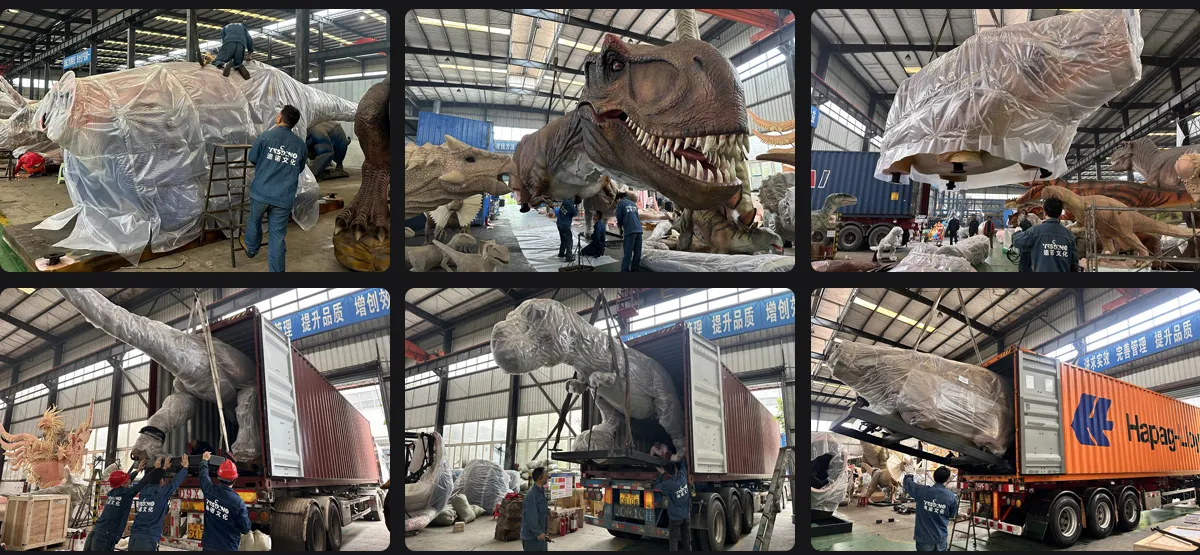
Production Process
Why two, and why these two sizes
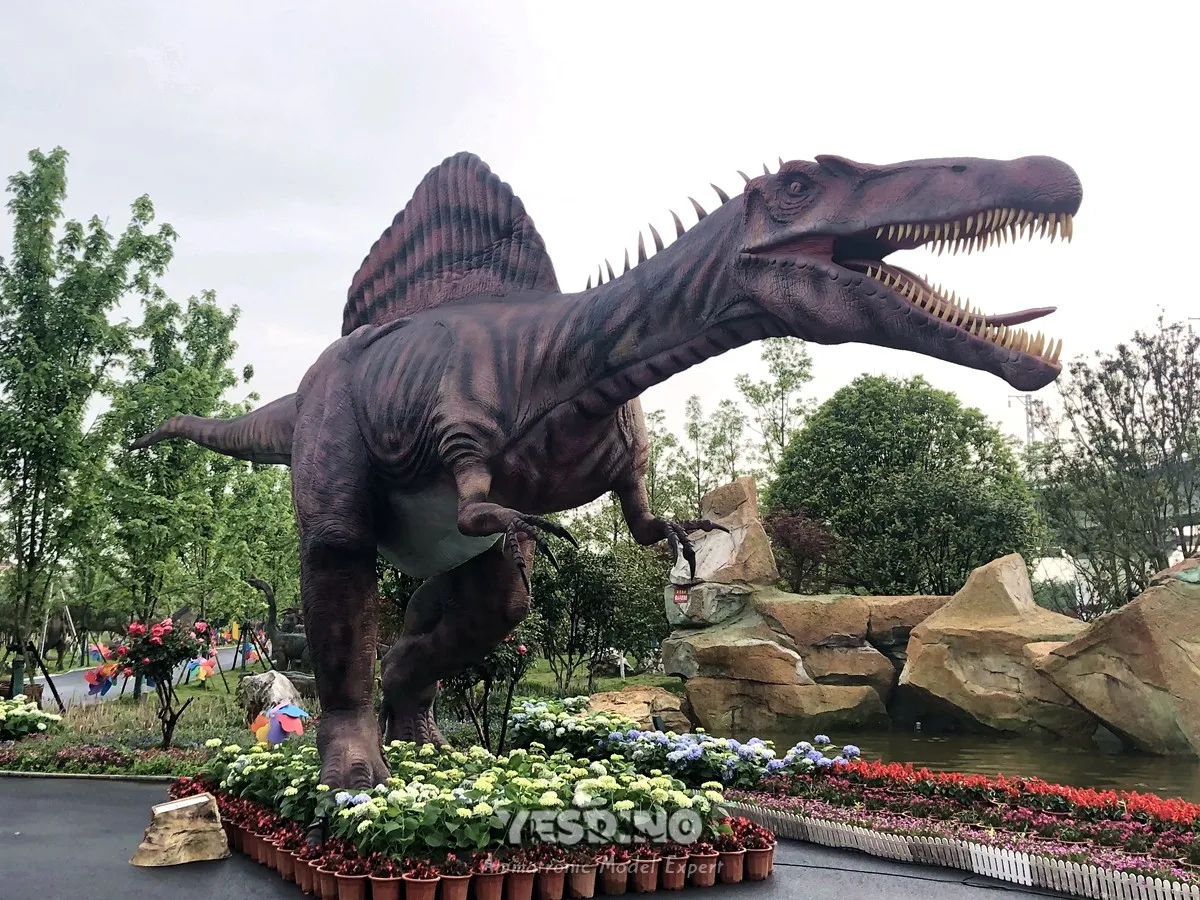
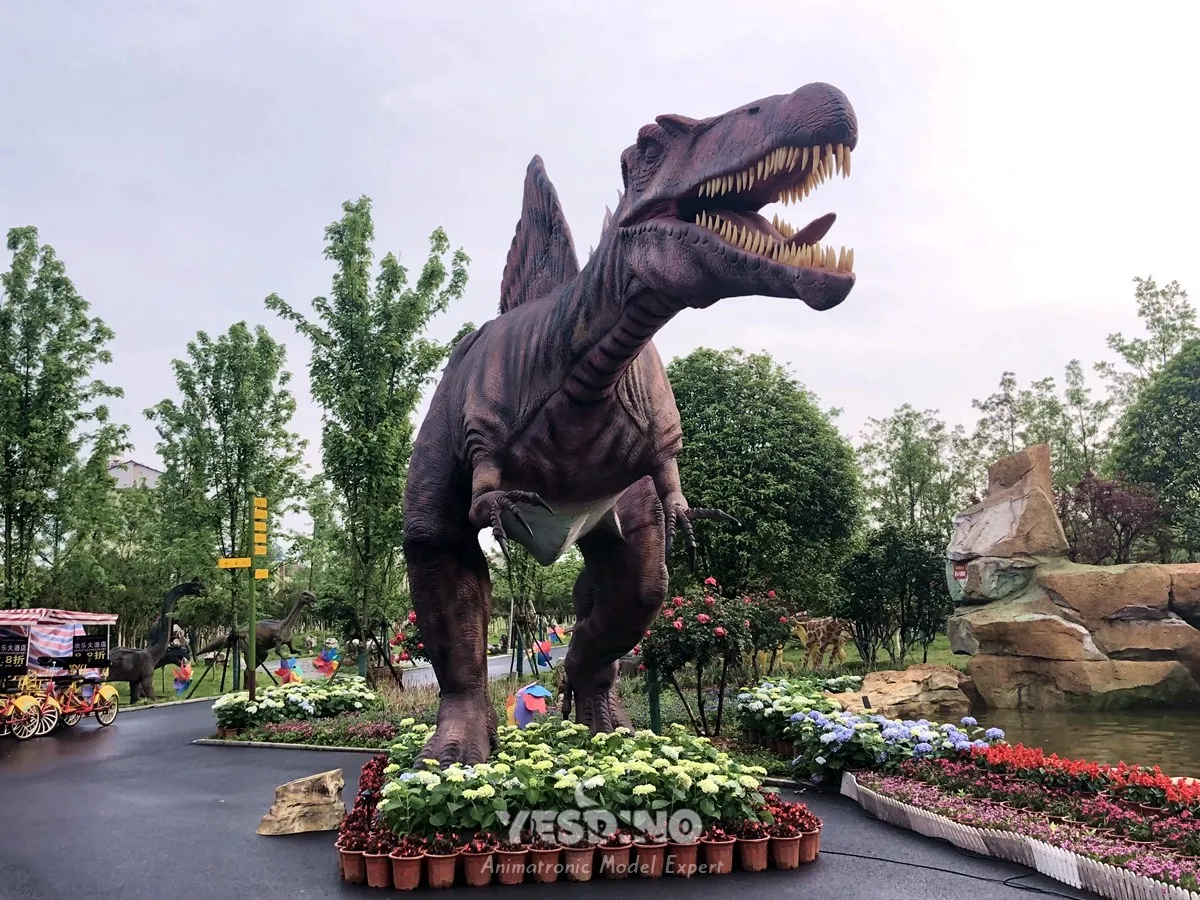
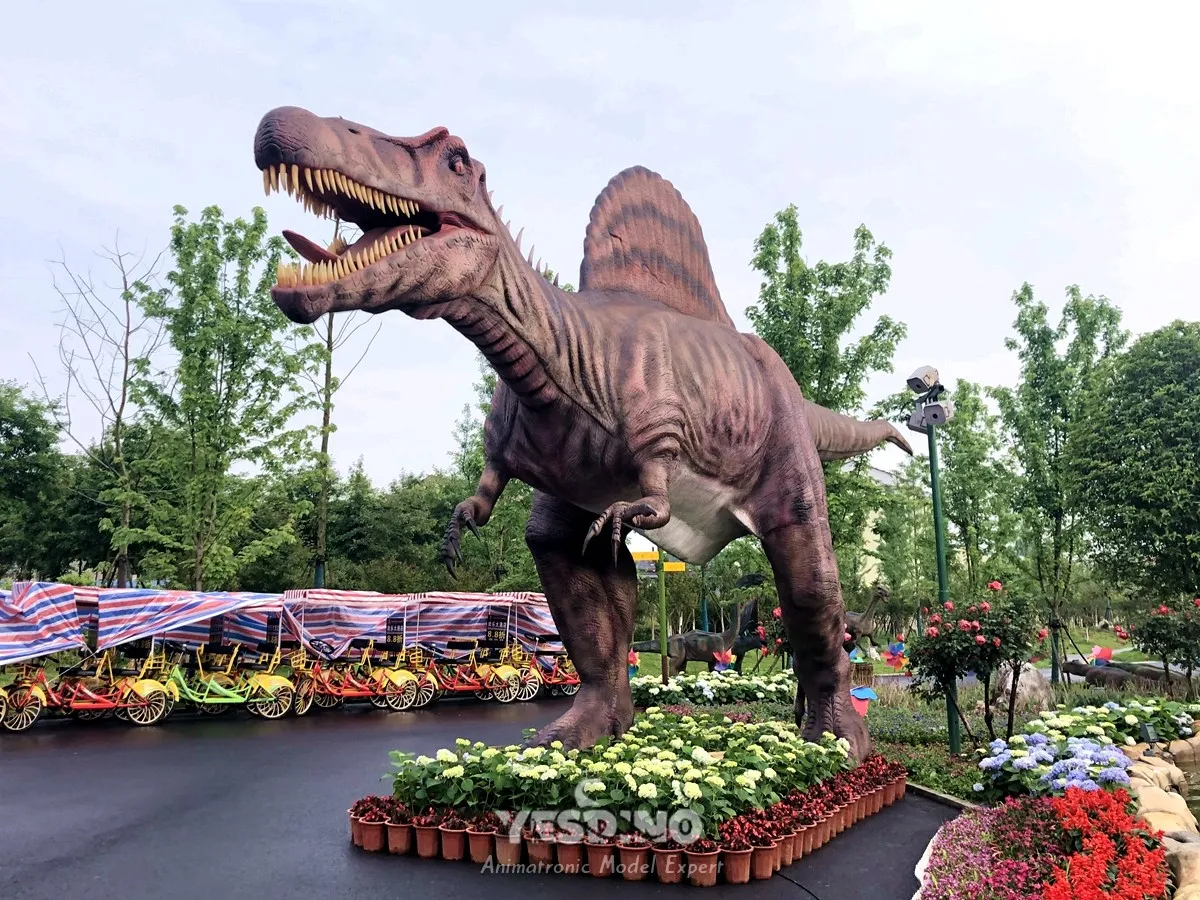
A single Spinosaurus beside a lake is a photograph. Two of them at different distances turn the same water into habitat - the eye reads the nearer animal as foreground and the further one as depth, and the sail, which is the whole reason anyone orders this species, gets compared against itself rather than against a fence.
The 15 m and 13 m split exists for placement. The 15 m is the one that goes behind water or up a slope, where it is seen whole and never touched. The 13 m goes on the walkway side, closer to people, where the head and the jaw are worth detailing. Same species, two different jobs, one order.
What is in the set
- Spinosaurus, 15 m - the far piece. Set it back 8 to 12 m from the path, ideally across water so the reflection doubles the sail.
- Spinosaurus, 13 m - the near piece, 3 to 5 m off the walkway, angled so the two heads point into the same sightline rather than at each other.
- One layout drawing at 1:100 - marked with the water line, the power drop and the access route for the crane.
Both units are built to the same palette and the same scale reference, so the size difference reads as two animals rather than two products.
Where the movement budget should go
The sail needs nothing. It reads at 30 m standing still, so the money that would go into a sixth and seventh joint is better spent on the neck and the jaw - the two movements that make a long-necked animal look alive rather than mounted. Four to six joints covers head turn, neck, jaw with the roar and a tail sweep, and that is the specification most builds of this species land on.
What changes with size is not the movement list but the engineering behind it. At 15 m the frame splits into several transport sections, the neck has to be braced to travel and to hold, and wind load becomes a design input rather than an afterthought. That is why 15 m and 13 m sit in different cost classes even though they are the same animal.
Water, and the one thing that goes wrong
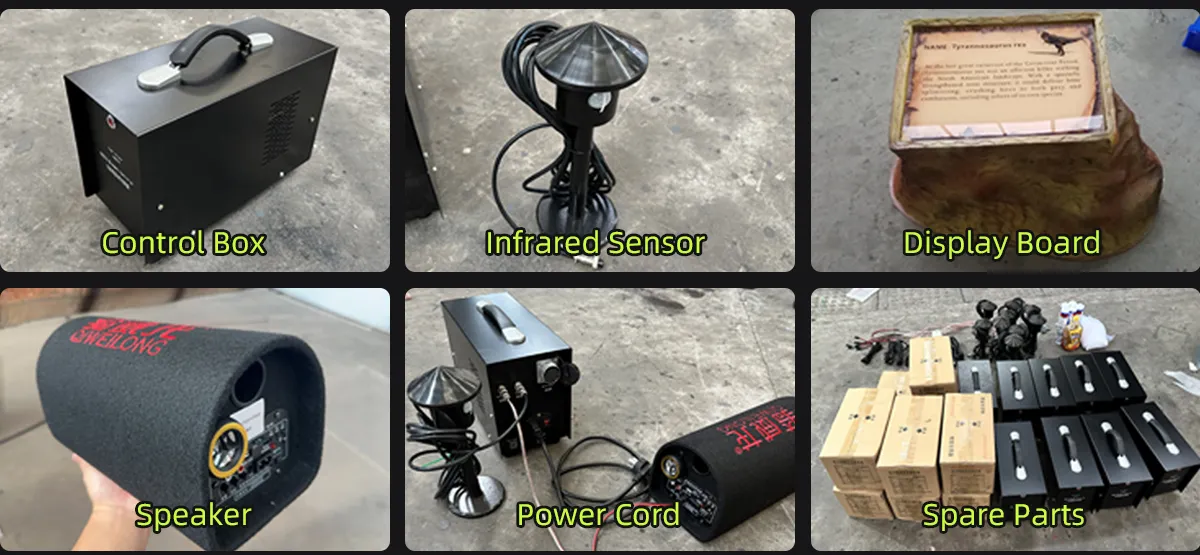
Lakeside placement is the common brief for this species and it is also where cabinets fail. The animal itself is fine outdoors: sealed cable entries, UV-stable colour coats, a skin built for rain. The control cabinet is the part that objects to standing water.
Raise it above the high-water line, put it on a plinth or in a nearby service box, and check drainage around the base before the animal arrives. A cabinet that sits in a puddle works until the first wet season and then reads as a motor fault. If you send photos of the proposed water level and the ground beside it, the base design can account for it at drawing stage instead of after installation.
Installation and the routine
The 15 m arrives in sections and needs a crane, a clear access route and a crew on site for more than a day. The 13 m is quicker but still needs level ground and an anchor. Both need the ground bearing checked first - soft ground beside water is the usual weak point.
Maintenance is a morning a month: run the full cycle before opening and listen for a change in sound, wipe the skin and check the seams, confirm the cabinet is dry and the door gasket seats. Before winter, re-seal the jaw hinge and the base seams. In the off season, exercise the joints monthly - the ones that seize are the ones that stood still, not the ones that ran.
Technical specifications
| Item | Spec |
|---|---|
| Set composition | Spinosaurus 15 m + Spinosaurus 13 m |
| Model code | YKL-017 |
| Length | 13 m and 15 m |
| Height | Sail height follows the length; fixed on the shop drawing |
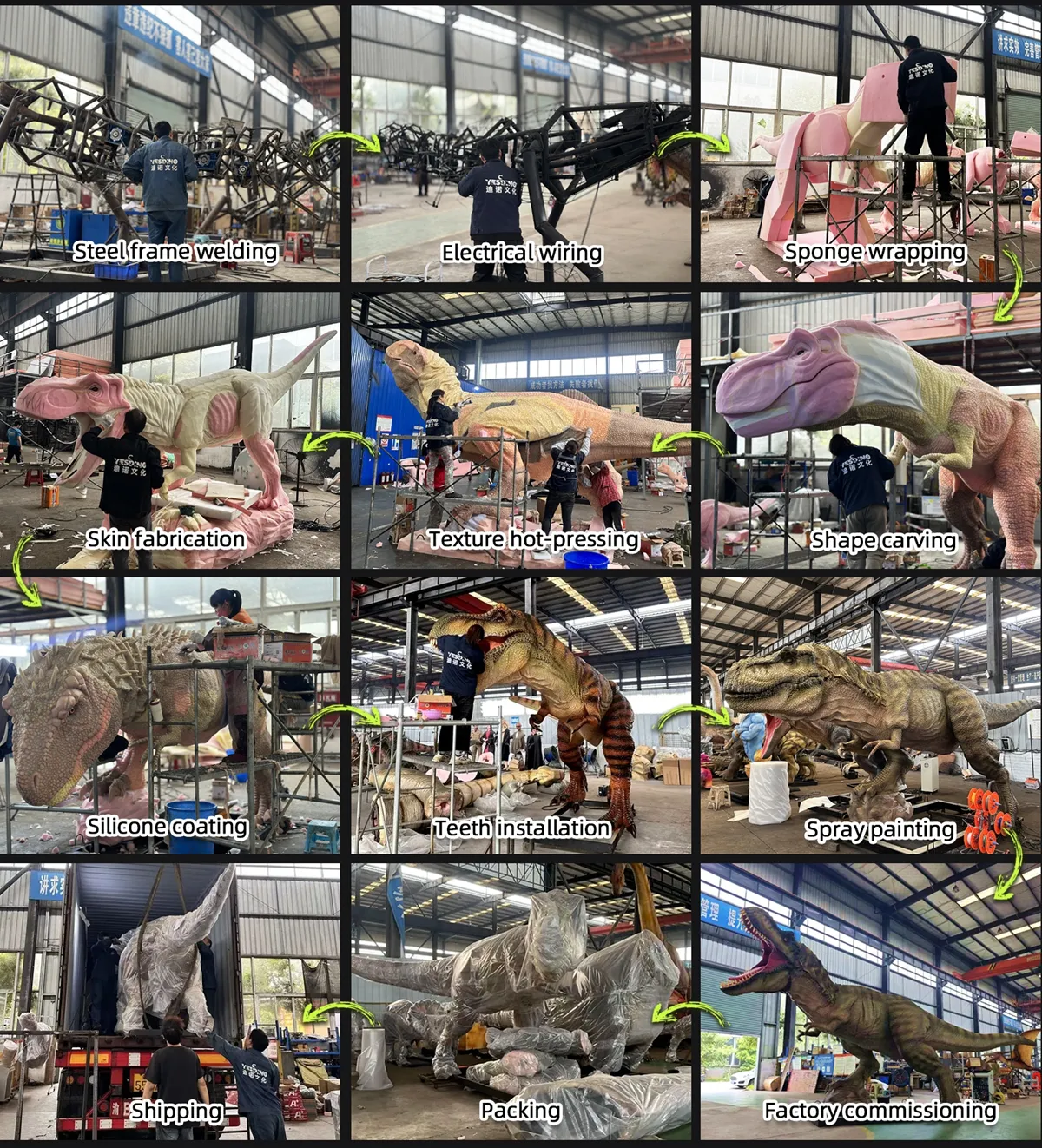
| Frame | Welded Q235 steel, anti-rust coating, sectional for transport |
| Body and skin | Carved foam volume, 5-7 mm silicone skin, translucent colour coats |
| Movement | Head turn, neck, jaw with roar, tail; 4-6 joints per unit |
| Drive | 450 W brushed DC motors, relay control board |
| Power | 110 V or 220 V single phase |
| Environment | -25 °C to 45 °C, sealed cabinet; lakeside placement needs the cabinet raised |
| Shipping | Multiple transport sections at 15 m; crane on site |
| Warranty | 2 years on core electronics |
What the price covers
Inside: both animals framed, skinned, wired and tested, the movement set and control boards, export packing for the transport sections, two years on the core electronics.
Outside: freight and insurance, duty and taxes, certificates, installation with crew travel, crane and local labour, foundations and waterside site works, and delay costs. On a lakeside install the site works are often the line that surprises people, so get a local number for them before committing.
Questions buyers ask about this pair
Can we buy only the 15 m?
Yes. Both lengths are quoted separately, and the pair price reflects building them together to one palette.
Will the 15 m stand safely next to water?
Yes, provided the base and the cabinet are designed for it. Send the high-water level and ground photos; that is the information the base design needs.
Does the sail move?
No. The sail is rigid by design. Movement is in the head, neck, jaw and tail, which is what reads at distance.
Sizes and what changes at each band are set out on the animatronic dinosaur features page. If the brief is a long-necked silhouette rather than a sail, the 16 m Brachiosaurus for museum displays covers the same sightline from a different shape. Everything else is on the animatronic dinosaur range.
Product Accessories
Packaging and Container Loading