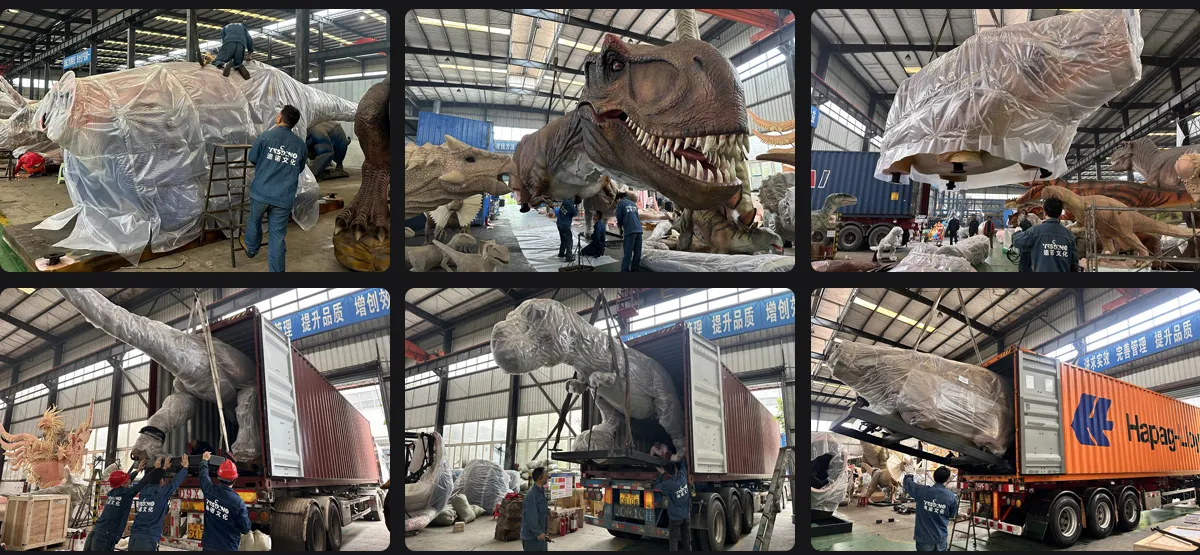
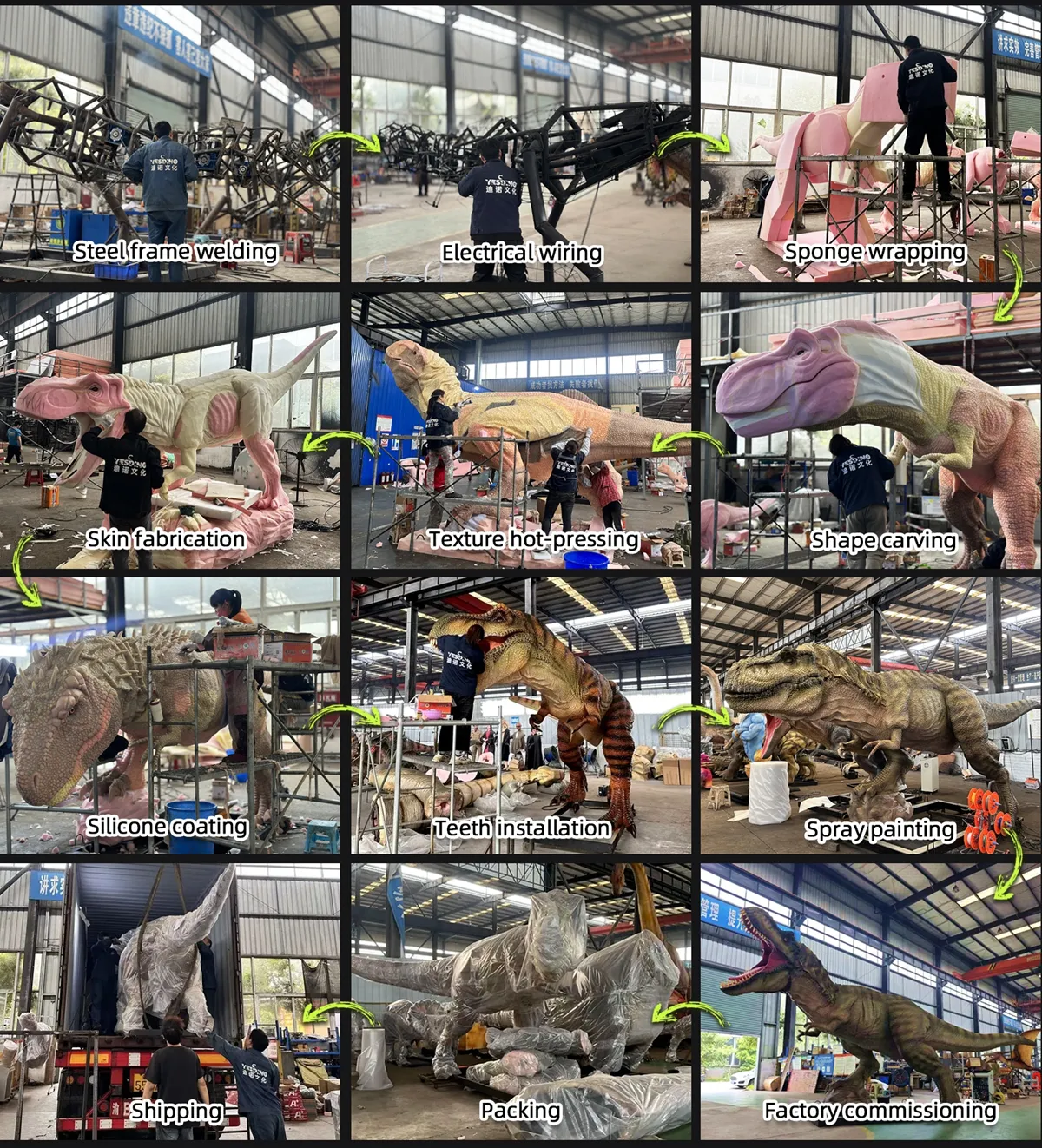
Production Process
An animal people walk past, not up to
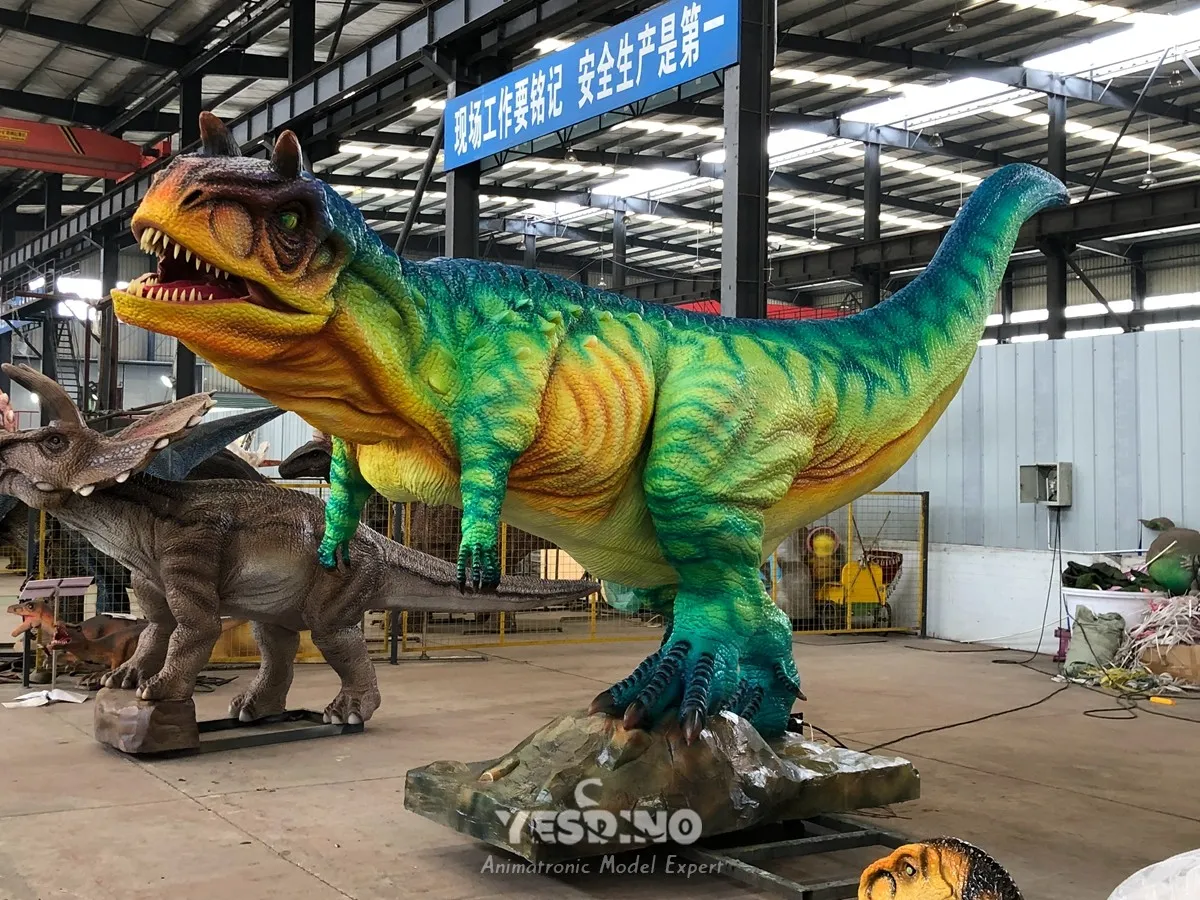
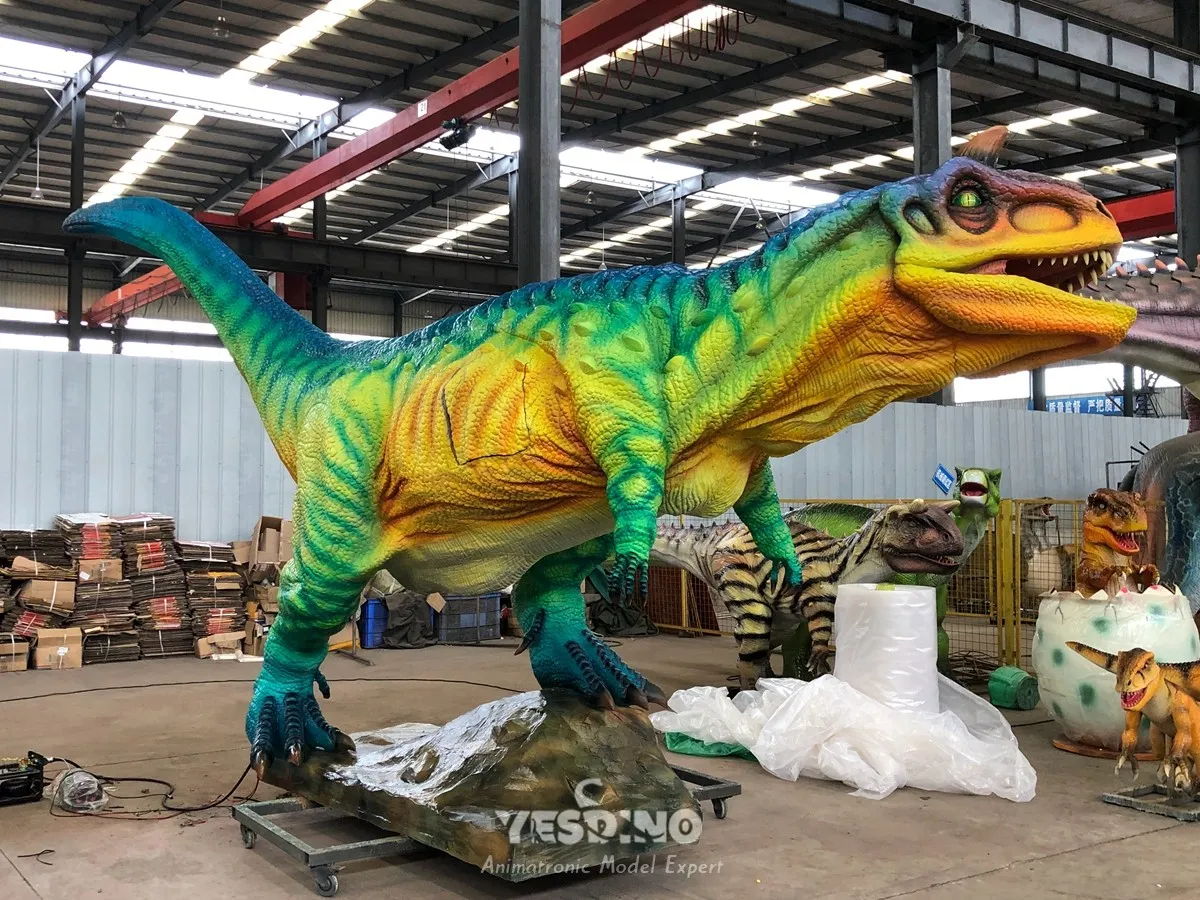
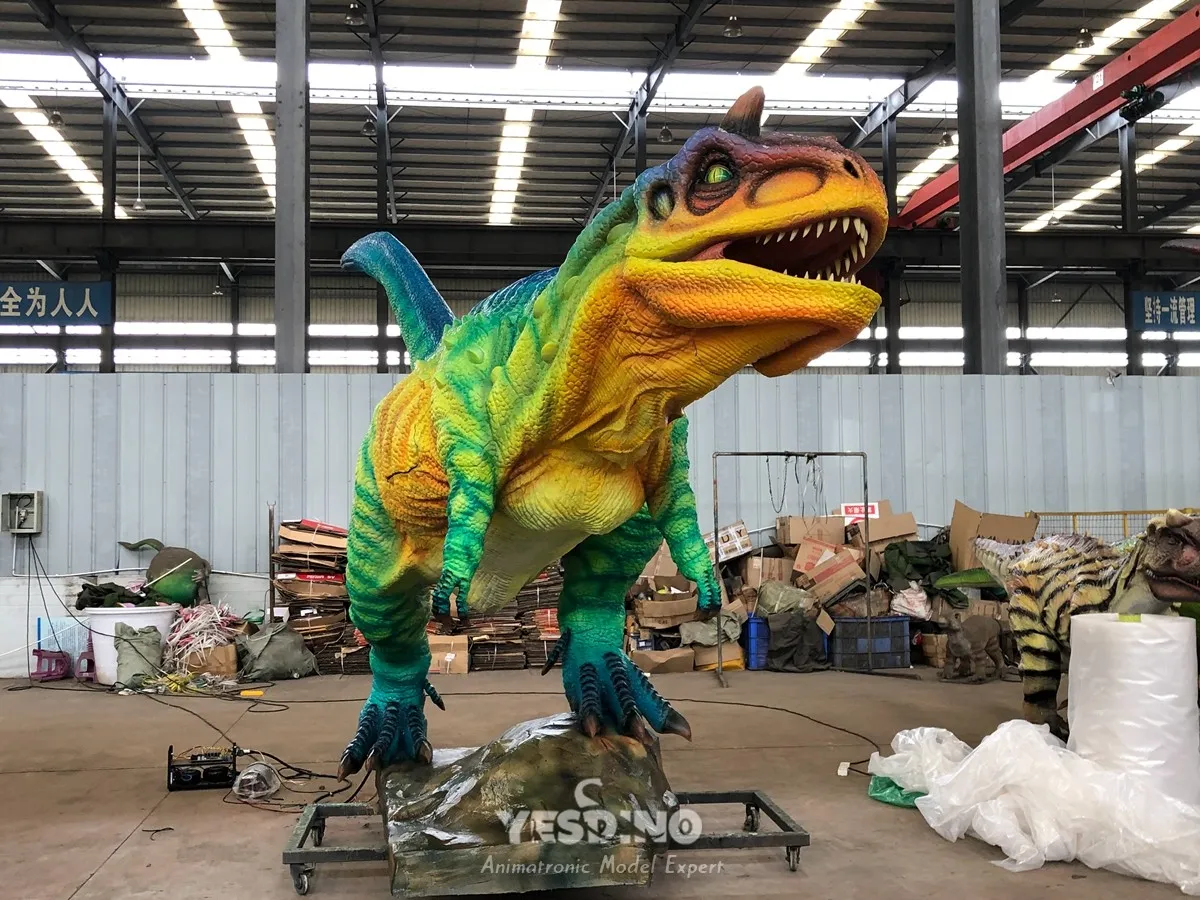
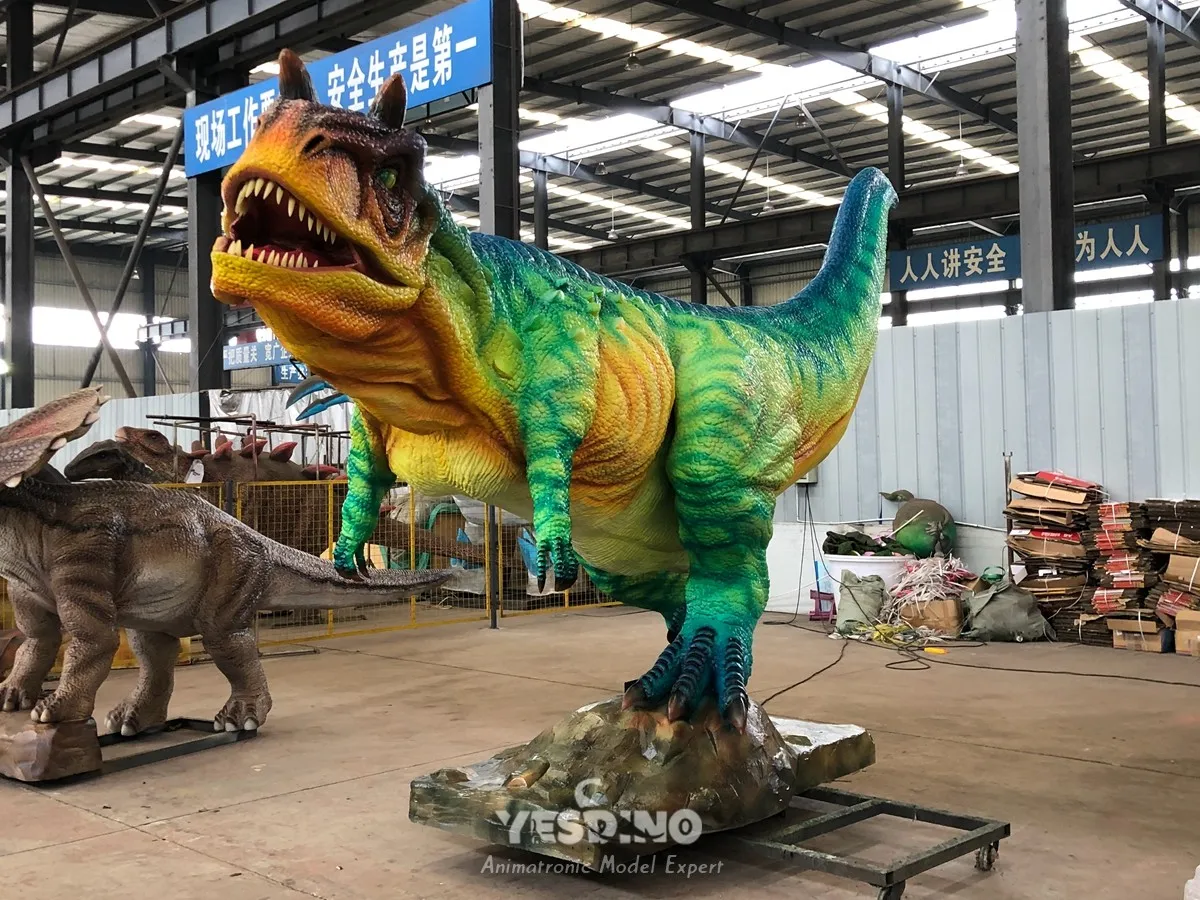
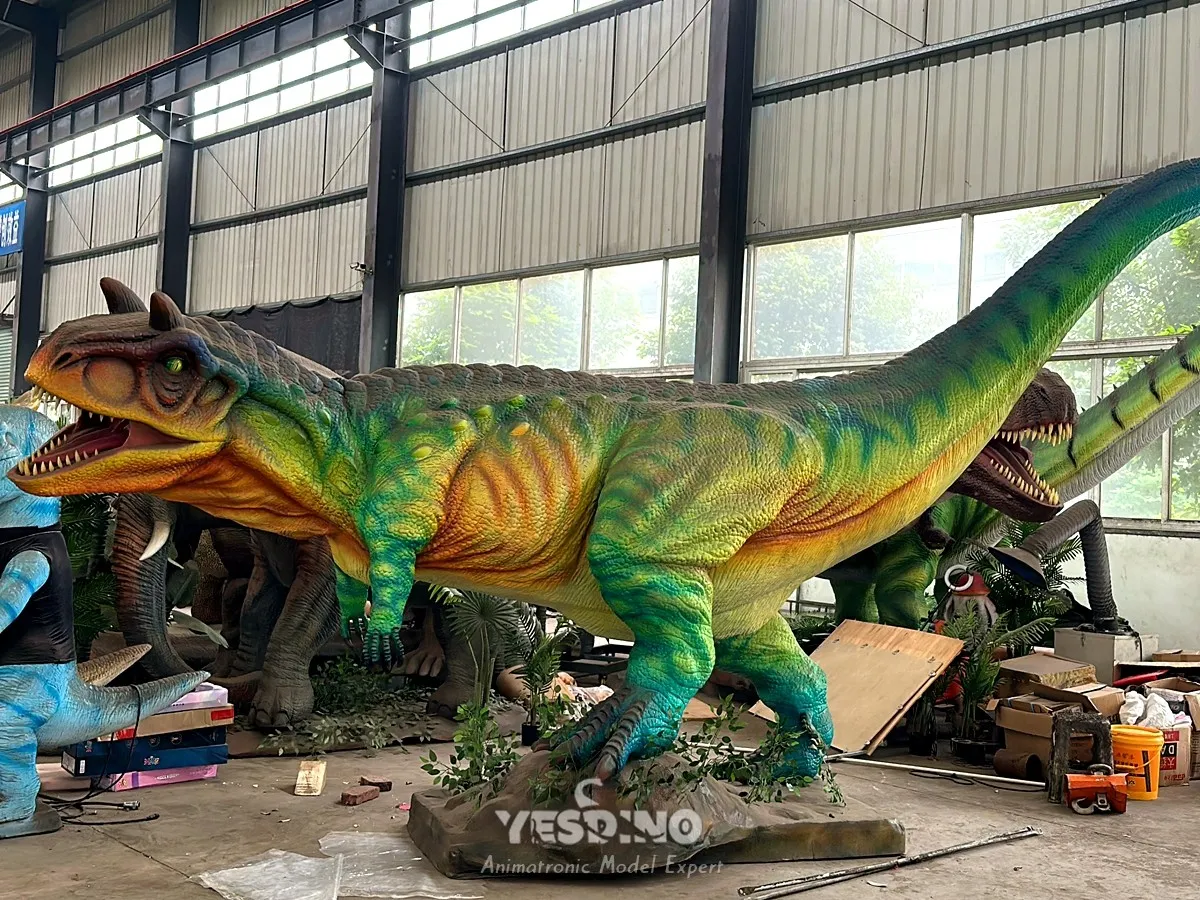
Carnotaurus is the species that works at short range. The horns sit above the eye and only read from a low angle, the skull is short and deep, and the whole silhouette is built to be seen from three metres rather than thirty. That single fact decides how this one should be specified.
At 8 m it is the largest length we would still call a walkway animal. Big enough to stop someone mid-stride, small enough to install on a path without a crane and a week of site works.
Where the money should go
Not into joint count. On a piece seen at two metres, visitors study the jaw line, the teeth, the way the skin folds at the shoulder, and whether the eyes move. Six joints does that work; nine does not do it better.
What is worth paying for here is surface: the layered scale rows along the back, the horns, the jaw interior and tongue, and the translucent colour coats that keep the surface reading as skin under direct light instead of painted plastic. A cheap build at this length looks cheap up close, which is exactly the distance this animal is bought for.
Movement set
Head turn, jaw open with the roar, tail sweep, and eyes that blink. Add neck tilt if it will sit on a stage where the head is above eye level, and forelimb movement if visitors are meant to pose with it. Body rise is available but on an 8 m piece it earns less than it costs unless the viewing distance is under five metres.
Where a joint has to hold against gravity or travel slowly and evenly, it is specified as servo with its own controller - a different cost class. On this size that is usually only worth it for the jaw, if the roar is timed to a show.
Build, and what 8 m changes
The method does not change with length: a welded Q235 frame carries the load, carved foam gives it volume, 5-7 mm of silicone goes on in layers over the top, and colour goes on in translucent coats rather than one opaque finish. What changes at 8 m is the arithmetic around it.
Skin is surface, and surface grows faster than length. Going from a 4 m Carnotaurus to an 8 m one roughly quadruples the area that has to be carved, coated and painted, which is why the price step between the two is steeper than the length difference suggests. It is also why a cheap 8 m build has nowhere to hide - at 4 m the shortcuts are small, at 8 m they are the whole animal.
Logistics change as well. The frame splits into sections that fit a standard container, the base needs a plate or an anchor rather than castors, and the piece is still light enough for a pallet truck and two people to reposition - so fix the final position before anything is poured.
Themed settings, and the practical detail
Three placements suit this animal: a themed walkway where it stands just off the path, an event stage where it is the reveal, and a horror or jungle beat where visitors round a corner and meet it at close range. In all three the same thing matters - sightline. If the first view is from 20 m, the detail you paid for is wasted.
Sound is cheap relative to mechanical joints and the effect is large, but check local noise limits before specifying a roar on a stage that runs all evening. For outdoor placement, sealing at the cable entry and cabinet is the part to get right; the skin and frame are built for rain.
Technical specifications
| Item | Spec |
|---|---|
| Model | Carnotaurus, 8 m |
| Model code | YKL-121 |
| Length | 8 m |
| Height | Fixed on the shop drawing |
| Frame | Welded Q235 steel, anti-rust coating |
| Body and skin | Carved foam volume, 5-7 mm silicone skin, translucent colour coats |
| Movement | Head turn, jaw with roar, tail, eyes; 4-6 joints |
| Drive | 450 W brushed DC motors, relay control board |
| Power | 110 V or 220 V single phase |
| Environment | -25 °C to 45 °C, sealed cabinet |
| Shipping | Sectional; small enough for a pallet truck on site |
| Warranty | 2 years on core electronics |
| Custom options | Length, pose, colour, sound, smoke or water effect, LED |
What the price covers
Inside: the animal framed, skinned, wired and tested, the specified movement set and control board, export packing, two years on the core electronics.
Outside: freight, duty and taxes, market certificates, installation with crew travel and local labour, foundations and site works, and delay costs. Custom work - a specific pose, an unusual colour reference, smoke or water effects - is quoted before production rather than added afterwards.
Questions buyers ask about this model
Can the length change?
Yes. Anything from roughly 3 m to 15 m can be built in this species. Moving up a length band changes frame layout, joint count and shipping, so it is a re-quote rather than a colour change.
How close can visitors get?
This is built for close viewing. Keep a 1.5 m gap or a low barrier - not because the animal is fragile, but because the skin and seams last longer when they are not being leaned on.
Can it be built in a specific pose?
Yes, within reason. Pose changes that alter the frame are quoted before production; small head and limb angle changes usually are not.
Sizes, movement options and the site checklist are on the animatronic dinosaur features page. If the brief is a bigger predator for an entrance rather than a walkway, the 13 m Giganotosaurus covers the same role at the next band up. Full range on the animatronic dinosaur range.
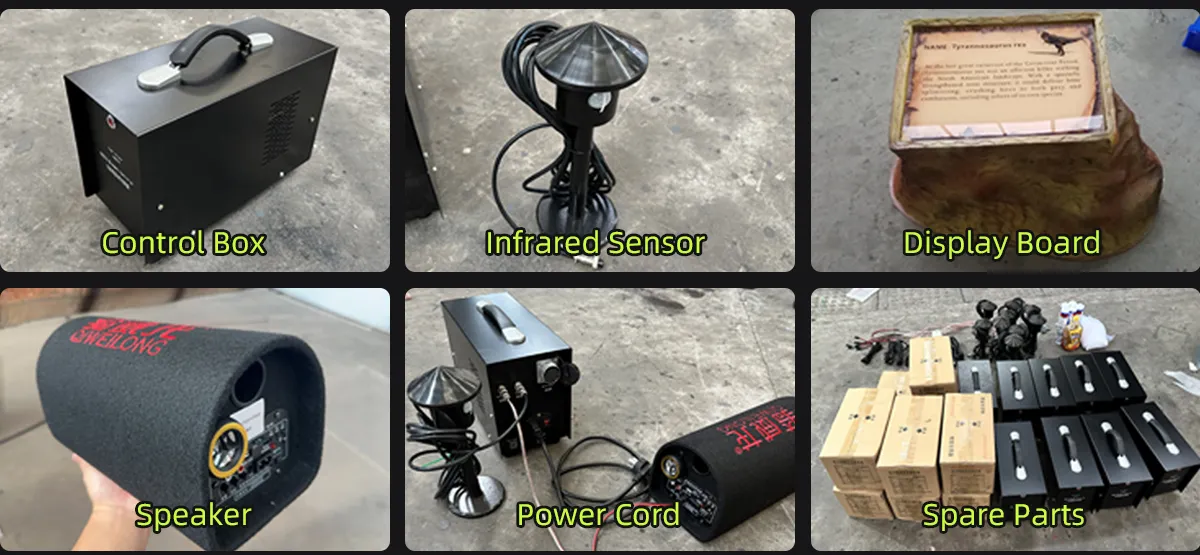
Product Accessories
Packaging and Container Loading