|
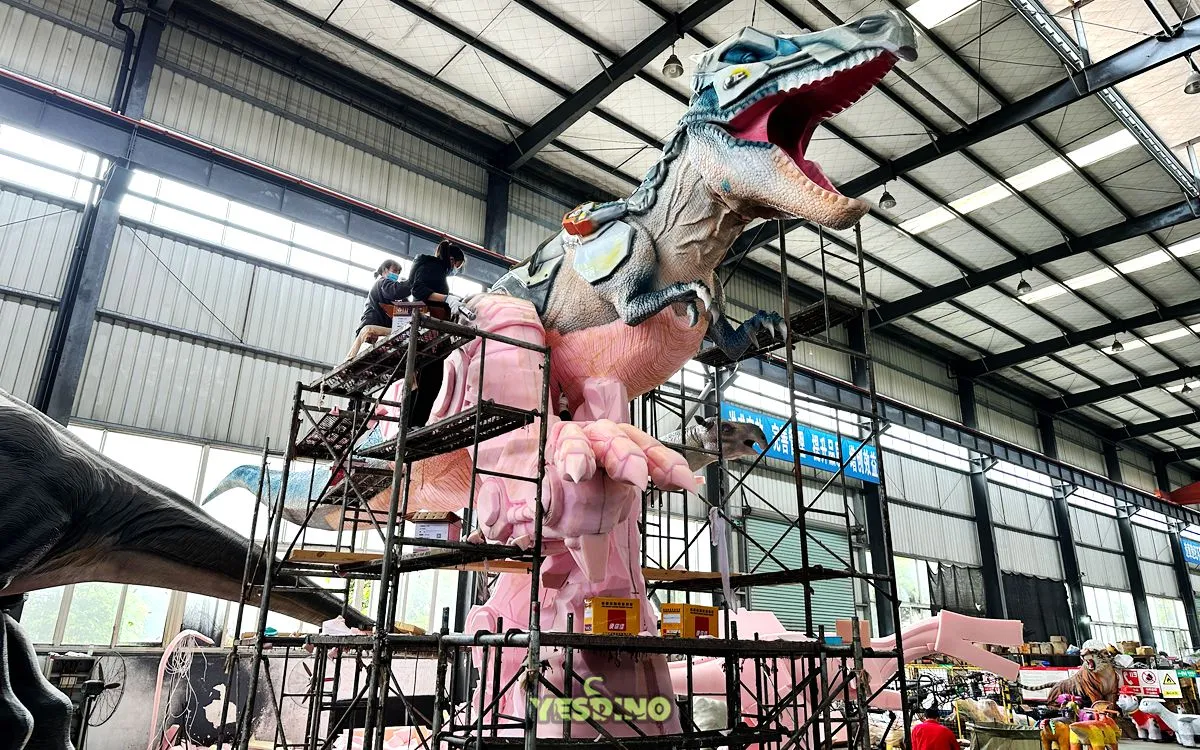
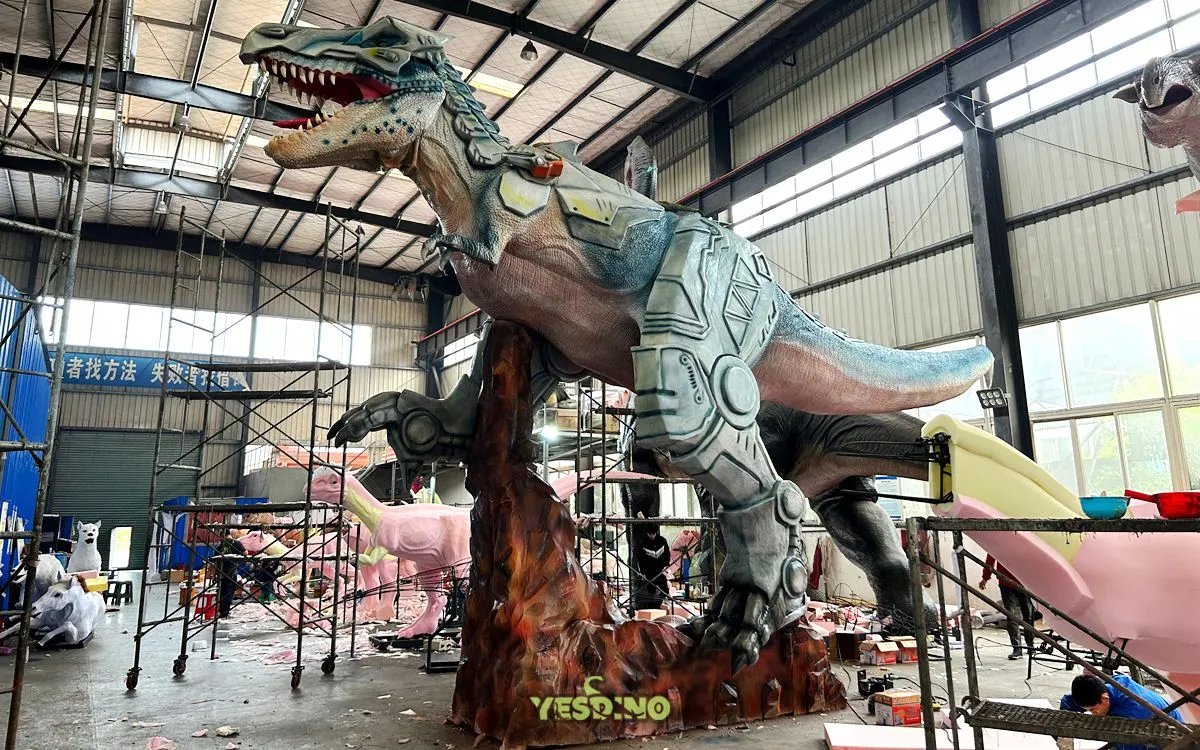
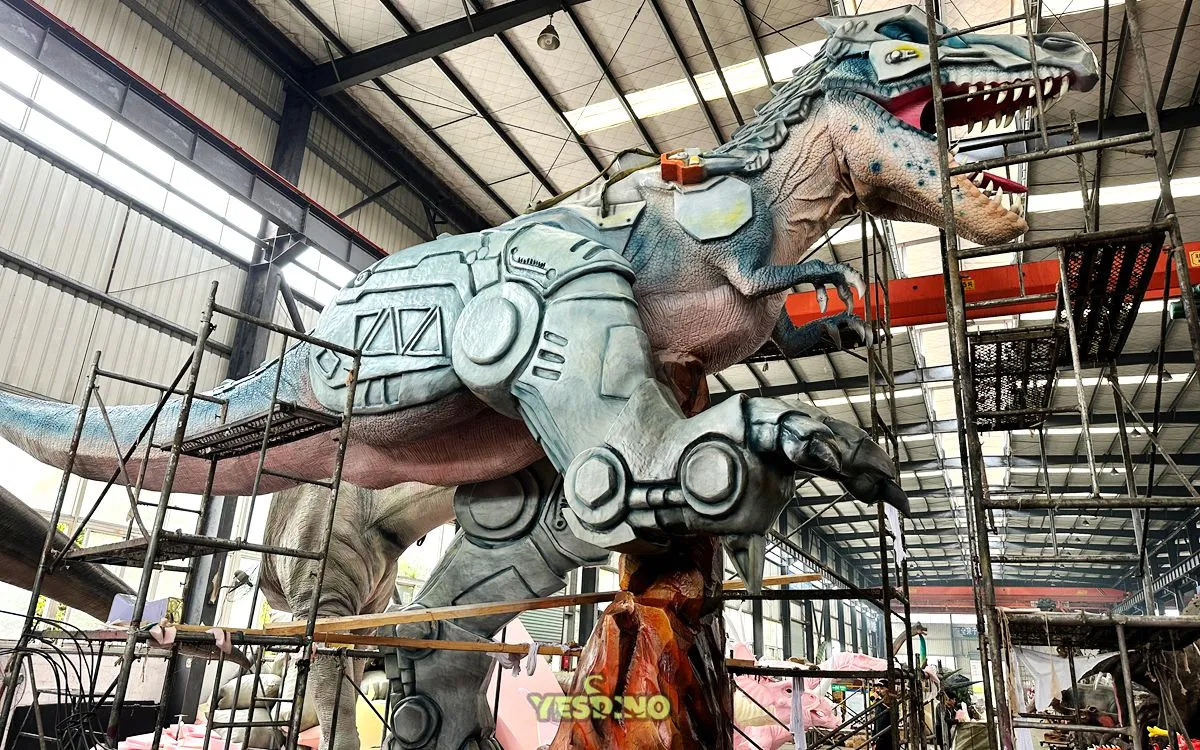
There is no list price for an animatronic dinosaur, because there is no off-the-shelf animatronic dinosaur. Two buyers walk into a factory and both say, "I want a T. rex." One gets quoted $4,000. The other gets $12,000. Both quotes can be fair, because they are not buying the same dinosaur. It is the "how much is a car" problem: the answer depends on whether you mean a city runabout or an off-road truck. This is not a sales pitch. It does three things. It shows you what actually moves the price. It tells you what belongs on a proper quotation. And it shows you how to ask, so the number you get is the number you end up paying. The six factors that move the price1. Size: guessing big only knocks out the models that would have fittedSize is the single biggest variable. Change the length and everything changes with it: the steel frame, the sculpting hours, the skin, the motors needed to move that weight, and further down the line the crate and the freight. When you ask for a price, give the size you can actually fit, ceiling height and gate clearance included. Guessing big "to be safe" has exactly one result. You rule out the designs that would have worked in your venue. 2. Movement: every movement is a real mechanismHead turn and roar, plus breathing, blinking, claw movement and tail sway are standard on a life-size model. Each one is a mechanism, a control channel and testing time. But more movement is not automatically better. It depends on how far your visitors stand. In a museum, where people stand close, subtle movement like breathing and blinking earns its keep. In a park, where visitors watch from fifteen metres away, you need big, readable motion. The subtle stuff is invisible at that distance. A good builder recommends a movement set for your viewing distance instead of selling you everything the control box can hold. 3. Frame and skin: the cheap decision does not show up on delivery daySteel wall thickness, frame design, foam density, silicone layer thickness. None of this photographs well, but it decides whether the model is still roaring in three years or splitting at the seams in six months. An outdoor build in sun and rain is not the same build as an indoor gallery piece. The materials section of a quote deserves as much of your time as the total. 4. Surface detail: the right question is how close visitors will standA model viewed from twenty metres behind a barrier does not need museum-grade hand painting. A model visitors can walk around and photograph at arm's length does. Phone cameras are brutal. Finish level is a fair place to save money, but only if the distance is genuinely that great. Get it wrong and you are paying for detail no visitor can see.
5. Controls and sound: an unmanned trail is not a stage showSensor trigger, timer, remote, operator control, a roar synced to the jaw. Change the control approach and you change the electronics and the price. Tell the builder how the model will be staffed and how visitors move past it. The control setup that suits an unmanned trail is wrong for a live show. 6. Freight and installation: the line most quotes leave outThe model is only part of the landed cost. Export packing for an oversized sculpture, international freight, access at your site, foundations and power all change with the destination. This is the line missing from cheap quotes, and the line where "surprises" tend to appear after the contract is signed. A complete quote prices the whole journey, not just the workshop gate.
What a serious quotation should containBefore you compare any two quotes, check that both say:
If a quote is one line with one number, that is not a quotation. That is a deposit receipt. Five things to send for a quote that means somethingSend a builder these five and the answer will be real:
For the wider pre-order checklist, see also seven things to check before you buy an animatronic dinosaur. The buying mistakes we see most often
Three details that separate a good builder from the restYou do not need to memorise these. But if you ask and the other side cannot answer, be careful. Why does one eight-metre model weigh 450 kg and another 800 kg?Not a measuring error. Frame wall thickness, frame design and skin thickness. If a quote does not state the weight and lifting points, ask them to add it. That is the minimum. A twelve-metre model normally comes in at 800 to 1,200 kg on its steel frame. Our fifteen-metre T. rex is 1,550 kg.
Why do some models look mechanical when they move?The movement is usually right. The speed curve is wrong. A real animal raises its head slowly, accelerates, then eases into place. A motor that turns at one constant speed gives itself away in a second. The fix is a DC gear motor with a controller that ramps speed up and down. Why talk about the tail on its own?On a twelve-metre model the tail reaches five to six metres behind the hips. It is a cantilever and needs its own steel section bolted to the hips. If the skin and foam carry that weight, the tail starts to sag and split within six months. This is the first thing to look at in a factory visit. Frequently asked questionsHow much does an animatronic dinosaur cost?It depends on size and configuration. A three-metre model costs a few thousand dollars, six to ten metres is the main price band, and anything over twelve metres is quoted per configuration. Send a builder site photos and dimensions and you can get a reliable range within a day. If someone quotes a flat "uniform price" straight away, they are either clearing old stock or planning to add charges later. How long does production take?Standard models take three to five weeks. Fully custom builds take six to ten. Be careful of "ships in three days" — that usually means something has been in a warehouse for a long time. Can an animatronic dinosaur stay outdoors in the rain?Normal rain is fine as long as the control box sits under its rock cover. Cut power and add extra protection during typhoons, heavy storms or dust storms. That is standard practice across the industry. Can you put one on the second floor of a shopping mall?Check the floor load first. An eight-metre model at 450 to 800 kg is normal, but the weight sits on a few support points, so a property manager or structural engineer needs to sign off. We have done a number of mall projects where the answer was a spread base plus a steel platform. How often does it need maintenance?Run the full movement set and check connectors and wiring harnesses once a month. Lubricate the moving parts every quarter. Do a full inspection once a year. Three parts build, seven parts care. Want a quote that means something? Send your site photos, species, target size and delivery date to YESDINO. We will come back with a configuration matched to your venue and a reference price. No pressure, and no lowball number that grows later. |