

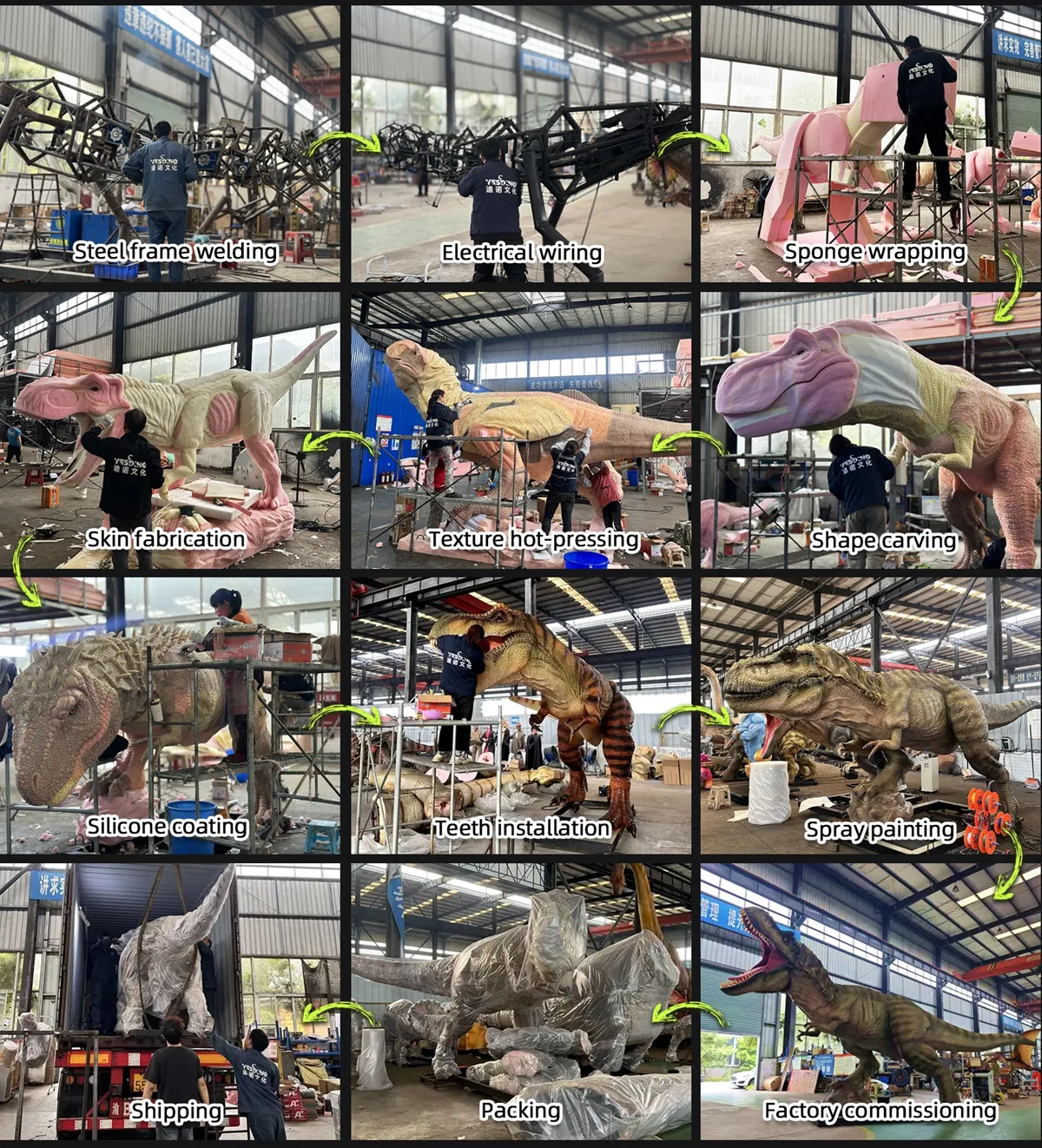
Production Process
Most dinosaur exhibits are built for adults looking up. This one is built for children looking level — two metres long, 1.2 m tall, standing at the height of a seven-year-old's shoulder.
SKU YKL-072: two metres long, 0.6 m across the body, 1.2 m to the back. Lotosaurus was a stocky, four-legged plant-eater from the Middle Triassic of what is now China, and at this size the model is close to the real animal rather than scaled for effect.
A small animal that isn't a baby
Small dinosaurs on trails are usually juvenile versions of big ones: a young T-Rex, a young Triceratops. They look like toys beside their parents. Lotosaurus is different — it is small because the animal was small, and it reads as a complete creature rather than a scaled-down one.
That changes how it should be placed. Give it its own space at child height rather than putting it in front of a large model, where the comparison does it no favours. A short section of low planting, a few metres of path and a couple of these animals make a better exhibit than one of them lost beside a hero predator.
The build has to survive children
At this height the animal is within reach of everyone. That is the design constraint, and it is worth being explicit about: the barrier line matters more than the movement programme. A metre of clear space on the visitor side, and a base frame that sits flat enough that nobody can get a foot under it.
The skin at this scale takes more contact than on a large model — hands on the back, children leaning over the tail. Silicone five to seven millimetres over carved foam handles that better than fabric or a painted shell, and small damage can be patched locally with matching pigment rather than repainted.
Five movement groups
Head left and right, neck up and down, jaw open and close with a call, blinking eyes, tail sweep. On an animal this size the eyes do more work than any other group — a blink at 1.2 m is the moment a child decides the thing is alive — so we set the blink interval shorter than on a large build and keep the jaw movement small.
The sound file is a short, low call rather than a roar. For a children's area that is the right call both ways: it suits a small herbivore and it doesn't send anyone running.
Where it fits
Children's trails and playground edges. The height is the argument. Nothing else in the range meets a child at eye level.
Museum discovery zones. A hands-on area with small animals lets a school group interact without a barrier wall, which is often what teachers ask for.
Retail and resort theming. Small enough to place inside a shop or a lobby, and light enough to move between locations during the year.
Specification and delivery
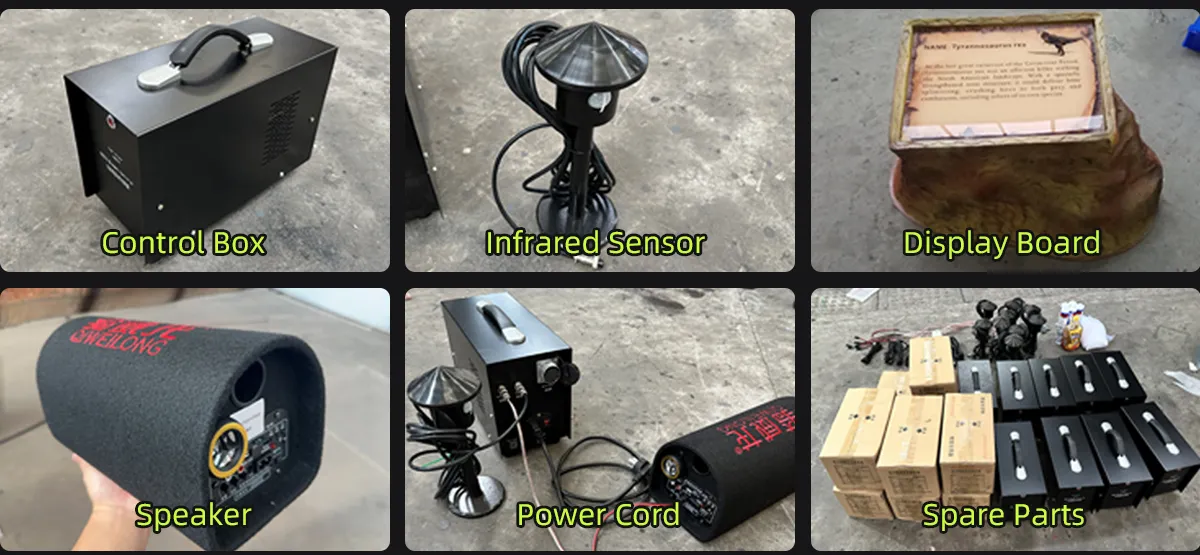
Welded Q235 steel frame with anti-rust treatment, foam volume, silicone five to seven millimetres, translucent layered colour. Powered at 110 V or 220 V configured for the destination, with the control cabinet accessible through a service panel. Ships with the base frame, cabinet, sound system, wiring diagram and calibration sheet.
Freight, duties, certificates and installation are quoted separately from the product price. Because of the size, several units ship in one crate — which is worth knowing if you're pricing a group of four for a children's area.
A Triassic animal from China
Lotosaurus comes from Middle Triassic deposits in Hunan, and it is one of a group of early plant-eaters that spread across the supercontinent before the dinosaurs proper took over. It walked on four legs, had a long body and a small head, and it is the sort of animal that rarely appears in a park because it isn't famous.
That is exactly why it works in a discovery zone. Every other model a child sees is a celebrity; this one is a genuine animal that most adults have never heard of, and the label can say so. Pair it with a Plateosaurus and you have a Triassic corner that no competitor trail has.
Enquiry
Tell us how many units you're considering and whether children will get within arm's reach. If the answer is yes, we'll spec the barriers and the touch-up kit alongside the animals.
Where to go next
Worth reading before you commit: the size guide covering 3 m to 12 m builds for how the sizes compare, the rental cost breakdown for what the ground has to carry, and the pneumatic versus hydraulic comparison for where the money actually goes.
For ideas on placing it, see exhibit planning walkthrough. The rest of the range is on animatronic dinosaurs, and if this one is the wrong size for the slot, animatronic ouranosaurus for jurassic theme parks is the closest alternative.
Product Accessories
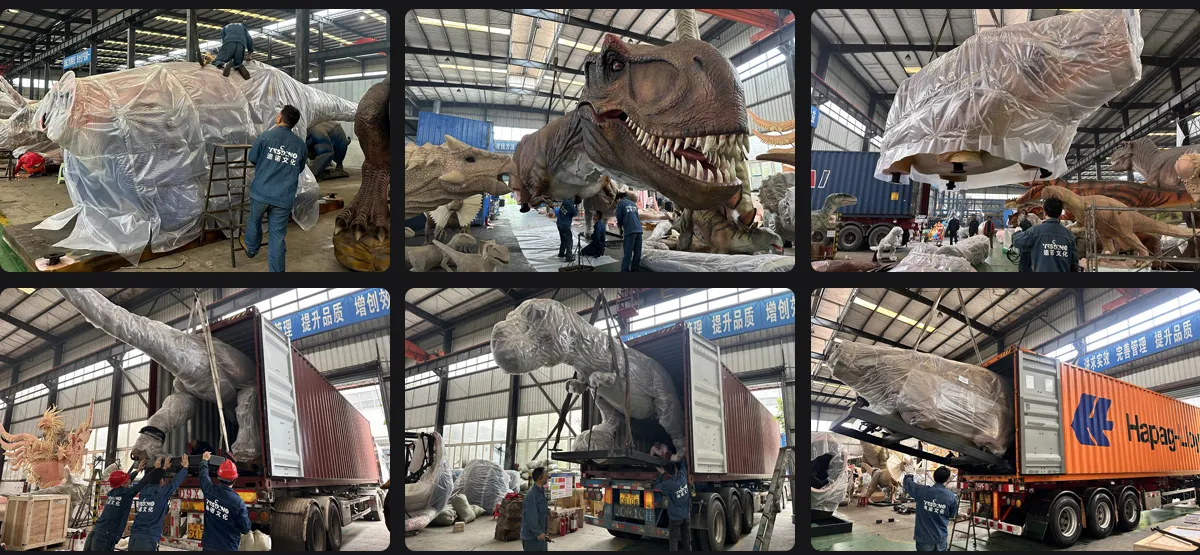
Packaging and Container Loading