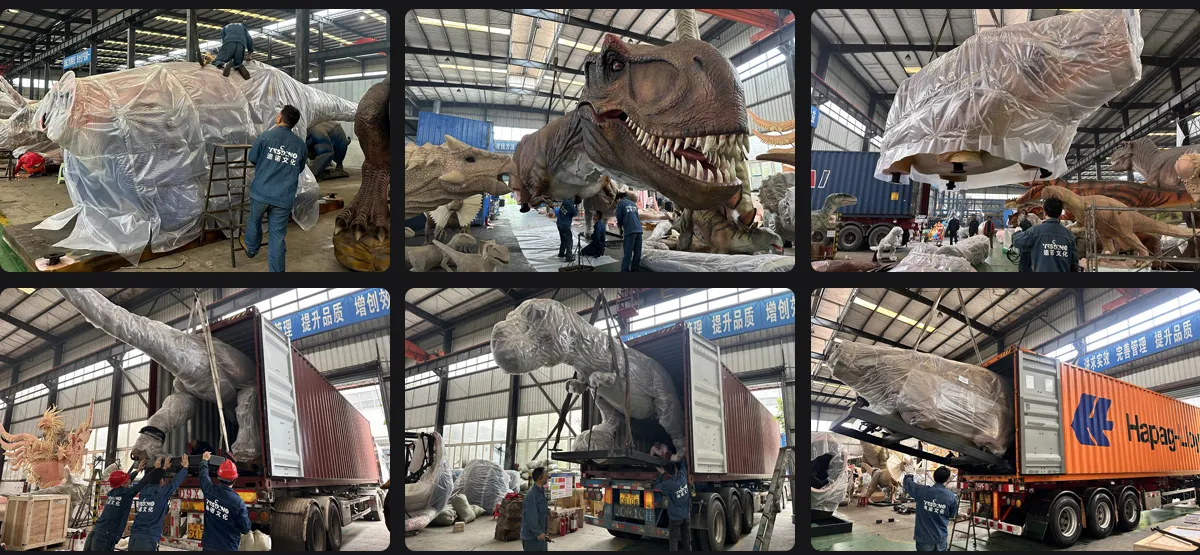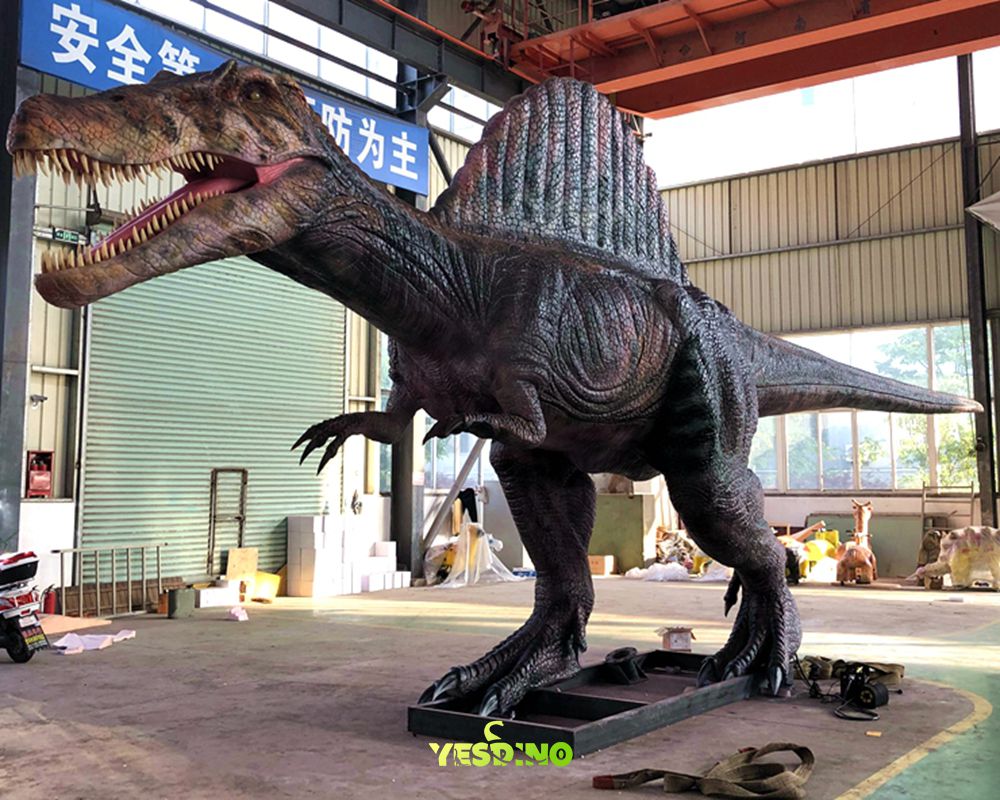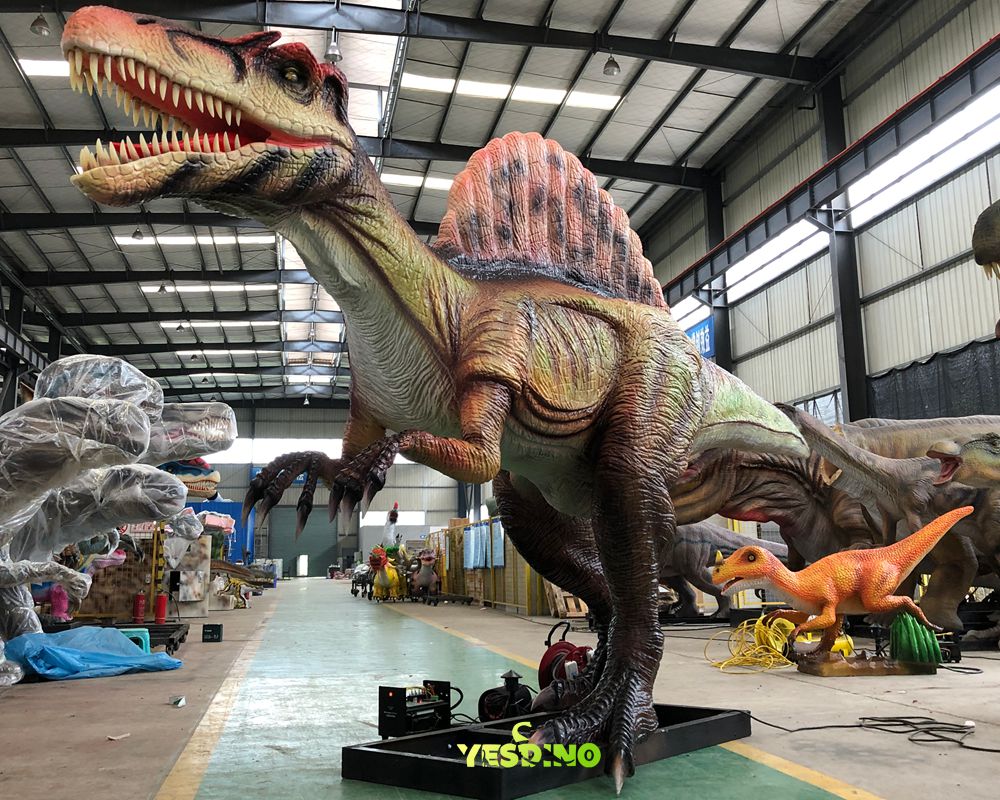
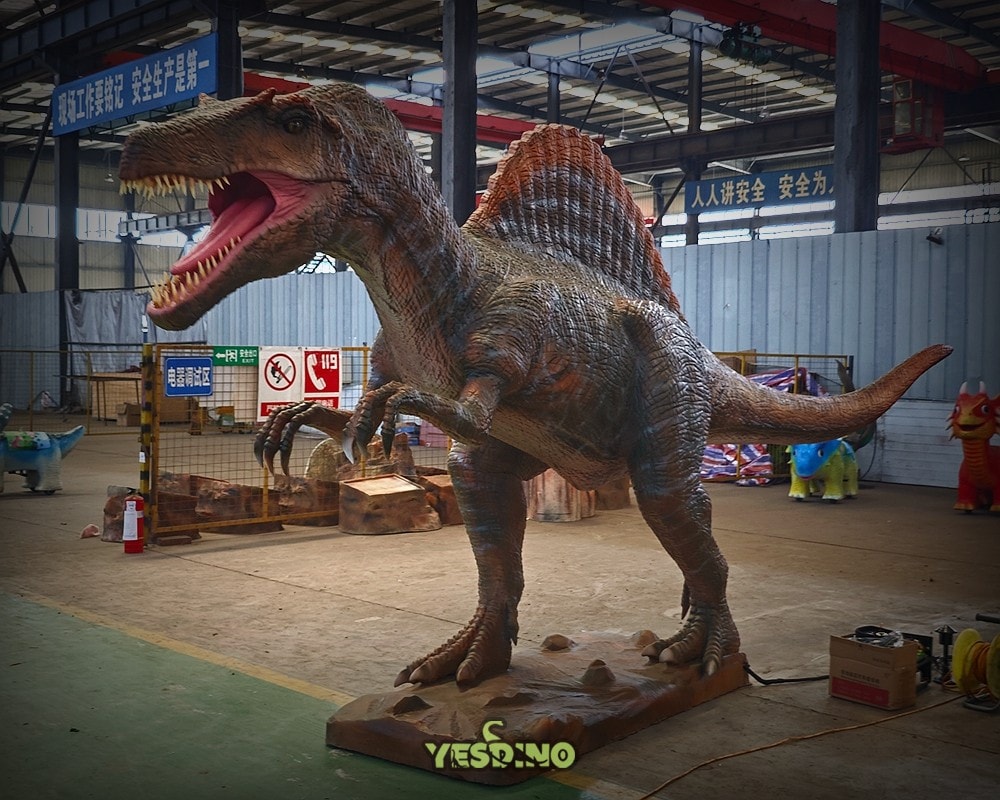
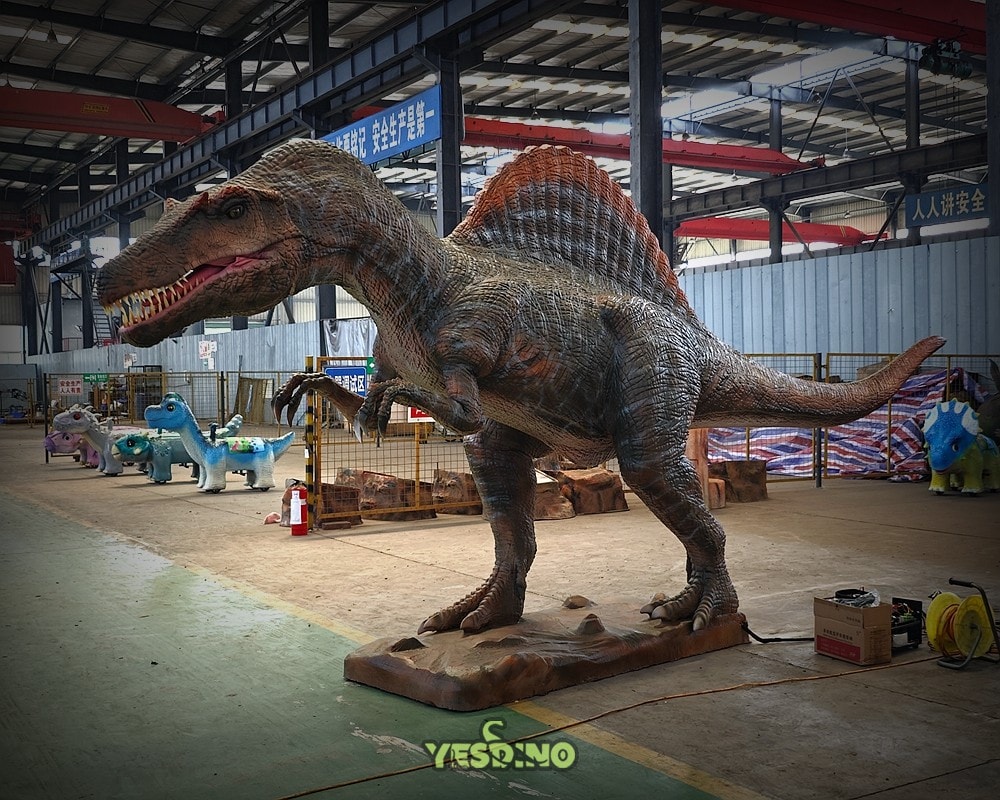
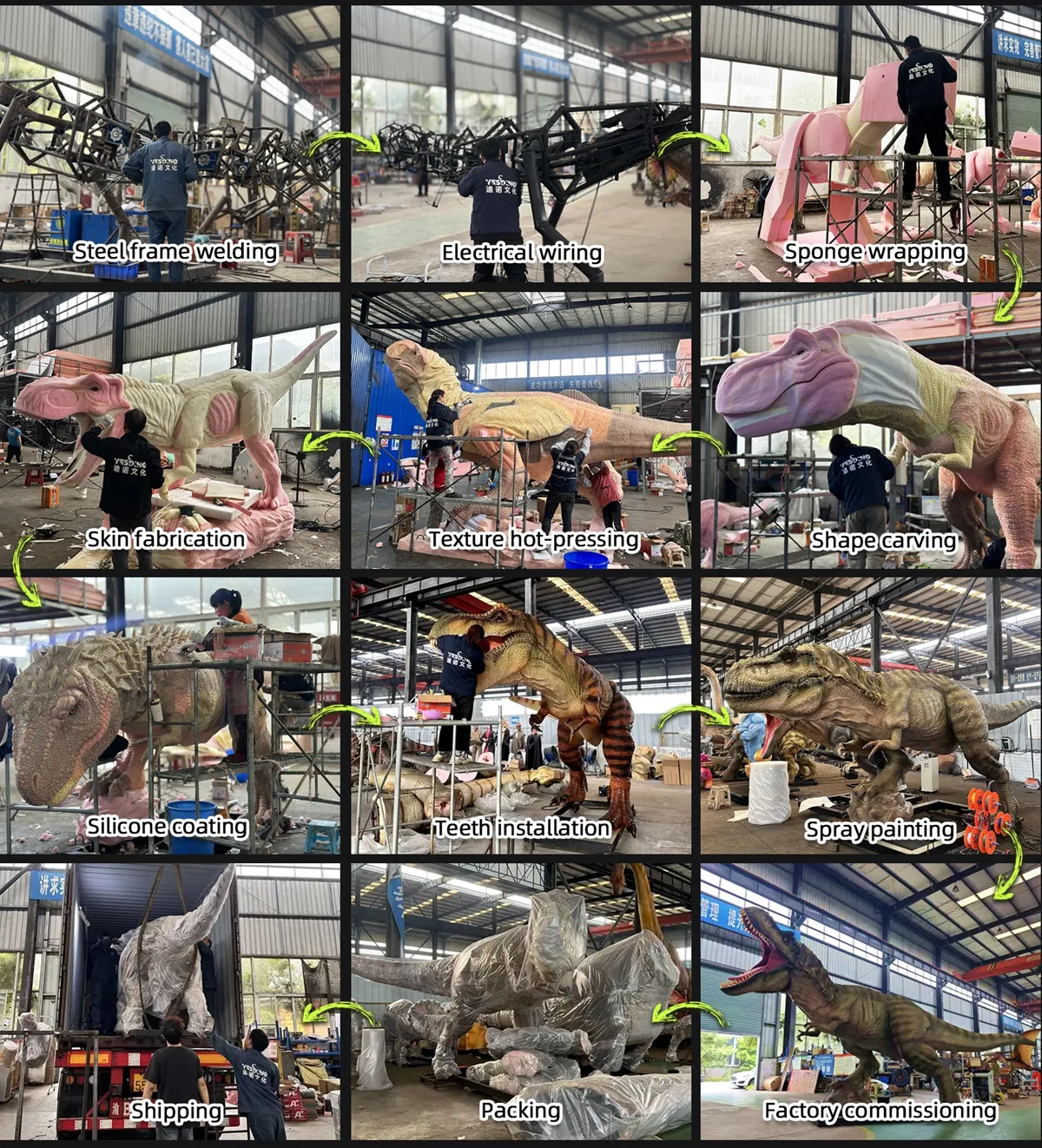
Production Process
Most buyers arrive with a setting in mind. Some arrive with a budget, a date and a rough idea, and the setting gets decided later, usually by whoever lays the path.
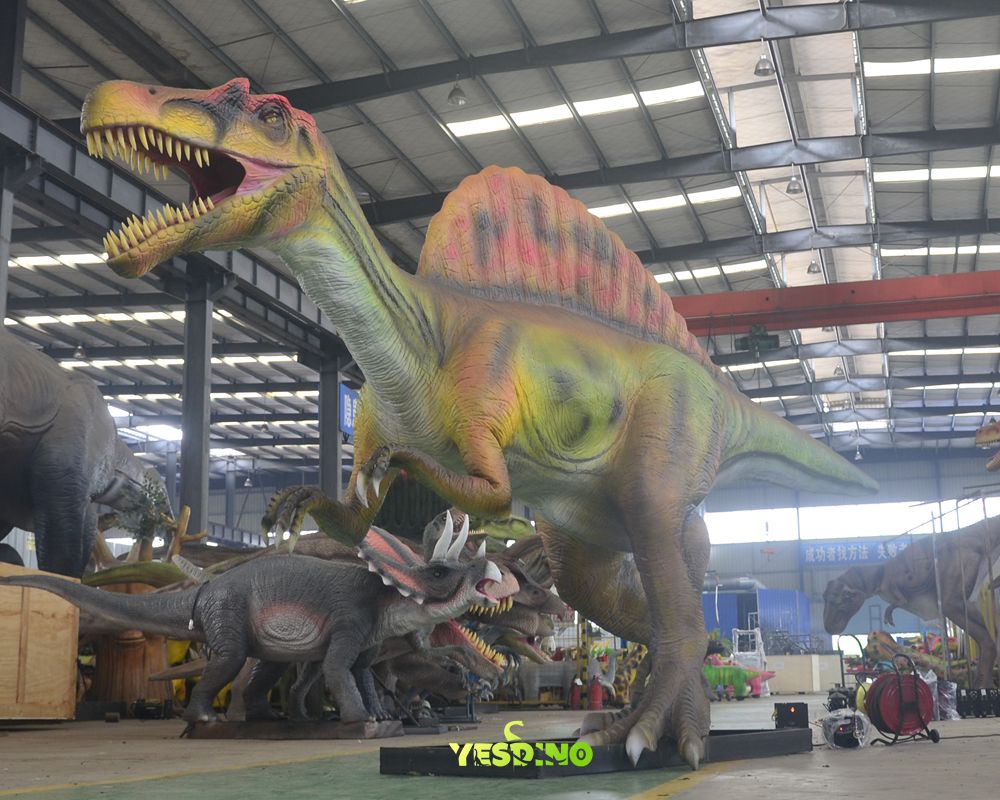
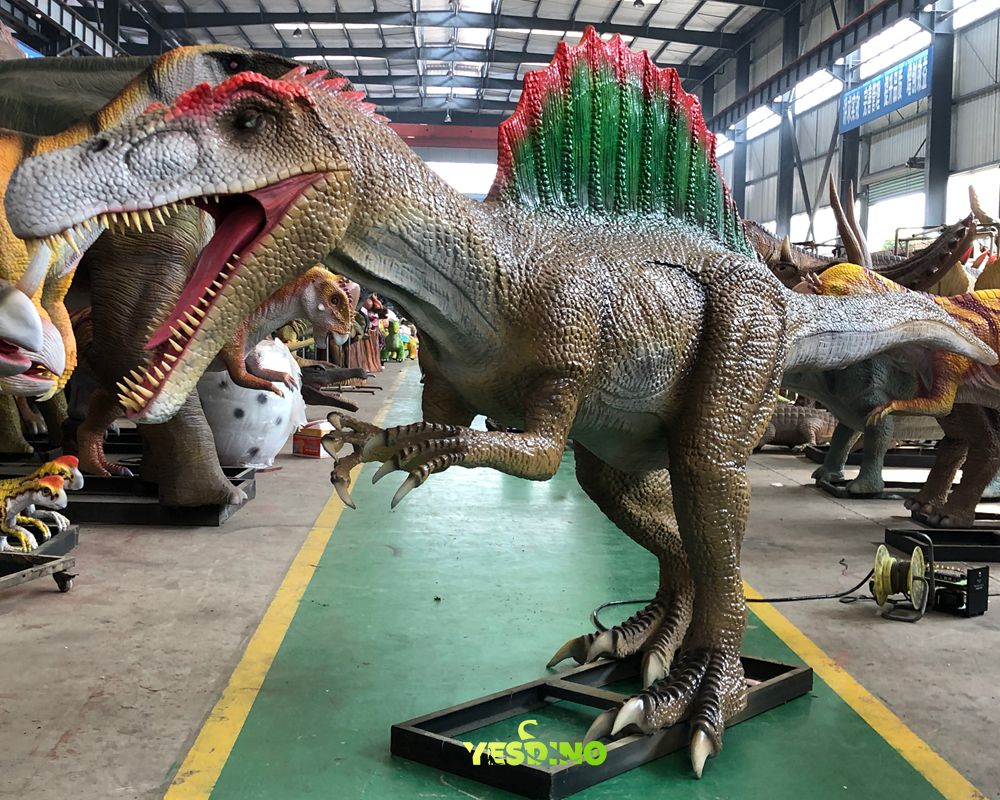
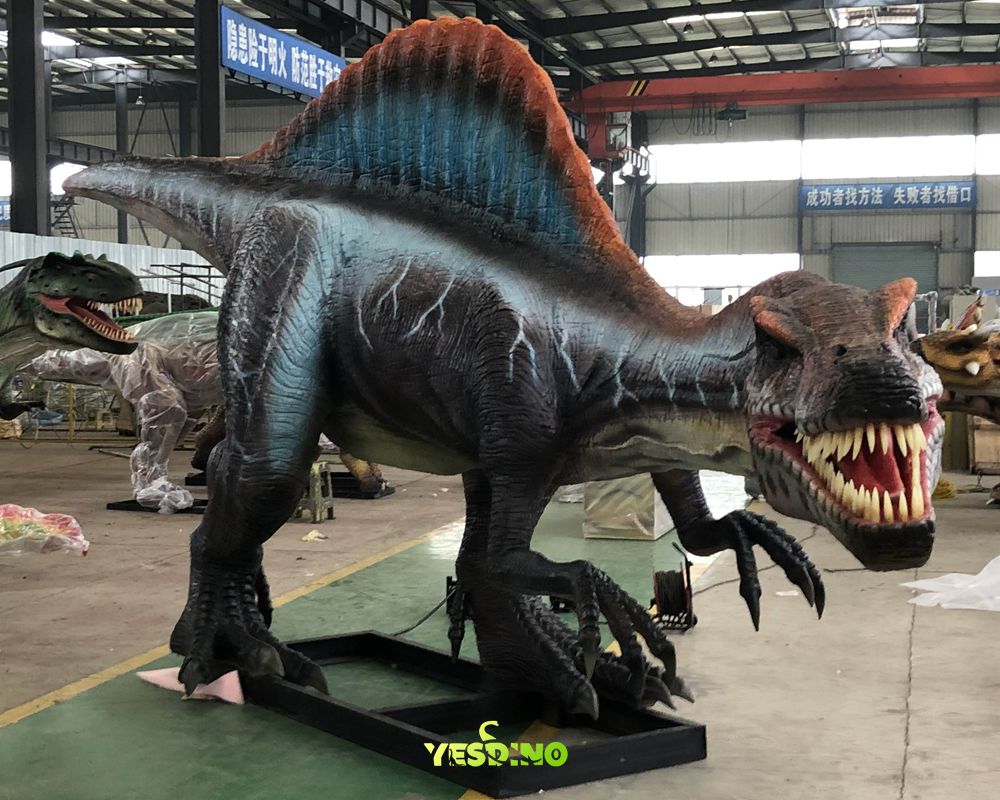
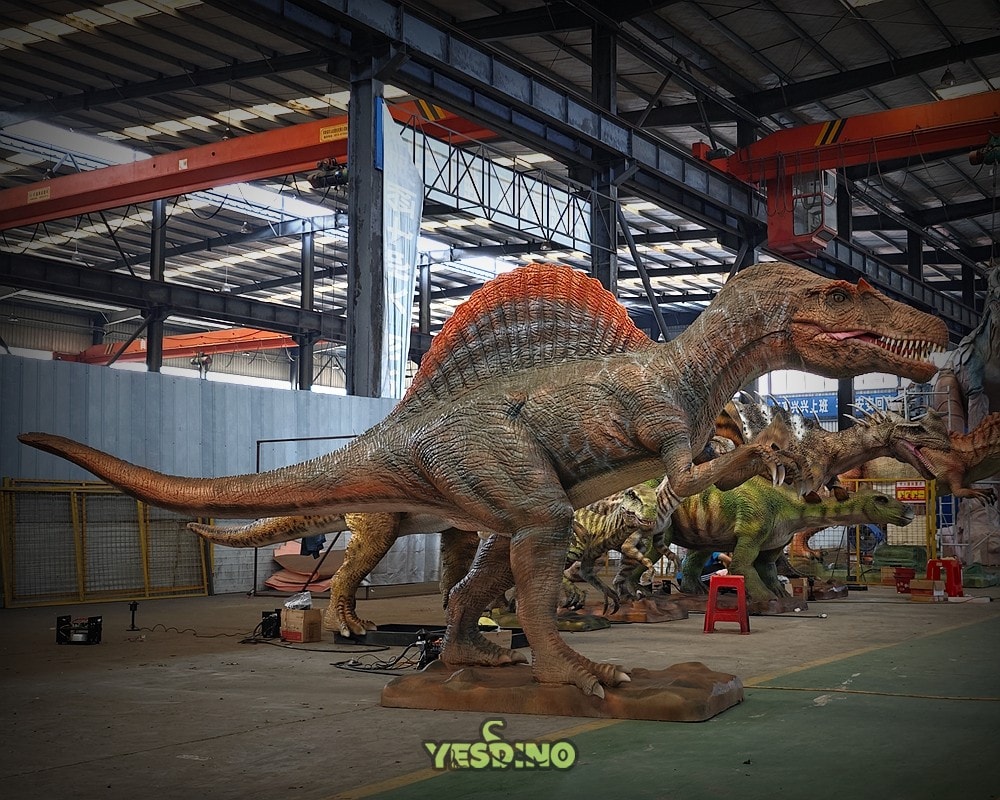
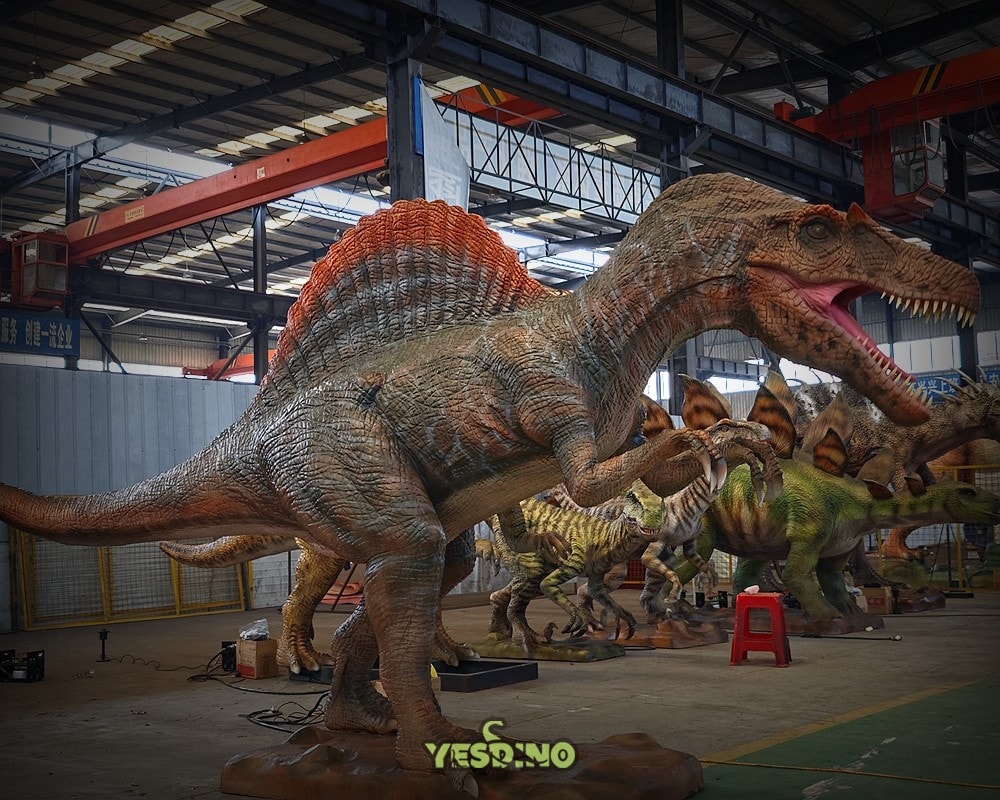
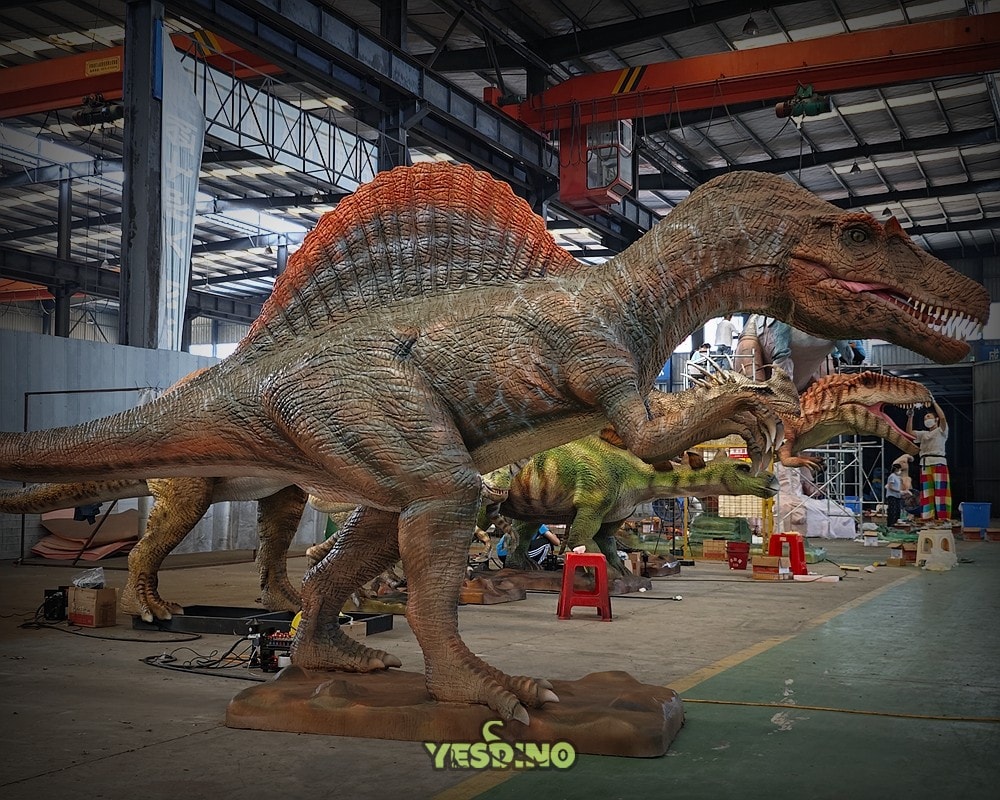
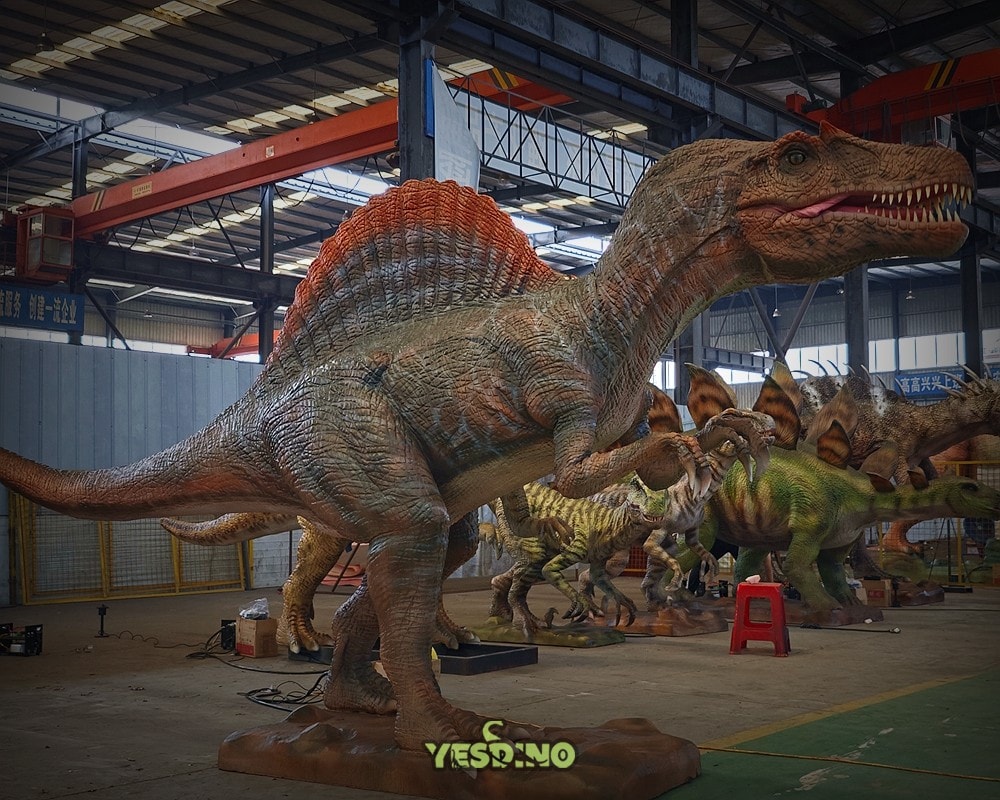
This animal is for that second group. Six metres long, 2.2 m to the top of the sail, 0.85 m across, with nothing in the frame that assumes a hall, a trail or a pond.
A size that survives a change of plan
The numbers are deliberately unremarkable. At 2.2 m the animal clears a 2.6 m ceiling and sits below the eaves of most park buildings; at 6 m long it holds a view from eight to fifteen metres, which covers a hall aisle, a trail platform and a pond rail equally well. At 0.85 m across it passes a 1.2 m gap without the skin coming off.
What it is not: it is not tall enough to be a landmark from a road, and it is not long enough to fill a plaza. If the brief says the animal has to be seen from thirty metres or from a car, this is the wrong purchase, and the answer is a longer build rather than a taller plinth.
Three placements it handles
Indoors, against a wall. A 2.6 m to 3 m ceiling gives the sail room and still leaves the lighting track clear. Set the animal parallel to the wall with 1.2 m to the barrier, and the head toward the direction people enter from.
A trail platform. The 0.85 m body stands on a 1.2 m strip, with the tail over the verge. The height means the head sits above an adult's eye line without a fence needing to be high, which keeps the path feeling open.
A water edge. The sail reads against water better than anywhere else, because the reflection carries the shape. Feet 0.6 m back from the waterline, head angled out over it.
One movement set, tuned per site
The sail is structure rather than mechanism, so the performance comes from the long snout, the jaw with its conical teeth, and the neck. The set covers head turn, neck, jaw, eyes and tail sway, and it behaves differently in each of the three positions: indoors the speeds come down and the pauses lengthen, outdoors they go up slightly because wind and distance swallow small movement.
Sensing changes with the setting too. Indoors, a beam across the approach at 3 m with 1.2 s of delay; on a trail, a sensor at 5 m with 0.8 s; at a pond, a sensor facing along the rail rather than across the water. Those three are not interchangeable, and the parameters are written down at commissioning.
Build and skin, whichever site you pick
Q235 steel frame with rust treatment, body carved in high-density foam, silicone skin 5–7 mm sprayed in translucent layers. The finish changes with the setting, not the structure: an indoor animal is finished flatter so track lighting does not find a hot spot on the shoulder, and an outdoor one carries a deeper base tone.
Rated −25 °C to 45 °C, with a two-year warranty on the core electronics. The sail edge and the snout take the knocks, so both are reinforced and both are covered by the touch-up kit that travels in the crate.
Three crates and a pad decision
Three crates, the longest 2.5 m, the heaviest around 320 kg. Assembly is base frame, legs, body, neck and head, skin, then power and programme, which is a day for two people including alignment. Anchoring is four M12 points into slabs, a pad or ground screws, depending on the surface you end up with.
Because of that, the base frame is drilled to take all three fixing types rather than one. The cabinet sits on the far side from the public with 600 mm of standing room and the door opening toward your service route; on an indoor site that is often the difference between a five-minute check and a room closure.
The setting it does not suit
A through-route where people pass within a metre of both flanks. Six metres of animal in a three-metre aisle becomes an obstruction, the sensors fire from both sides continuously, and there is nowhere to stand with the cabinet open. A mall concourse with a central position is the usual version of this. Put the animal against a wall with a barrier, or choose a shorter build.
The second caveat is ceiling height. At 2.2 m the sail clears most interiors, but a room at 2.4 m leaves nothing for the lighting. Measure the ceiling before deciding the setting.
Enquiry
Send the plan, the ceiling or the sky, and the distance visitors will view from. If the setting is still open, say so; we will tell you which of the three positions the site supports, and what changes if you move it.
Where to go next
If you are still comparing options, start with the spare parts and repair kit list — it lines up the builds by length and reach. Site work is covered in the size guide covering 3 m to 12 m builds, and the rental cost breakdown lists the factors that move the price.
For ideas on placing it, see exhibit planning walkthrough. The rest of the range is on animatronic dinosaurs, and if this one is the wrong size for the slot, 15m animatronic t-rex for theme parks is the closest alternative.
Product Accessories
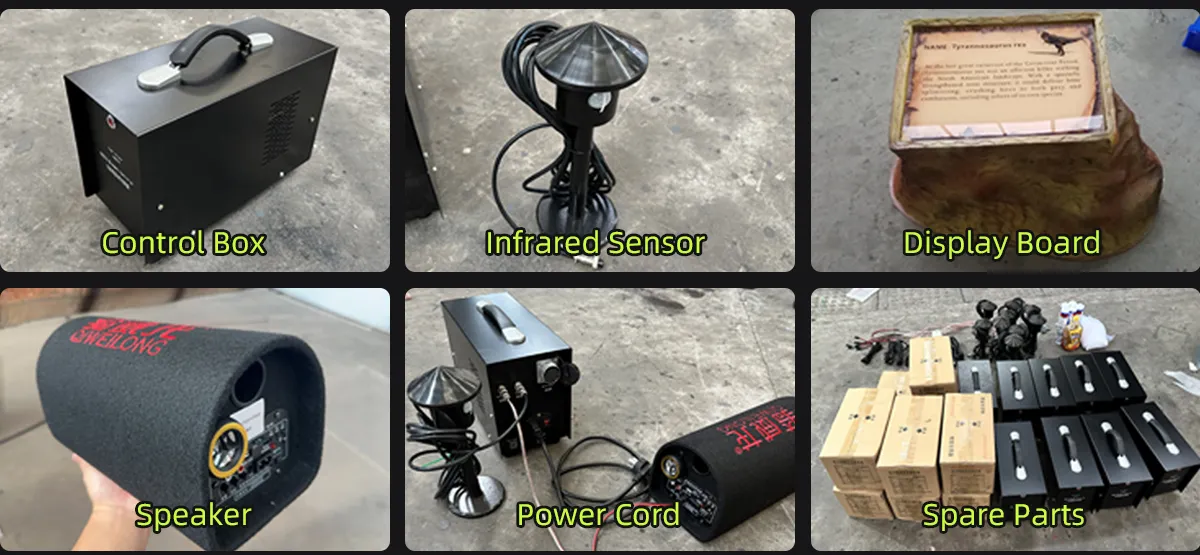
Packaging and Container Loading